

© 2026 SCREENPRO®. Specifications are subject to change without notice. | SamsAV All Rights ReservedSite Map Designed by iwonder.cn


The best outdoor projection screen depends on whether the installation is temporary or permanent, the required screen size, viewing conditions, and how frequently the screen needs to be transported or stored.
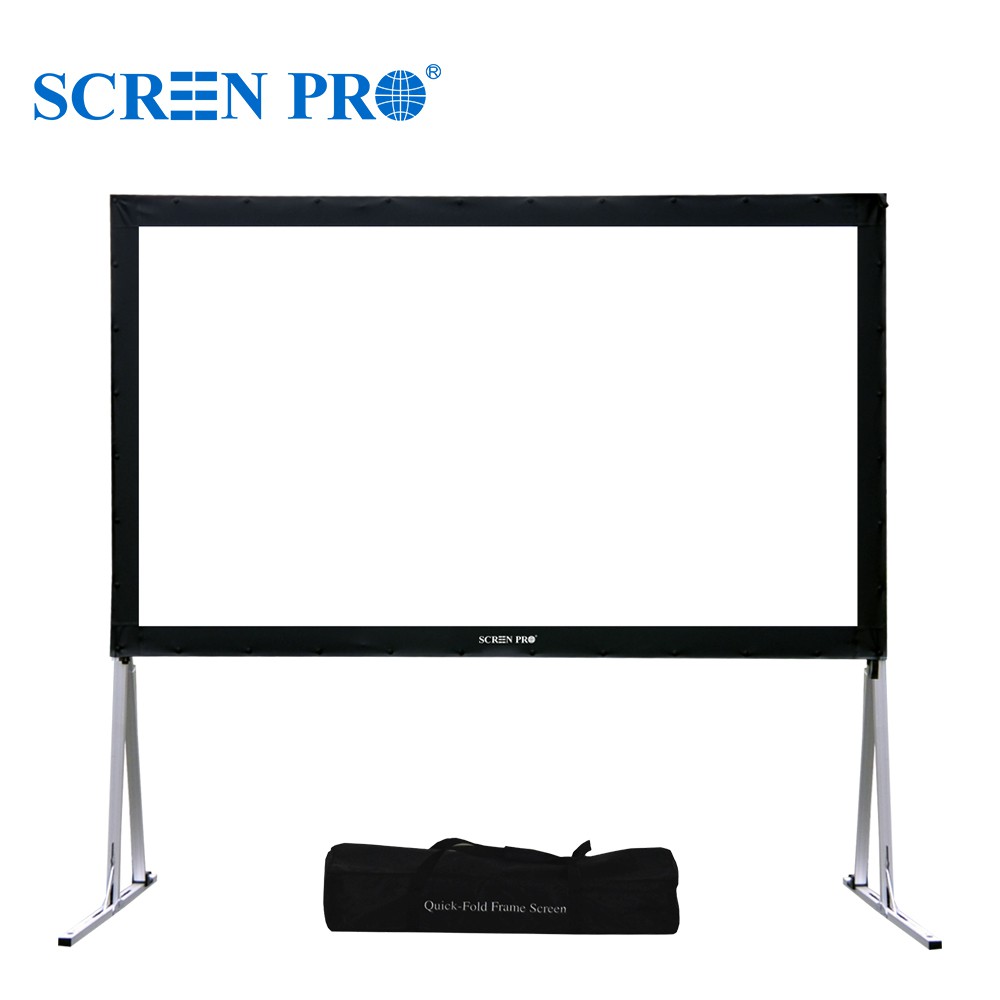
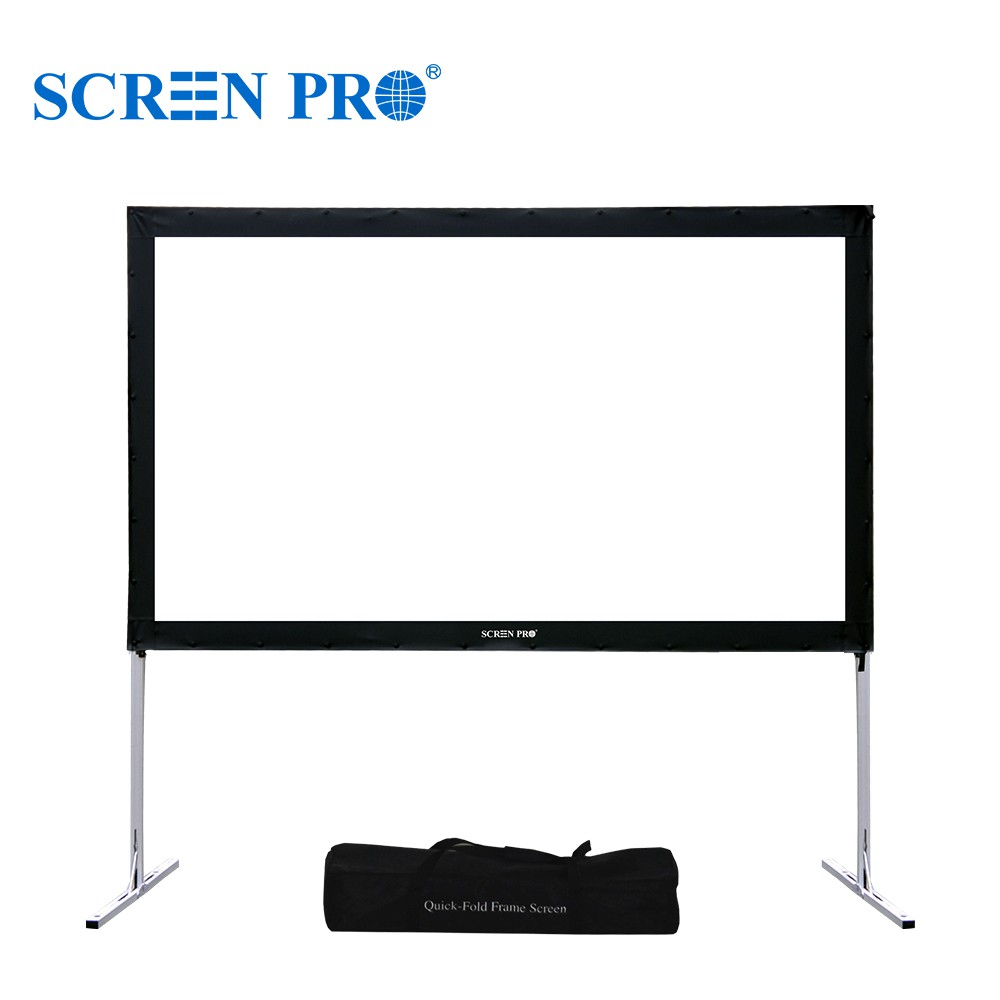
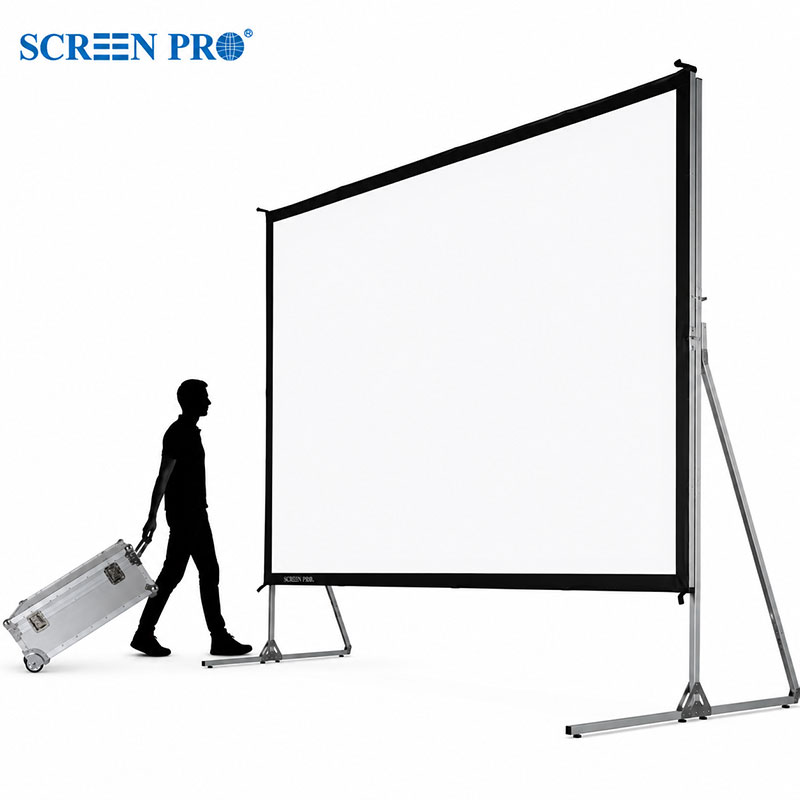
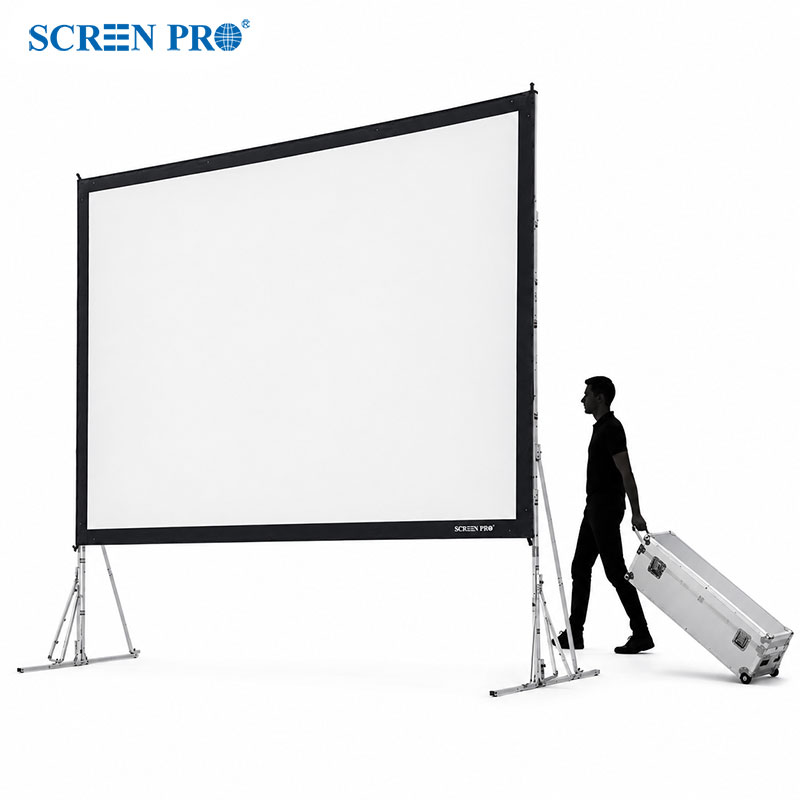
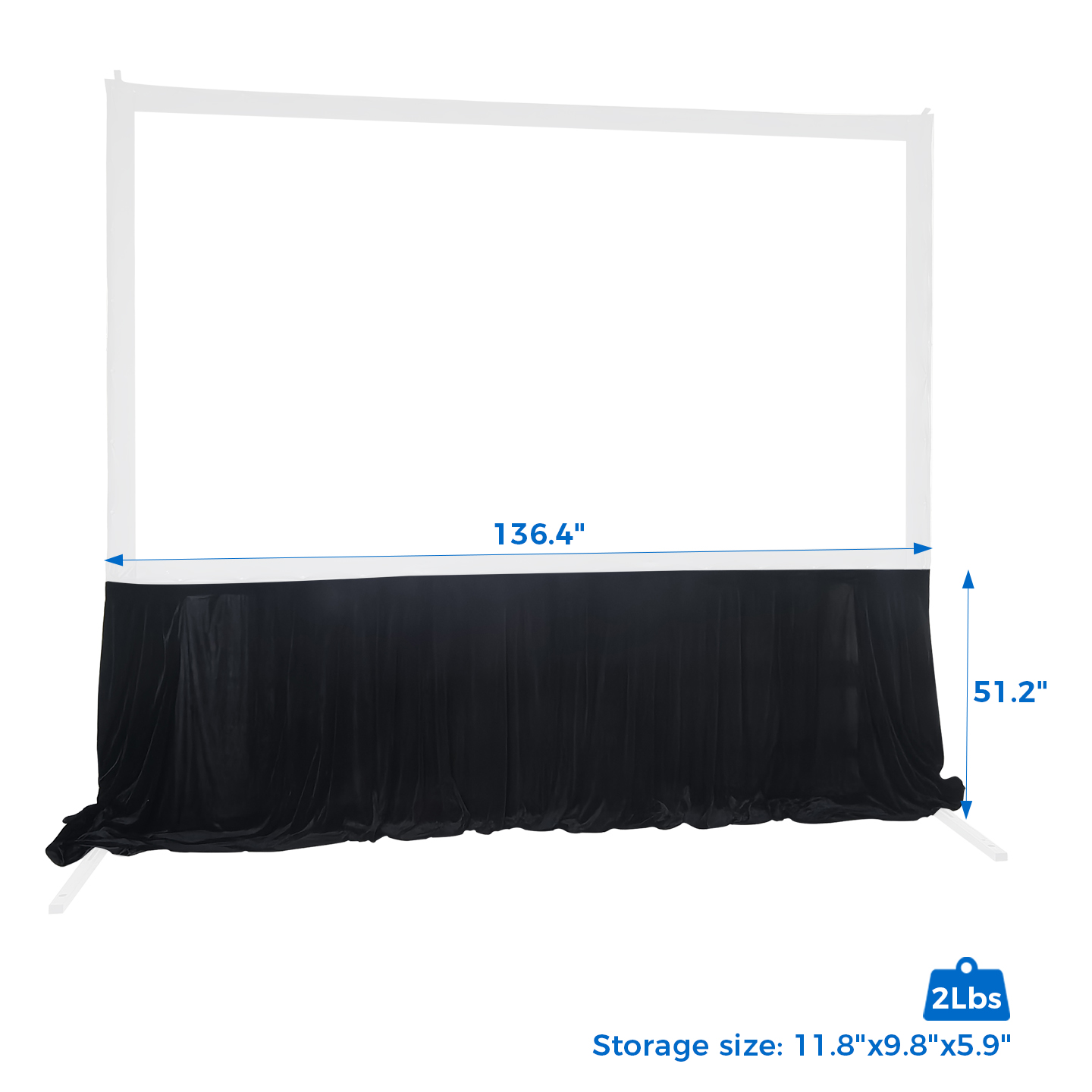
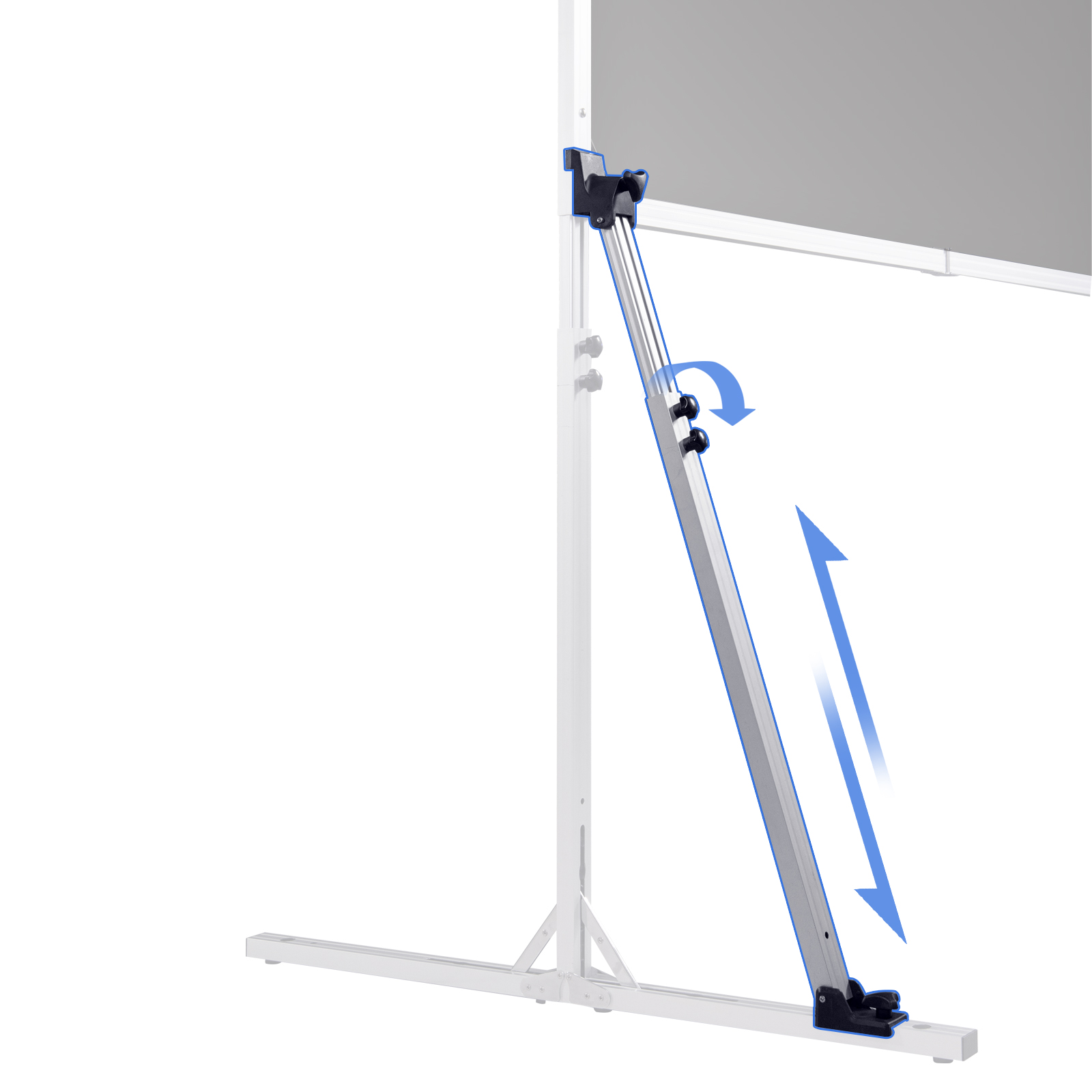
For temporary outdoor movie nights, events, and commercial presentations, a portable quick-fold screen is often a practical choice because it can be assembled, dismantled, transported, and stored between uses.
For larger outdoor or event applications, screen size, frame stability, projection direction, wind conditions, and installation environment should all be evaluated before selecting the screen.
Projection screens should not be treated as weatherproof installations unless specifically designed for that purpose. Avoid direct exposure to rain, strong wind, and other severe weather conditions.
The projector model is one of the most useful pieces of information when selecting a projection screen.
If possible, provide the following:
Projector brand and model
Throw ratio
Projector installation position
Required image size and aspect ratio
Projector-to-screen distance, if applicable
This information helps determine whether the projector is UST, short-throw, or standard/long-throw and which screen materials and structures are compatible with the installation.
Room lighting, viewing distance, available installation dimensions, and speaker placement are also helpful when selecting the complete screen configuration.
The best screen structure depends on your room layout, installation conditions, and how you use the space.
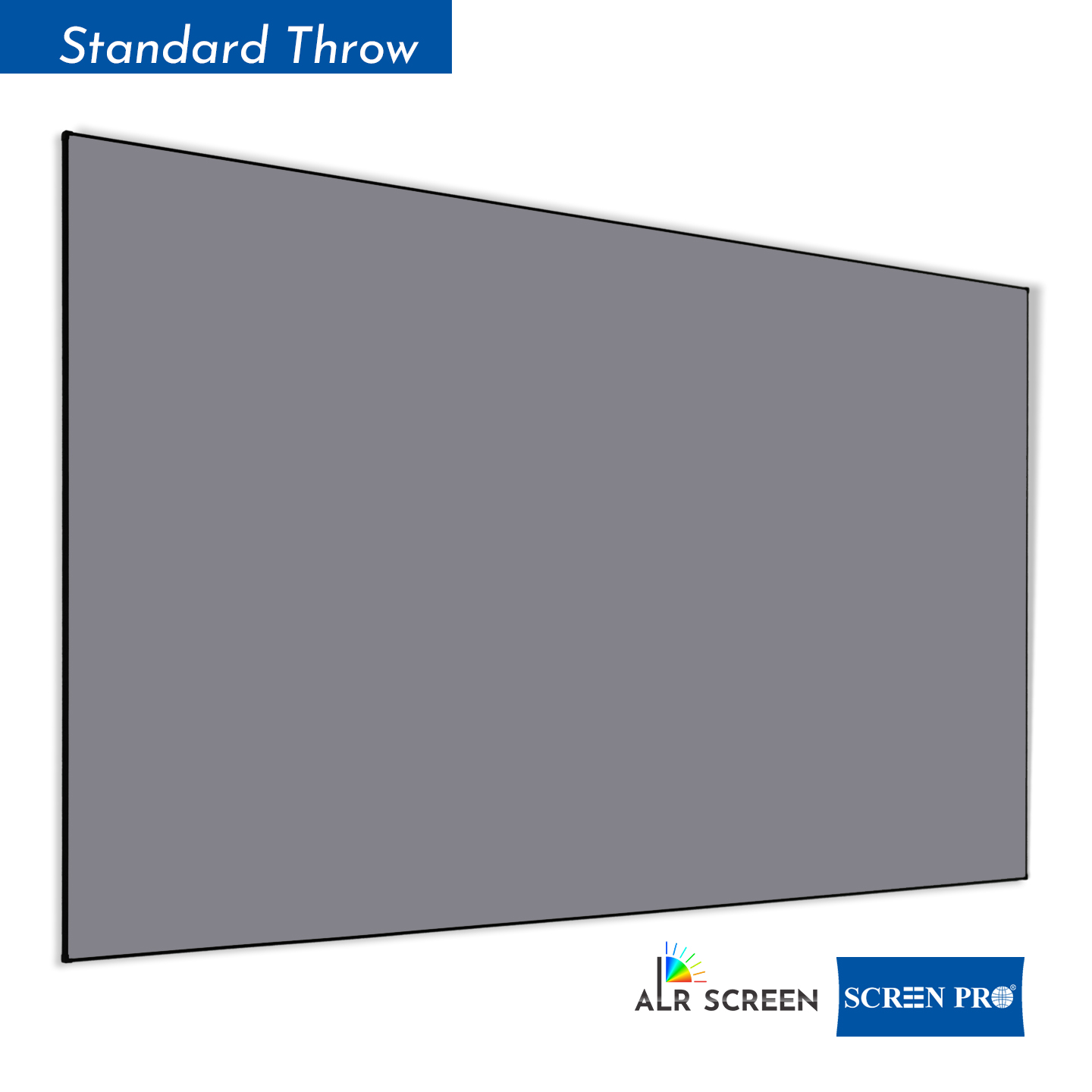
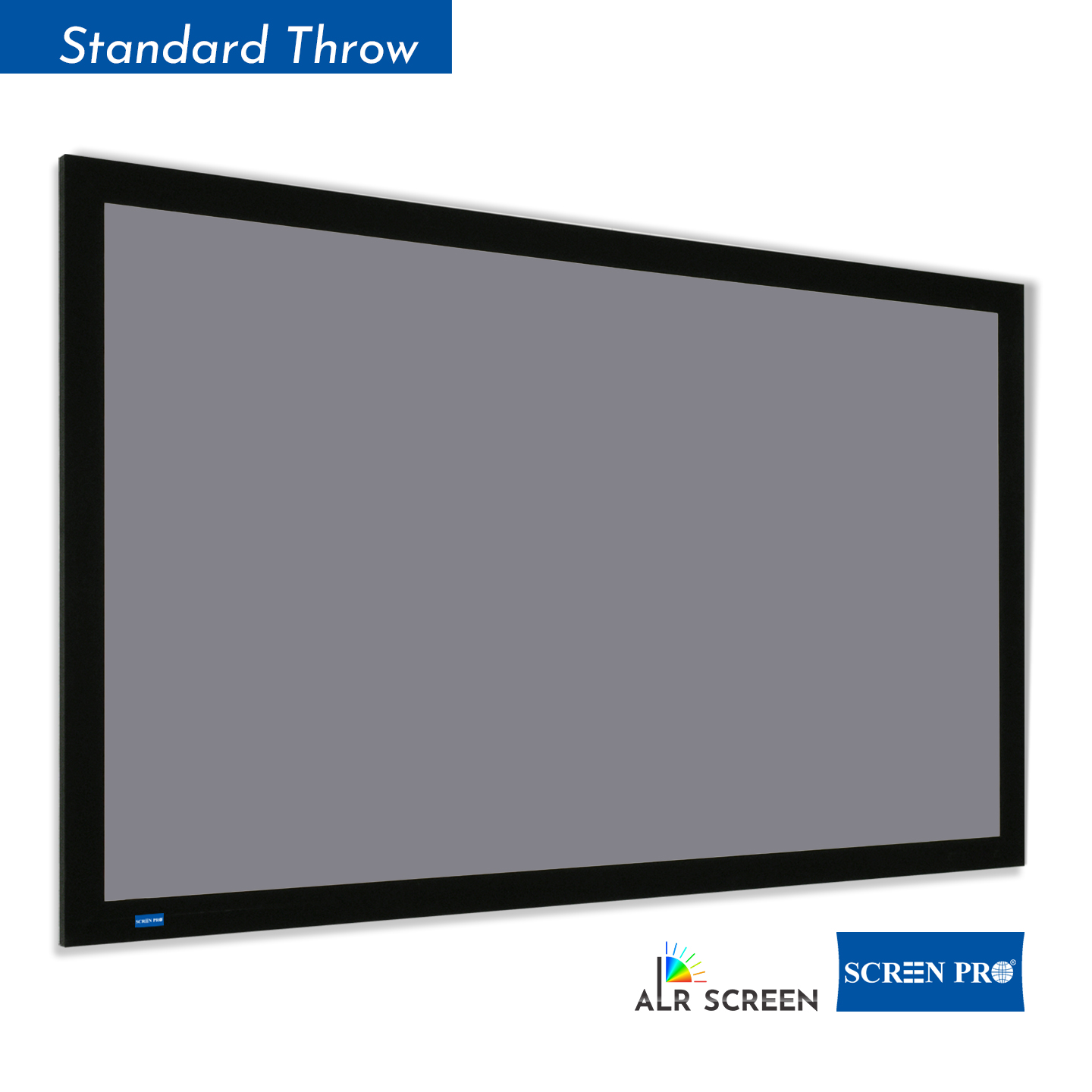
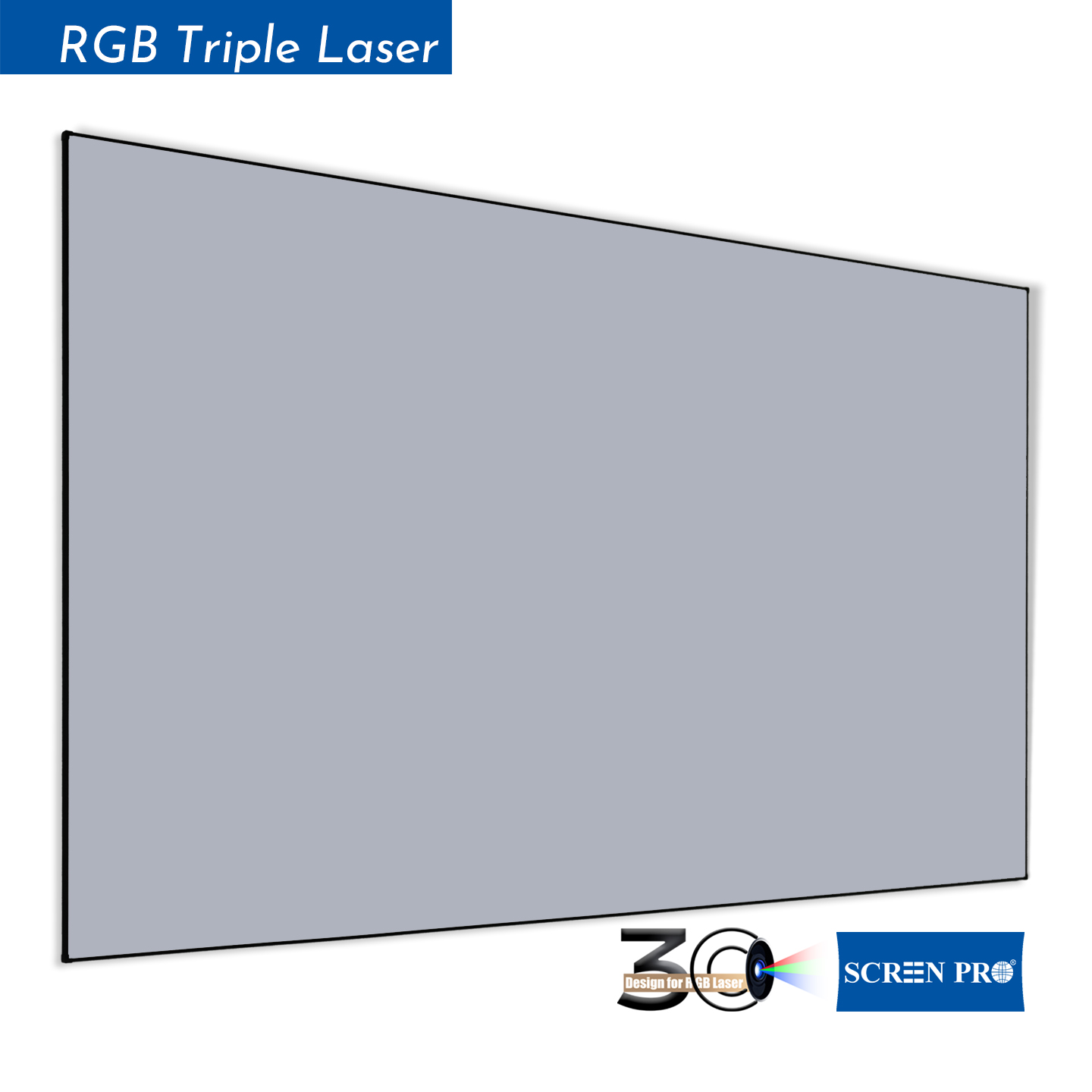
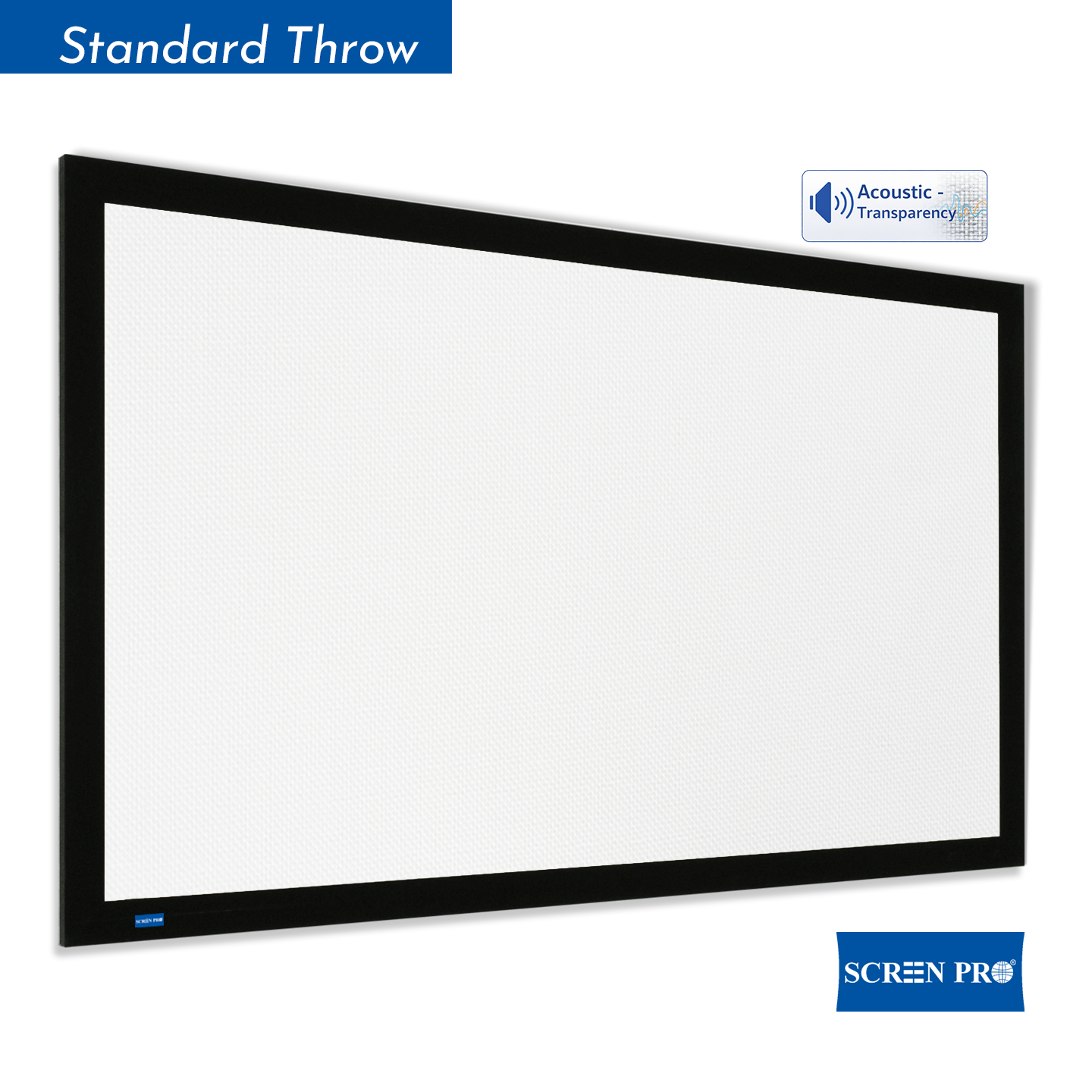
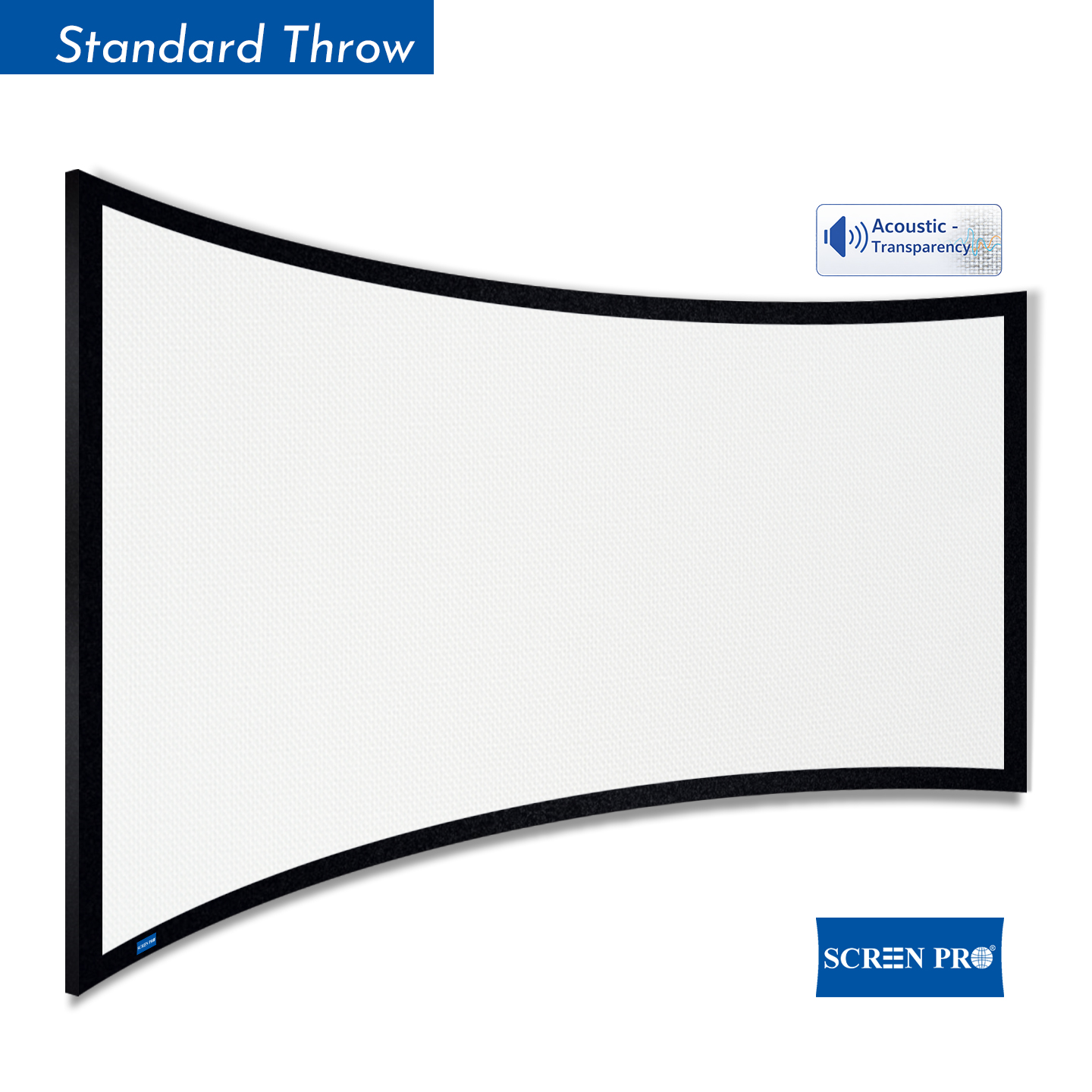
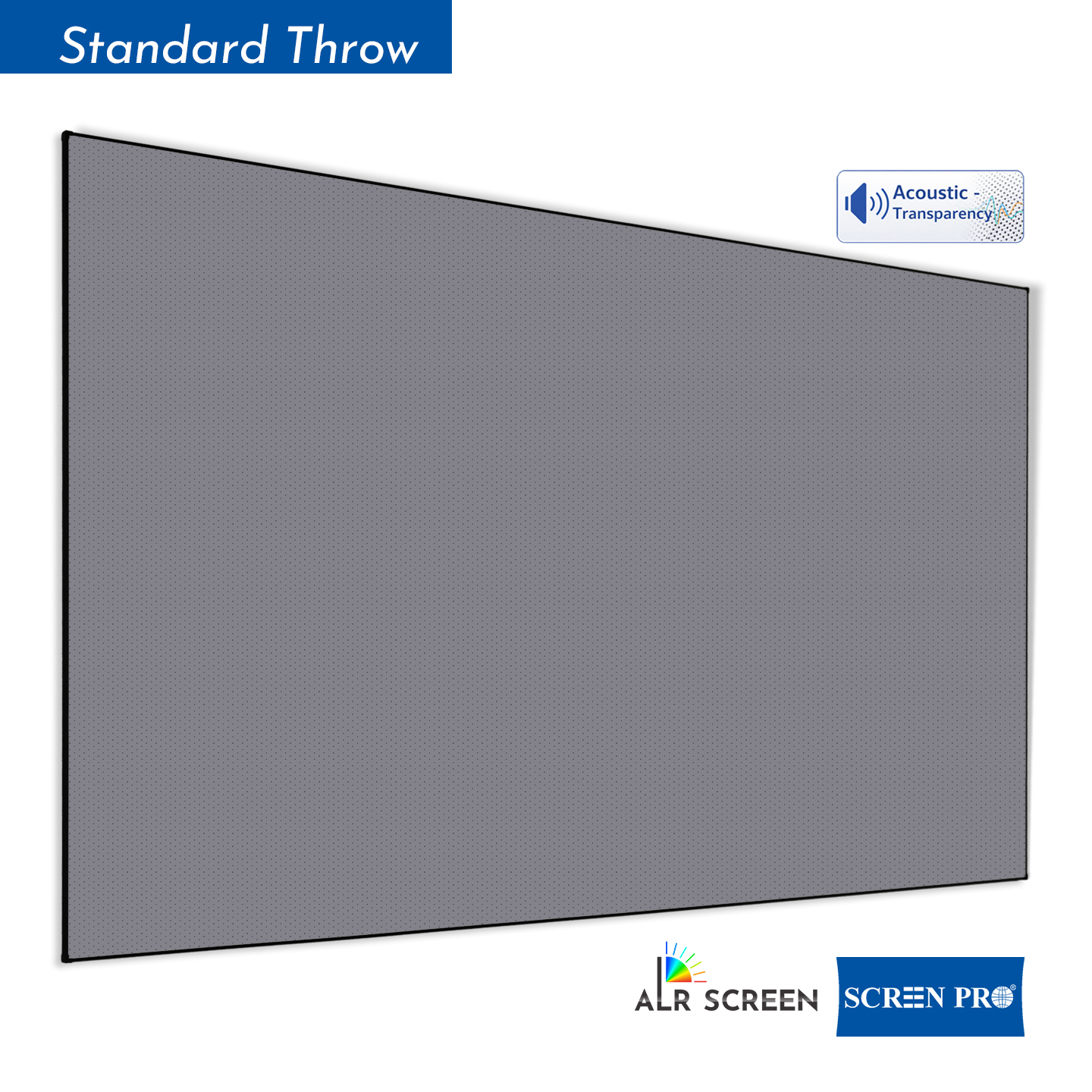
Fixed-frame screens are ideal for dedicated viewing spaces where the screen can remain permanently installed and consistently tensioned.
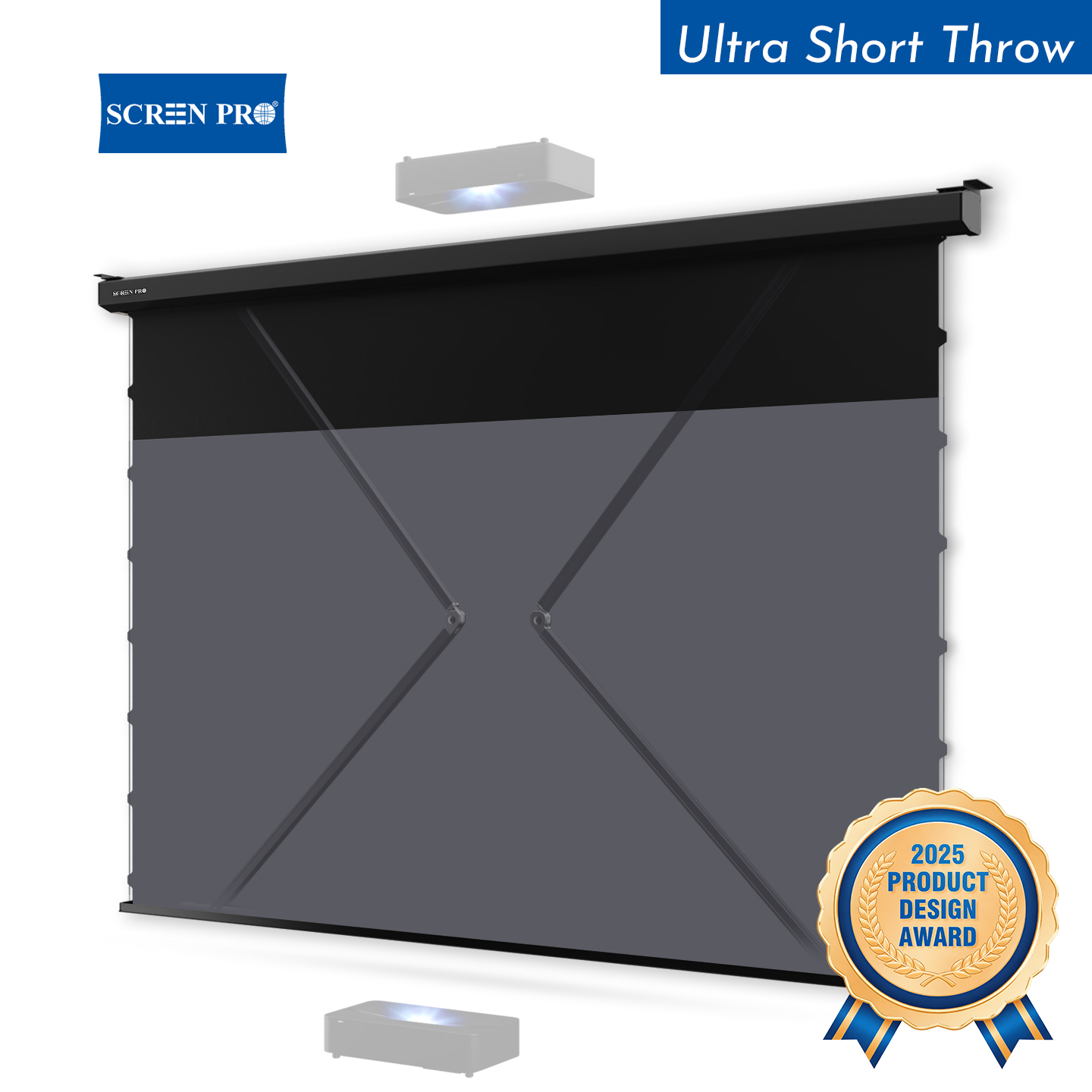
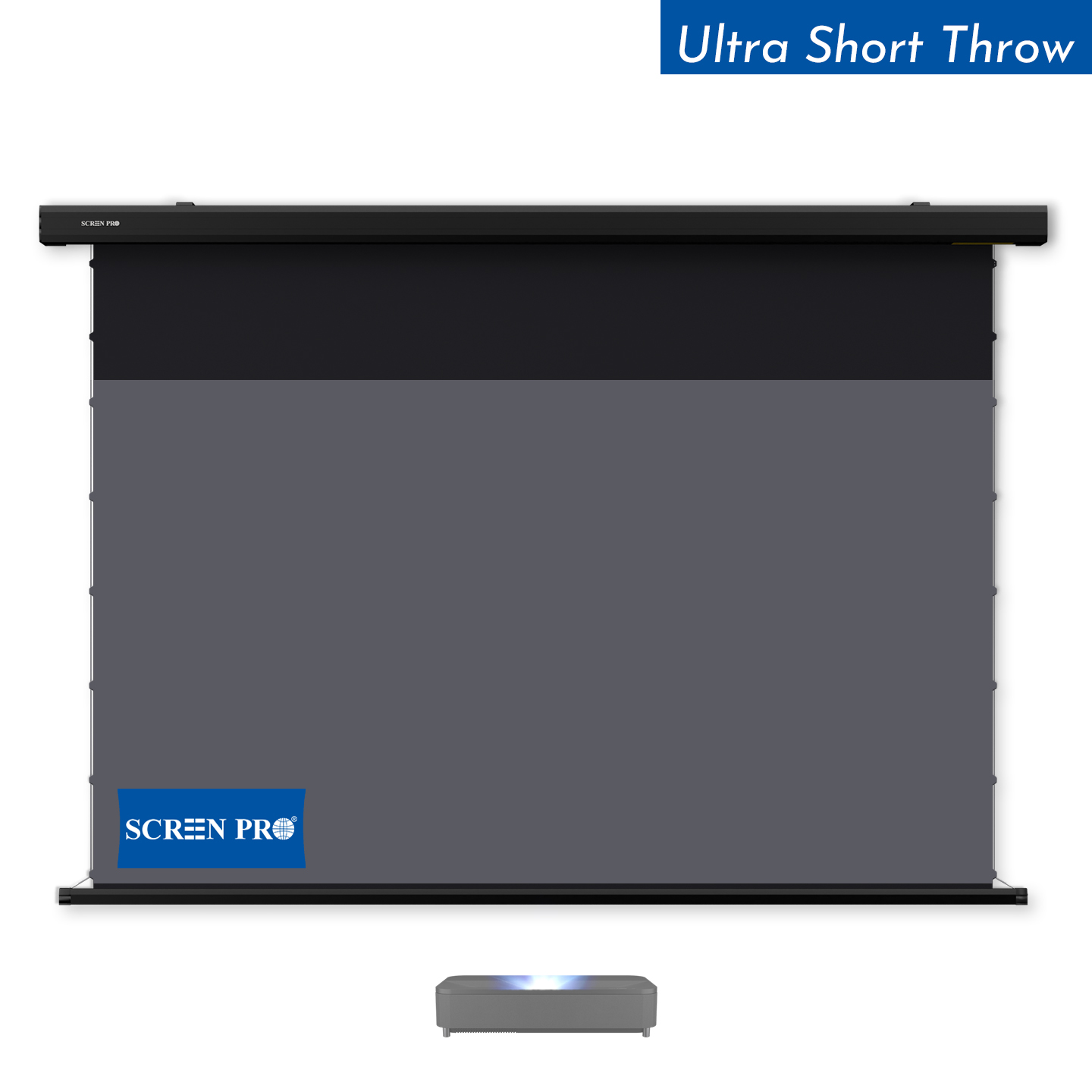
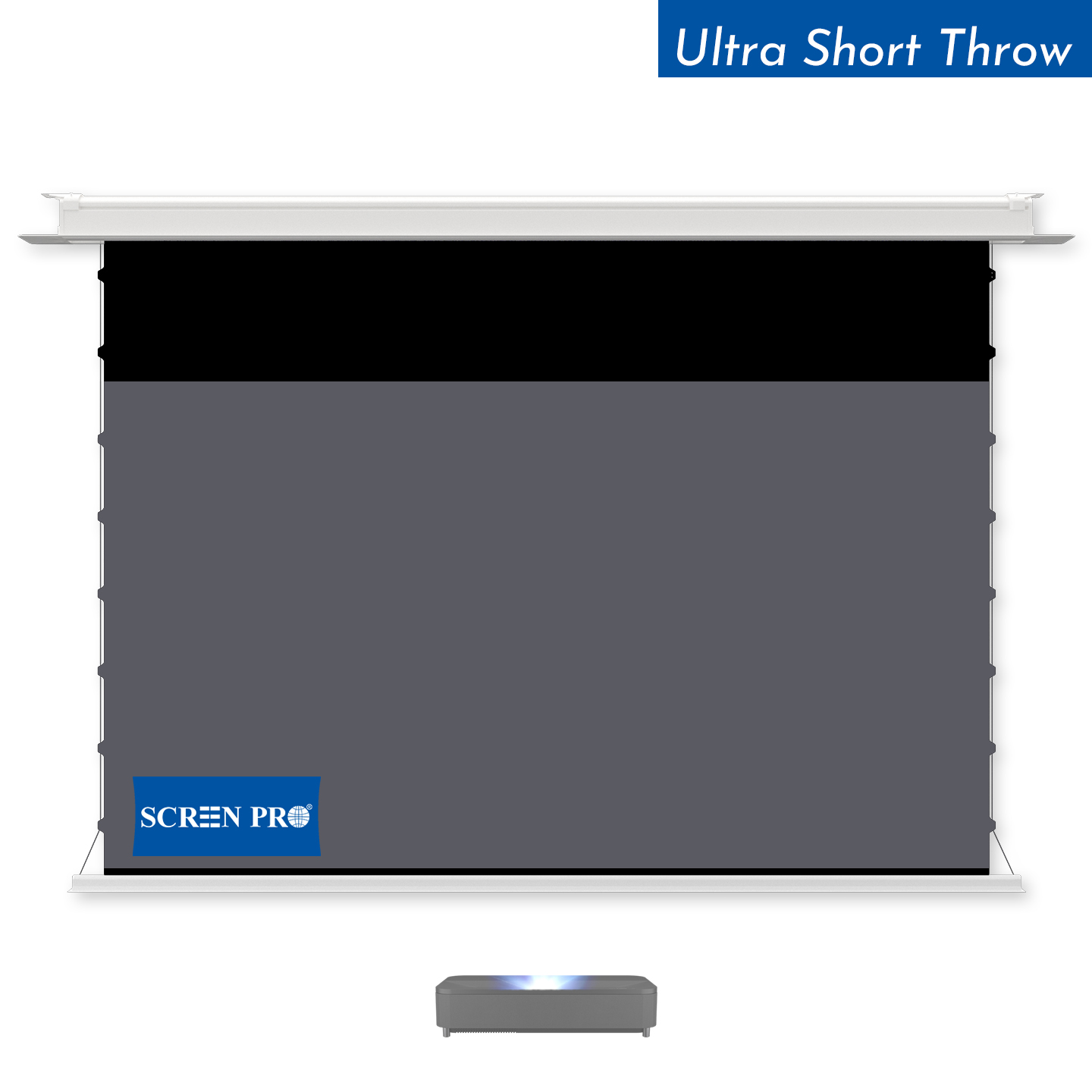
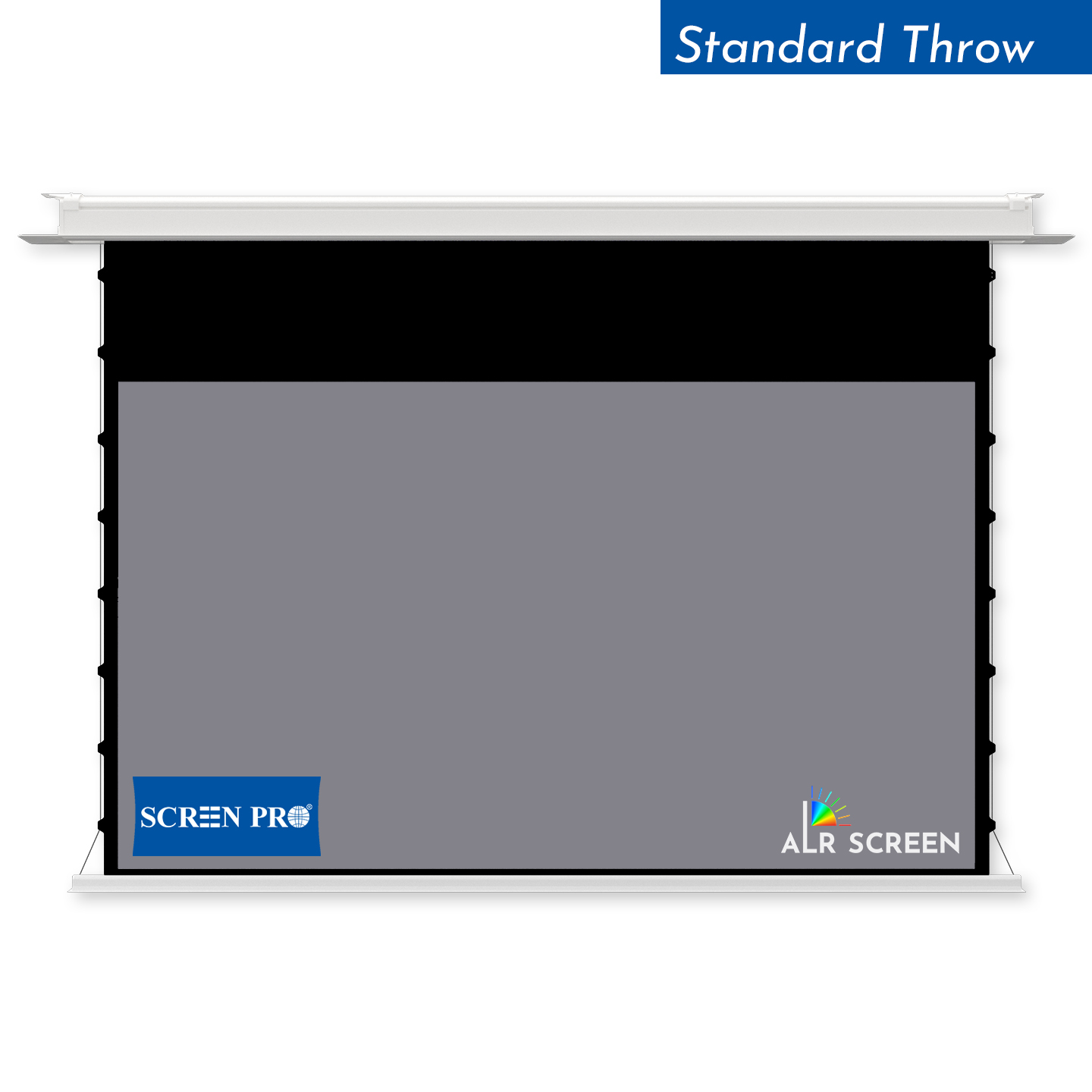
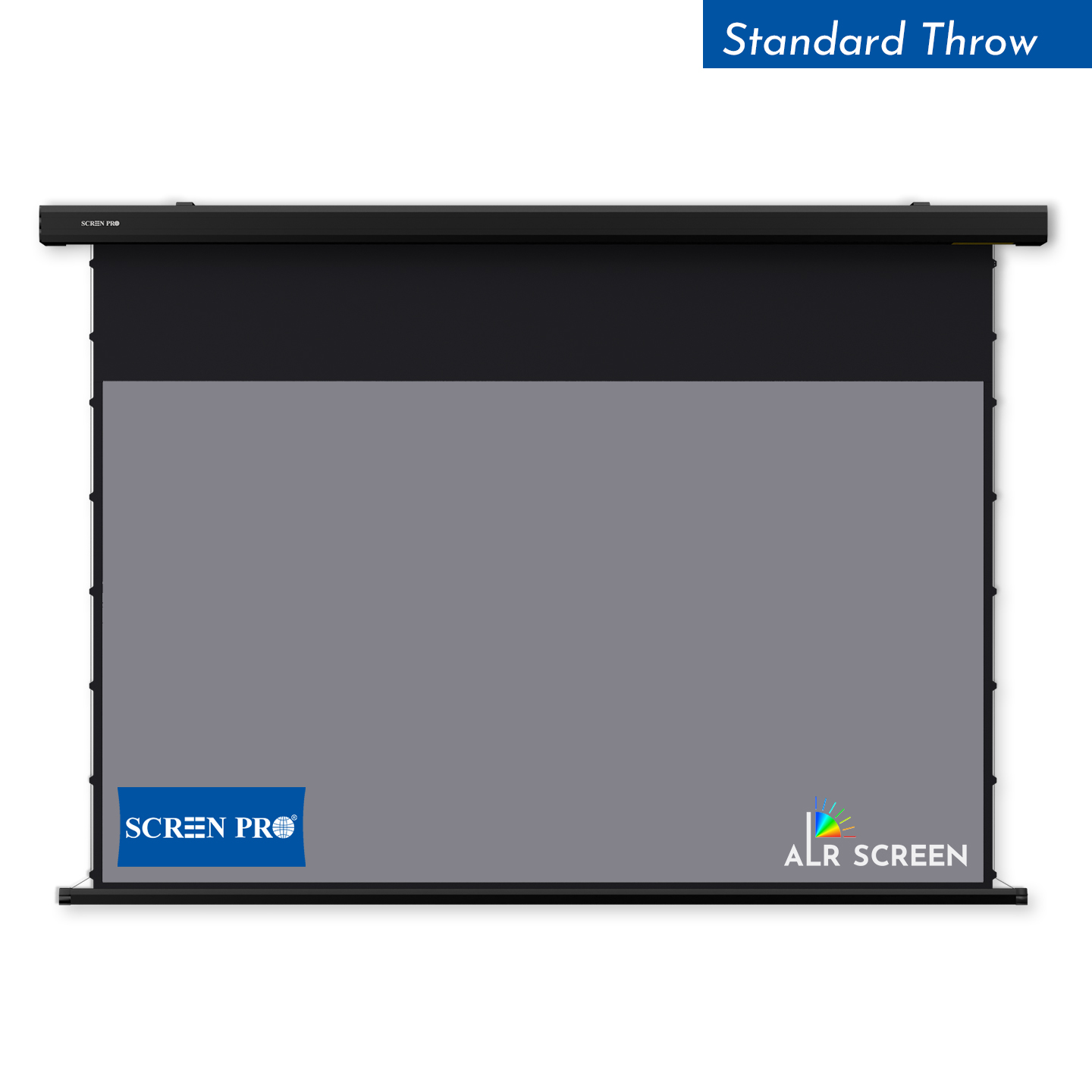
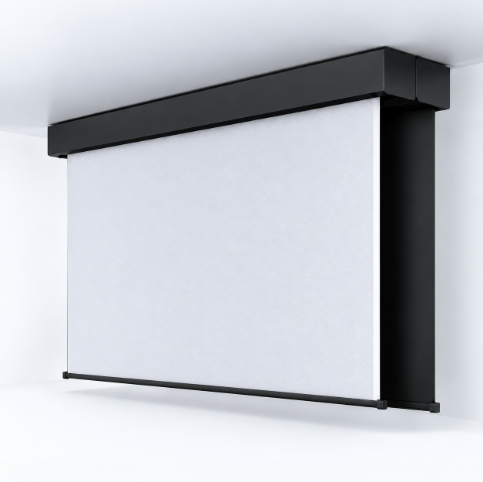
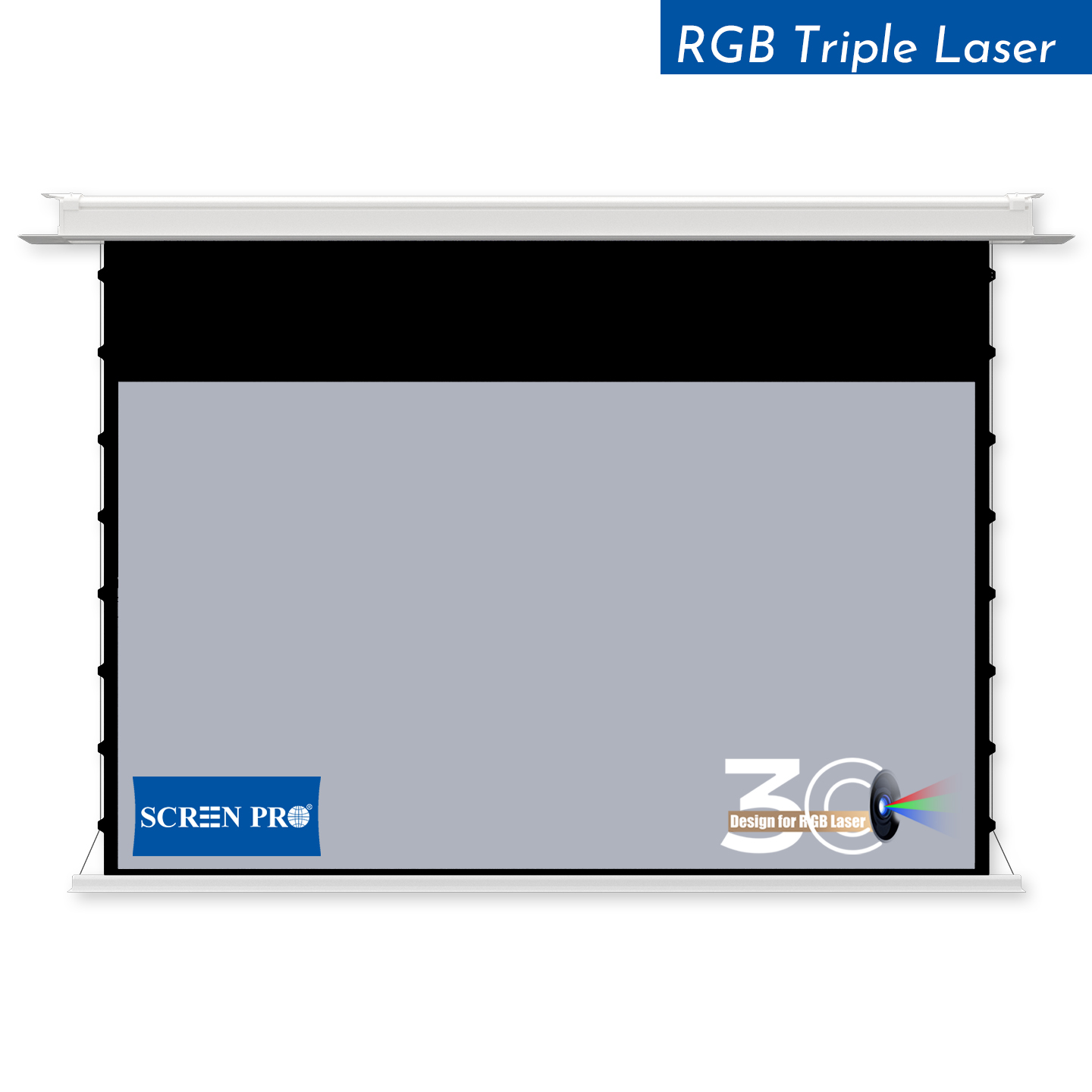
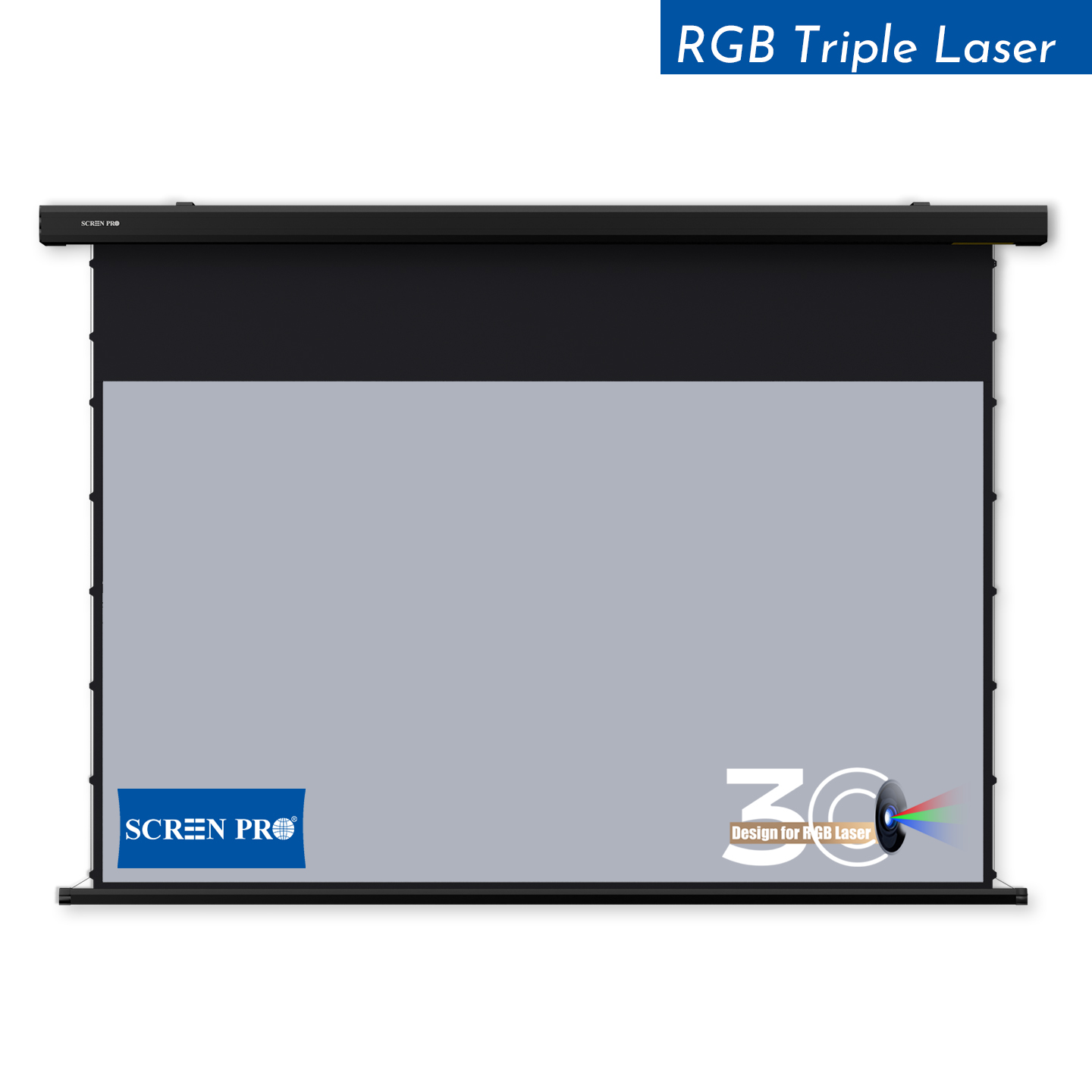
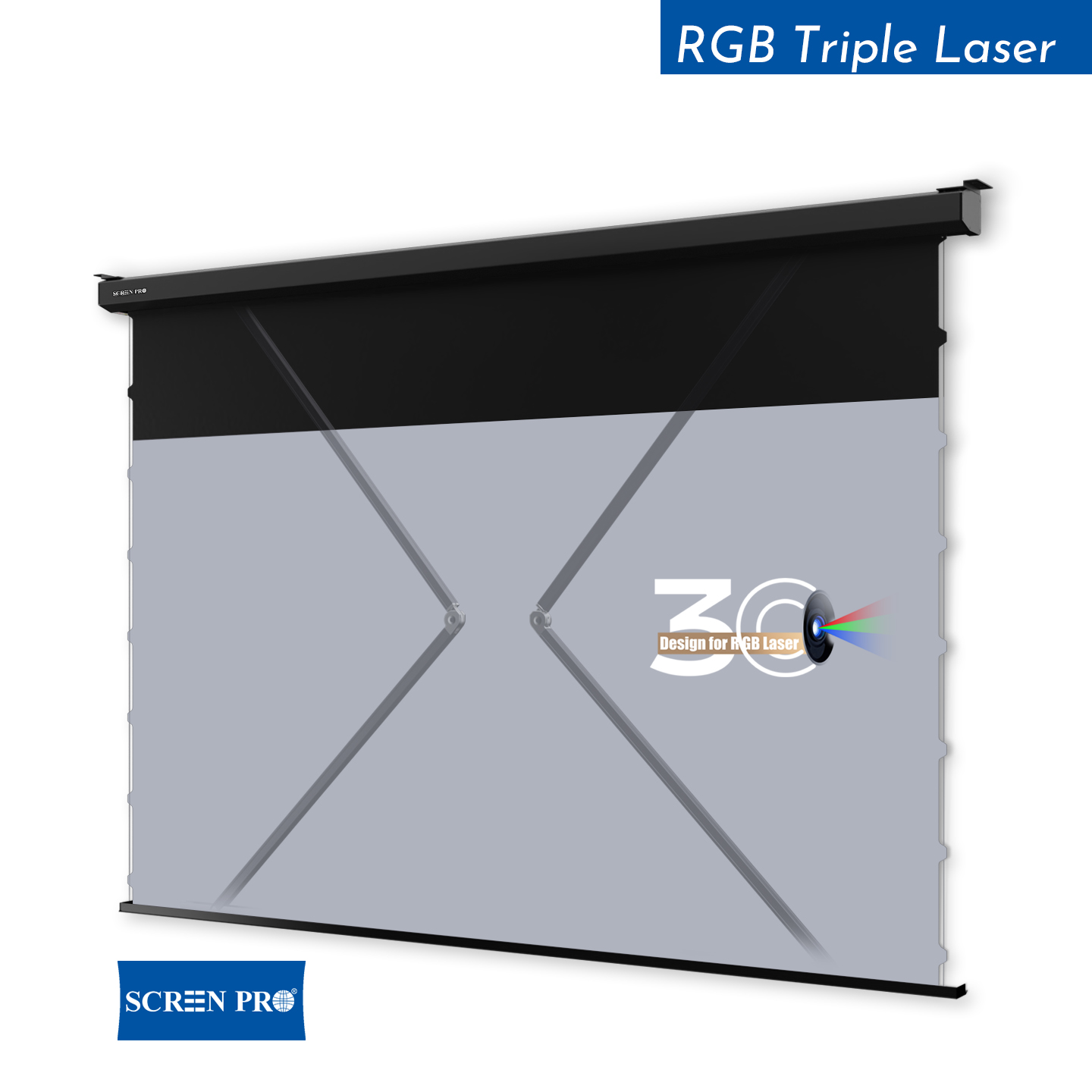
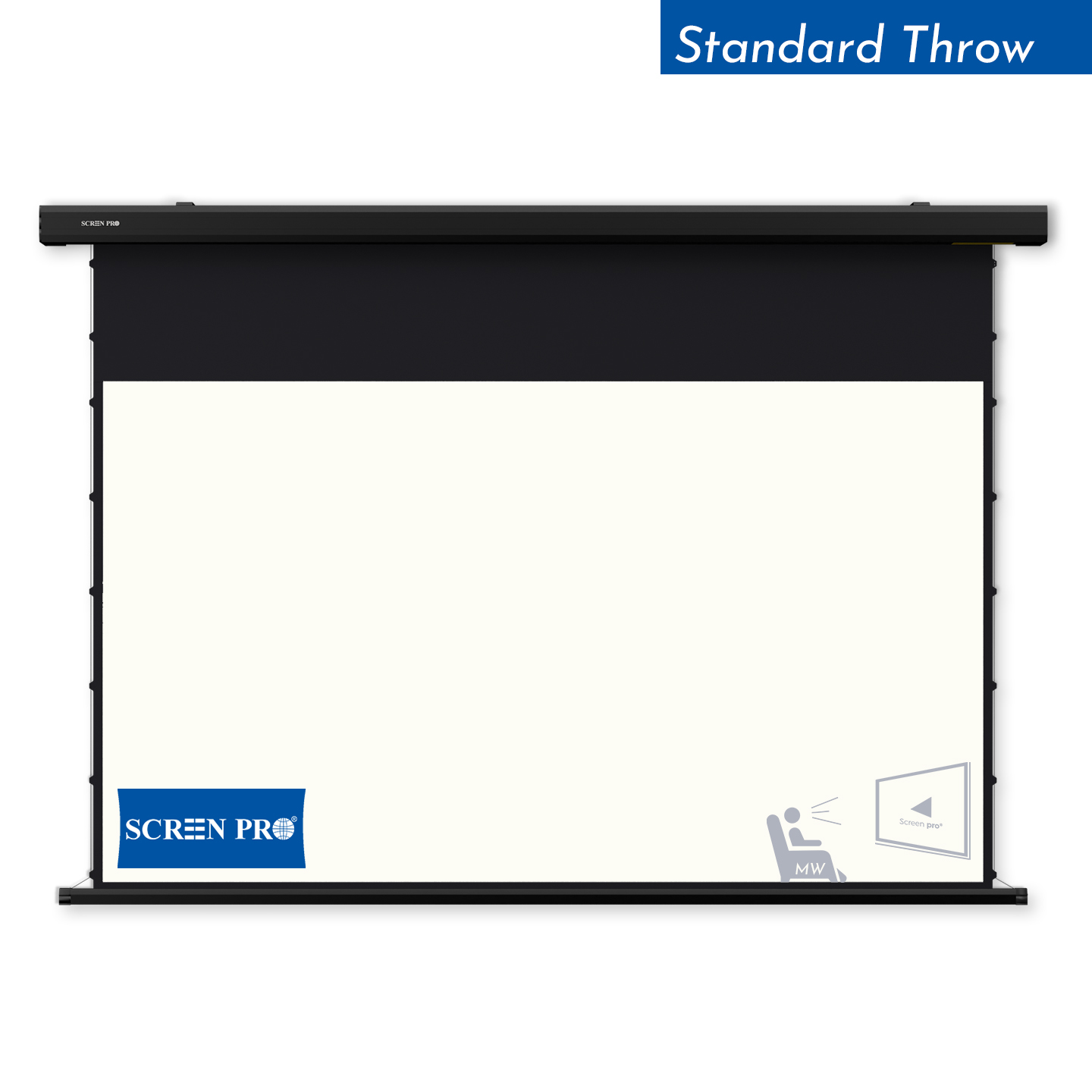
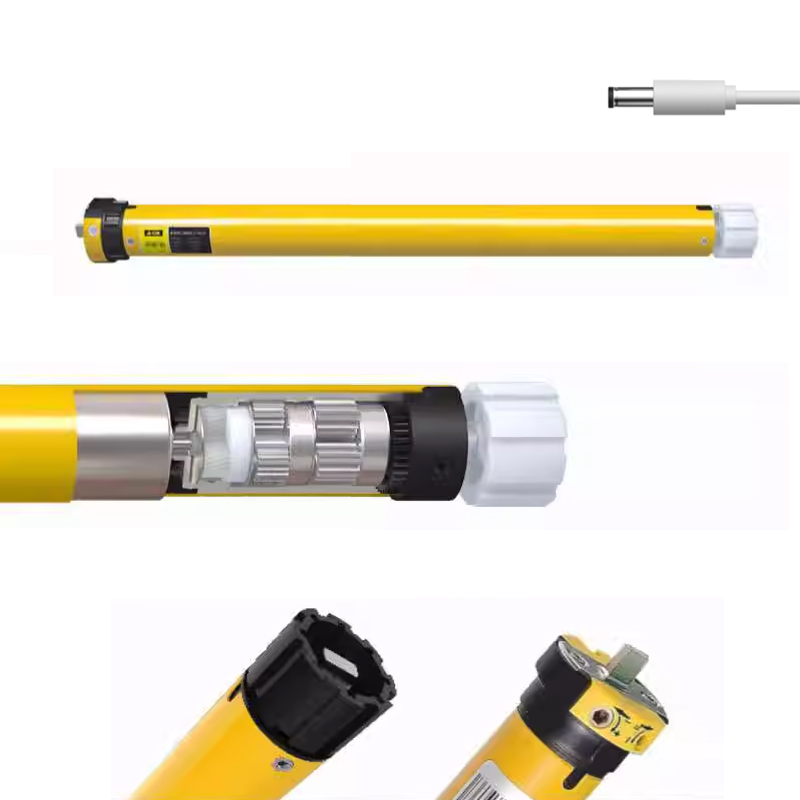
Motorized screens are suitable for multipurpose rooms where the projection surface should retract when not in use. In-ceiling models can provide an even more integrated installation when ceiling space is available.
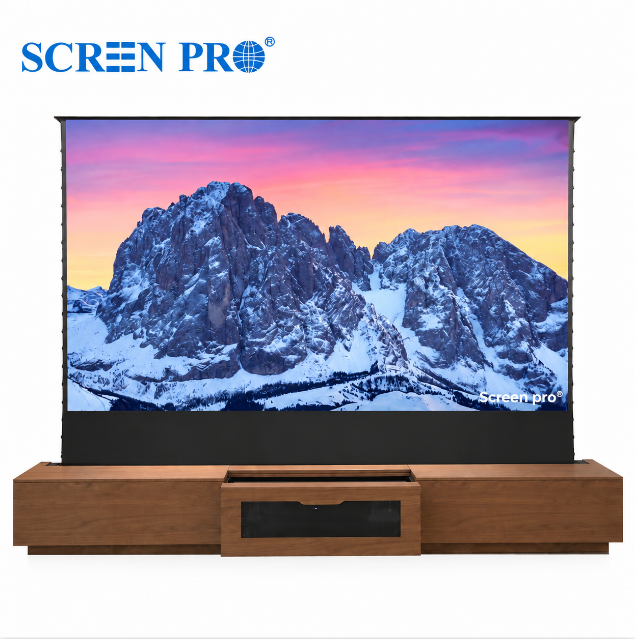
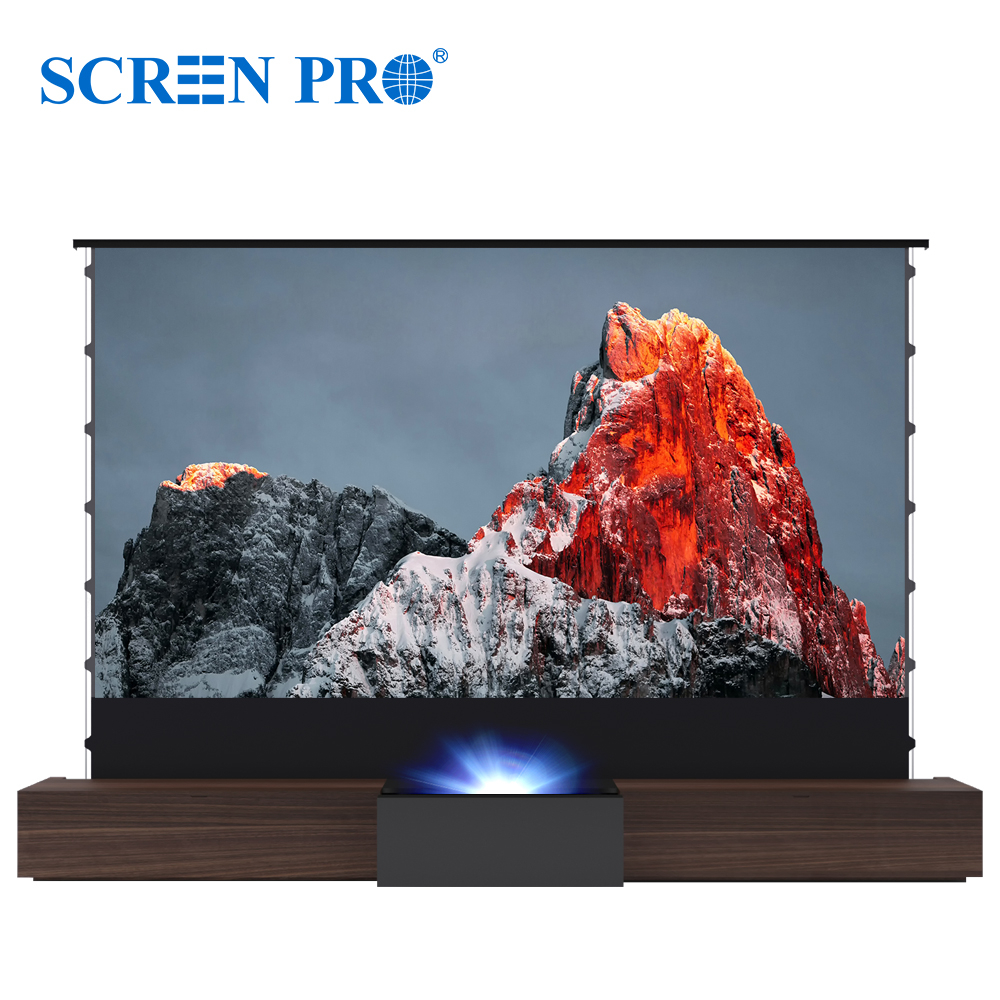
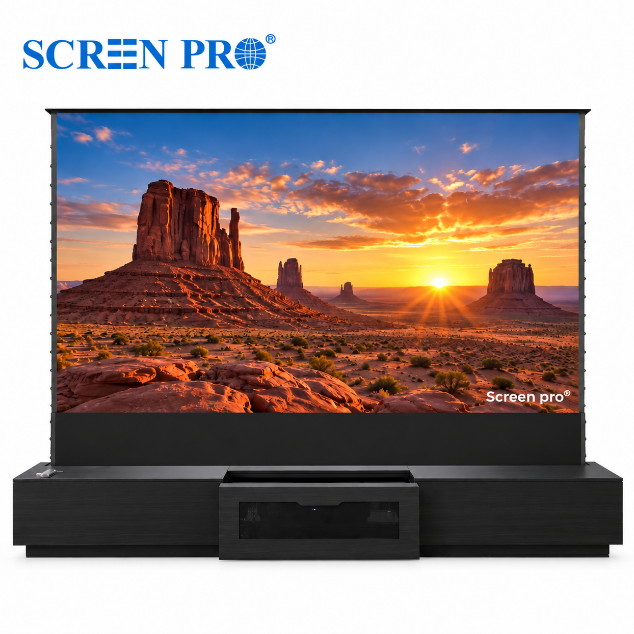
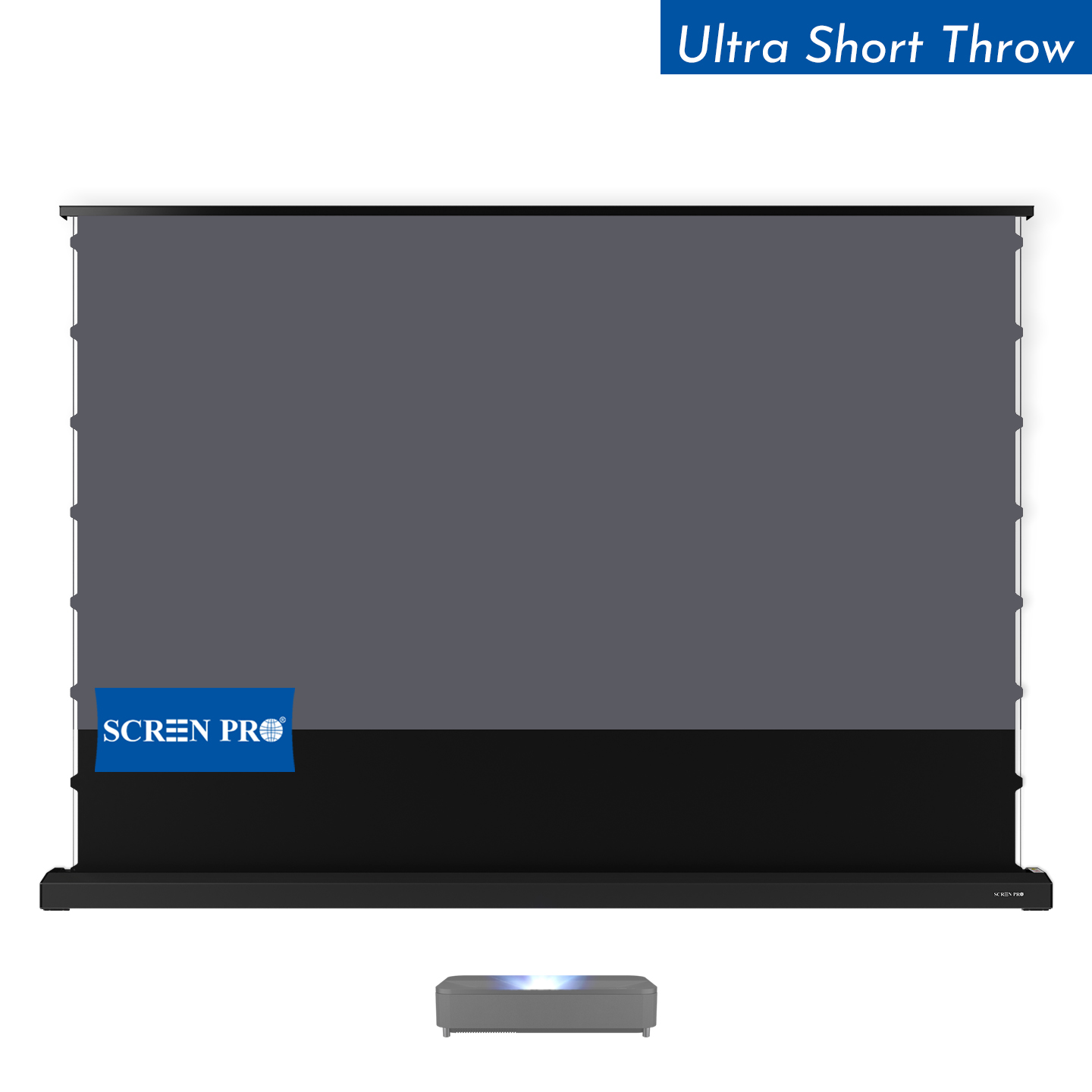
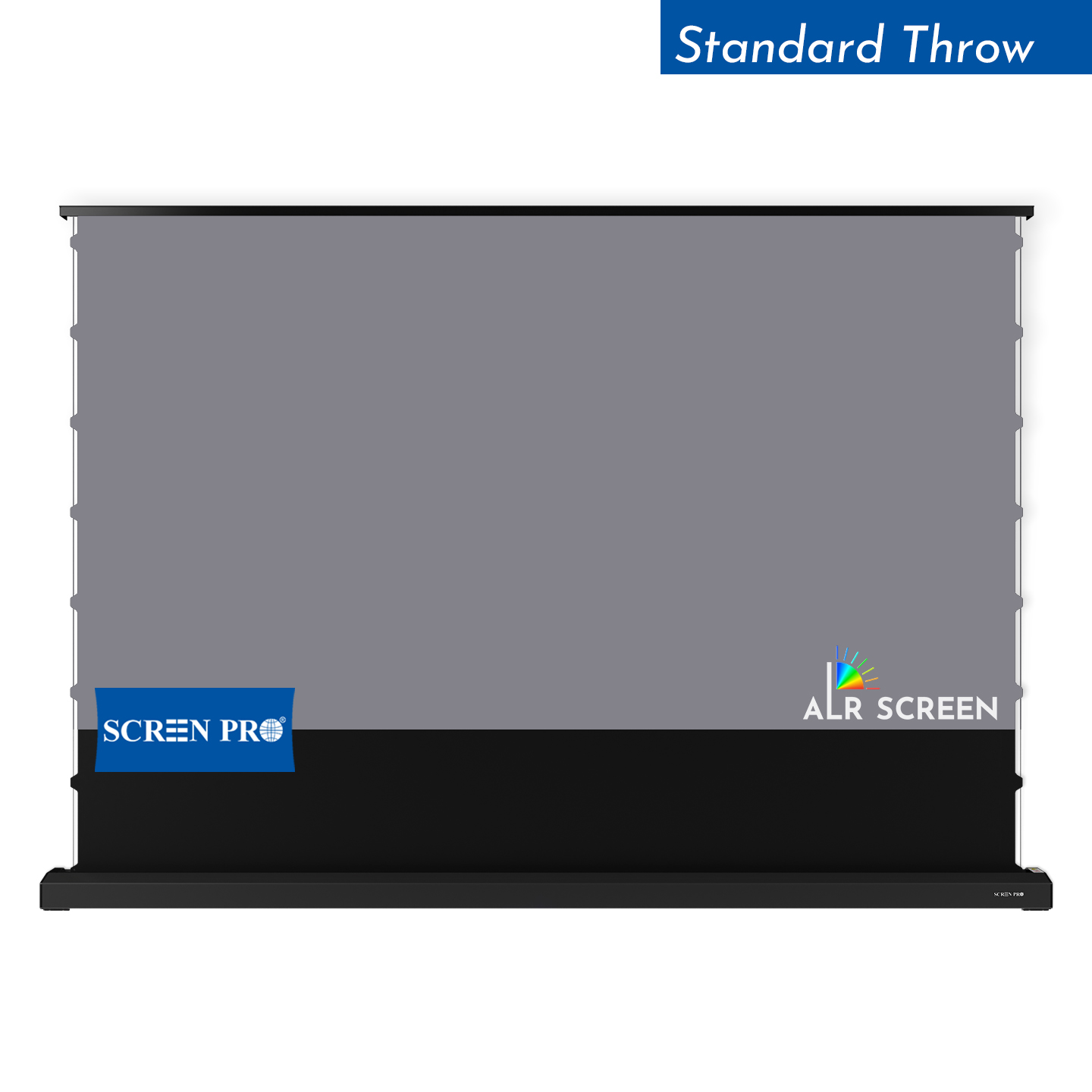
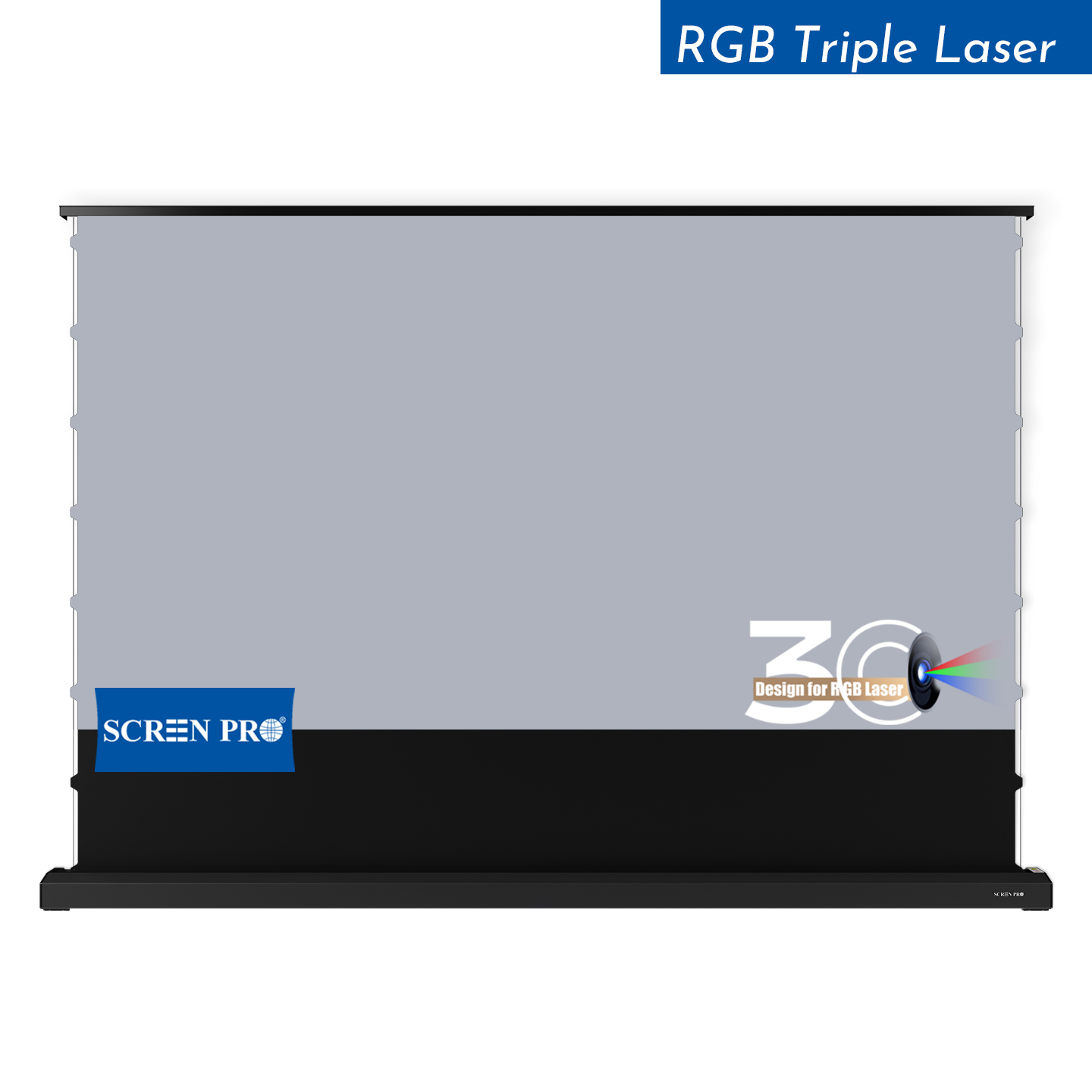
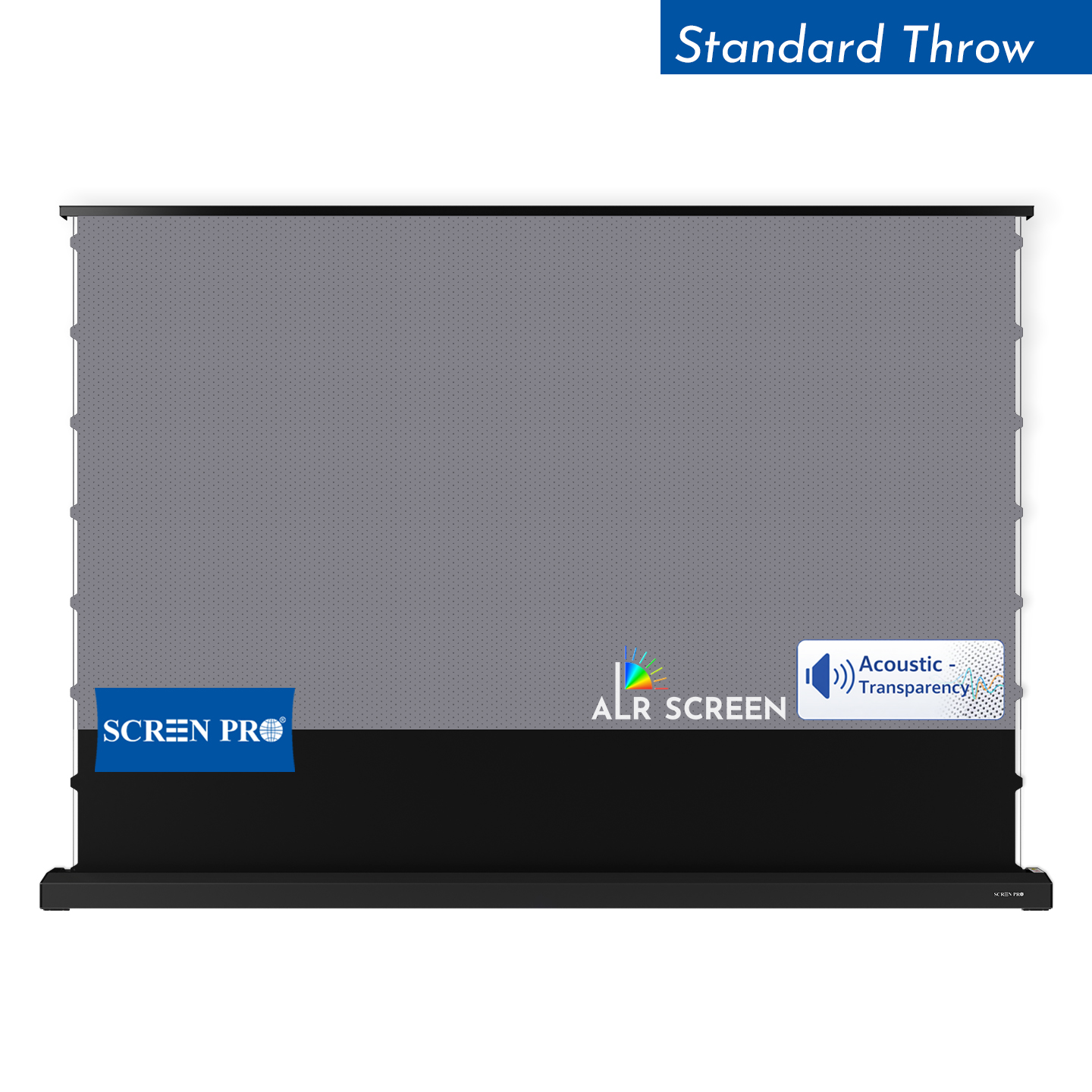
Floor-rising screens are a good option when wall or ceiling installation is not practical, or when the screen needs to disappear into a cabinet or furniture system after use.
Portable and quick-fold screens are better suited to temporary installations, events, rental applications, and locations where the screen needs to be transported or stored.
The ideal projection screen size depends on your viewing distance, projector capability, room dimensions, aspect ratio, and available installation space.
A larger screen is not always better. The screen should provide an immersive image while remaining comfortable to view and within the projector's recommended image size and brightness range.
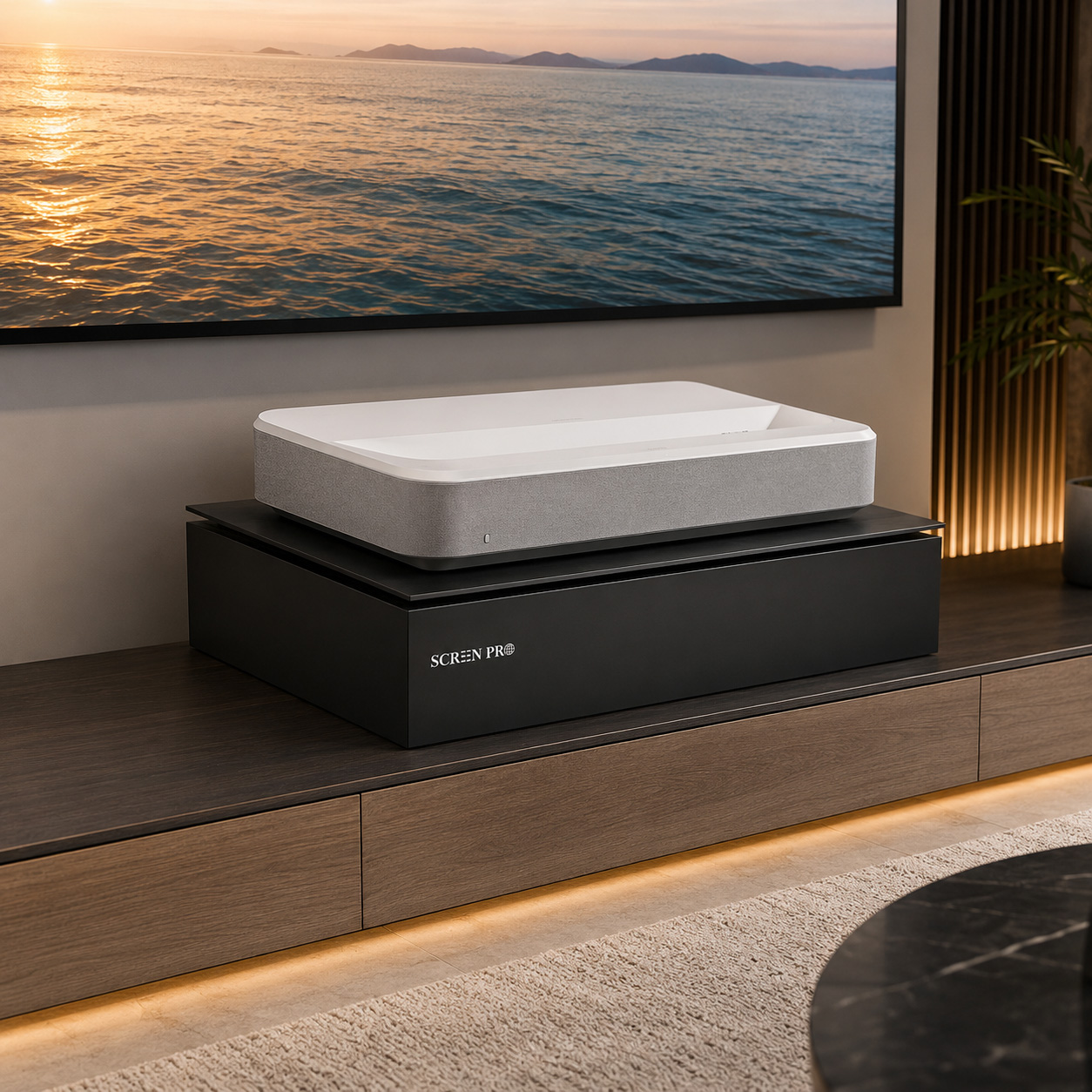
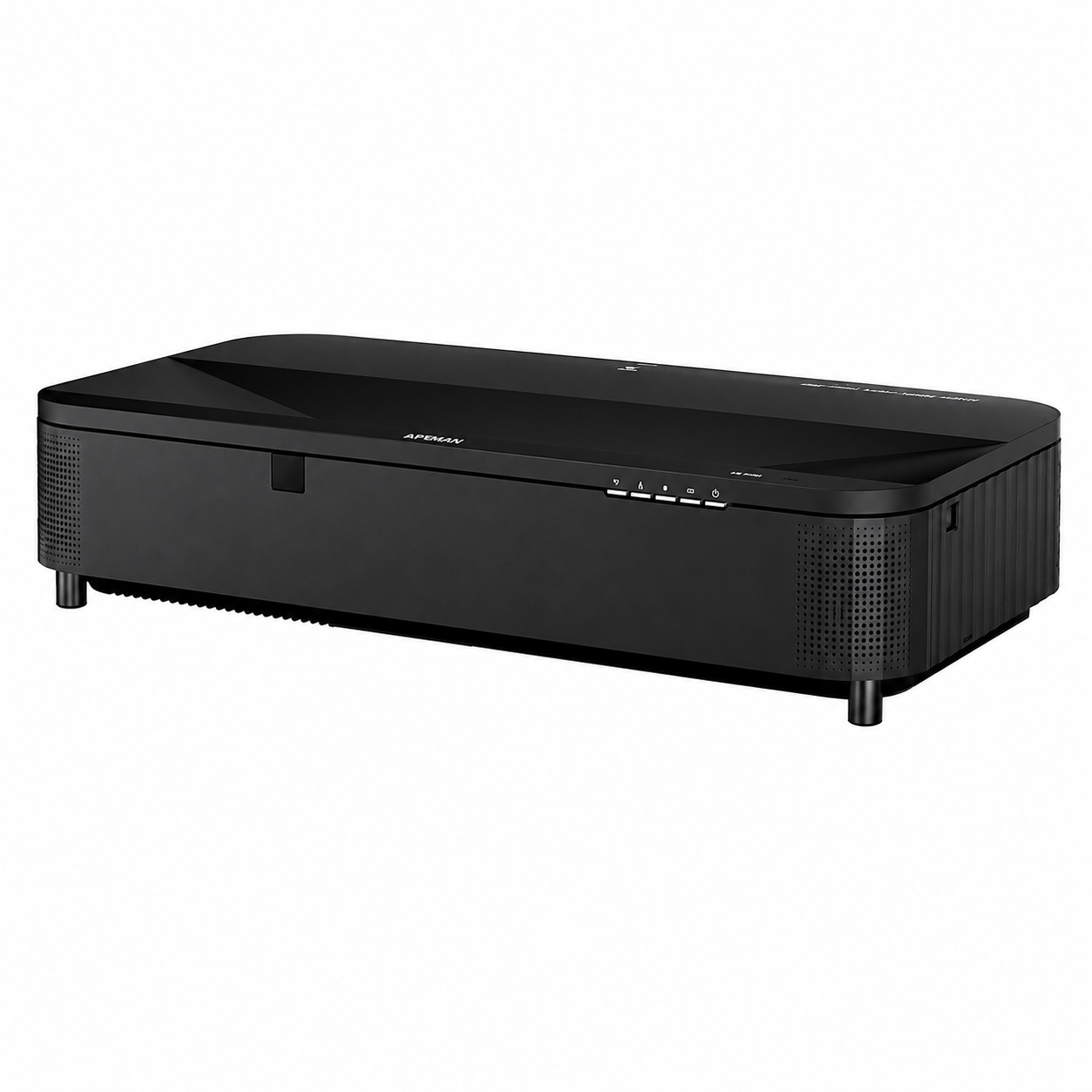
Before selecting a size, confirm the projector's throw ratio or image-size range and measure the available width and height at the screen location. For UST projectors, also confirm the required projector-to-screen placement for the intended image size.
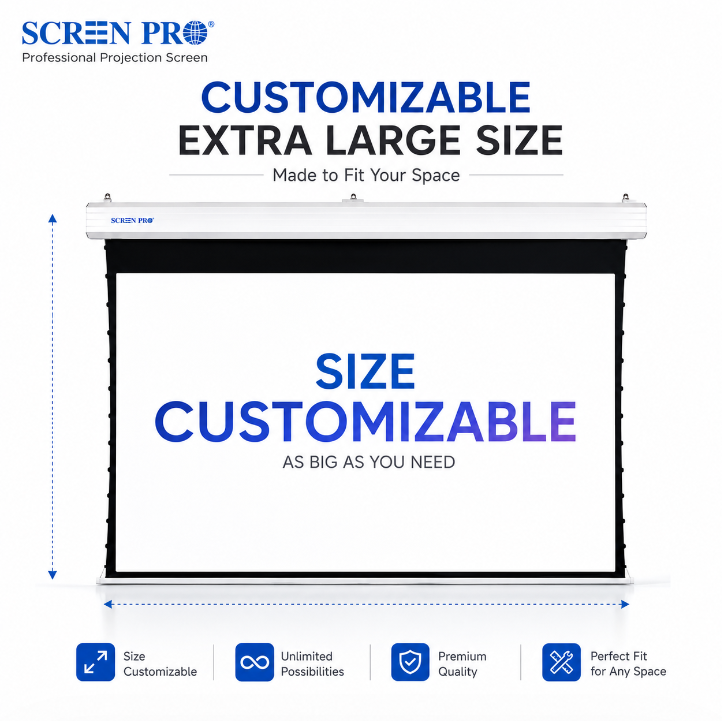
For custom installations, SCREENPRO® can evaluate the required image size together with the projector model and available installation dimensions.
The right projection screen material depends primarily on your projector type, room lighting, viewing requirements, and speaker placement.
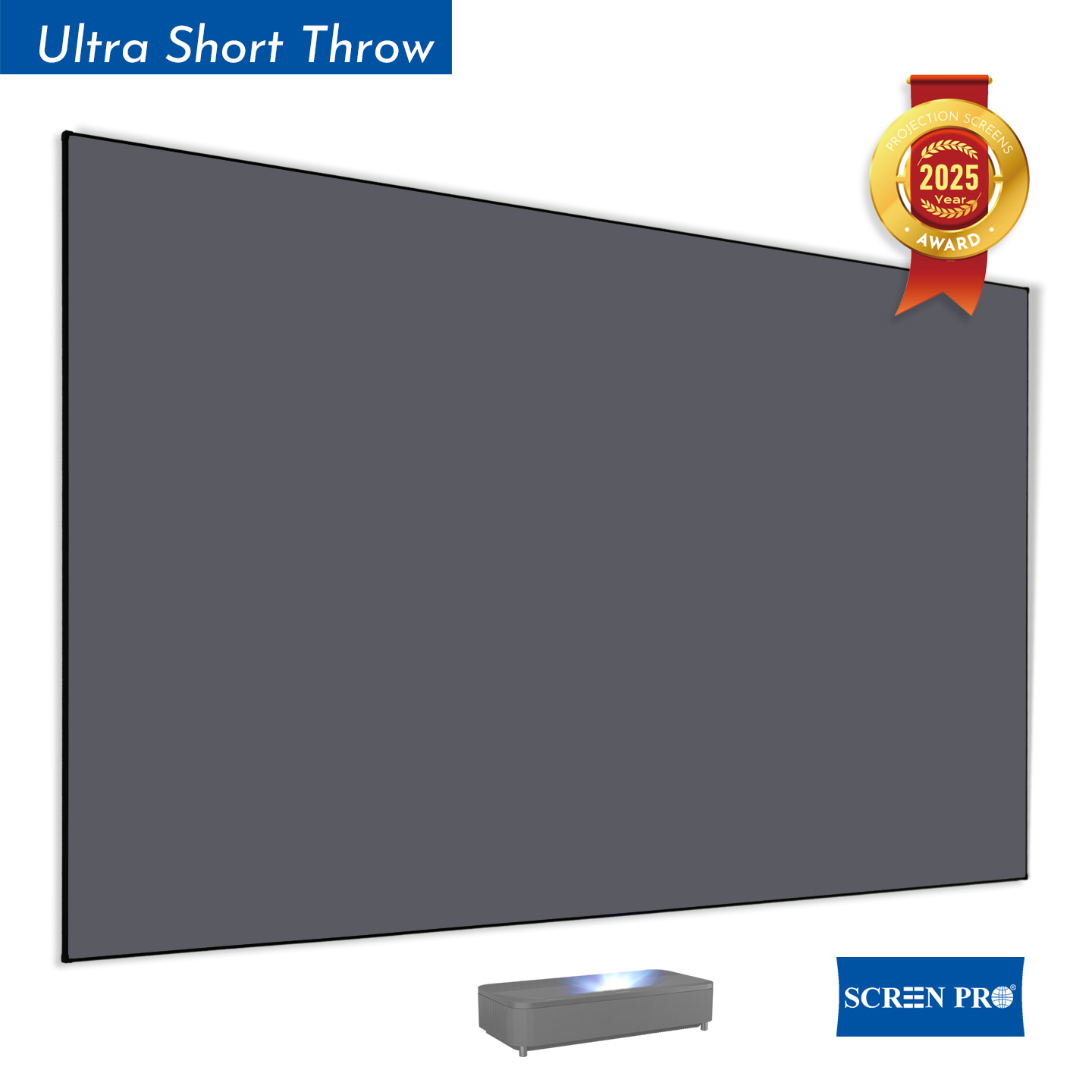
For UST projectors, choose a compatible UST screen material designed for the projector's steep projection angle. For standard or long-throw projectors, use a material designed for the corresponding projection geometry.
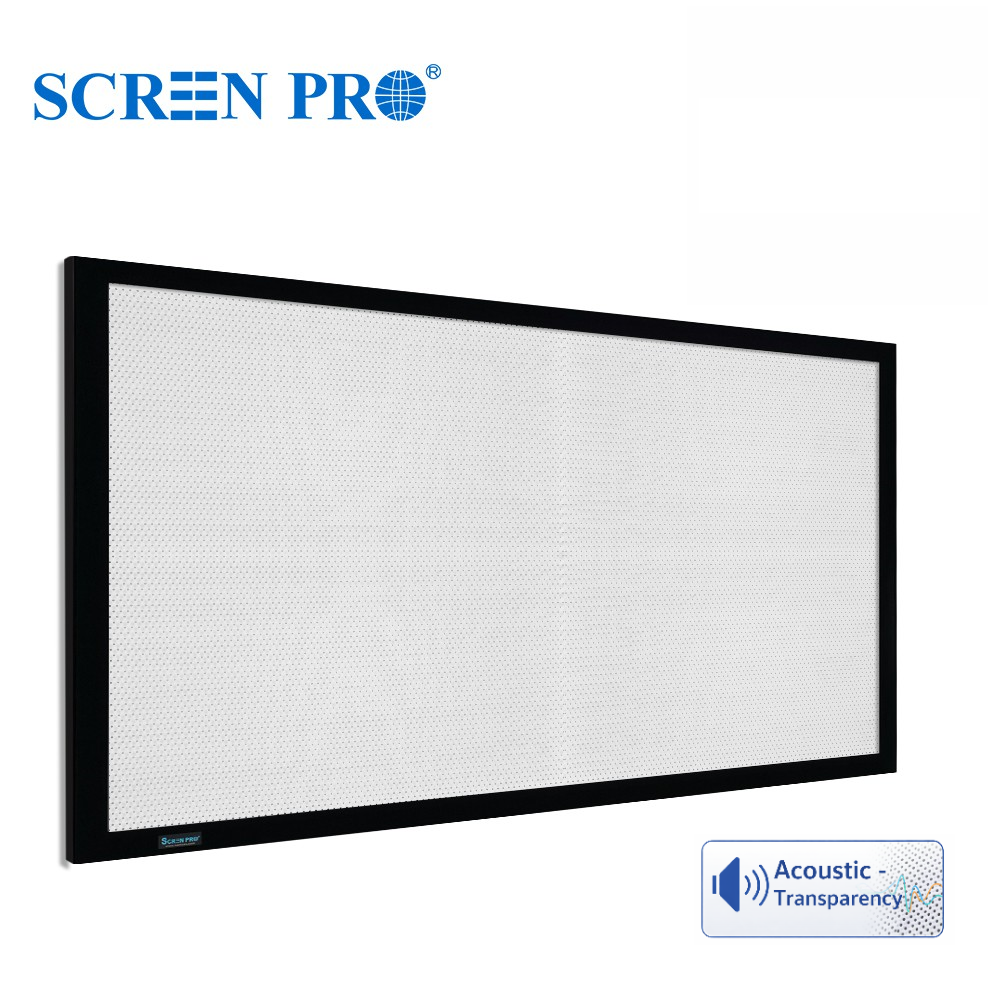
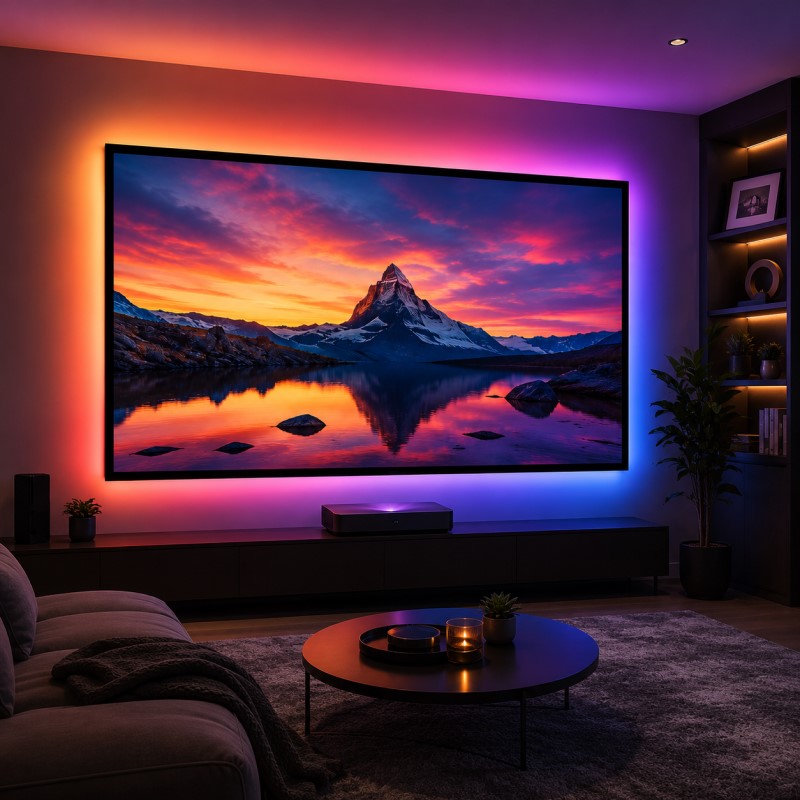
If ambient light is present, an appropriate ALR material can help maintain perceived contrast. For dedicated dark rooms, standard projection surfaces may be suitable. If speakers are installed behind the screen, an acoustically transparent woven or micro-perforated material may be required.
Other factors such as screen gain, viewing angle, laser speckle, screen size, and installation structure should also be considered.
The right projection screen depends on your projector, room environment, required screen size, and installation method.
Start with your projector type and throw ratio, then consider ambient light, viewing distance, available installation space, and how you want the screen to be installed.
For example, UST projectors require compatible screen materials designed for their steep projection angle, while standard and long-throw projectors require materials suited to their projection geometry. Rooms with ambient light may benefit from an appropriate ALR material, while dedicated dark rooms may use standard or acoustically transparent projection surfaces.
Installation also matters. Depending on the space, you may choose a fixed-frame, motorized, floor-rising, in-ceiling, or portable projection screen.
If you are unsure, provide your projector model, required screen size, viewing distance, room lighting, and installation method so SCREENPRO® can help identify a suitable configuration.





© 2026 SCREENPRO®. Specifications are subject to change without notice. | SamsAV All Rights ReservedSite Map Designed by iwonder.cn