
© Copyright 2004-2026 SCREEN PRO® All Rights Reserved | Specifications are subject to change without notice. All Rights ReservedSite Map Designed by iwonder.cn


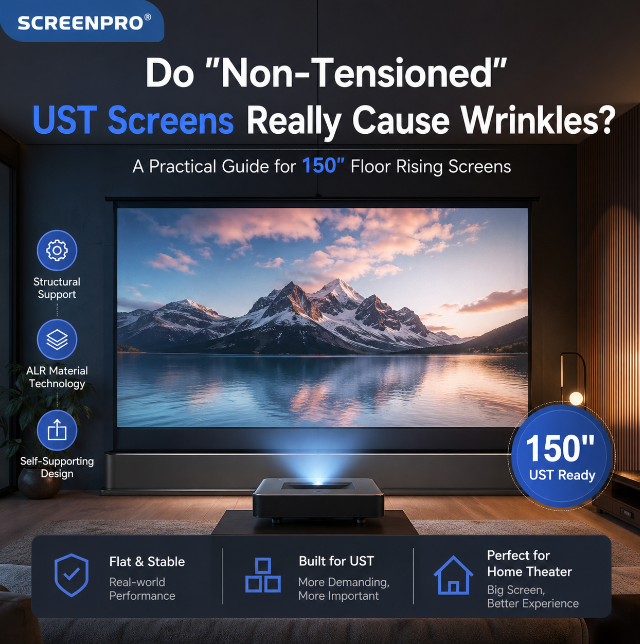
A practical guide to floor-rising UST screen flatness, T-Prism material, side tension cables, and why “non-tensioned” does not always mean a loose or wrinkled viewing surface.
In many projection screens, “tensioned” usually refers to side cables or tab-tension systems that pull the screen fabric from both edges.
Because of this, users often assume that a non-tensioned UST screen must be loose, unstable, or more likely to show wrinkles. This is not always accurate, especially for large floor-rising ALR screens built with a stable optical material and a strong support structure.
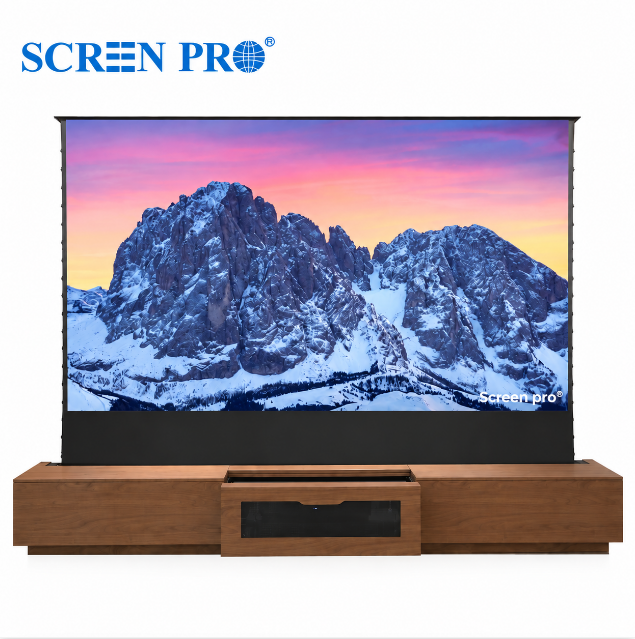
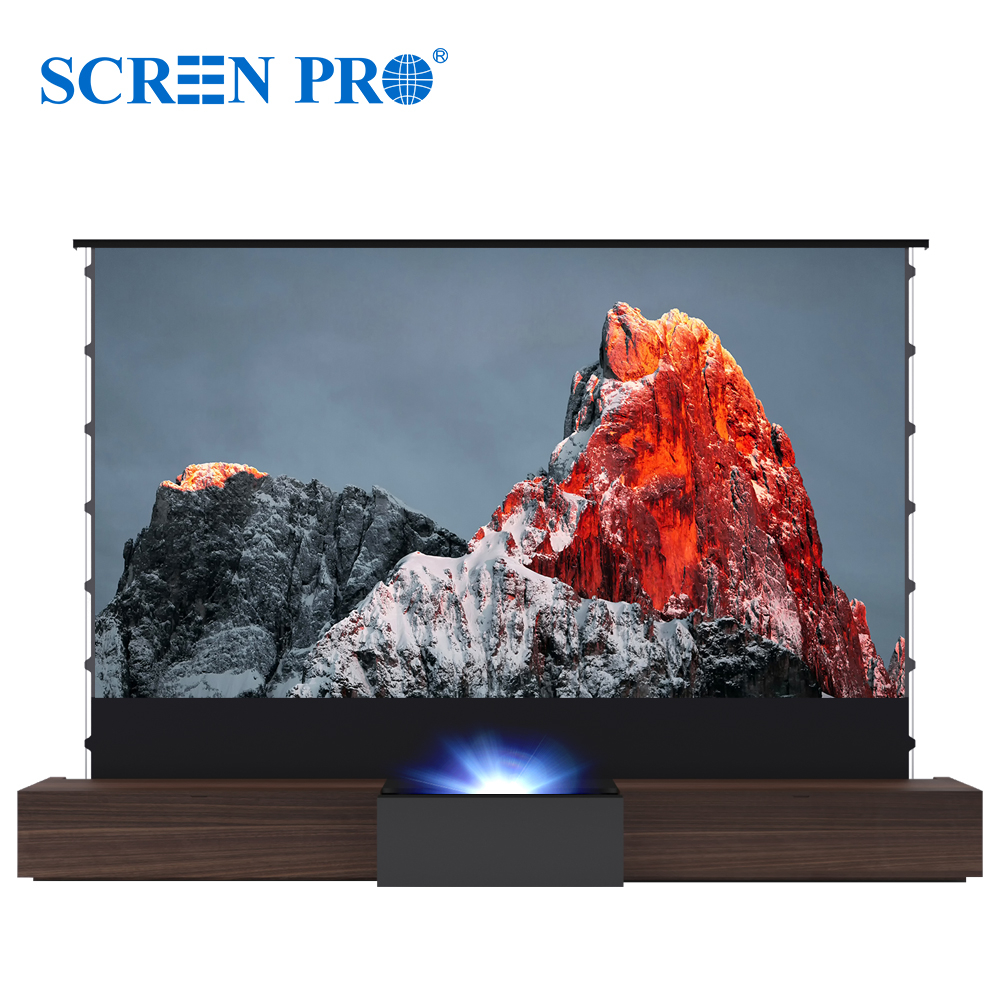
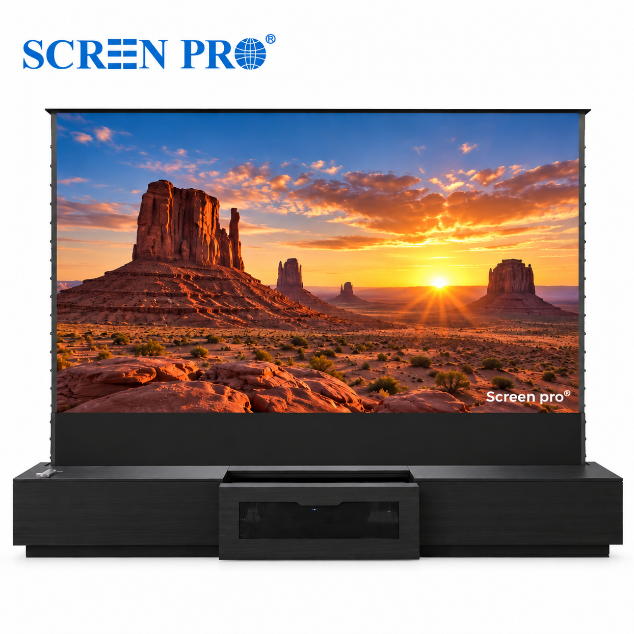
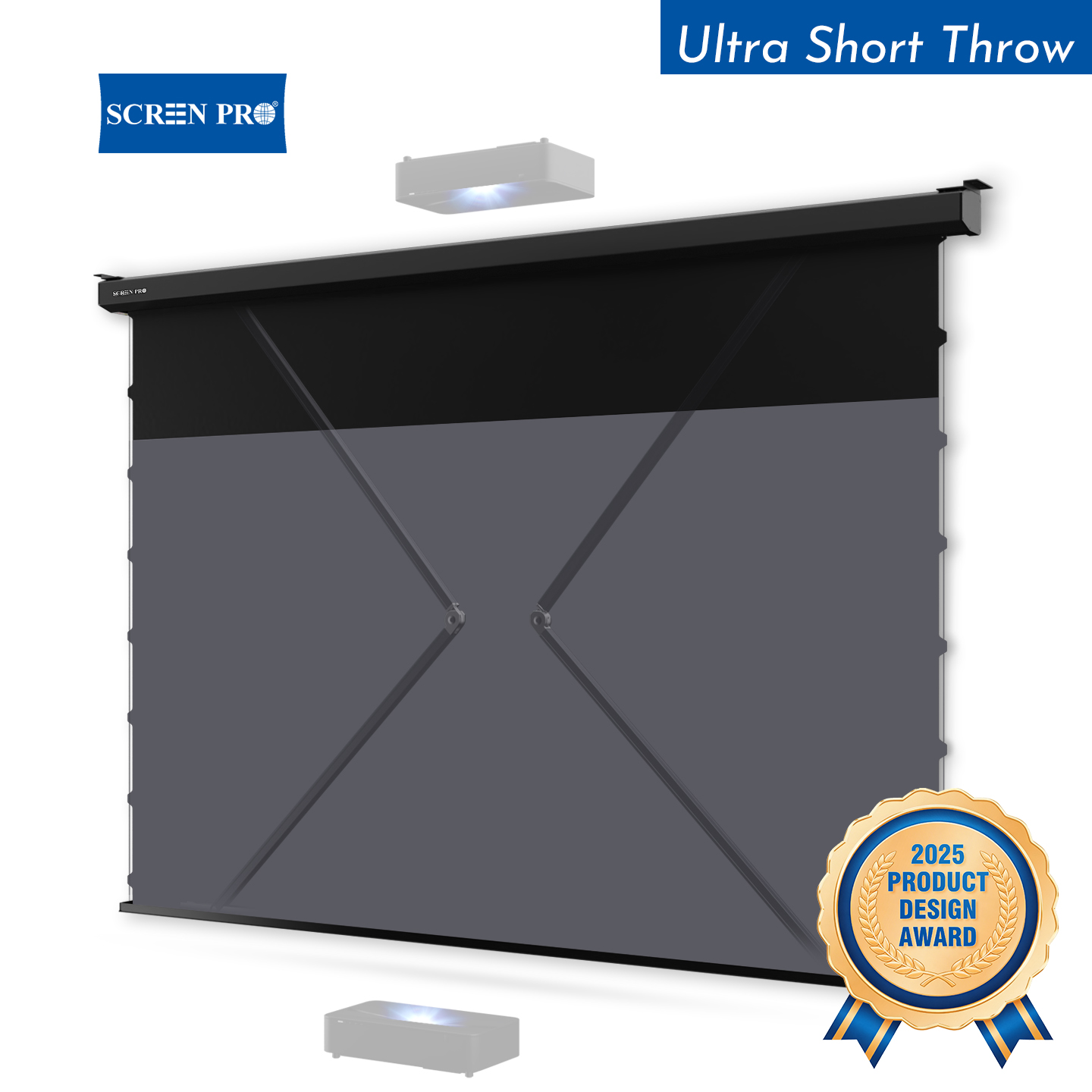
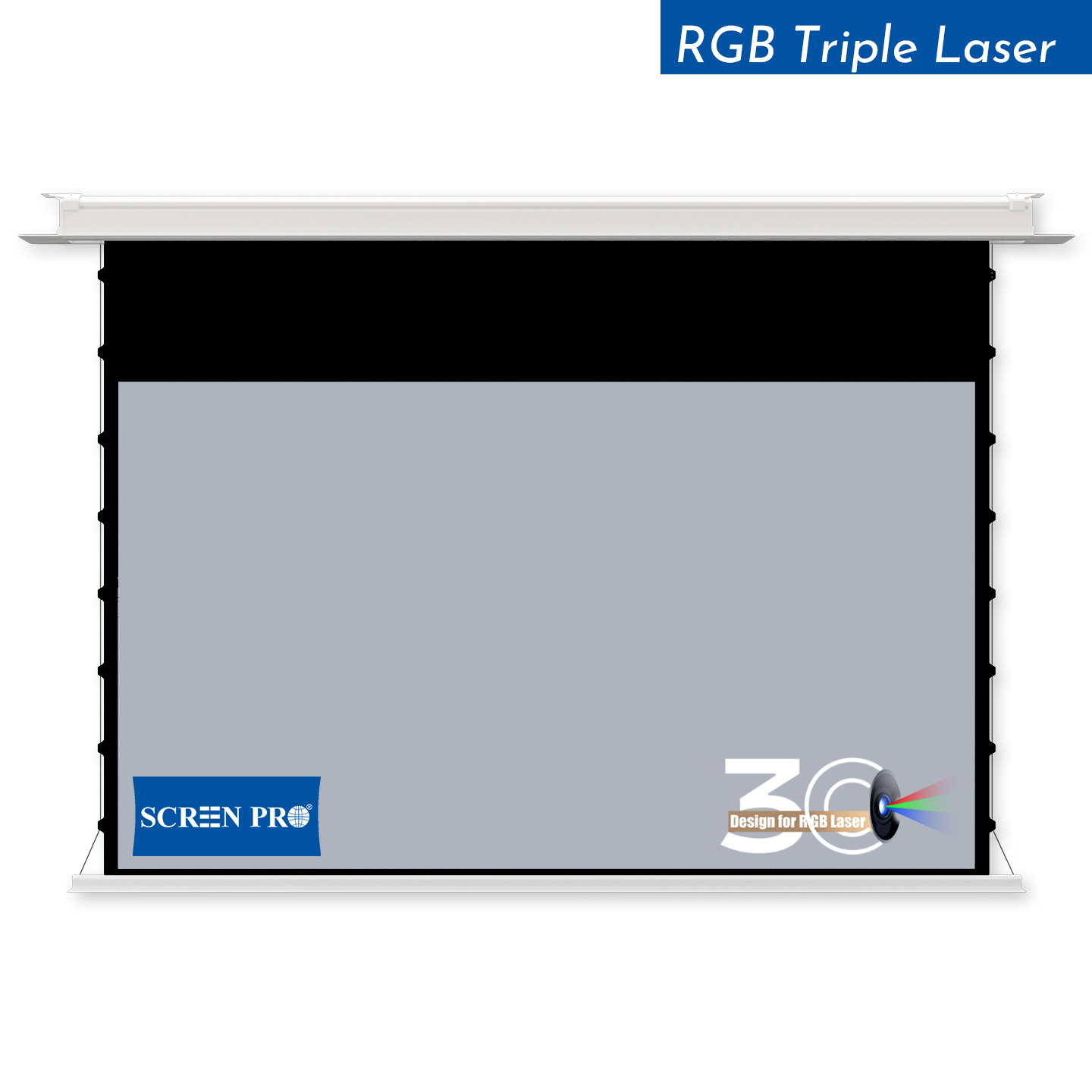
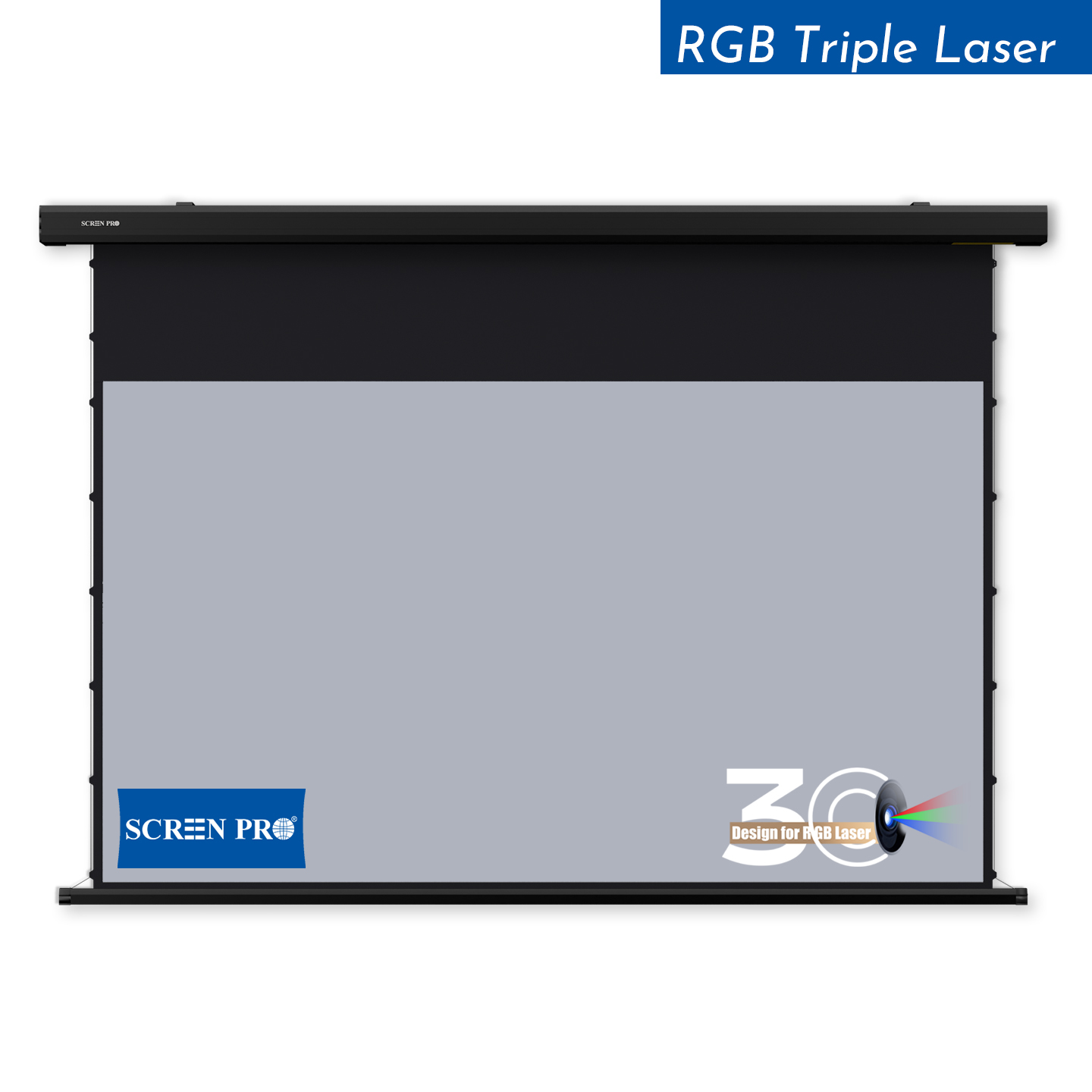
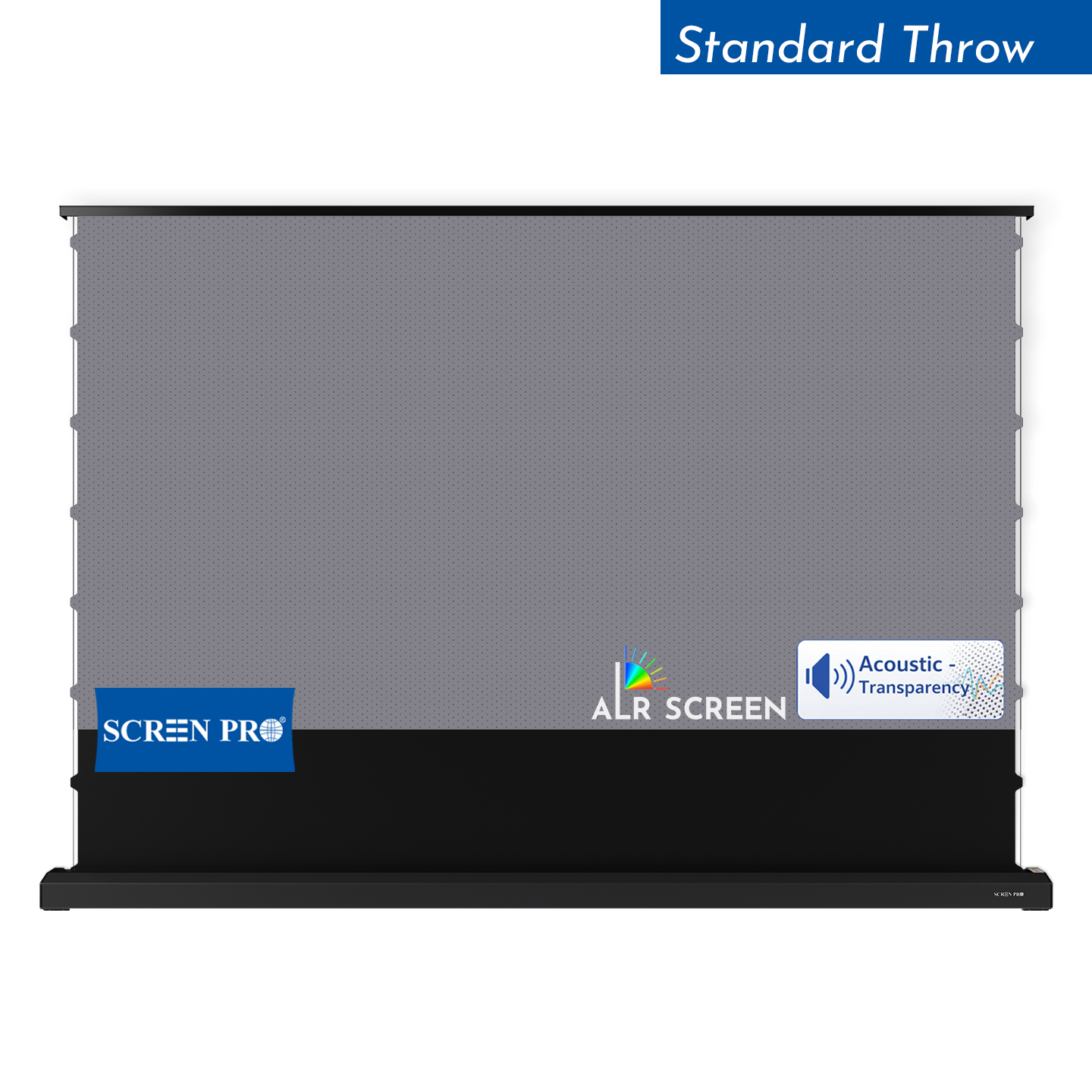
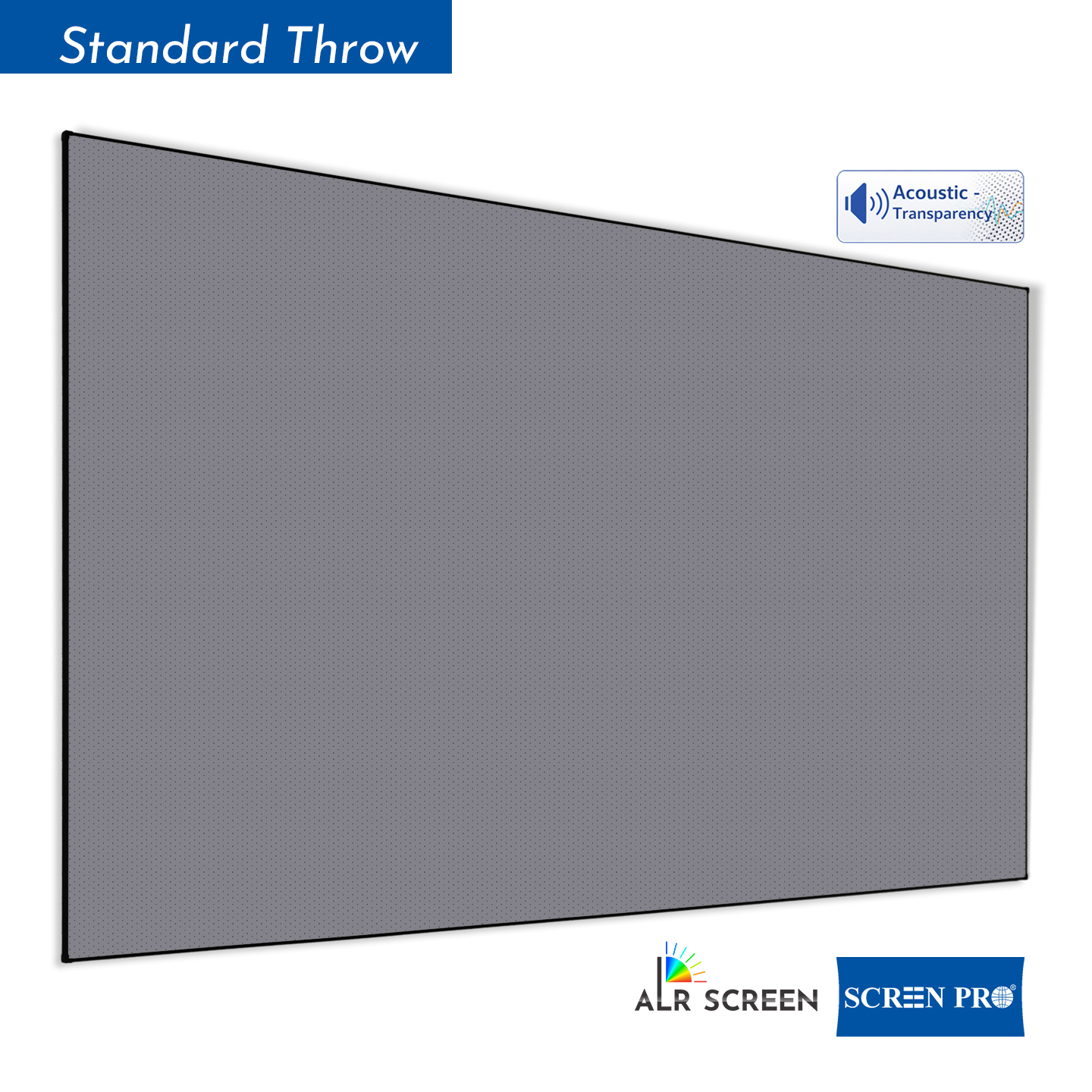
Traditional large rollable screens often depend on side tension cables to control edge waves. SCREENPRO® T-Prism material uses a structured optical surface designed for UST projection, helping the screen maintain a smoother viewing area without exposed side tension lines.
In other words, T-Prism flatness is not only created by pulling force from the edges. It comes from the combined behavior of material structure, rollable stability, bottom-up support, and controlled lifting alignment.
T-Prism material is designed with a more stable optical structure, reducing dependence on side pulling force alone.
Without side tension cables, the screen keeps a simpler, cleaner visual profile for living rooms and media rooms.
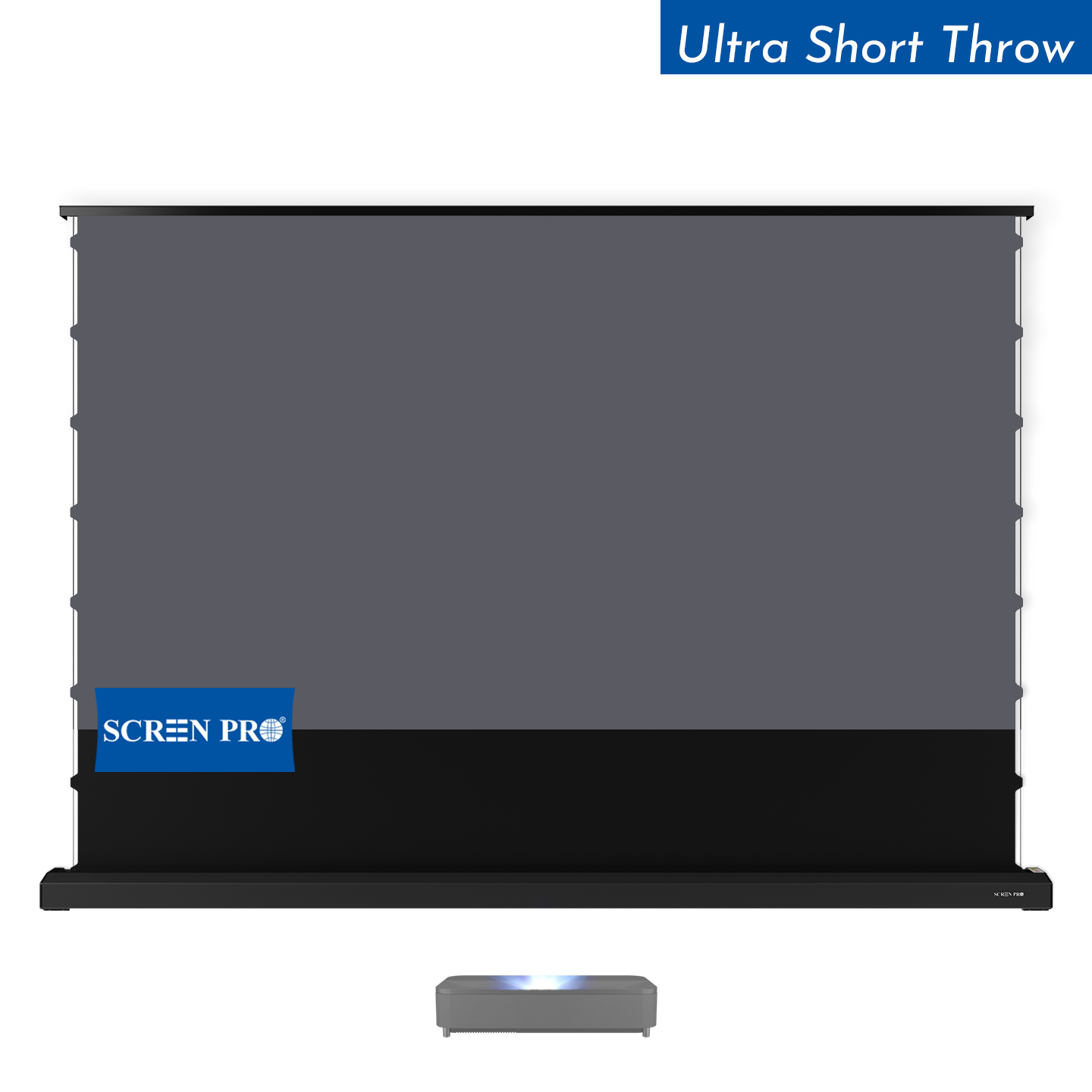
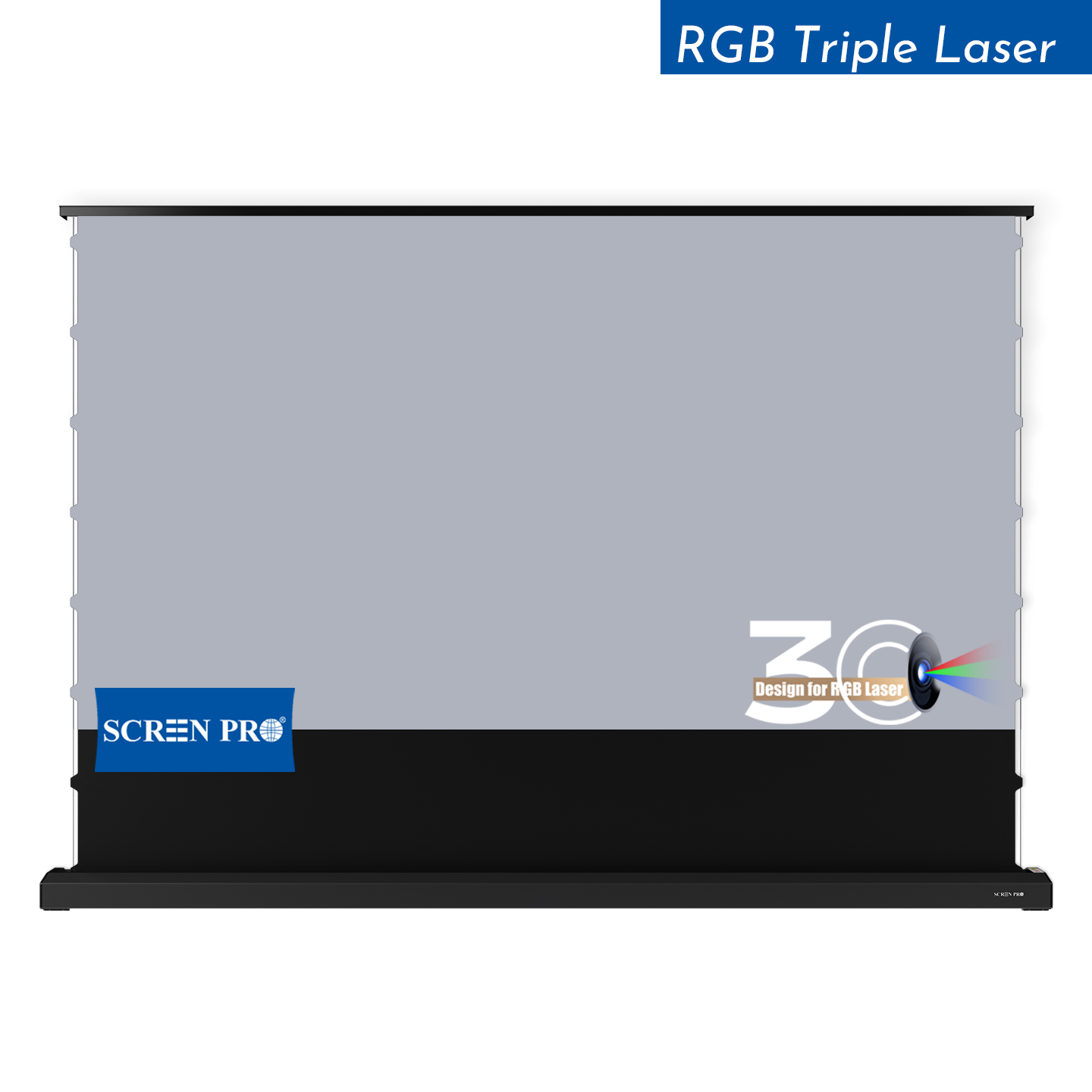
For a 150-inch screen, flatness depends on the complete system: material, base, lifting arms, and alignment.
Not all rollable UST ALR materials behave the same. A standard rollable surface may rely more heavily on edge tension, while T-Prism is designed to contribute more of its own surface stability.
| Comparison Point | Traditional Rollable Screen | SCREENPRO T-Prism Screen |
|---|---|---|
| Flatness method | Often relies heavily on side pulling force | Combines material stability with floor-rising support |
| Side cables | Common on tab-tension designs | No exposed side tension cables required |
| Appearance | More visible tension components | Cleaner edge design |
| Best use case | General motorized projection screen applications | UST ALR floor rising screen applications |
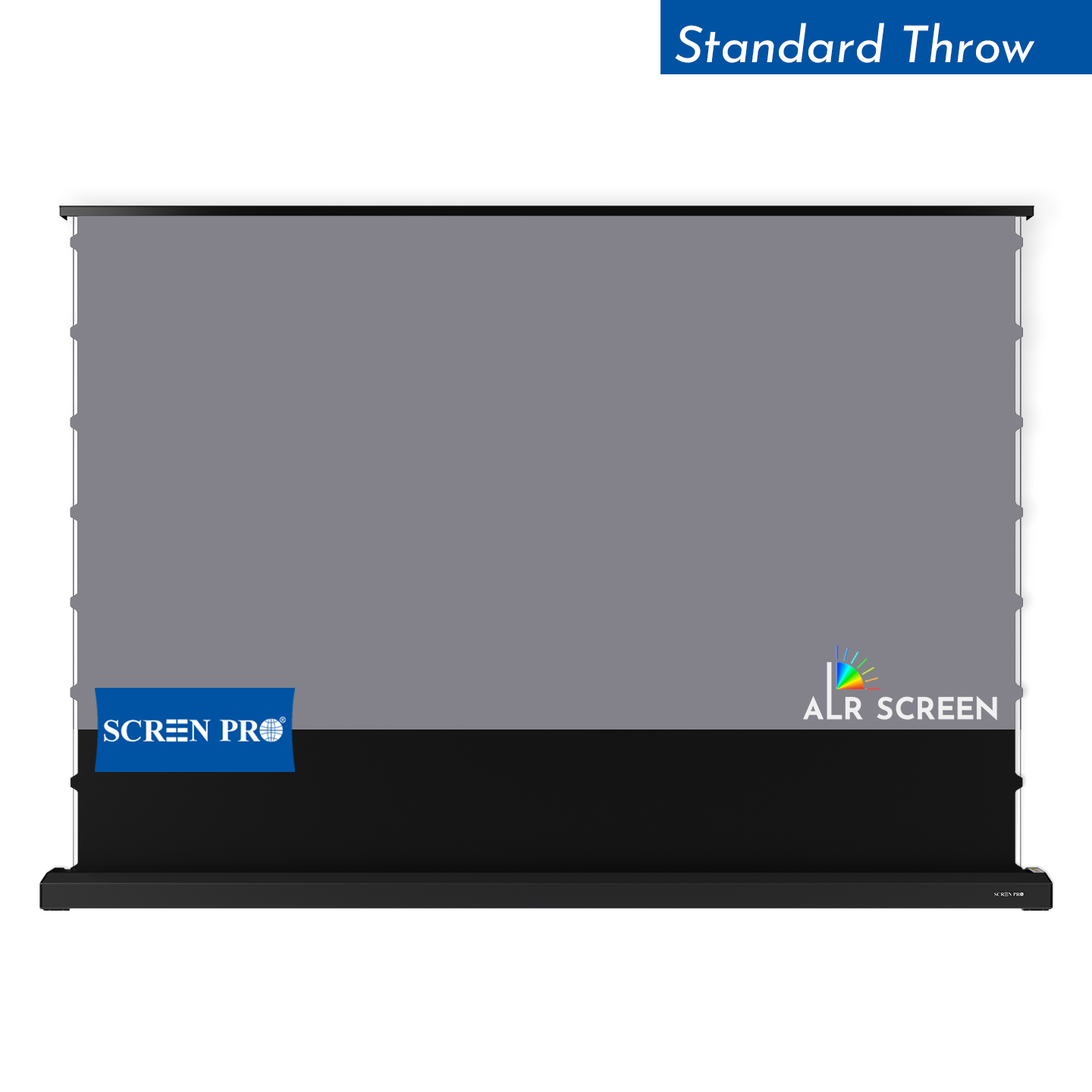
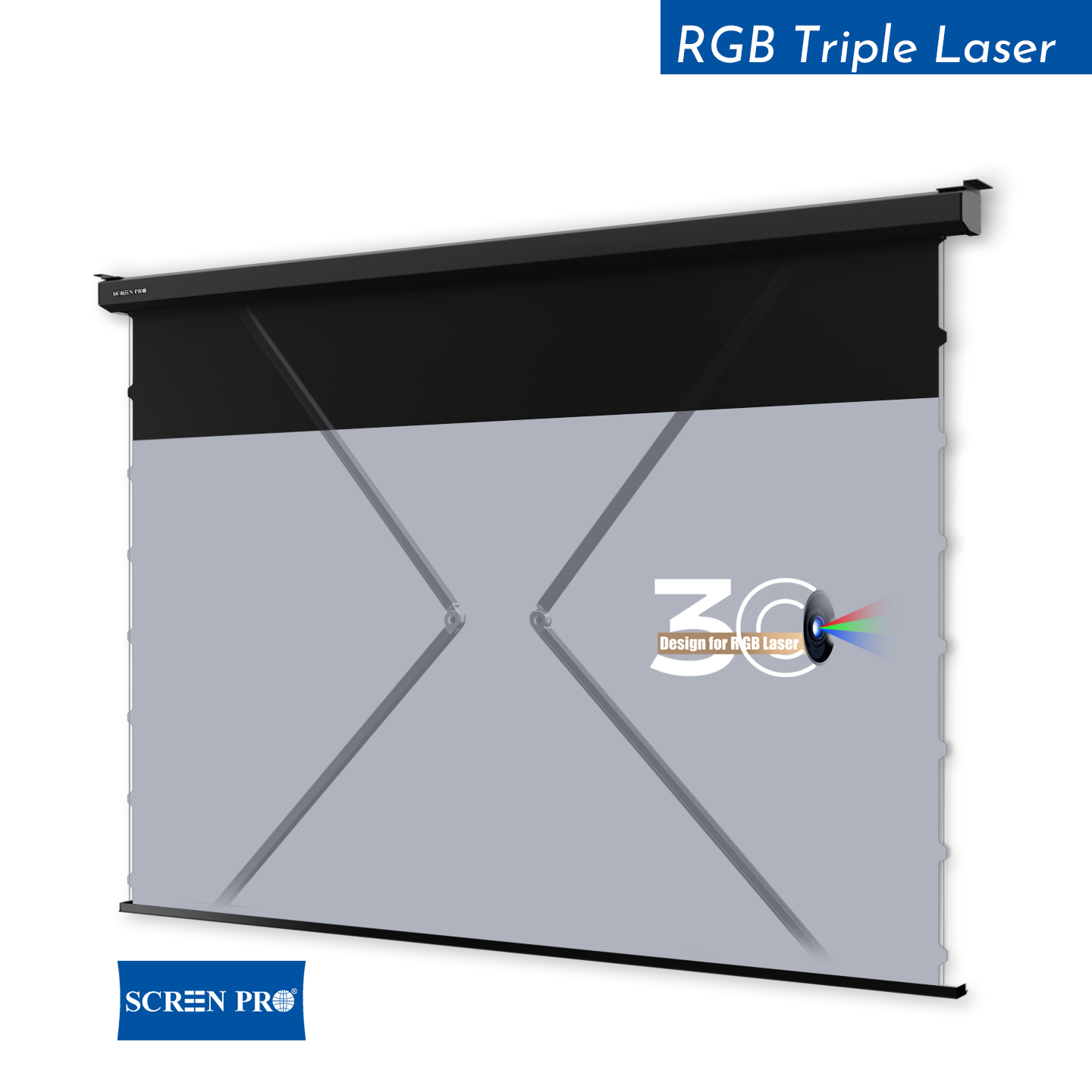
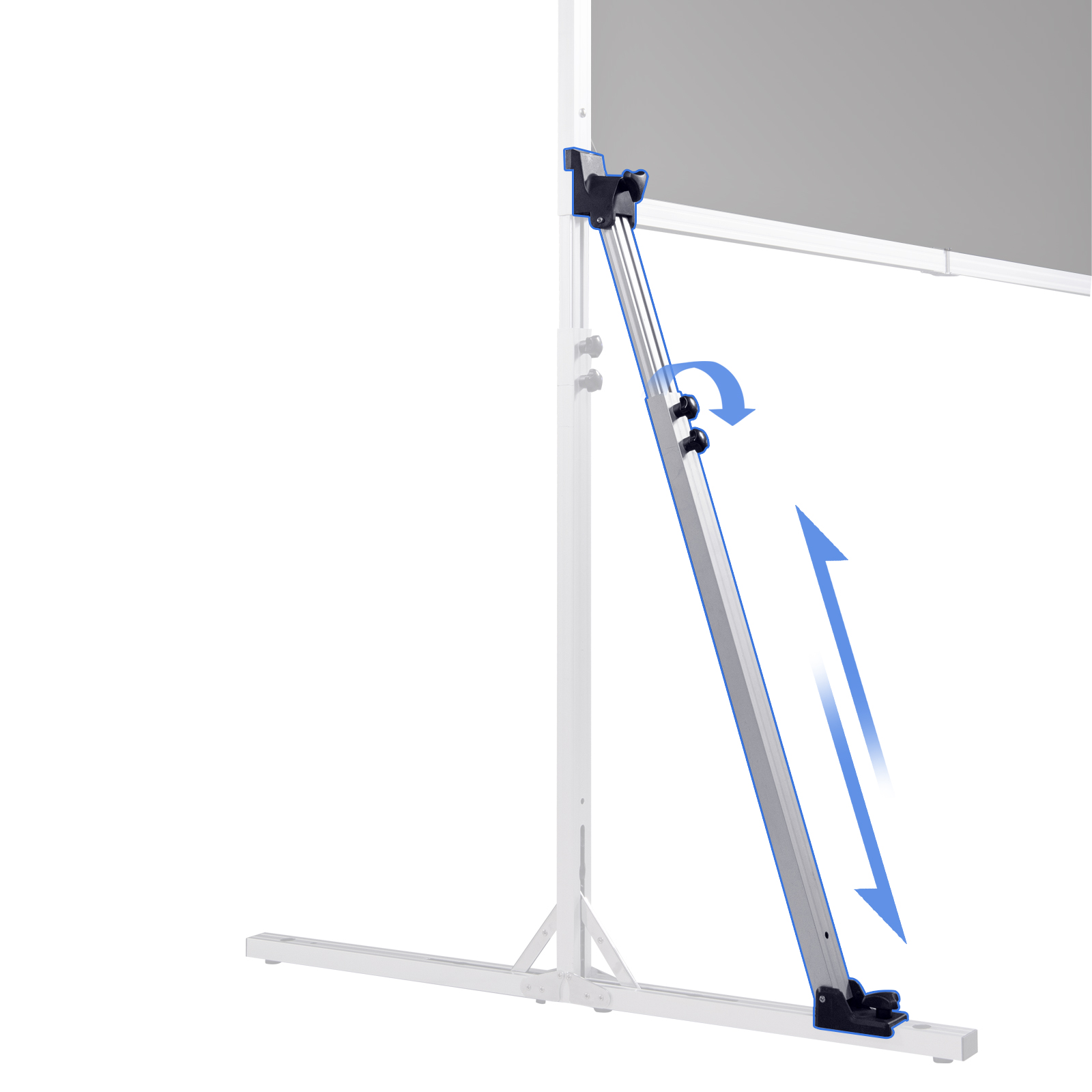
A modern floor-rising UST screen is not the same as a loose manual pull-down screen. The flatness comes from a complete system: material rigidity, reinforced support arms, controlled vertical movement, and a stable base structure.
For large UST floor-rising screens, this structure can create a practical self-supporting effect, helping the screen remain stable during real-world use.
Ultra-short-throw projectors project light from a very steep upward angle. This makes the screen surface more important than with standard long-throw projection.
UST projectors cast the image upward from a very close range, so waves or wrinkles can become more visible.
A UST ALR material is designed to reject ambient light and direct projector light toward the viewer.
At 150 inches, the base, support system, material stiffness, and lifting accuracy are all critical.
Many users searching for “UST screen wrinkles,” “non-tensioned UST screen flatness,” “floor rising ALR screen waves,” or “VIVIDSTORM alternative” are really asking the same question: does a large rollable UST screen need side tension to stay flat?
The answer depends on the screen material and structure. Side tension is one engineering method, but it is not the only way to manage flatness on a floor rising UST ALR screen.
Instead of judging only by “tensioned” or “non-tensioned,” users should look at the real engineering factors behind screen flatness.
Not necessarily. It usually means the screen does not use side tab-tension cables. Flatness depends on material rigidity, support structure, and manufacturing quality.
Not always. Side tension is one method to control edge waves, but a stable optical material like SCREENPRO T-Prism and a strong floor-rising structure can also help maintain a smooth viewing surface.
T-Prism material is designed with a structured optical surface and improved material stability. Combined with the floor-rising support system, it can reduce dependence on side tension cables.
Yes, if it uses UST-specific ALR material and a stable floor rising structure. UST projection is more demanding, so screen quality is especially important.
Yes. Because UST projectors use a steep projection angle, surface waves can be more noticeable than with standard long-throw projection.
In general, fixed frame screens have permanent frame tension, while floor rising screens must balance rollability, lifting structure, and material stability. This makes engineering quality especially important.
Large floor-rising UST screens require stronger support systems, advanced optical materials like SCREENPRO T-Prism that contribute to surface stability, and highly precise structural control. That is why large-format solutions remain relatively limited across the market.
Check the material type, real-world screen flatness, support structure, size compatibility, and whether the screen is designed specifically for ultra-short-throw projectors.
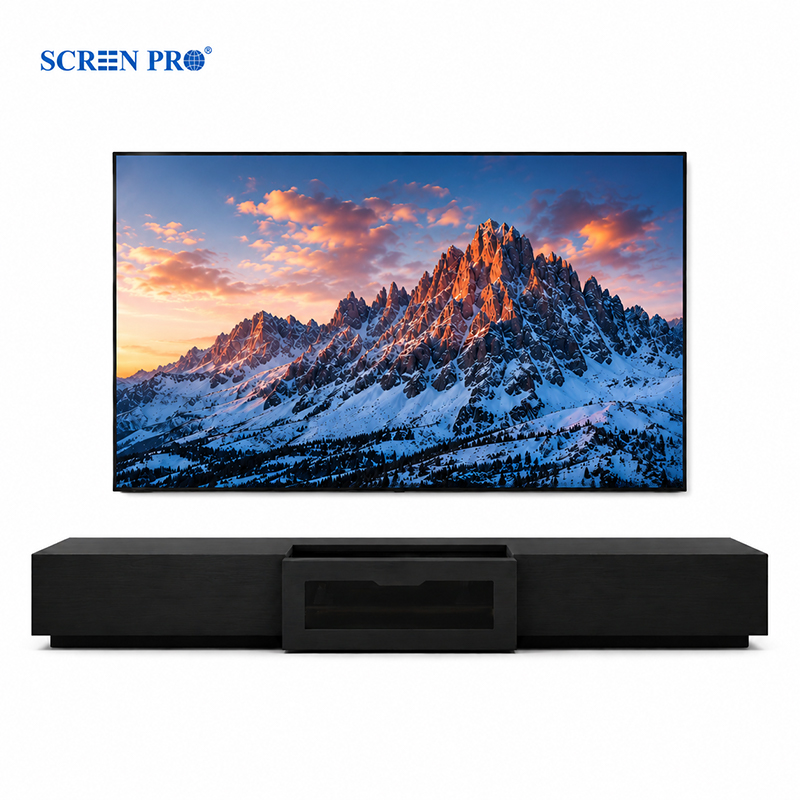
Compare T-Prism, Fresnel, fixed frame, in-ceiling, and floor-rising UST ALR options based on your projector model, room size, viewing distance, and installation requirements.
Explore Floor Rising Screen Contact SCREENPRO```





© Copyright 2004-2026 SCREEN PRO® All Rights Reserved | Specifications are subject to change without notice. All Rights ReservedSite Map Designed by iwonder.cn