
© Copyright 2004-2026 SCREEN PRO® All Rights Reserved | Specifications are subject to change without notice. All Rights ReservedSite Map Designed by iwonder.cn


Compare projector placement, screen material, image quality, and room requirements to choose the right SCREENPRO projection screen solution.
When comparing short throw projection with standard throw projection, the best choice depends on more than projector type. Screen material, projector placement, room size, ambient light, and installation method all affect the final image.
For SCREENPRO screens, choosing the right match helps improve brightness, contrast, geometry, viewing comfort, and long-term performance.
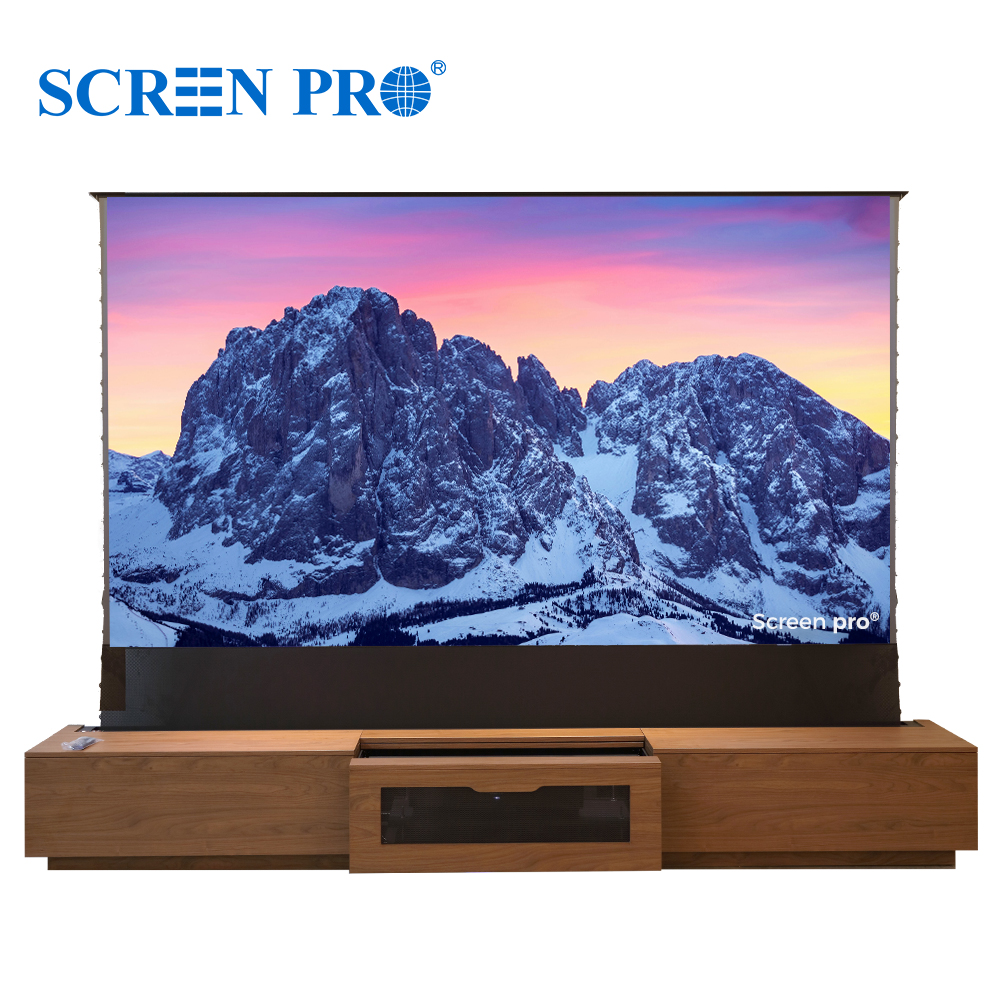
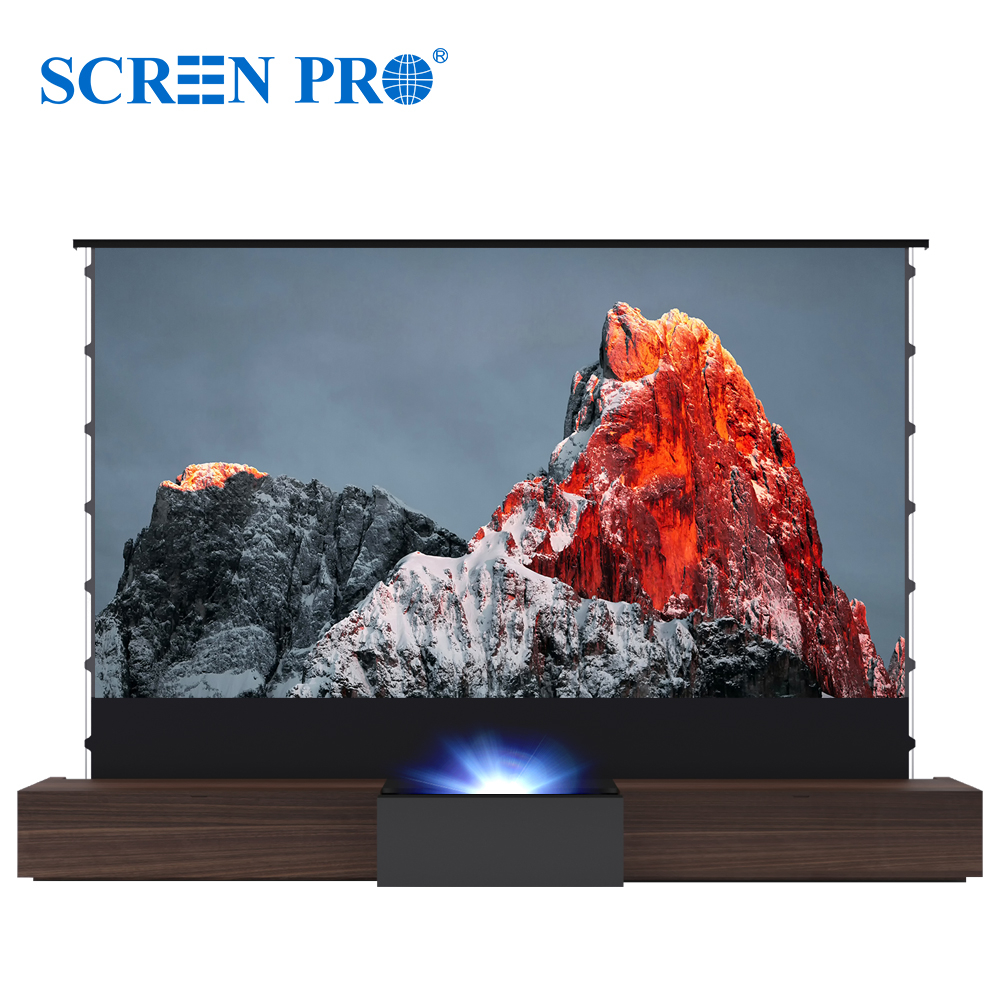
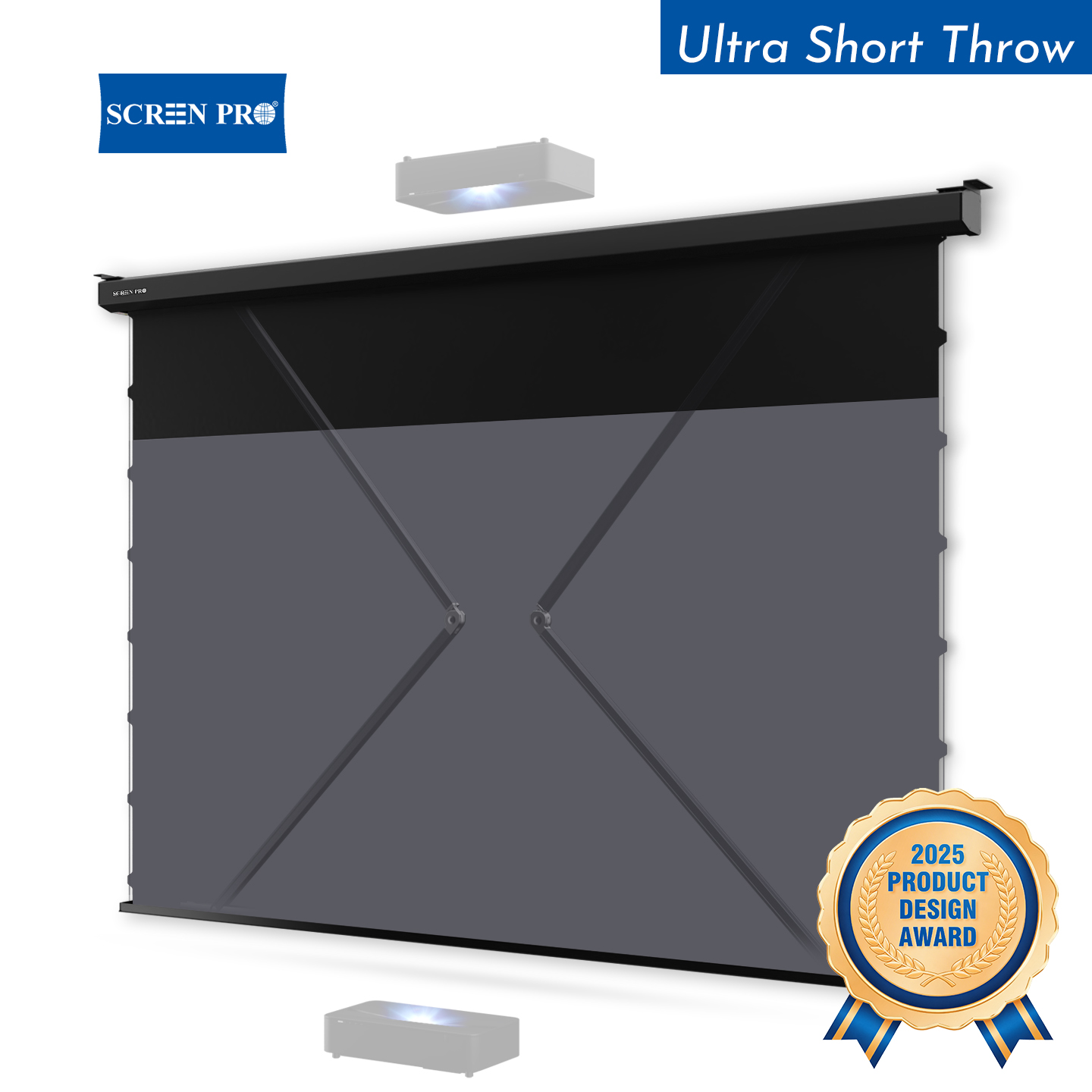
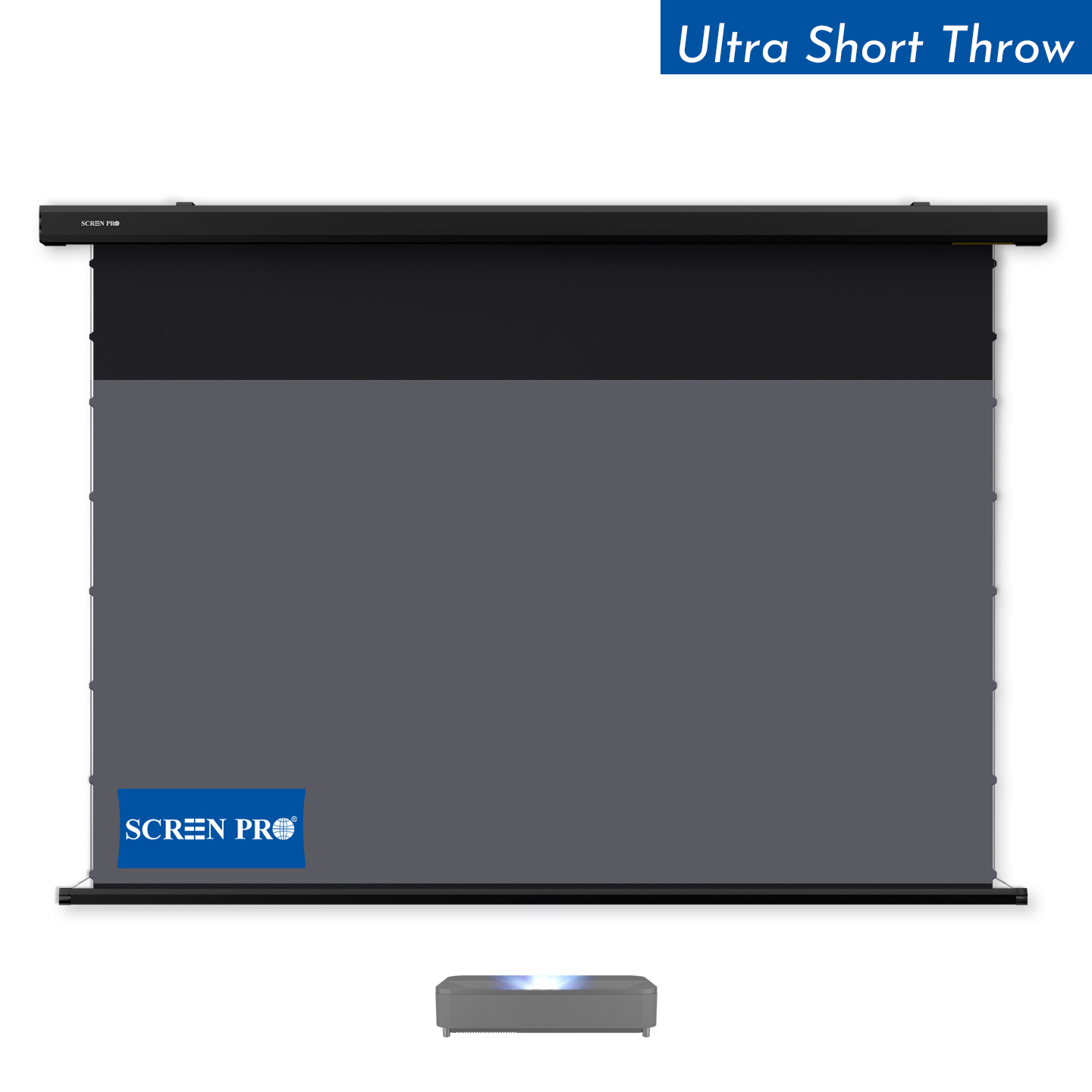
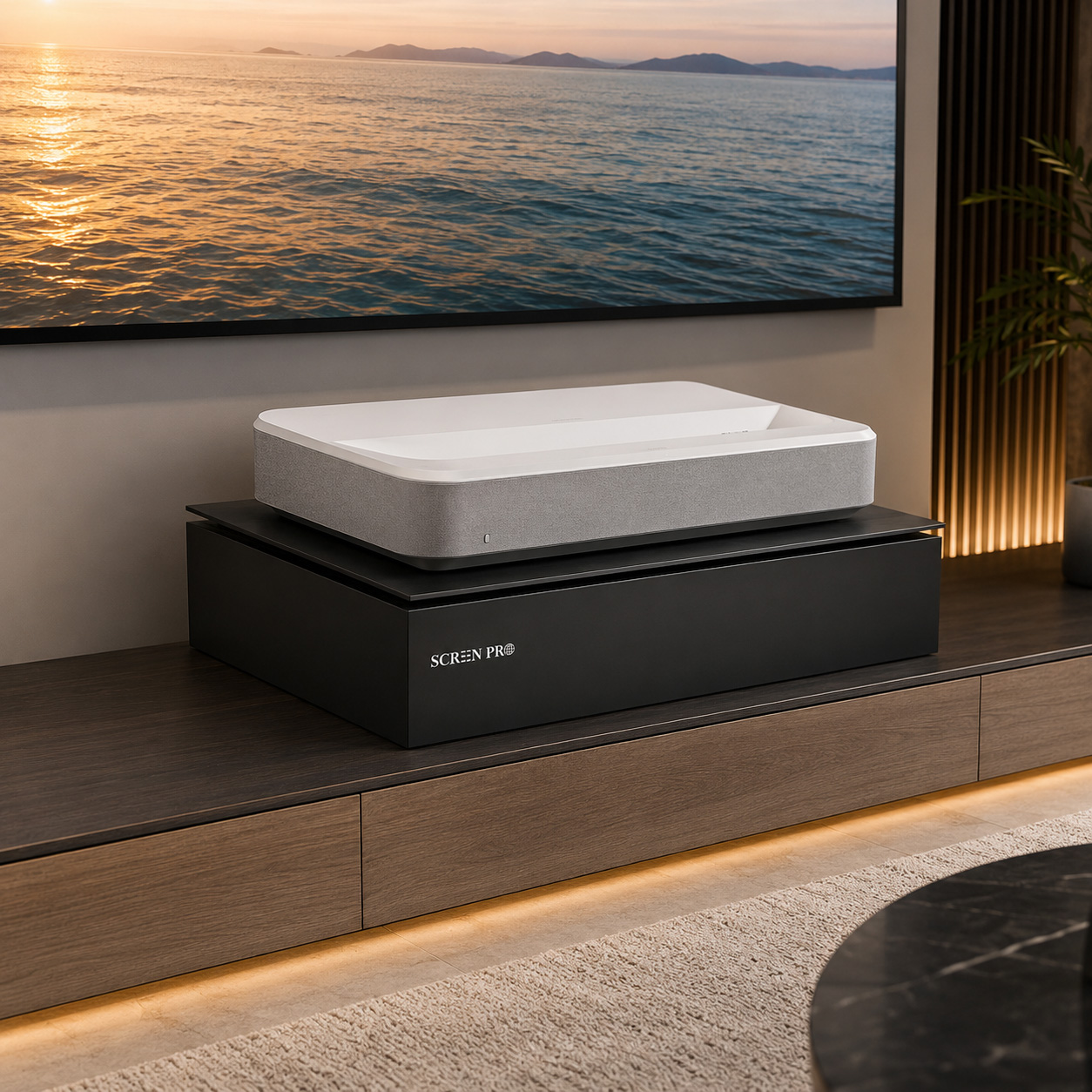
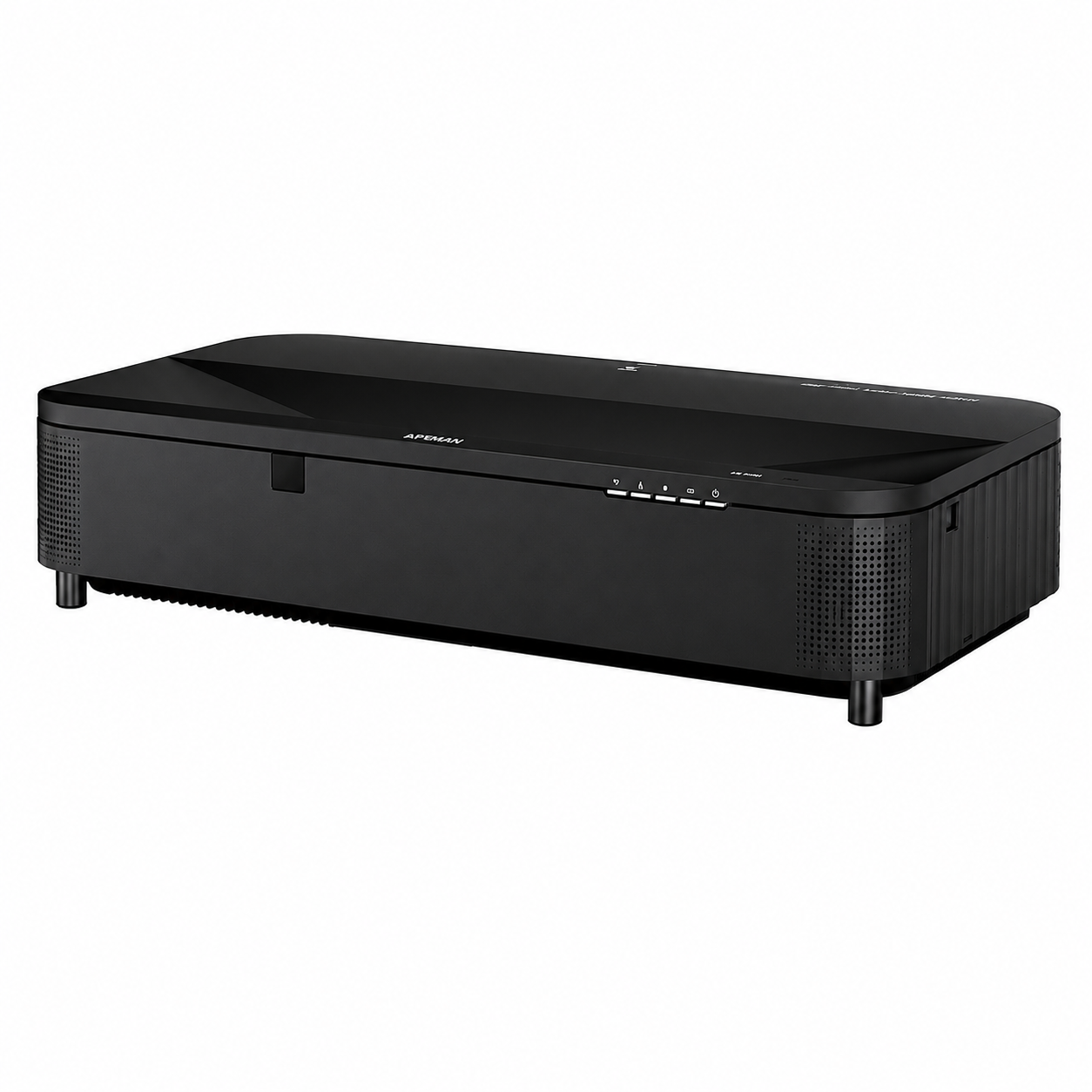
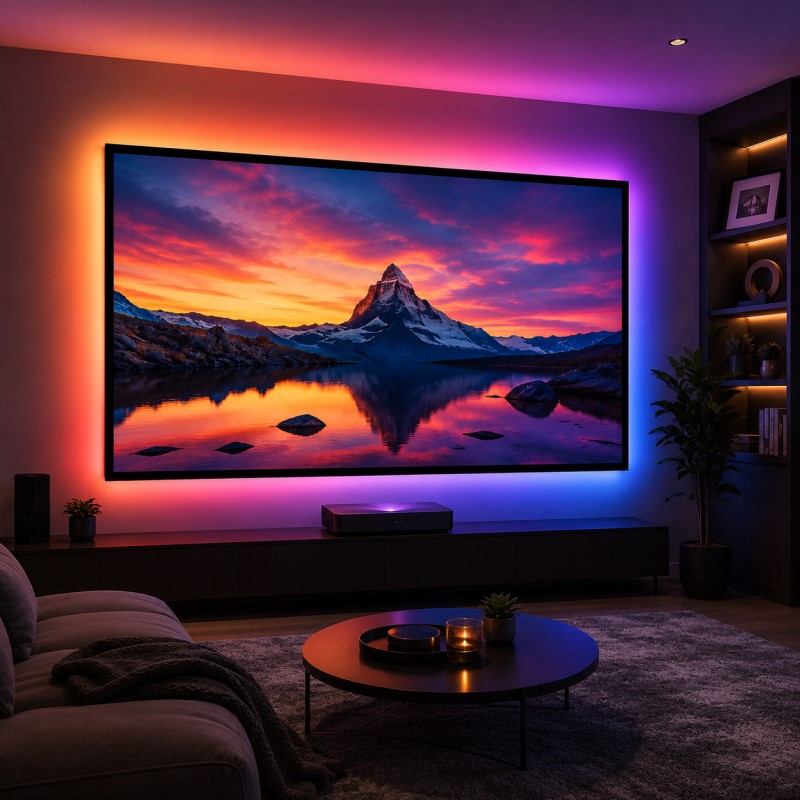
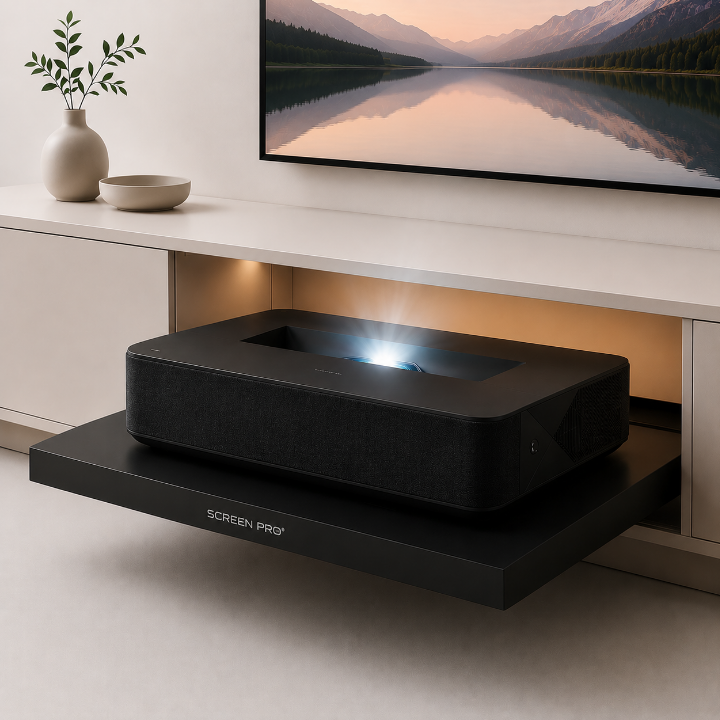
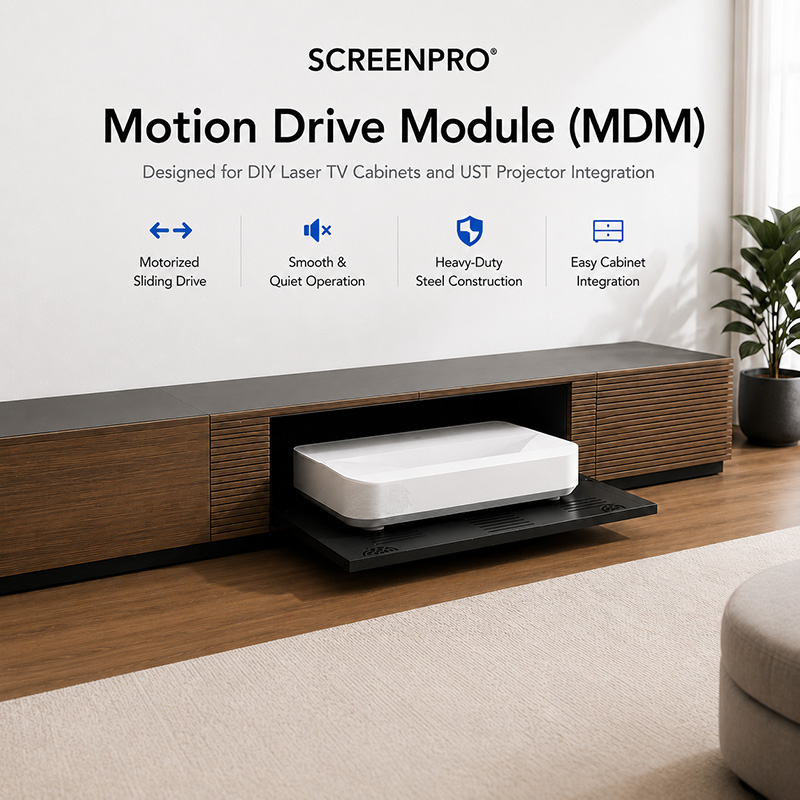
Short throw and ultra-short throw projectors are placed close to the screen, making them suitable for living rooms, small offices, classrooms, and compact media spaces.
This setup helps reduce shadow interference and avoids the need for a long rear projection distance.
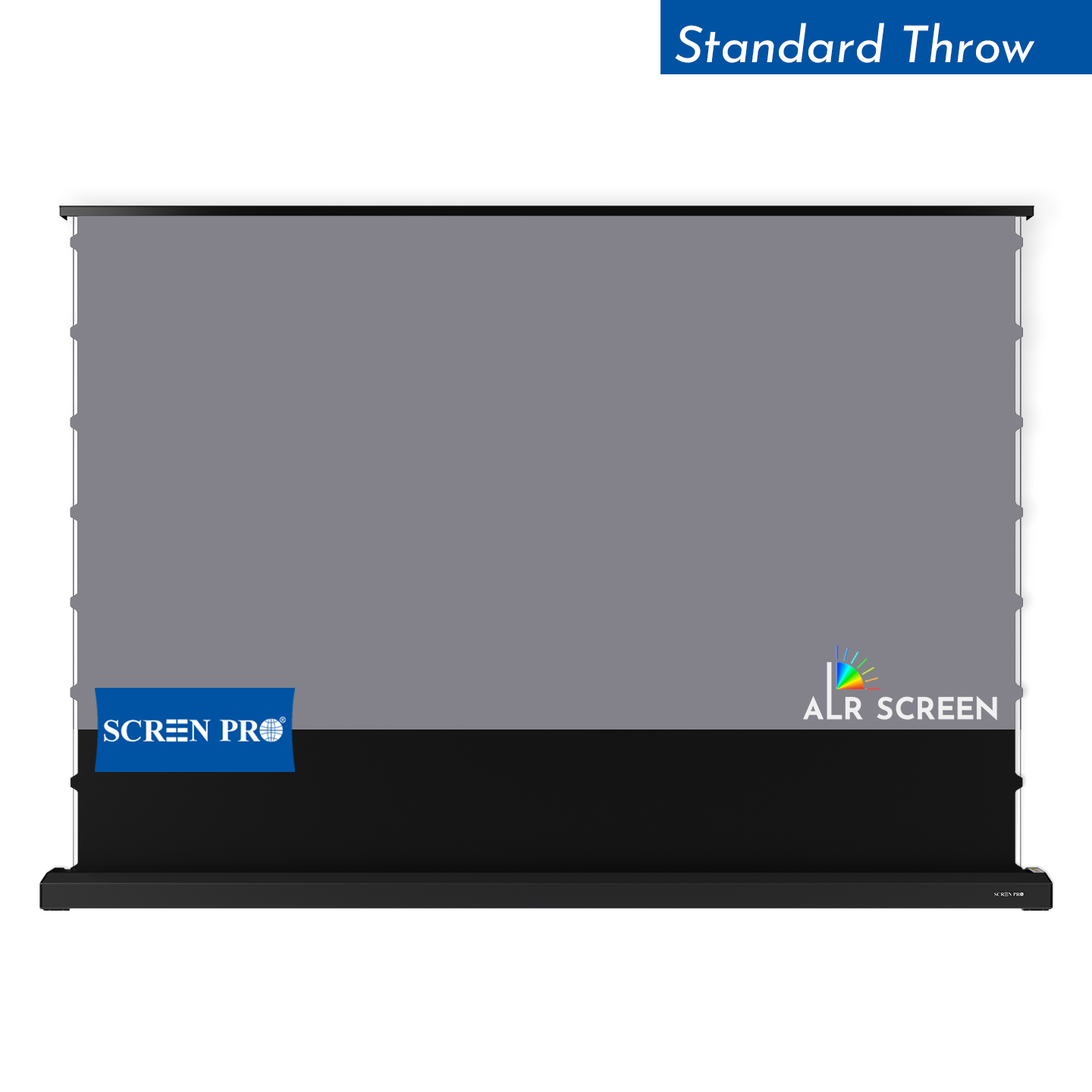
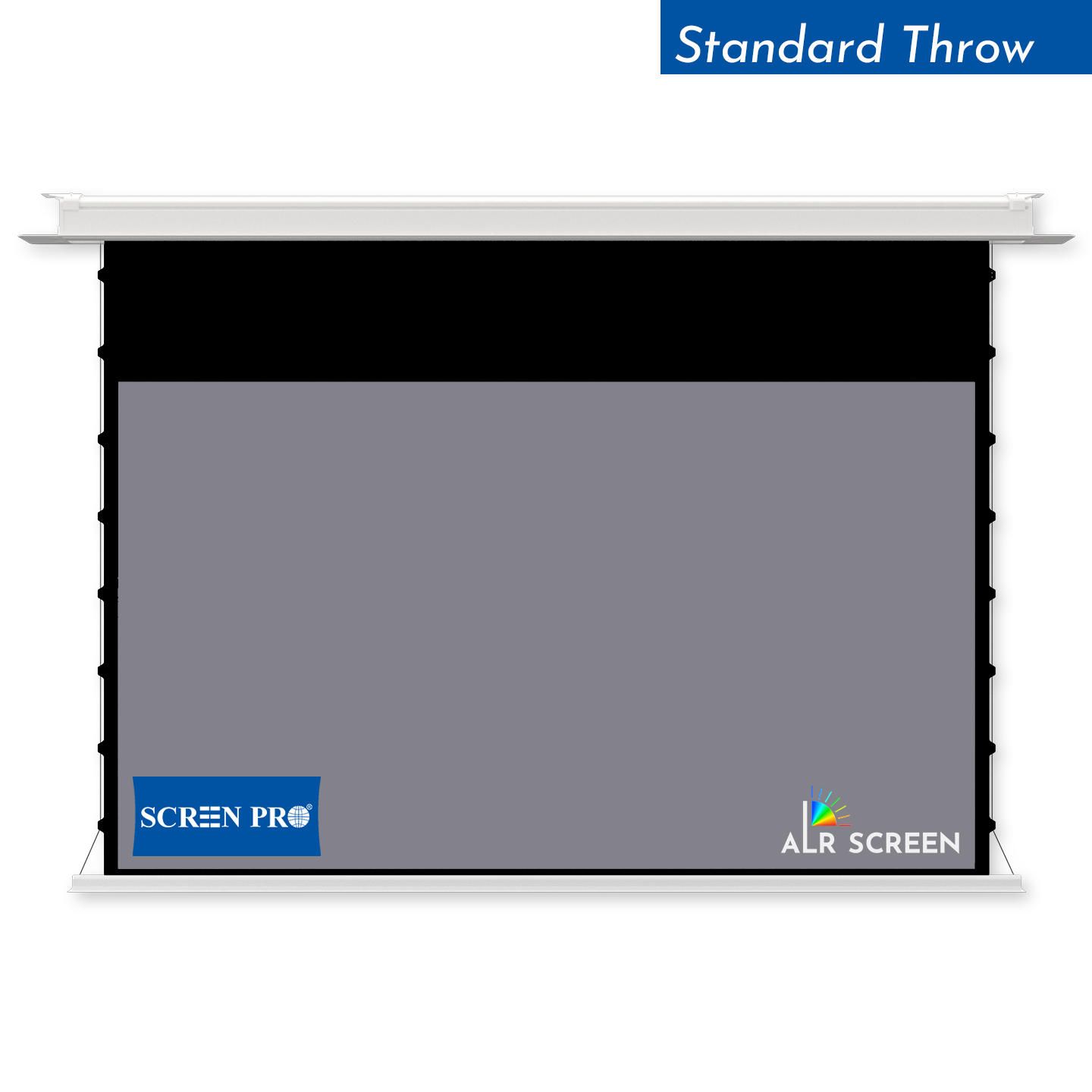
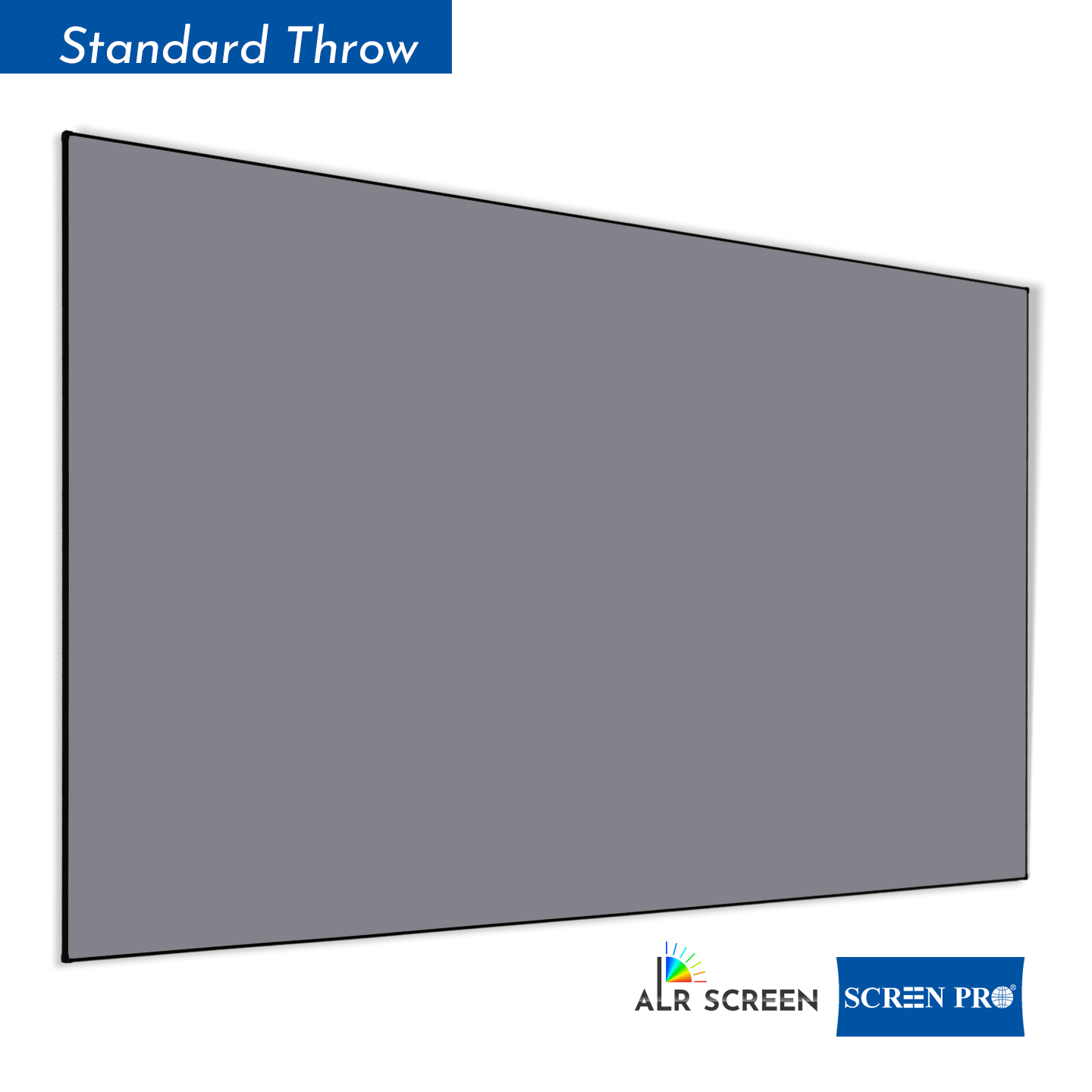
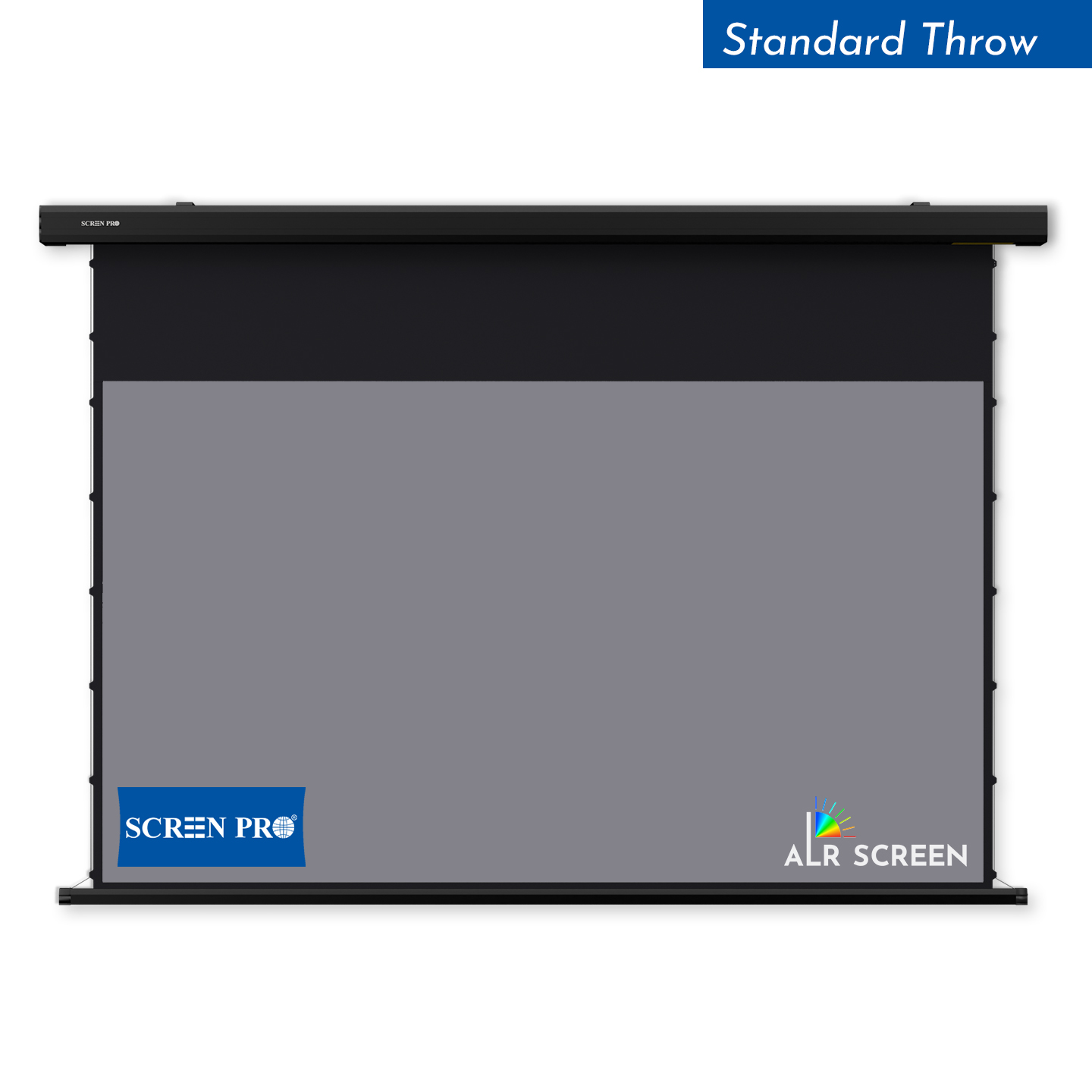
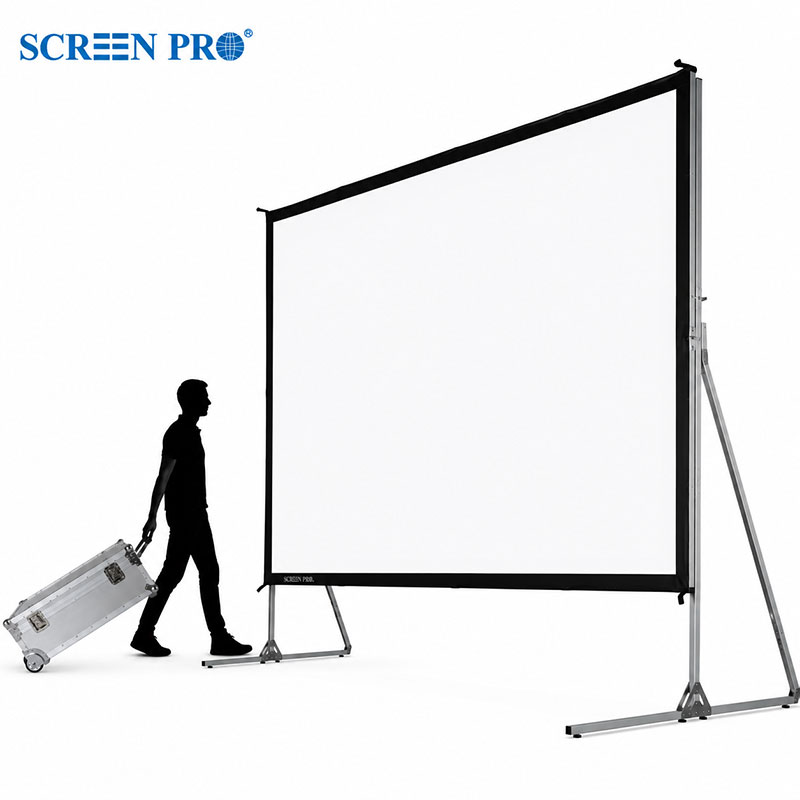
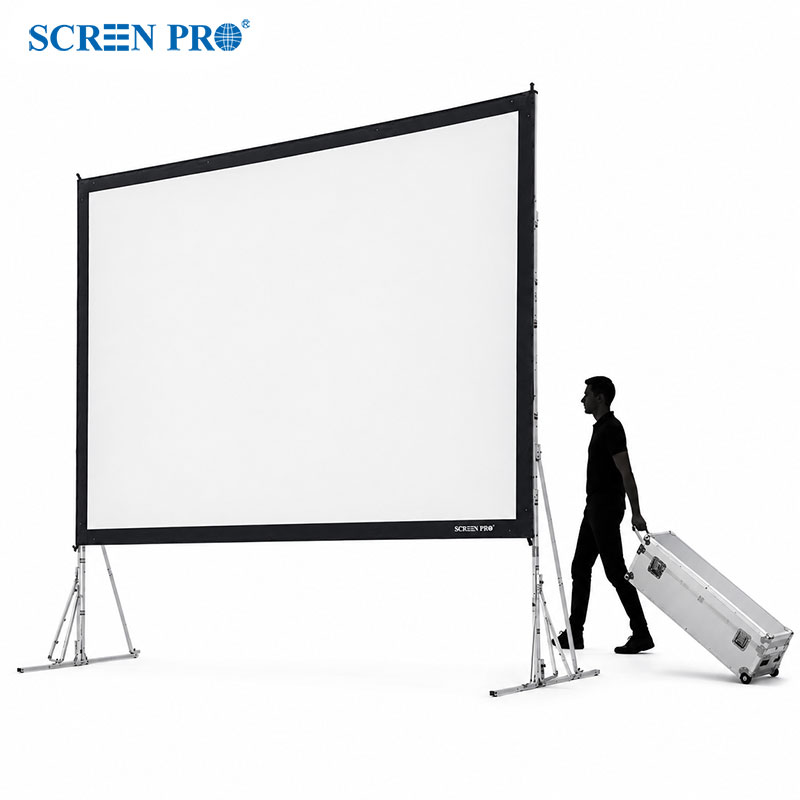
Standard throw projection usually requires more distance between the projector and the screen. It is often better suited for larger rooms, conference halls, classrooms, and dedicated theater spaces.
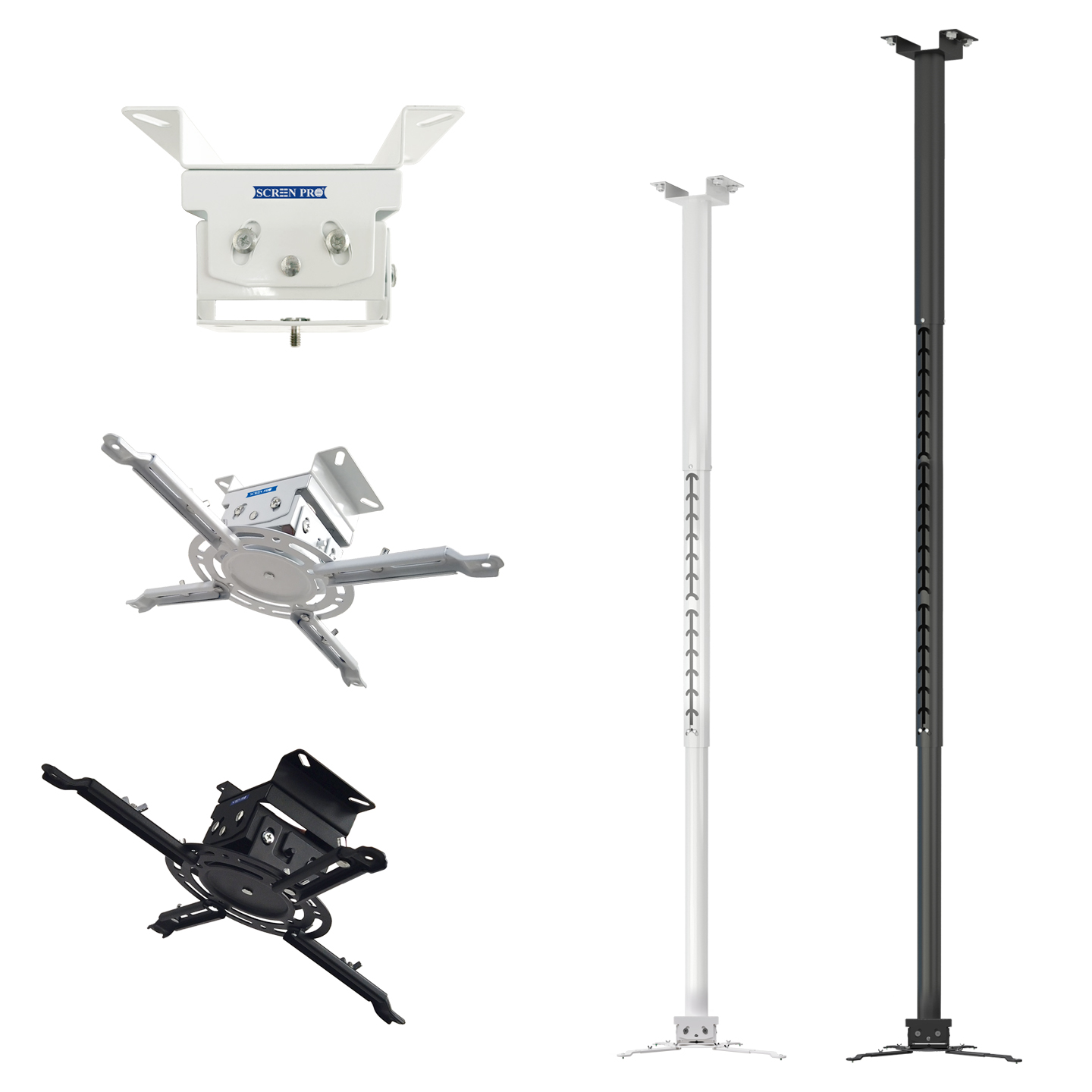
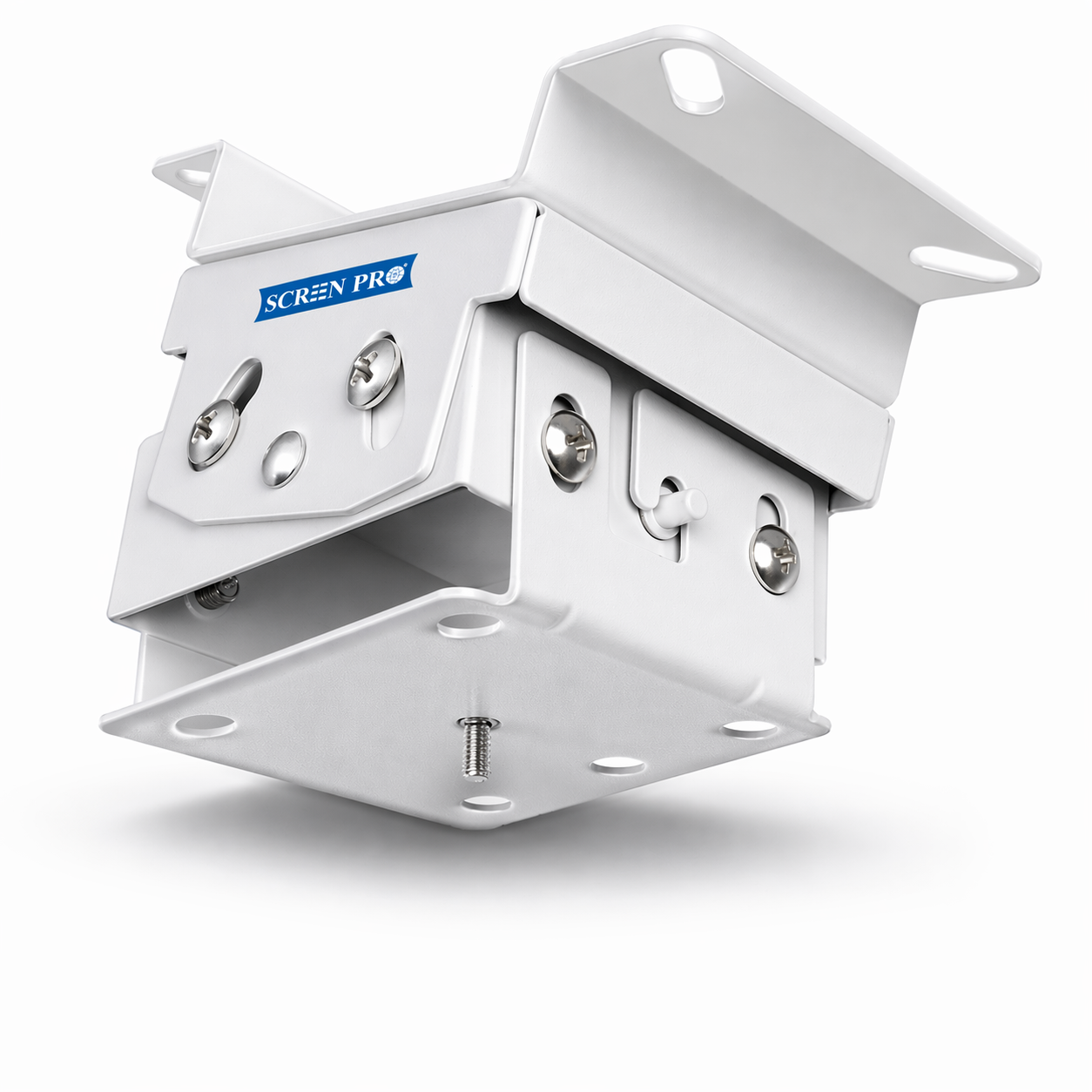
Ceiling mounting is common, and alignment is usually more forgiving than short throw projection.
Different throw types require different screen materials. A screen that performs well with a standard throw projector may not deliver the best result with a UST projector, and vice versa.
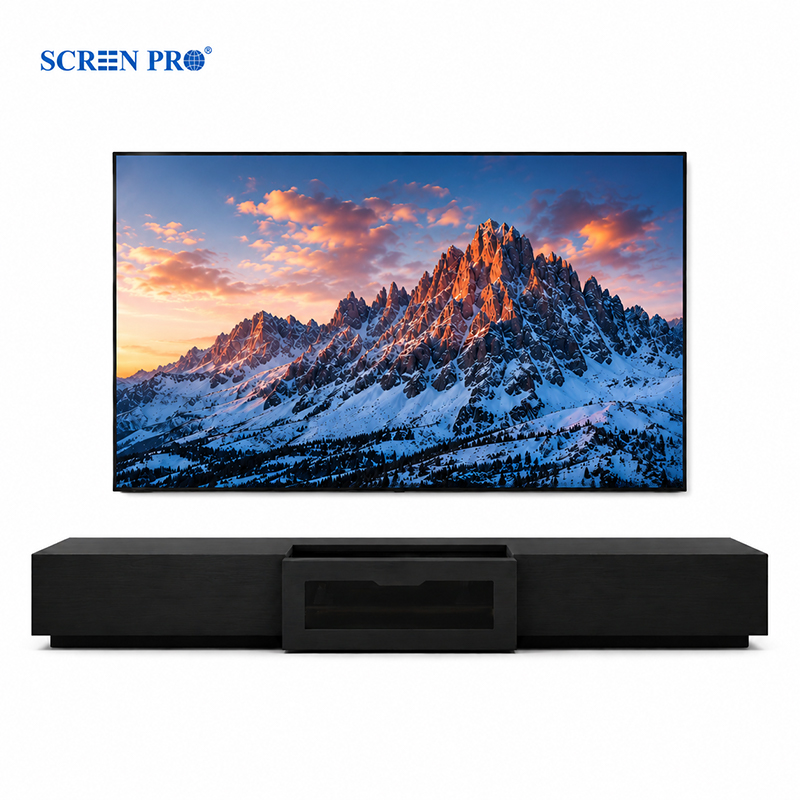
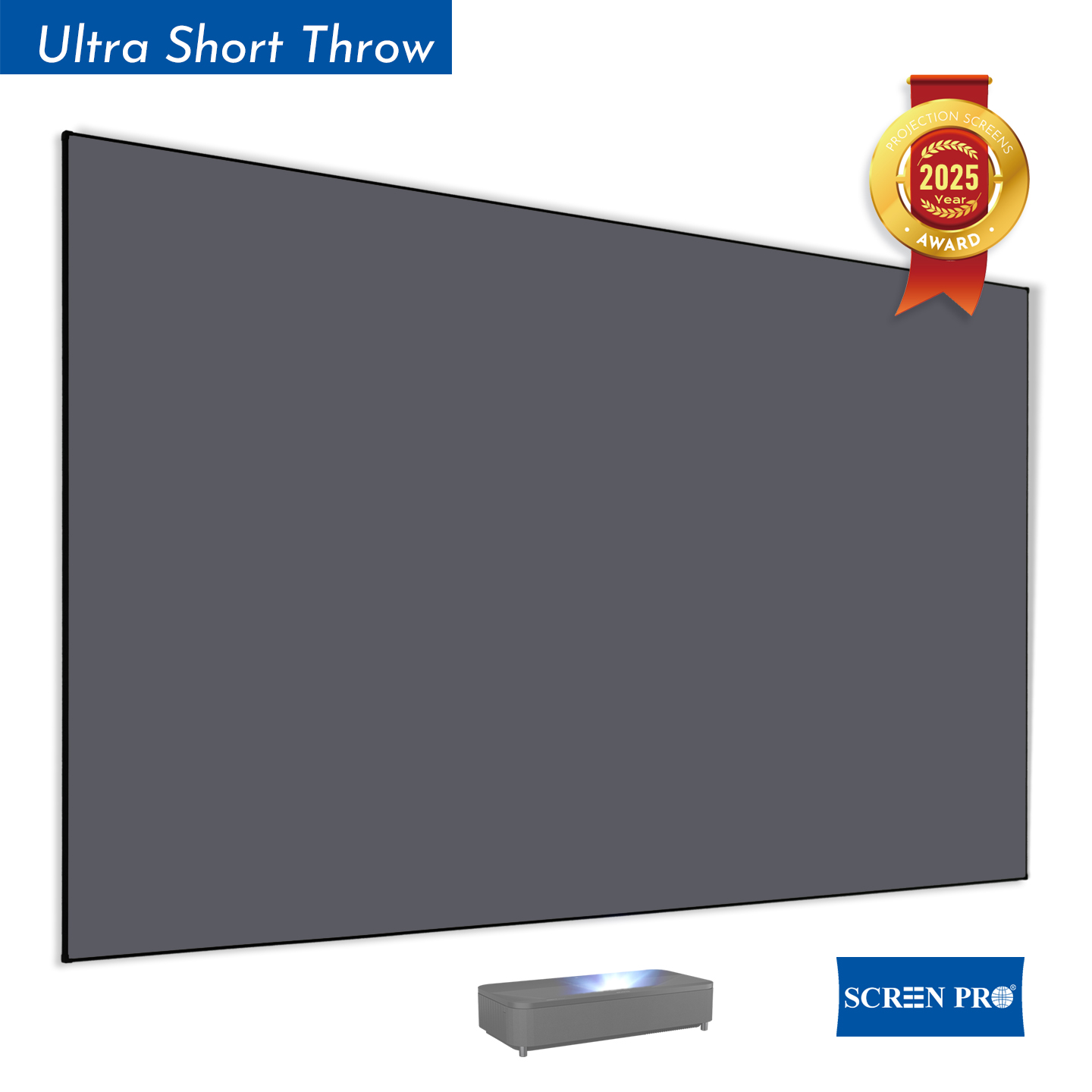
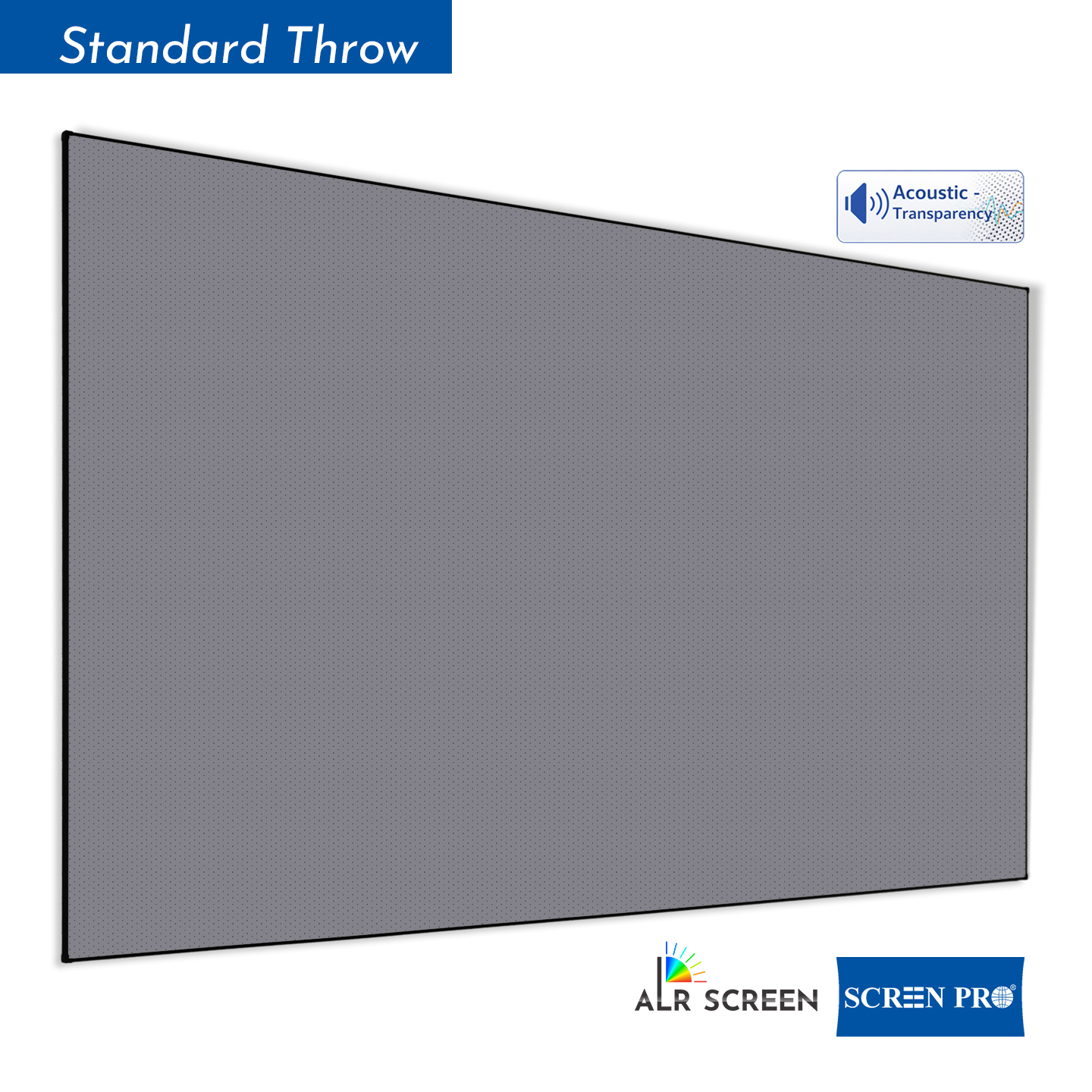
Short throw and UST projection often benefits from specialized ALR or optical screen materials. These materials help improve contrast, reject unwanted ambient light, and manage the steep projection angle.
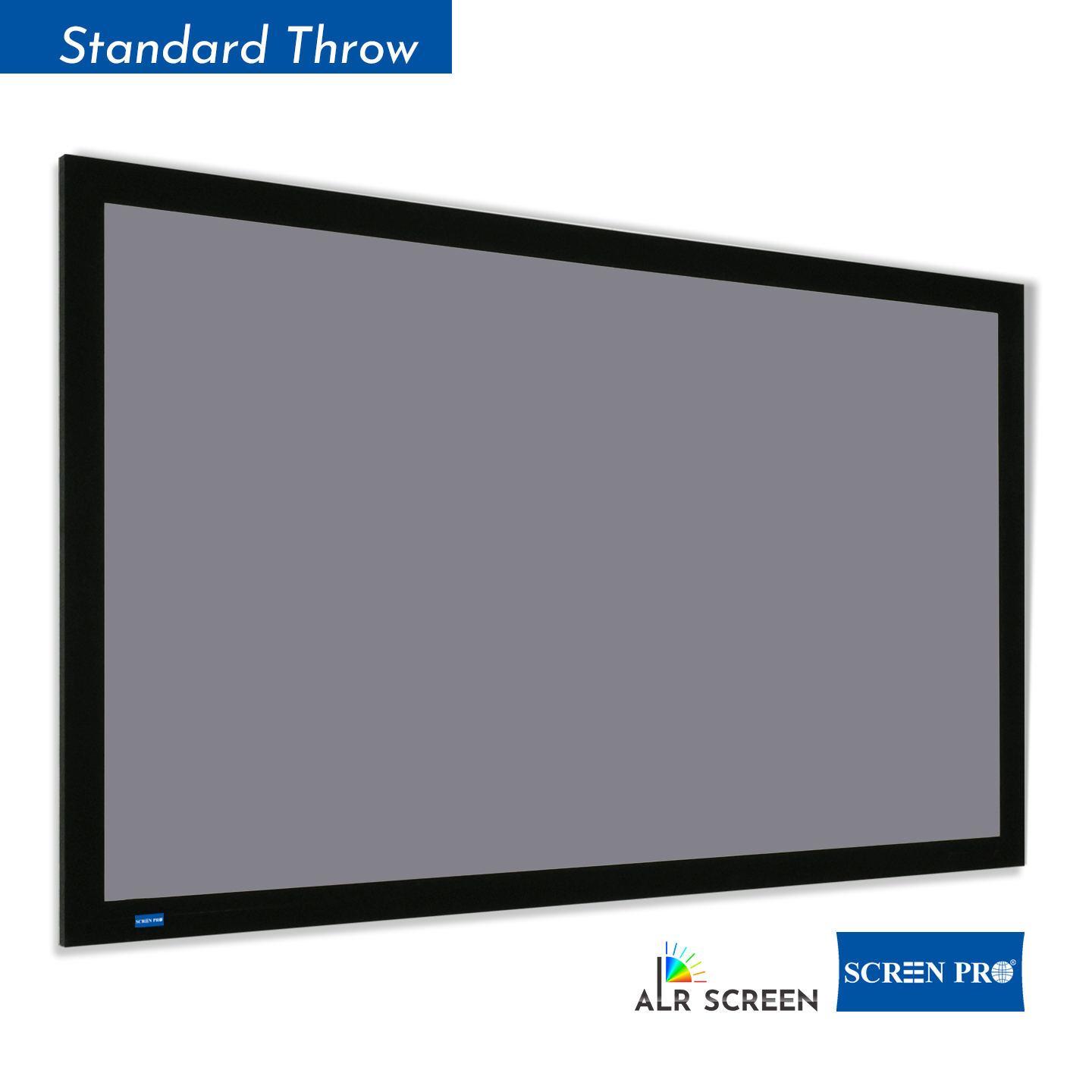
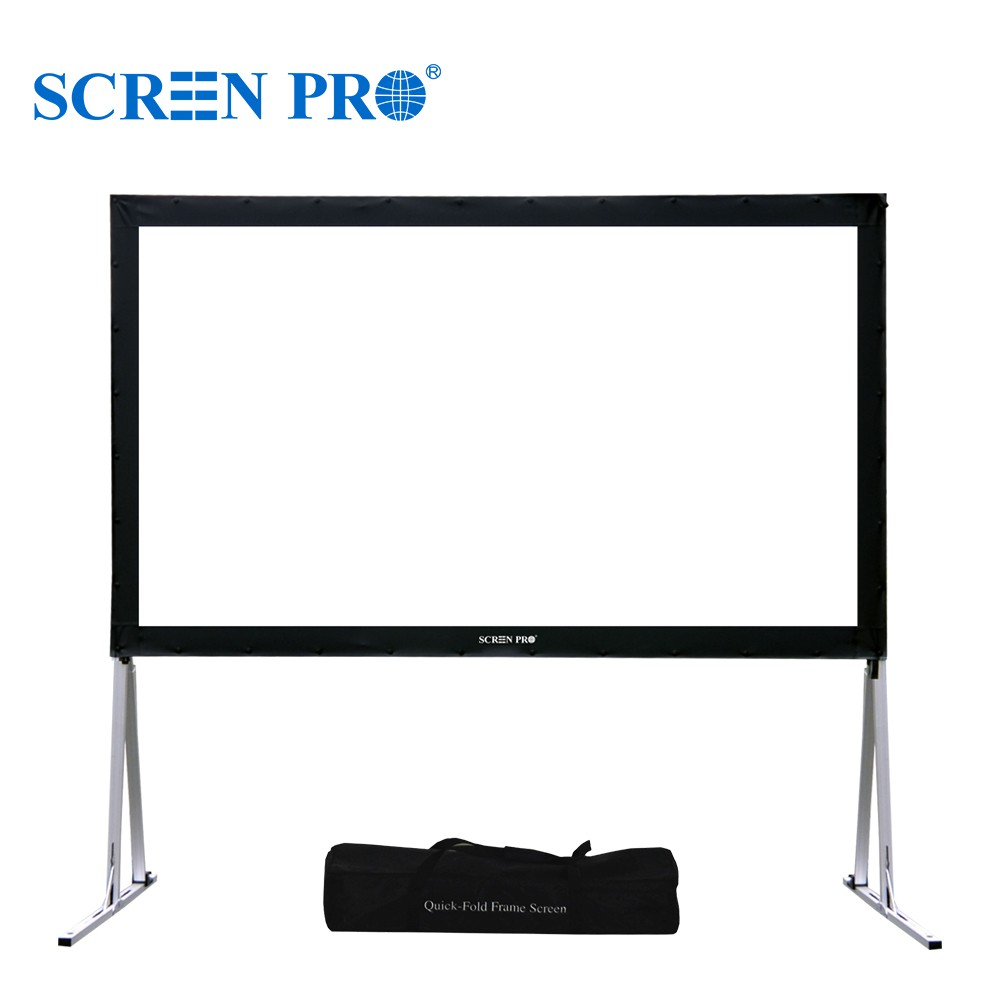
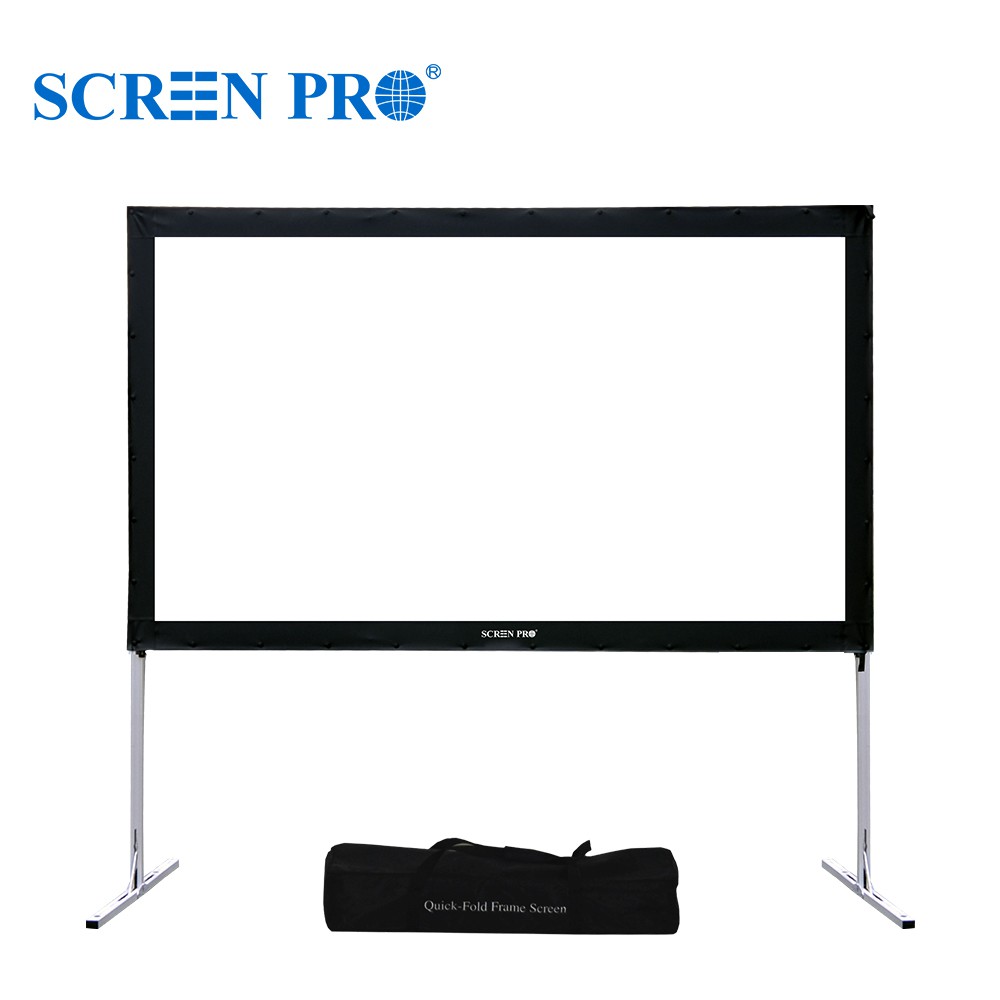
For UST setups, tensioned or fixed-frame structures are often preferred because surface flatness is especially important.
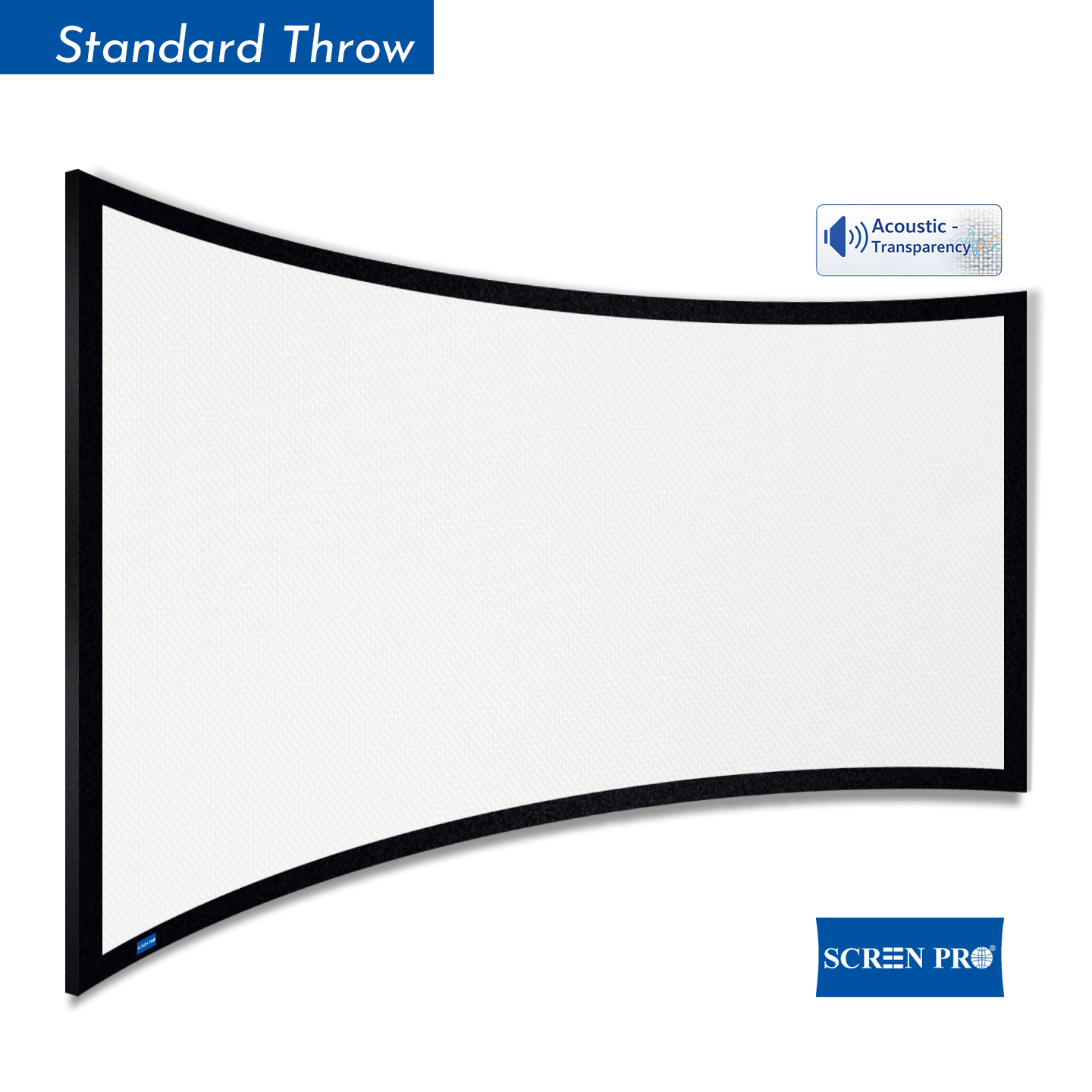
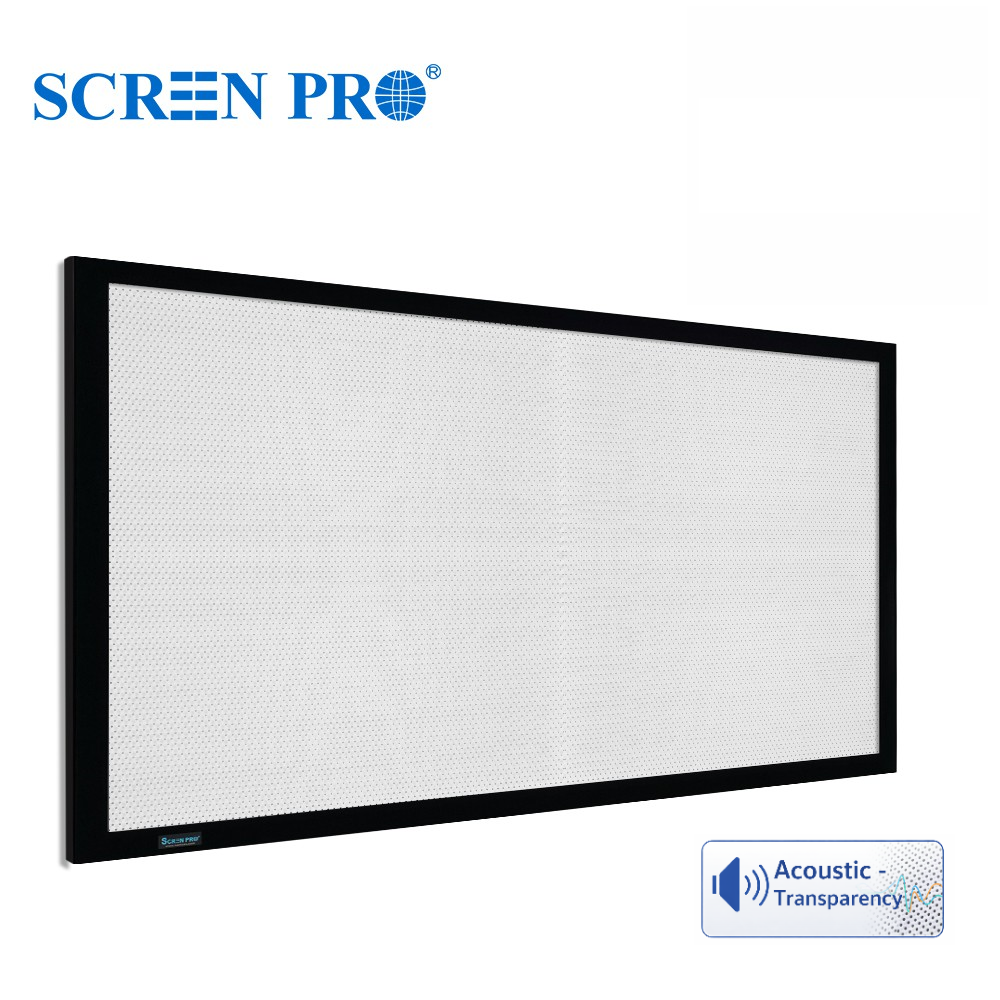
Standard throw projection is more flexible with screen material choices, including matte white, gray, high-gain, woven acoustic transparent, and long-throw ALR materials.
The best choice depends on room lighting, projector brightness, viewing angle, and whether speakers need to be placed behind the screen.
Both short throw and standard throw projection can deliver excellent image quality when matched with the correct screen. The key is choosing a screen surface designed for the projector’s light path.
| Feature | Short Throw / UST Projection | Standard Throw Projection |
|---|---|---|
| Projector Placement | Close to the screen; ideal for compact spaces | Farther from the screen; ideal for larger rooms |
| Brightness Perception | Can appear bright due to proximity, but depends heavily on screen material | More uniform when properly matched with projector brightness and screen gain |
| Geometry & Alignment | More sensitive to screen flatness and projector position | Usually easier to align and more forgiving |
| Ambient Light Control | UST ALR screens can improve contrast in living rooms | May require controlled lighting unless using ALR material |
| Shadow Interference | Minimal because the projector sits near the screen | Possible if people walk between projector and screen |
| Installation Flexibility | Excellent for cabinets, wall-mounted screens, and small rooms | Better for ceiling mounts, larger rooms, and dedicated theaters |
The right choice depends on your room size, projector type, and viewing environment.
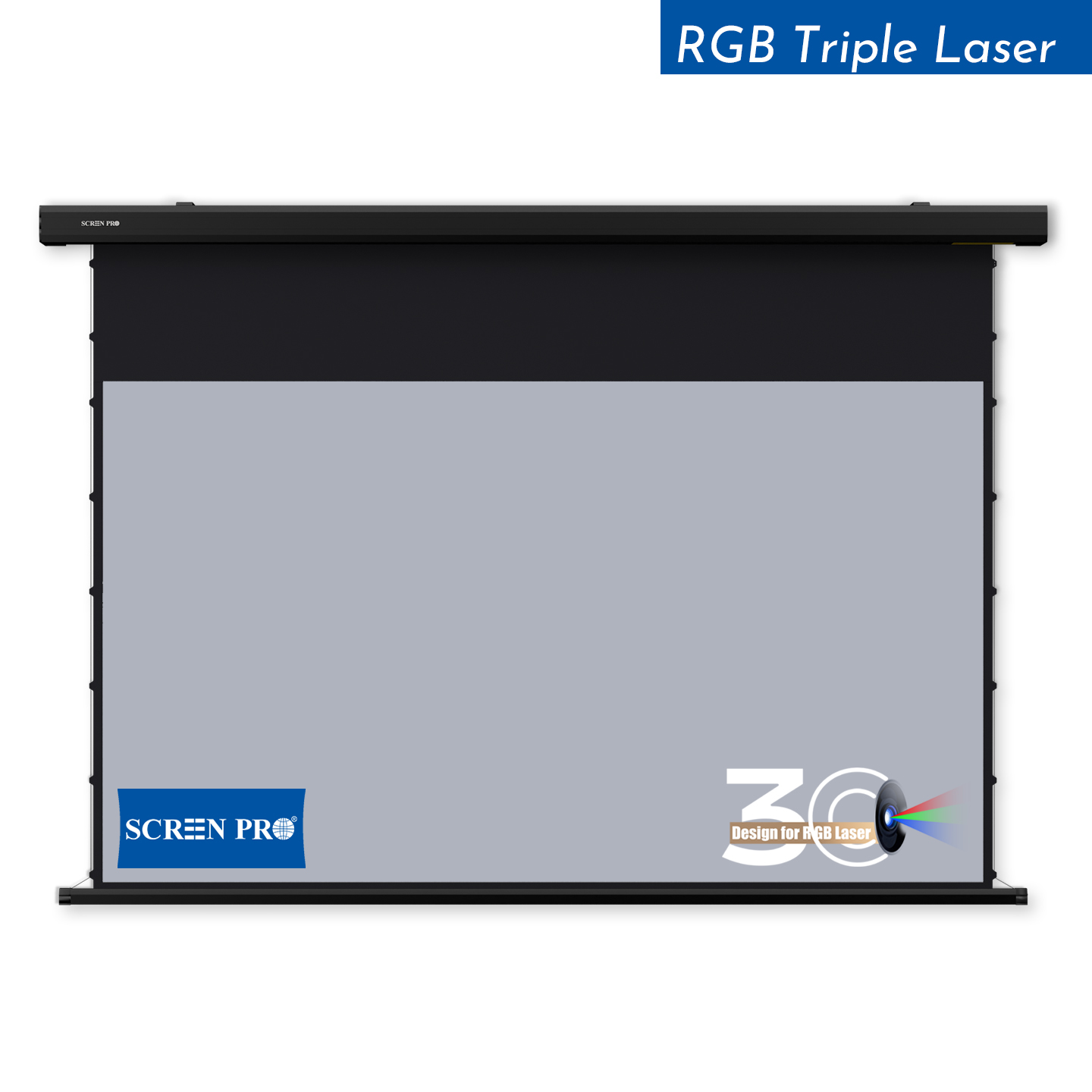
SCREENPRO offers different screen structures and materials for short throw, UST, standard throw, RGB laser, and acoustic transparent projection systems.
| Projection Setup | Recommended SCREENPRO Screen Type | Why It Fits |
|---|---|---|
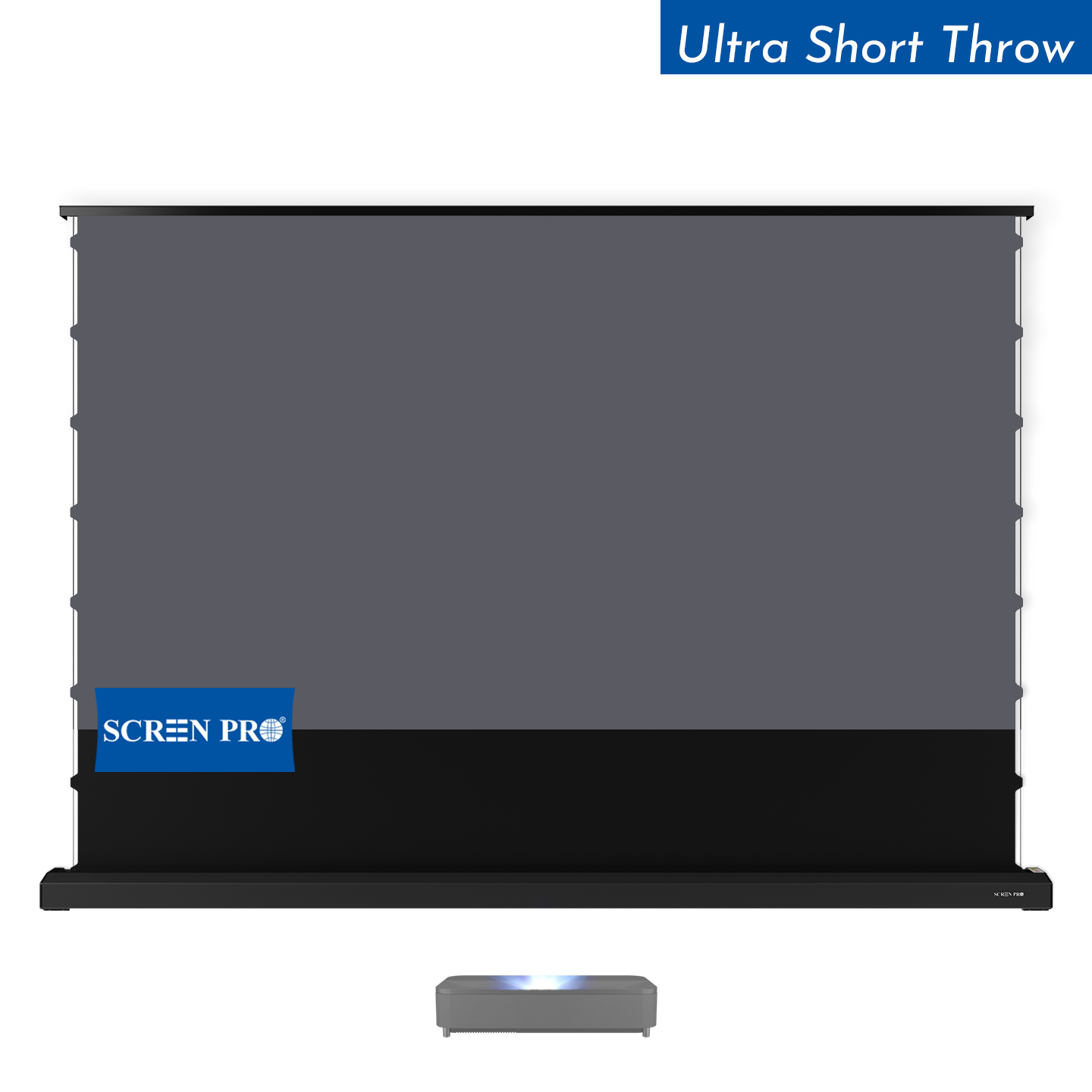
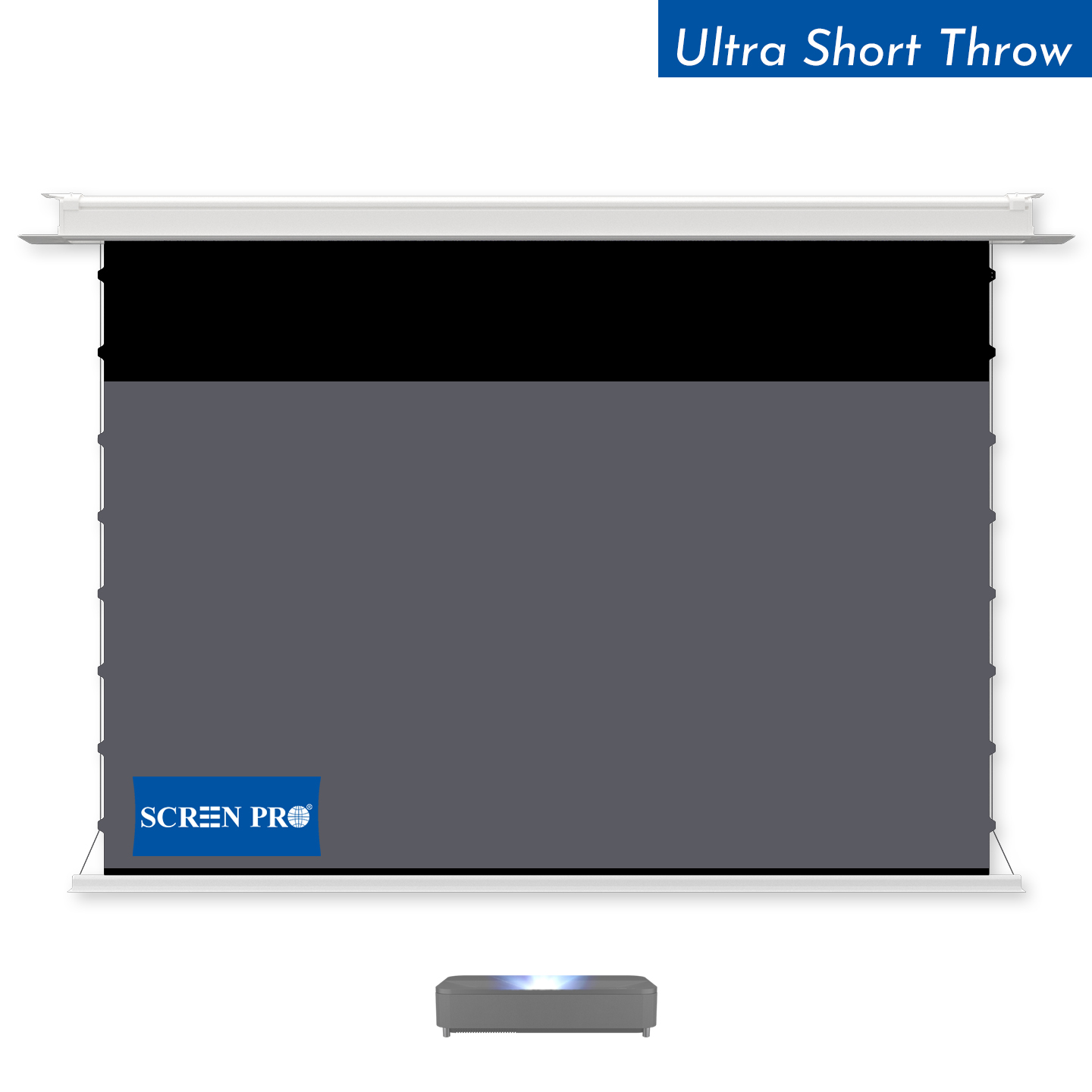
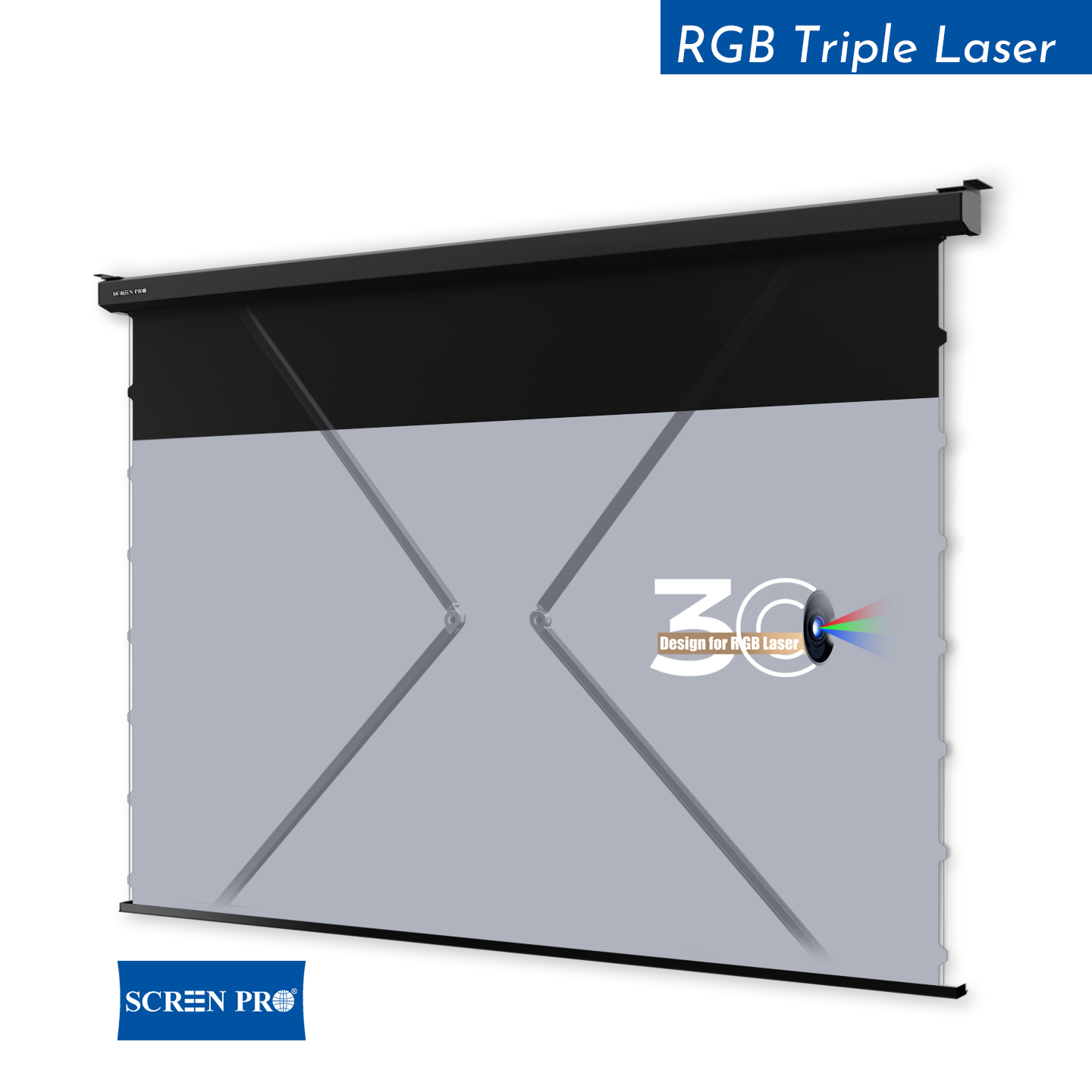
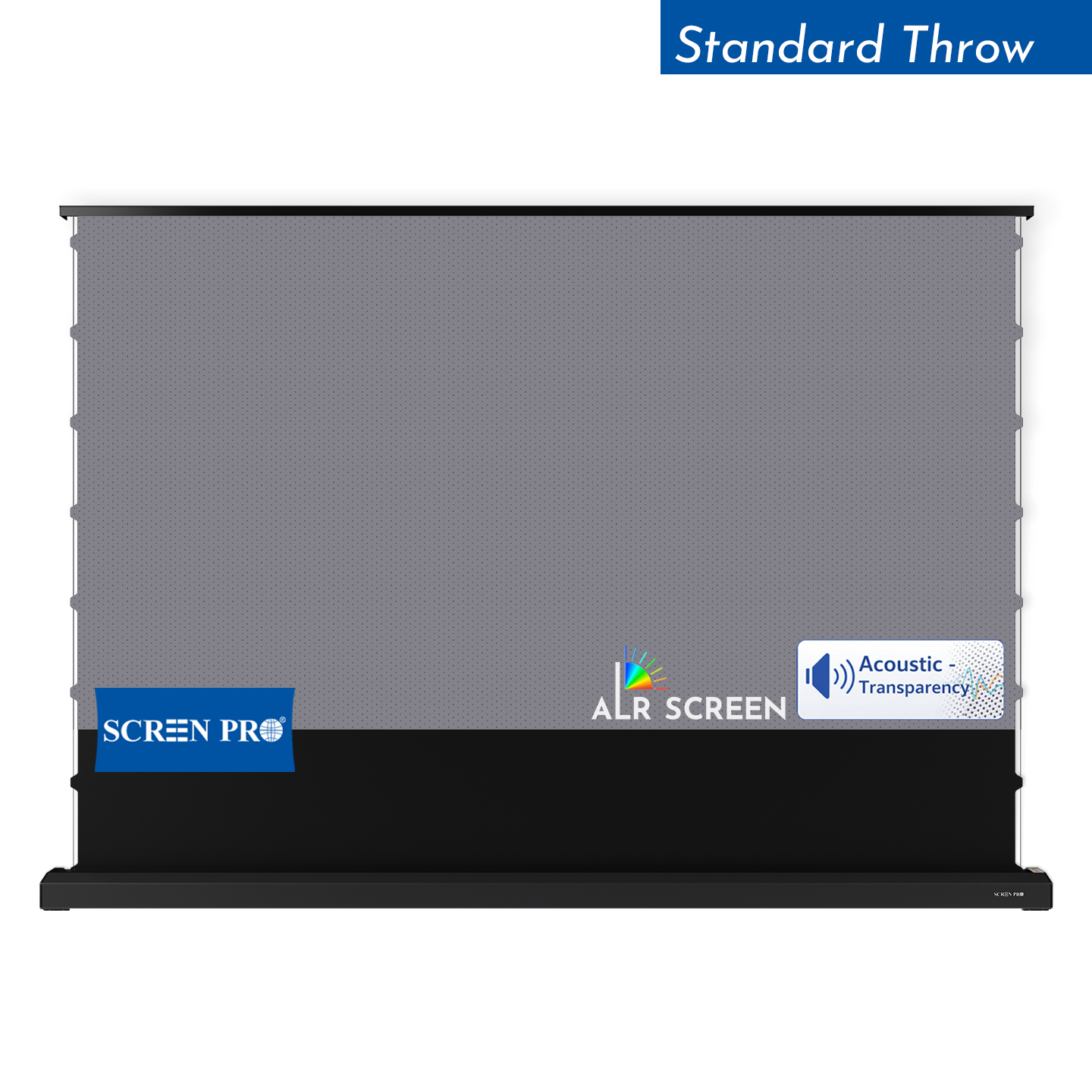
| Ultra-Short Throw Living Room | UST ALR fixed frame, motorized UST ALR, or floor-rising UST ALR screen | Improves contrast, supports close projector placement, and helps reject overhead/ambient light |
| Short Throw Small Room | Tensioned screen or flat fixed-frame screen | Maintains surface flatness and helps reduce geometry issues |
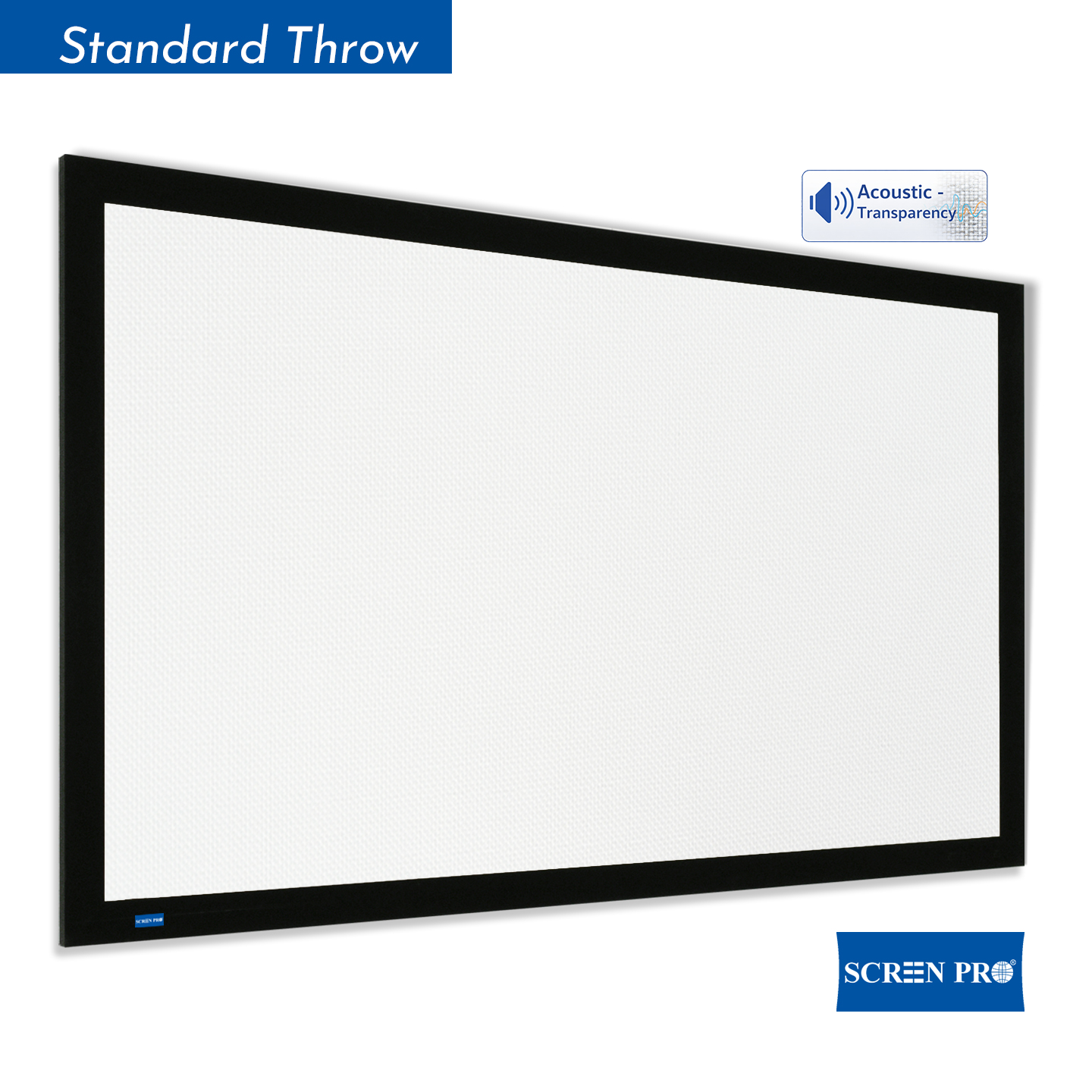
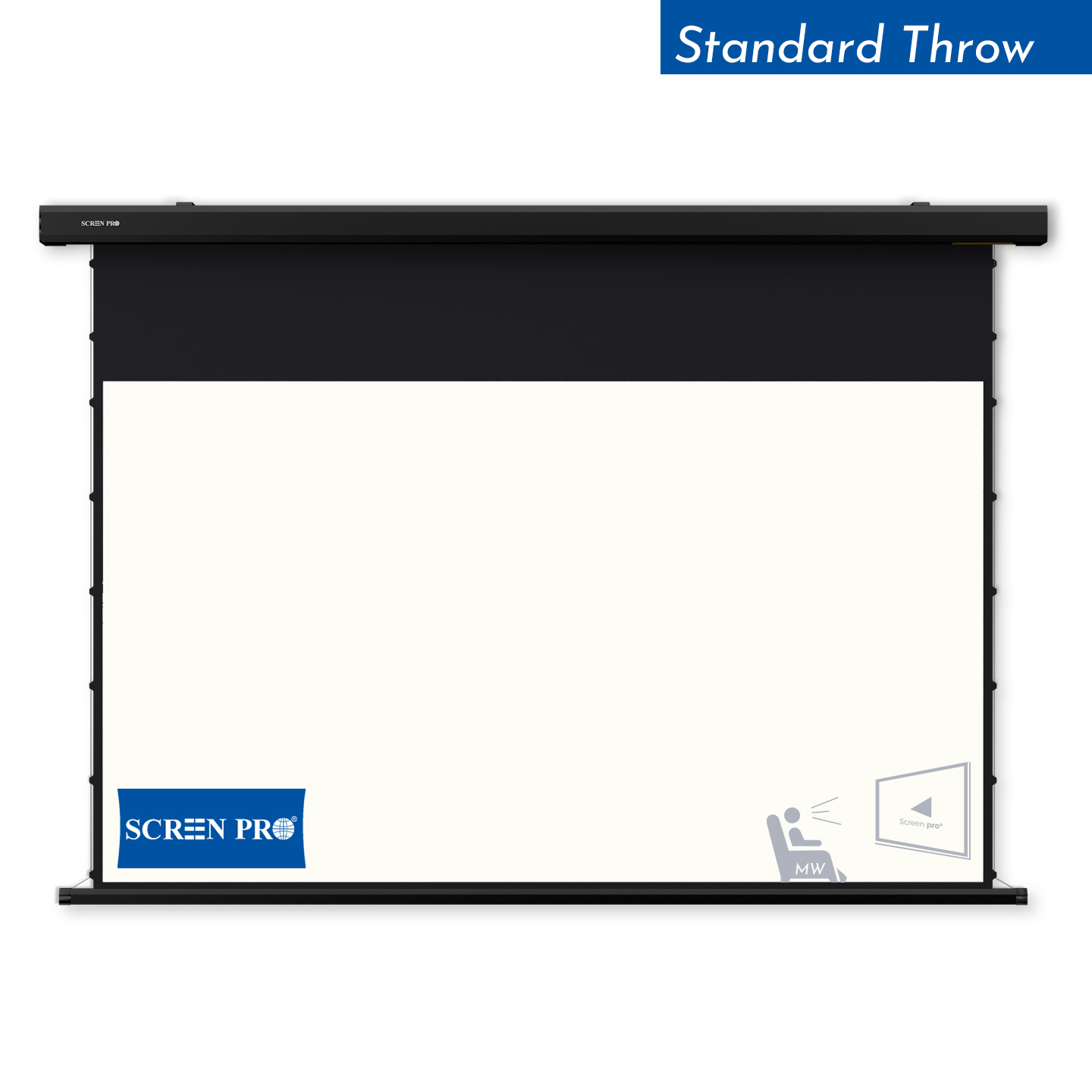
| Standard Throw Home Theater | Matte white, gray, ALR, or acoustic transparent screen | Offers more flexibility based on room lighting, brightness, and audio layout |
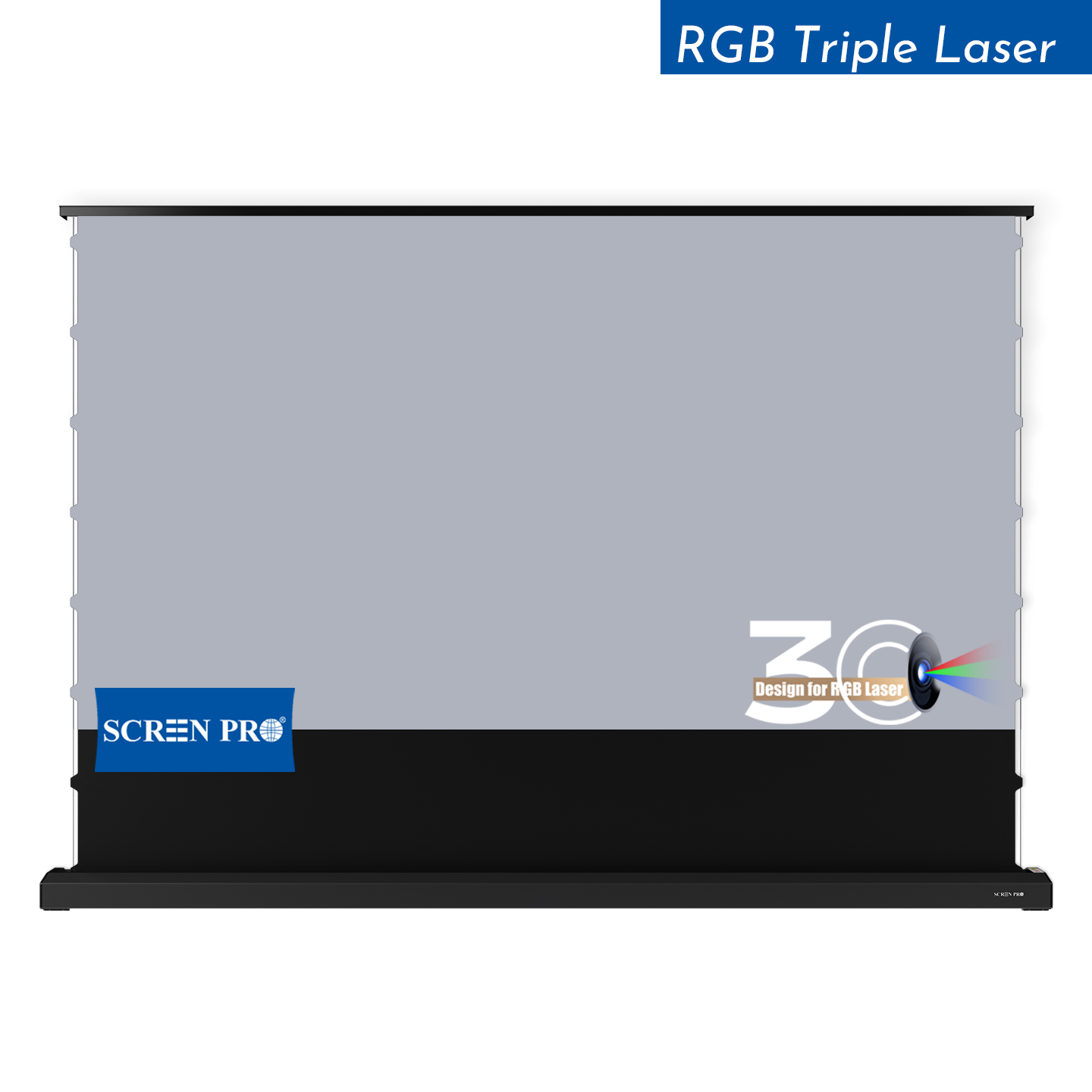
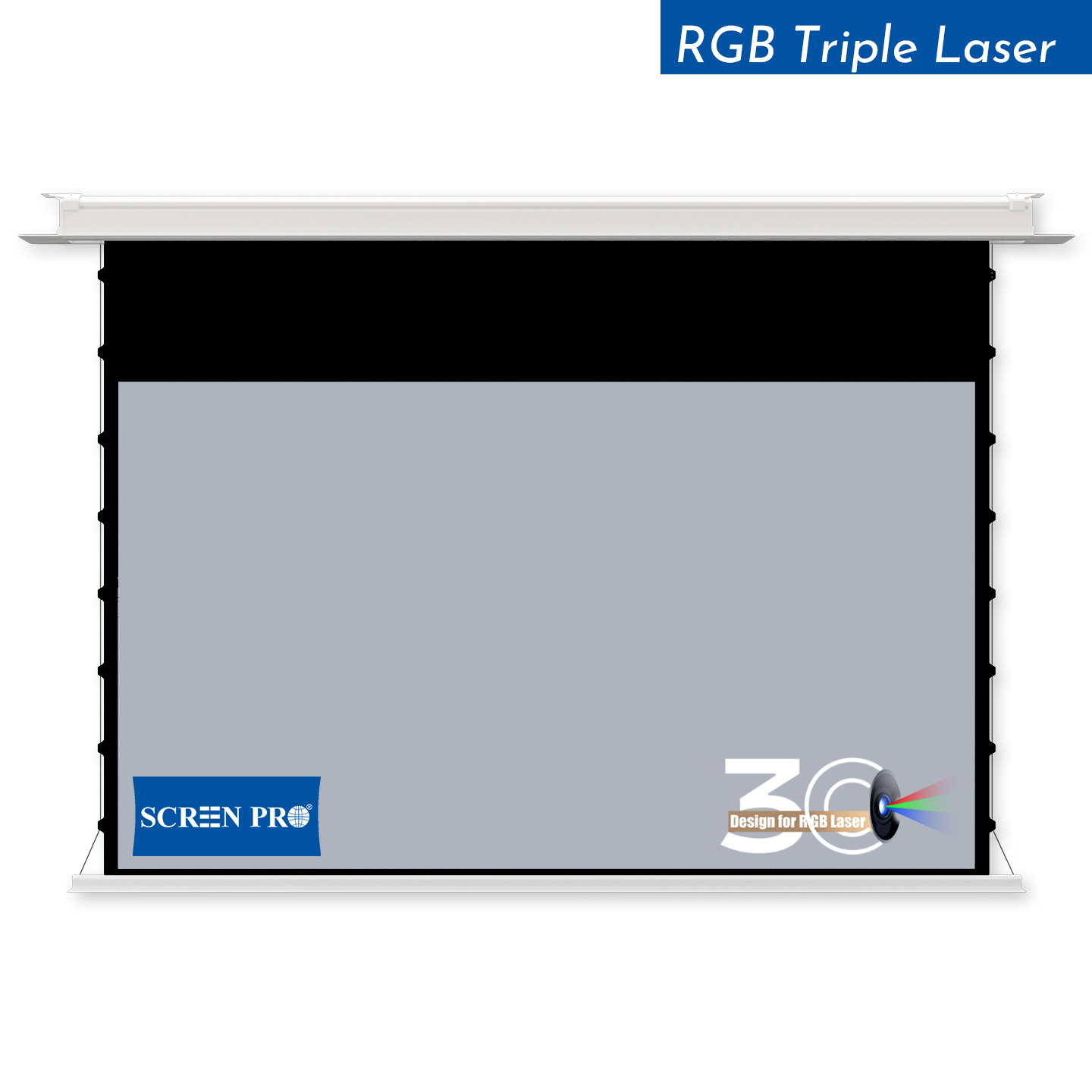
| RGB Triple-Laser Projection | 3C or 3W anti-speckle fabric | Helps reduce visible laser speckle while supporting a smoother cinematic image |
| Dedicated Theater With Speakers Behind Screen | Woven acoustic transparent screen | Allows front speakers to be placed behind the image for better sound localization |
Short throw projection is best for compact spaces, living rooms, small offices, and setups where the projector needs to stay close to the screen.
Standard throw projection is better for larger rooms, dedicated theaters, conference halls, and installations where projector placement and screen material choices can be planned more freely.
In simple terms: short throw plus a SCREENPRO UST ALR screen is ideal for compact or brighter rooms, while standard throw plus the right SCREENPRO matte white, gray, ALR, or acoustic transparent screen is ideal for larger and more controlled spaces.
It is possible, but not usually recommended for best performance. UST projectors use a steep projection angle, so a UST ALR or properly flat tensioned screen usually delivers better contrast and image geometry.
Not always. Short throw is better for tight spaces and reduced shadows. Standard throw is often better for larger rooms, easier alignment, and wider screen material choices.
For UST projectors, a UST ALR screen is usually the better choice. For standard throw projectors, a compatible ALR material may help improve contrast in rooms with ambient light.
SCREENPRO 3C and 3W fabrics are designed for users who want to reduce visible laser speckle. 3C focuses on anti-speckle image performance, while 3W also adds acoustic transparency.
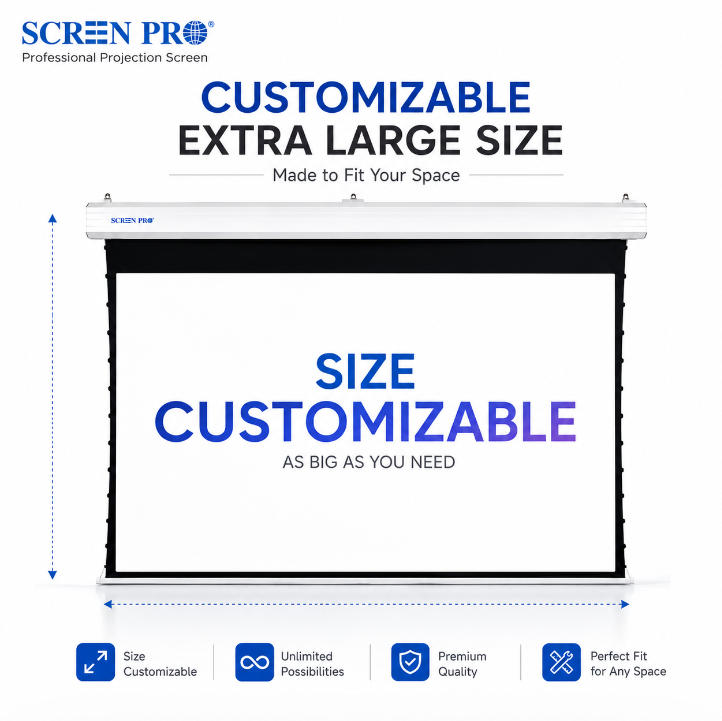
Whether you are building a compact UST setup or a large dedicated theater, SCREENPRO can help match screen structure, material, size, and installation method to your projector.
Talk To SCREENPRO```





© Copyright 2004-2026 SCREEN PRO® All Rights Reserved | Specifications are subject to change without notice. All Rights ReservedSite Map Designed by iwonder.cn