


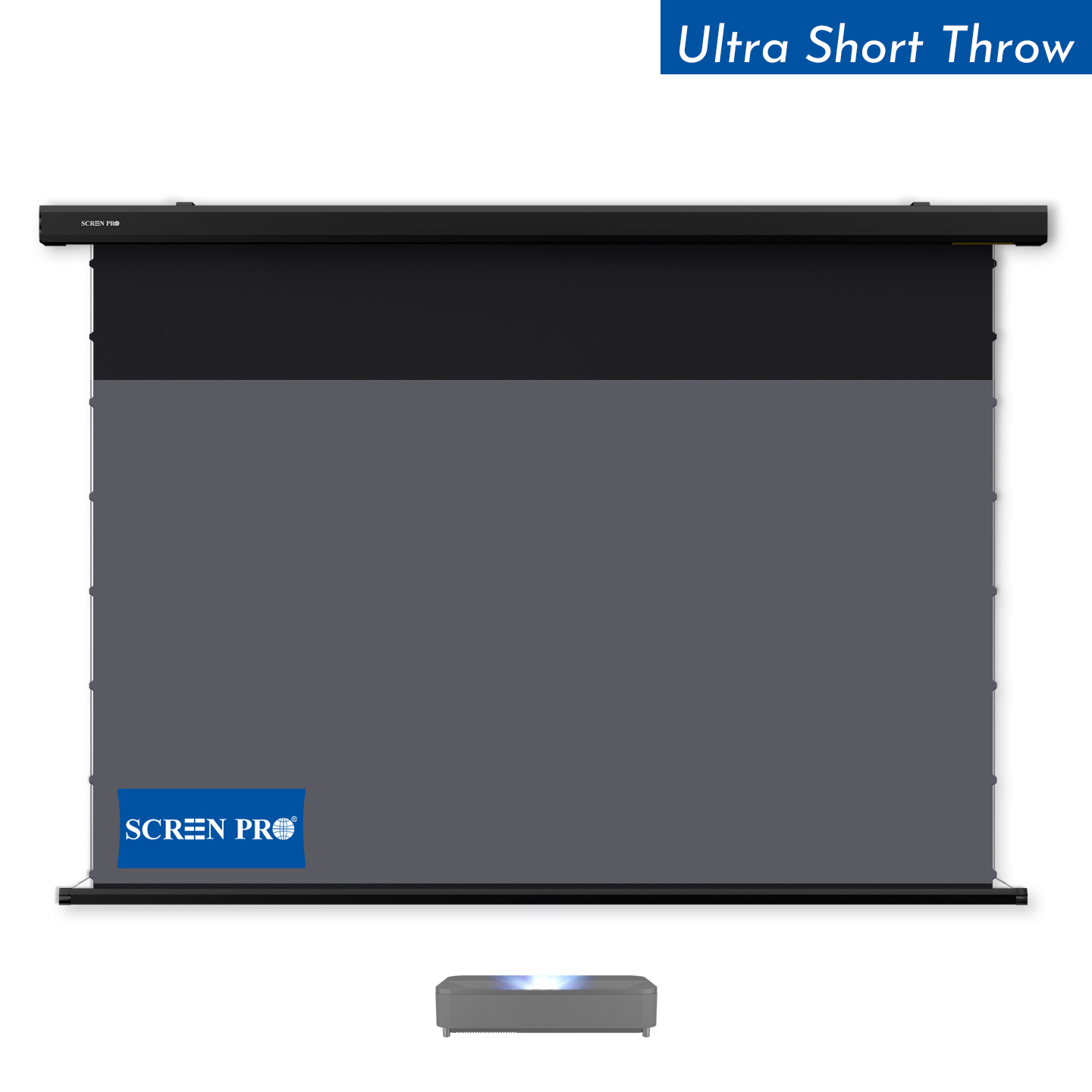
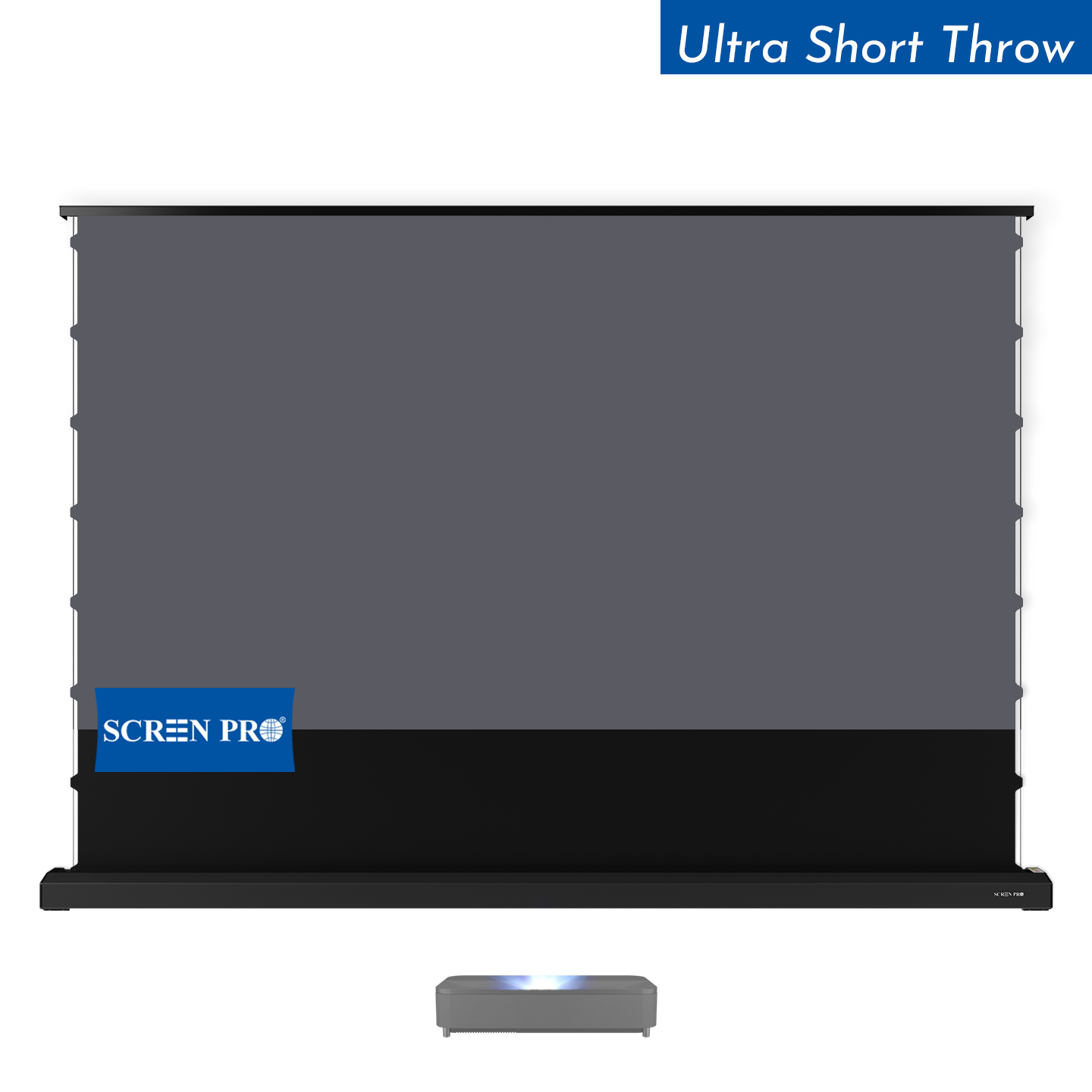
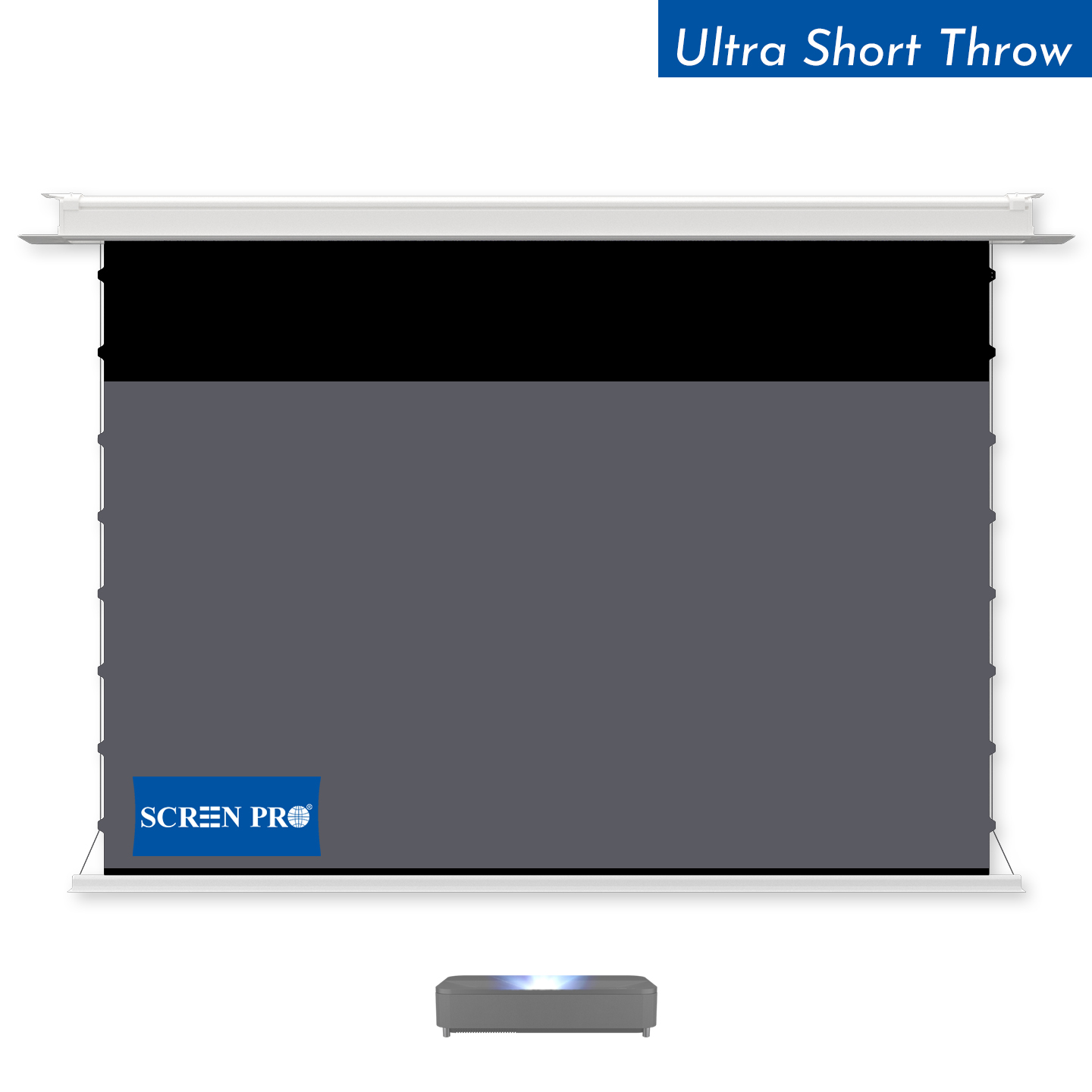
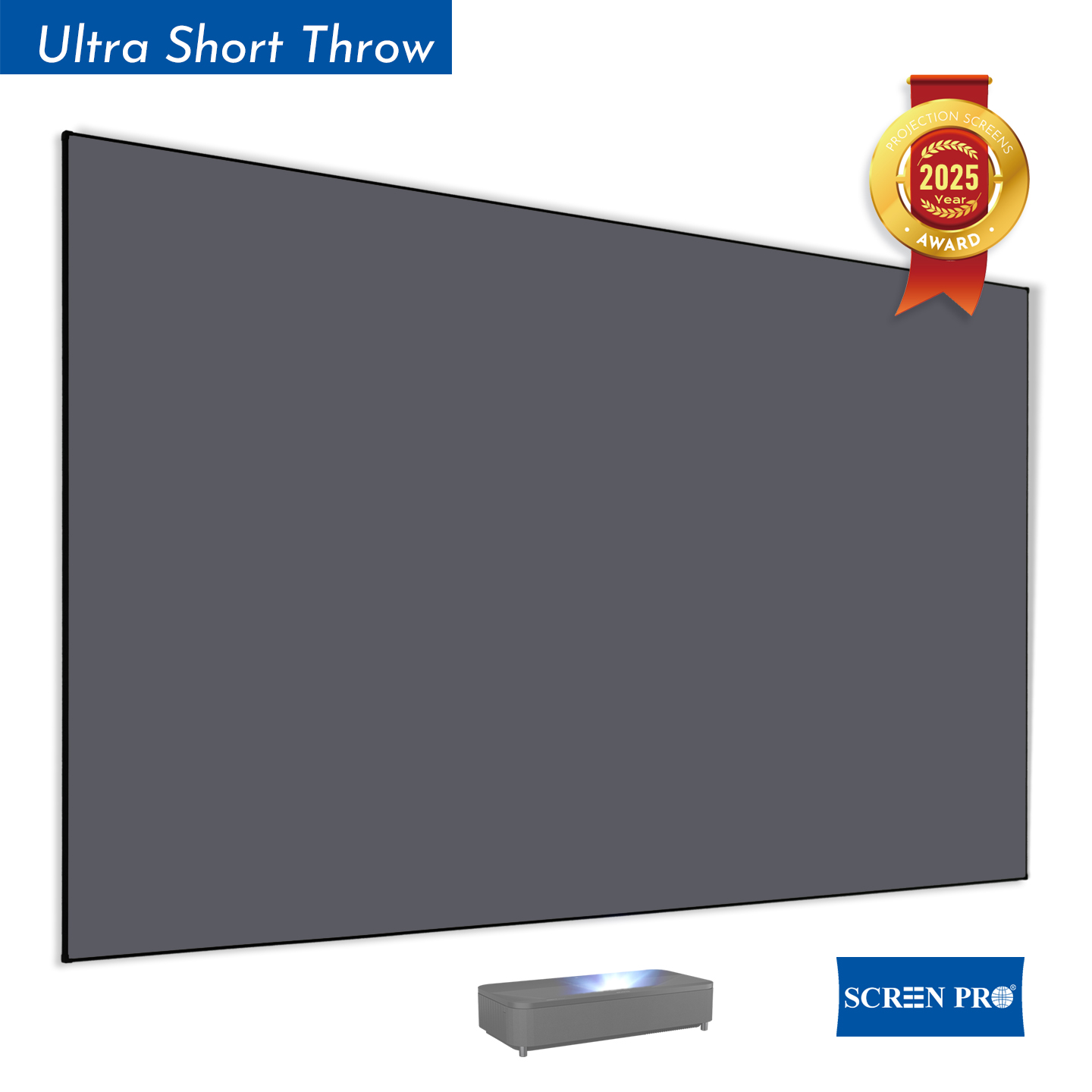


Why T-Prism Cannot Fully Overcome Complex Ambient Light Conditions
T-Prism technology can greatly improve UST projection performance in real-world rooms, but no optical screen can completely defeat uncontrolled ambient light from every direction.
Understanding How T-Prism Works
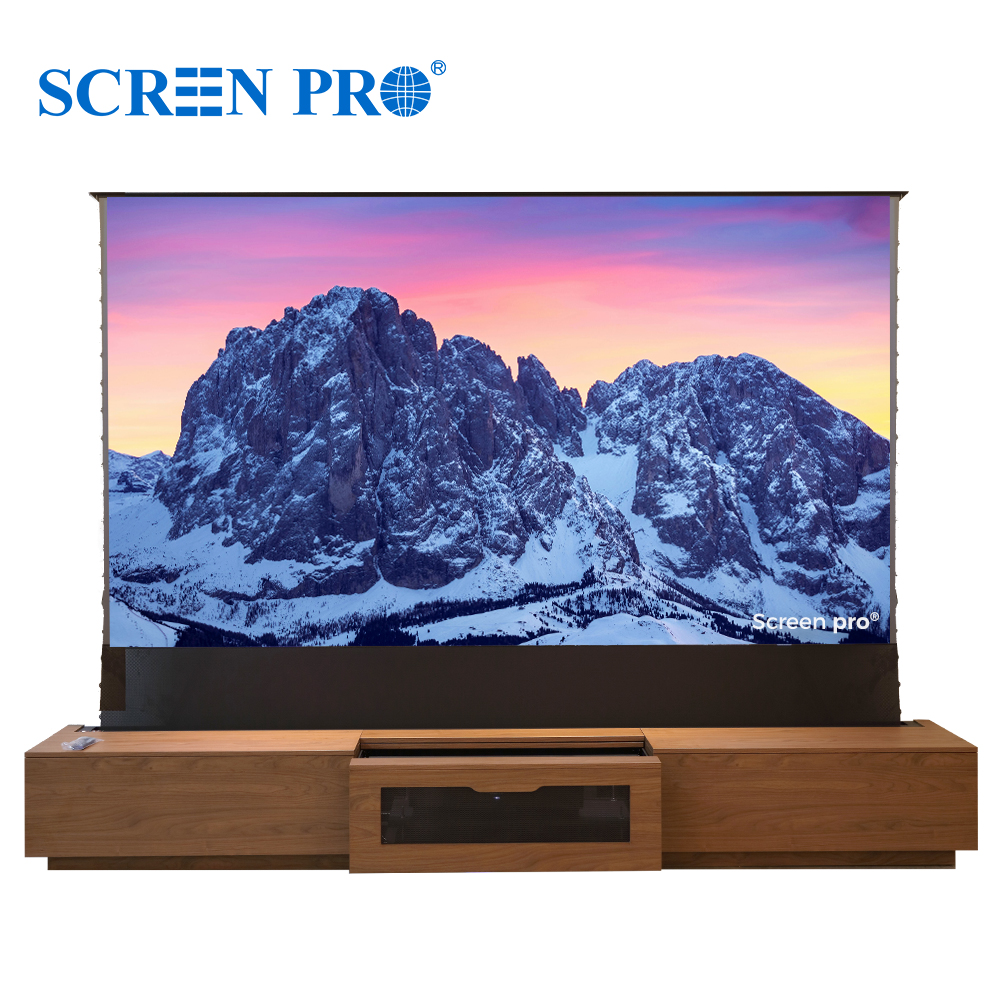
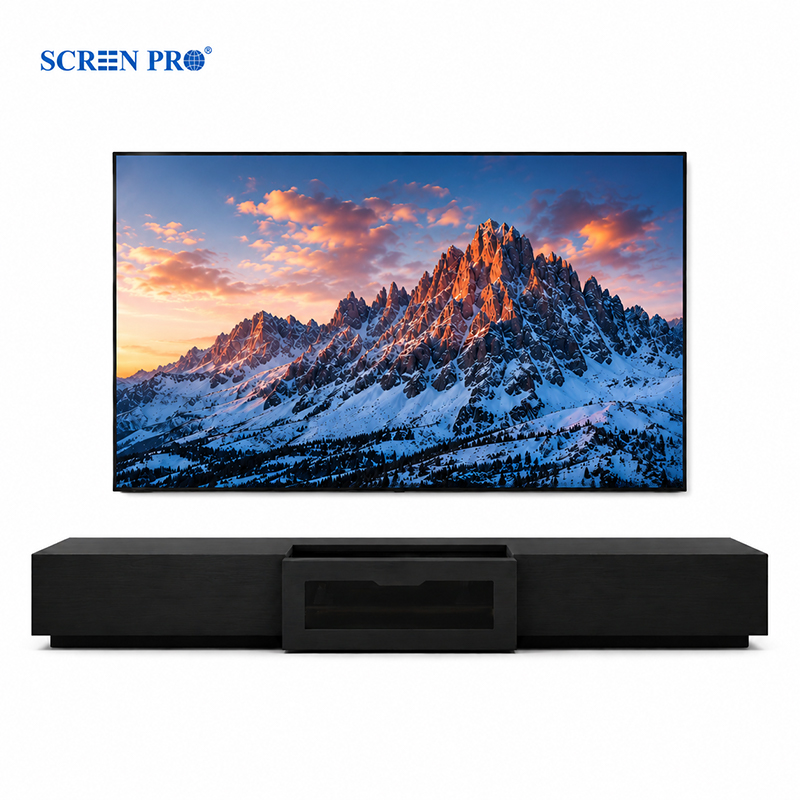
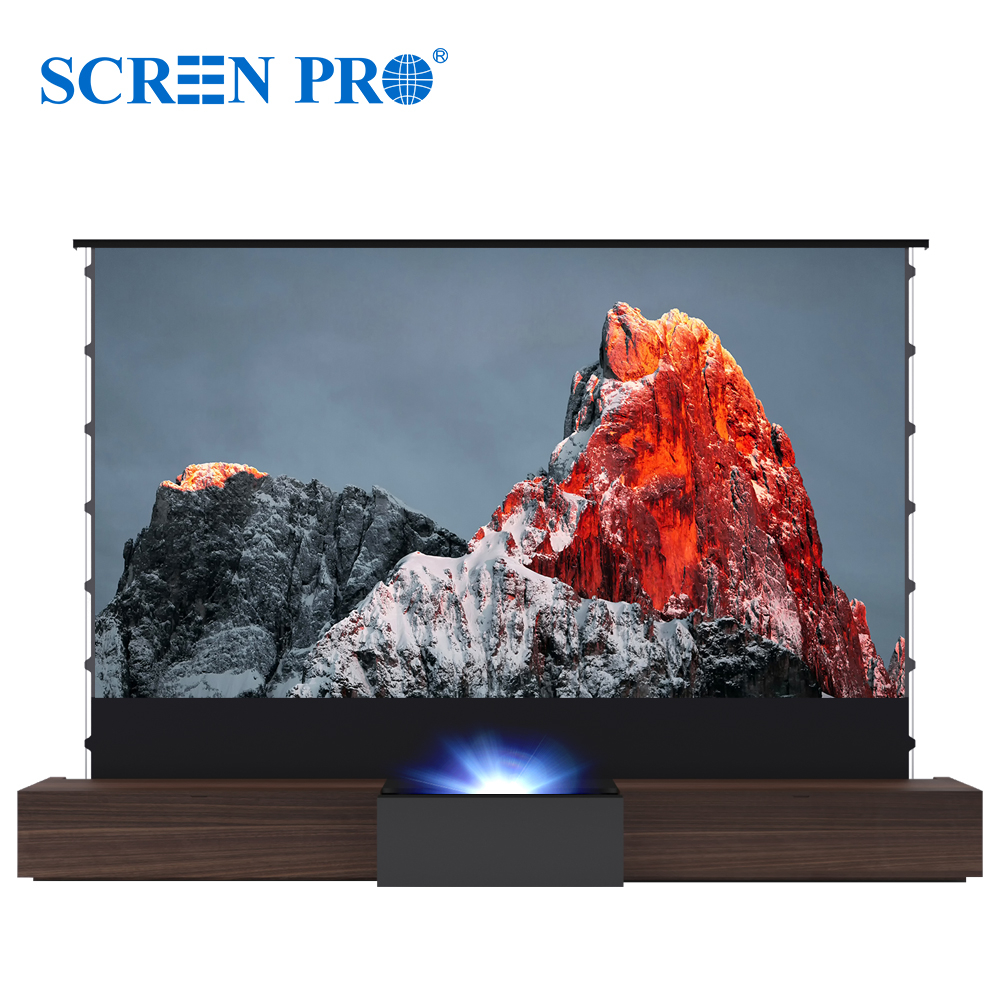
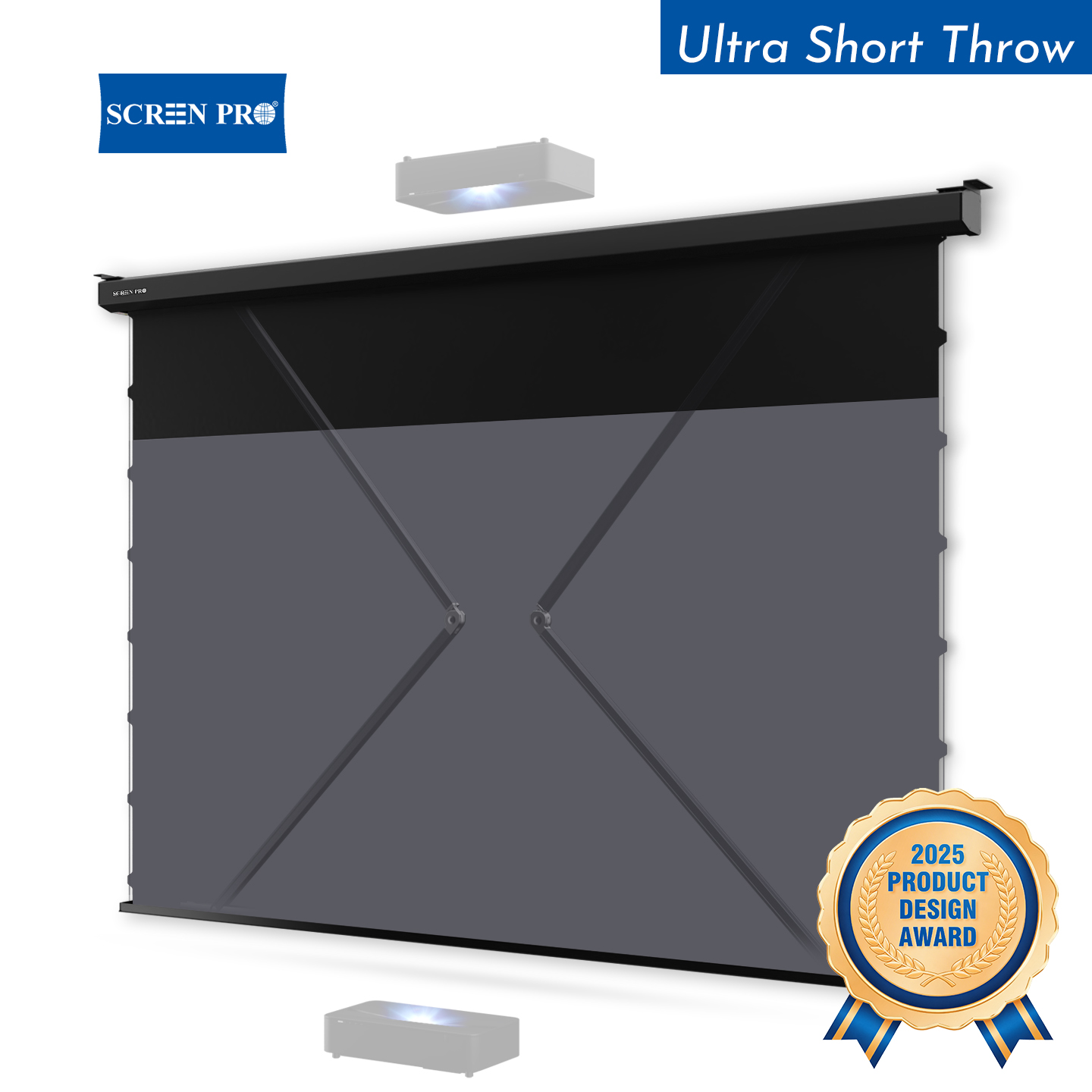
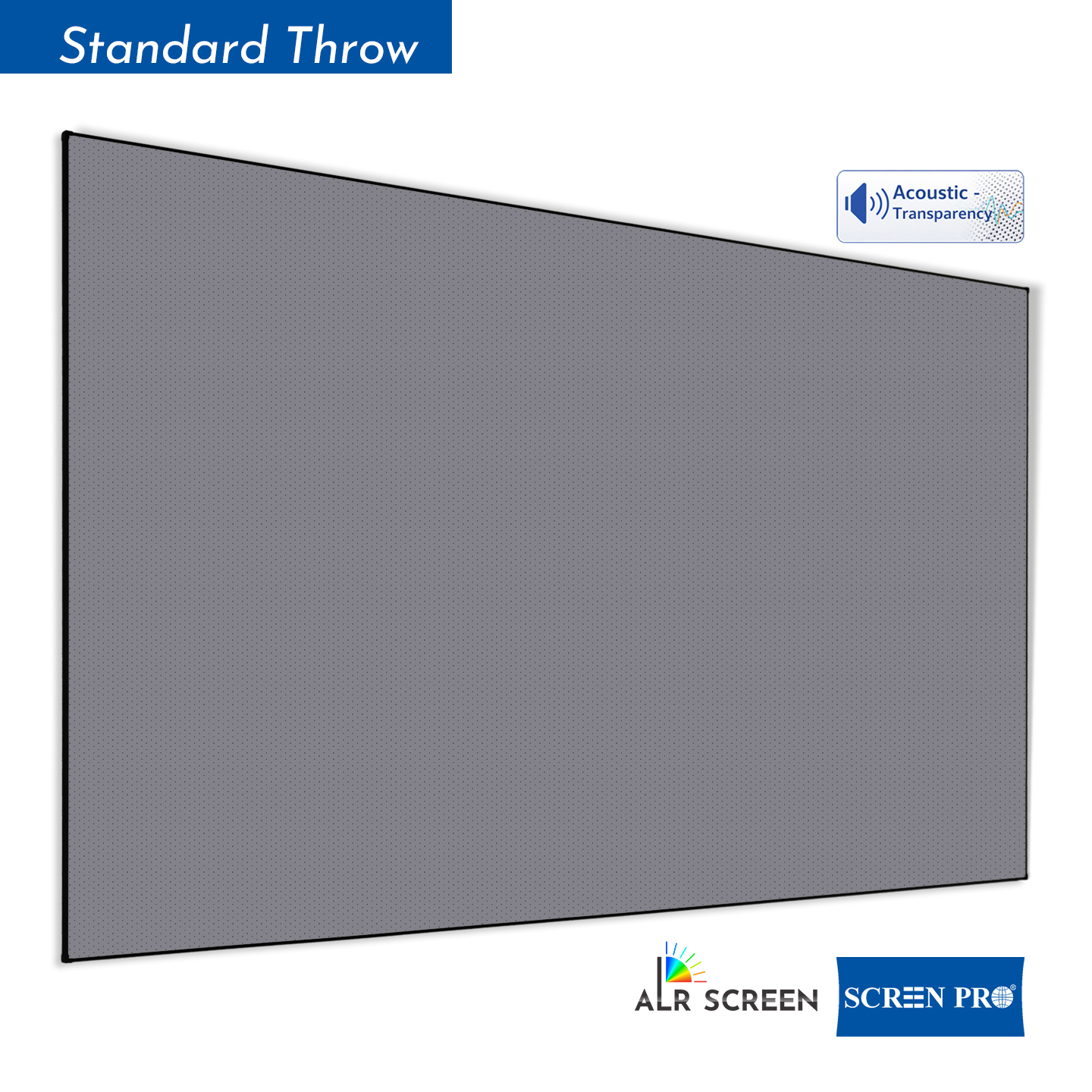
T-Prism is an optical structure designed specifically for ultra-short throw projectors. Unlike traditional matte white projection surfaces that reflect light in many directions, a T-Prism screen uses engineered microstructures to control how light is reflected.
Direct UST Light
UST projector light arrives from a predictable low angle and is redirected toward the viewer.
Reject Ambient Light
Light from less desirable directions is reduced to improve perceived contrast.
Improve Black Levels
By reducing reflected room light, dark scenes appear deeper and more stable.
The Challenge: Ambient Light Comes From Everywhere
In a controlled test environment, light sources can be positioned in predictable locations. In a real home, ambient light is much more complex.
- Windows and glass doors
- Ceiling fixtures
- Floor and table lamps
- Reflections from walls
- Reflections from ceilings
- Reflections from furniture
While a T-Prism structure can reject a large percentage of light arriving from certain angles, it cannot perfectly distinguish every ambient light ray from every projector light ray. Some unwanted light will inevitably reach the viewer.
Direct Light vs. Reflected Light
Many users focus only on direct sunlight or ceiling lights, but reflected light is often the larger problem in real rooms.
Direct Light
Direct light comes from visible light sources such as lamps, windows, or ceiling fixtures. This type of light is easier to understand and reduce.
Reflected Light
Reflected light bounces from white walls, ceilings, floors, glossy cabinets, mirrors, and other bright surfaces before reaching the screen.
Why No Screen Can Defeat Physics
A common misconception is that ALR screens “block” ambient light. In reality, they selectively manage light. Every optical screen involves trade-offs between brightness, viewing angle, color accuracy, contrast, and ambient light rejection.
| Performance Factor | What Users Want | The Optical Trade-Off |
|---|---|---|
| Brightness | A vivid image in bright rooms | Too much rejection may also reduce projector light. |
| Viewing Angle | Consistent image from wider seating positions | Stronger directional rejection may narrow the optimal viewing area. |
| Contrast | Deeper blacks and better dark-scene detail | Highly reflective rooms can still wash out black levels. |
| Color Accuracy | Natural and accurate color reproduction | Complex coating or structure design must balance rejection and neutrality. |
If a screen were designed to reject virtually all ambient light from every direction, it would also begin rejecting part of the projector’s own light. This would reduce brightness and narrow the viewing angle.
Why T-Prism Still Matters
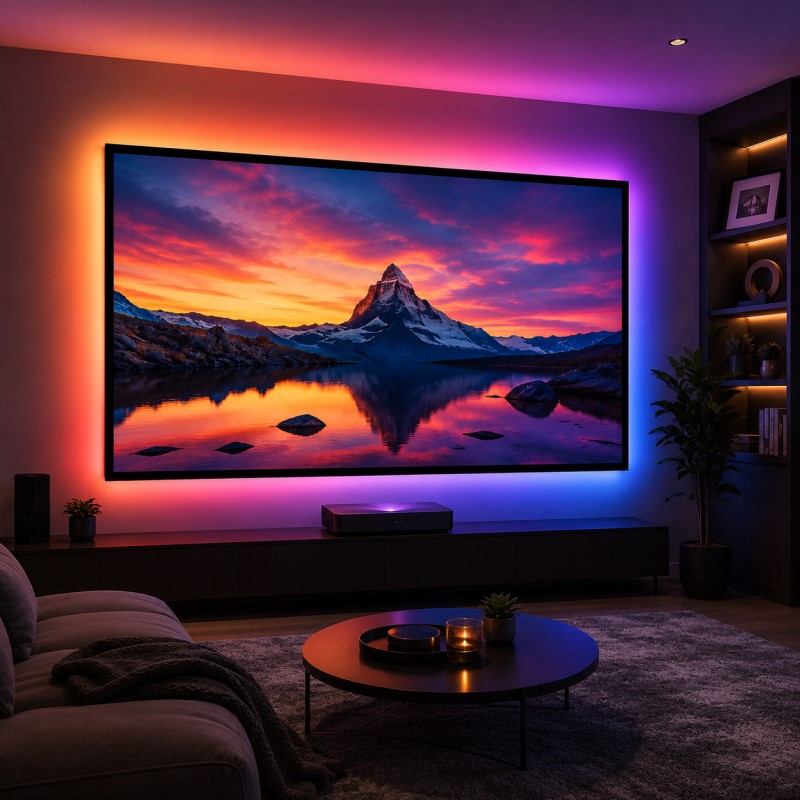
Although T-Prism cannot completely eliminate complex ambient light, it can dramatically improve UST projection performance compared with conventional projection surfaces.
Higher Perceived Contrast
Dark scenes appear deeper because less ambient light is reflected toward the viewer.
Better Daytime Viewing
Sports, TV shows, and casual viewing remain more enjoyable under moderate room lighting.
Enhanced Black Levels
Black areas appear significantly darker than they would on traditional white screens.
Greater Image Stability
The image stays more consistent as lighting conditions change throughout the day.
Living Room Friendly
T-Prism helps make large-screen projection more practical in everyday media rooms.
Not Magic — Engineering
Its role is to intelligently manage light, not eliminate the laws of optics.
How to Maximize T-Prism Performance
To get the best result from a UST ALR screen, the room should be treated as part of the projection system.
- Use curtains or blinds on large windows
- Reduce direct sunlight on the screen
- Choose darker wall colors near the screen
- Minimize glossy or reflective furniture
- Place ceiling lights behind the seating area
- Avoid spotlights aimed toward the screen
- Maintain correct projector alignment
- Control white ceilings and bright side walls when possible
The Bottom Line
T-Prism technology is one of the most effective solutions for improving UST projector performance in real-world environments. However, it is not magic. Its job is to intelligently manage light, not eliminate the laws of optics.
The more controlled the room environment, the greater the benefit users will see from T-Prism technology. While no screen can completely overcome highly complex ambient light from every direction, a properly designed T-Prism screen can dramatically enhance contrast, black levels, and overall viewing quality.
SCREENPRO®
Engineering projection screens for real-world environments — from UST ALR screens to custom home theater and commercial projection solutions.
Talk to SCREENPRO