

© Copyright 2004-2026 SCREEN PRO® All Rights Reserved | Specifications are subject to change without notice. All Rights ReservedSite Map Designed by iwonder.cn


When comparing projection screen materials, many buyers focus on one specification first:
Gain.
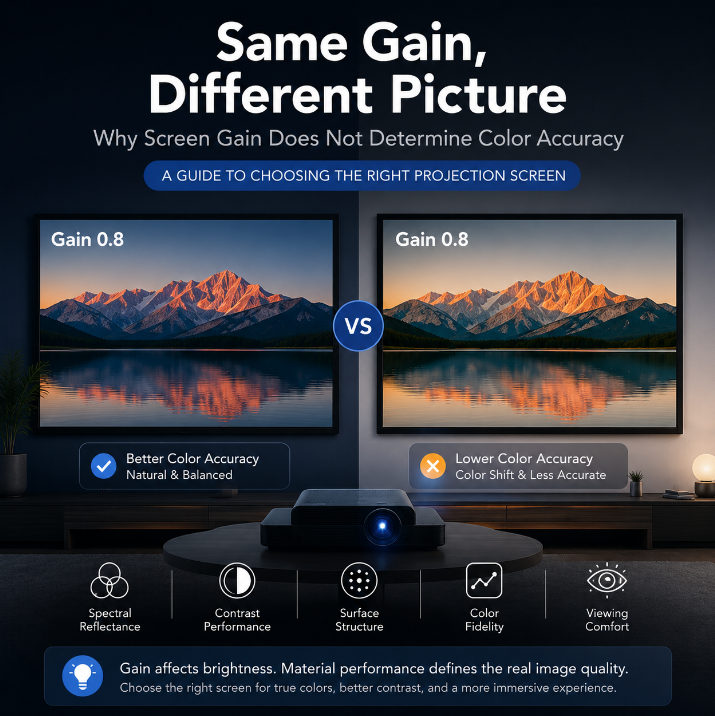
It is common to assume that if two projection screens have the same gain, they will produce the same image quality. In reality, this is not the case.
Two screen materials may both be rated at 0.8 gain, yet deliver noticeably different colors, contrast, viewing comfort, and overall image quality.
Understanding why can help you choose the right screen for your projector, room lighting and viewing environment.
Quick answer: Gain mainly describes brightness efficiency. Color accuracy depends on spectral reflectance, surface structure, contrast performance, screen color and projector compatibility.
Gain is a measurement of how efficiently a projection screen reflects projected light toward the viewer.
A higher gain screen reflects more light in the viewing direction, making the image appear brighter.
Gain primarily describes brightness efficiency.
However, gain does not directly describe color accuracy, color balance, contrast performance, black levels or laser speckle visibility.
This is why two projection screens with identical gain values can produce very different viewing experiences.
One of the most important factors affecting color reproduction is a material's spectral reflectance.
An ideal screen reflects red, green and blue light evenly.
The resulting image appears neutral and color accurate.
However, another screen may have uneven reflectance:
Even if both screens are rated at 0.8 gain, the second screen may appear warmer, cooler or slightly color-shifted.
This difference becomes especially visible when using modern RGB triple-laser projectors.
Screen color has a direct impact on perceived image quality.
White screens generally provide natural color reproduction, wide viewing angles and high brightness efficiency. They are often preferred in dedicated dark-room theaters.
Grey screens can provide improved perceived black levels, higher perceived contrast and better performance under ambient light.
However, they may also slightly reduce overall image brightness.
As a result, two 0.8 gain screens — one white and one grey — can look dramatically different.
Modern projection screens often use optical structures rather than simple flat surfaces.
Examples include:
These technologies are designed to manage ambient light, improve contrast or reduce laser speckle.
However, they also influence how different wavelengths of light are reflected.
This is why two screens with the same gain rating may show different color performance, especially when paired with high-color-volume laser projectors.
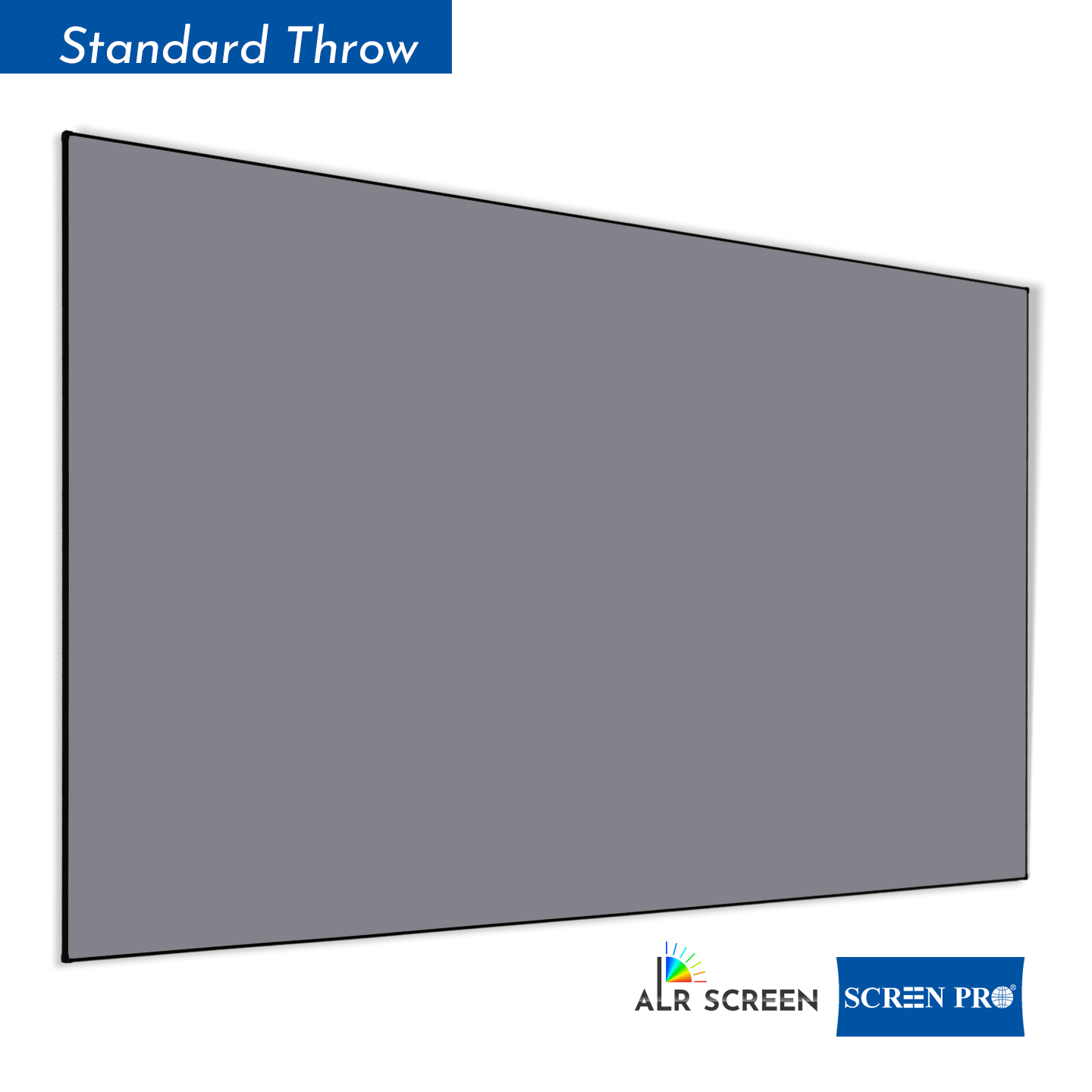
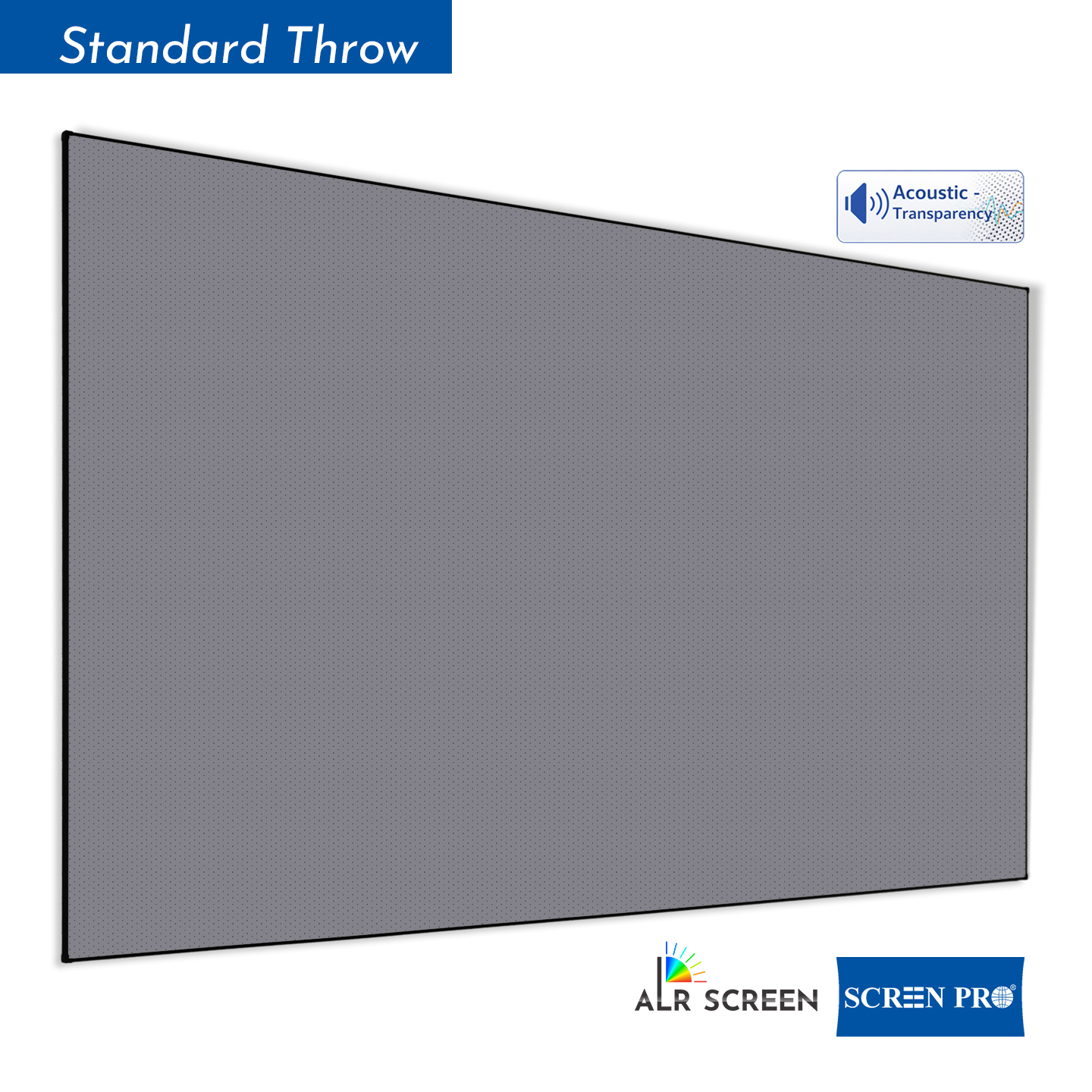
For rooms with ambient light or high contrast requirements, explore SCREENPRO ALR screen systems.
Screen texture plays a major role in image reproduction.
For RGB laser projectors, texture can affect:
A smooth PVC material, a woven acoustic fabric and an anti-speckle surface may all share similar gain ratings while producing very different visual results.
Consider two screen materials:
Brightness may appear similar.
However, Screen A can deliver more accurate colors, better shadow detail, higher perceived contrast and cleaner image reproduction.
This difference becomes increasingly noticeable on 4K, 8K and RGB triple-laser projection systems.
RGB triple-laser projectors are capable of producing extremely wide color gamuts and high brightness levels.
Because of this, any limitation in screen material performance becomes easier to see.
A screen designed specifically for triple-laser projection can help maintain:
Choosing the right material often has a greater impact on image quality than a small difference in gain value.
Designed for RGB triple-laser projectors, 3C helps reduce visible laser speckle while maintaining balanced image performance.
Explore 3C Screen SeriesA woven acoustic transparent anti-speckle material for home cinema systems that require both speaker placement behind the screen and speckle reduction.
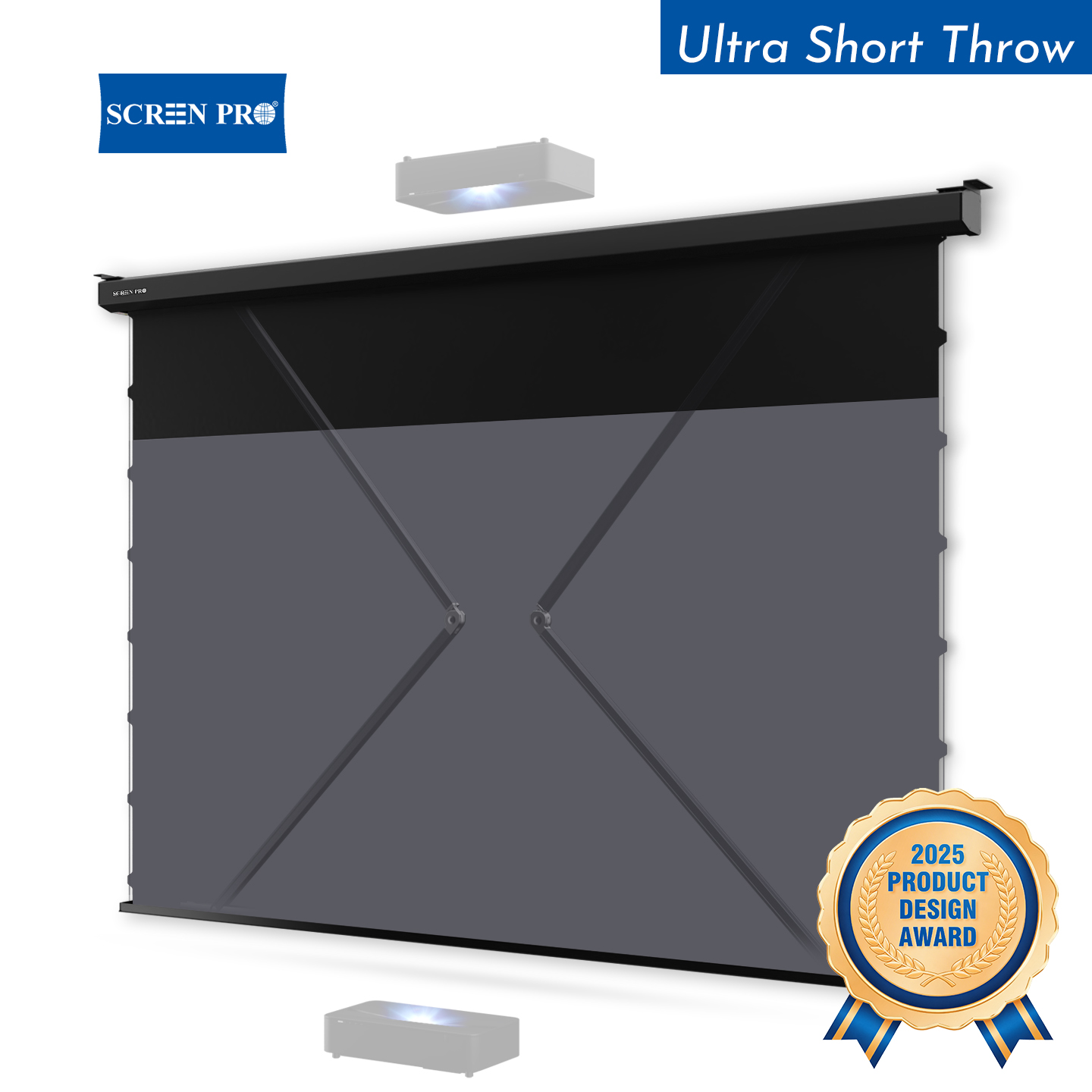
Explore 3W MaterialDesigned for ultra short throw projectors, UST ALR screens help reject overhead ambient light and improve perceived contrast.
Explore AJ UST ALR ScreenIdeal for dedicated cinema rooms where front speakers are installed behind the screen for a more immersive soundstage.
Explore FP Acoustic Transparent ScreenScreen gain is only one part of the picture.
While gain determines how bright a screen appears, it does not determine how accurately colors are reproduced.
When evaluating projection screen materials, consider color accuracy, spectral reflectance, contrast performance, surface structure, ambient light performance and compatibility with your projector type.
Two screens may share the same gain rating, but the viewing experience can be completely different.
For today's high-performance RGB laser projectors, choosing the right screen material is just as important as choosing the projector itself.





© Copyright 2004-2026 SCREEN PRO® All Rights Reserved | Specifications are subject to change without notice. All Rights ReservedSite Map Designed by iwonder.cn