


© 2026 SCREENPRO®. Specifications are subject to change without notice. | SamsAV All Rights ReservedSite Map Designed by iwonder.cn


A true HiFi home theater is not built by the projector alone. It is the result of balanced audio, controlled lighting, room acoustics, and the right projection screen working together.
HiFi stands for “High Fidelity,” which means accurate, natural, and detailed sound reproduction. In a home theater environment, HiFi is not only about music playback. It also affects dialogue clarity, surround sound realism, bass control, and the emotional impact of movies.
A complete HiFi home theater system usually includes a projector or display, projection screen, AV receiver, speakers, subwoofer, media source, acoustic treatment, seating, and lighting control.
Projector, projection screen, screen size, ambient light control, and viewing distance.
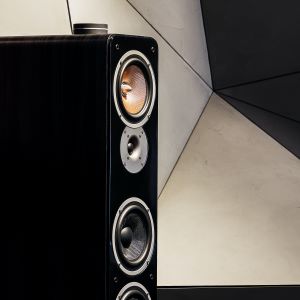
Front speakers, center channel, surrounds, subwoofer, AV receiver, and speaker calibration.
Room shape, curtains, wall reflections, acoustic panels, seating position, and installation style.
The room has a major impact on both image quality and sound quality. A high-end projector and speaker system cannot perform well if the room has uncontrolled light, strong reflections, or poor seating distance.
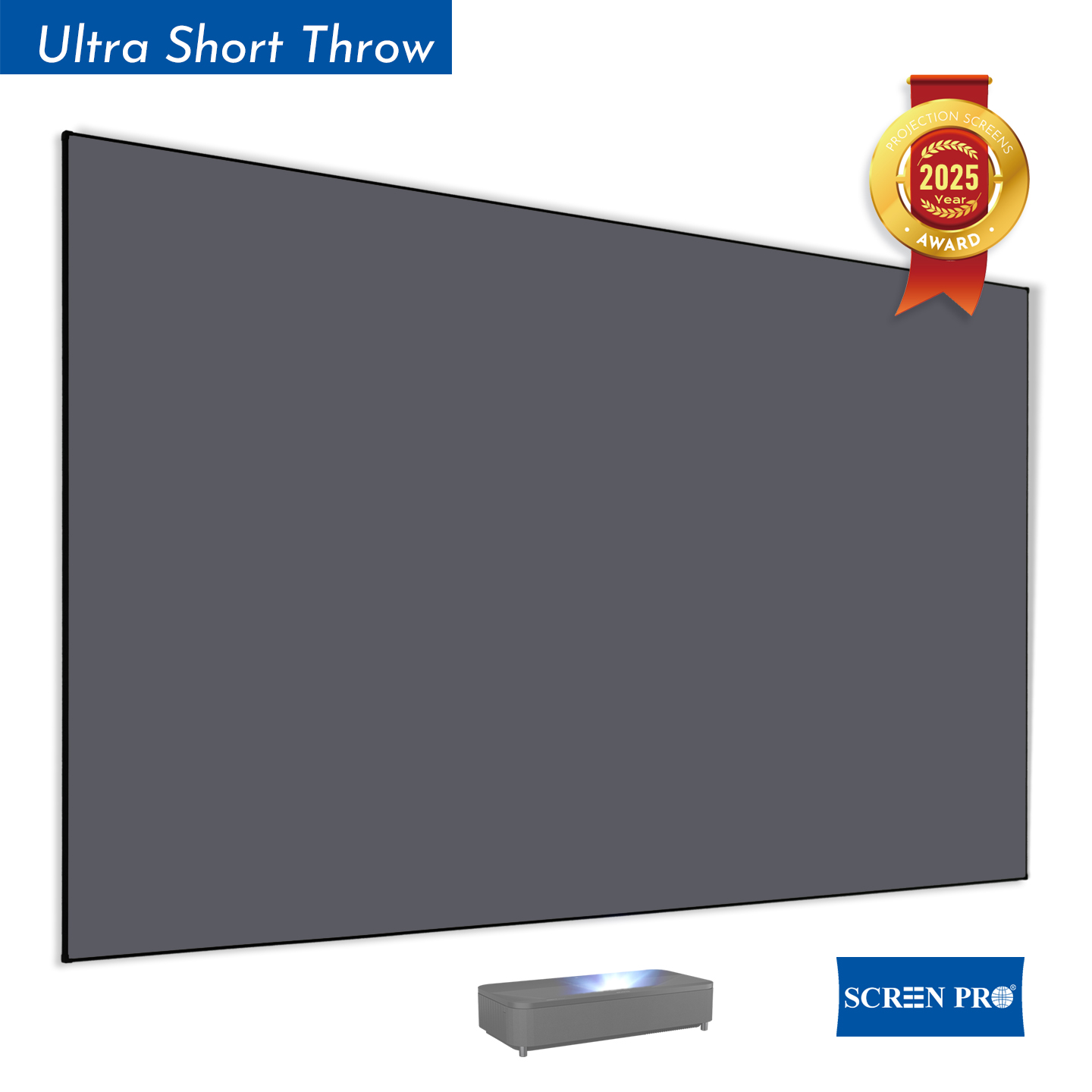
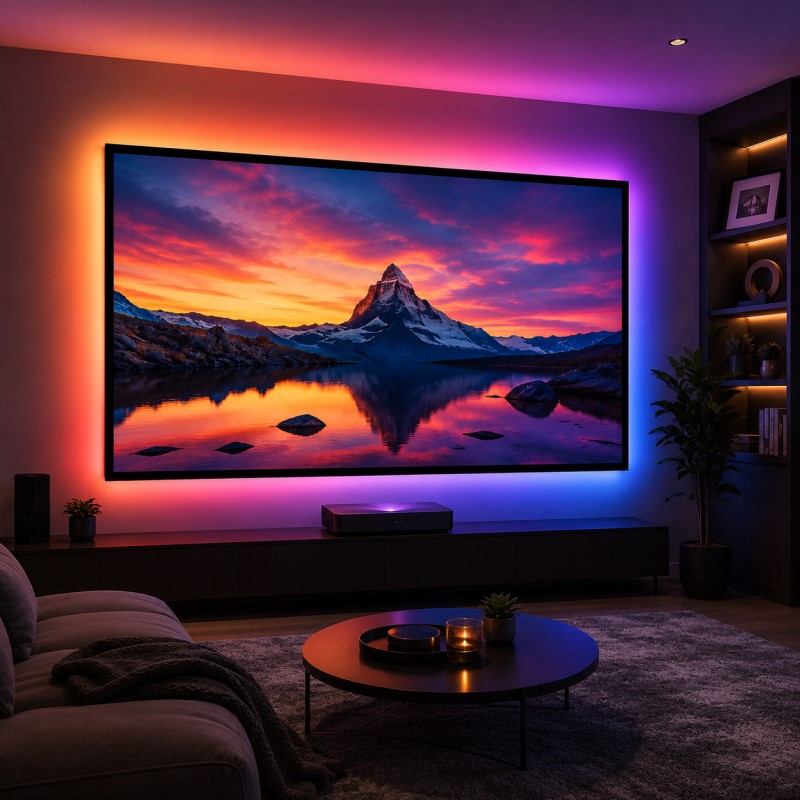
A dedicated cinema room is ideal for maximum performance. However, modern living rooms can also deliver excellent results when paired with the right ALR screen, UST ALR screen, or motorized projection screen.
Screen size is one of the most important decisions in a home theater system. A screen that is too small reduces immersion, while a screen that is too large may cause eye fatigue or make subtitles difficult to follow.
| Viewing Distance | Recommended Screen Size | Best Use |
|---|---|---|
| 7–8 ft | 100" | Compact living room |
| 8–10 ft | 120" | Most home theater rooms |
| 10–12 ft | 135" | Dedicated cinema room |
| 12–15 ft | 150" | Large-format home cinema |
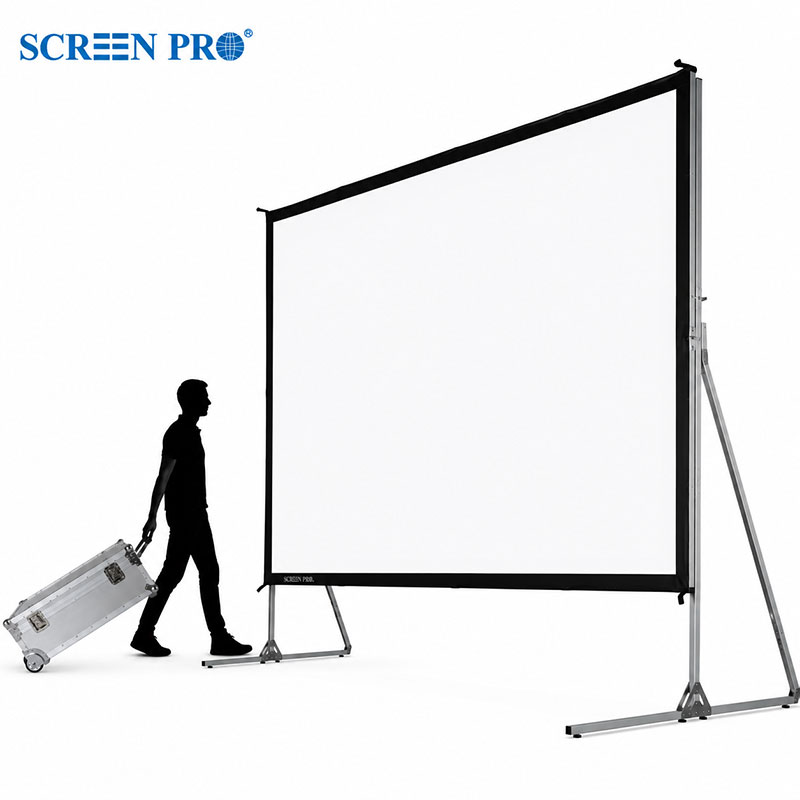
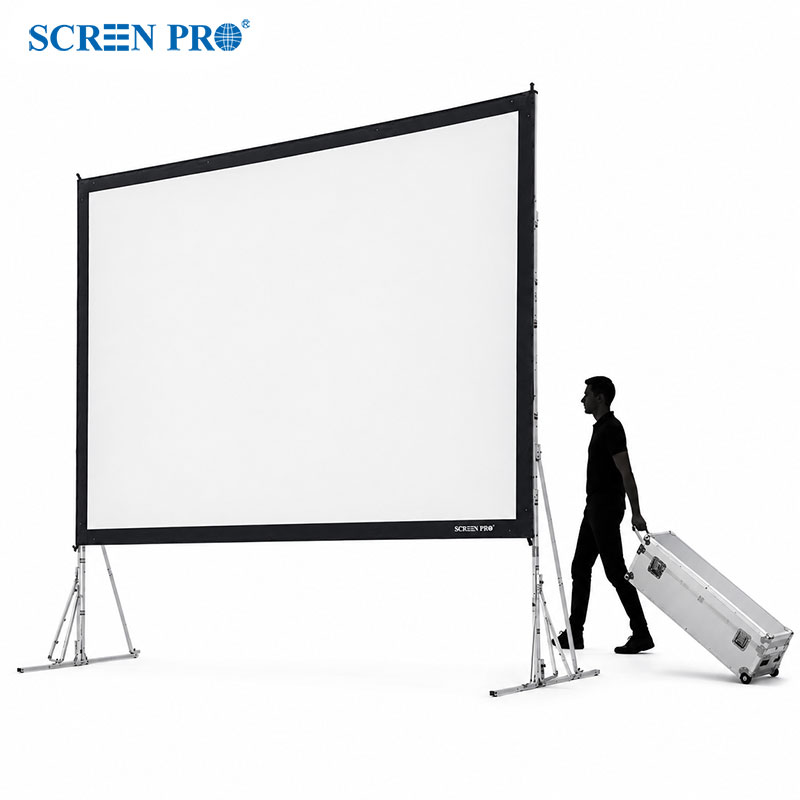
Compared with a large TV, a projection screen can deliver a much bigger cinematic image while keeping the room visually clean. This is especially valuable for 120-inch, 135-inch, and 150-inch home theater installations.
The projection screen determines how much of your projector’s performance actually reaches your eyes. Brightness, contrast, black level, color accuracy, viewing angle, and image flatness are all affected by the screen material and structure.
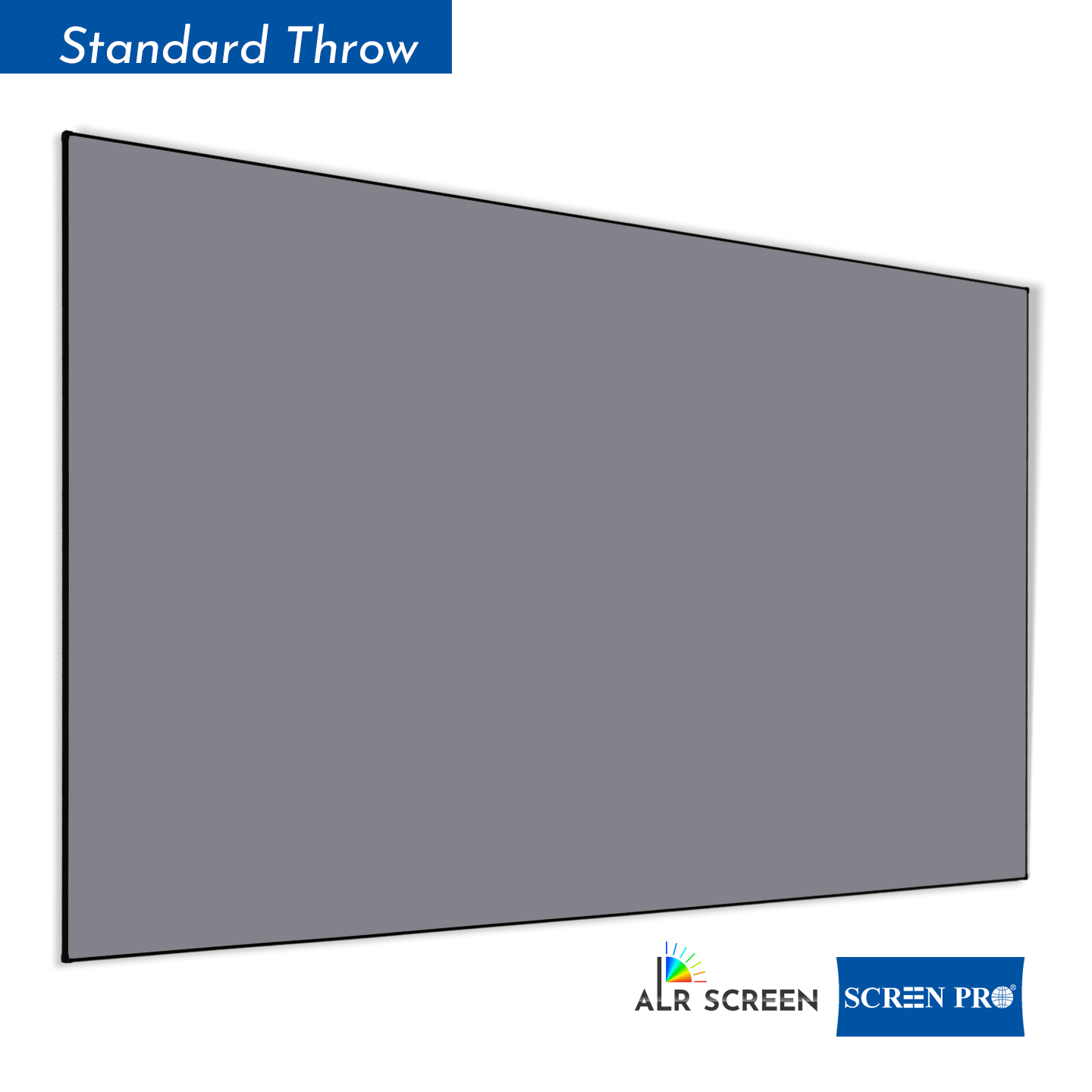
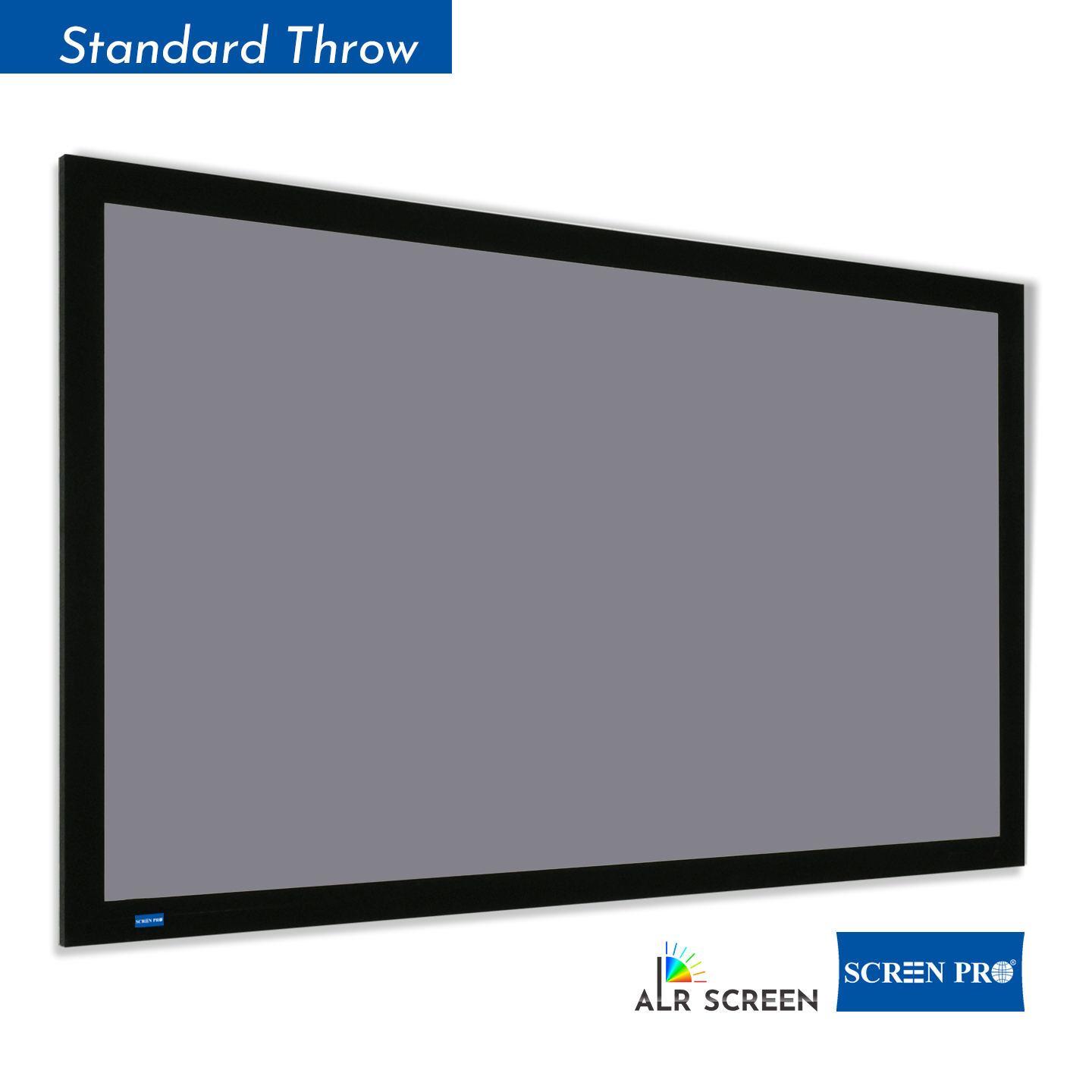
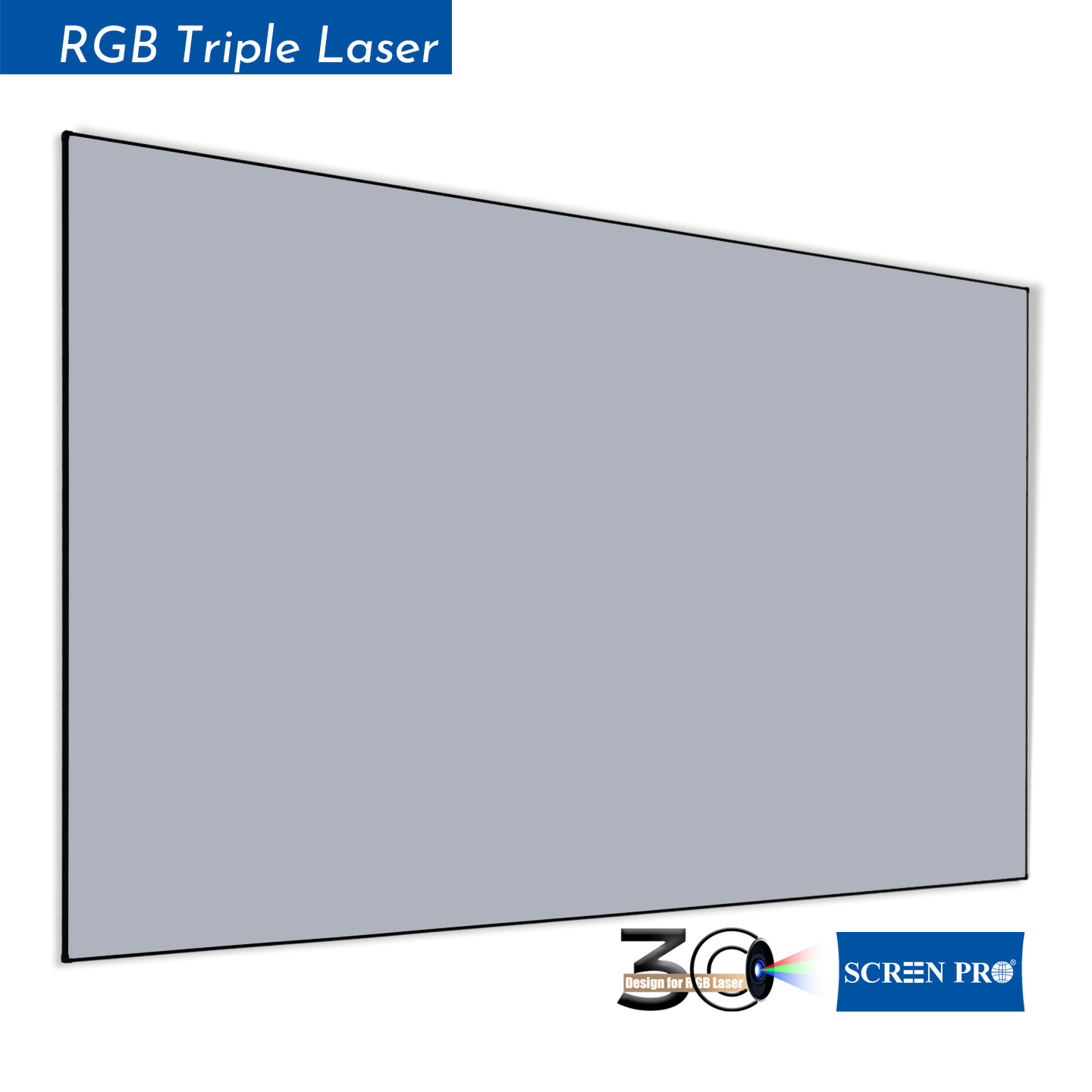
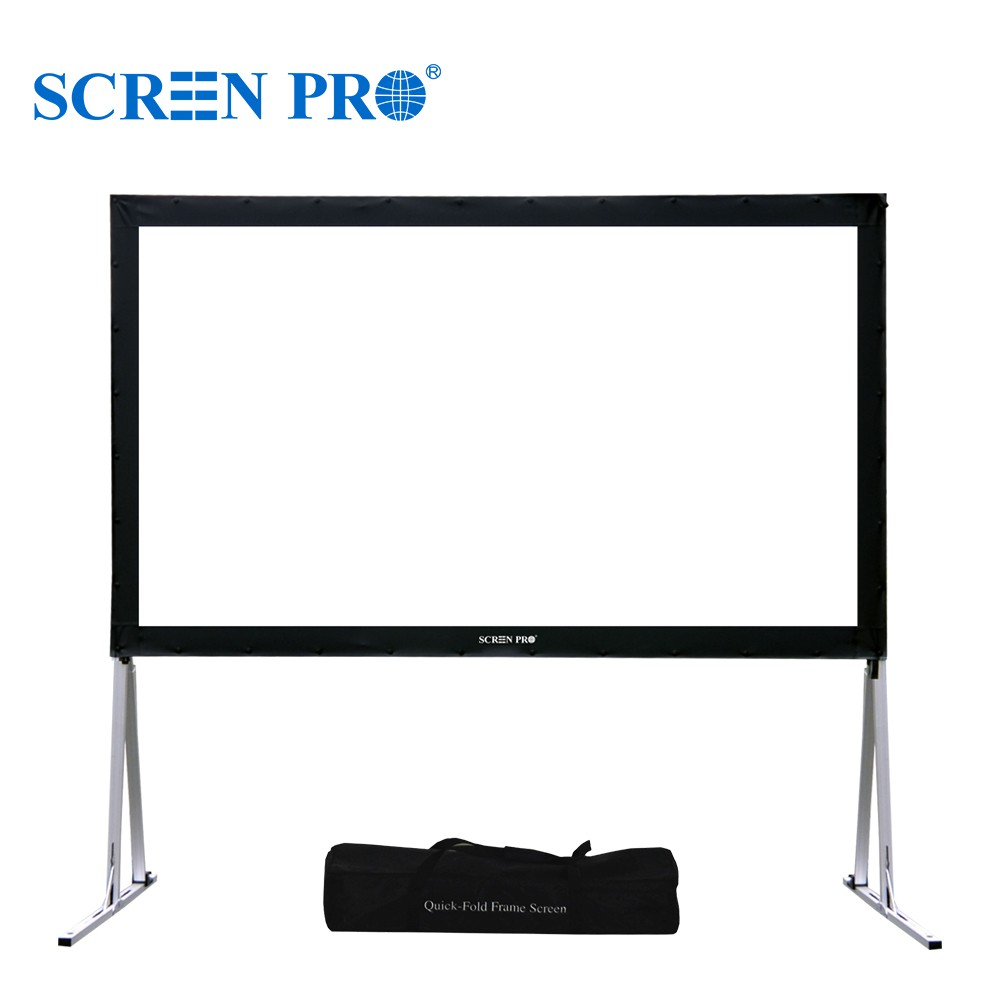
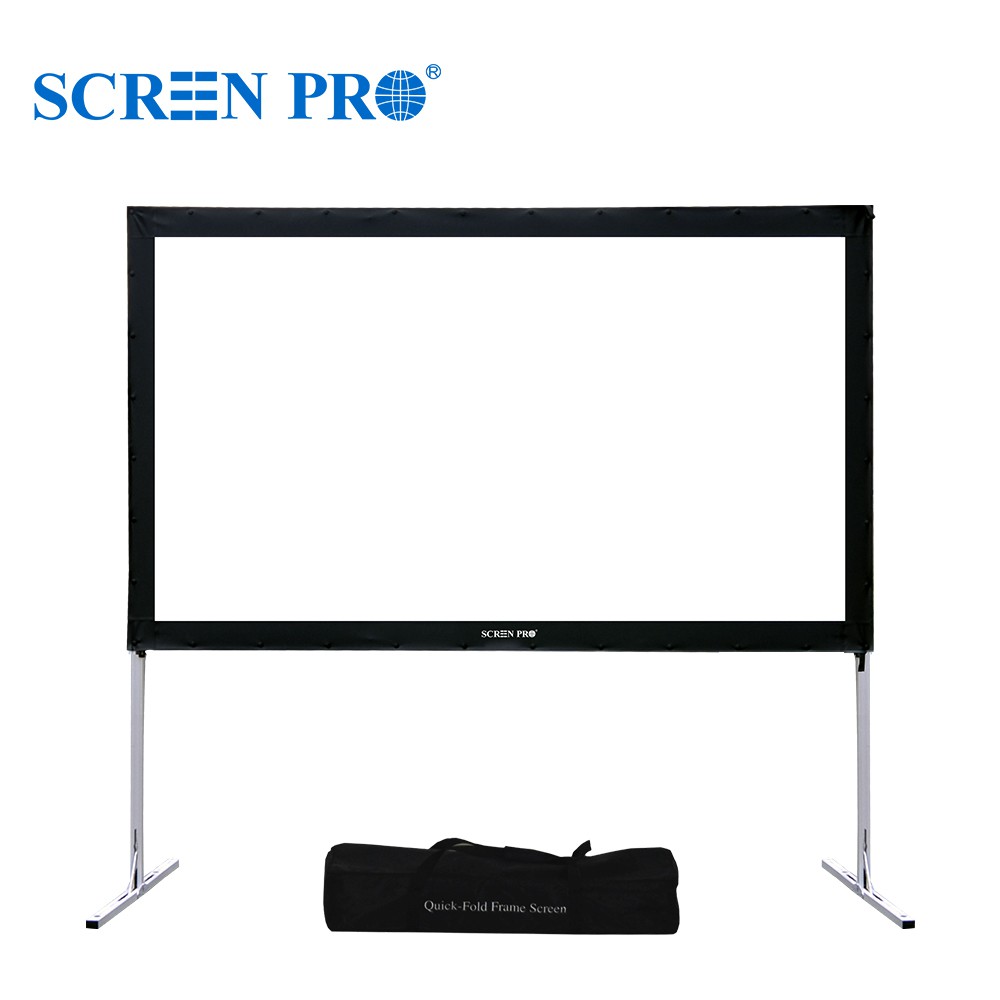
Best for dedicated rooms where the screen stays permanently installed. Fixed frame screens offer excellent flatness and consistent image geometry.
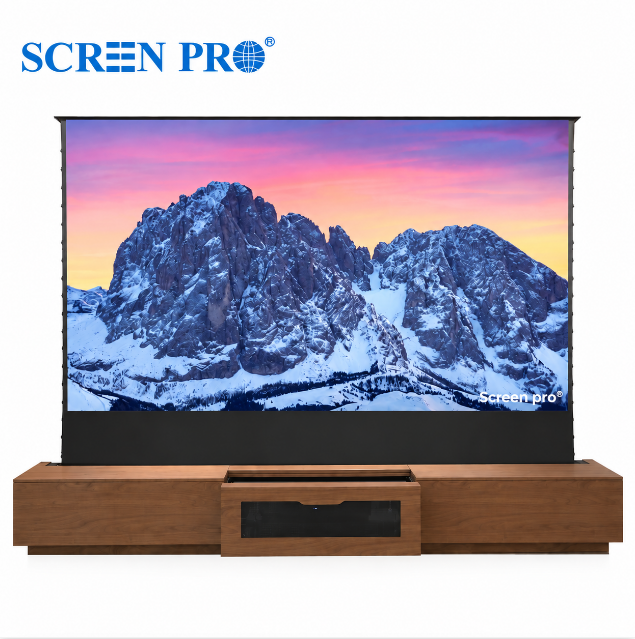
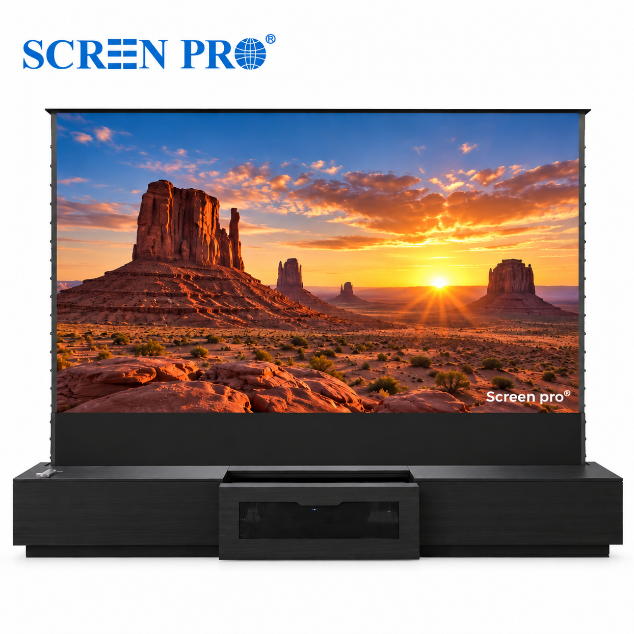
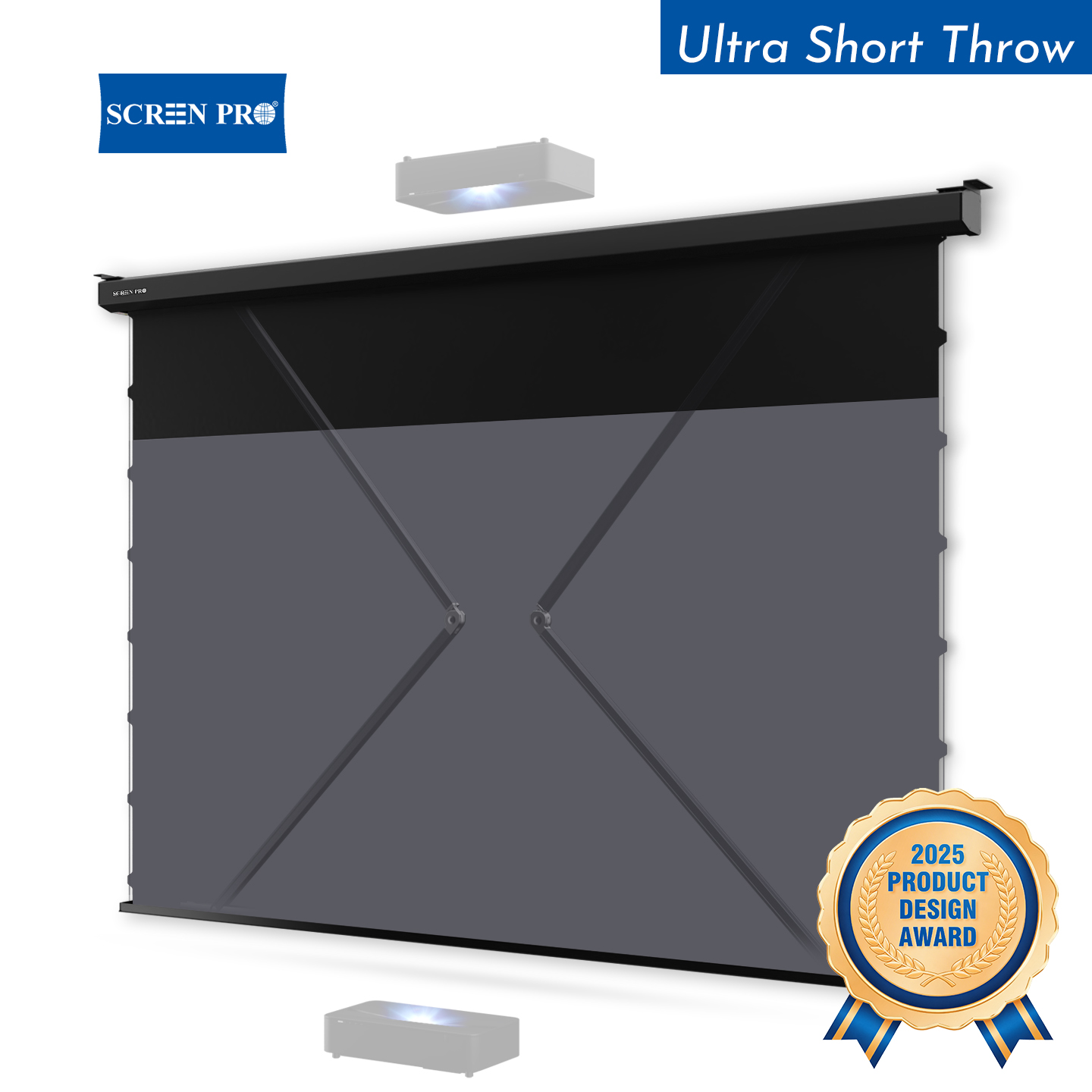
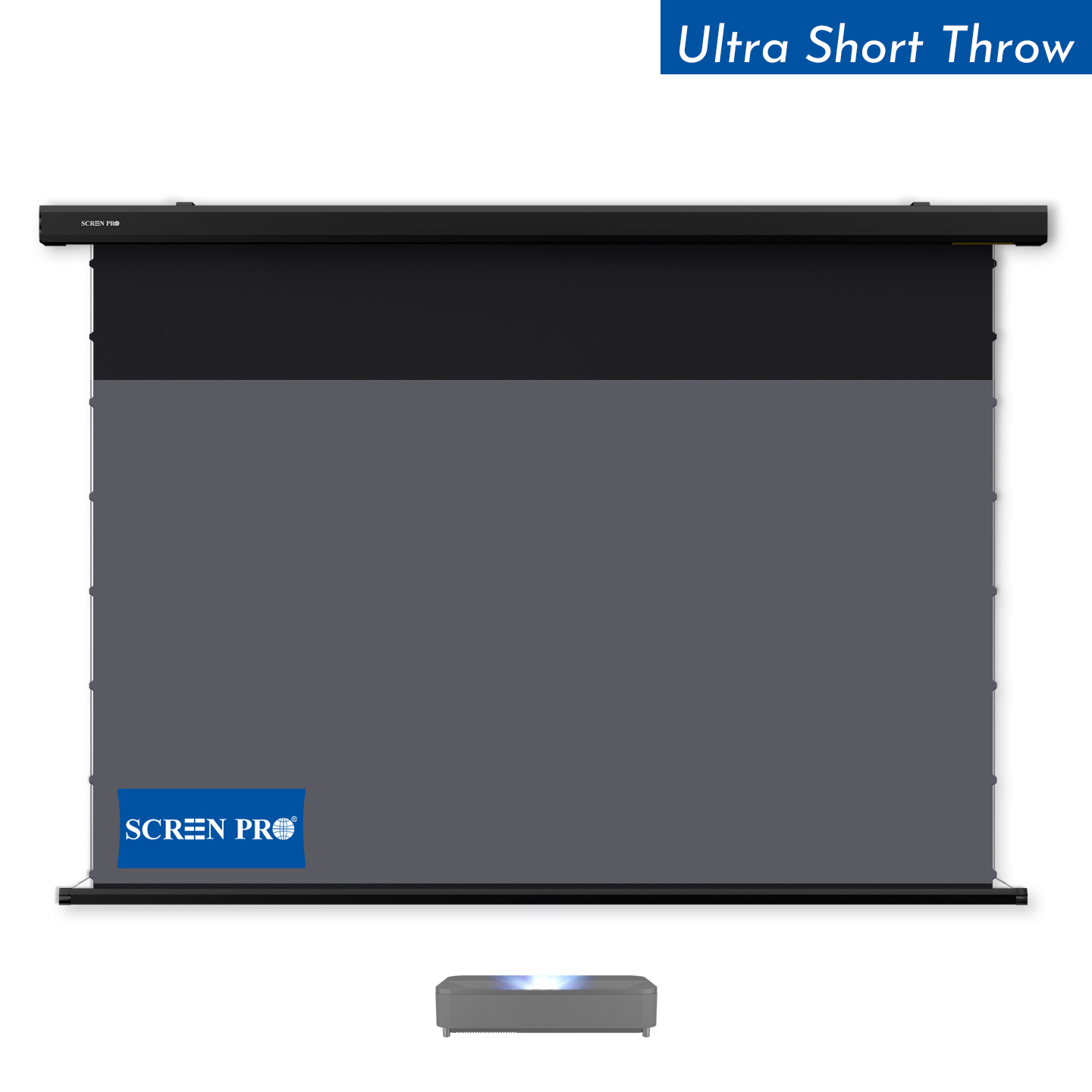
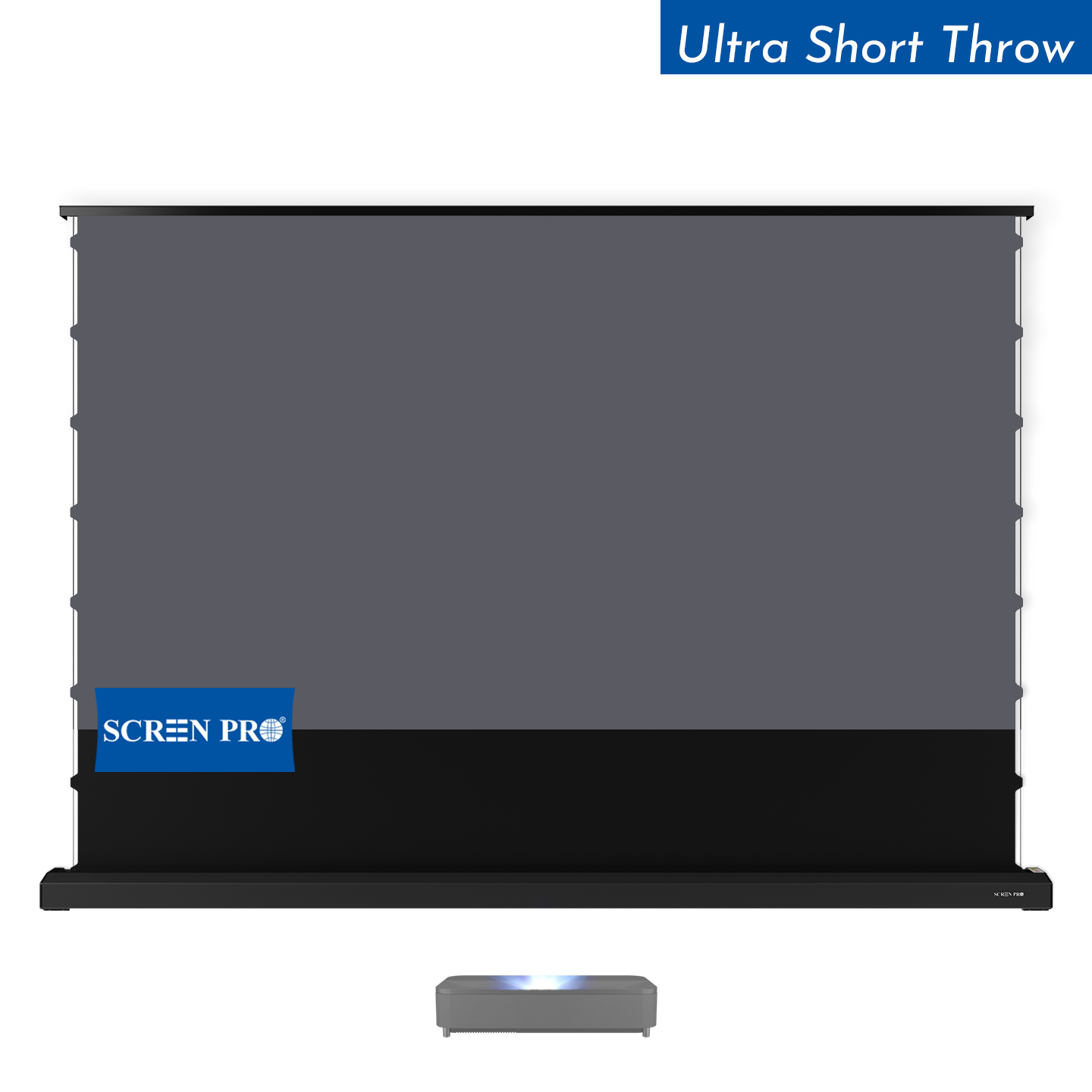
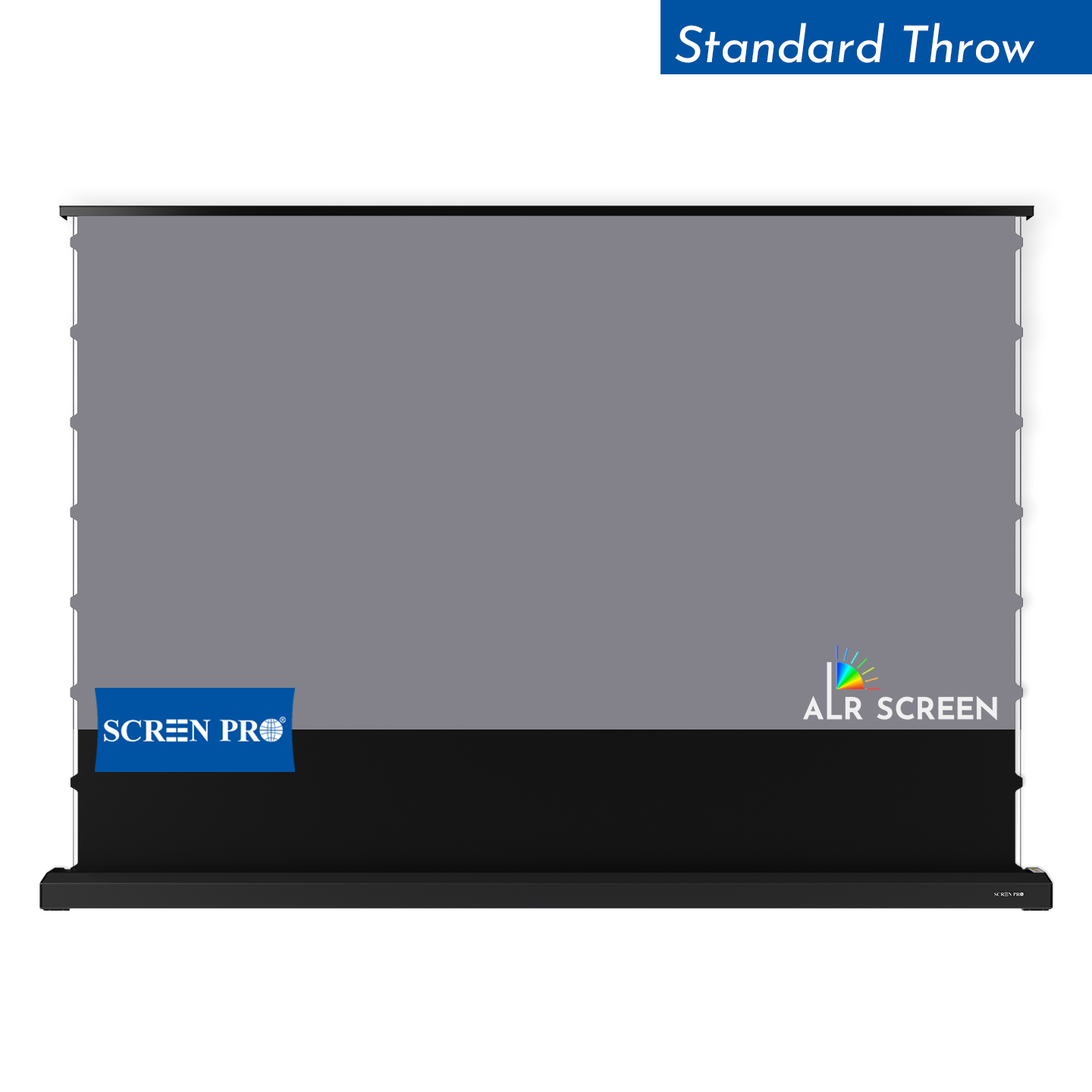
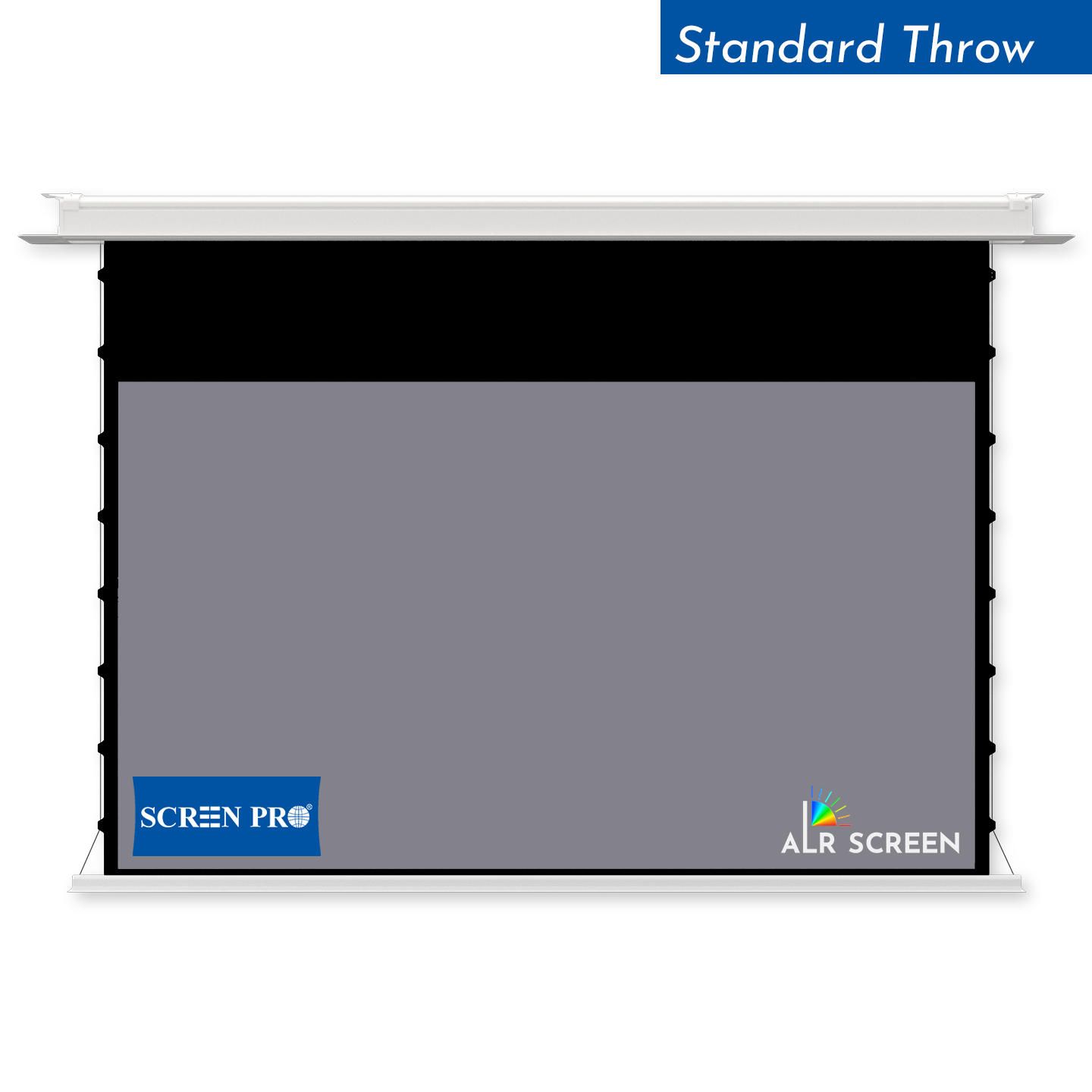
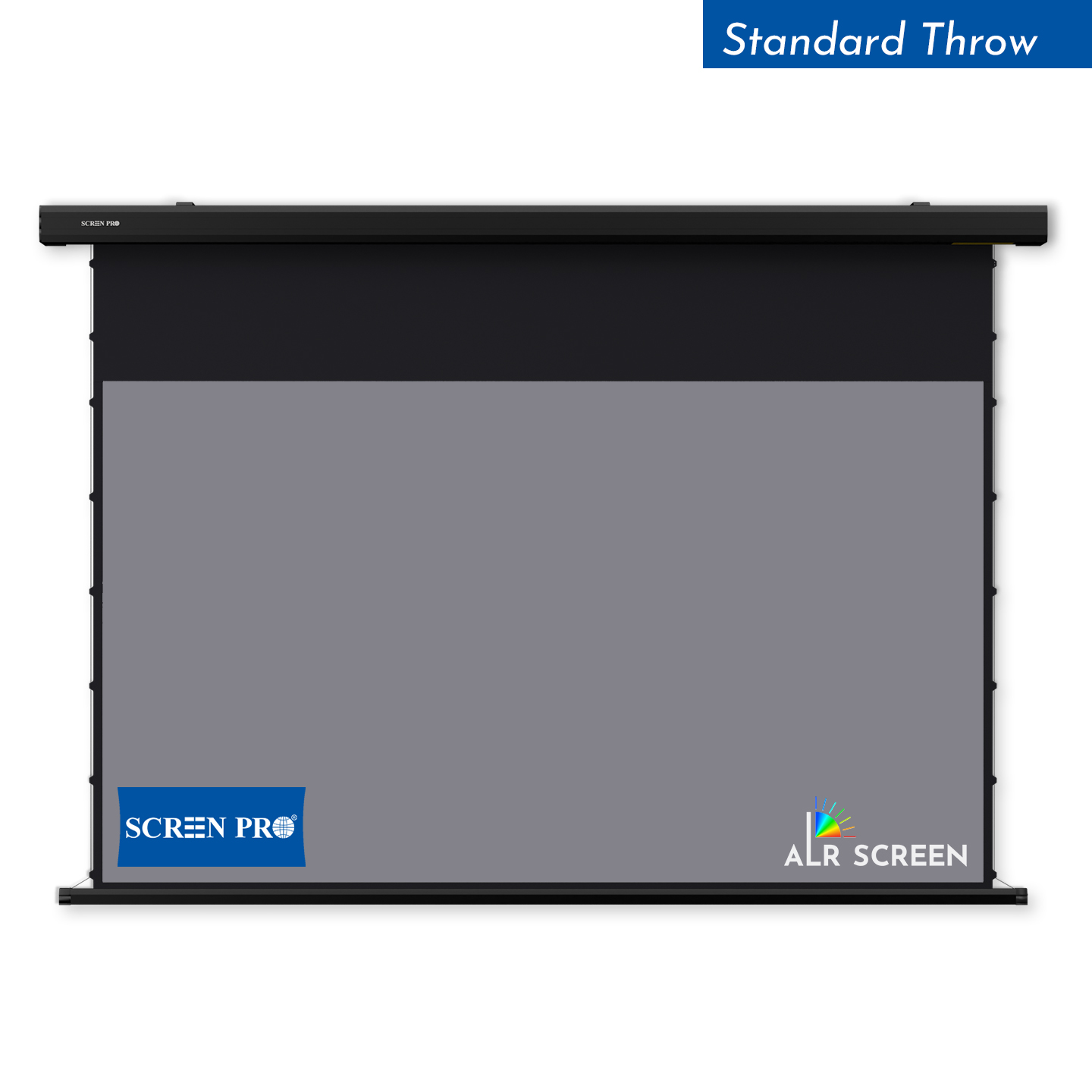
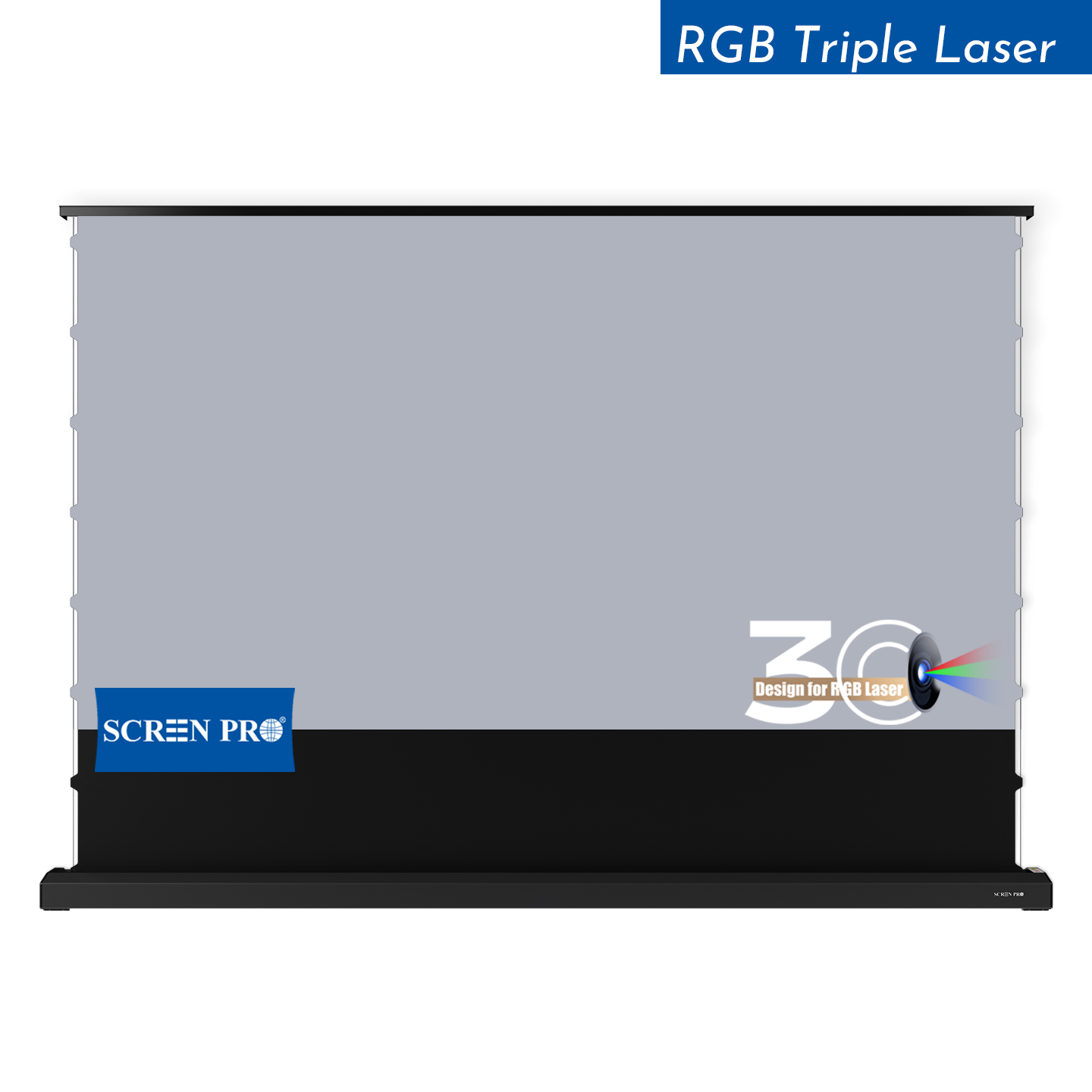
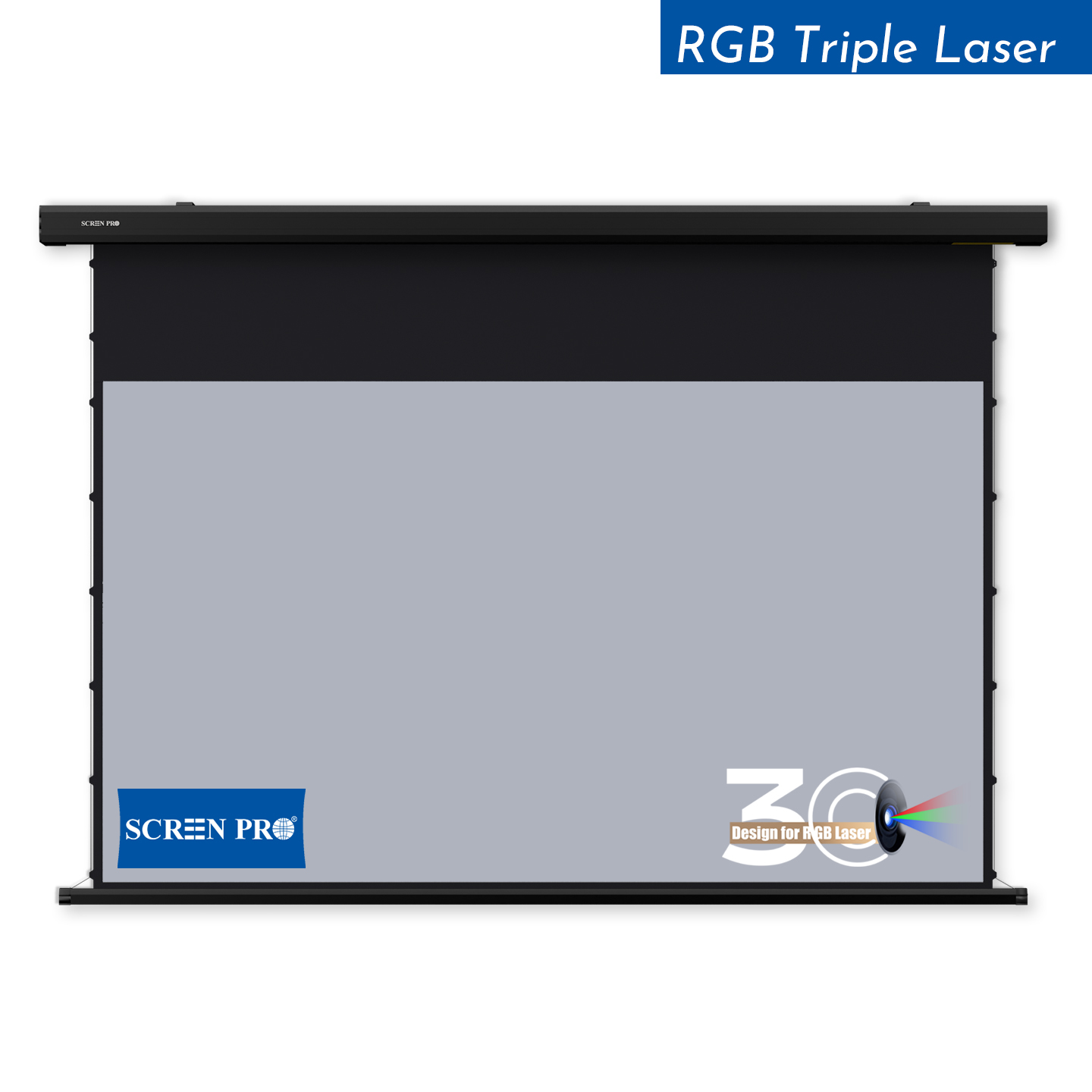
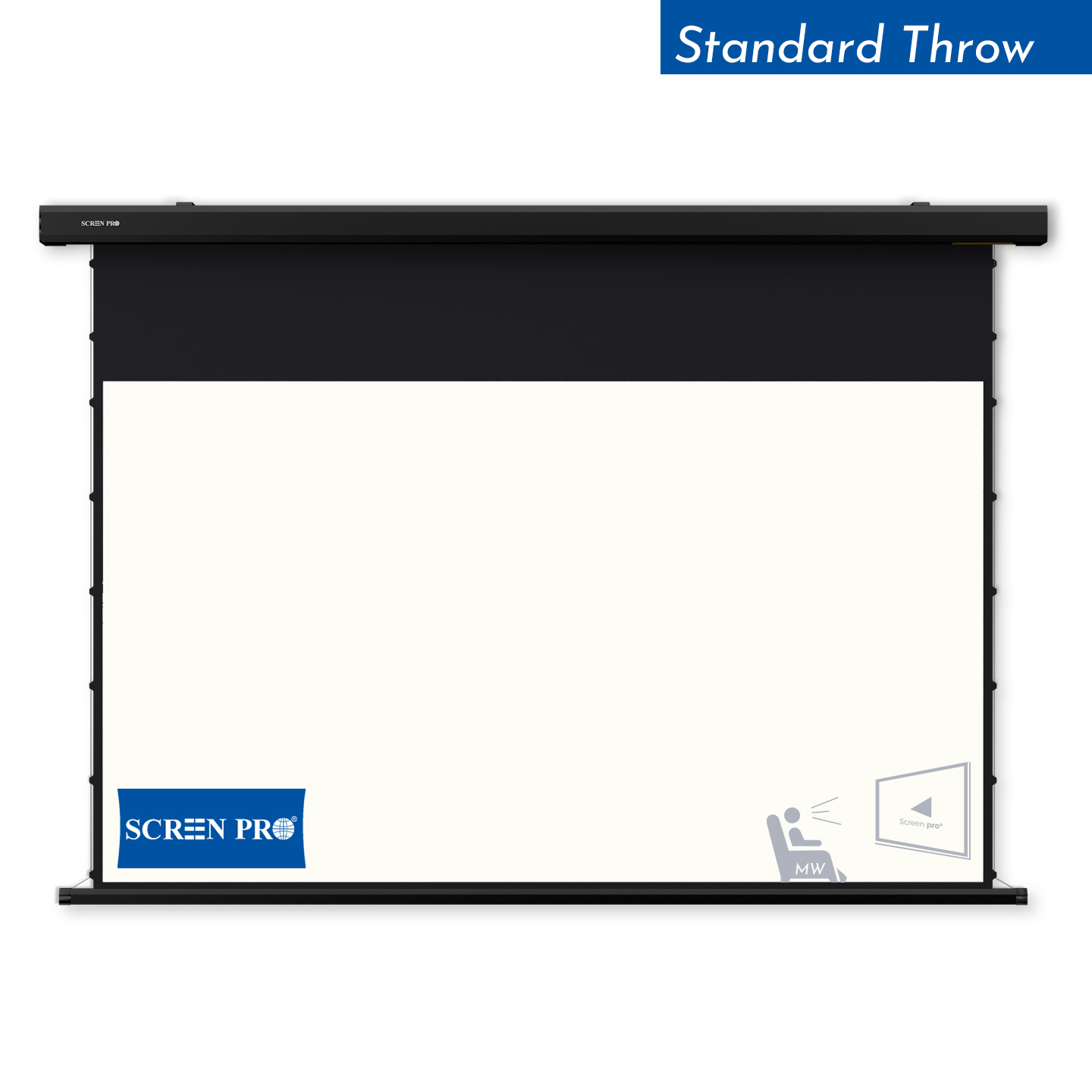
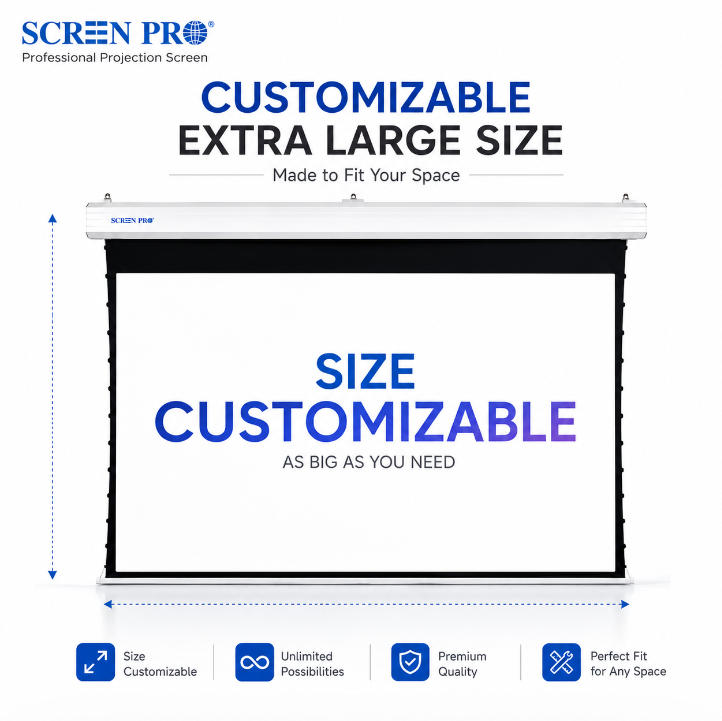
Best for living rooms, media rooms, and multi-purpose spaces where the screen needs to disappear when not in use.
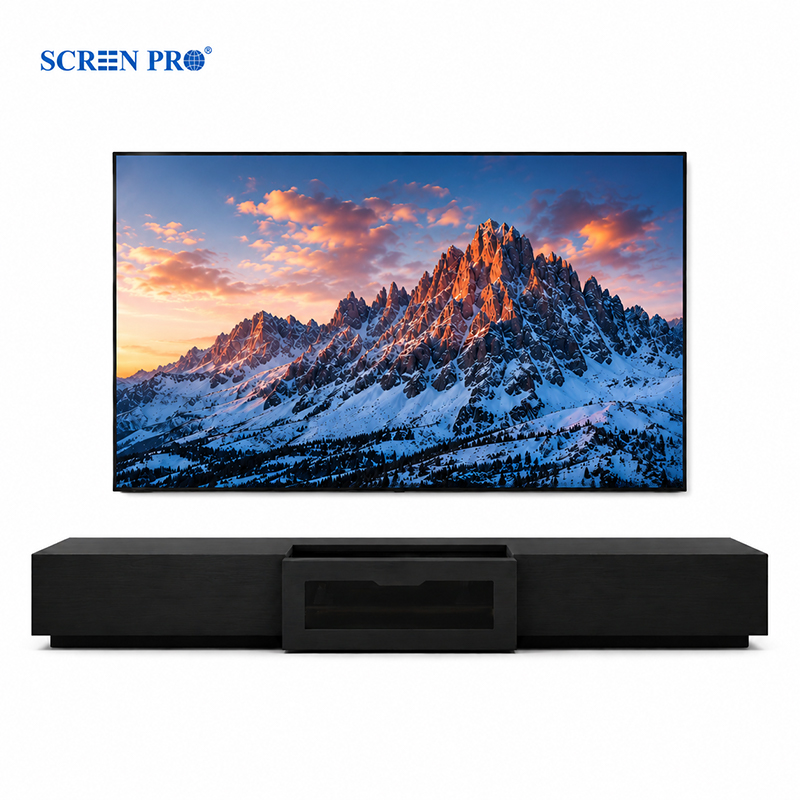
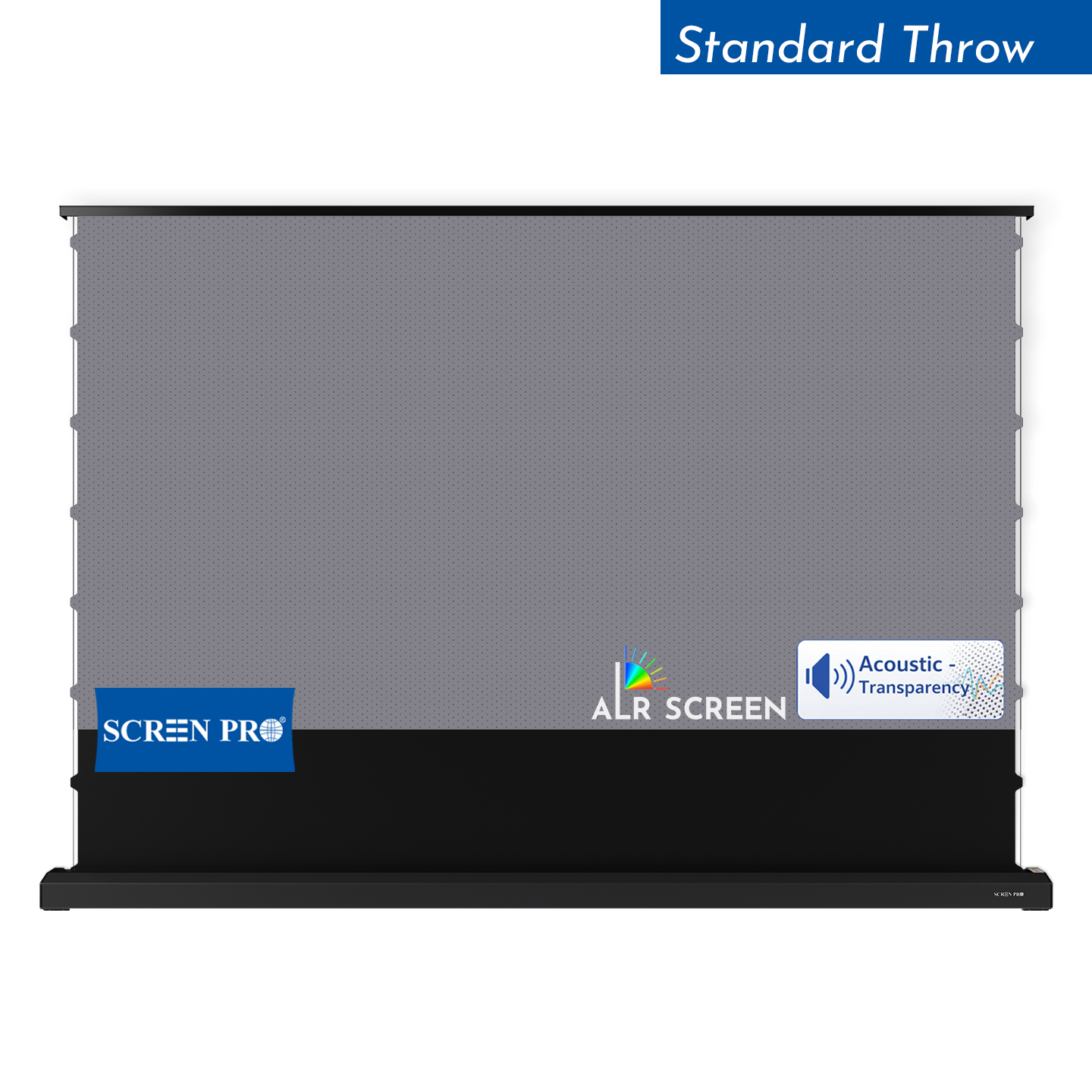
Best for rooms with ambient light. ALR screens help improve contrast and reduce image washout from surrounding light.
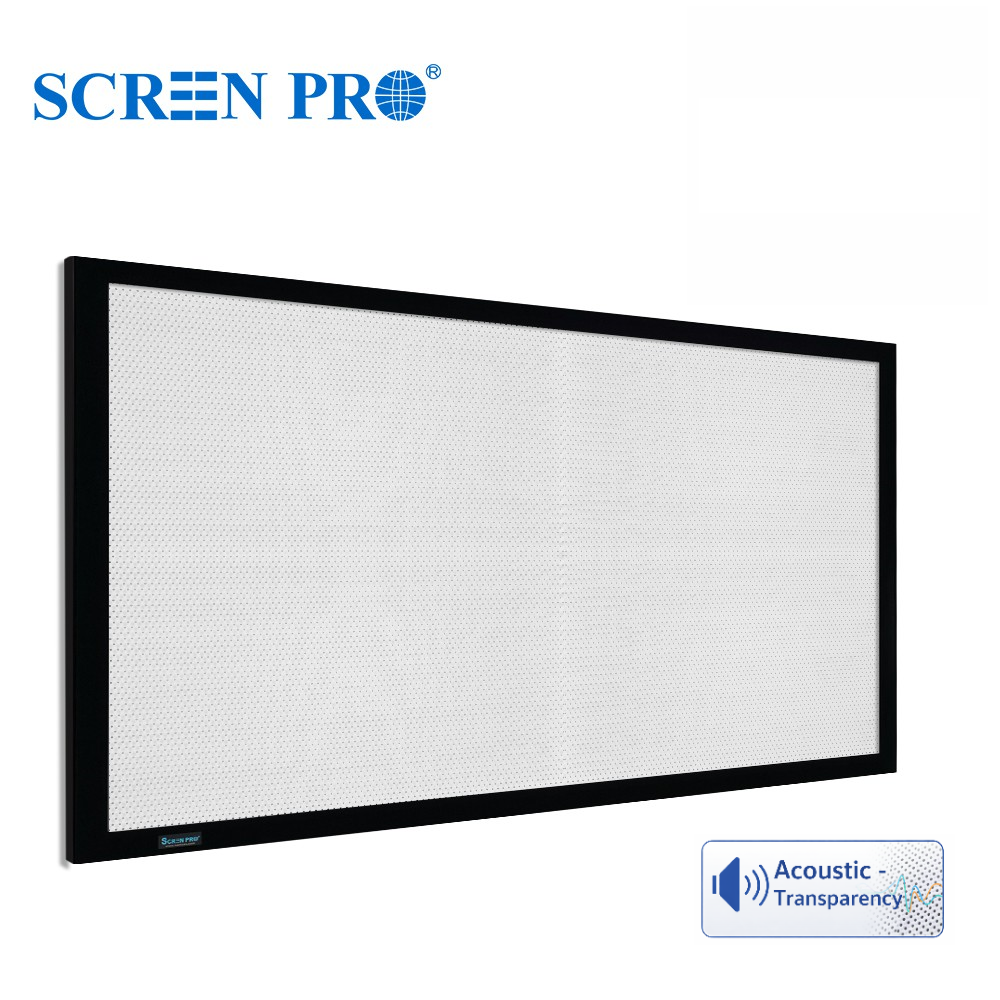
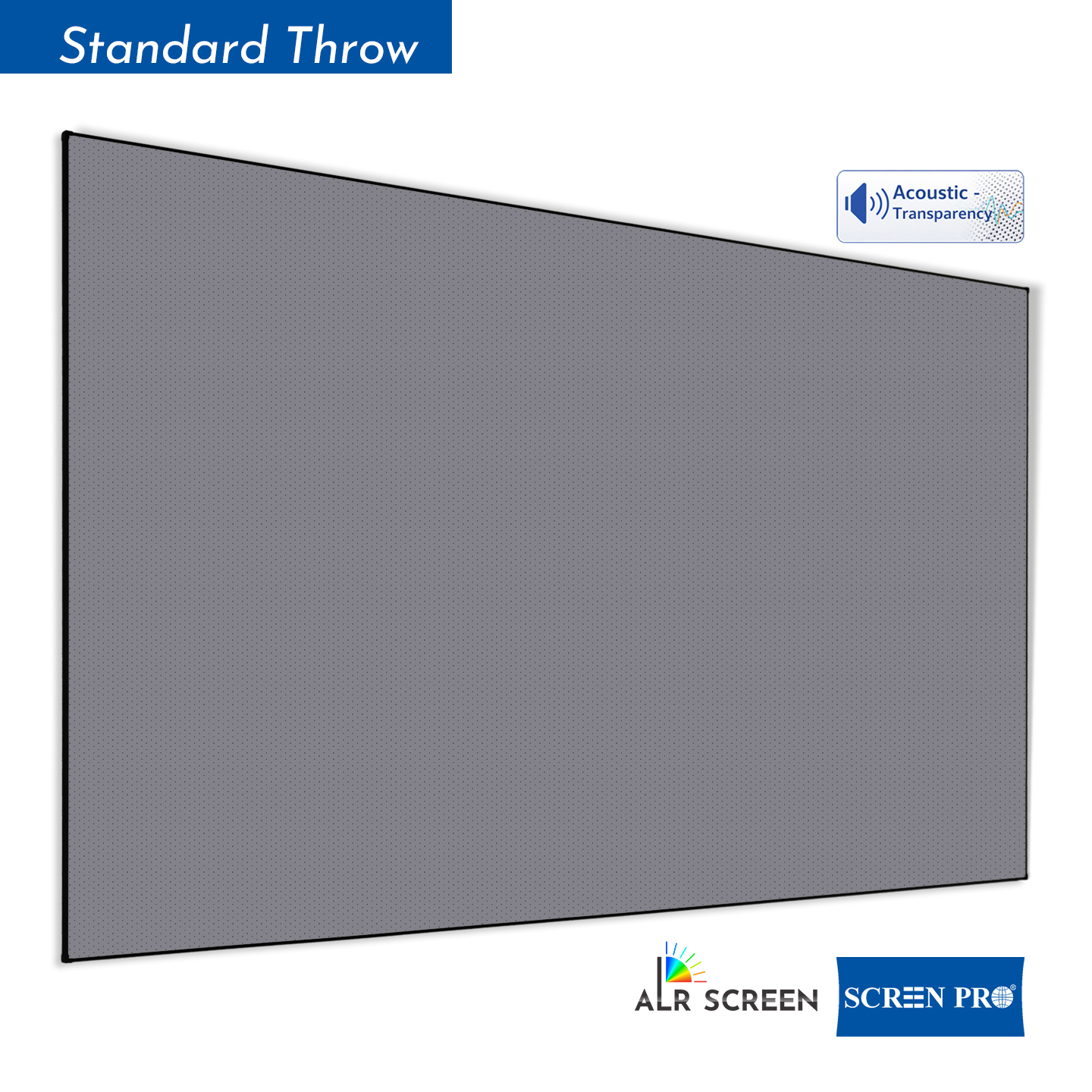
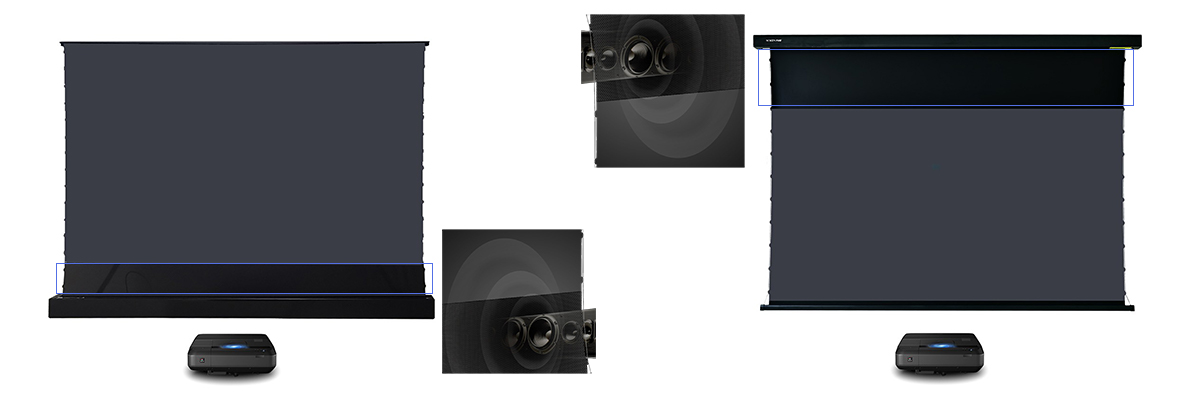
Best for HiFi cinema rooms. Speakers can be placed behind the screen so dialogue appears to come directly from the image.
In a serious HiFi home theater, the center speaker is critical because it reproduces most movie dialogue. With an acoustically transparent screen, the center speaker can be installed behind the screen instead of below it. This creates a more natural soundstage because voices come from the center of the picture.
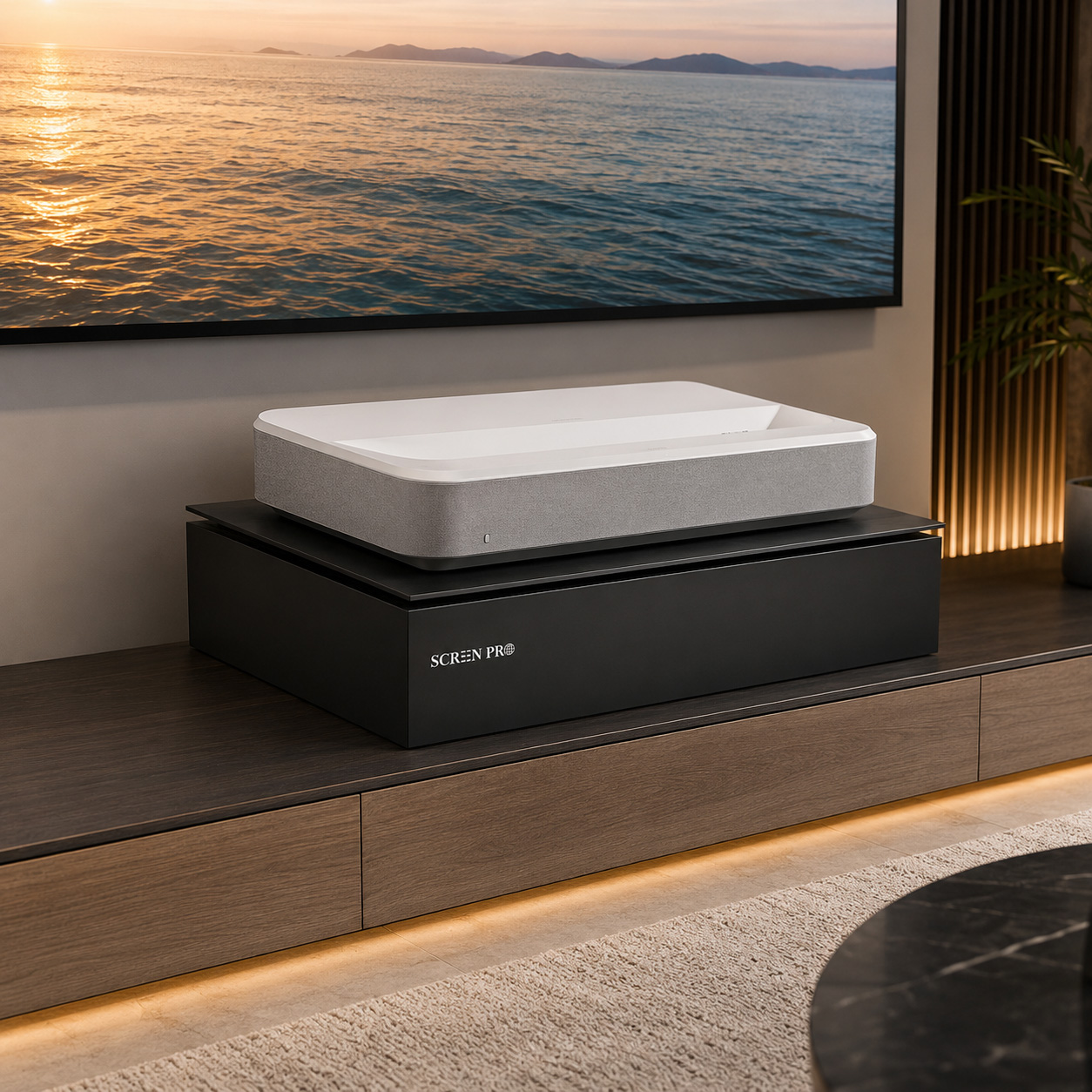
Living rooms often have windows, ceiling lights, white walls, and reflective furniture. An ALR projection screen helps maintain contrast in these environments, making it a strong choice for modern home cinema setups.
Good speaker placement is essential for a believable cinema experience. A typical 5.1 system includes left, center, right, two surround speakers, and one subwoofer. Larger rooms may use 7.1, Dolby Atmos, or DTS:X layouts.
Many homeowners spend most of the budget on speakers and electronics but ignore the room. In reality, room acoustics can strongly affect clarity, bass response, and listening comfort.
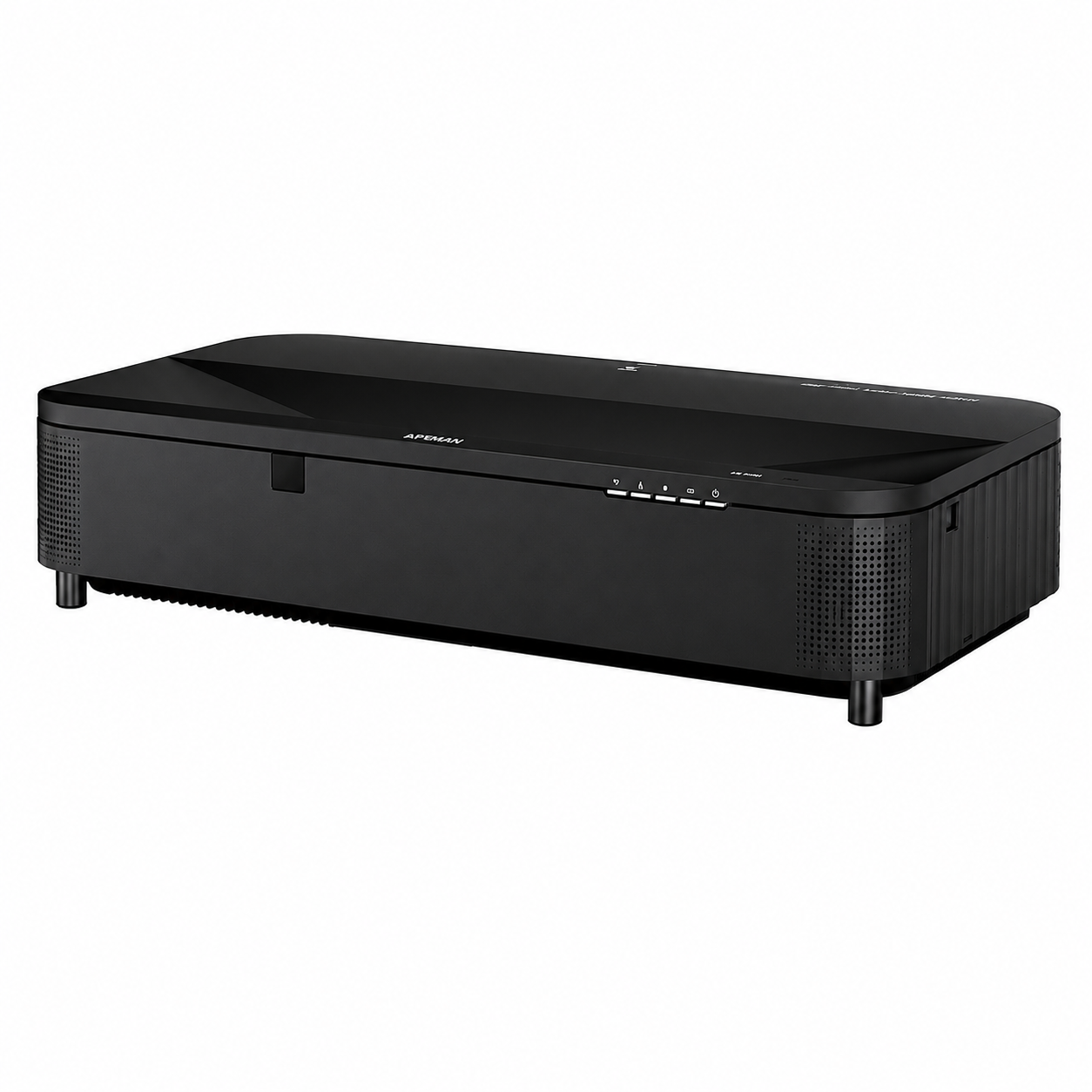
Projector selection should match the room, screen type, and installation method. Different projector types require different screen materials for the best result.
| Projector Type | Best Room Type | Recommended Screen |
|---|---|---|
| Ultra Short Throw | Living room / TV replacement | UST ALR Screen |
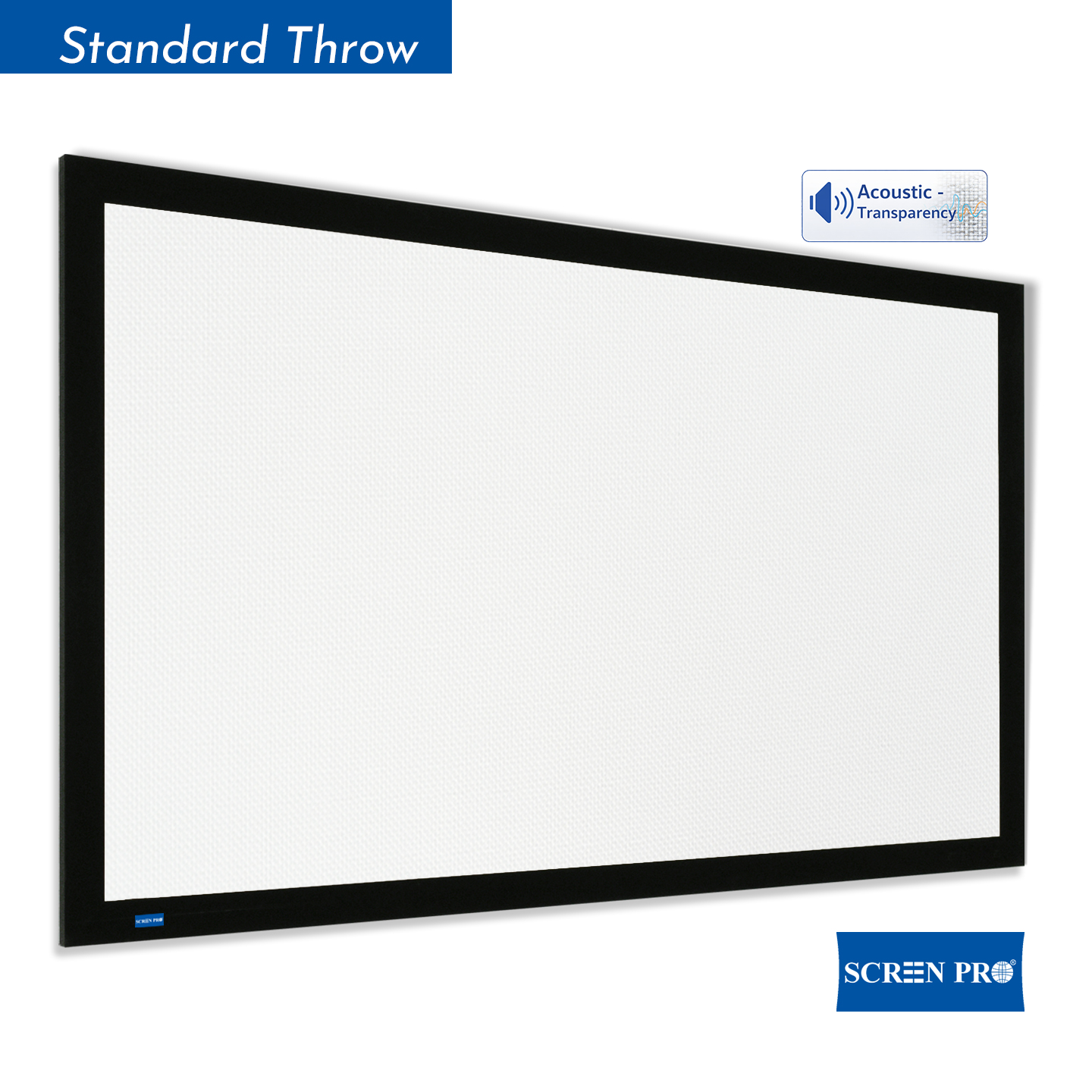
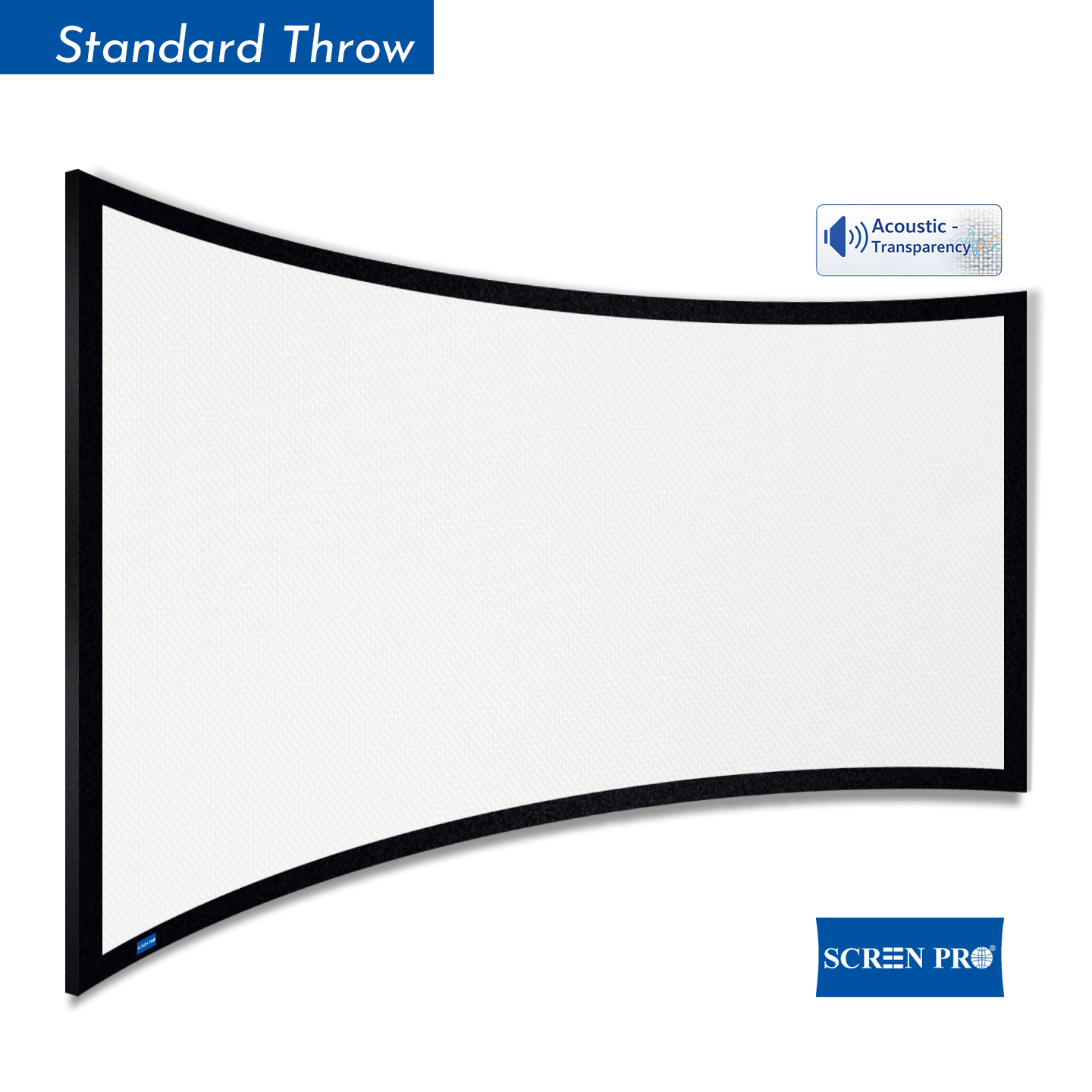
| Standard Throw | Dedicated cinema room | Fixed Frame / ALR / Acoustic Transparent Screen |
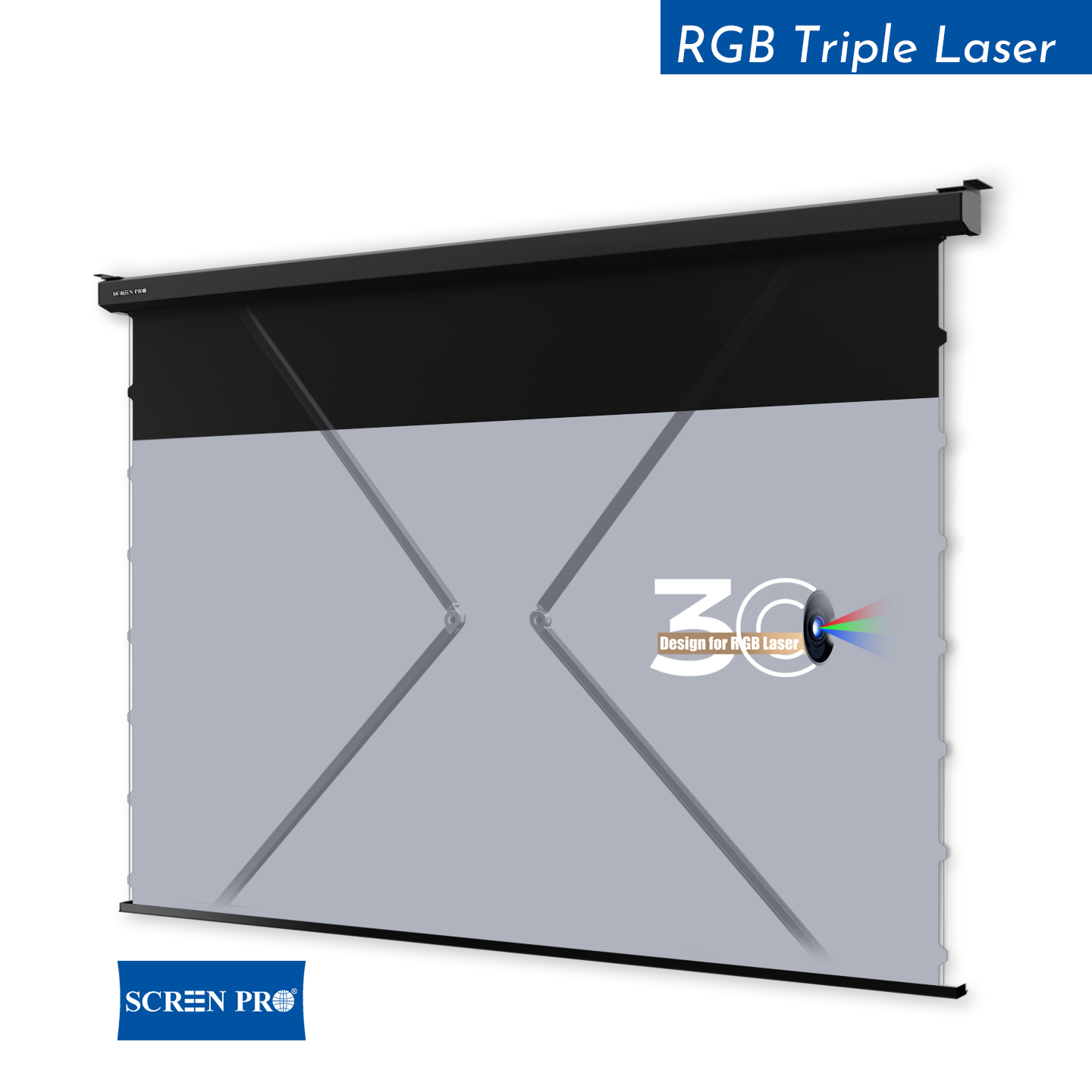
| RGB Triple Laser | Premium cinema room | Anti-speckle Screen / 3C / 3W |
RGB triple-laser projectors can deliver excellent color performance, but they may also make laser speckle more visible on unsuitable screen materials. For this reason, anti-speckle projection materials should be considered when building a premium HiFi cinema system.
A common mistake is spending too much on a projector while neglecting the screen, sound system, and room environment. A balanced system usually performs better than a system with one expensive component and several weak links.
Choose a fixed frame screen or acoustic transparent screen for maximum flatness, cinematic image quality, and better speaker integration.
View FP Acoustic Transparent Screen →Choose a UST ALR or motorized ALR screen to improve contrast while keeping the room clean and flexible.
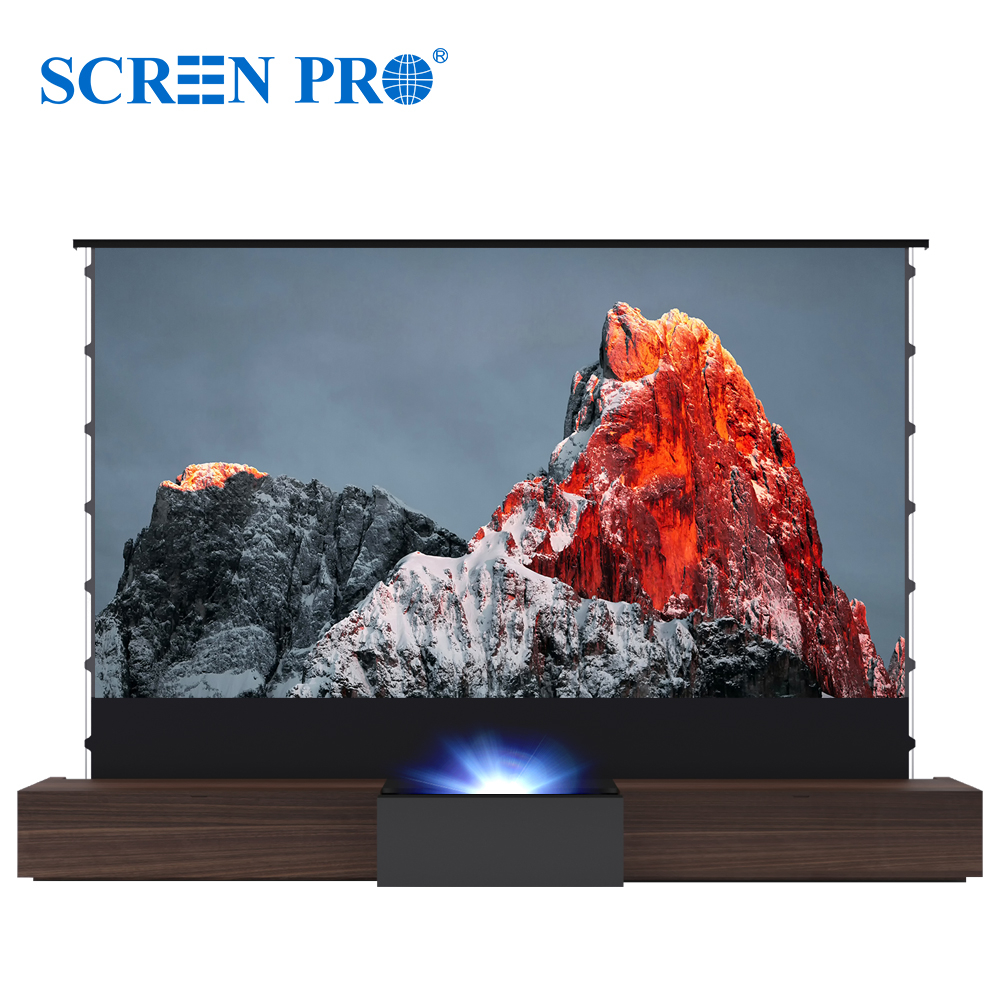
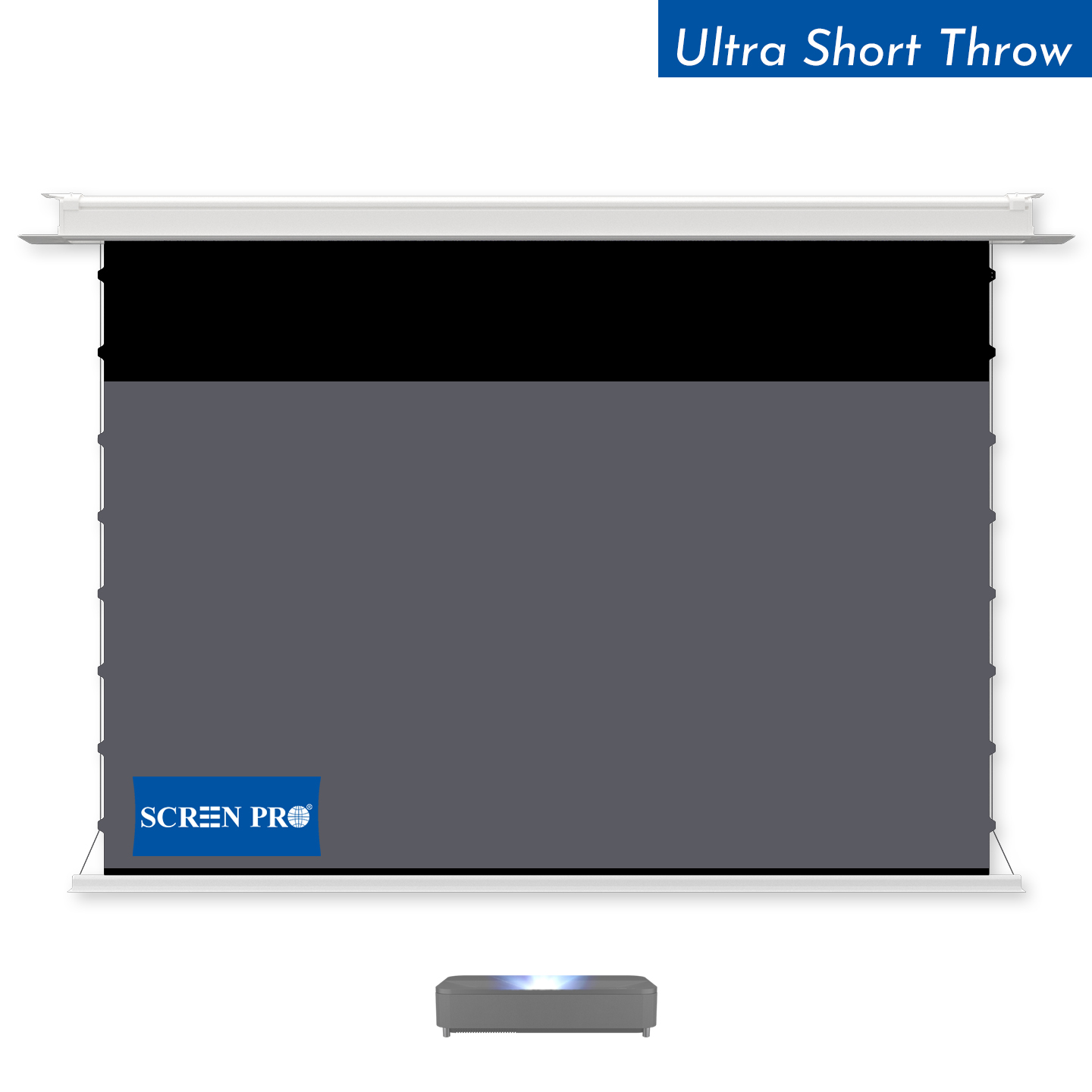
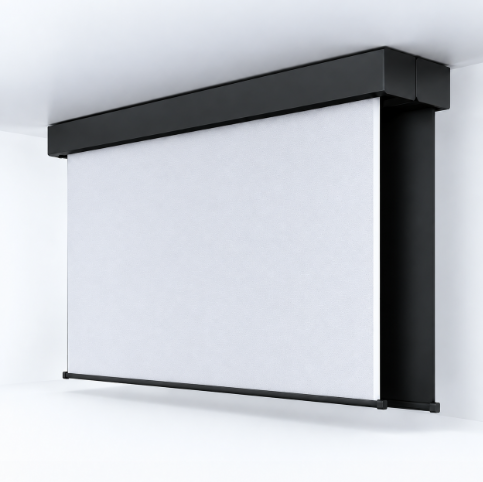
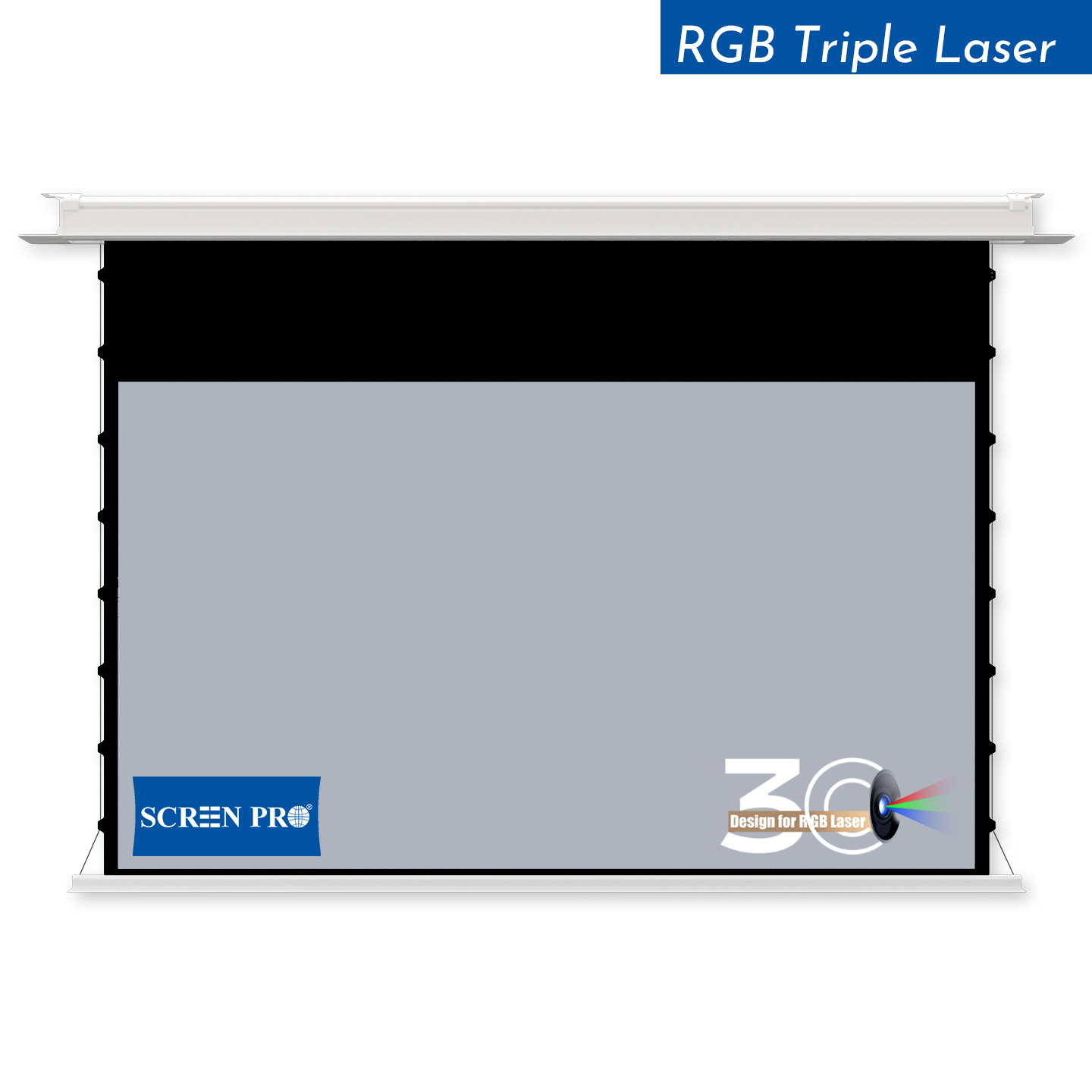
View AJ Motorized UST ALR Screen →Choose an in-ceiling screen when you want the projection system to disappear into the architecture.
View AI In-Ceiling UST ALR Screen →Choose anti-speckle screen materials such as 3C or 3W to help reduce visible laser speckle.
View 3W Anti-Speckle Fabric →Learn why RGB laser projectors need carefully matched screen materials.
Read more →Understand how woven anti-speckle materials help improve the viewing experience.
Read more →The room, screen, audio system, and projector all matter. However, the projection screen has a major impact on brightness, contrast, black level, and viewing comfort.
Yes, especially for dedicated cinema rooms. It allows speakers to be placed behind the screen, creating a more natural soundstage and better dialogue placement.
If your room has windows, ceiling lights, or bright walls, an ALR screen can help preserve contrast and reduce image washout.
RGB triple-laser projectors may show laser speckle on unsuitable surfaces. Anti-speckle screen materials such as 3C or 3W are recommended for better viewing comfort.
For many home theater rooms, 120 inches is a balanced choice. Larger rooms may use 135-inch or 150-inch screens depending on seating distance.
From acoustic transparent fixed frame screens to UST ALR, in-ceiling, floor rising, and anti-speckle projection materials, SCREENPRO helps you build a complete home theater screen solution for modern cinema rooms.
Talk to SCREENPRO →





© 2026 SCREENPRO®. Specifications are subject to change without notice. | SamsAV All Rights ReservedSite Map Designed by iwonder.cn