
© Copyright 2004-2026 SCREEN PRO® All Rights Reserved | Specifications are subject to change without notice. All Rights ReservedSite Map Designed by iwonder.cn

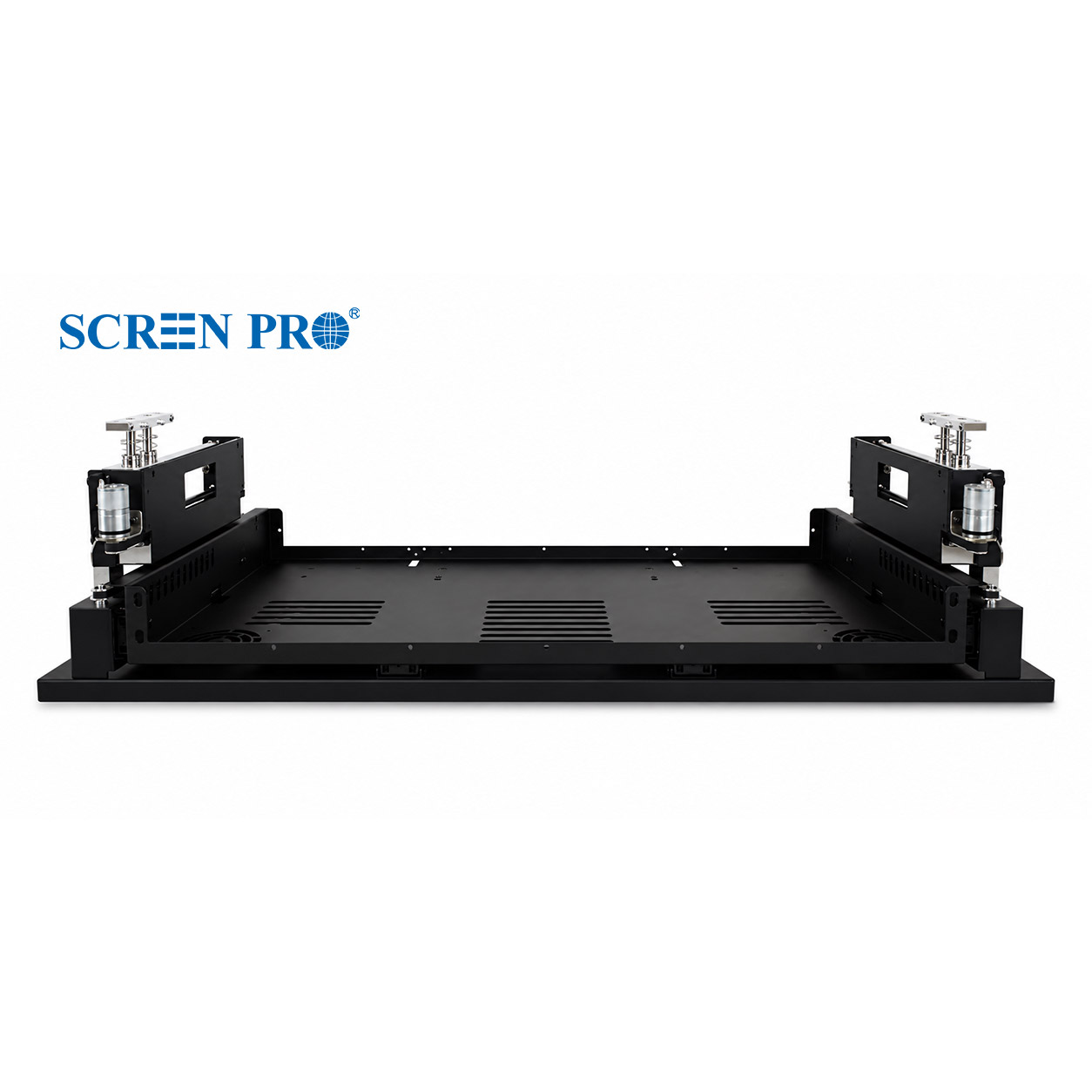
| Product Type | Motorized Sliding Drive Module |
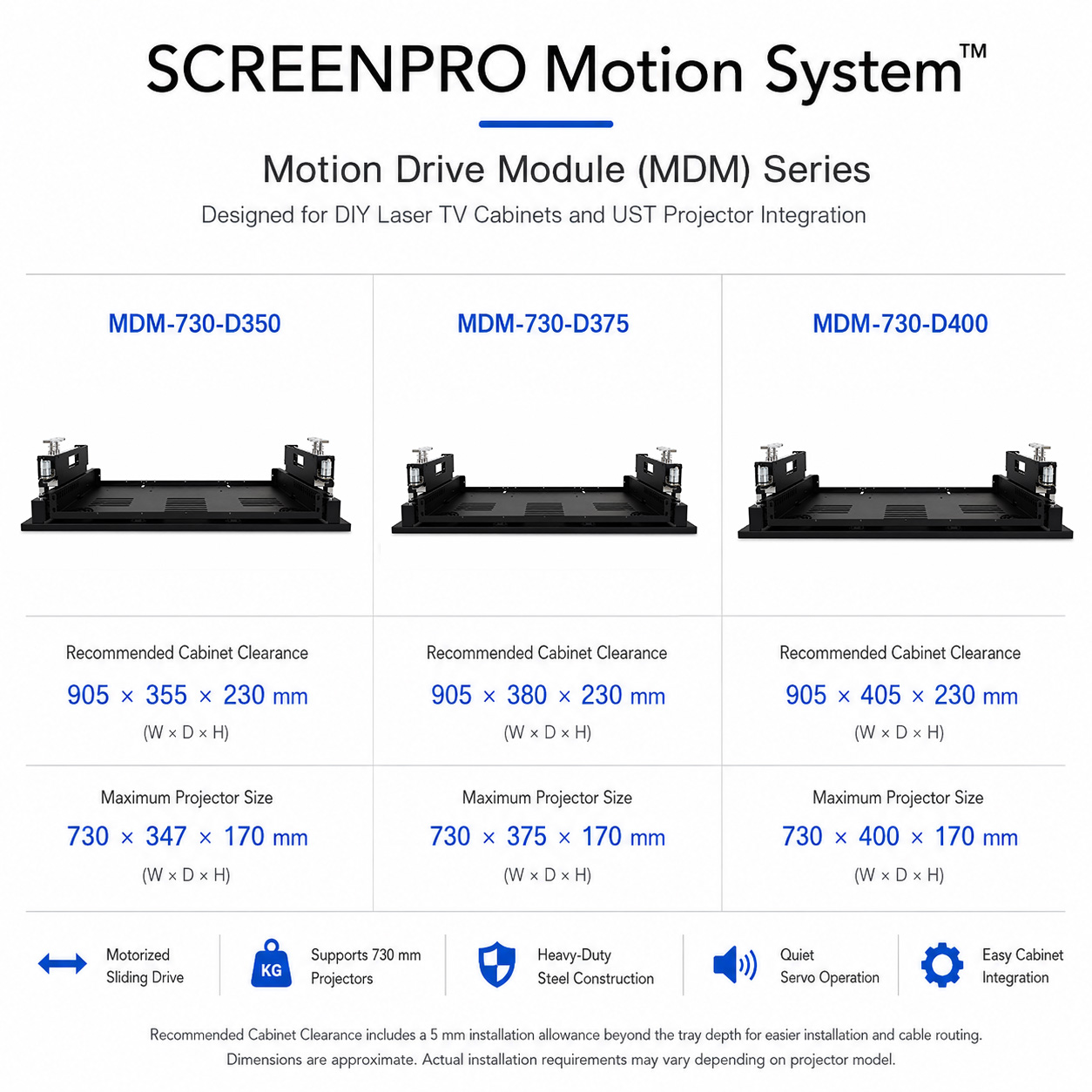
| Recommended Cabinet Clearance | 905 × D × 230 mm (W × D × H) |
| Maximum Projector Size | 730 × D × 170 mm (W × D × H) |
| Required Cabinet Depth | Tray depth + 5 mm installation allowance |
| Construction | Heavy-Duty Steel |
| Recommended Applications | UST Projectors, Laser TV Cabinets and Custom AV Furniture |
Installation Note: Depth (D) depends on the selected MDM model. Allow at least 5 mm of additional cabinet depth beyond the tray depth for installation and operating clearance.
| Available Online Buy the Motion Drive Module from the SCREENPRO Global Store | BUY NOW → |
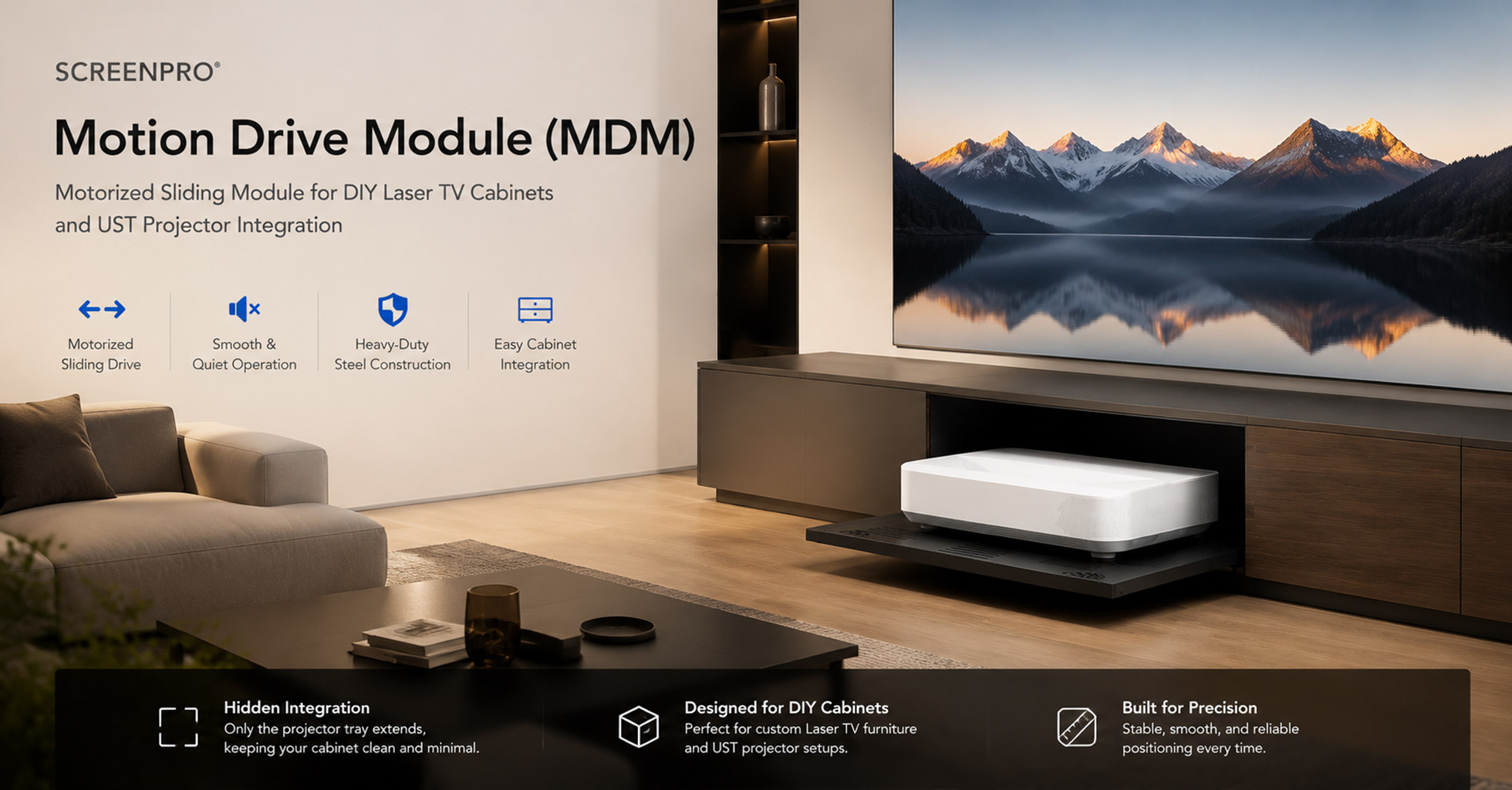
Answers about compatibility, DIY cabinet integration, motorized sliding operation and precise UST projector positioning for the SCREENPRO Motion Drive Module.
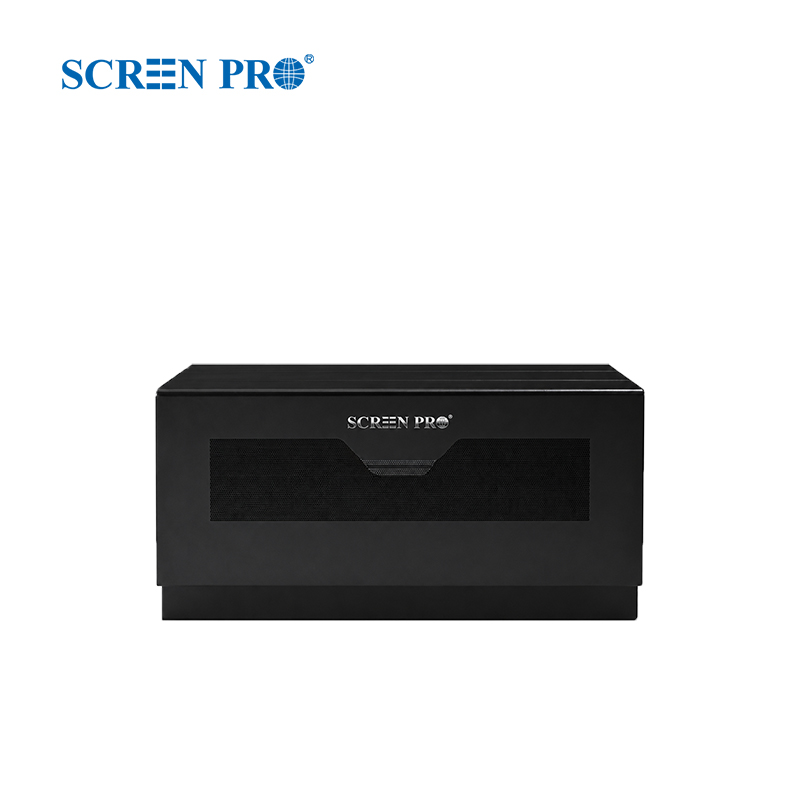
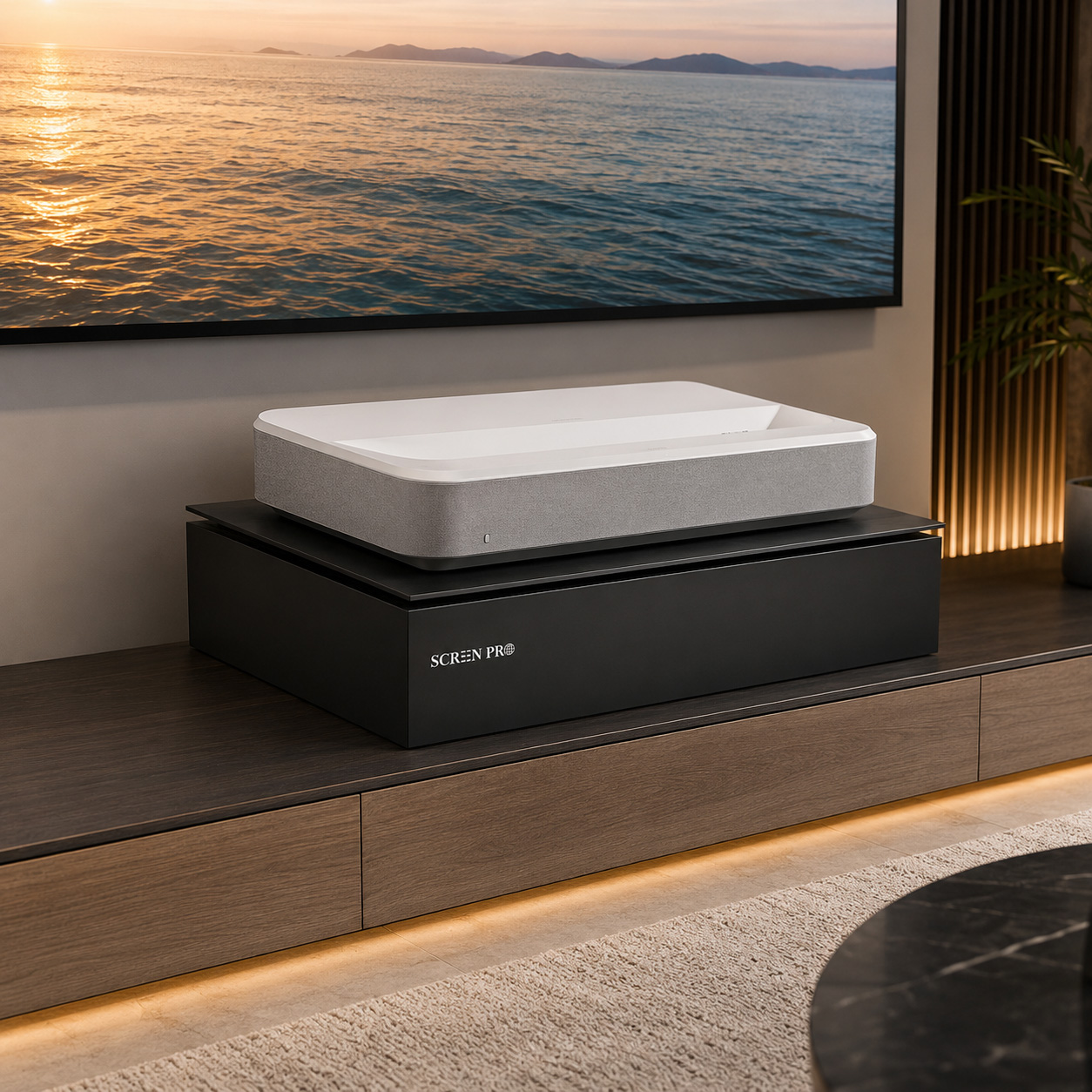
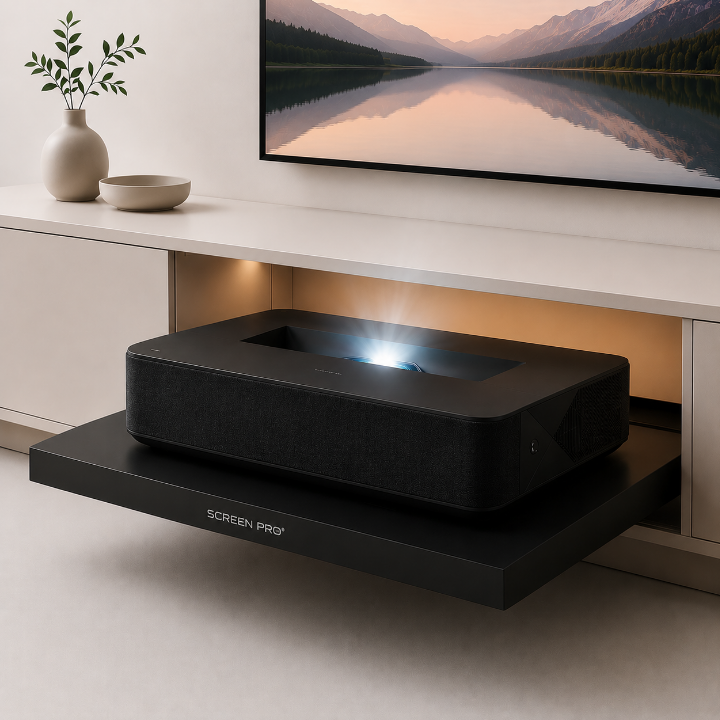
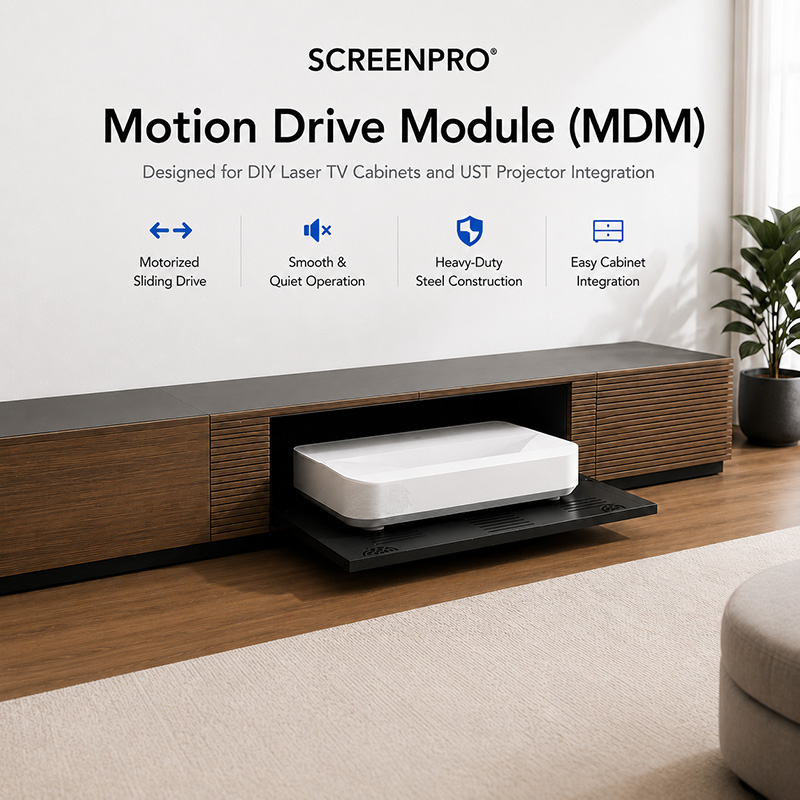
The SCREENPRO Motion Drive Module, or MDM, is a motorized sliding drive system designed for DIY Laser TV cabinets and custom Ultra Short Throw projector installations.
It allows the projector tray to extend smoothly from inside the cabinet while keeping the main drive structure concealed.
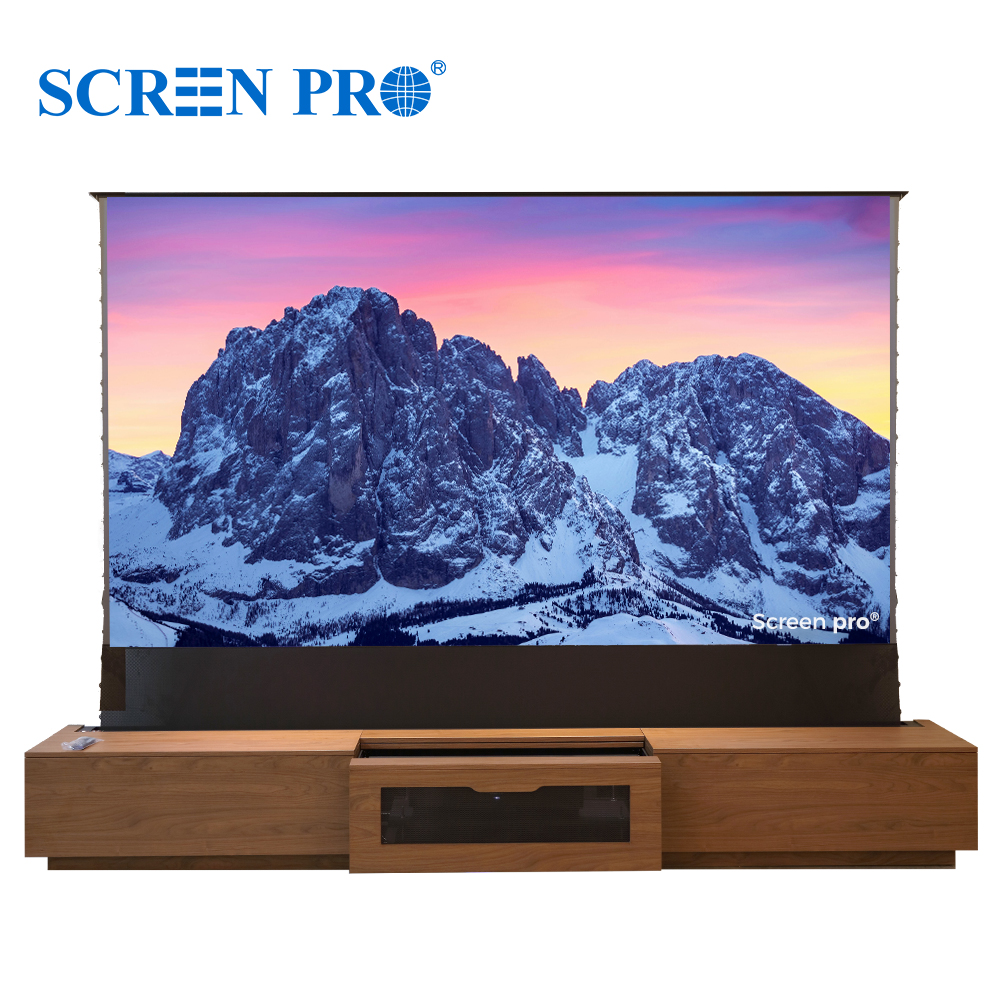
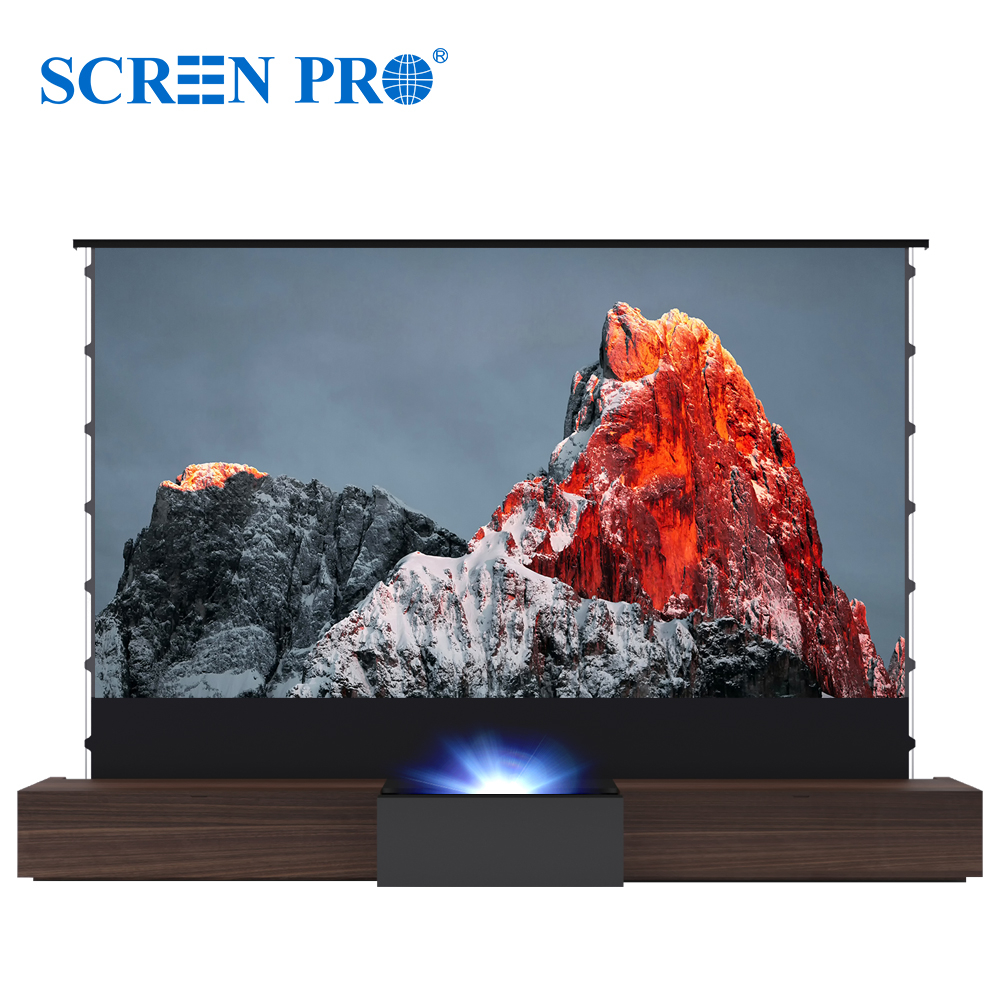
The MDM is designed for custom Laser TV cabinets, built-in media furniture and DIY home theater installations that require a UST projector to move forward into its operating position.
The MDM is installed inside a compatible cabinet structure. When activated, the projector tray moves forward while the side rails and main drive mechanism remain inside the cabinet.
This creates a cleaner and more integrated Laser TV installation.
No. Only the bottom projector tray is designed to extend outward. The side structures, drive rails and supporting mechanism should remain fixed and concealed inside the cabinet.
The recommended DIY cabinet clearance is approximately:
905 × D × 230 mm (W × D × H)
The required depth depends on the selected tray depth and cabinet structure.
The internal cabinet depth should be based on the actual tray depth, plus at least 5 mm of additional installation allowance.
Additional space may be required for cables, connectors, ventilation and manufacturing tolerances.
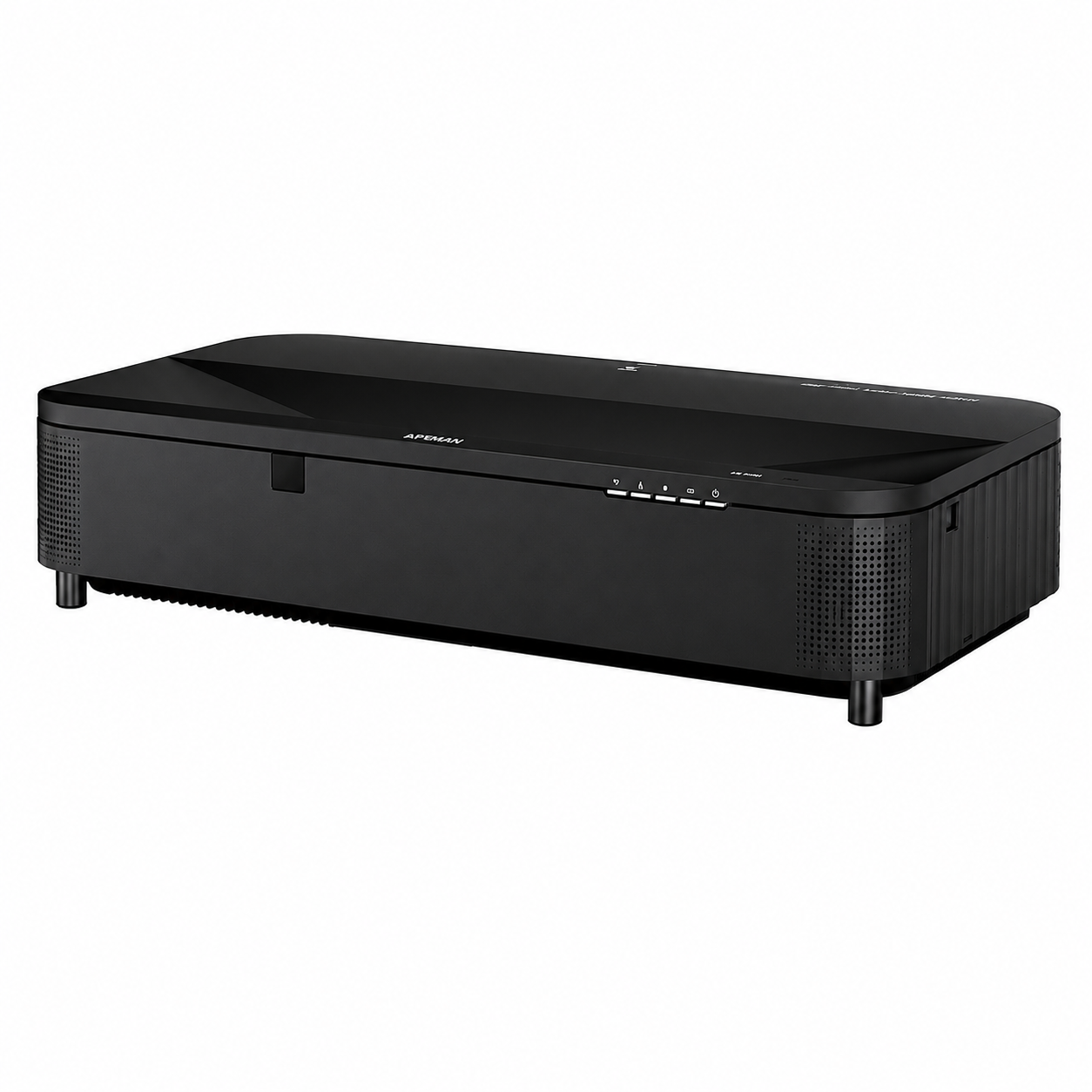
The recommended maximum projector dimensions are approximately:
730 × D × 170 mm (W × D × H)
Actual compatibility also depends on projector weight, ventilation requirements, connector position and cabinet design.
The MDM is suitable for many Ultra Short Throw projectors, provided the projector fits within the available tray and cabinet space.
Always confirm the projector width, depth, height, weight, ventilation requirements and connector locations before installation.
Available tray size depends on the selected MDM configuration. The cabinet and projector dimensions should be confirmed before production or installation.
No. The MDM is designed as a motorized horizontal sliding drive module.
It moves the projector tray forward and backward but does not provide vertical lifting.
Ultra Short Throw projectors are highly sensitive to changes in distance, height and angle.
Even a small position change can affect image size, geometry, focus and alignment with the projection screen.
The motorized drive is designed to provide stable and repeatable movement for consistent projector positioning.
The exact control and position-setting functions depend on the selected MDM configuration.
The operating method depends on the selected control configuration and cabinet installation.
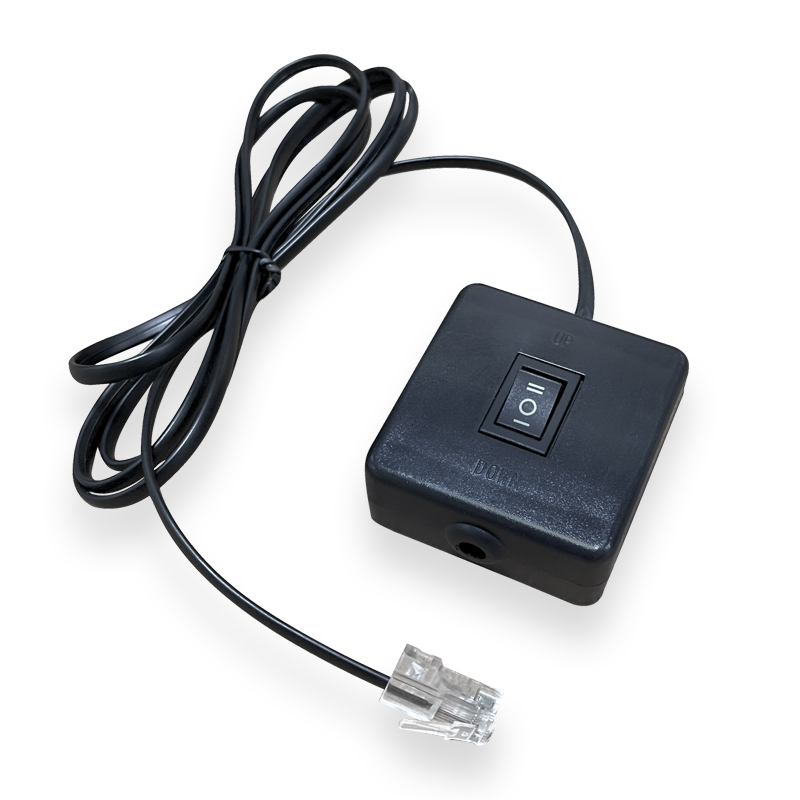
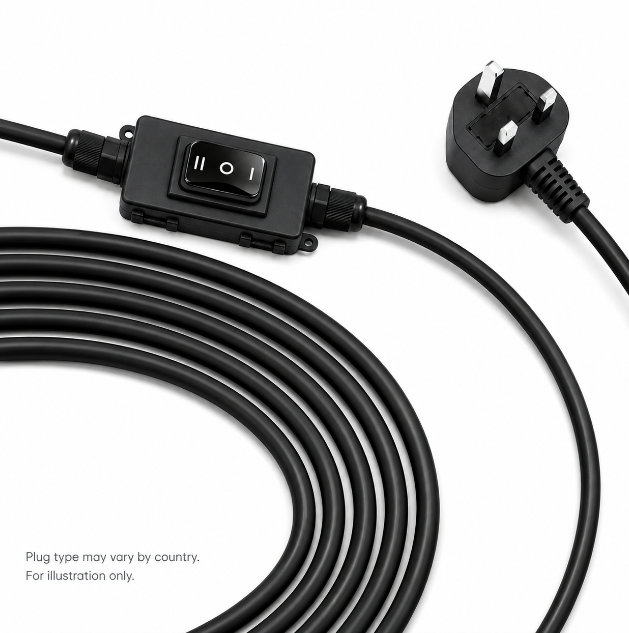
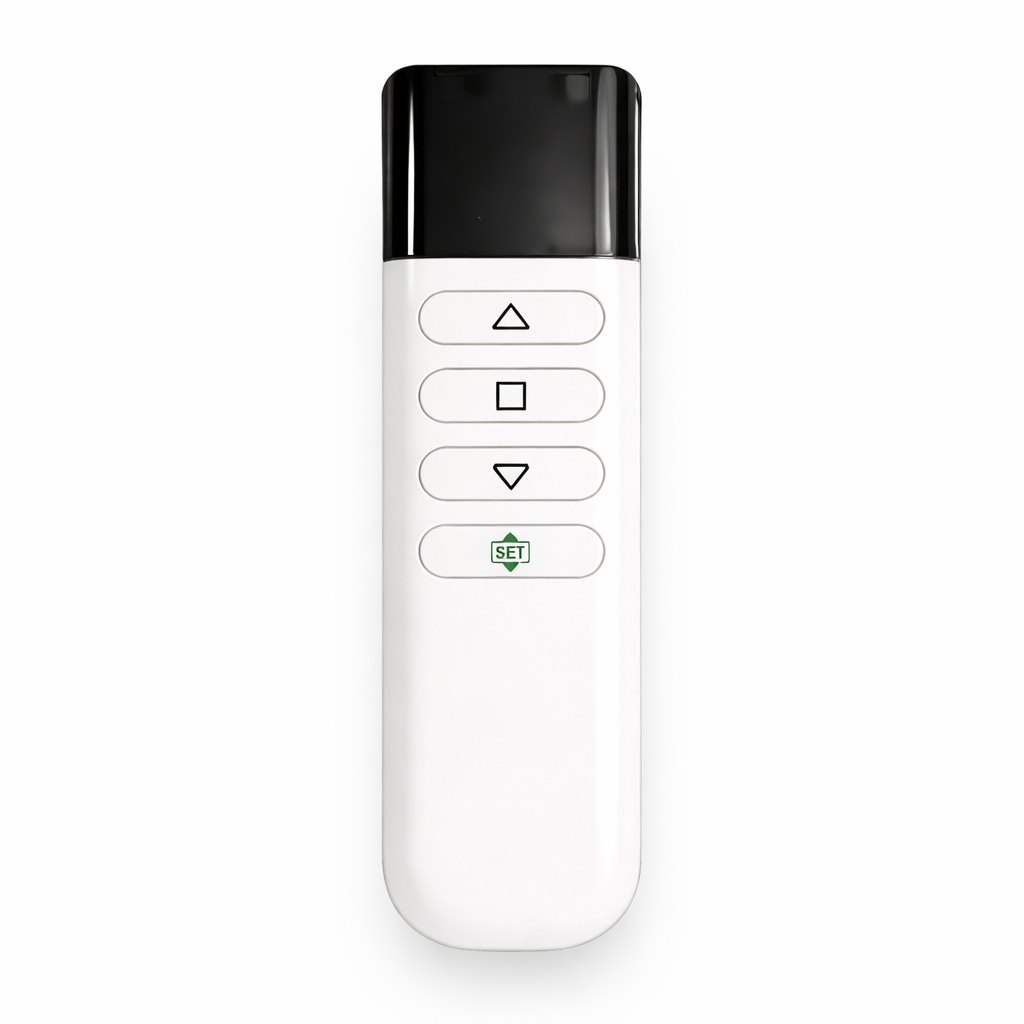
Confirm the required trigger, remote-control or integrated control method before ordering.
Synchronized operation may be possible when the MDM is connected to a compatible control or trigger system.
The actual operating sequence depends on the projector, screen and control configuration.
Normally no top opening is required because the MDM moves the projector horizontally rather than vertically.
The cabinet front must provide sufficient clearance for the projector tray to extend without interference.
Check the projector dimensions and weight, cabinet width, cabinet height, required depth, tray size, ventilation, cable routing, screen position and projection distance.
A complete extension and retraction test should be performed before the cabinet is permanently finished.
Allow sufficient flexible cable length for the full sliding movement.
Cables should be secured away from the rails, drive components and tray edges to prevent pinching, pulling or movement obstruction.
Ventilation requirements vary by projector model. Do not block the projector intake or exhaust openings.
The cabinet should provide adequate airflow around the projector in both the retracted and extended positions.
Keep the tray, sliding path and cabinet interior free from dust, loose cables and foreign objects.
Periodically check the mounting points and confirm that the tray can extend and retract smoothly without interference.
Yes. Professional installation is recommended because the cabinet structure, projector geometry, electrical connections, movement clearance and screen alignment must be coordinated accurately.
DIY installation should only be completed by users familiar with cabinet construction, electrical safety and UST projector positioning.
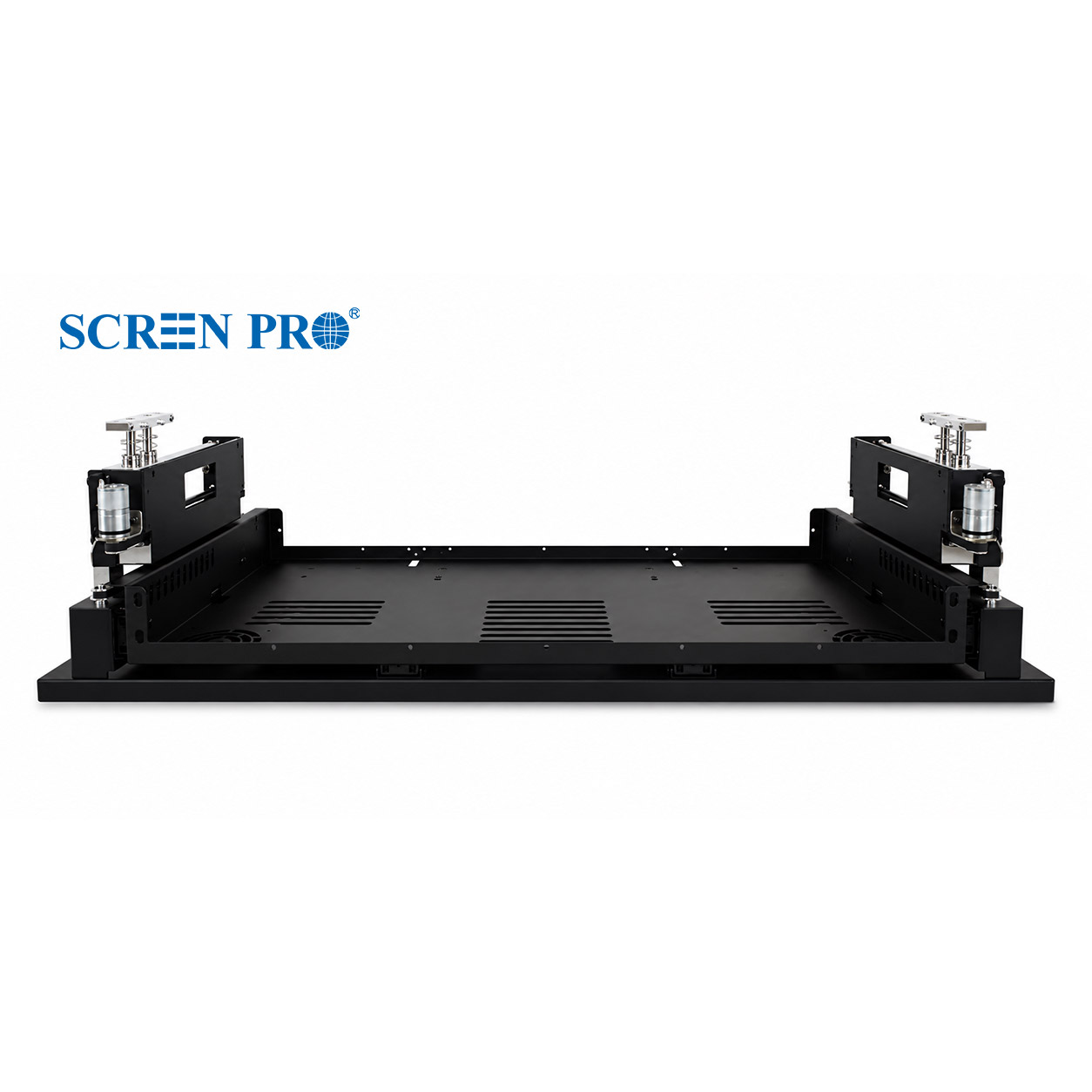
Download the SCREENPRO user manual for installation guidance, setup instructions, signal connection, position memory operation, and troubleshooting information.
Download PDF ManualIdeal for ultra-short-throw projector cabinet integration, laser TV furniture, hidden projector shelf systems, and custom home theater installations.
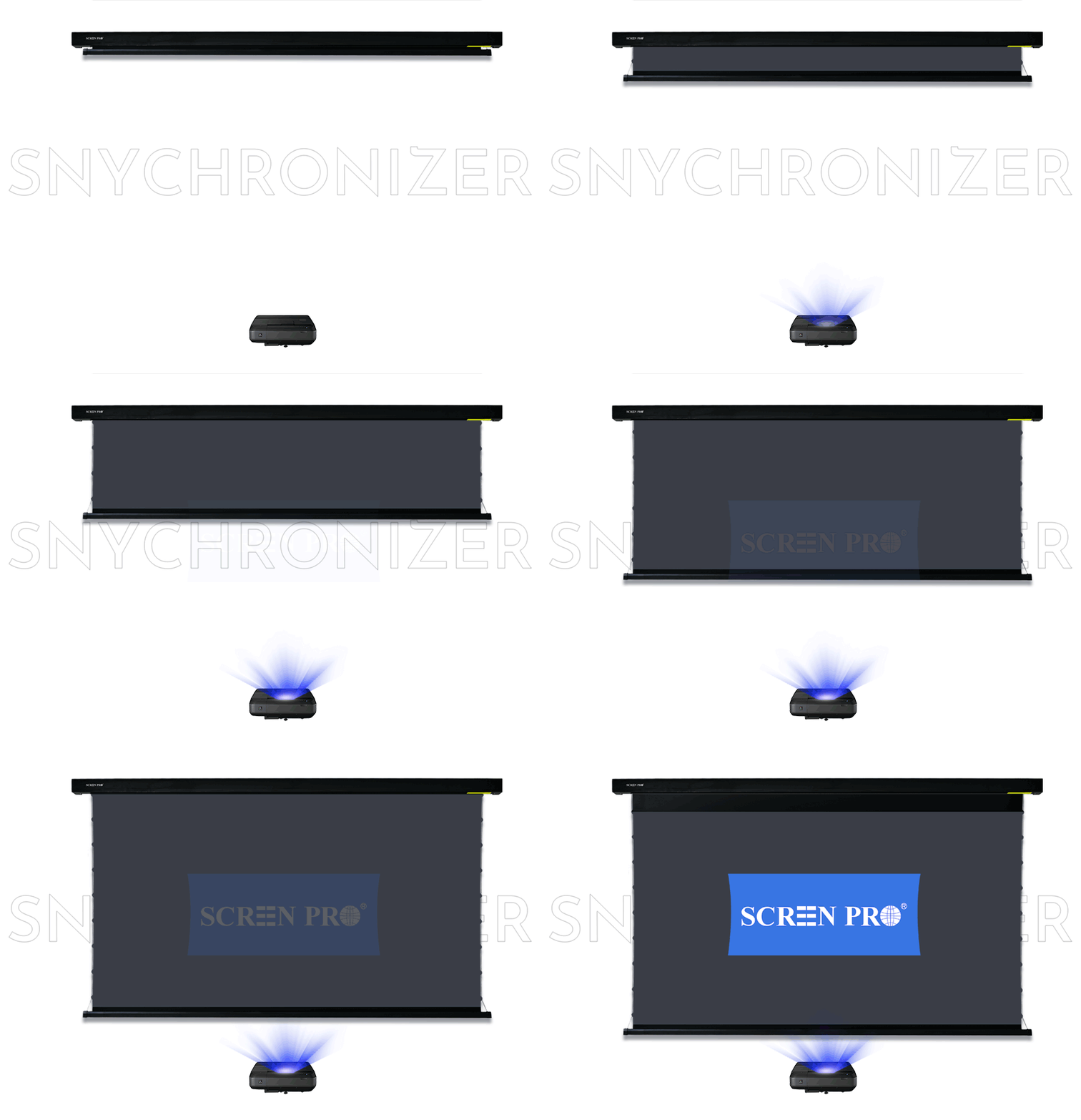
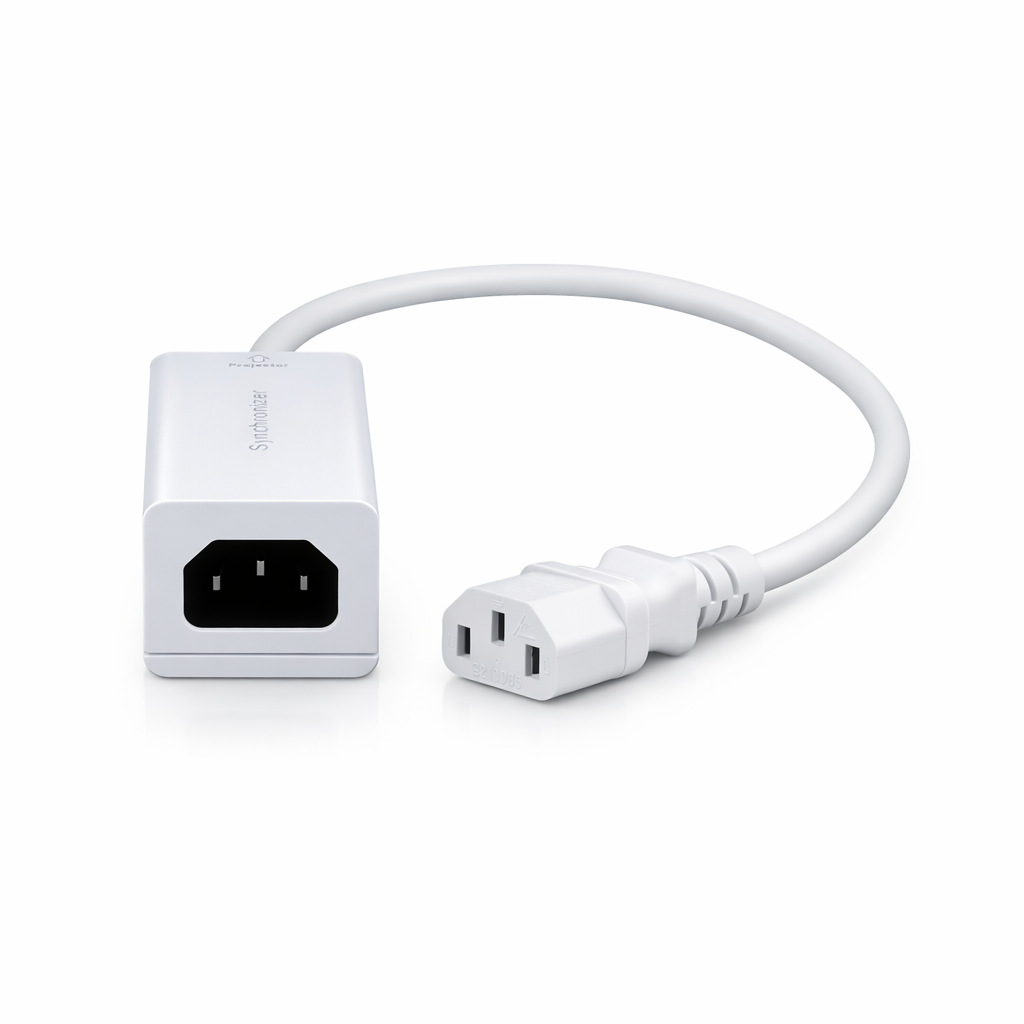
The Sync-Trigger System, also known as a projector screen synchronizer, allows compatible SCREENPRO projection screens to respond automatically to the projector's power status. When the projector powers on, the screen extends; when the projector powers off, the screen retracts.
This creates a cleaner, smarter, and more integrated home theater experience.
FURTHER READING
Explore how a motorized projector shelf, UST projector, projection screen, and cabinet can be integrated into a cleaner automated Laser TV installation.
READ DIY CABINET INTEGRATION GUIDE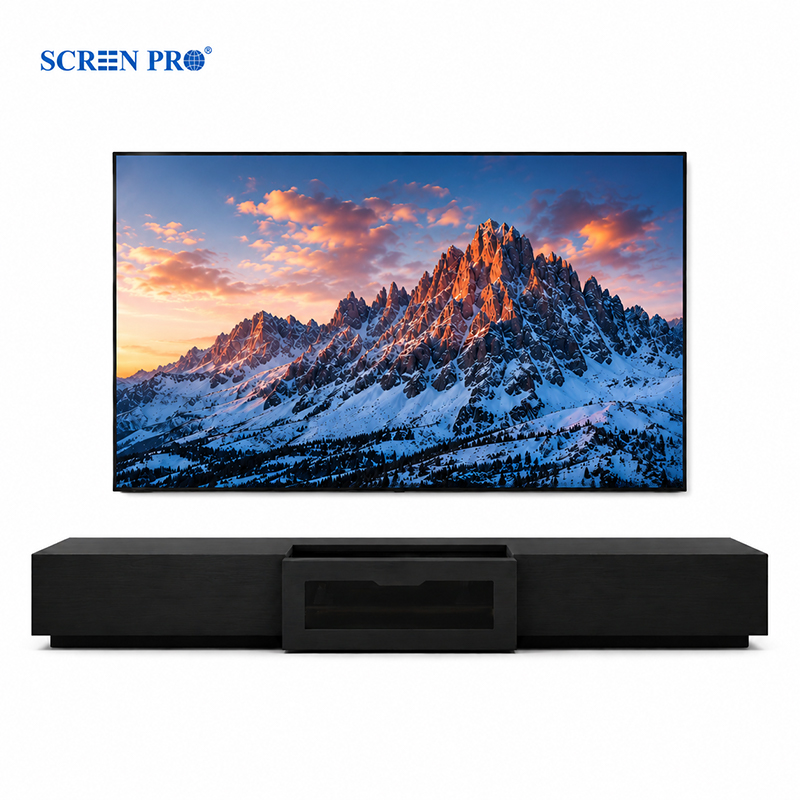
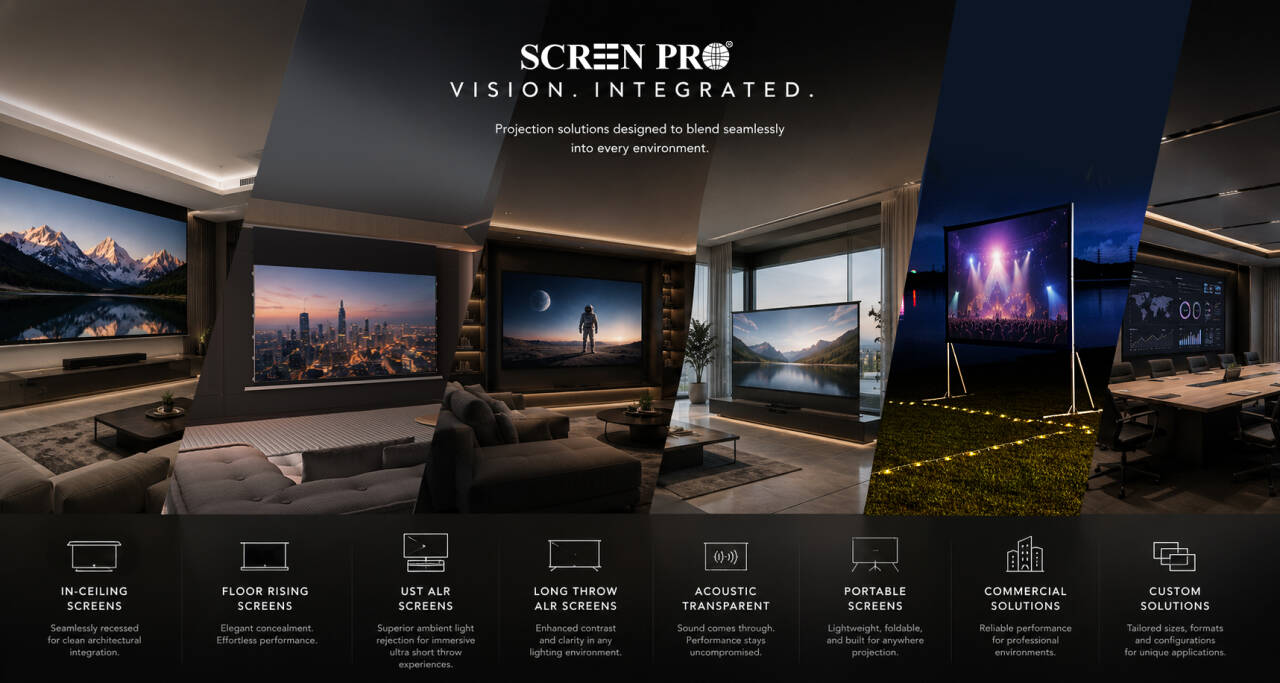
Everything you may want to know before choosing a SCREENPRO® projection screen.
The ideal screen material depends on your projector type, room lighting, and installation environment.
If you are unsure, SCREENPRO can recommend a suitable projection screen solution based on your projector model and room layout.
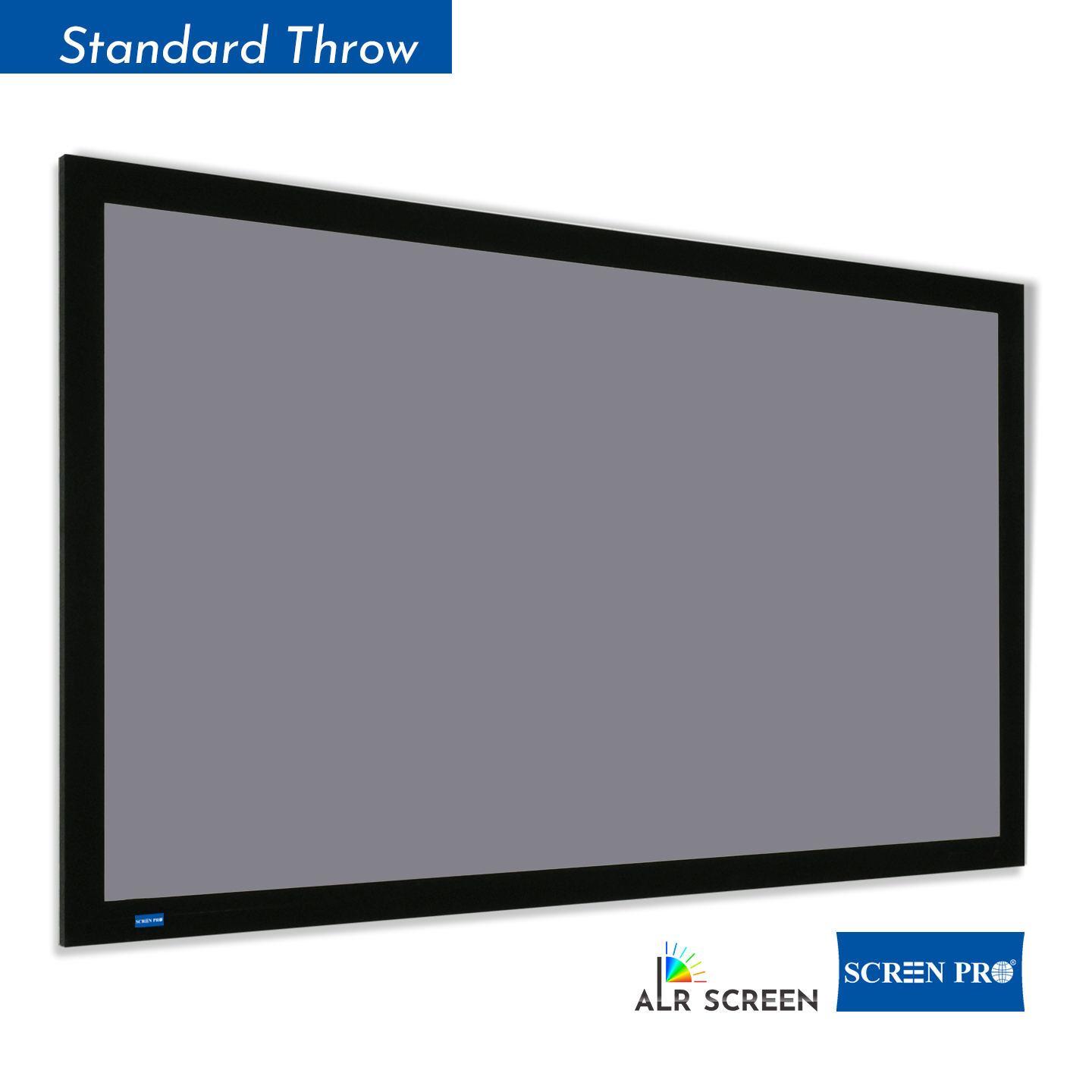
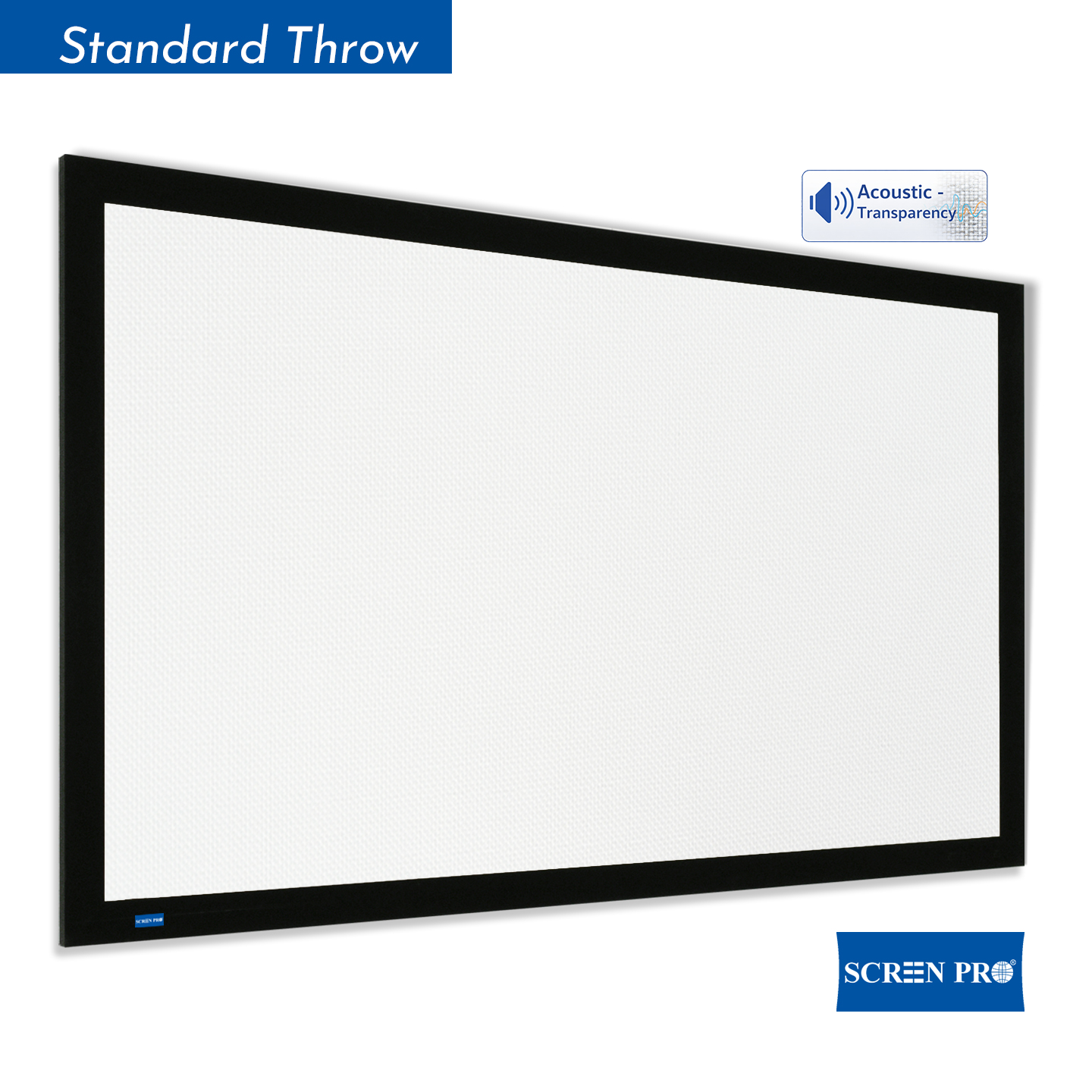
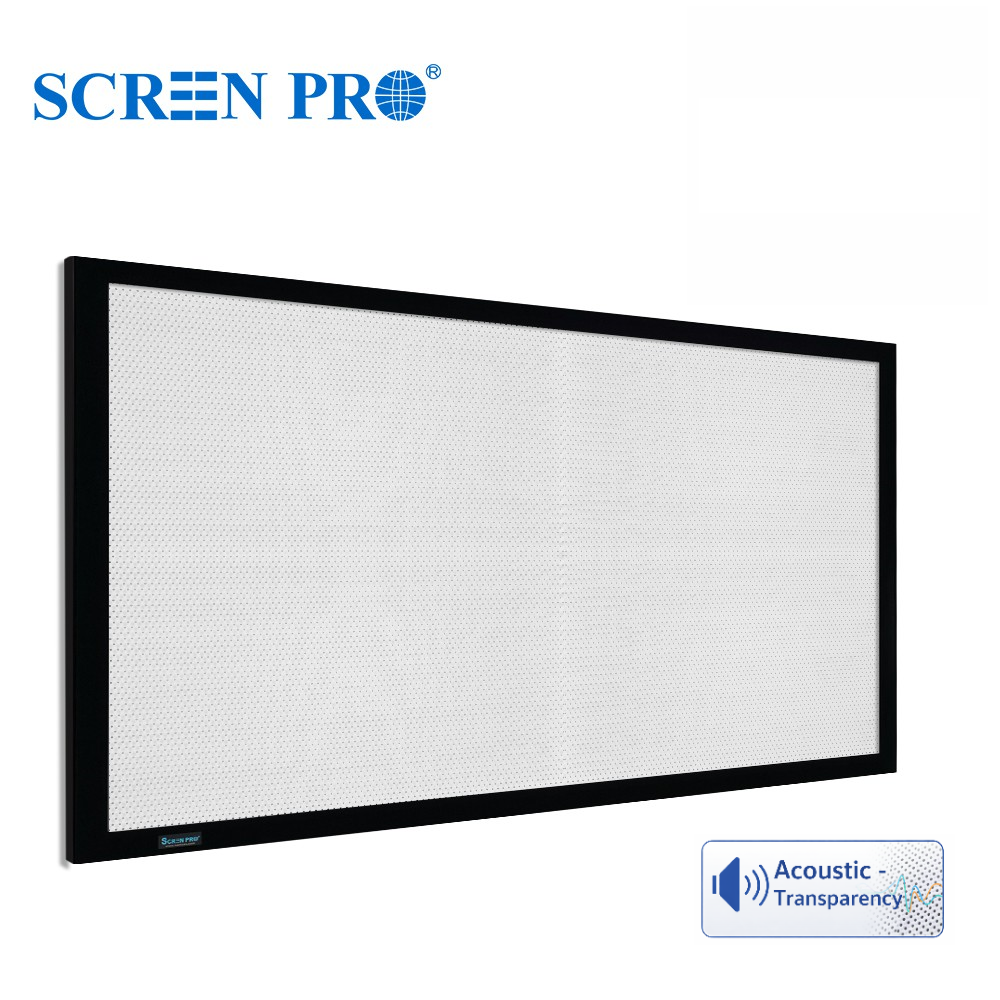
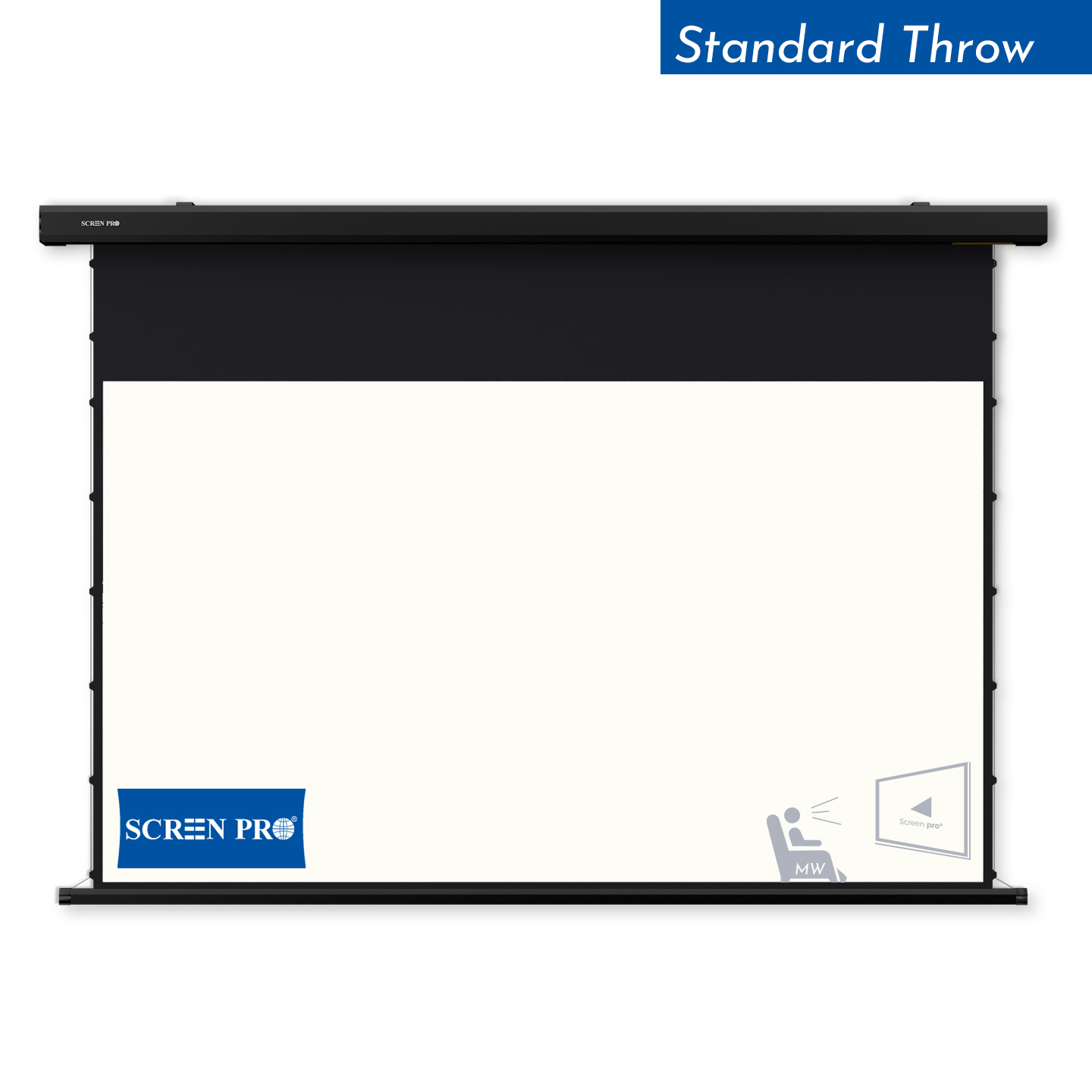
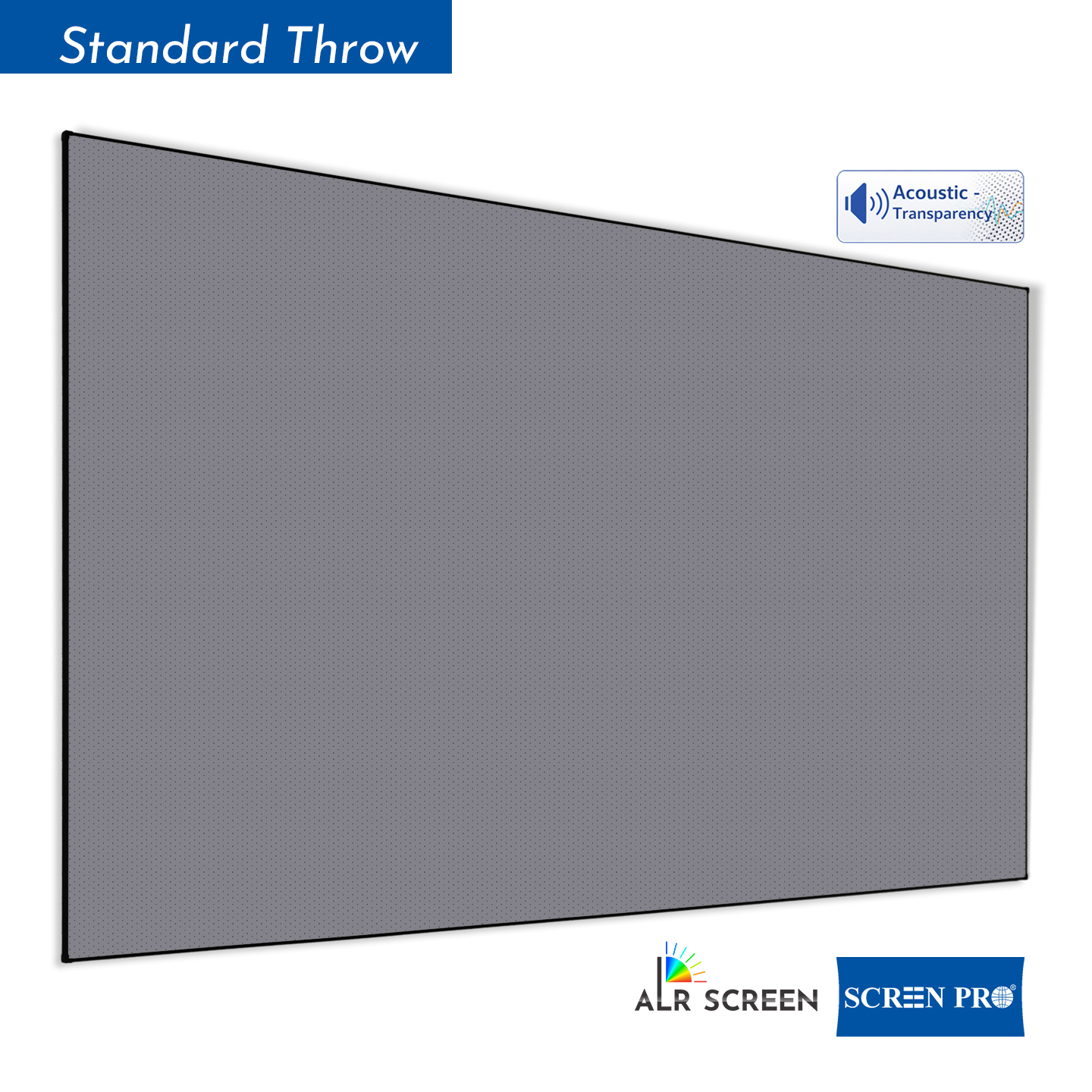
A standard white screen is best for dark or controlled lighting rooms. An ALR screen is designed to reduce the influence of ambient light and improve perceived contrast in brighter environments.
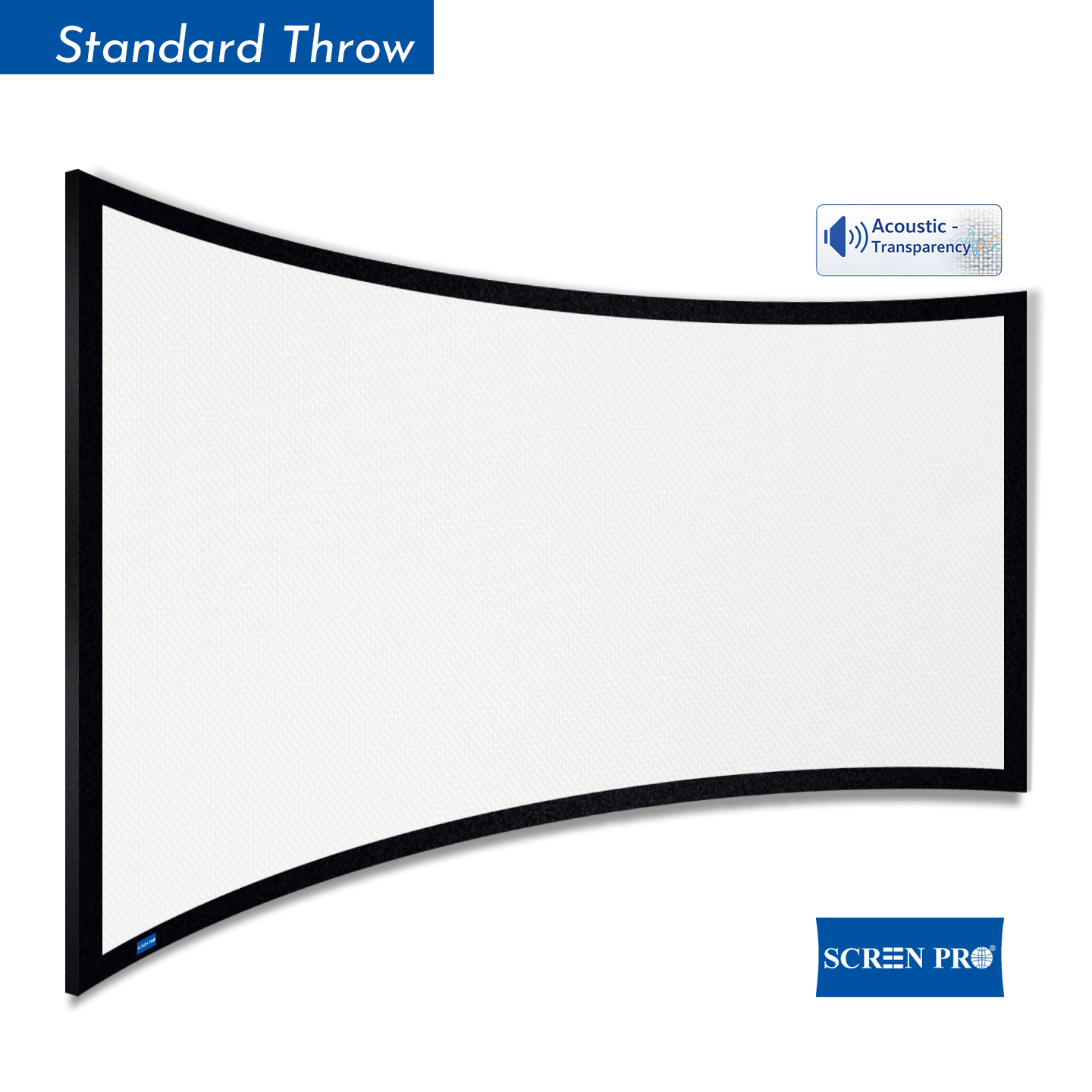
The best screen for contrast depends on your projector type and room lighting. In dark rooms, a high-quality white or acoustic transparent screen can deliver natural contrast. In rooms with ambient light, ALR screen materials help maintain deeper blacks and stronger perceived contrast.
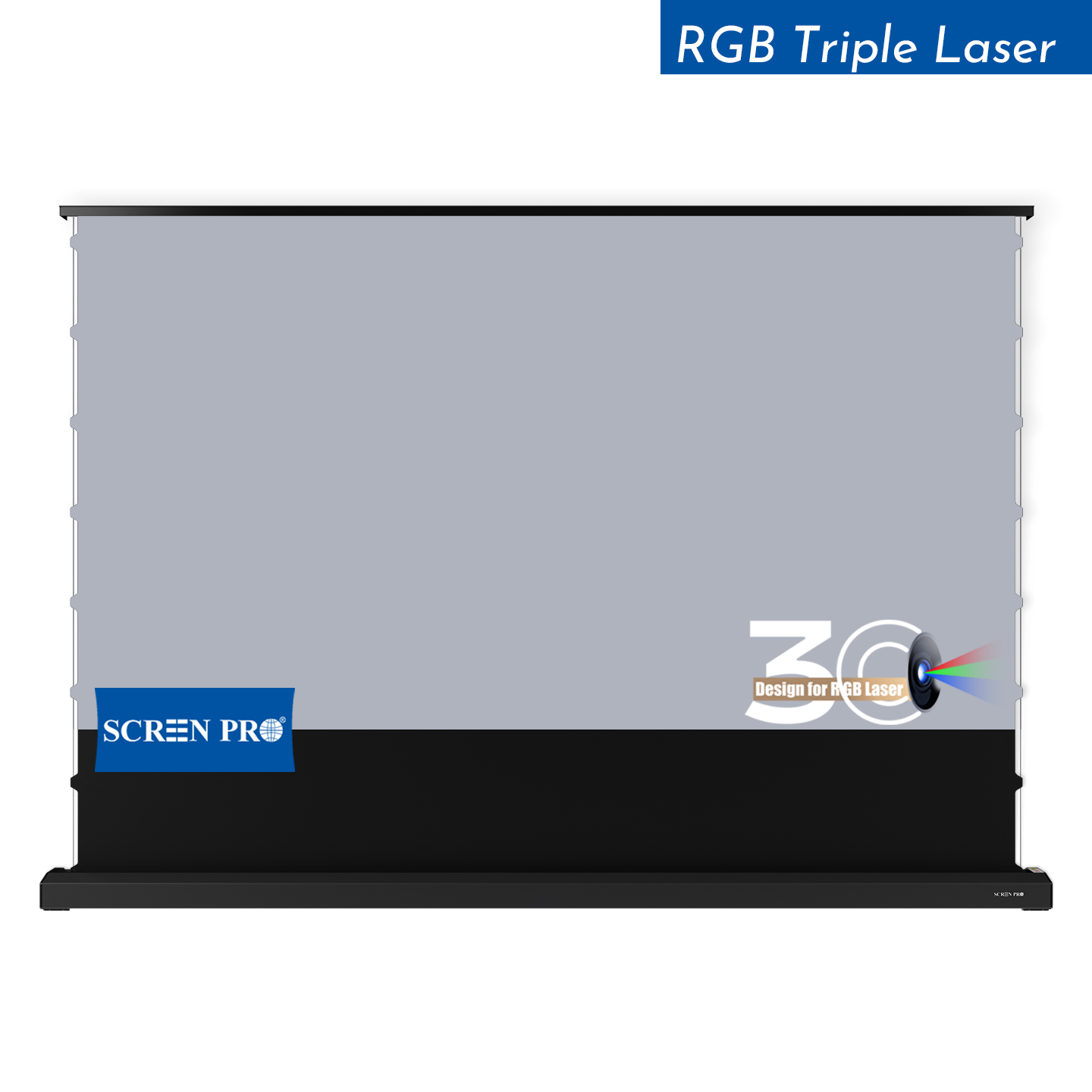
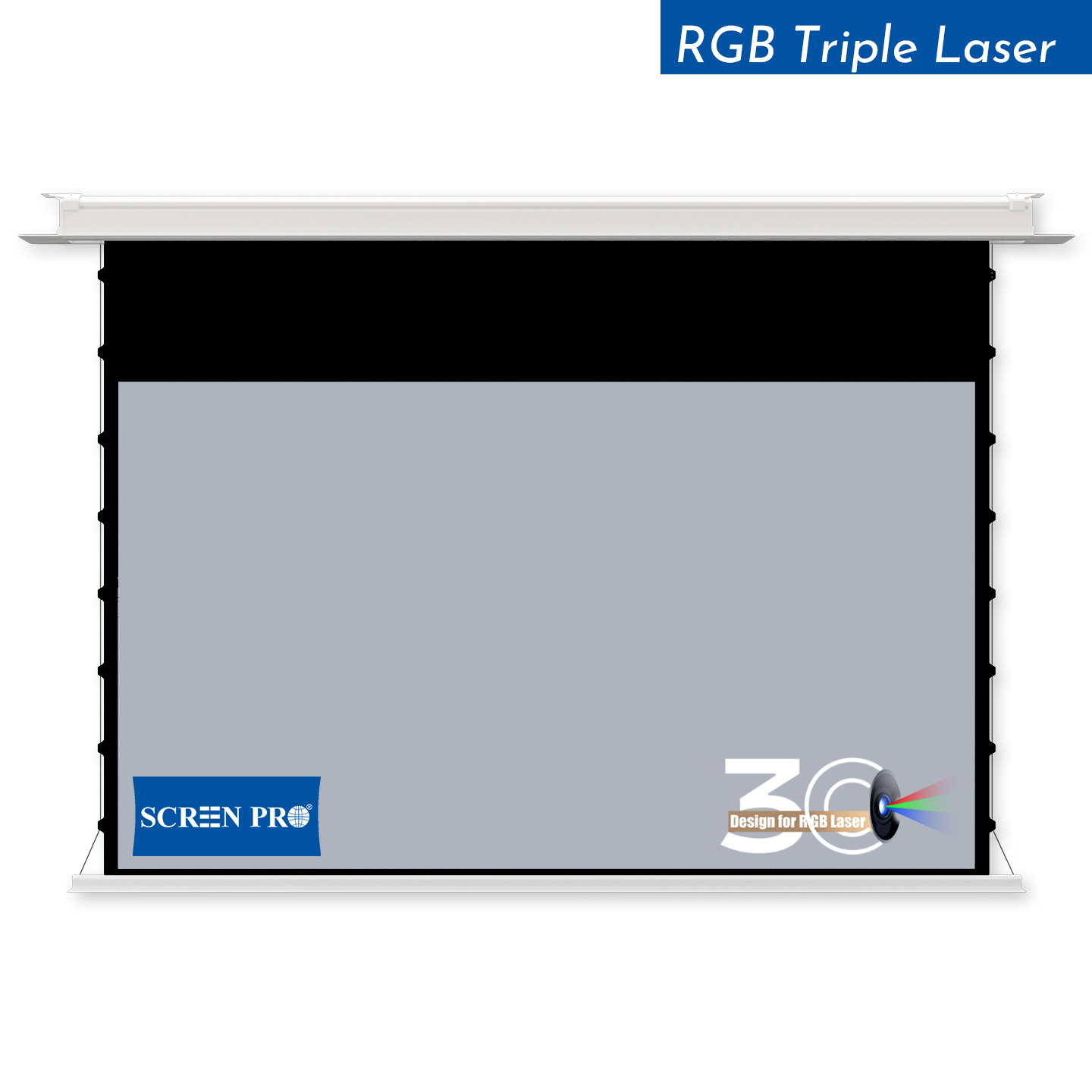
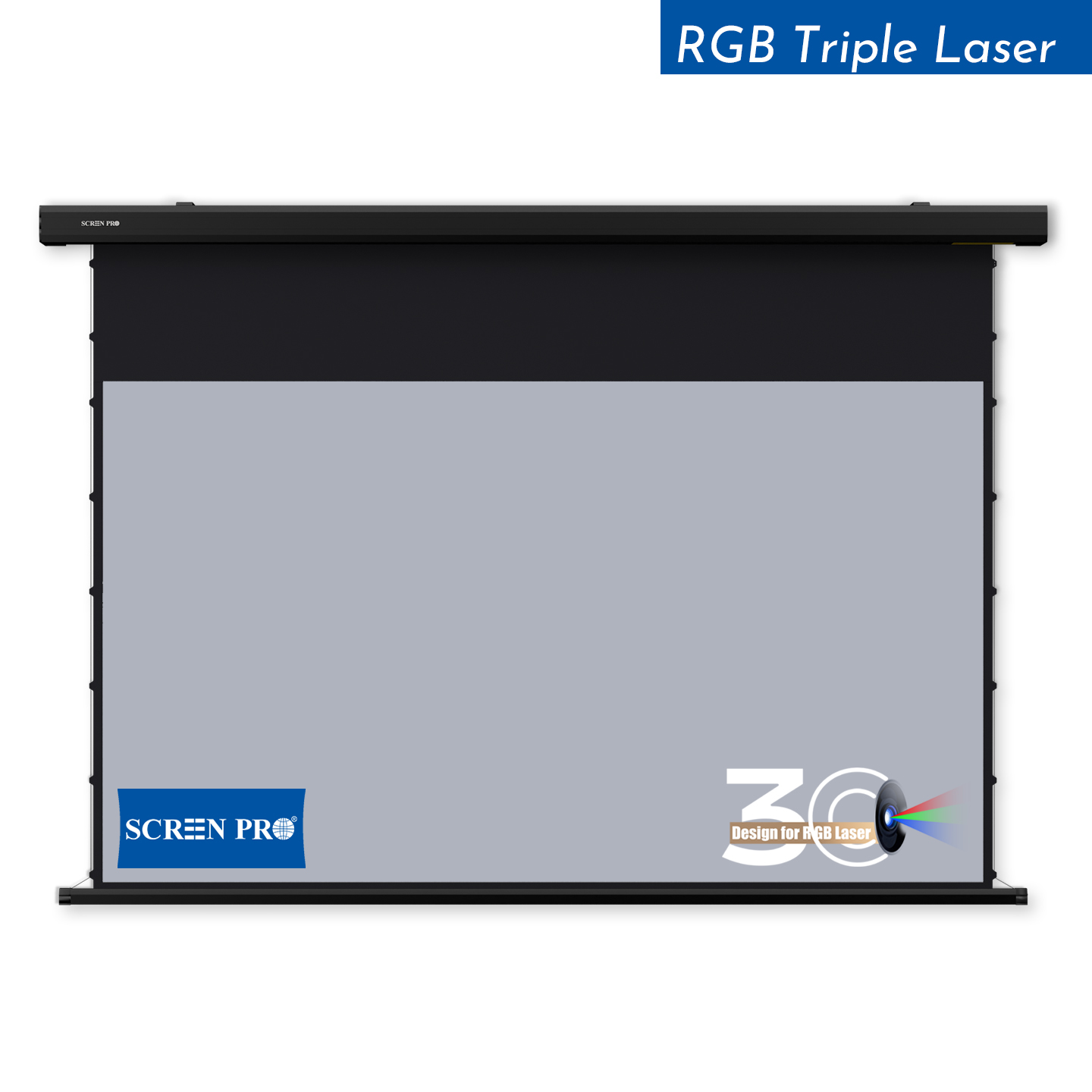
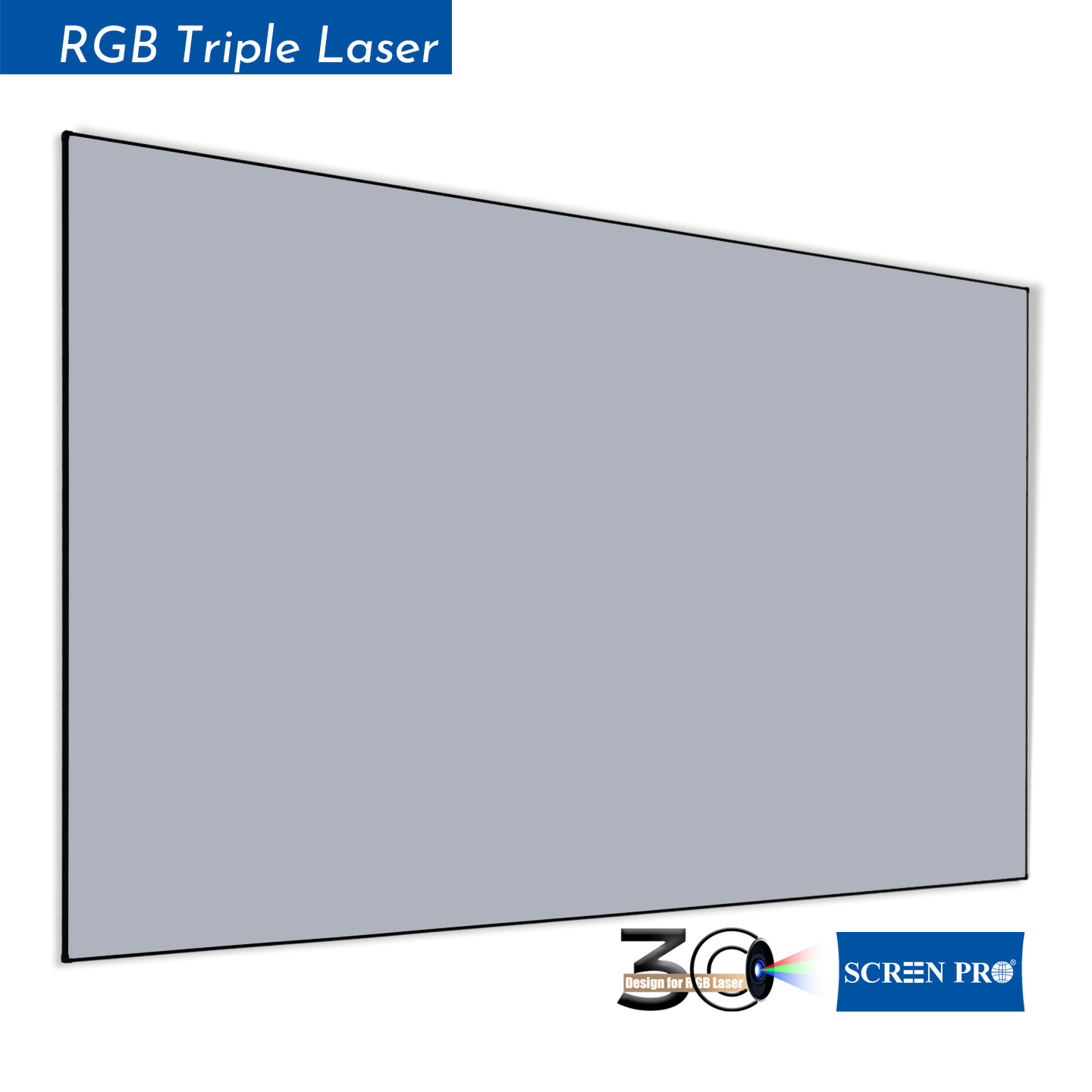
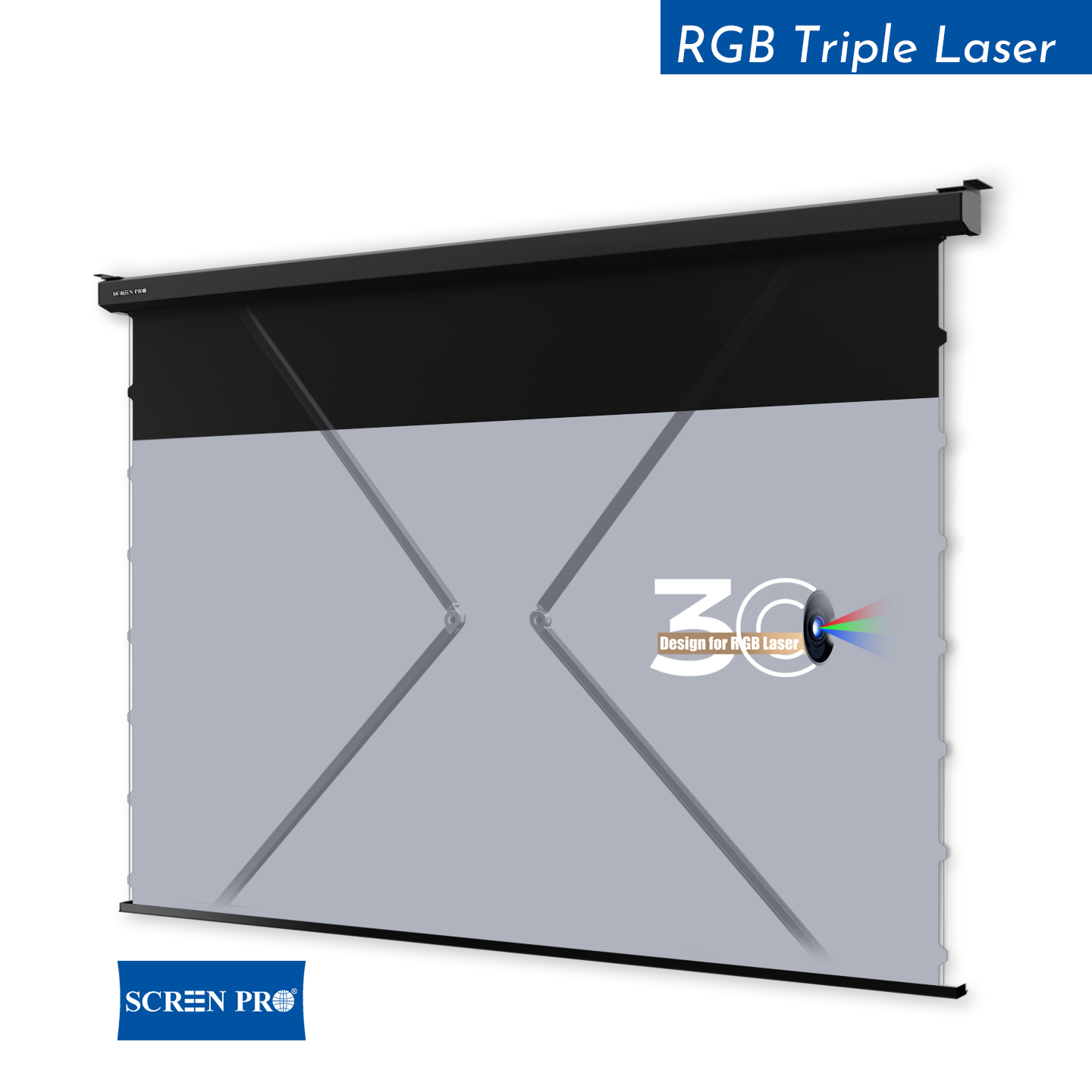
For RGB triple laser projectors, SCREENPRO recommends 3C Anti-Speckle or 3W Woven Anti-Speckle materials. These materials are designed to reduce laser speckle while preserving image contrast, color performance and viewing comfort.
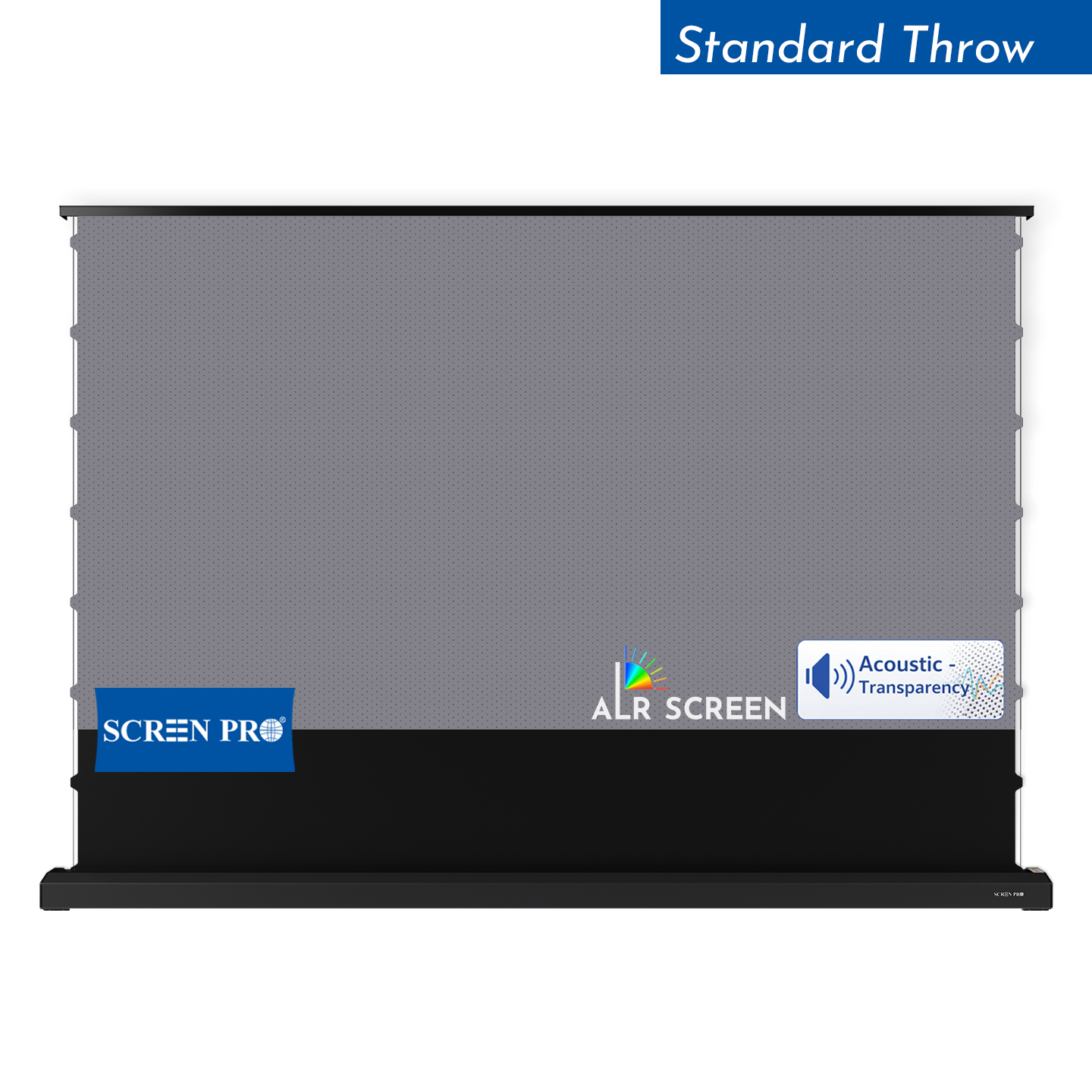
Technically yes, but a dedicated UST ALR screen usually provides better image performance. UST projectors project light from a steep angle, so a normal screen may show lower contrast, uneven brightness or visible texture depending on the material.
Screen size should be selected according to viewing distance, room size, projector brightness and installation space.
For commercial, church, education or large venue applications, custom screen size recommendations may be required.
3C is suitable for many triple laser projection setups, while 3W is recommended when stronger speckle reduction and acoustic transparency are required.
Most SCREENPRO® floor-rising screens are designed as freestanding systems and do not require wall fixation for normal use. For special installations, wall brackets or additional securing methods may be recommended depending on the environment.
Temporary waves or wrinkles may be caused by transportation, temperature changes, humidity, storage conditions or installation tension. Tab-tensioned and fixed frame structures generally provide better long-term flatness than non-tensioned or folding screen systems.
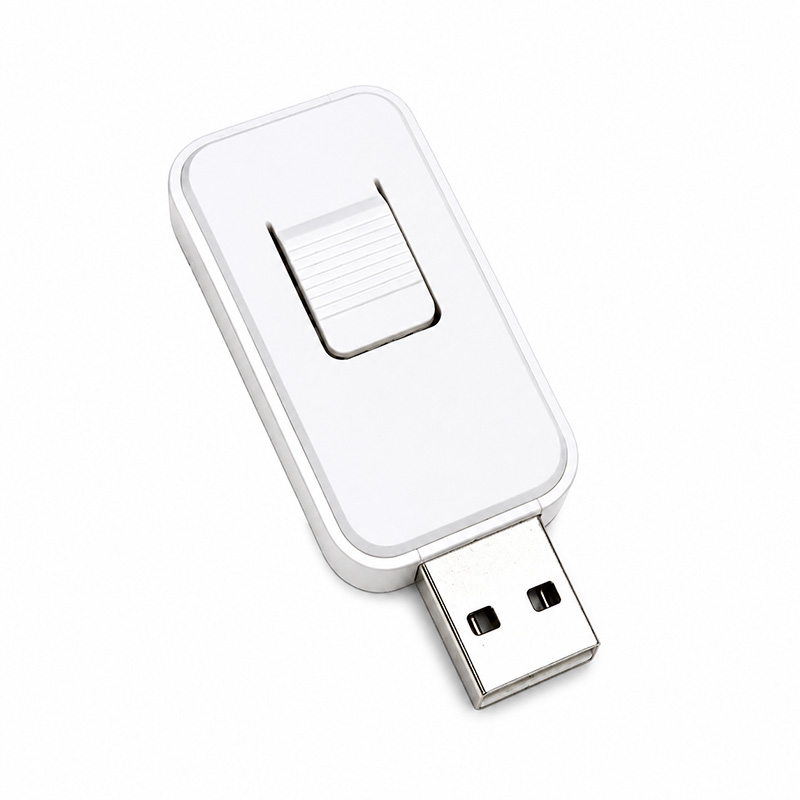
Many SCREENPRO motorized projection screens support RF remote control, 12V trigger, USB trigger, RS232, Tuya Smart, Alexa and Google Assistant integration. Compatibility may vary depending on the motor and control system selected.
Yes. Material samples are available for testing before purchasing a complete screen system. Samples can help you compare brightness, contrast, texture, acoustic transparency and anti-speckle performance in your own environment.
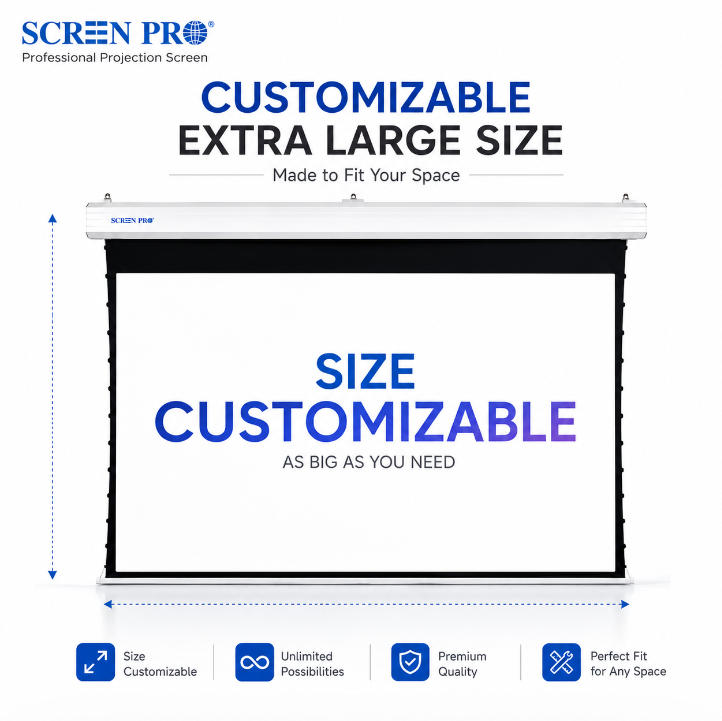
Yes. SCREENPRO supports customized screen sizes depending on the screen type, material, aspect ratio and application requirements. Custom options are commonly used for home cinema, commercial spaces, conference rooms, churches and OEM/ODM projects.
Warranty coverage varies by product category. Motorized systems, projection surfaces and accessories are covered under SCREENPRO warranty policies. Please contact SCREENPRO for specific warranty details based on your product model and installation type.
Explore compatible projection screen systems, materials and installation solutions for your project.
Talk to SCREENPRO





© Copyright 2004-2026 SCREEN PRO® All Rights Reserved | Specifications are subject to change without notice. All Rights ReservedSite Map Designed by iwonder.cn