

© 2026 SCREENPRO®. Specifications are subject to change without notice. | SamsAV All Rights ReservedSite Map Designed by iwonder.cn


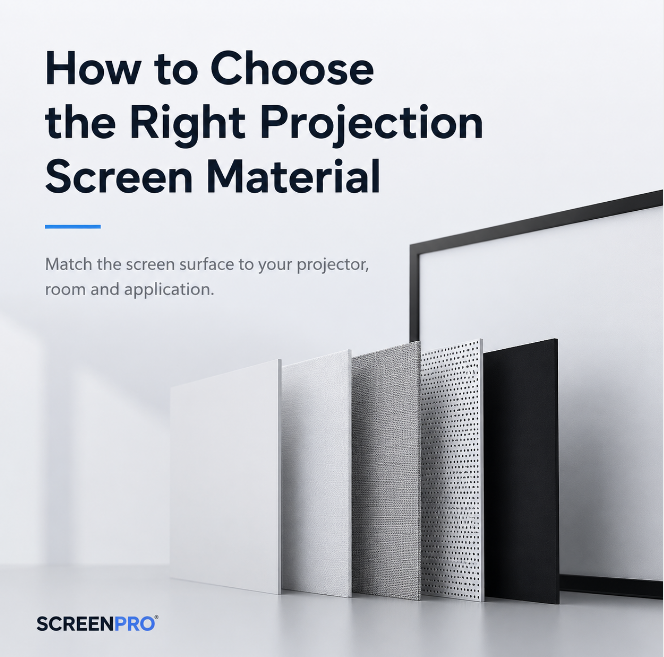
Match the screen surface to your projector, room, and application. Start with your setup below and jump directly to the material category most relevant to your system.
Select the option closest to your projection system.
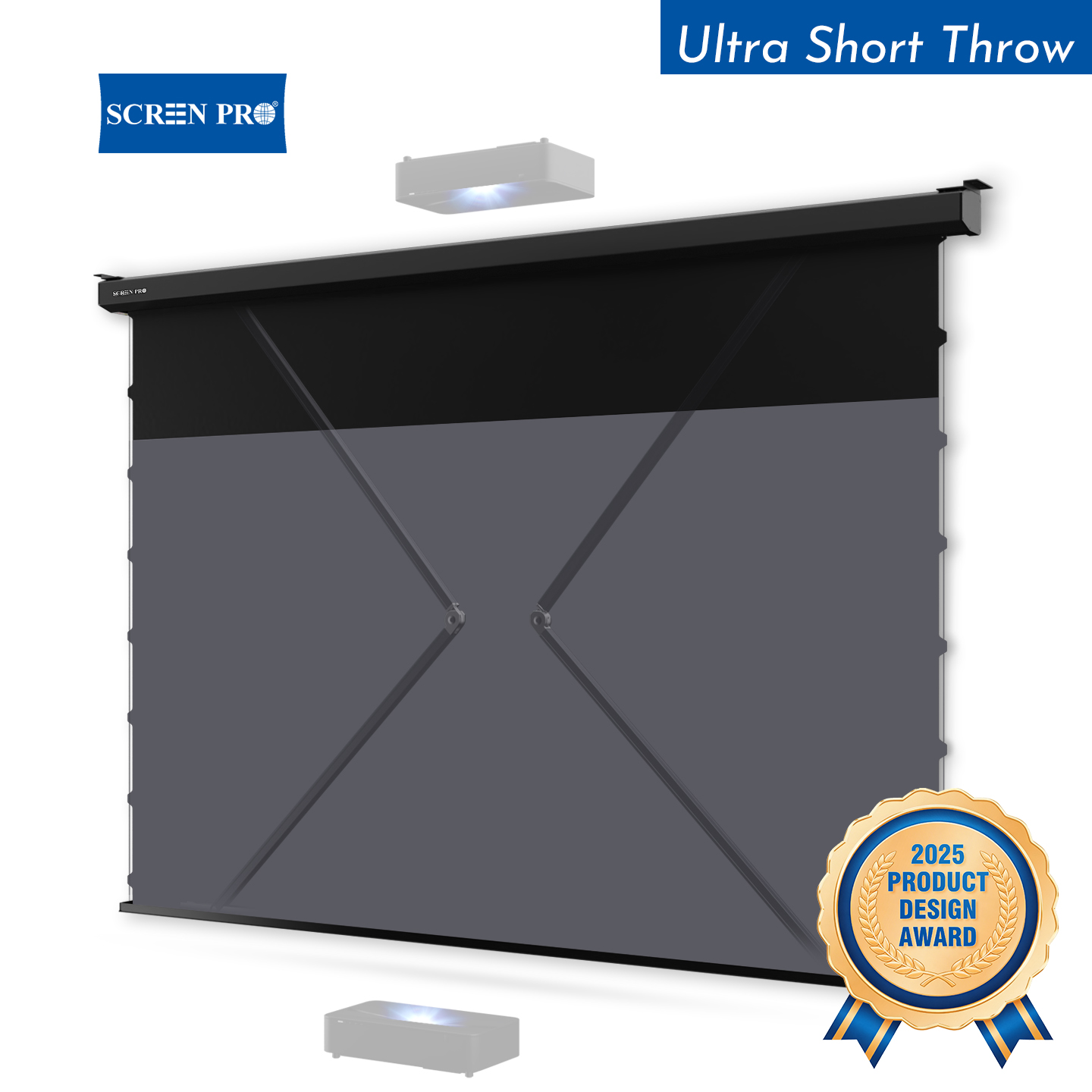
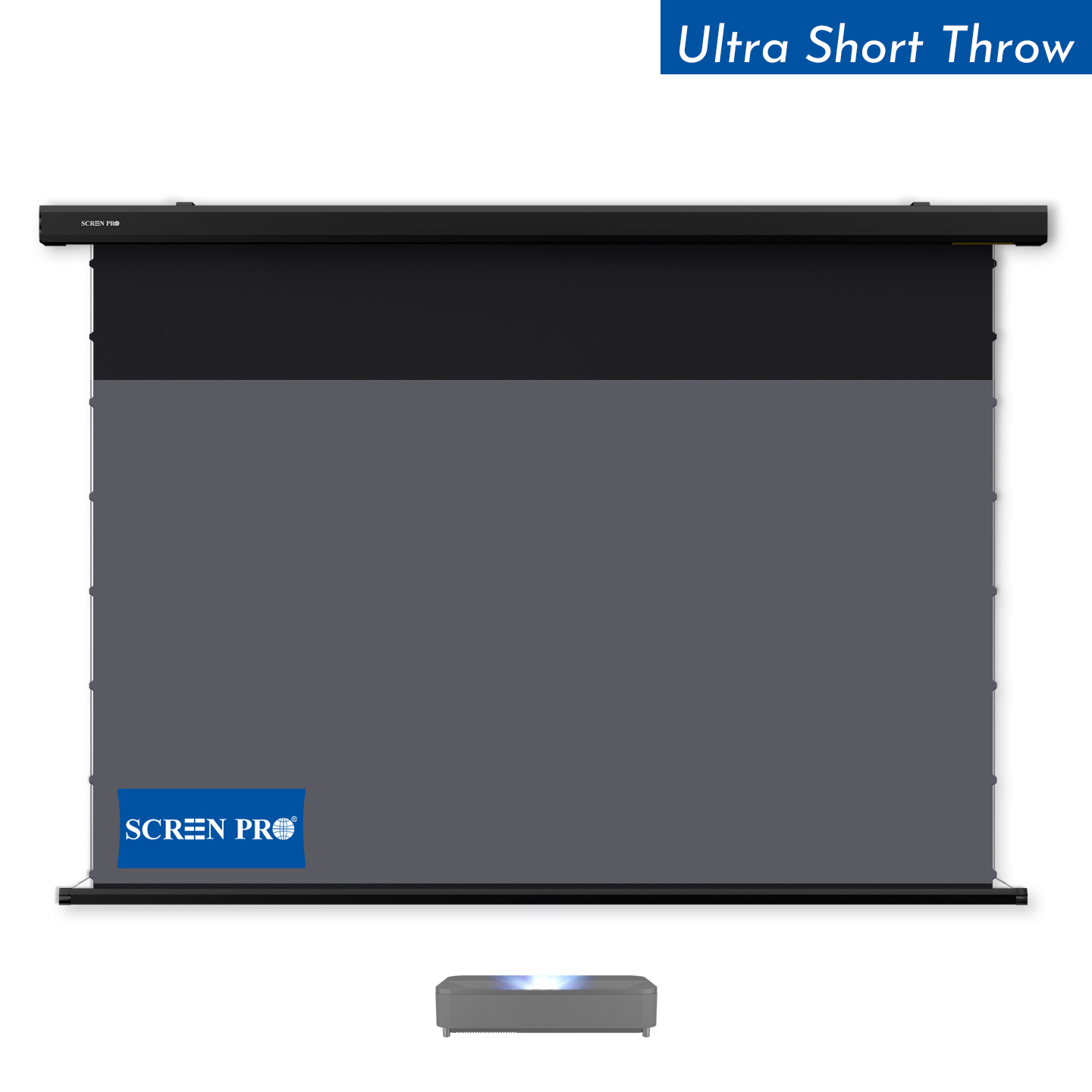
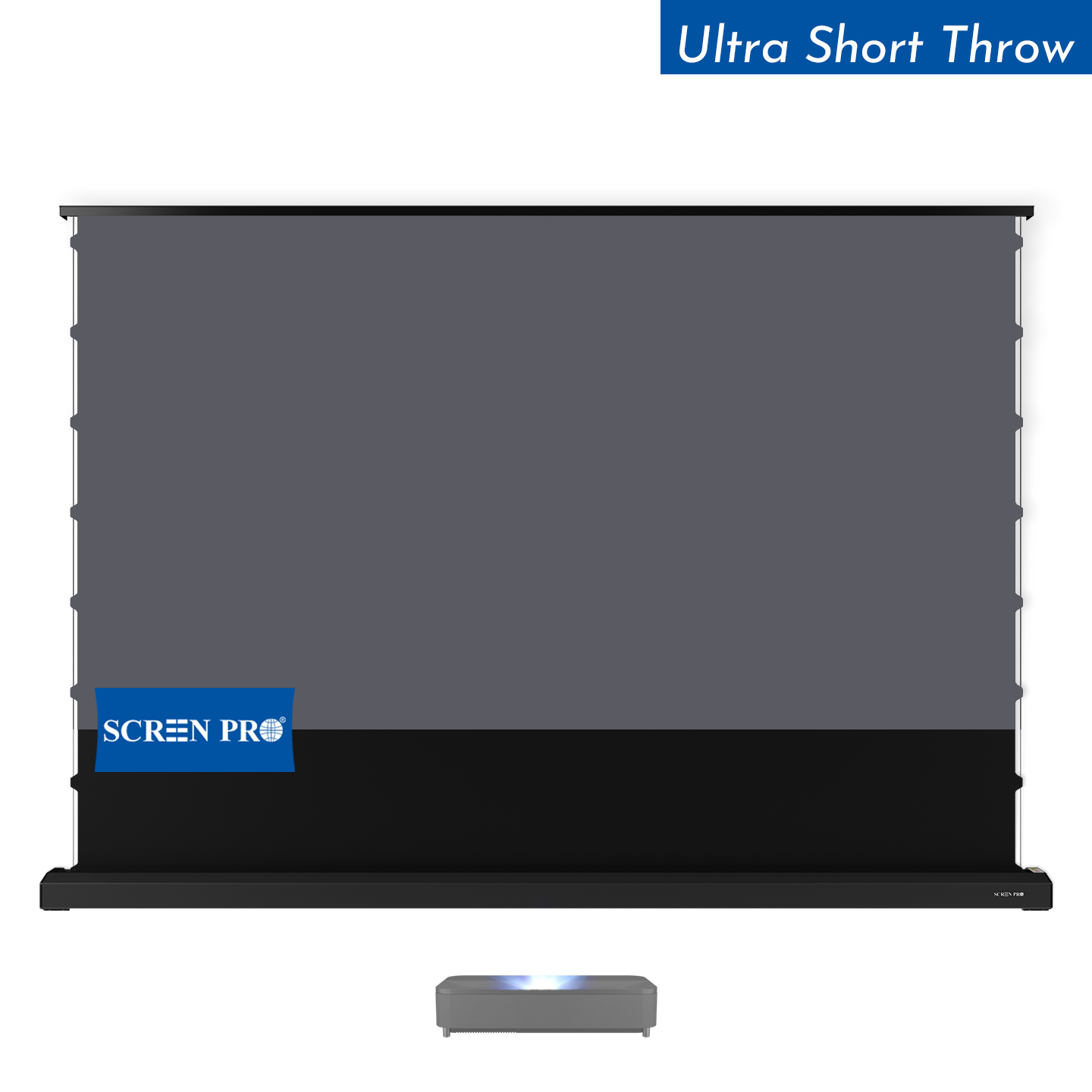
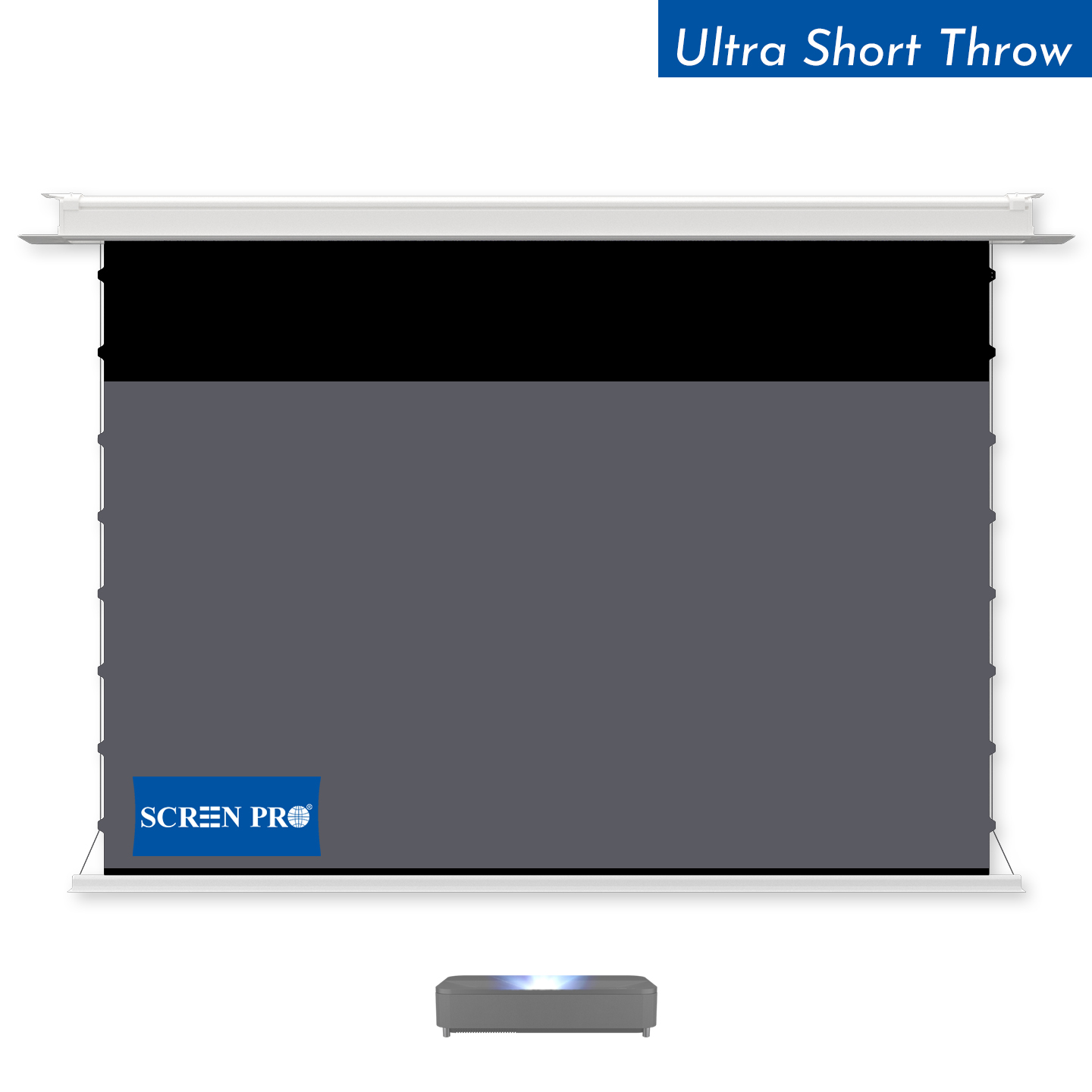
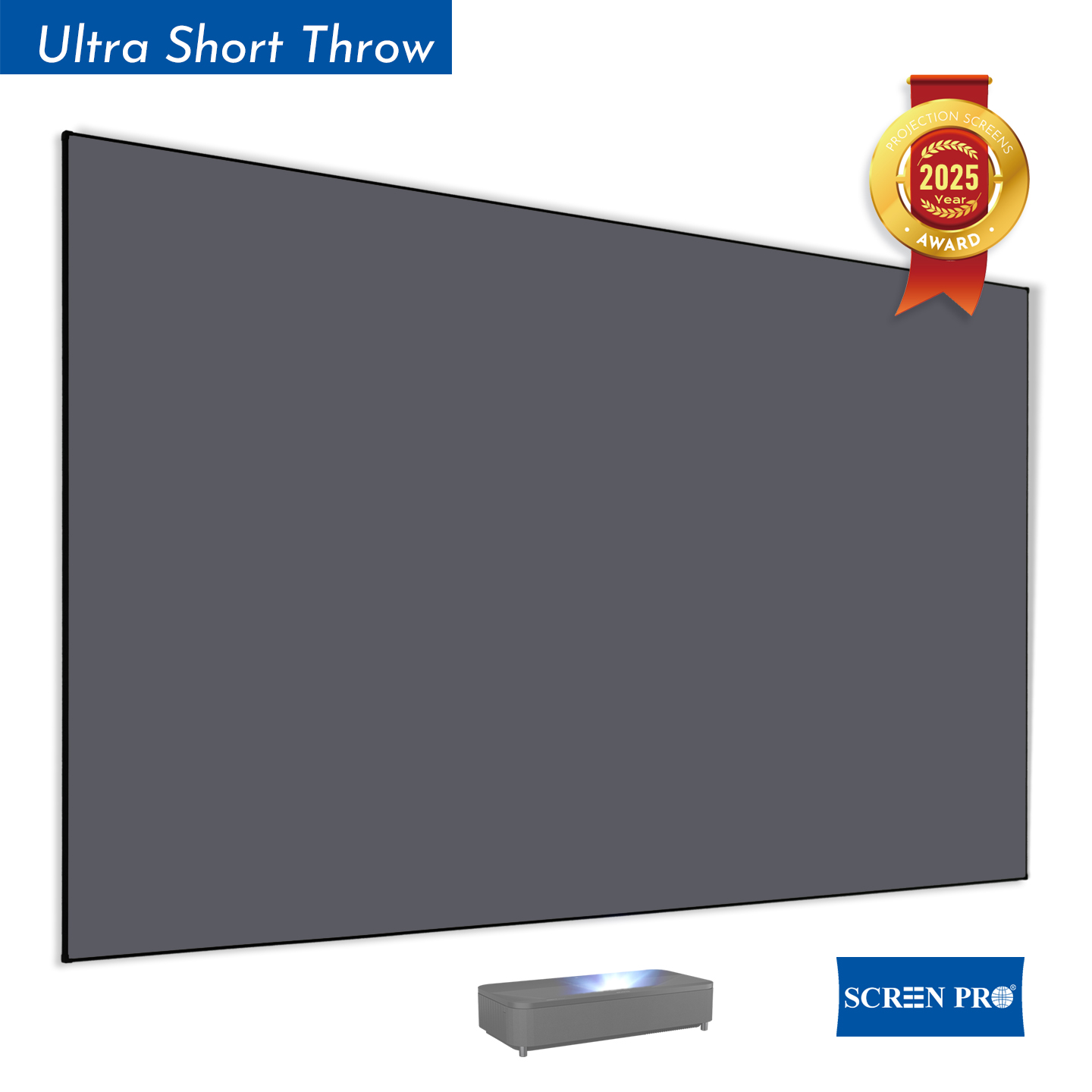
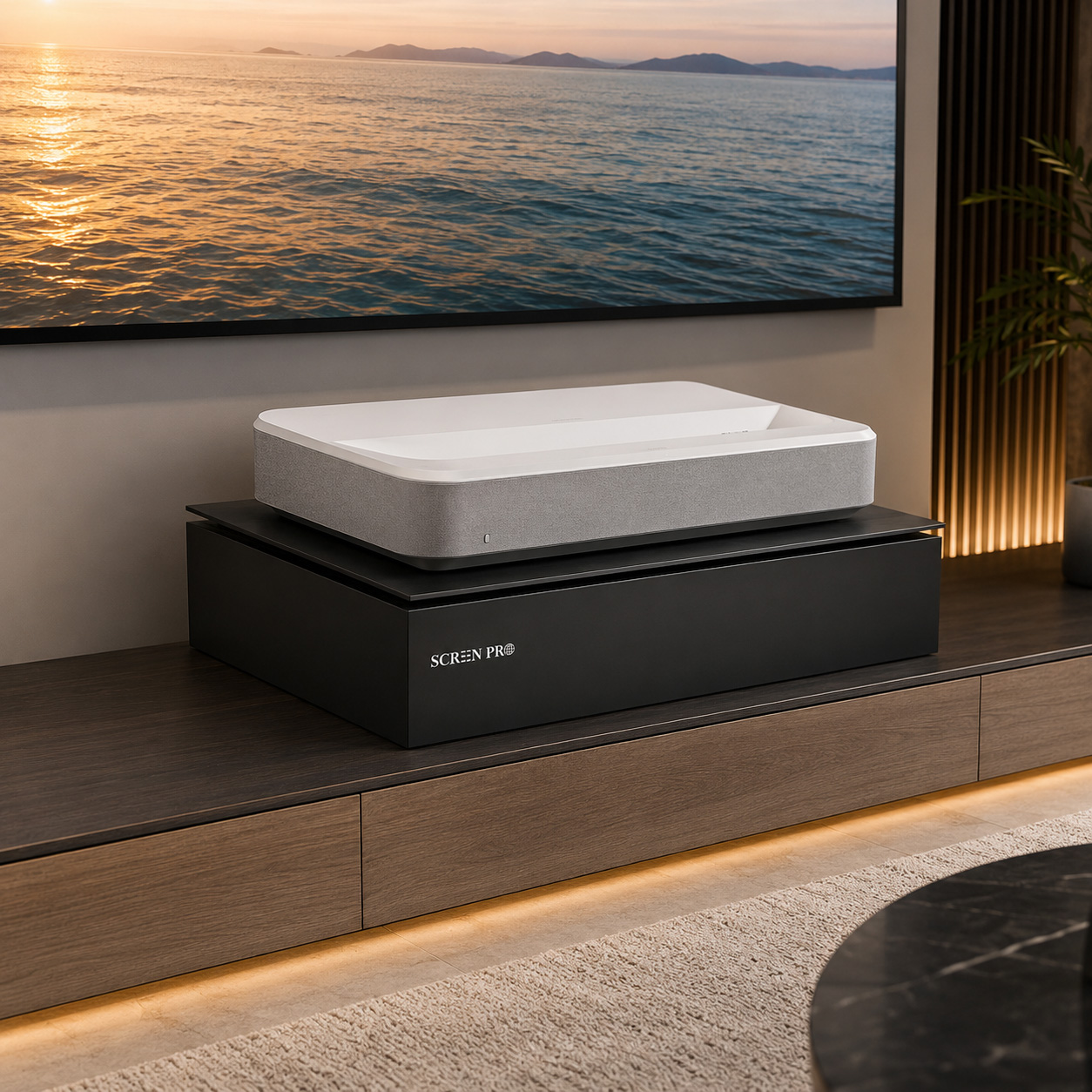
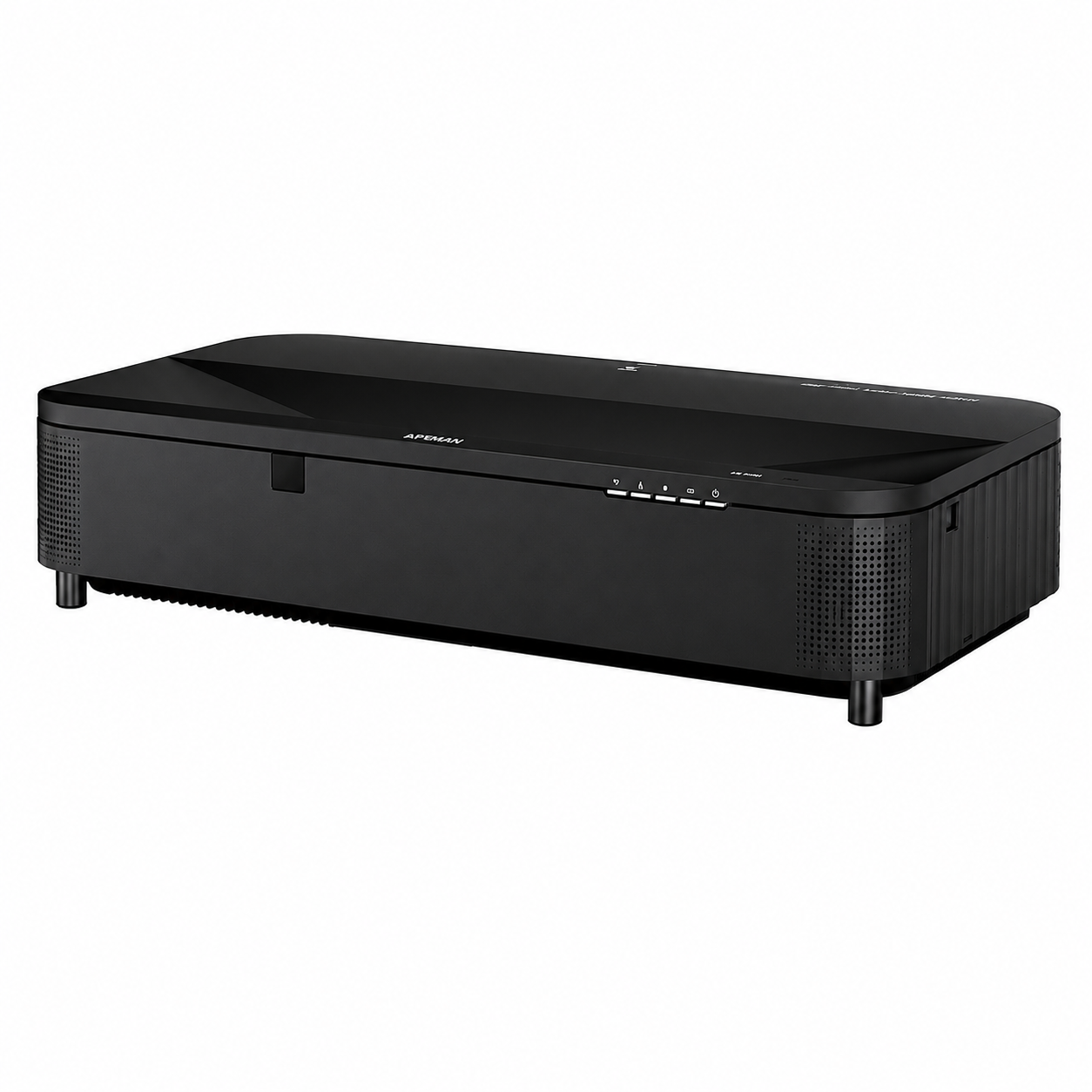
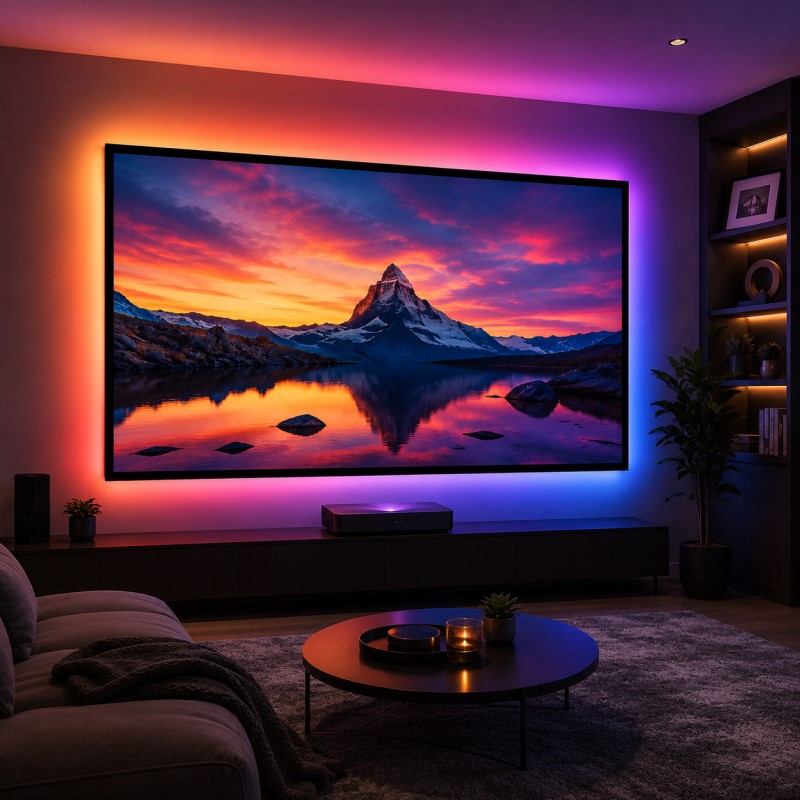
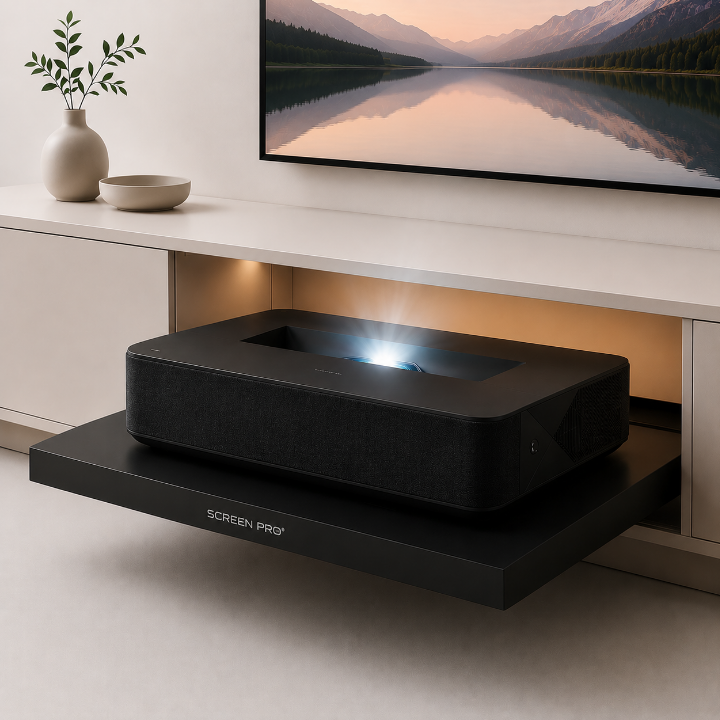
For ultra-short-throw projectors, especially in rooms where ambient-light rejection is important.
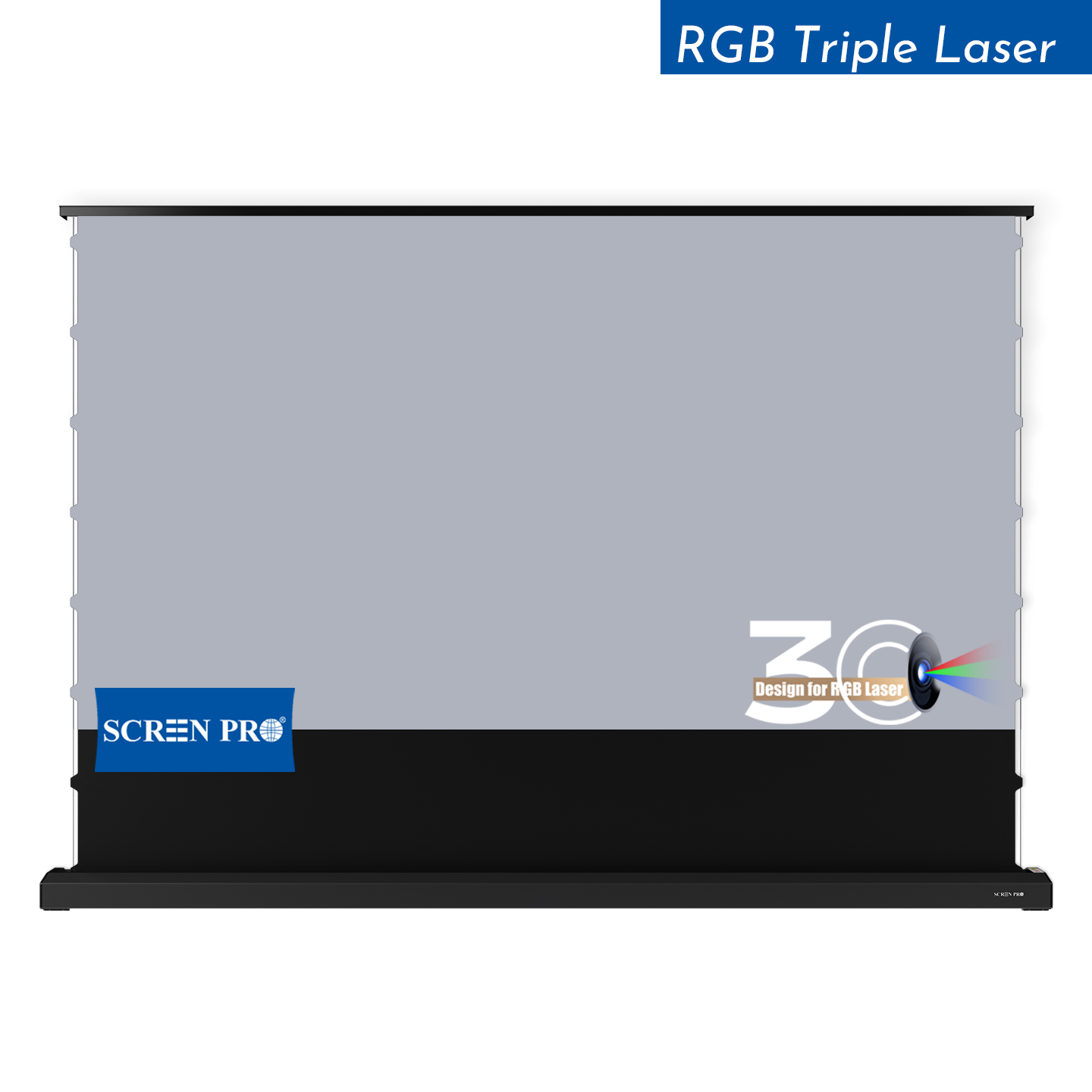
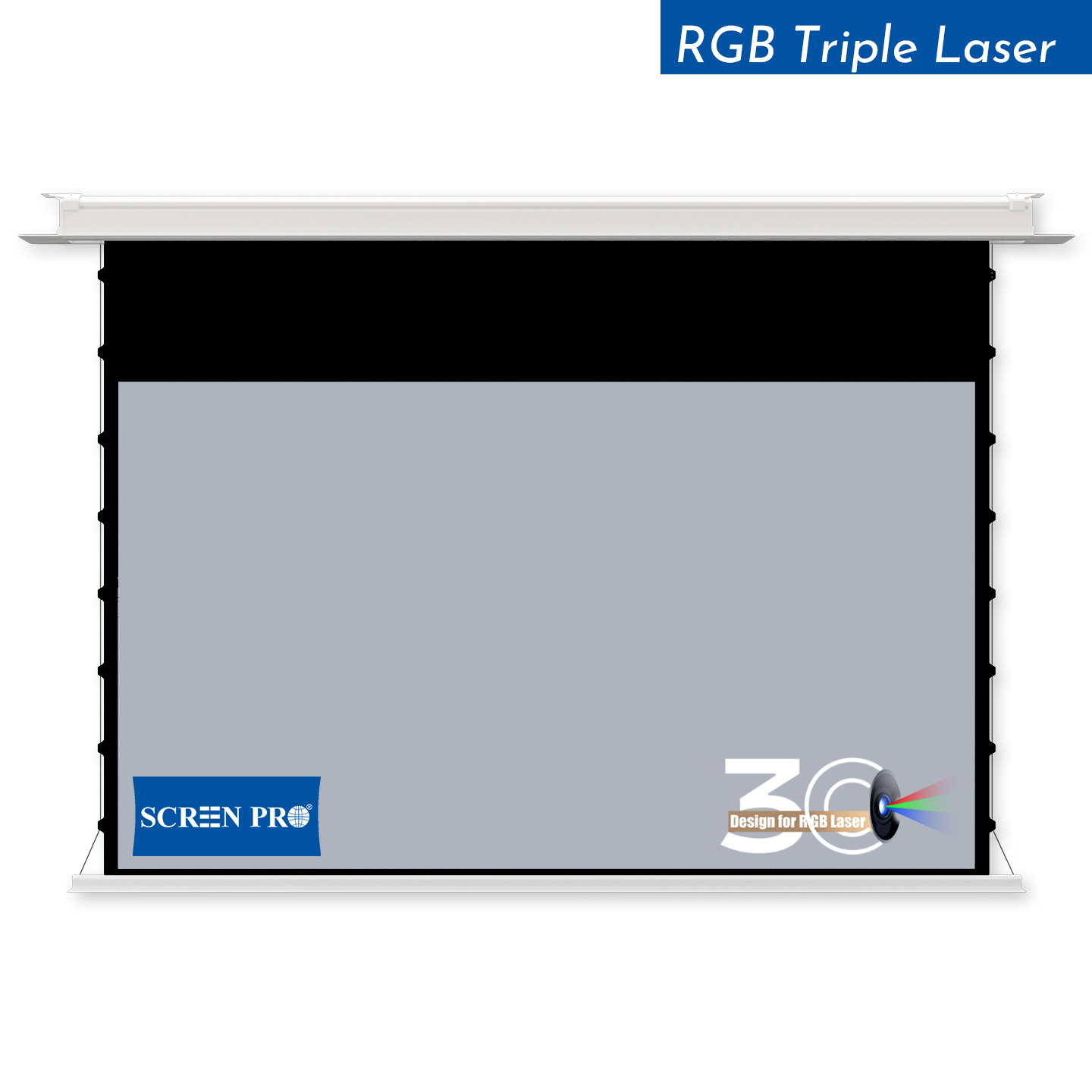
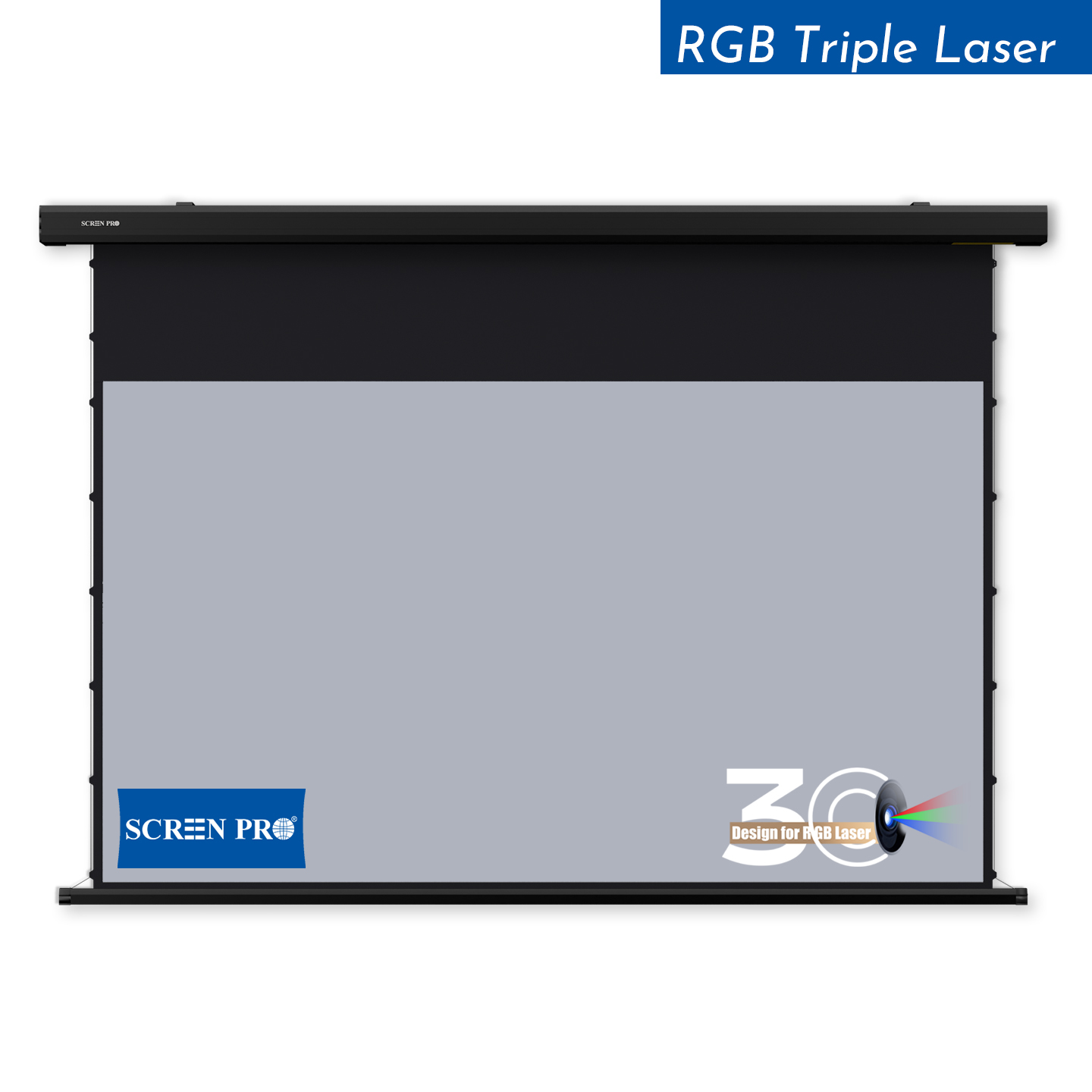
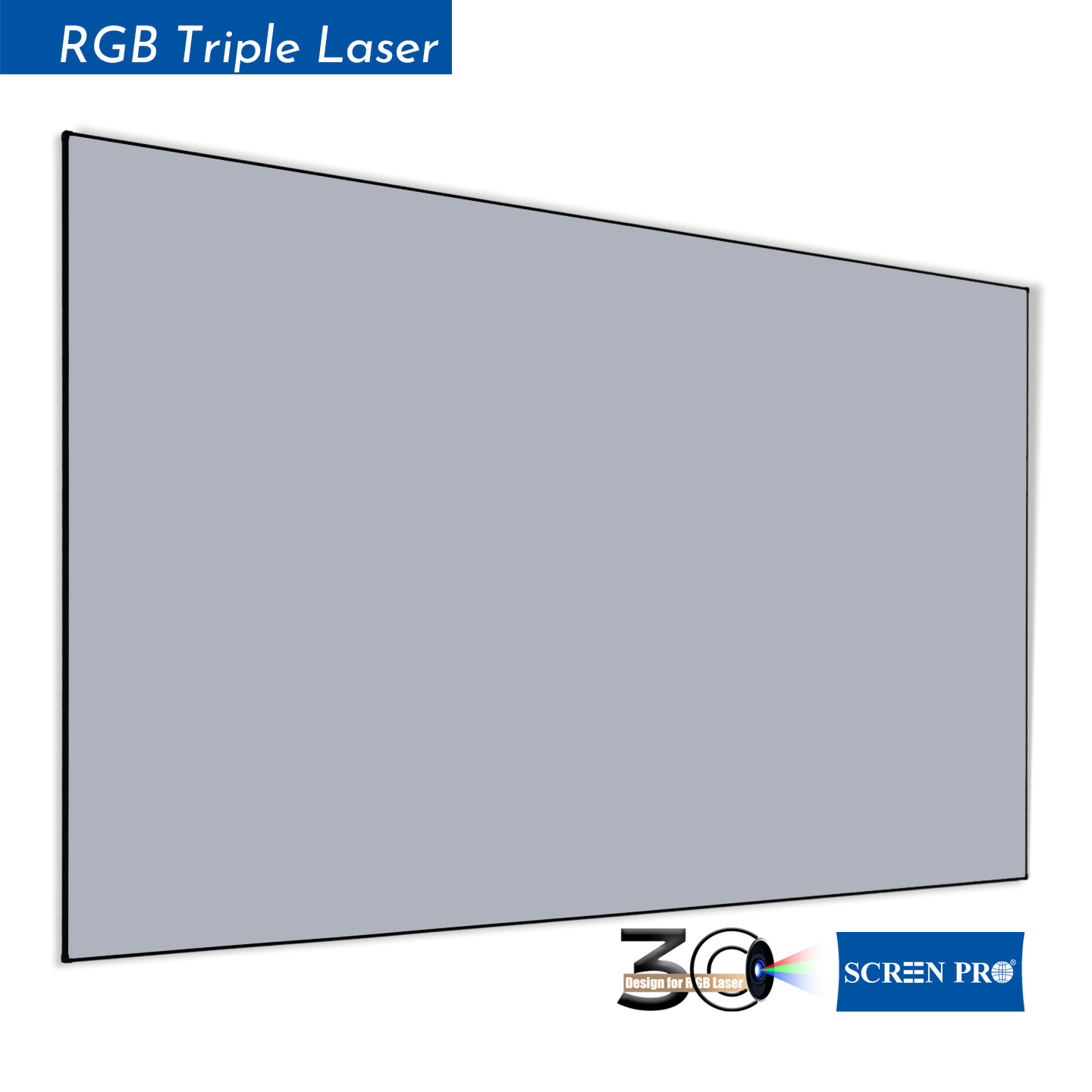
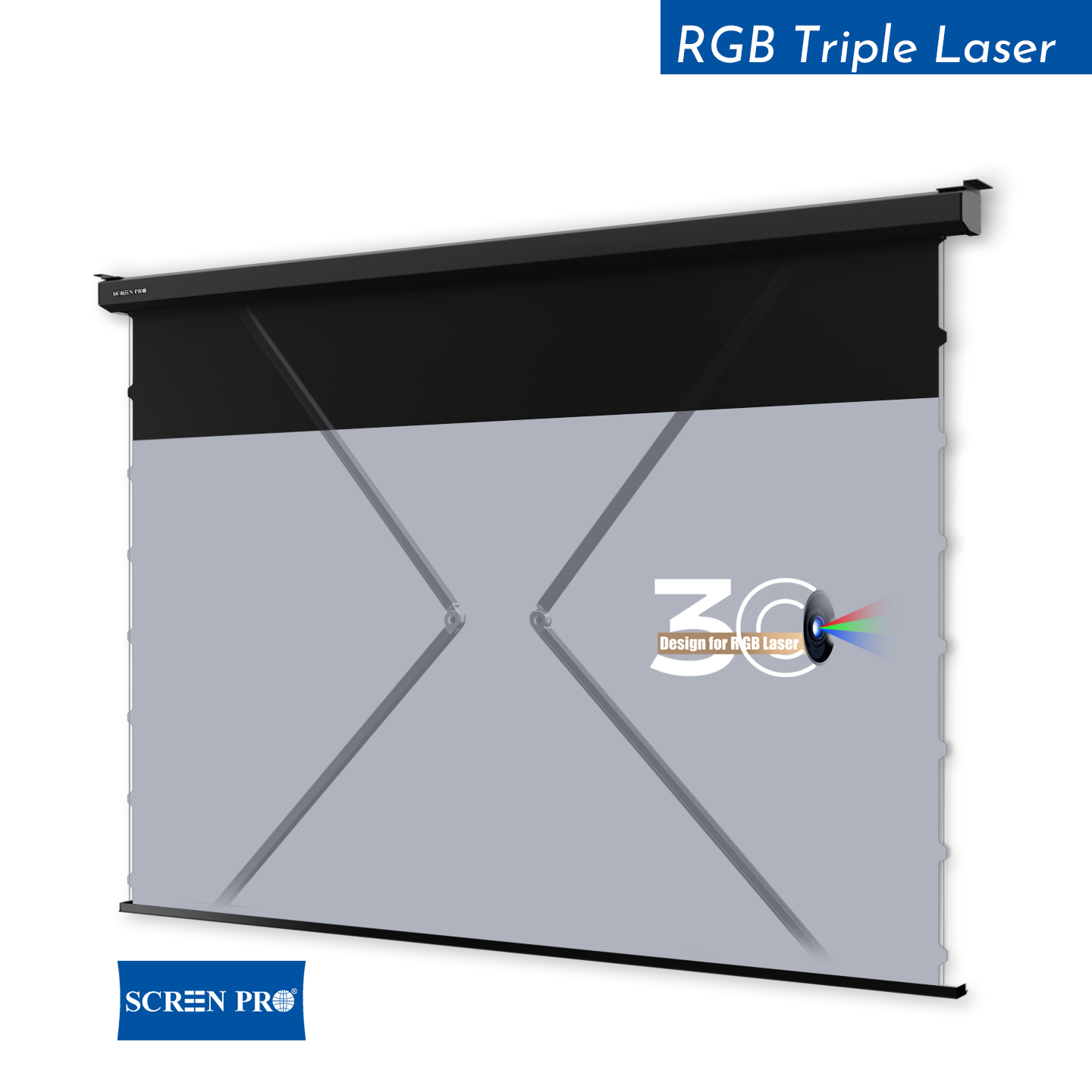
For RGB laser systems where visible speckle is one of the main image-quality concerns.
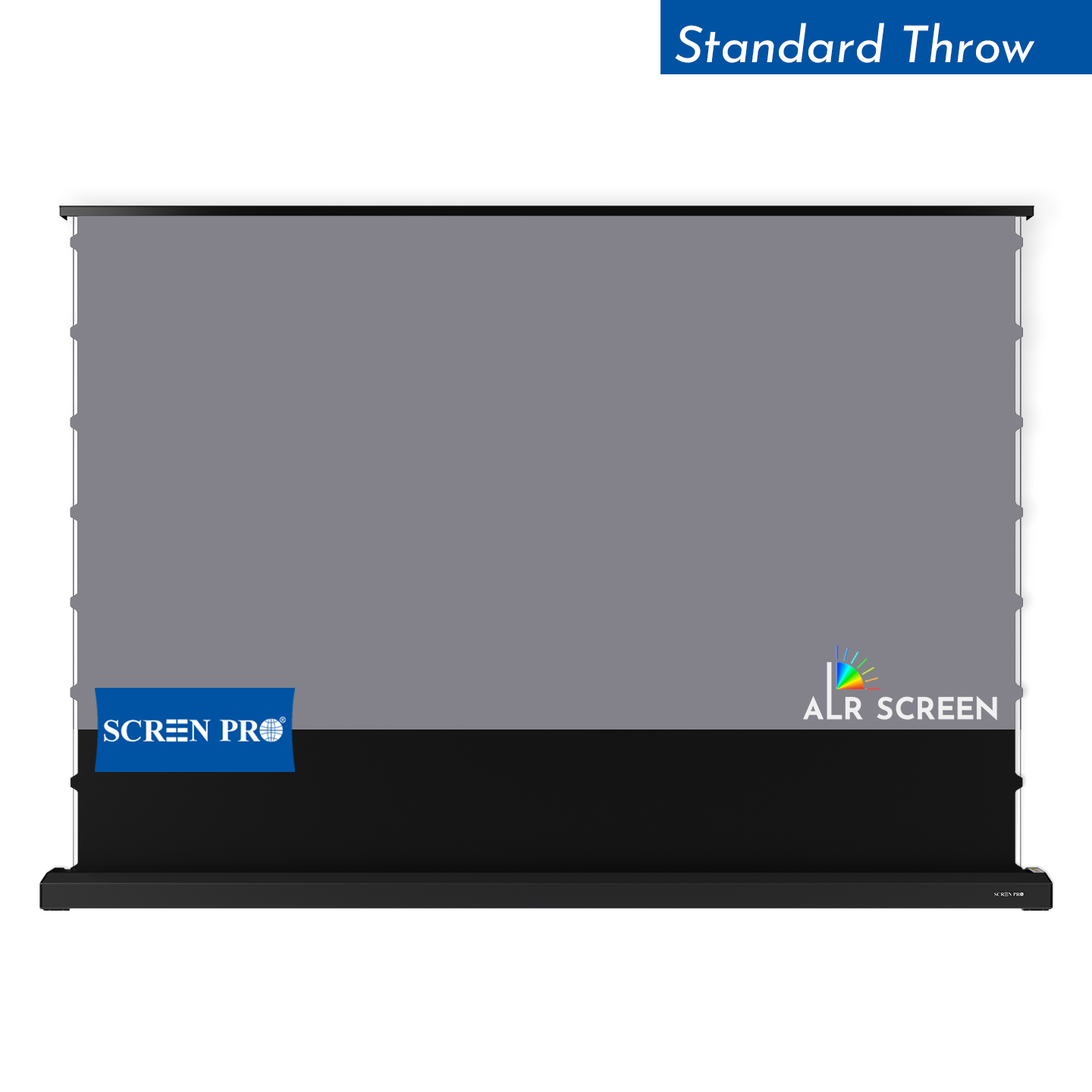
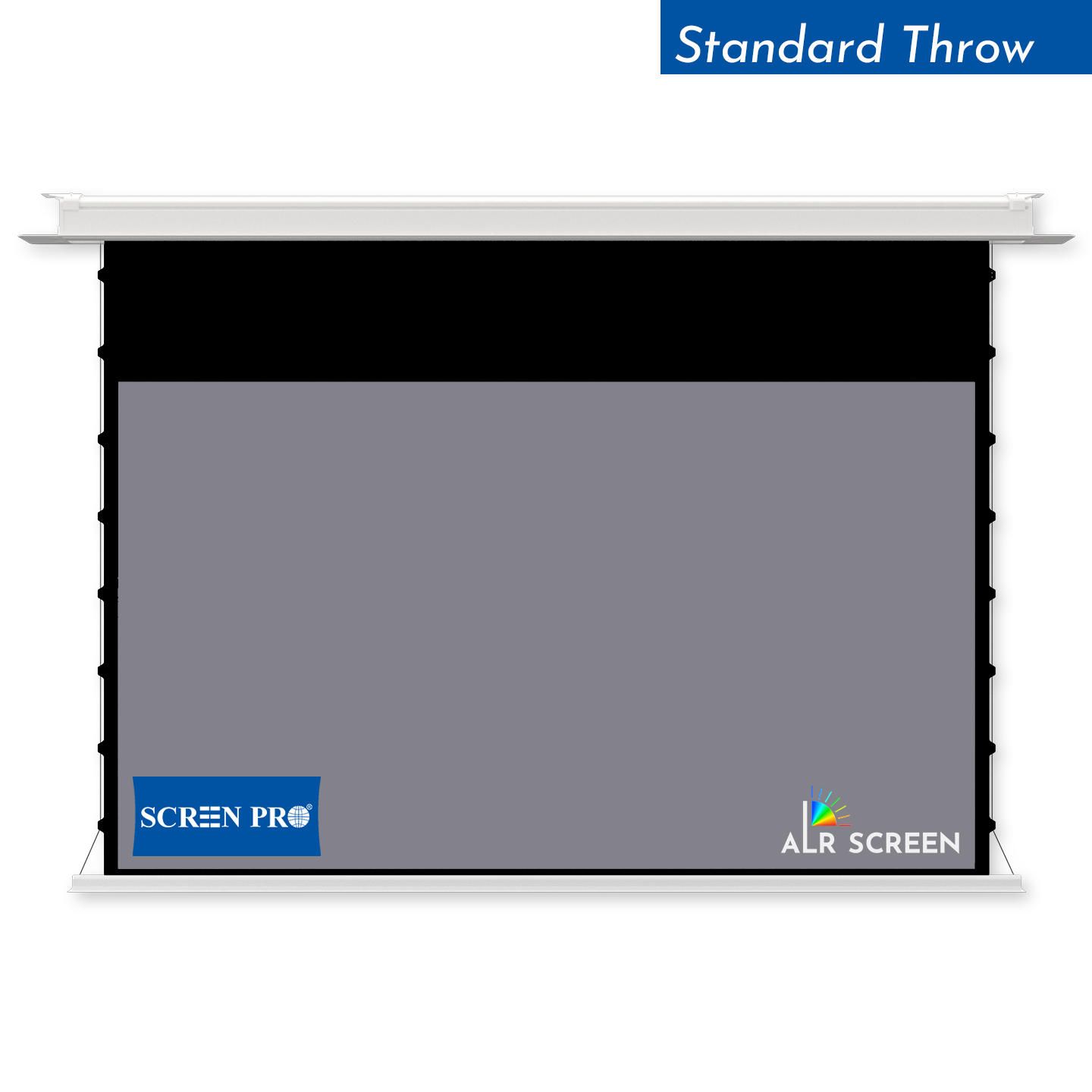
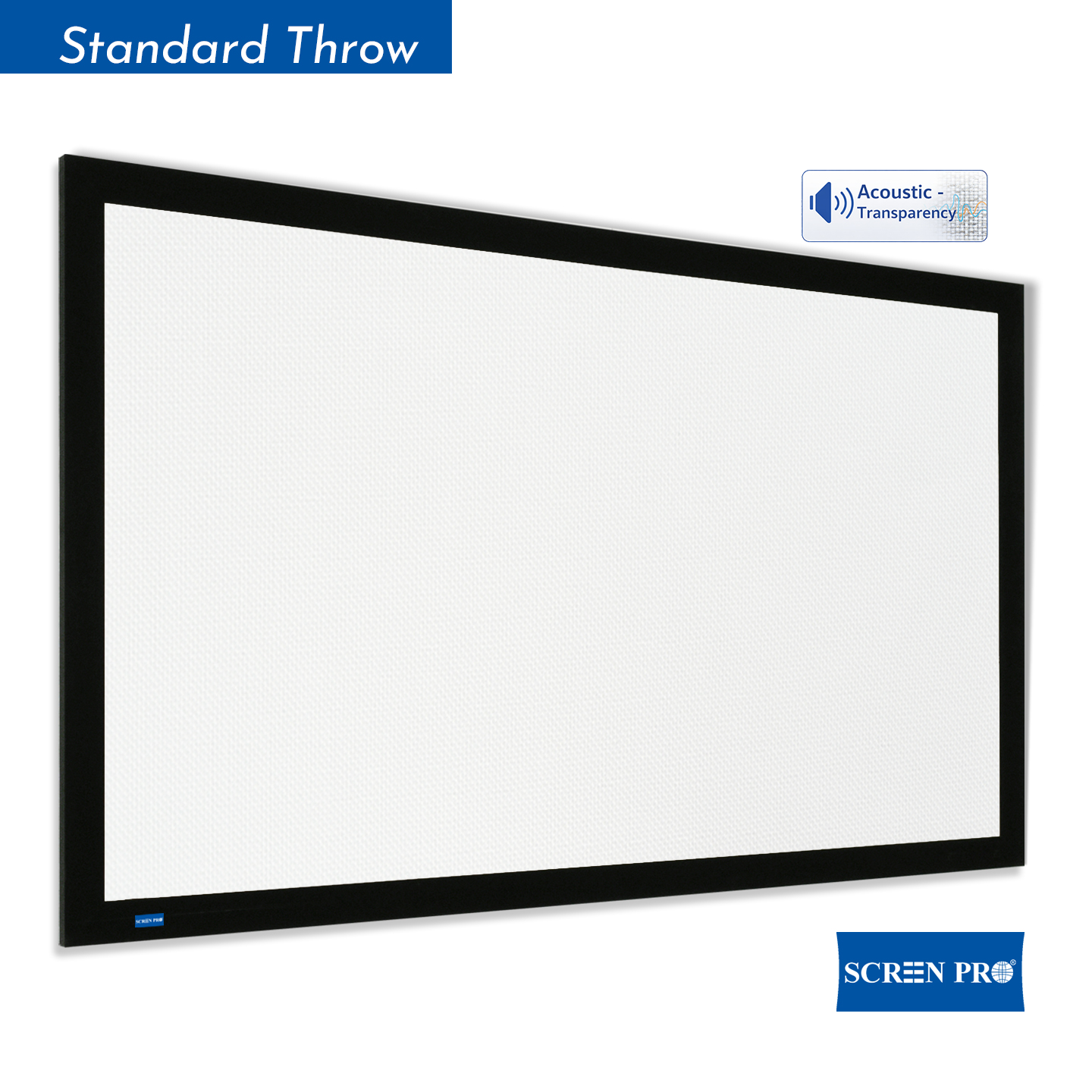
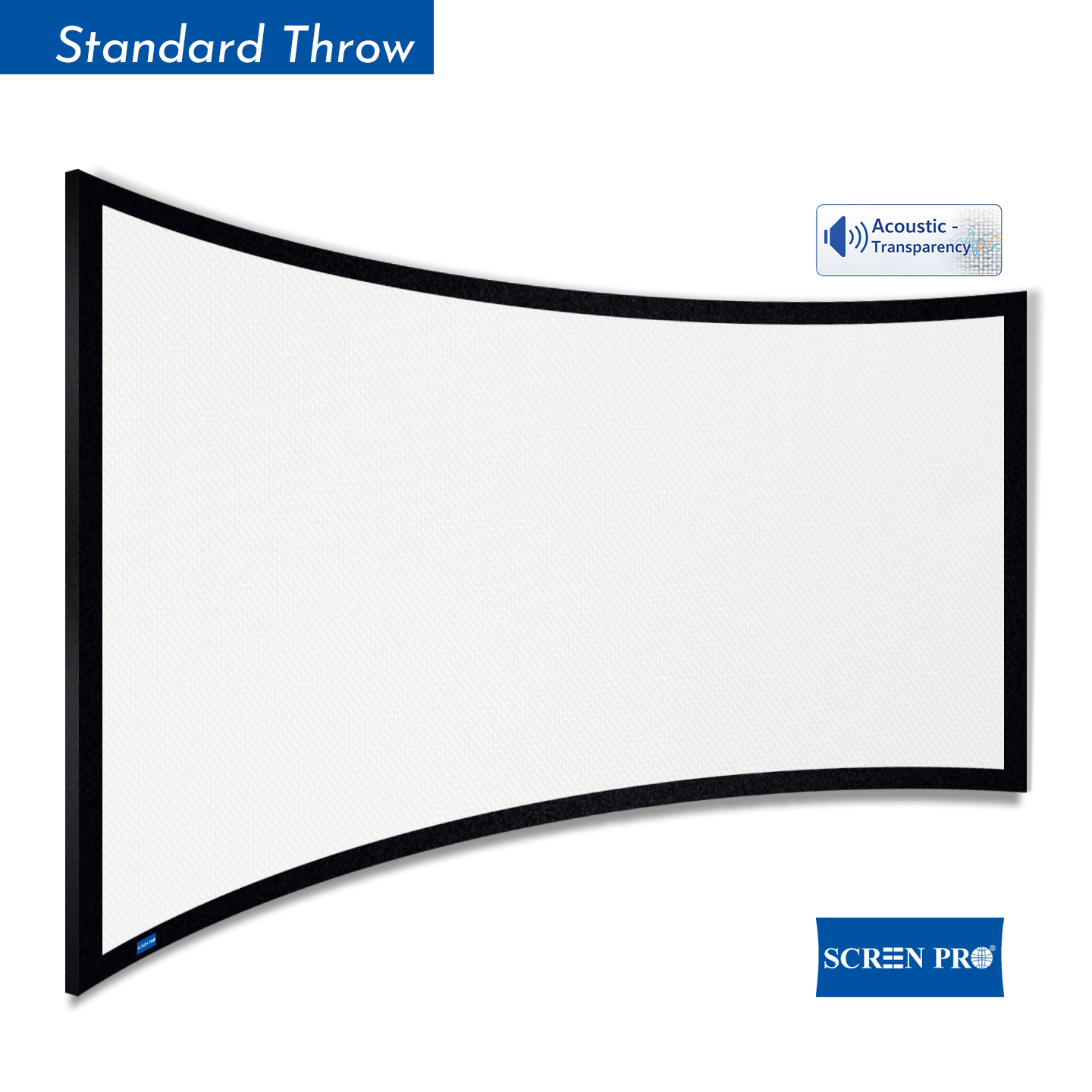
For standard and long-throw projection in dark, mixed-light or brighter environments.
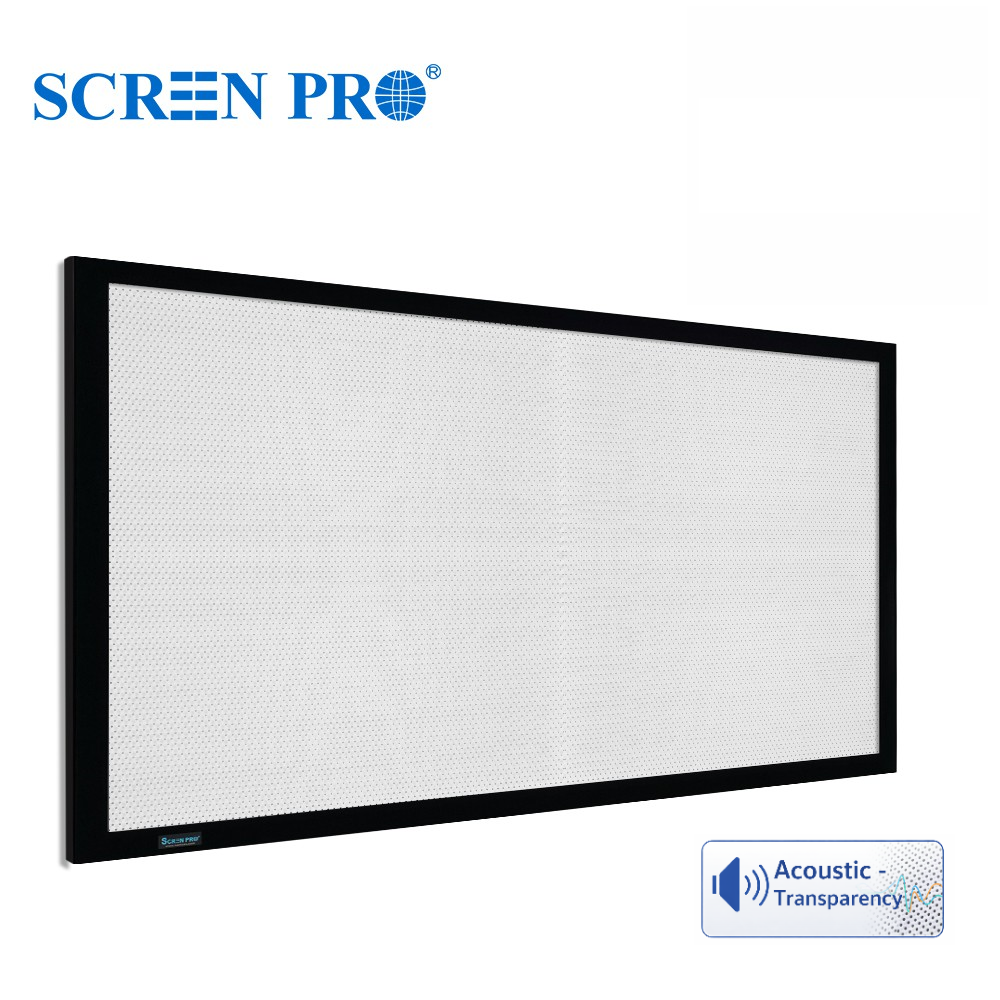
For theaters with loudspeakers positioned behind the projected image.
For installations where the projector is positioned behind the projection surface.
3C and 3W are both designed for applications where reducing visible RGB laser speckle is important. The main difference is whether the installation also requires acoustic transparency.
A dedicated speckle-reducing projection surface for RGB triple-laser systems. Choose 3C when reducing visible laser speckle is one of the primary requirements and speakers do not need to sit behind the image area.
3W combines speckle-reducing performance with a woven acoustically transparent structure. It is particularly suitable for cinema installations where loudspeakers are positioned behind the projection surface.
Ultra-short-throw projectors illuminate the screen from a steep angle. When ambient-light rejection is required, start with materials specifically designed for UST geometry rather than a conventional long-throw ALR surface.
| Code | Material | Best Starting Point For | Type |
|---|---|---|---|
| SP | T-Prism UST ALR | UST installations requiring ambient-light rejection and improved perceived contrast in living spaces. | UST ALR |
| SF | Fresnel Ultra-Short-Throw Anti-Light | UST systems where directional Fresnel light control is preferred. | UST Fresnel |
| 3C | 3C Speckle-Reducing Projection Fabric | RGB triple-laser systems where visible laser speckle is one of the main concerns. | Speckle-Reducing |
Standard and long-throw projectors use a different projection geometry from UST systems. Consider ambient light, projector position, seating angle, and speaker placement when selecting the screen surface.
| Code | Material | Best Starting Point For | Type |
|---|---|---|---|
| 8K | Long-Throw Ambient Light Rejecting (ALR) | Standard or long-throw projection in rooms where ambient light cannot be fully controlled. | Long-Throw ALR |
| LF | Fresnel Long-Throw Anti-Light | Long-throw applications requiring directional Fresnel light control. | Long-Throw Fresnel |
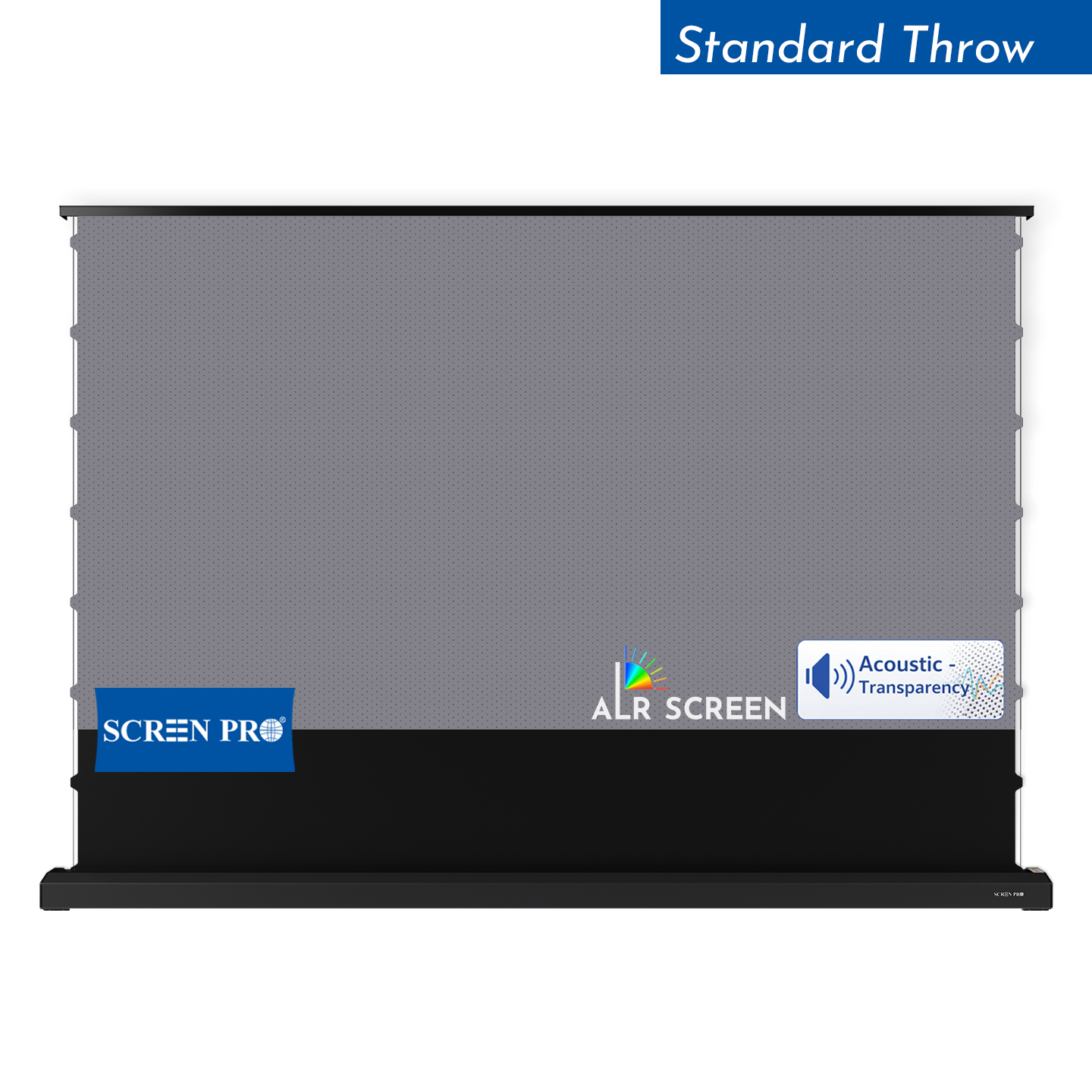
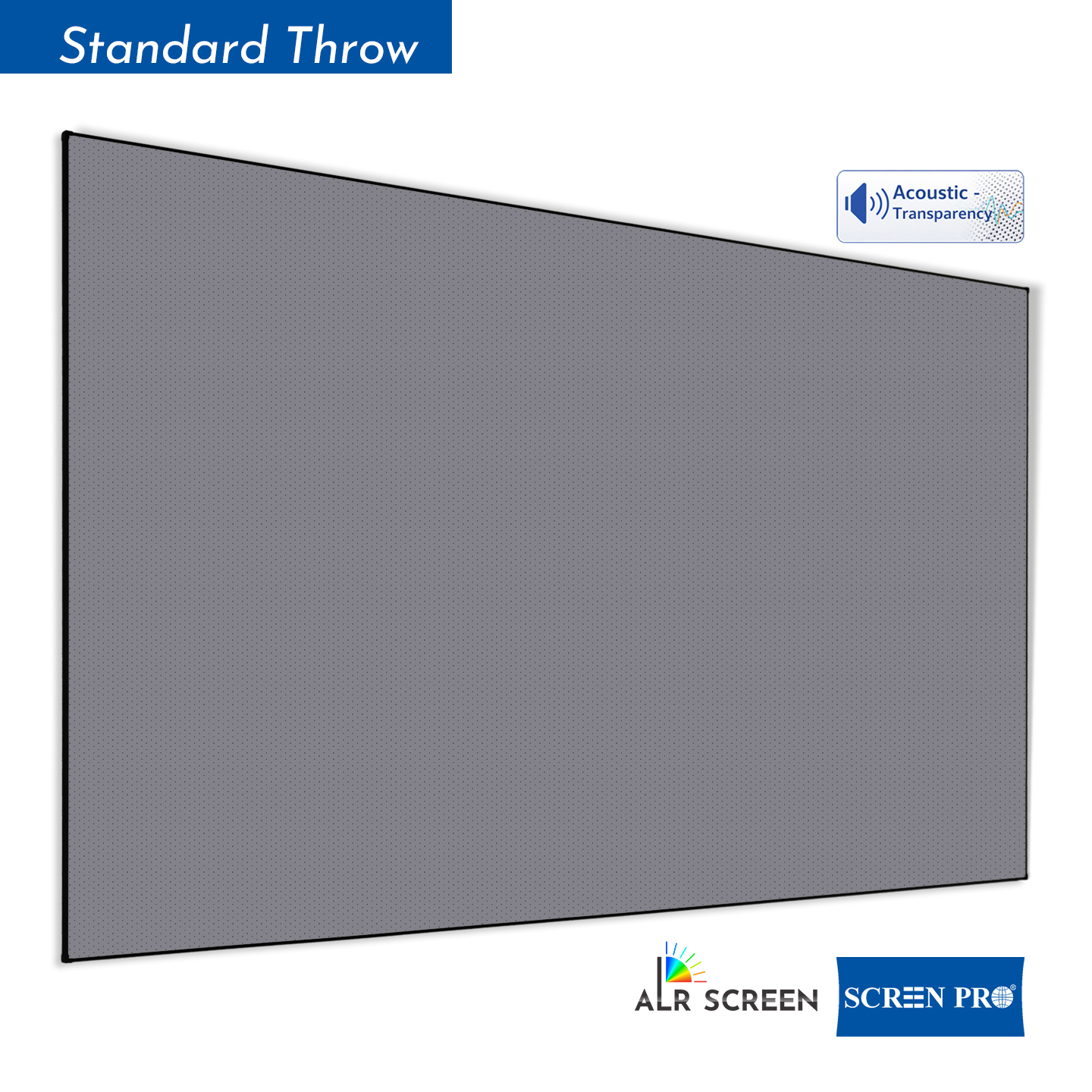
| T8 | Long-Throw ALR Micro-Perforated | Long-throw ALR installations that also require speakers behind the projection surface. | ALR + Acoustic |
| SL | High Gain Color Enhanced | Front projection applications where increased reflected brightness is preferred. | High Gain |
| M3 | High Gain Silver | Applications requiring a higher-gain reflective screen surface. | High Gain |
Acoustically transparent projection materials allow loudspeakers to sit behind the screen, helping dialogue and on-screen sound originate more naturally from the projected image.
| Code | Material | Choose It When | Structure |
|---|---|---|---|
| TW | Woven Acoustically Transparent Fabric | You want a woven cinema surface with speakers positioned behind the image. | Woven AT |
| 3W | 3W Woven Speckle-Reducing Projection Fabric | You use RGB triple-laser projection and also require acoustic transparency. | Woven AT + Speckle |
| TM | White Micro-Perforated | You prefer a conventional white micro-perforated acoustically transparent projection surface. | Micro-Perforated |
| TS | High Gain Color Enhanced Micro-Perforated | You need acoustic transparency together with a higher-gain projection surface. | High Gain + AT |
| T8 | Long-Throw ALR Micro-Perforated | You need both long-throw ALR performance and speaker placement behind the image. | ALR + AT |
In a dark or well-controlled room, a conventional projection surface may be the simpler and more appropriate solution. ALR is most useful when the installation genuinely benefits from directional ambient-light rejection.
| Code | Material | Typical Application |
|---|---|---|
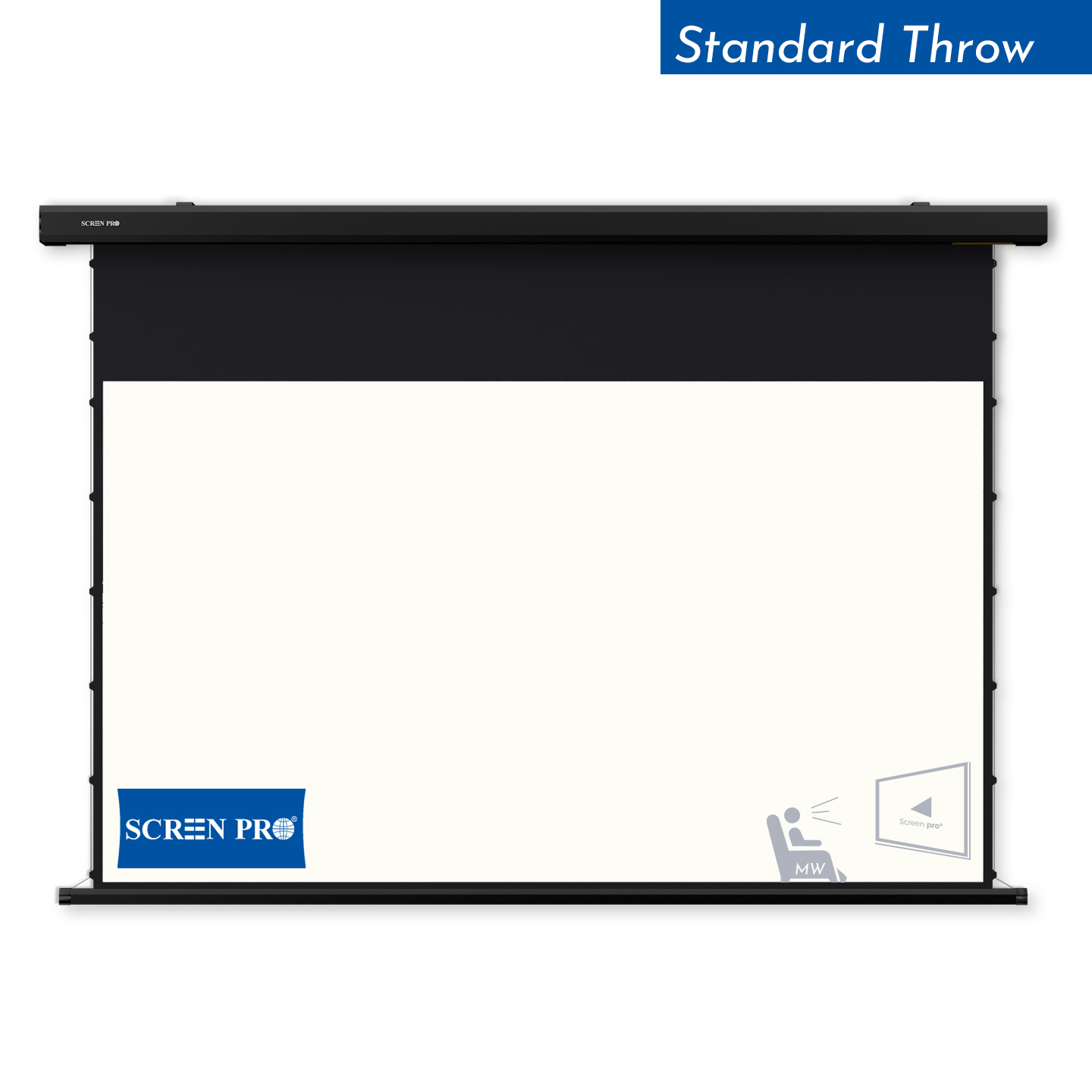
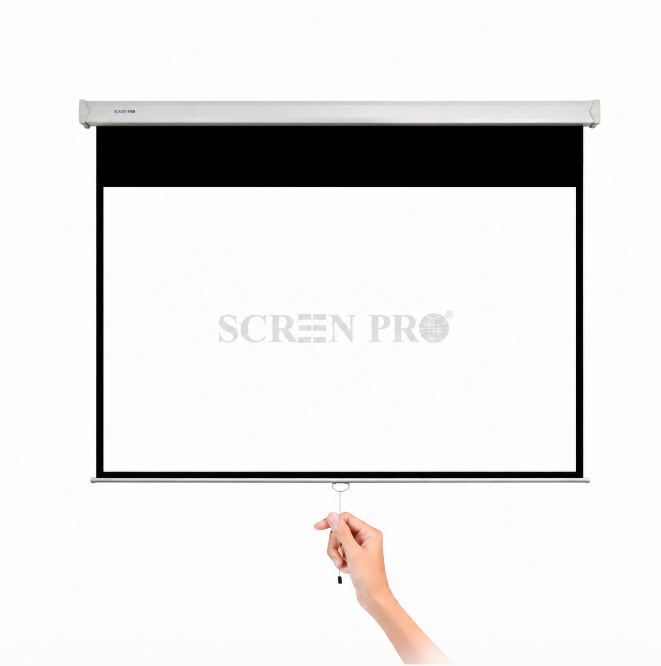
| MW | Matte White | General-purpose front projection in controlled-light environments. |
| MG | Fiberglass Matte White | General-purpose projection using a fiberglass-supported screen construction. |
| MD | Grid Matte White | General projection applications using grid-backed screen construction. |
| SL | High Gain Color Enhanced | Front projection where additional reflected brightness is preferred. |
| M3 | High Gain Silver | Higher-gain reflective projection applications. |
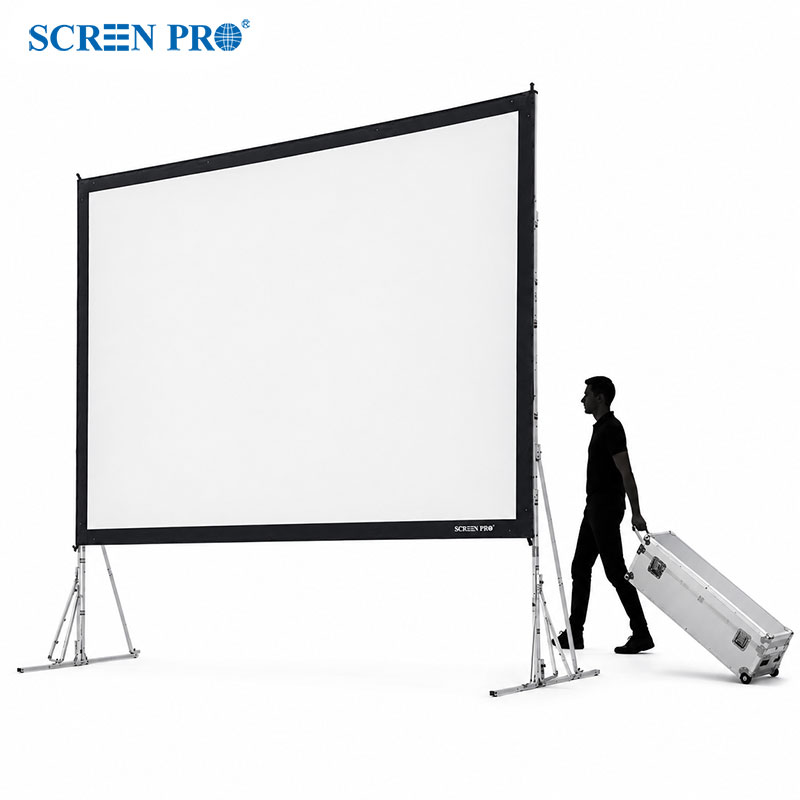
Rear projection, transparent displays and stage installations should be treated as separate projection categories rather than variations of a conventional front-projection screen.
| Code | Material | Typical Application |
|---|---|---|
| RL | Rear Projection | Projection systems with the projector positioned behind the screen surface. |
| TG | Gauze Screen | Stage, event and specialty visual installations. |
| TP | Holographic Film Screen | Transparent and holographic-style presentation applications. |
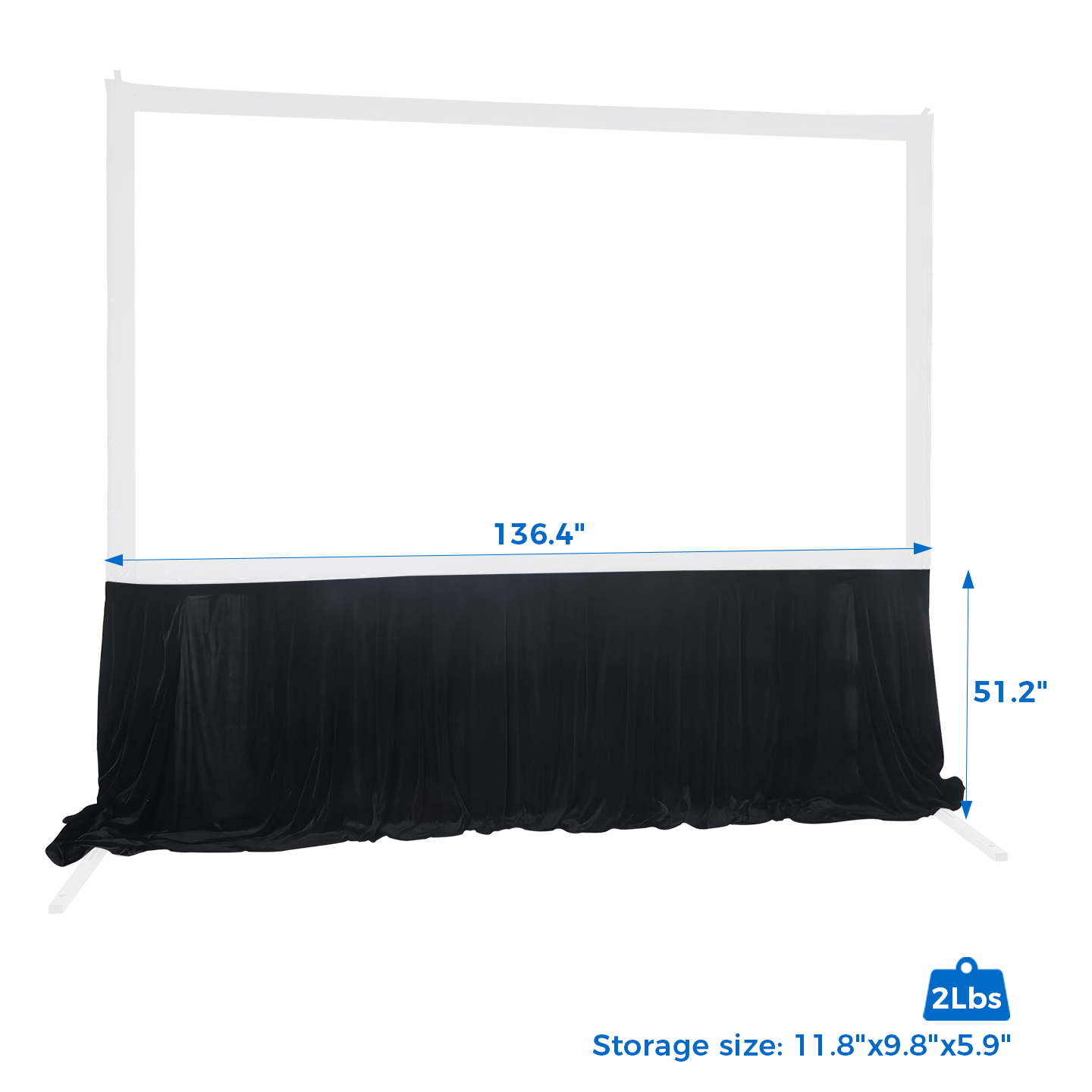
| SB | SCREENPRO ShadowBack™ | Black backing and stray-light control for compatible projection screen systems. |
Start by identifying whether the projector is UST, standard throw, long throw, or RGB triple-laser.
Dark-room installations may not need ALR, while brighter spaces may benefit from directional light rejection.
If yes, choose from woven or micro-perforated acoustically transparent materials according to projector type.
For RGB triple-laser systems, compare 3C and 3W when reducing visible speckle is one of the main requirements.
Projector technology, throw distance, ambient-light direction, screen size, seating position, screen structure and speaker placement all influence the final result.
Explore the complete projection screen material range or contact SCREENPRO for help selecting a suitable surface for your projector and application.
Explore All Materials →```





© 2026 SCREENPRO®. Specifications are subject to change without notice. | SamsAV All Rights ReservedSite Map Designed by iwonder.cn