

© 2026 SCREENPRO®. Specifications are subject to change without notice. | SamsAV All Rights ReservedSite Map Designed by iwonder.cn


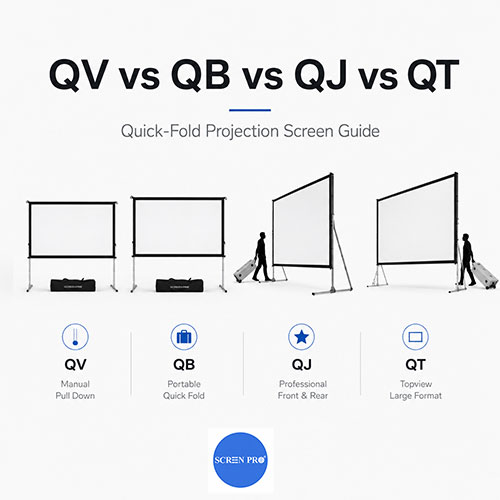
QV, QB, QJ and QT are designed for different levels of portable, outdoor and professional event projection. This guide explains how they differ and when front or rear projection makes the most sense.
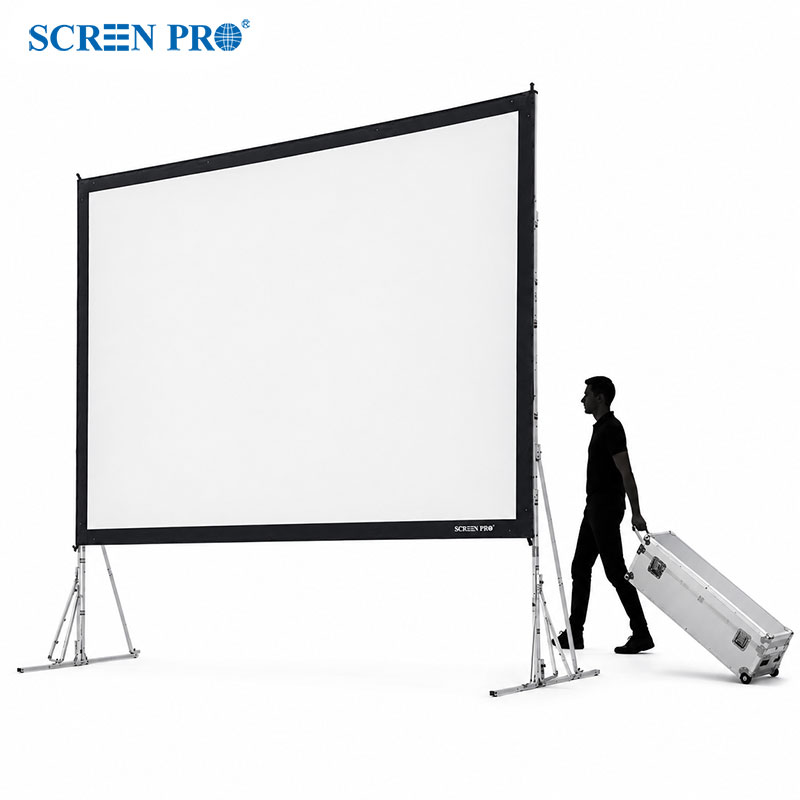
From backyard movie nights and school events to conferences, concerts and professional staging, a quick-fold projection screen offers something a permanently installed screen cannot: a large viewing surface that can be transported, assembled and removed when the event is over.
SCREENPRO offers four main quick-fold screen families for event use: QV Victor™, QB Benz™, QJ Jampo™ and QT Topview™. They share the same basic quick-fold concept, but differ in portability, support structure, installation flexibility and intended screen scale.
Think of the range as a progression from portable use to professional large-format staging.
Best for backyard cinema, schools, community events and portable presentations.
Portable quick-fold design with adjustable-height legs for improved audience sightlines.
Designed for rental, staging, conferences, churches and larger professional events.
Built for large venues, concerts, exhibitions and large-scale event projection.
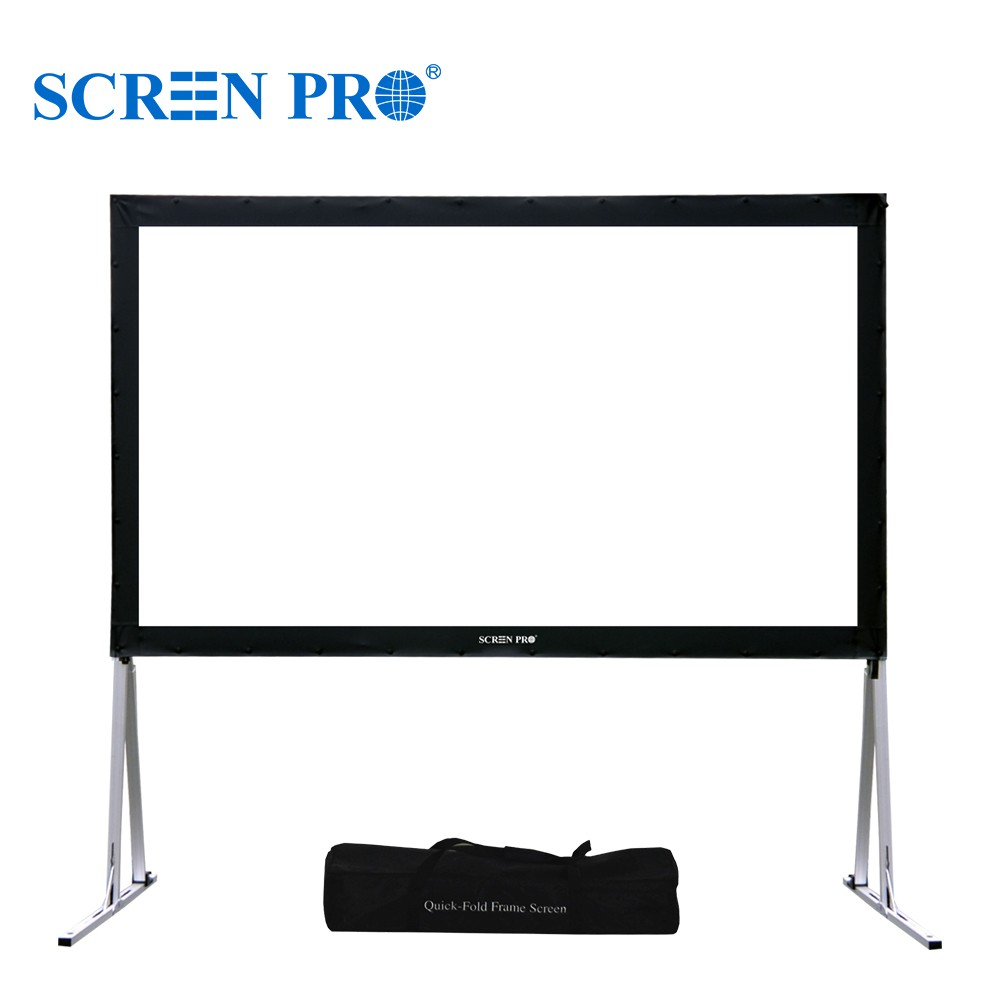
QV is the portable-oriented member of the SCREENPRO quick-fold family. Its folding aluminum structure and transport-friendly design make it suitable when the screen needs to move frequently between locations.
Best for: backyard cinema, schools, community events, small outdoor events and mobile presentations.
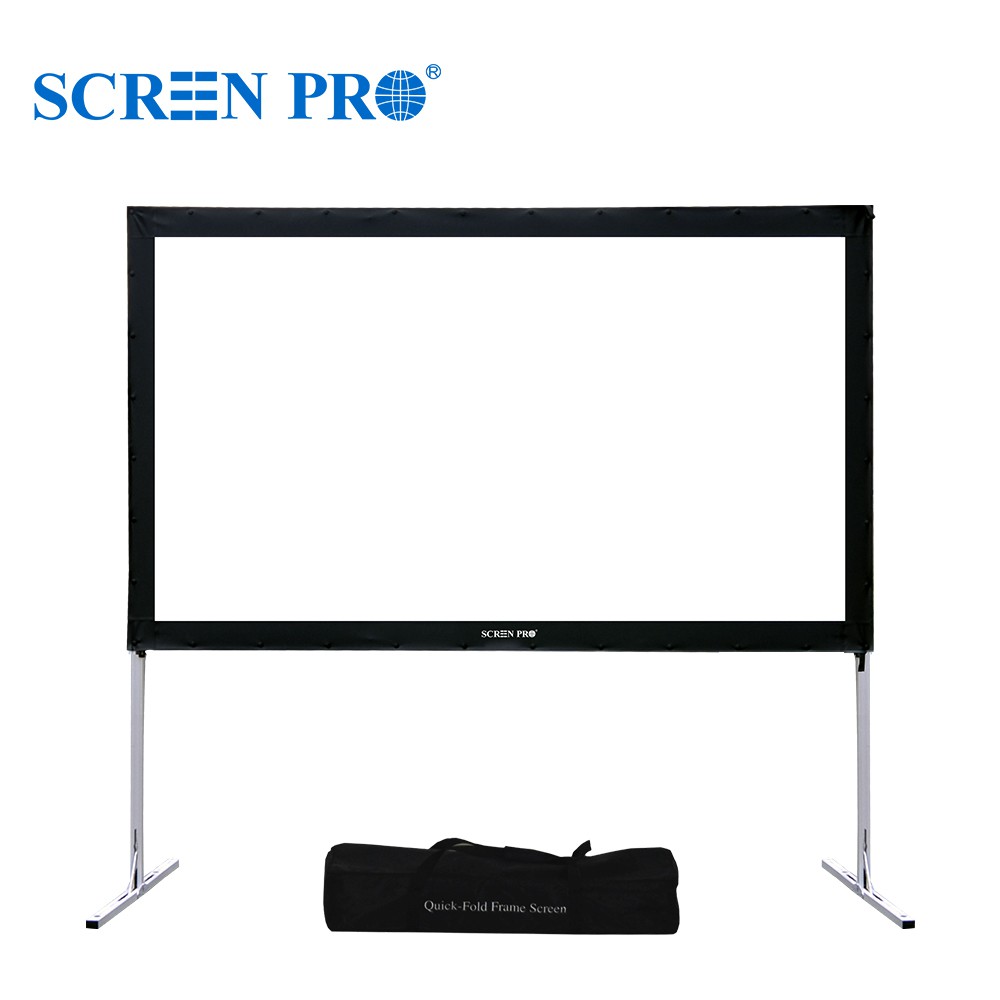
QB adds adjustable-height support to the portable quick-fold concept. This helps raise the viewing surface when the audience is seated several rows deep, improving visibility and giving the installation a more professional appearance.
Best for: mobile AV, corporate presentations, churches, outdoor events and small-to-medium event production.
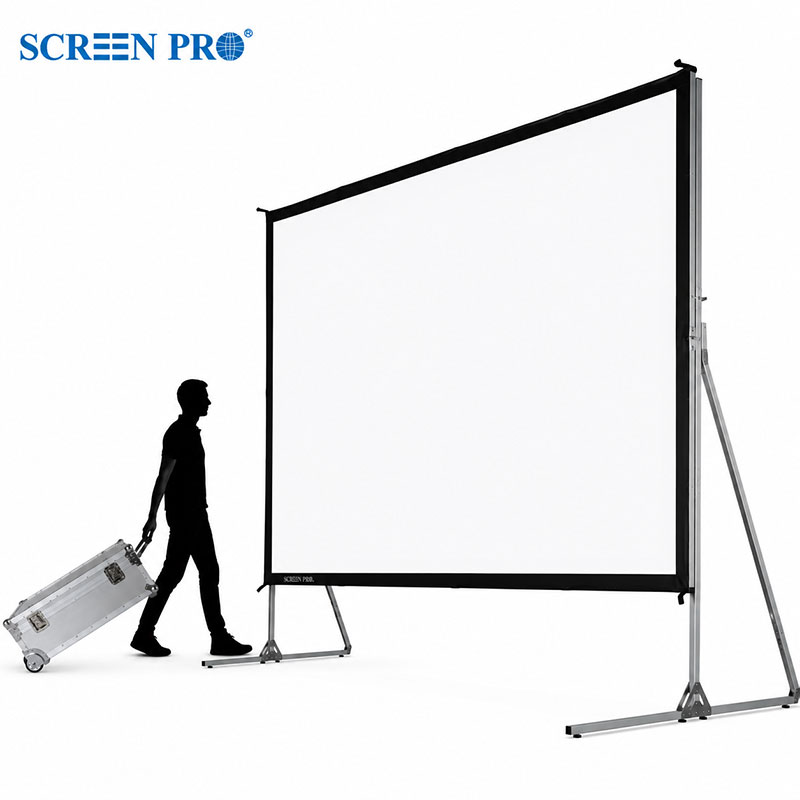
As screen size increases, portability alone is no longer enough. QJ is designed around reinforced support, larger event applications and frequent professional transport.
Best for: rental & staging, hotels, churches, large conferences, auditoriums and outdoor event production.
QT is intended for situations where the screen becomes part of the event infrastructure itself. At this scale, projector position, access, support, transportation and installation environment become just as important as diagonal size.
Best for: concert stages, exhibitions, major conferences, commercial events and large professional AV installations.
| Series | Positioning | Best For | Portability | Typical Scale |
|---|---|---|---|---|
| QV | Portable | Schools, backyard cinema, small events | Excellent | Small–Medium |
| QB | Adjustable Portable | Mobile AV, presentations, outdoor events | Excellent | Small–Medium |
| QJ | Professional Event | Rental, staging, conferences, churches | Professional transport | Medium–Large |
| QT | Large Format | Concerts, stages, exhibitions | Project-oriented | Large–Extra Large |
Choosing the frame is only half the decision. The projector position can completely change the way the event space is designed.
The projector and audience are positioned on the same side of the screen. This is the most common setup for outdoor cinema, schools and temporary events.
Simple setup, efficient projector brightness, wide compatibility and minimal space required behind the screen.
The projector sits behind the screen, keeping projection equipment out of the audience area and allowing presenters to move freely in front.
No presenter shadows, hidden projector equipment and a cleaner, more professional stage appearance.
The biggest advantage is often not image performance. It is stage management.
Presenters and performers can walk in front of the screen without blocking the projection beam.
Projectors, stands and cables remain behind the screen and out of the audience view.
The front of the stage can remain visually clean for conferences, concerts and launches.
Audience or production traffic is less likely to interrupt the projected image.
| Front Projection | Rear Projection | |
|---|---|---|
| Projector Position | Audience side | Behind screen |
| Space Behind Screen | Minimal | Required |
| Presenter Shadows | Possible | No |
| Equipment Visibility | May be visible | Hidden |
| Setup Complexity | Lower | Higher |
| Typical Use | Outdoor cinema, schools, general events | Stages, conferences, concerts, professional AV |
Rear projection solves projector visibility and shadow problems, but it still requires sufficient throw distance. Before specifying a rear-projection setup, always check screen size, projector throw ratio and available backstage depth.
Portable projection screens can be used outdoors, but a temporary outdoor screen should not be treated as a permanent weatherproof structure. Wind becomes increasingly important as the screen gets larger because the viewing surface behaves like a sail.
Choose for portability and simple temporary projection.
Choose when adjustable screen height is important.
Choose for professional rental, staging and larger events.
Choose for large-format event and stage projection.
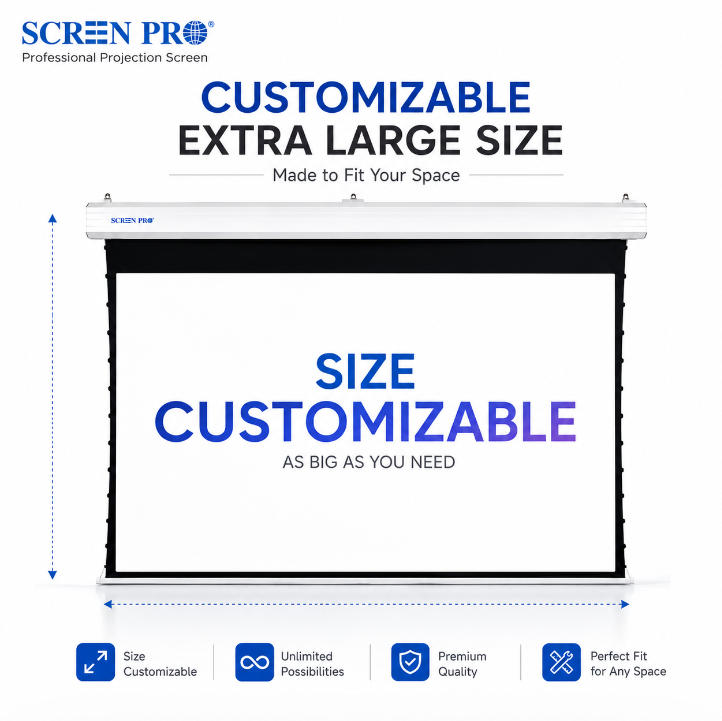
For large-format or customized projects, send us your required screen size, aspect ratio, front or rear projection requirement, projector model, indoor or outdoor application and preferred installation height.





© 2026 SCREENPRO®. Specifications are subject to change without notice. | SamsAV All Rights ReservedSite Map Designed by iwonder.cn