

© 2026 SCREENPRO®. Specifications are subject to change without notice. | SamsAV All Rights ReservedSite Map Designed by iwonder.cn


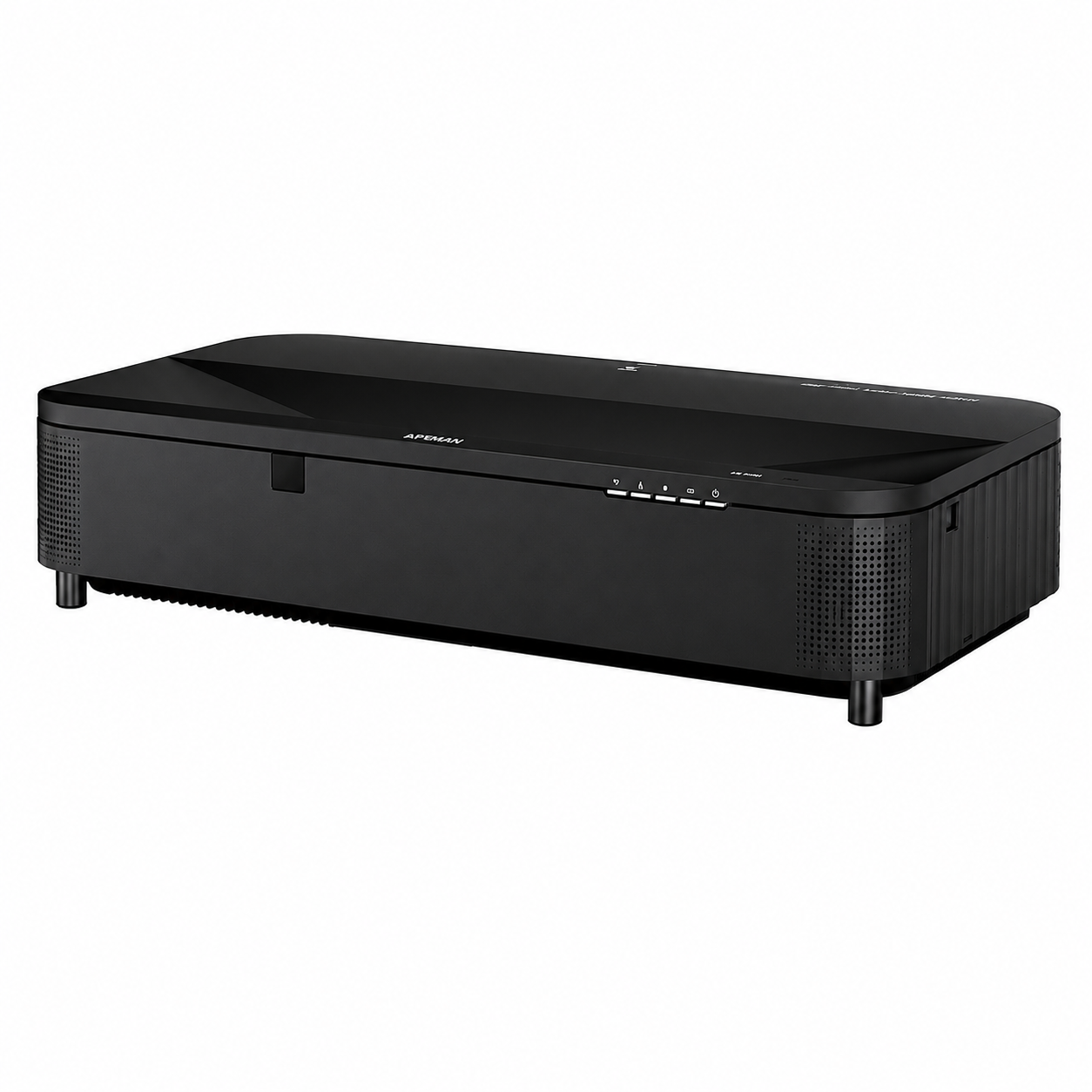
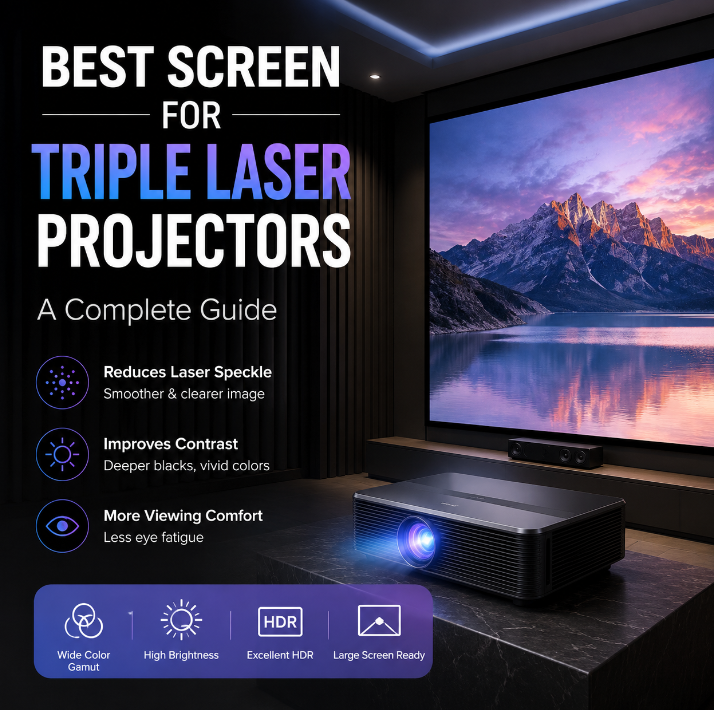
Triple-laser projectors deliver higher brightness, wider color gamut, and more vivid image reproduction than traditional lamp or single-laser projectors. However, many users discover an unexpected issue after upgrading: the projector becomes better, but the image on the wall or screen does not.
That is because a triple-laser projector and a projection screen work as one system. Choosing the wrong screen can reduce the benefits of the projector itself.
RGB triple-laser systems generate highly concentrated and coherent light. This enables excellent color performance, but it may also introduce visible laser speckle depending on the projector, projection surface, viewing position, and installation environment.
Matte white screens provide wide viewing angles and generally neutral image reproduction. However, they offer little ambient light rejection, and laser speckle may remain visible with some RGB triple-laser projectors.
Higher-gain materials can increase perceived brightness, but gain alone does not determine whether a screen is suitable for a triple-laser projector. Depending on the optical structure, higher-gain surfaces may produce narrower viewing angles, hotspot effects, or more noticeable speckle.
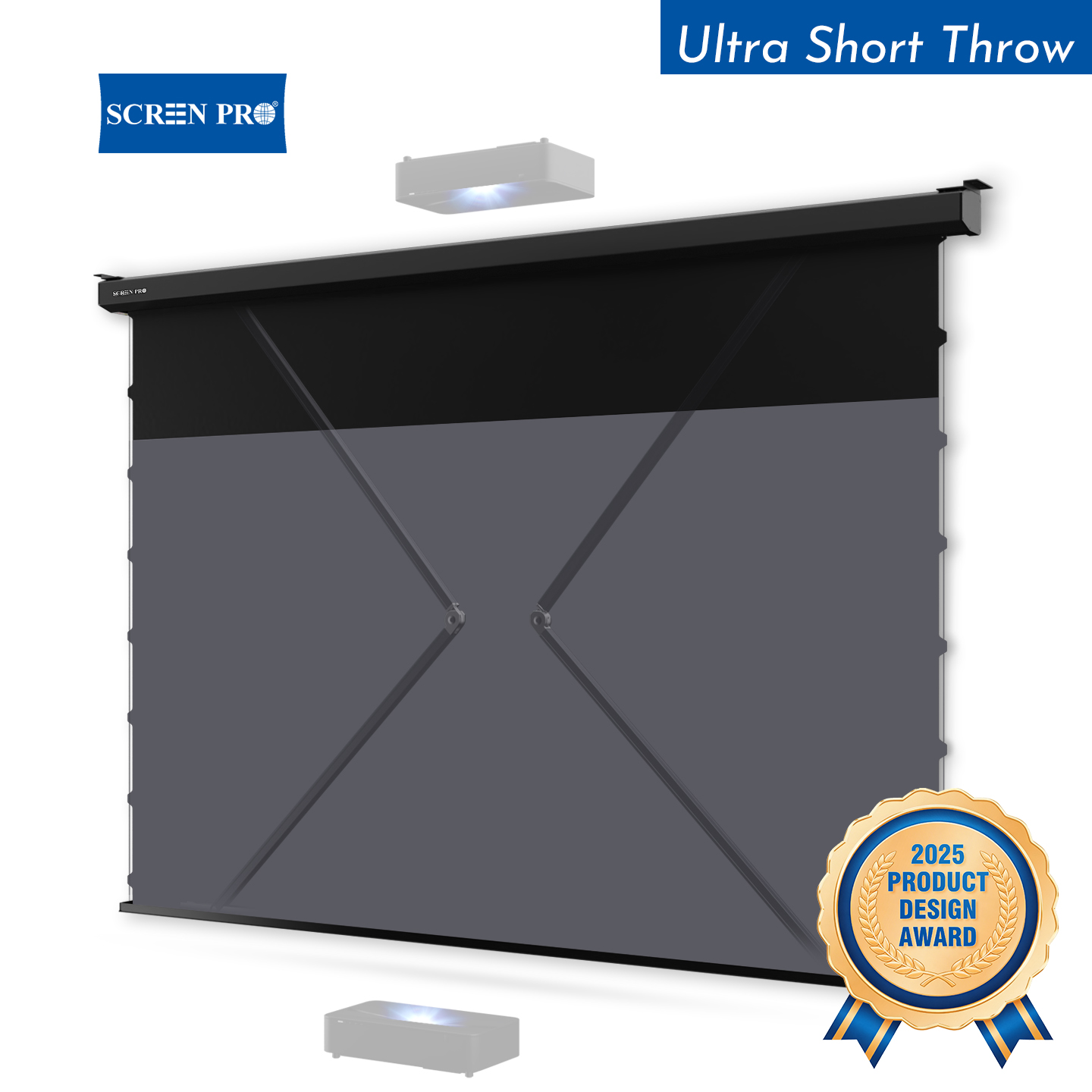
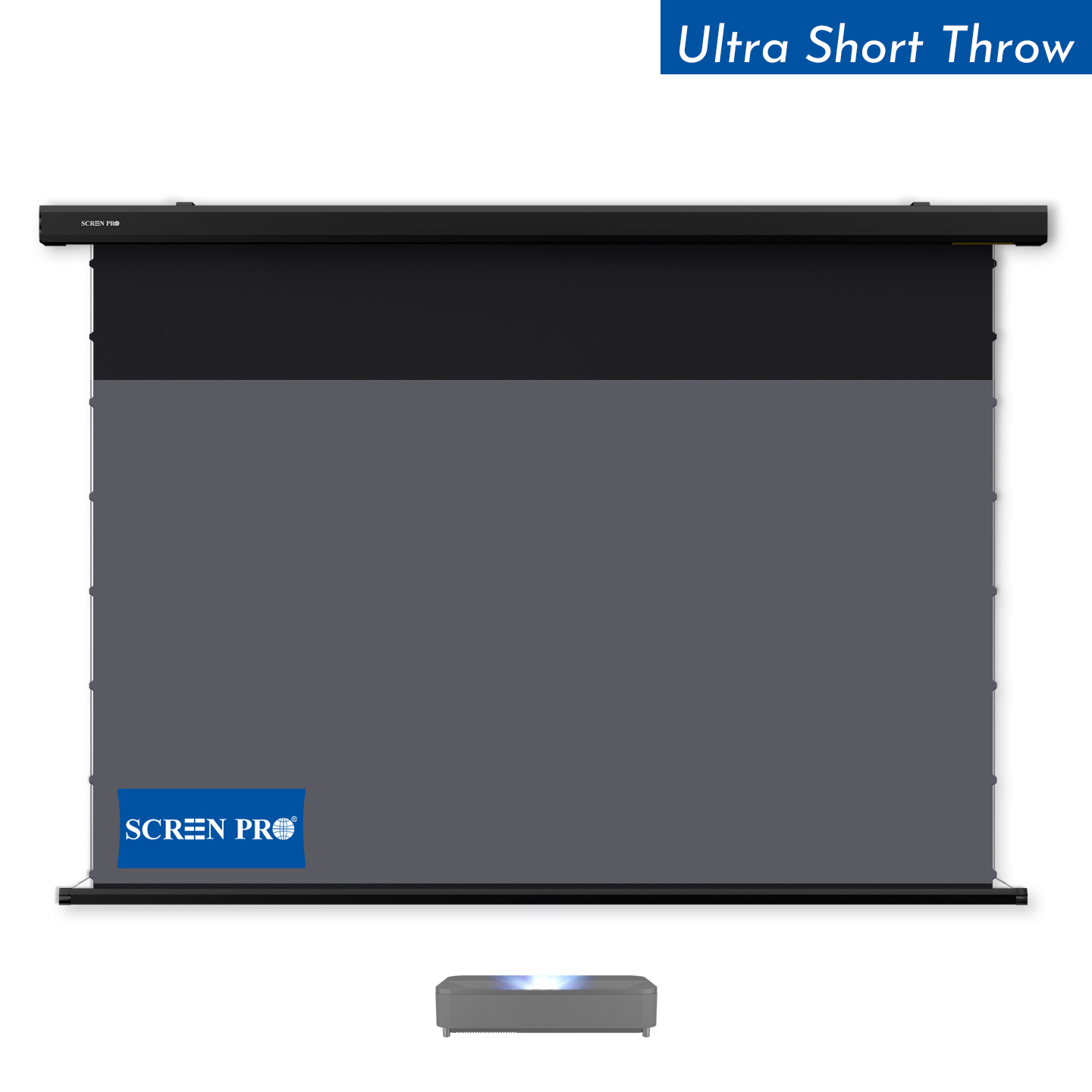
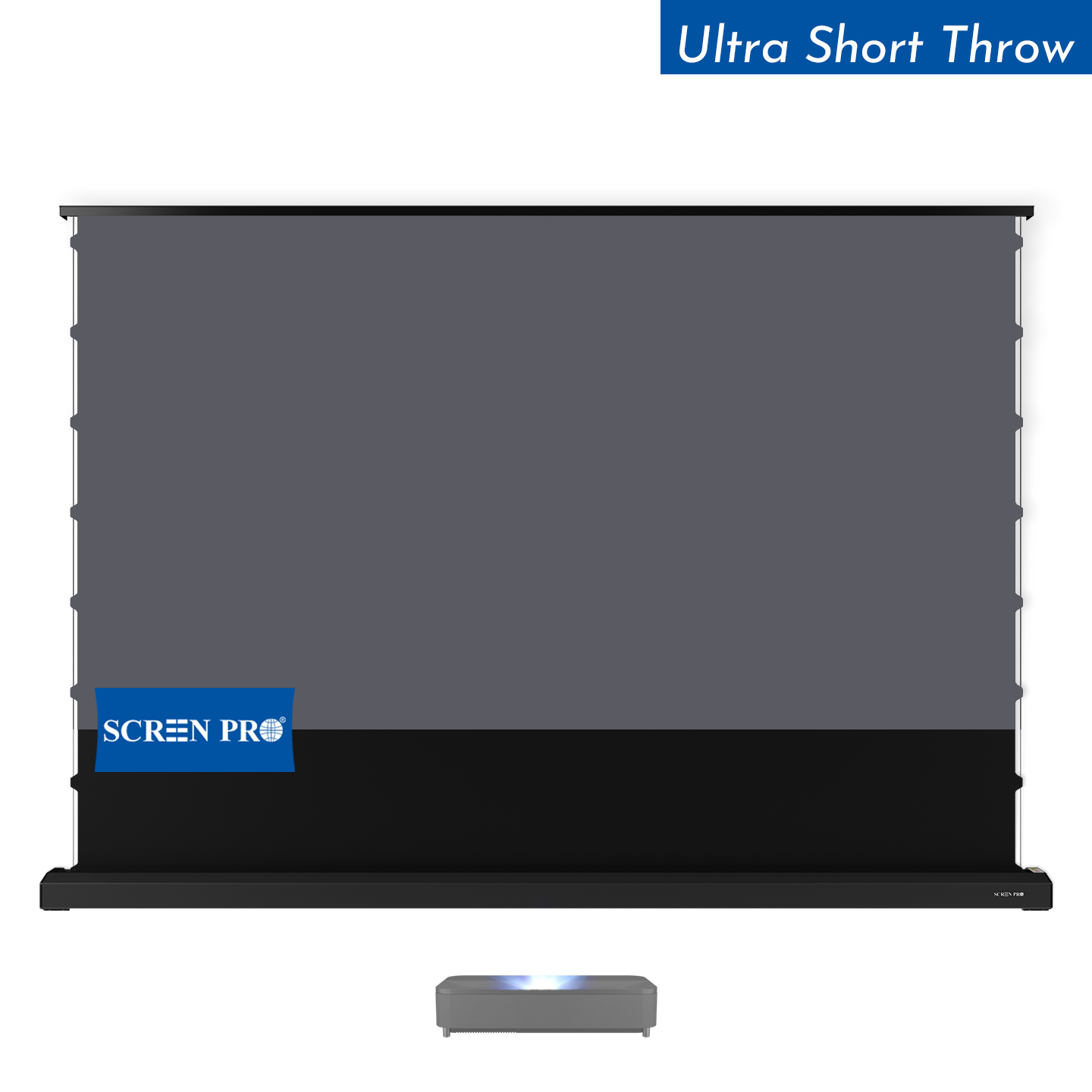
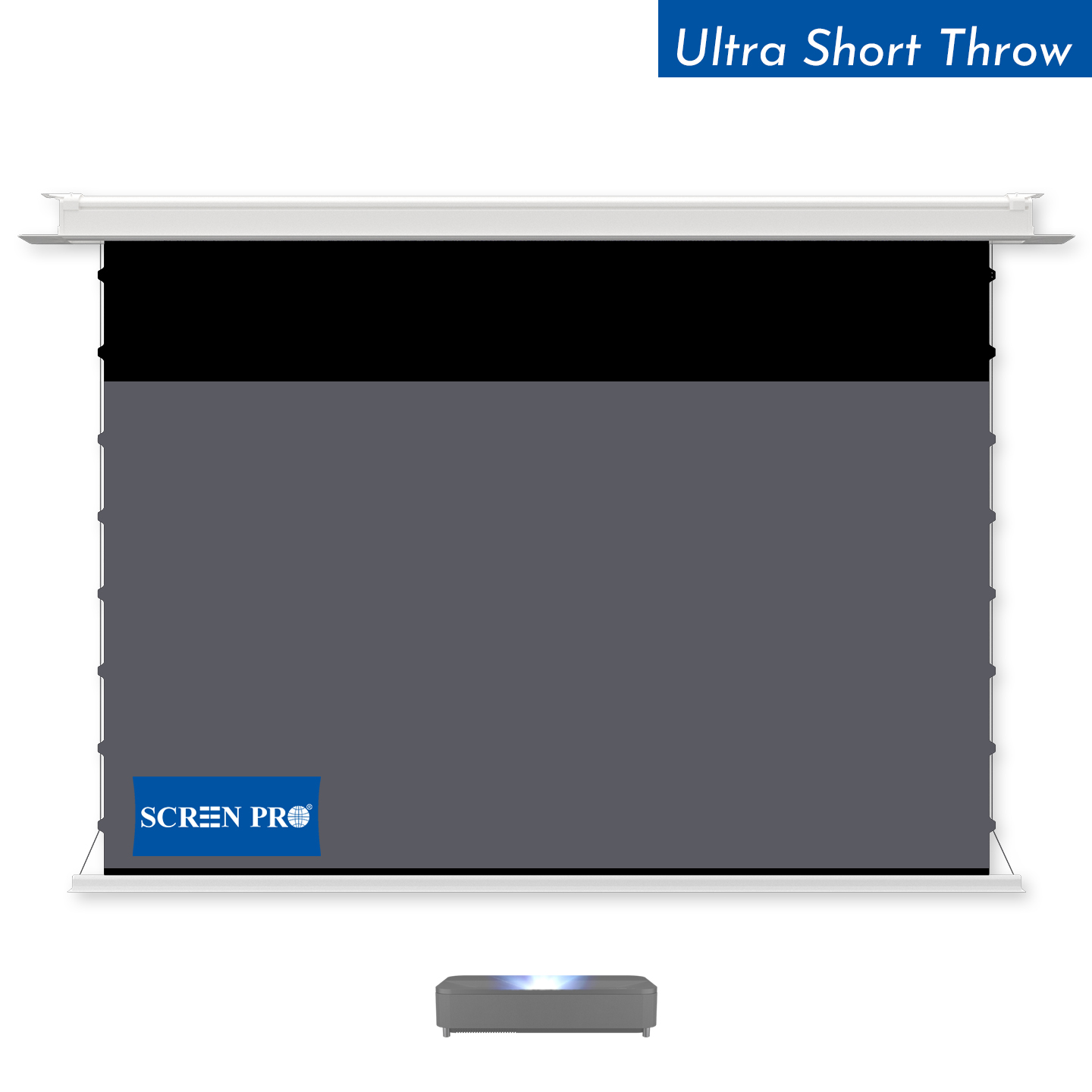
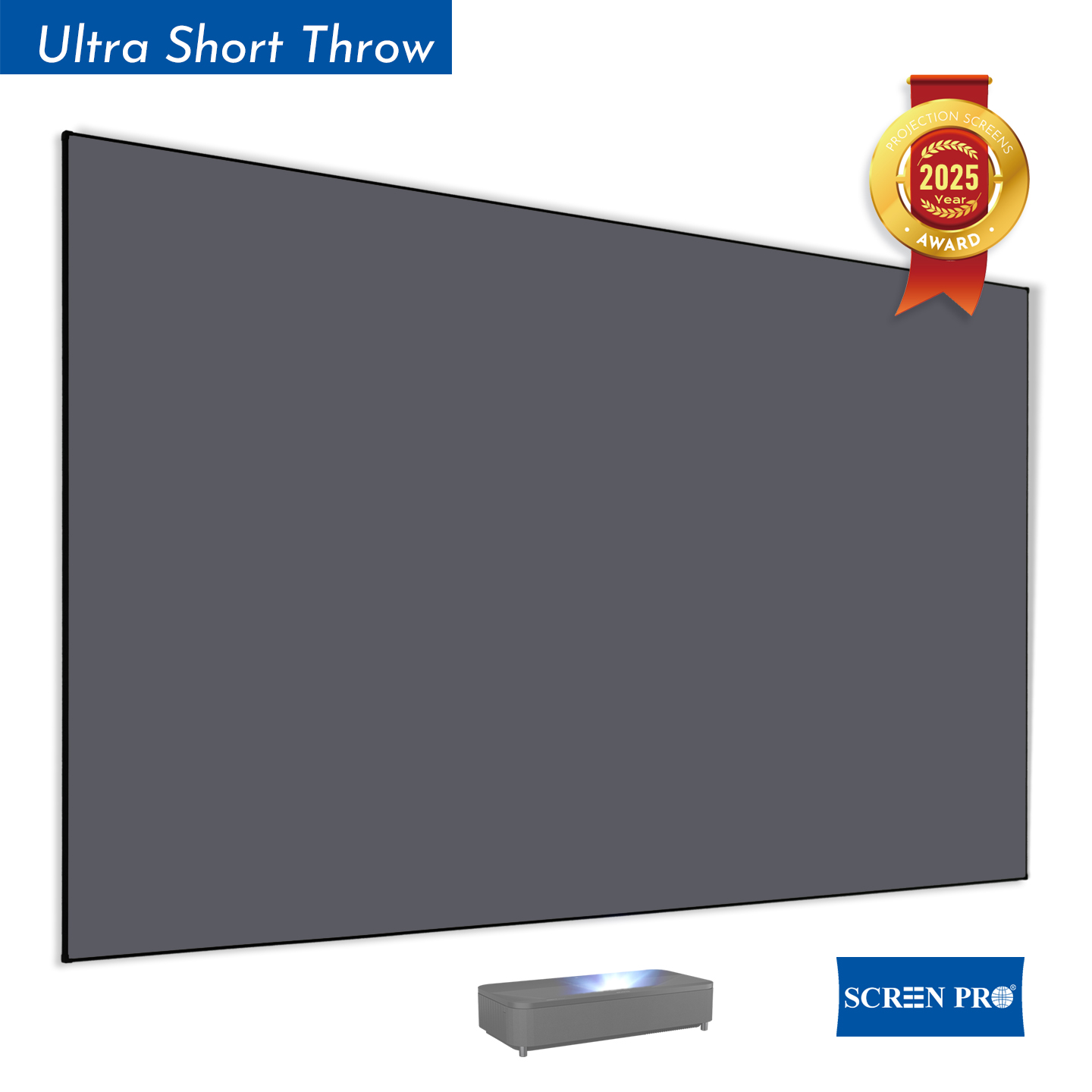
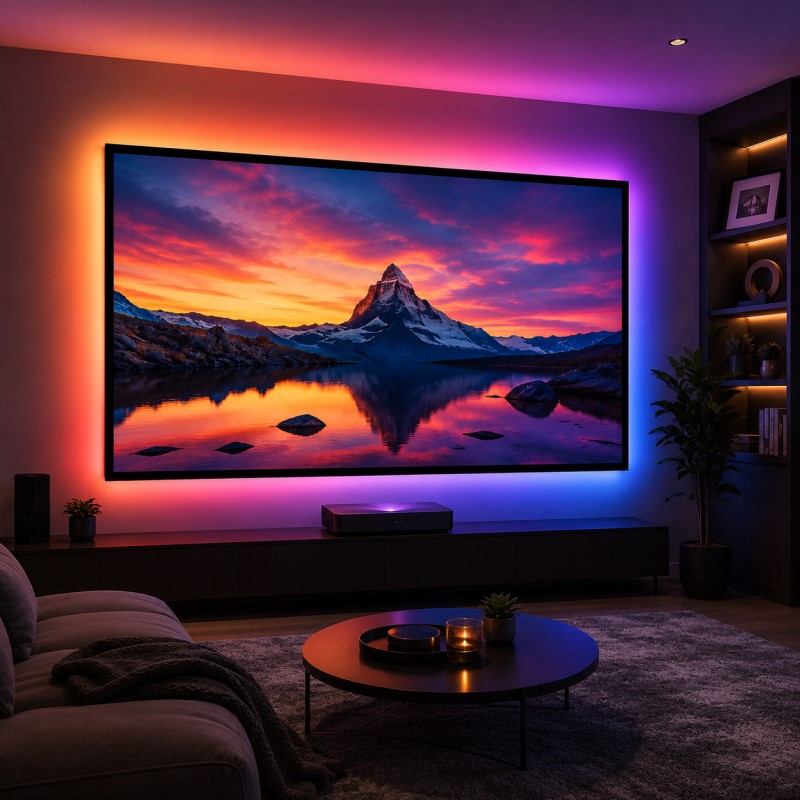
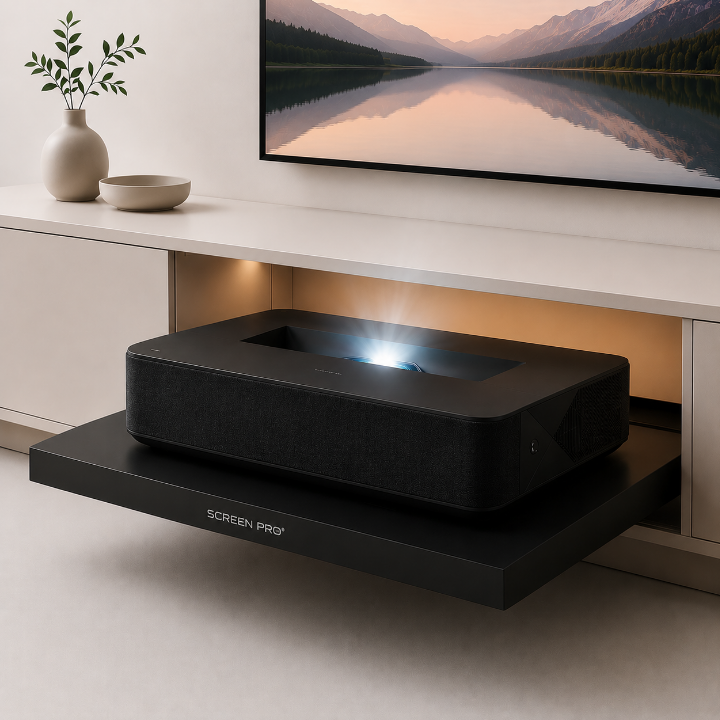
UST ALR screens are designed specifically for ultra-short-throw projectors. Their directional optical structures help accept light arriving from the projector below the screen while rejecting a significant amount of ambient light from other directions.
Because UST optical materials use different surface structures, their performance with RGB laser projectors can vary. Projector compatibility, room lighting, screen size, and viewing requirements should therefore be considered together.
For standard and long-throw RGB triple-laser projectors, a dedicated anti-speckle material can help reduce visible laser speckle while maintaining useful image detail, brightness, and viewing consistency.
Anti-speckle materials use specially engineered projection surfaces designed to diffuse coherent laser light in a more controlled way. The goal is to reduce visible speckle without unnecessarily sacrificing image detail or viewing comfort.
Depending on the material design, this may involve:
Gain should be selected according to projector brightness, screen size, room lighting, and screen material rather than simply choosing the highest available value.
A grey projection surface can help maintain perceived black levels and contrast, particularly in rooms where some ambient light is present.
A wide viewing angle helps maintain more consistent image brightness and color across multiple seating positions.
With RGB laser projection, surface structure can directly influence speckle visibility, image uniformity, perceived texture, and viewing comfort.
Do not choose a screen based on the words “triple laser” alone. First identify the projector's throw type.
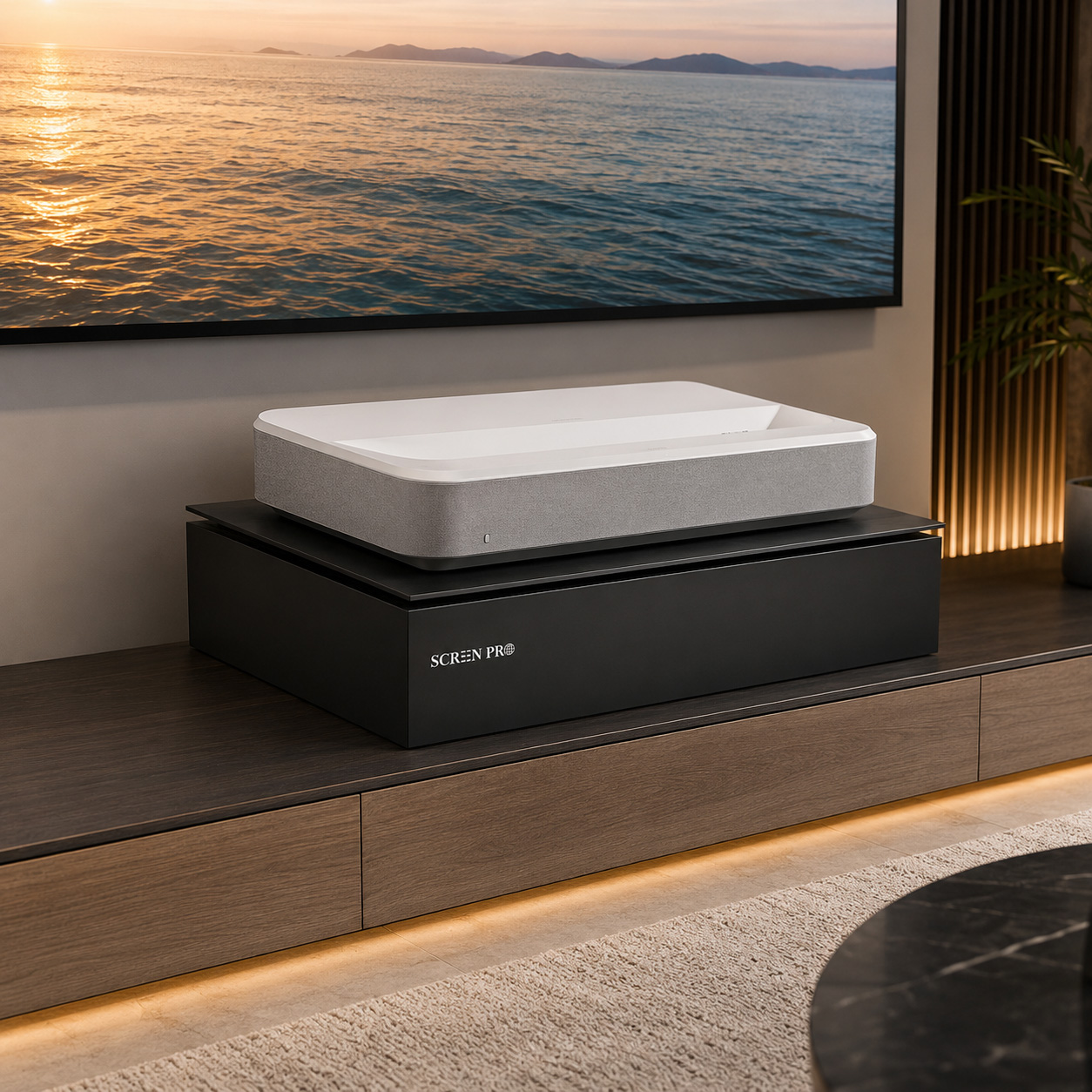
If the projector sits very close to the wall or screen, it requires a projection surface designed specifically for ultra-short-throw geometry.
Recommended direction:
UST ALR optical screen
For standard and long-throw RGB laser projectors, screen surface characteristics and anti-speckle performance become important material considerations.
Recommended direction:
Anti-speckle projection material
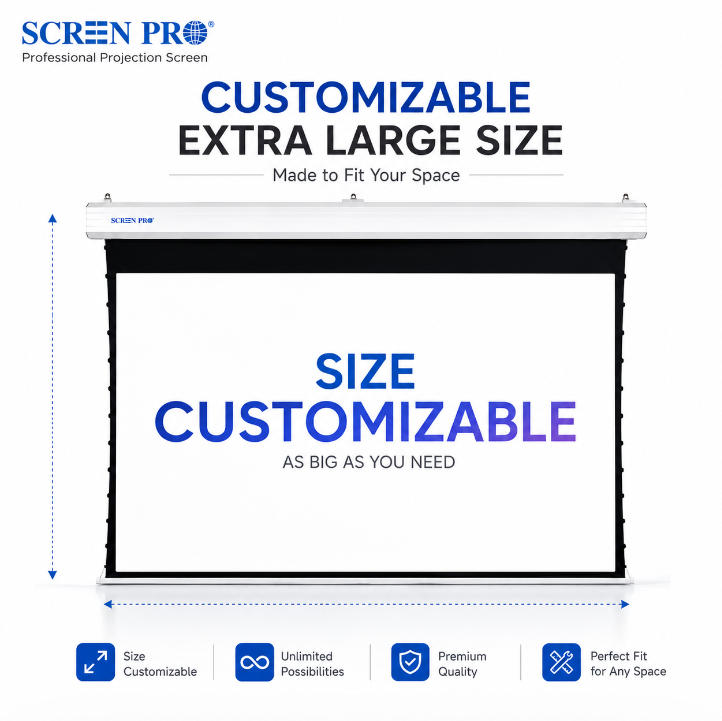
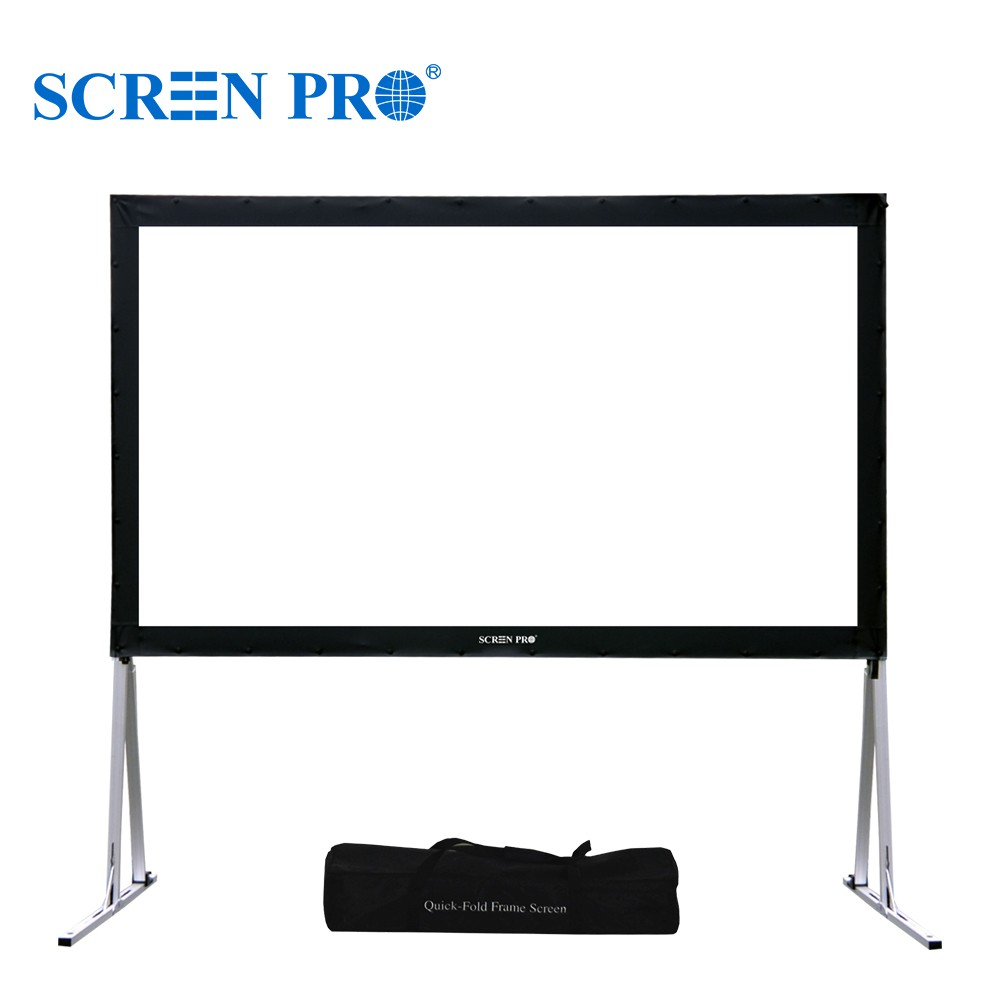
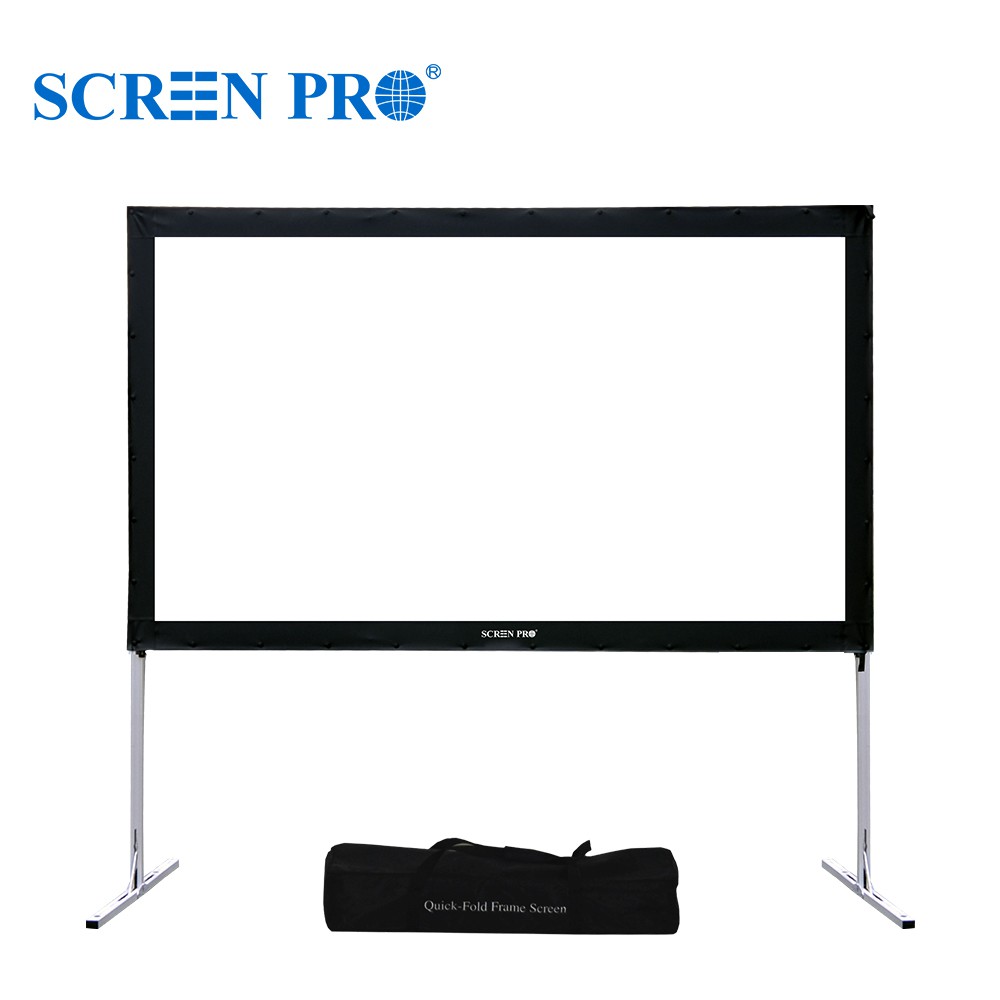
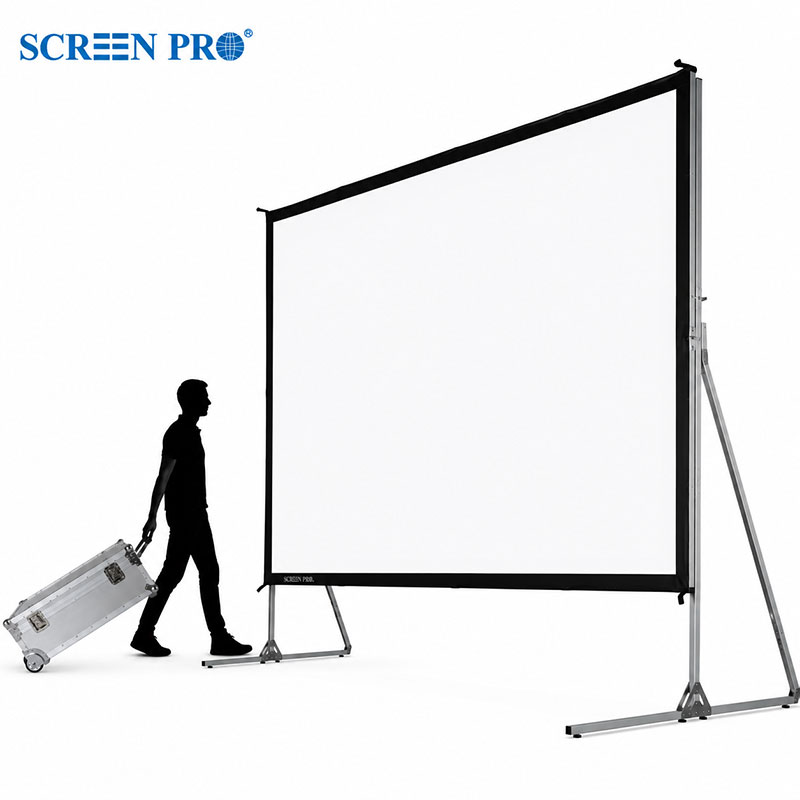
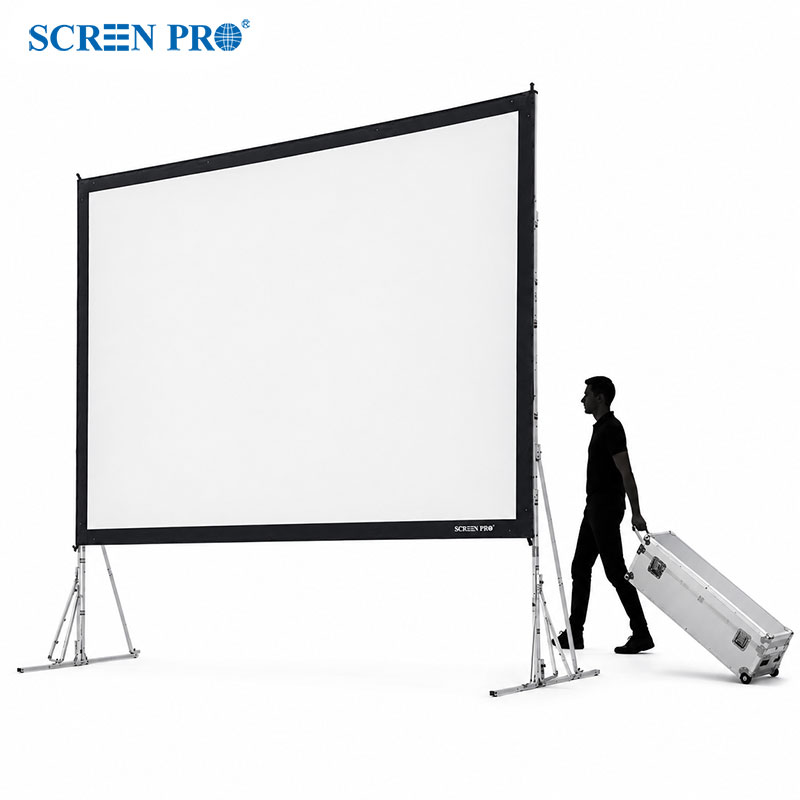
SCREENPRO offers different projection materials for different triple-laser applications. The right choice depends primarily on projector throw type, room lighting, acoustic requirements, screen size, and installation format.
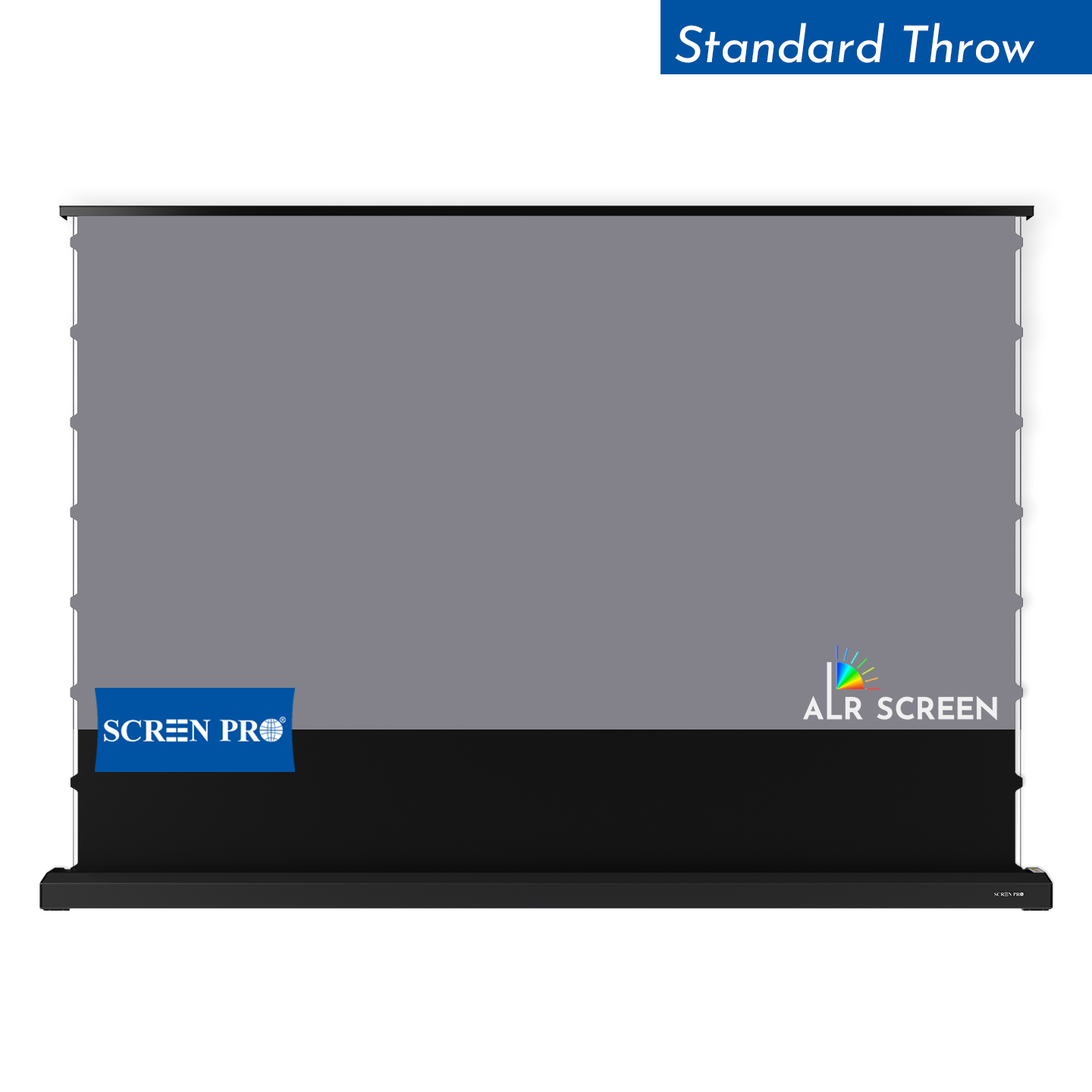
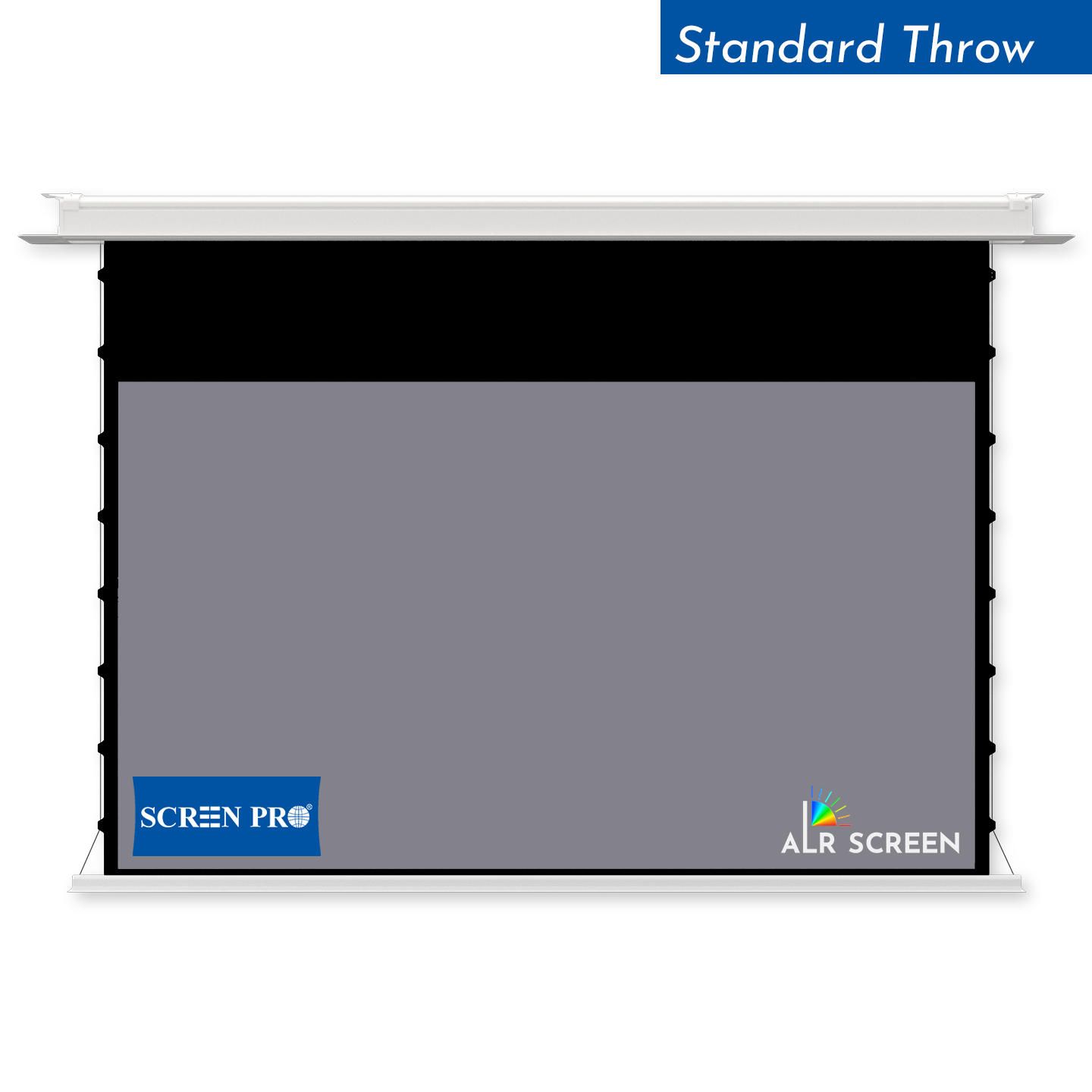
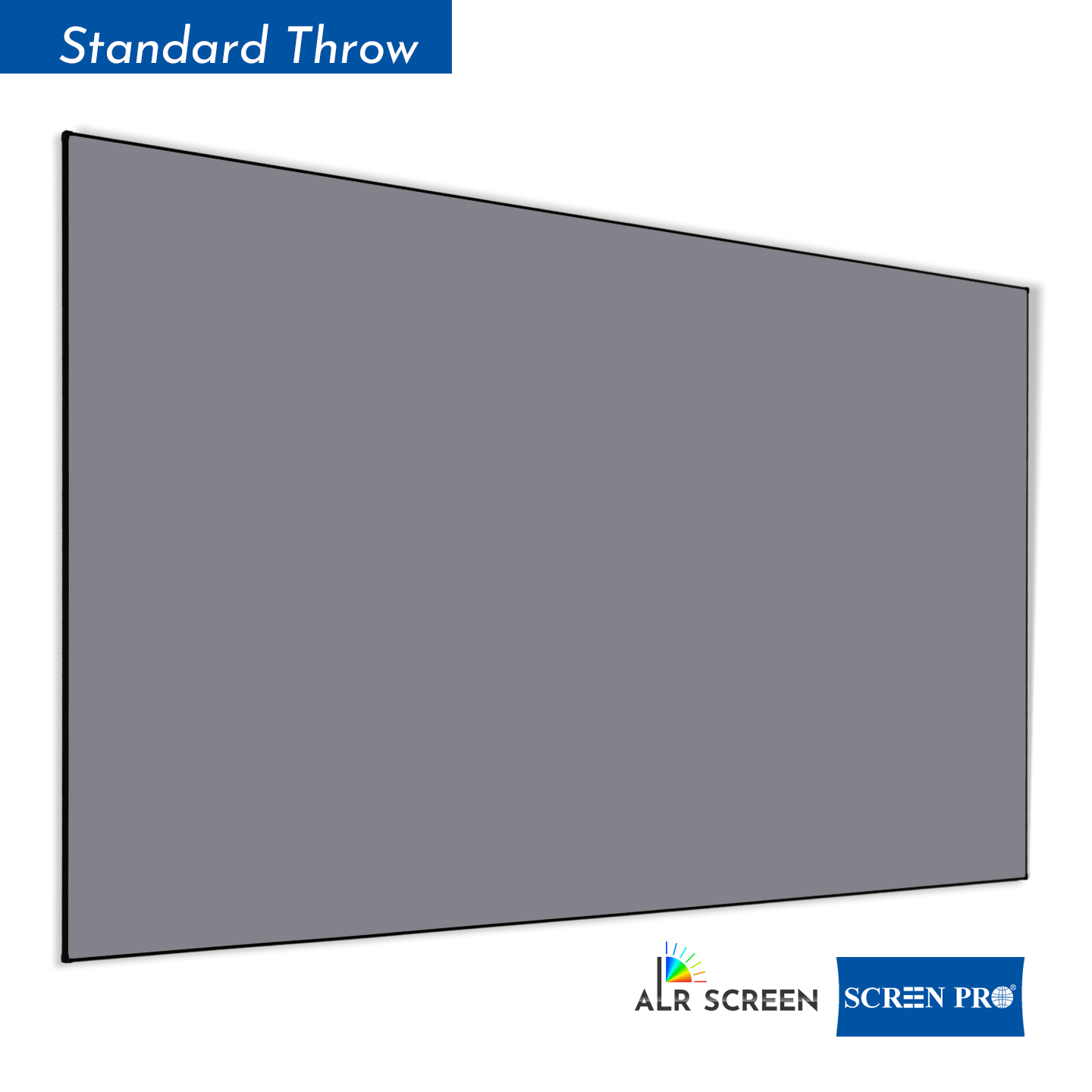
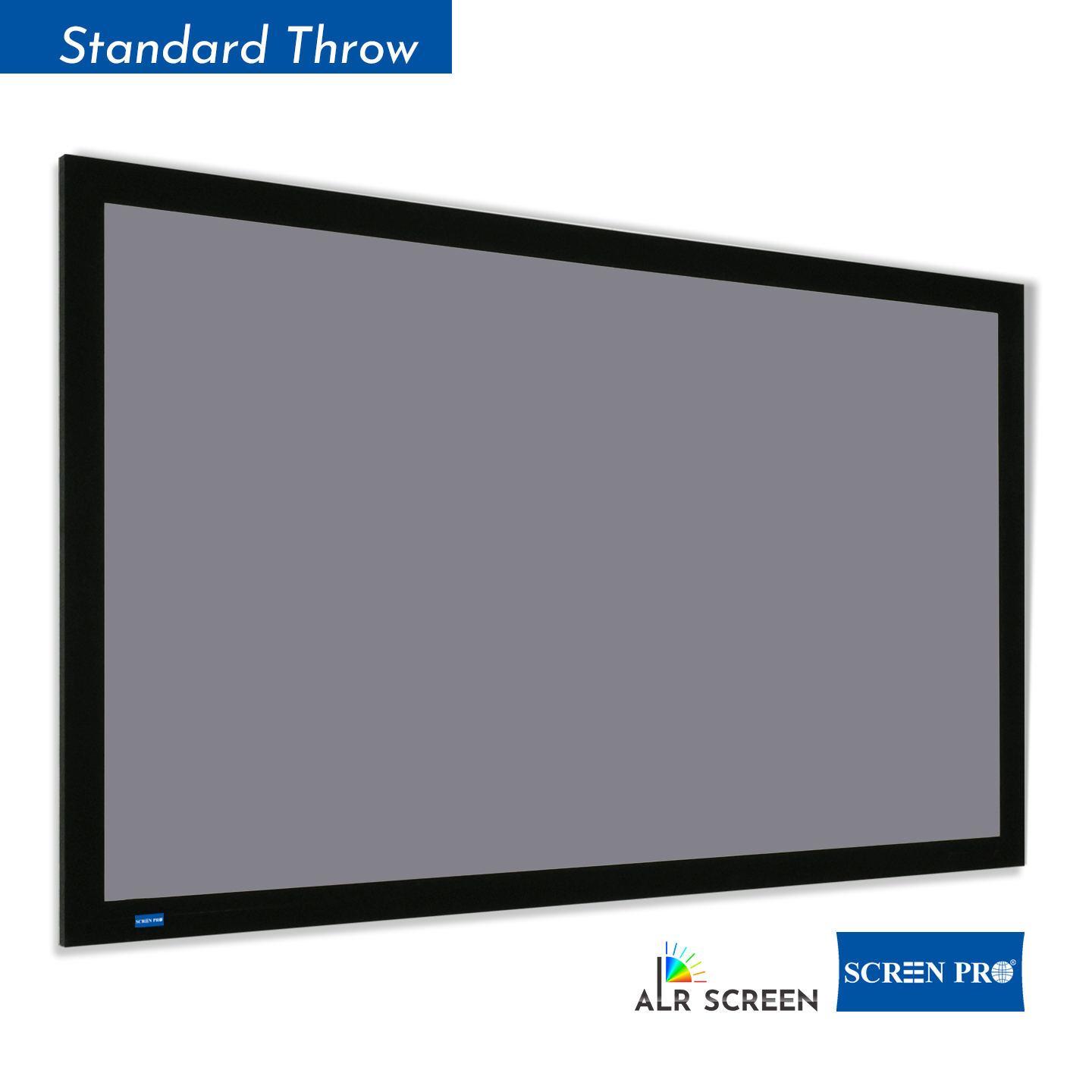
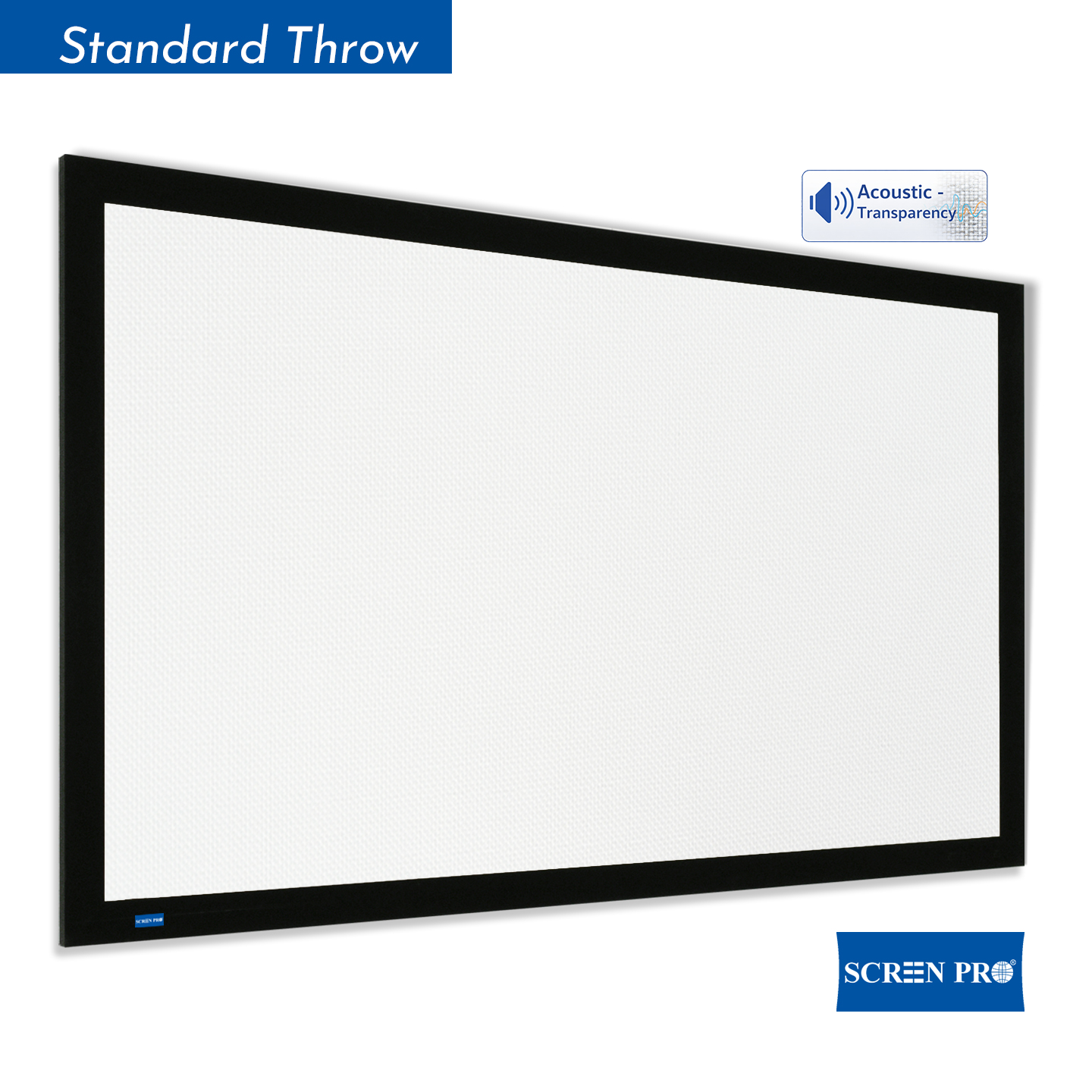
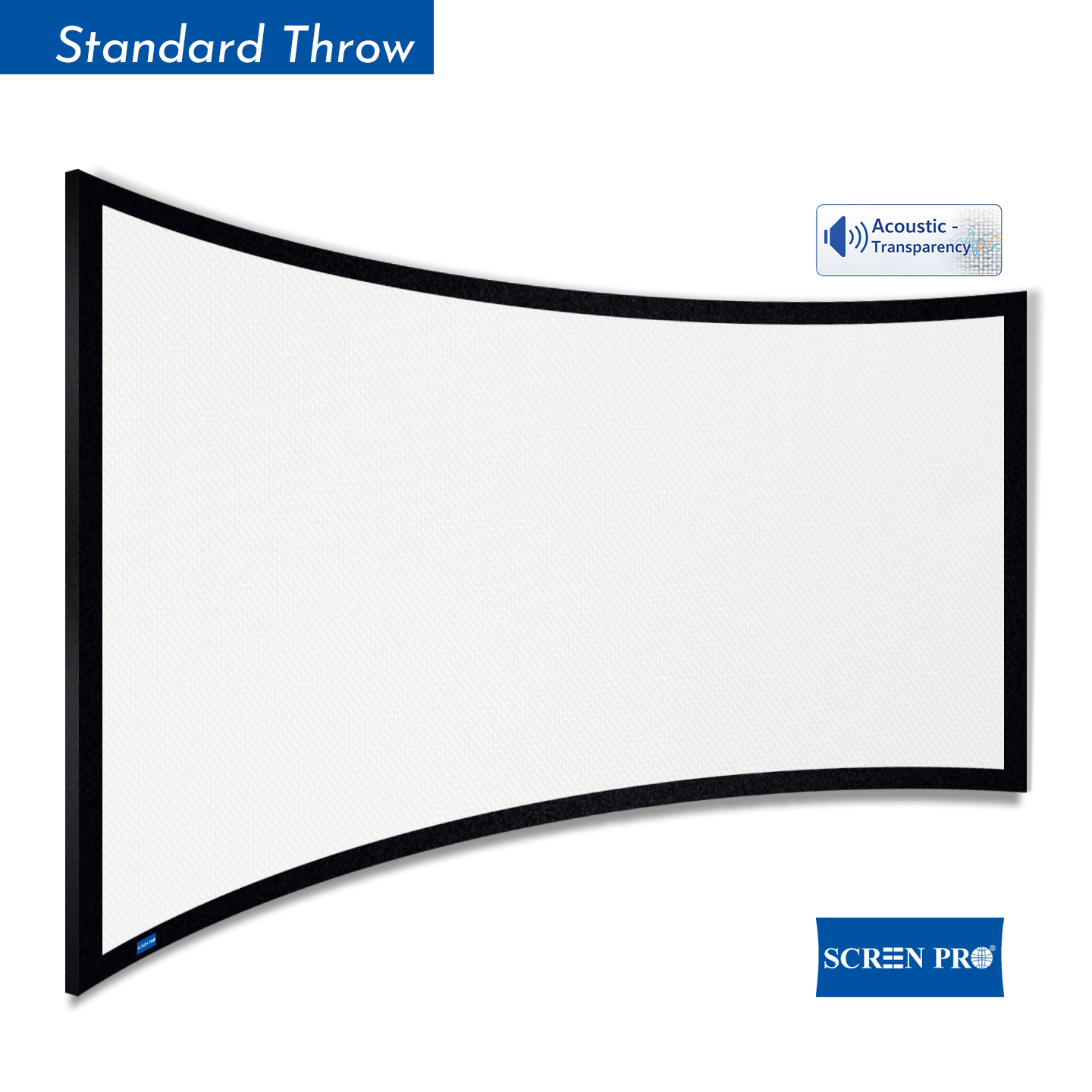
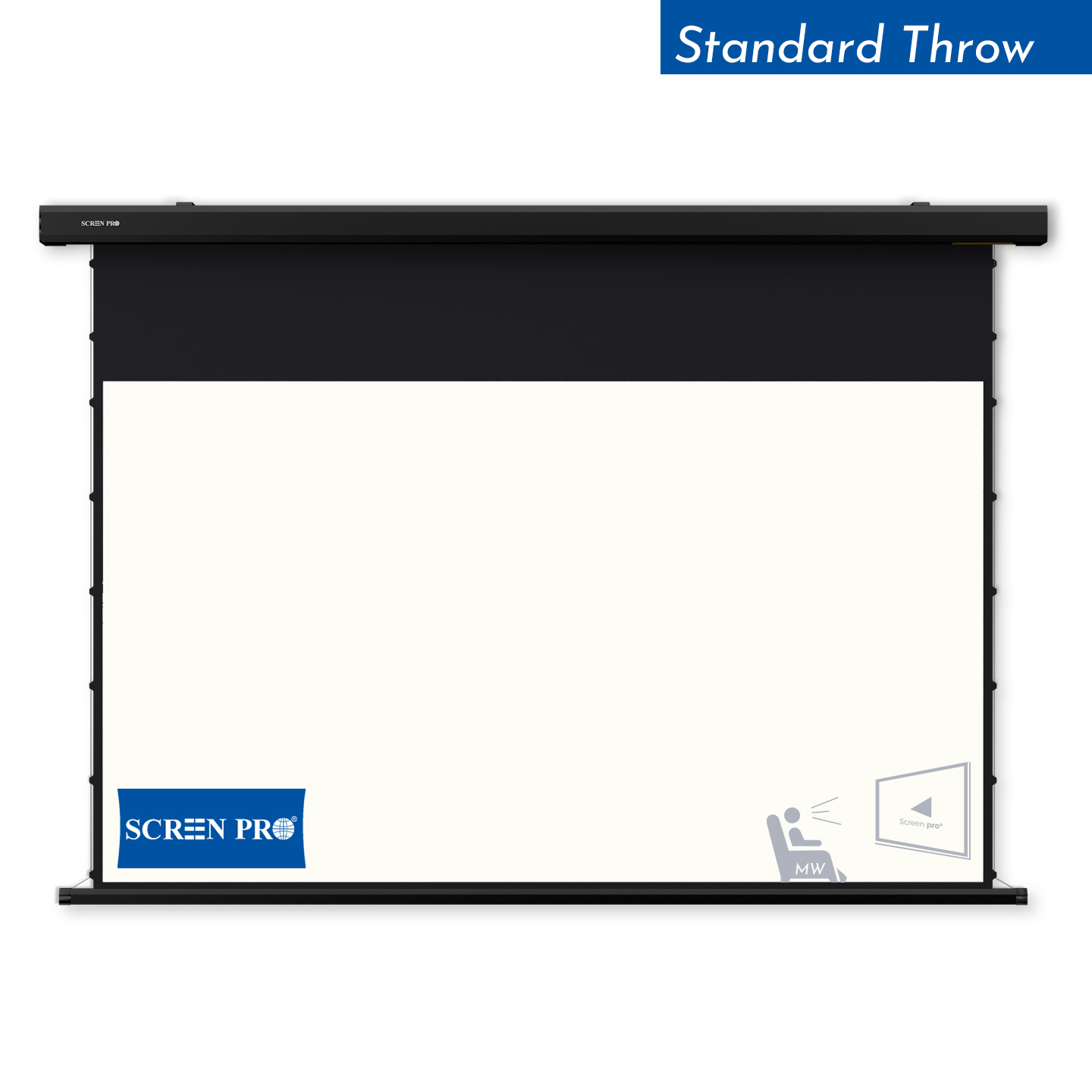
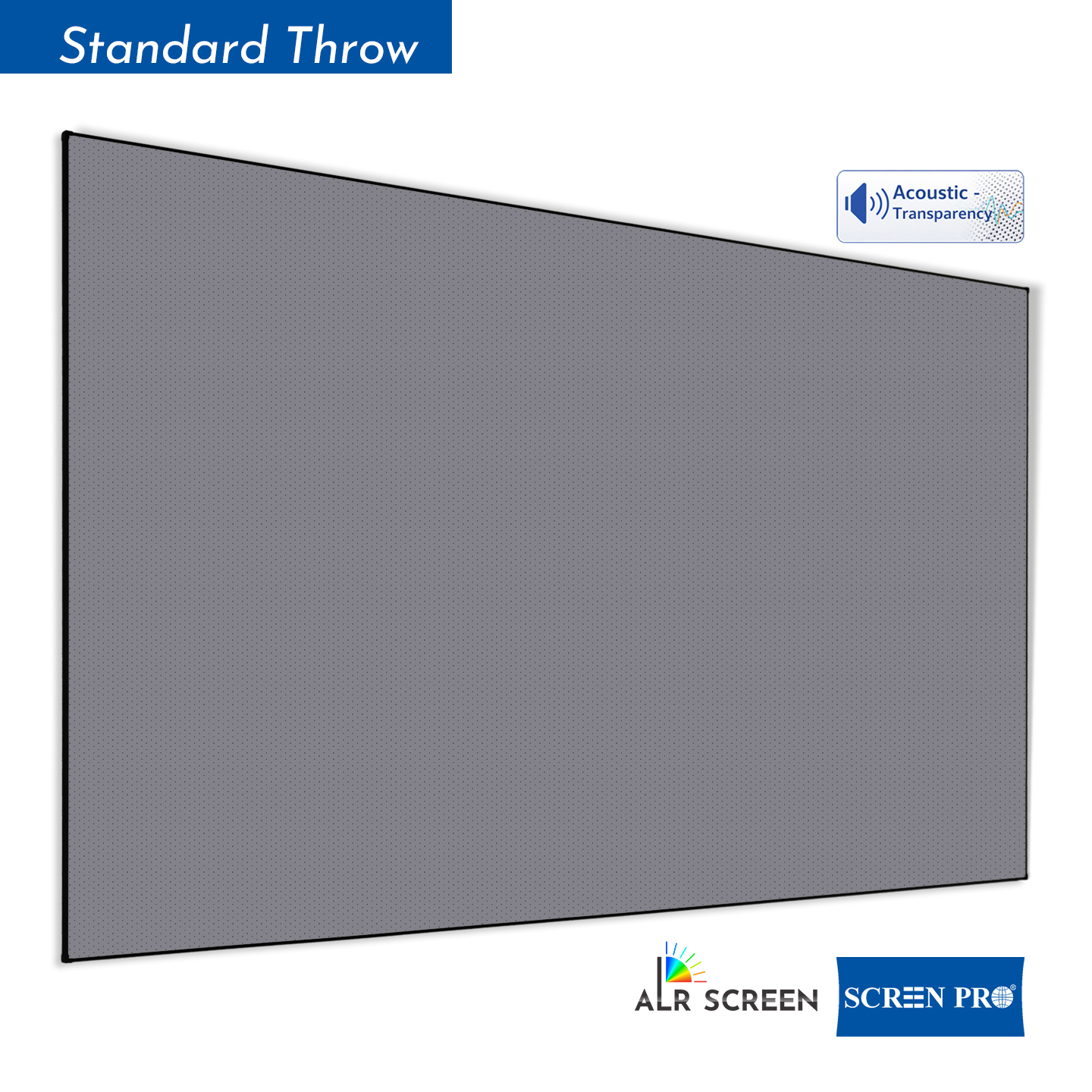
Designed for standard and long-throw RGB triple-laser projection where reduced visible speckle and balanced image performance are priorities.
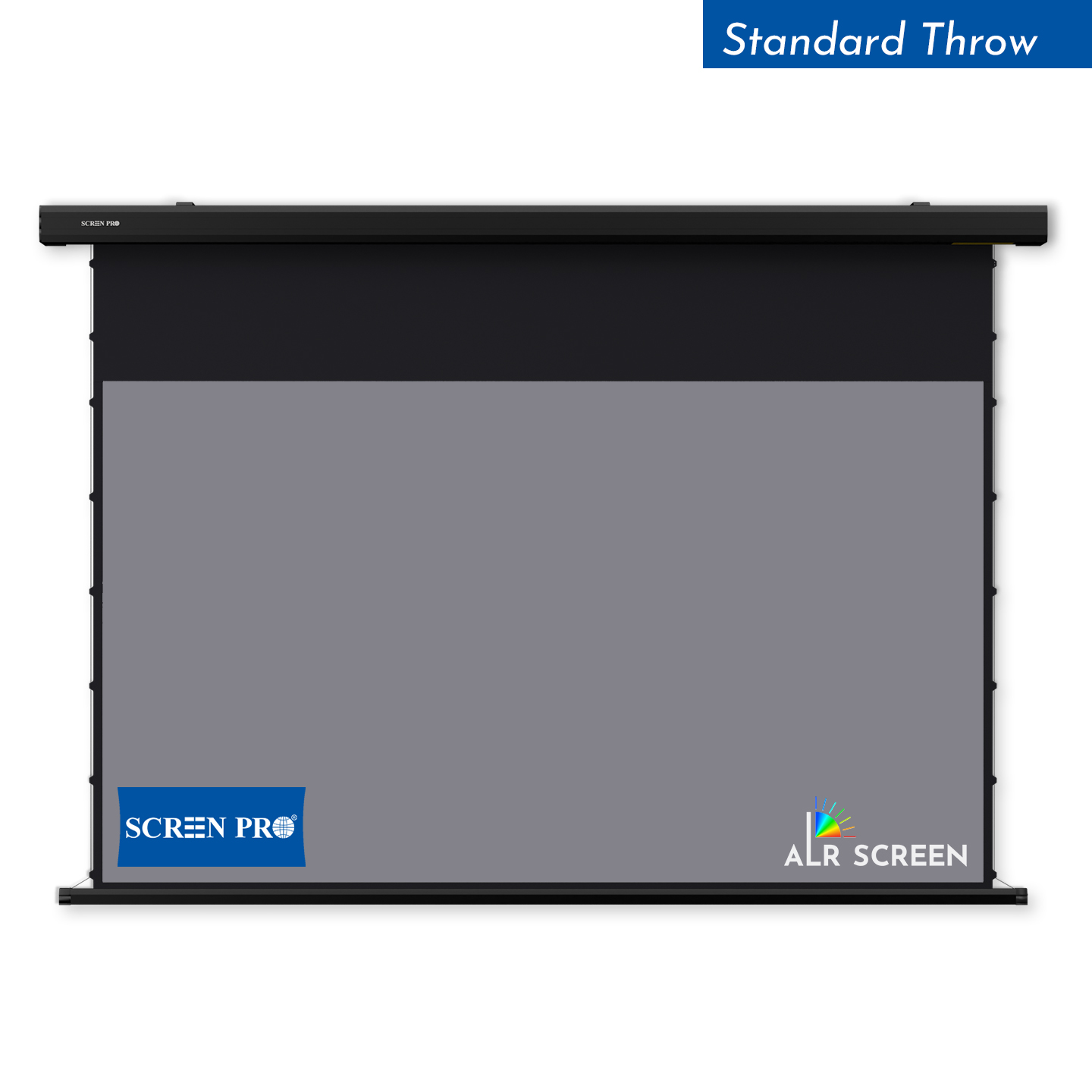
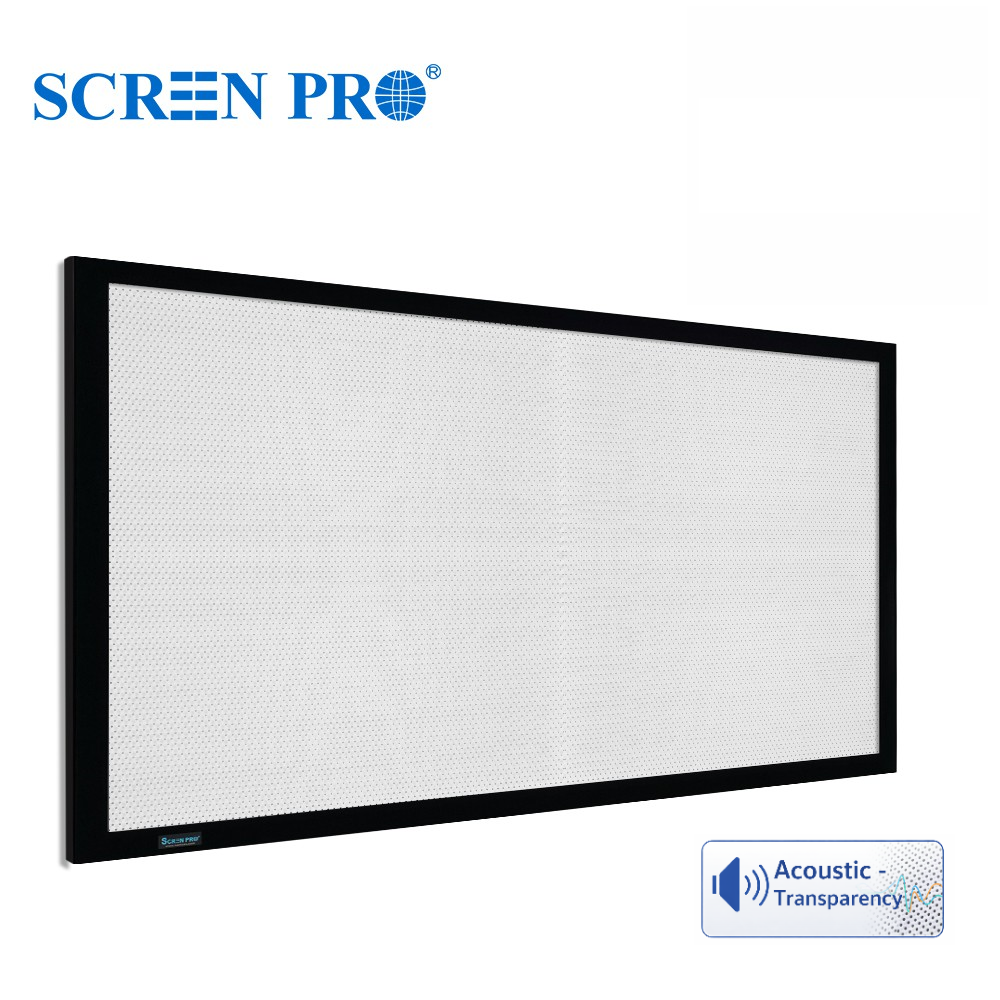
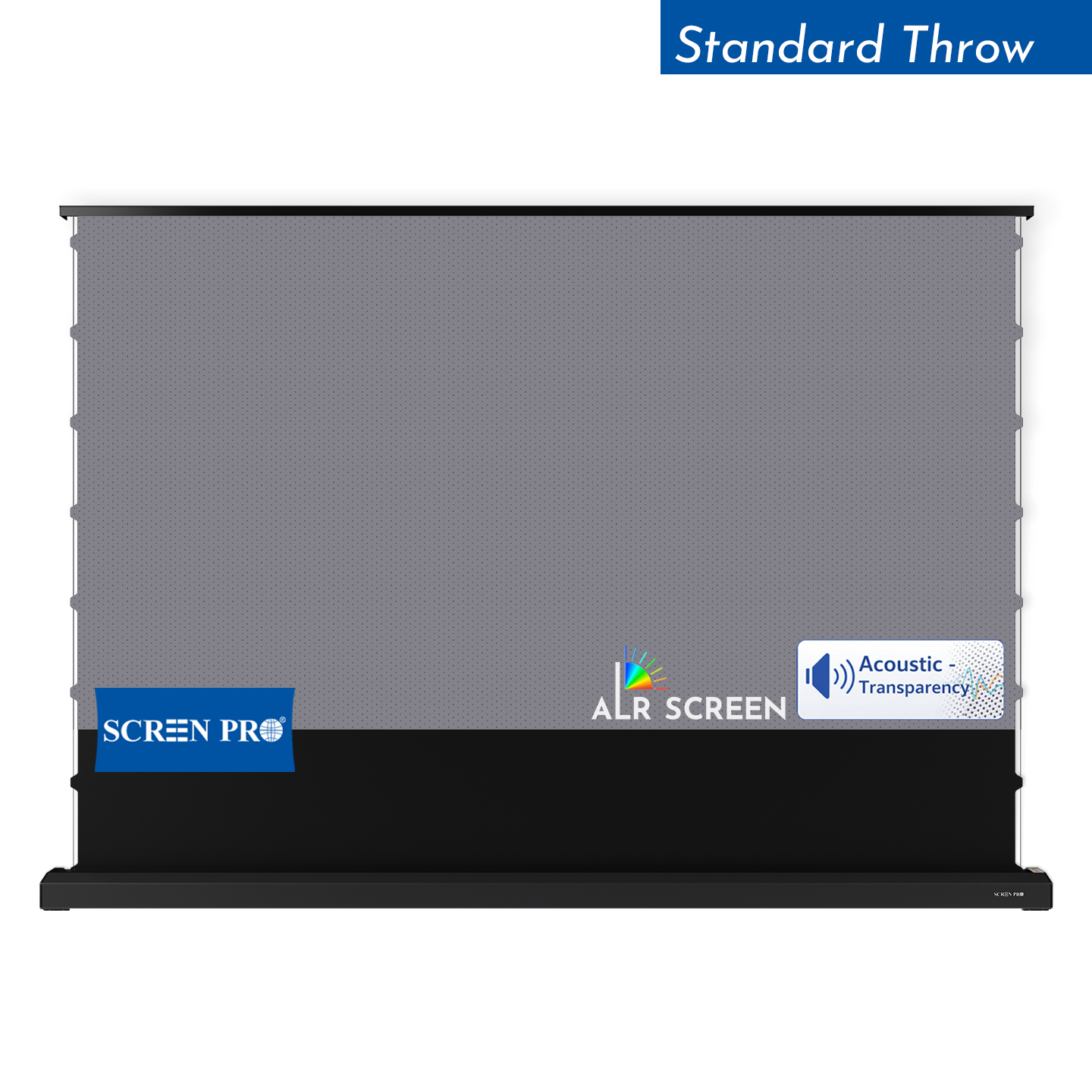
Designed for installations where speakers are positioned behind the projection surface while anti-speckle performance is also required.
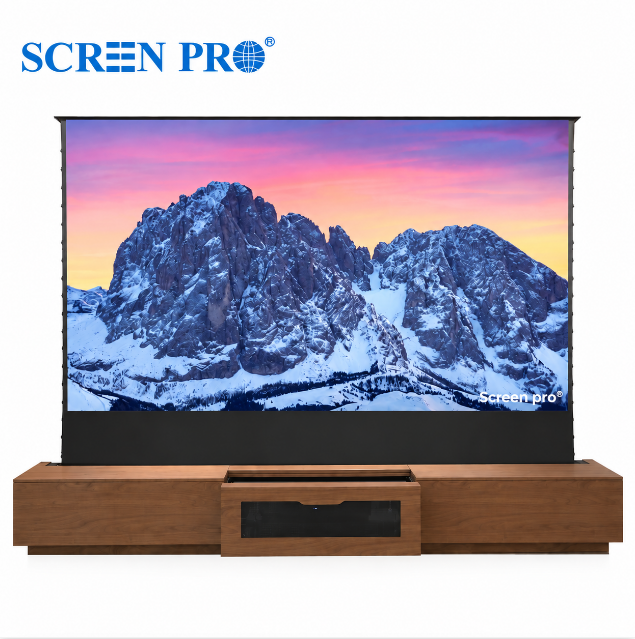
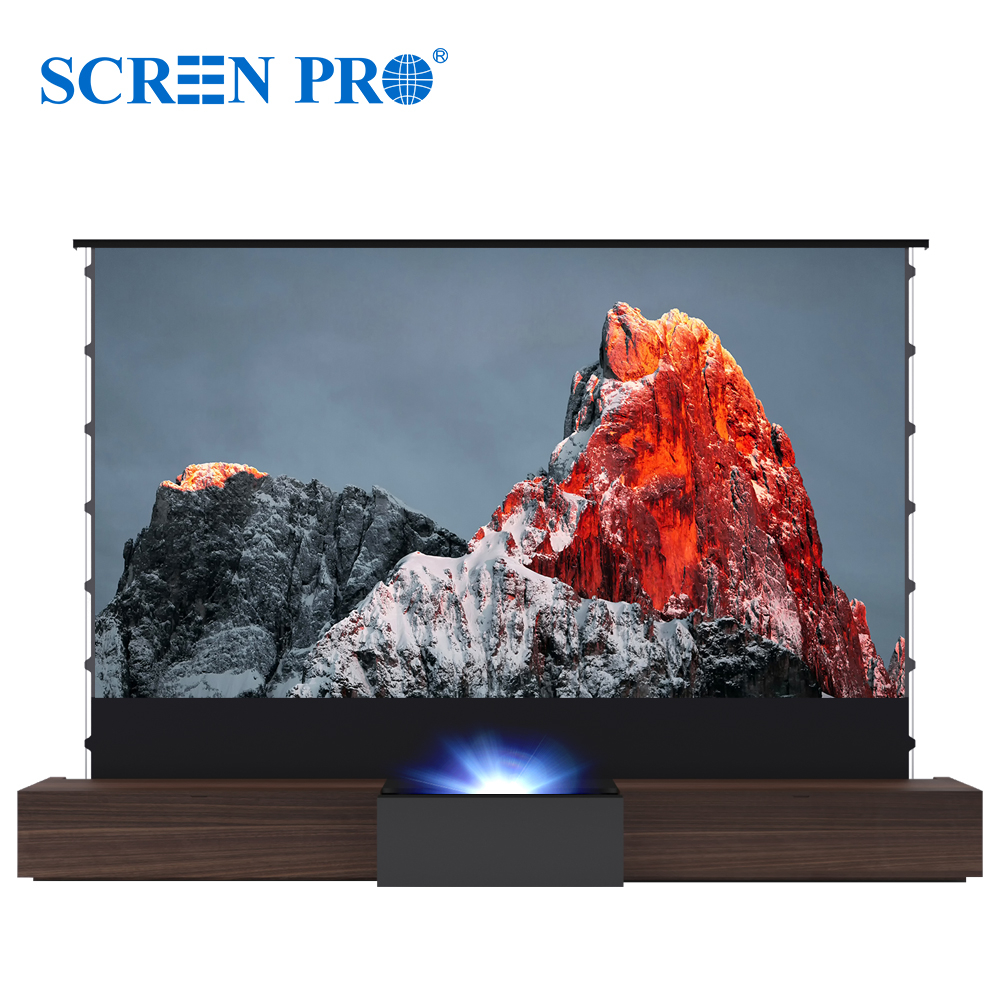
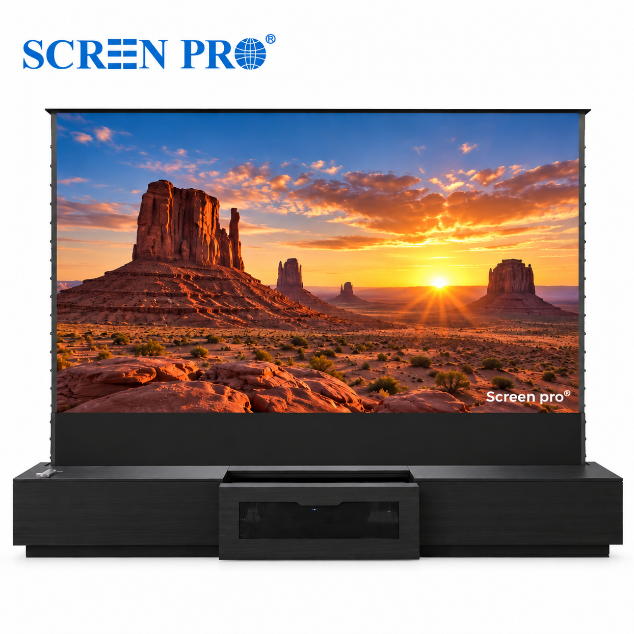
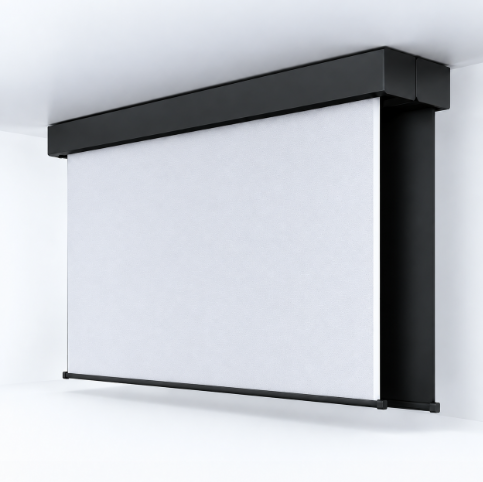
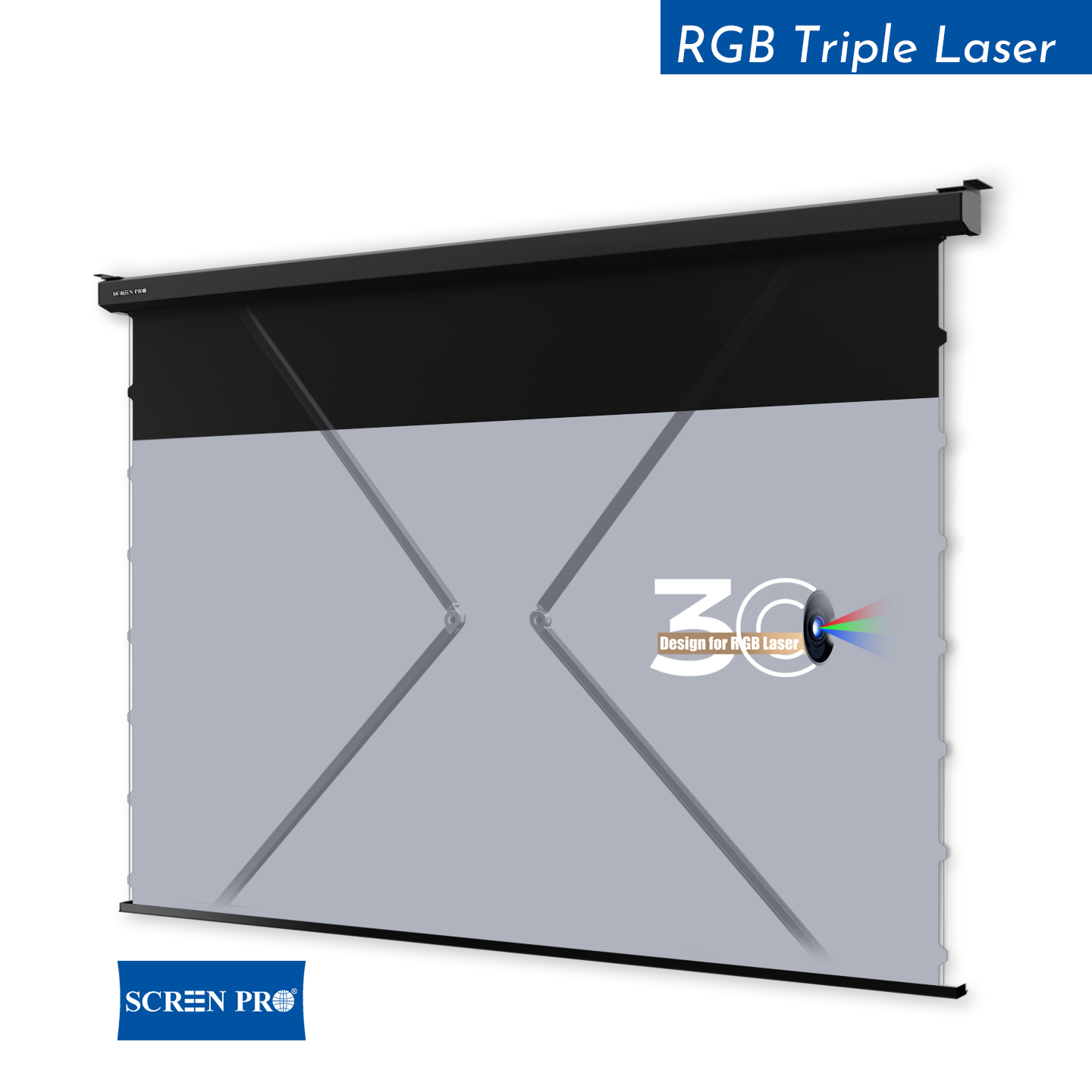
Designed specifically for ultra-short-throw projection, T-Prism uses a directional optical structure to improve perceived contrast in rooms with ambient light.
Projector:
RGB triple-laser long throw
Recommended material:
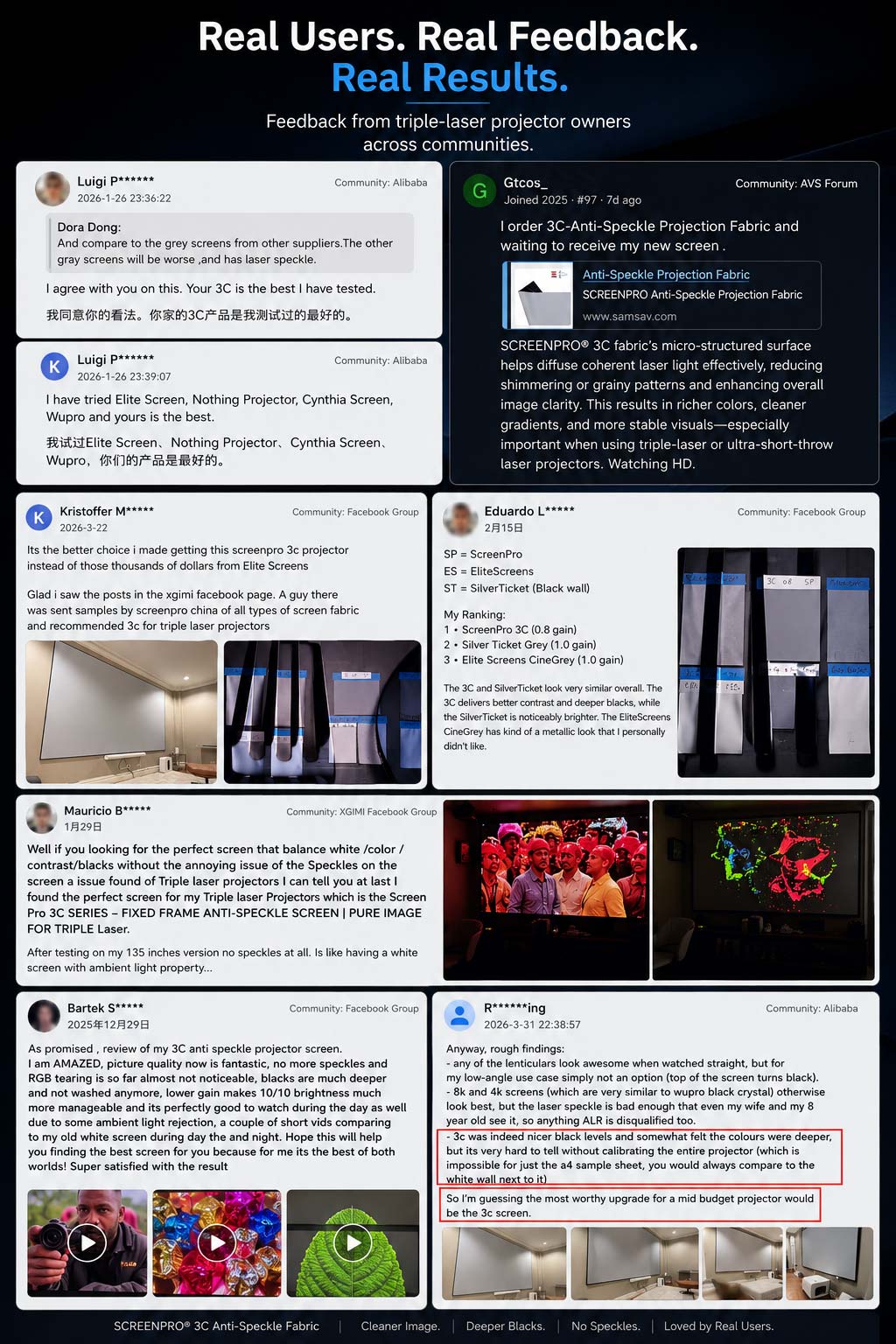
3C Anti-Speckle Grey
Priority:
Speckle reduction and image consistency
Projector:
RGB triple-laser UST
Recommended material:
T-Prism UST ALR
Priority:
Ambient light rejection and contrast
Projector:
RGB triple-laser long throw
Recommended material:
3W Woven Anti-Speckle
Priority:
Speckle reduction + acoustic transparency
Send us your projector model, desired screen size, and room lighting conditions. SCREENPRO can help identify the appropriate projection material and screen structure for your installation.
The best screen for a triple-laser projector is not necessarily the brightest or most expensive screen. The right choice starts with projector throw type, followed by room lighting, screen size, acoustic requirements, and the desired balance between brightness, contrast, and speckle reduction.
For a standard or long-throw RGB triple-laser projector, an anti-speckle material such as SCREENPRO 3C or 3W may be appropriate. For an ultra-short-throw triple-laser projector, a purpose-designed UST optical screen such as T-Prism should be considered instead.
If you are unsure, start with your projector model. From there, screen material and screen structure can be selected around the actual projection system rather than choosing a screen based on specifications alone.





© 2026 SCREENPRO®. Specifications are subject to change without notice. | SamsAV All Rights ReservedSite Map Designed by iwonder.cn