
© Copyright 2004-2026 SCREEN PRO® All Rights Reserved | Specifications are subject to change without notice. All Rights ReservedSite Map Designed by iwonder.cn


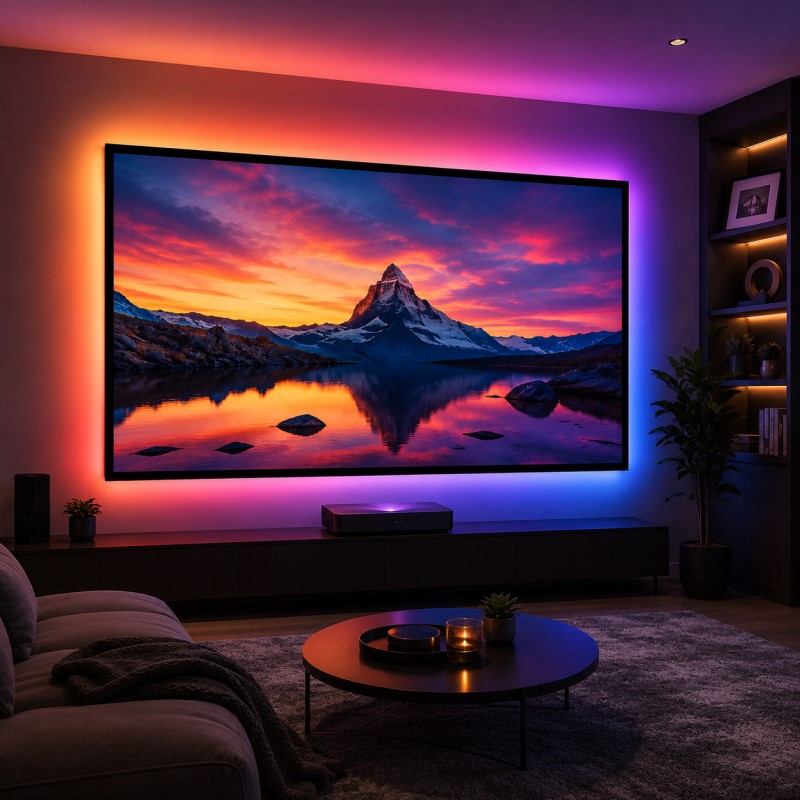
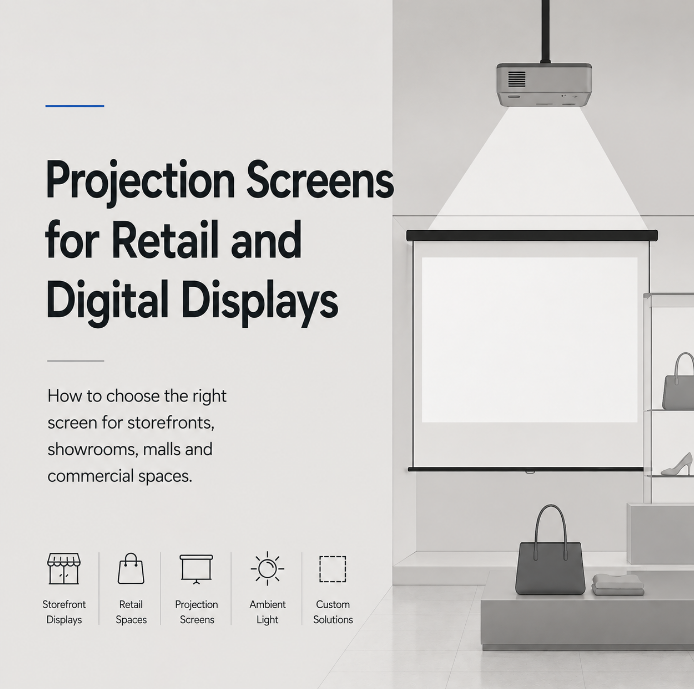
Projection is no longer limited to meeting rooms and cinemas. In modern retail environments, projection screens can become storefront displays, digital signage surfaces, product showcases, interactive installations and large-format visual experiences.
Unlike conventional LCD or LED displays, projection can create extremely large images without requiring a heavy display panel. Screens can also be retractable, transparent, hidden when not in use, integrated into glass surfaces or customized for unusual spaces.
Retail spaces compete constantly for attention. Storefronts, showrooms and shopping malls need visual displays that are large, flexible and capable of changing content quickly.
Projection can provide a practical alternative to conventional digital signage when the display needs to be especially large, integrated into architecture or invisible when switched off.
Projection can create images far larger than most conventional commercial displays without requiring an equally large physical display panel.
Fixed screens, motorized screens, rear projection screens and projection films can be adapted to different retail environments.
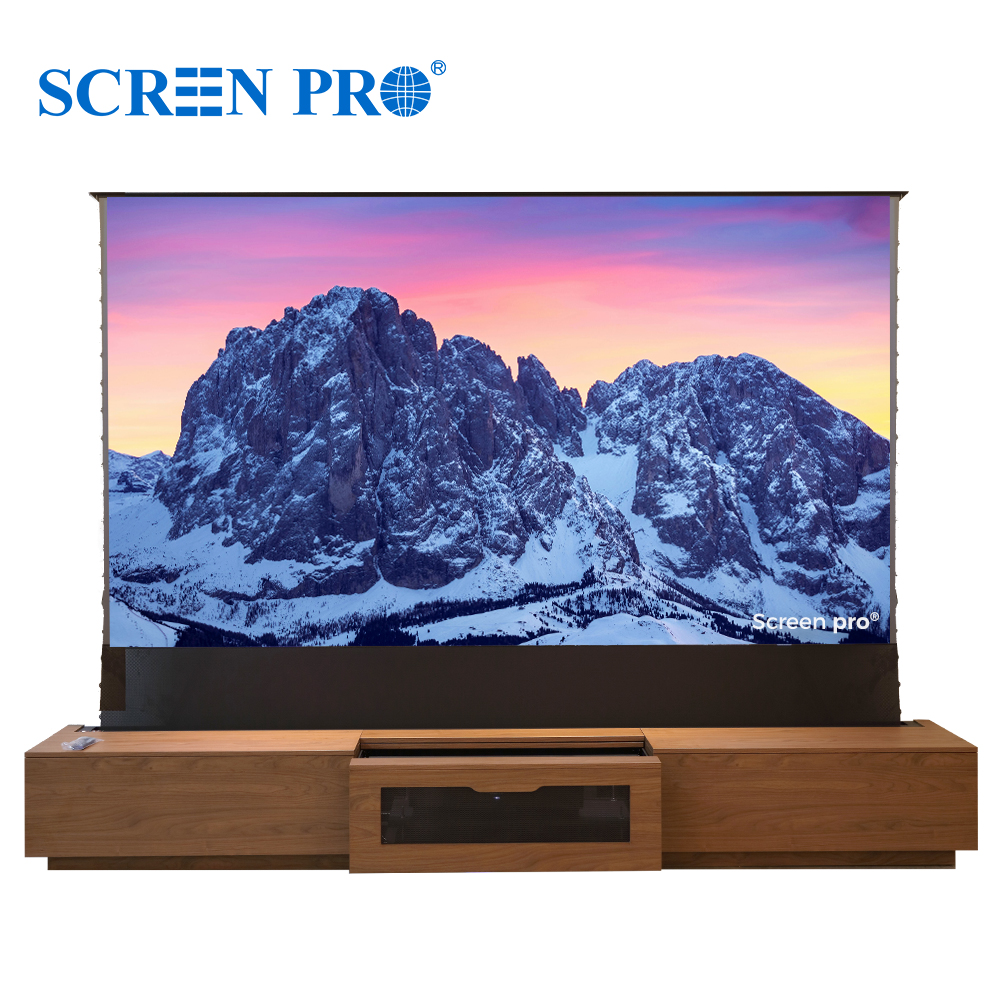
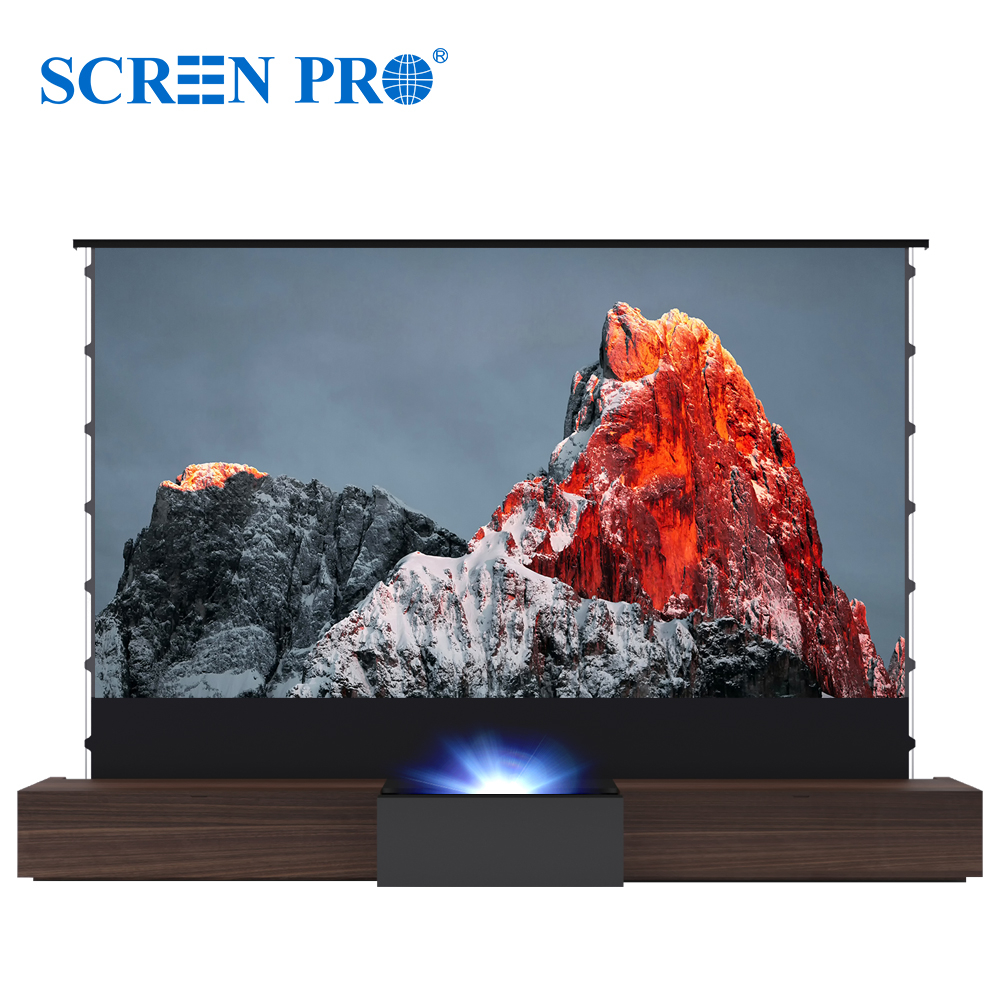
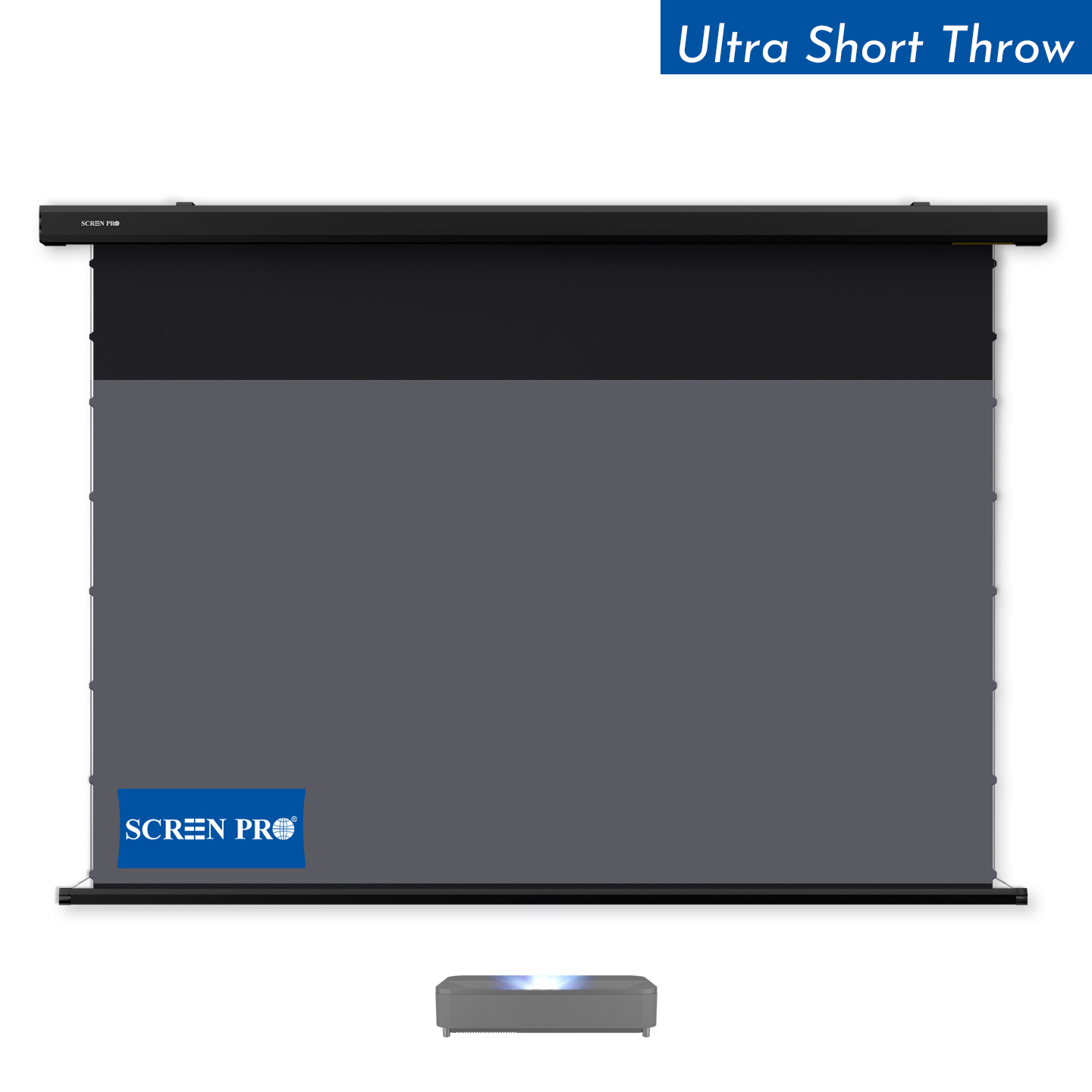
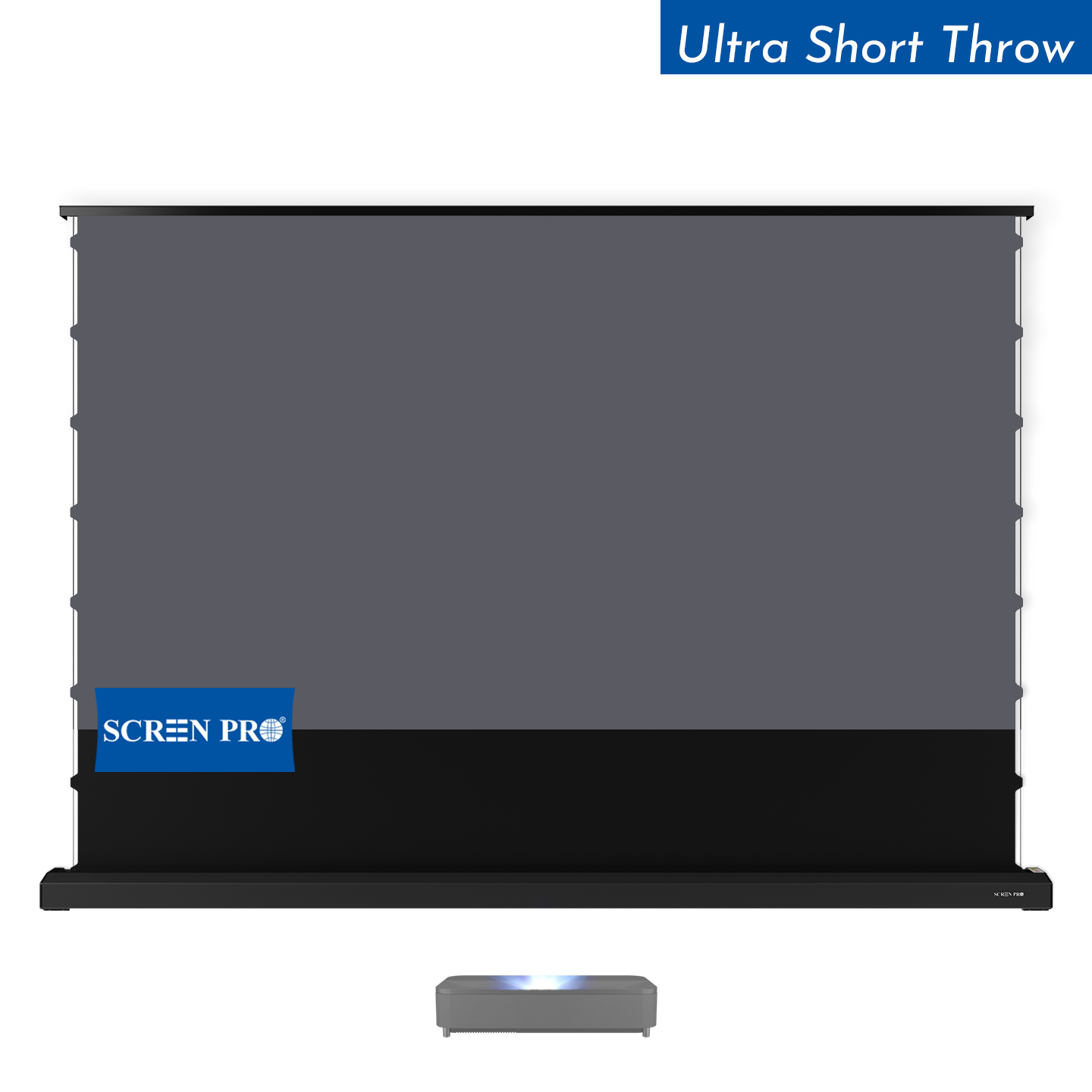
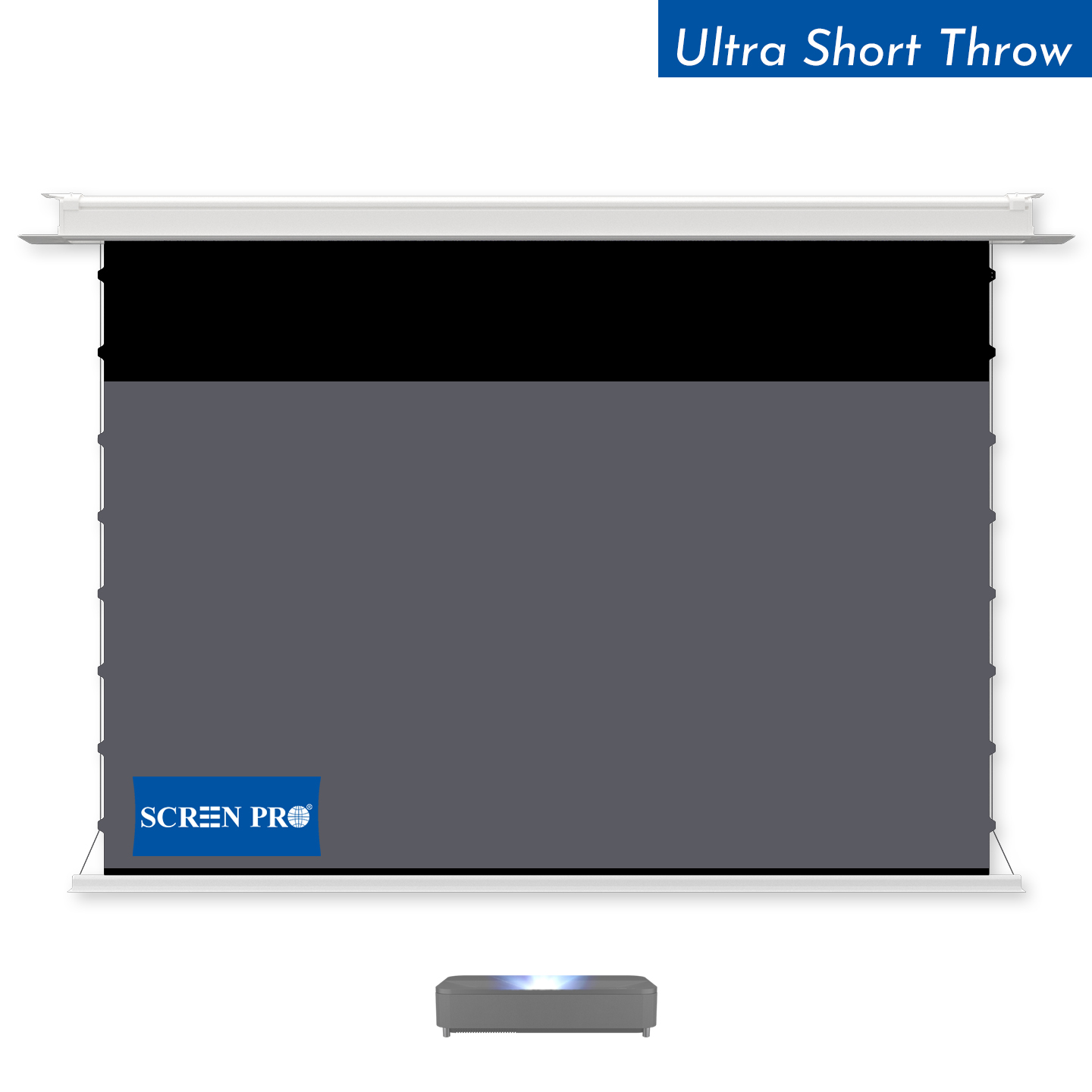
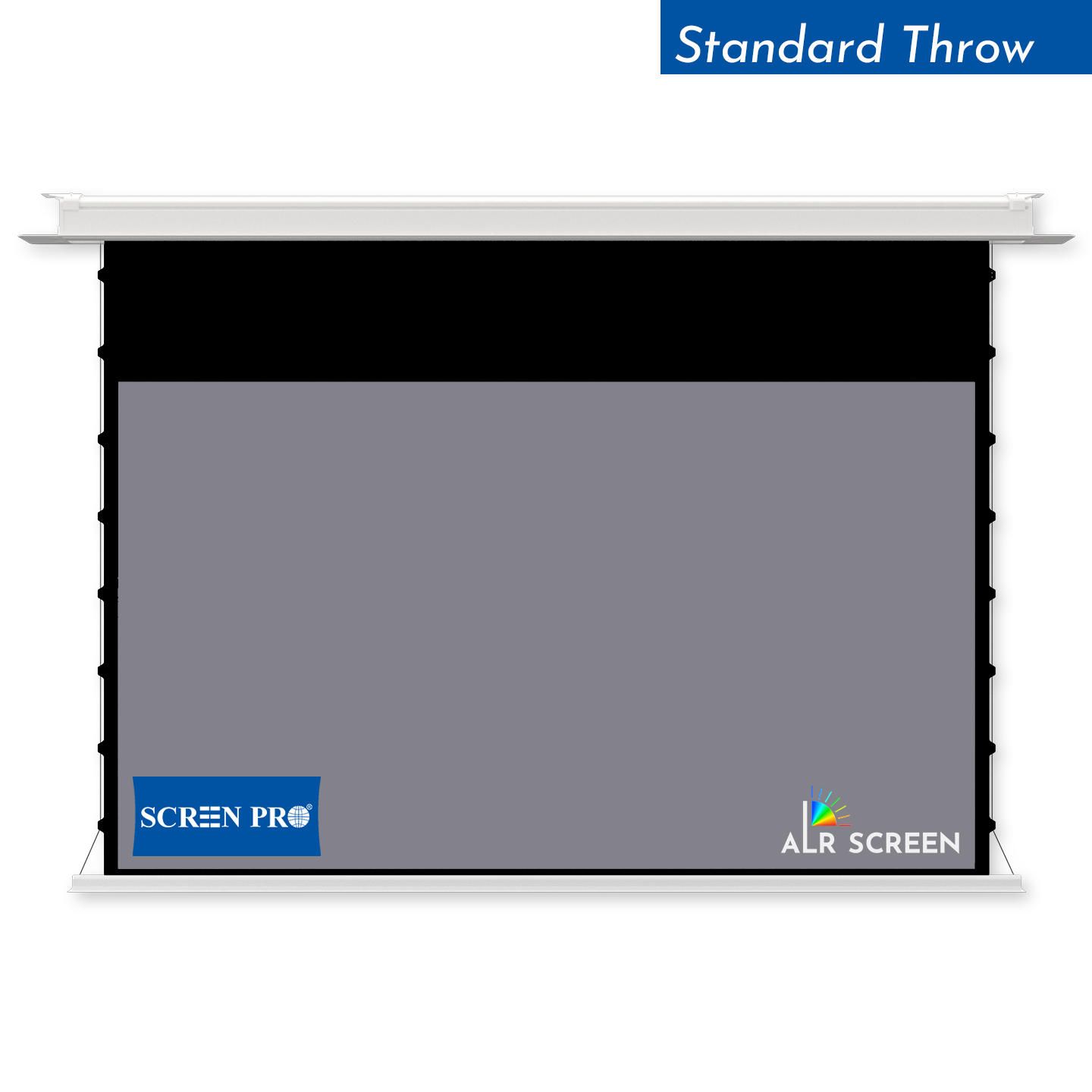
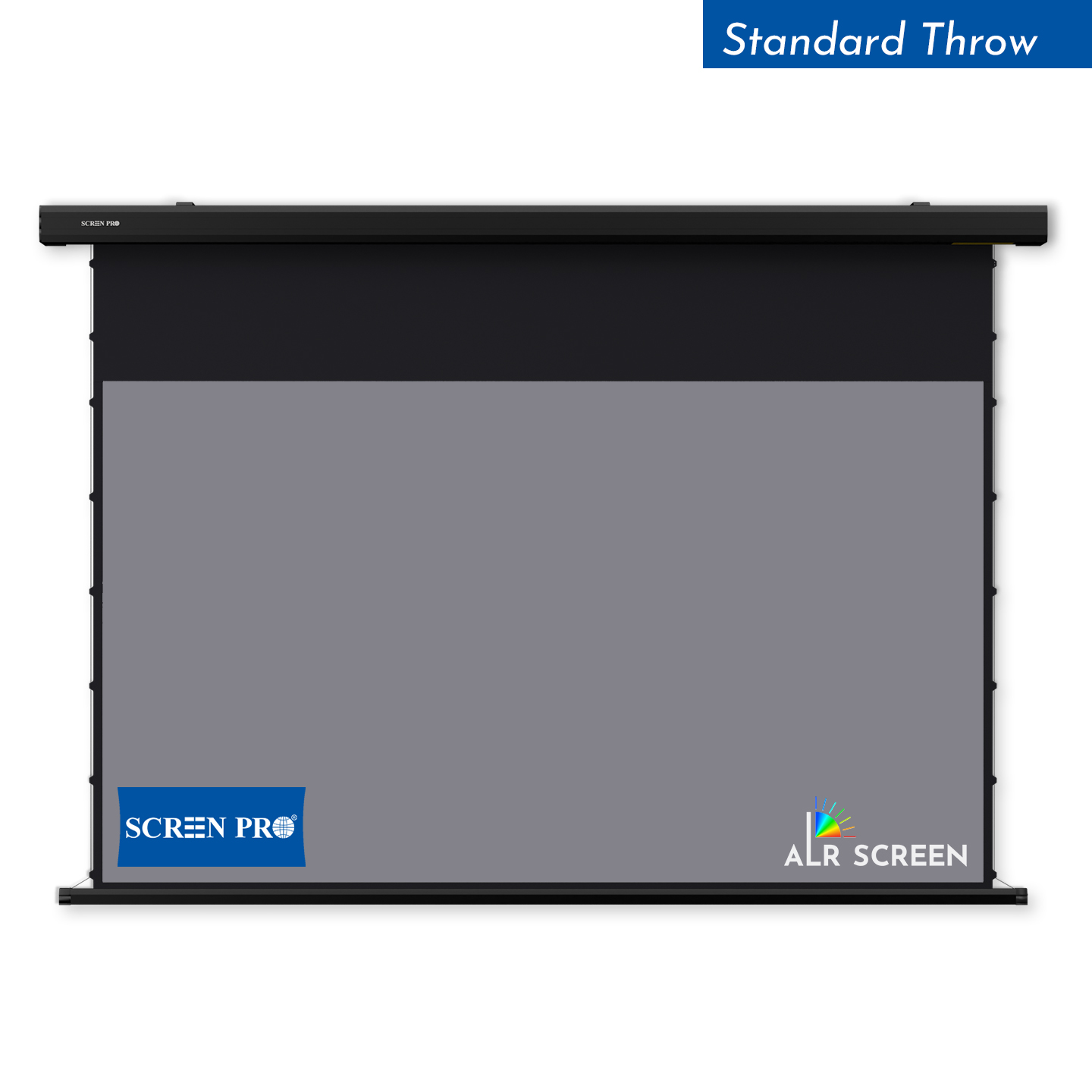
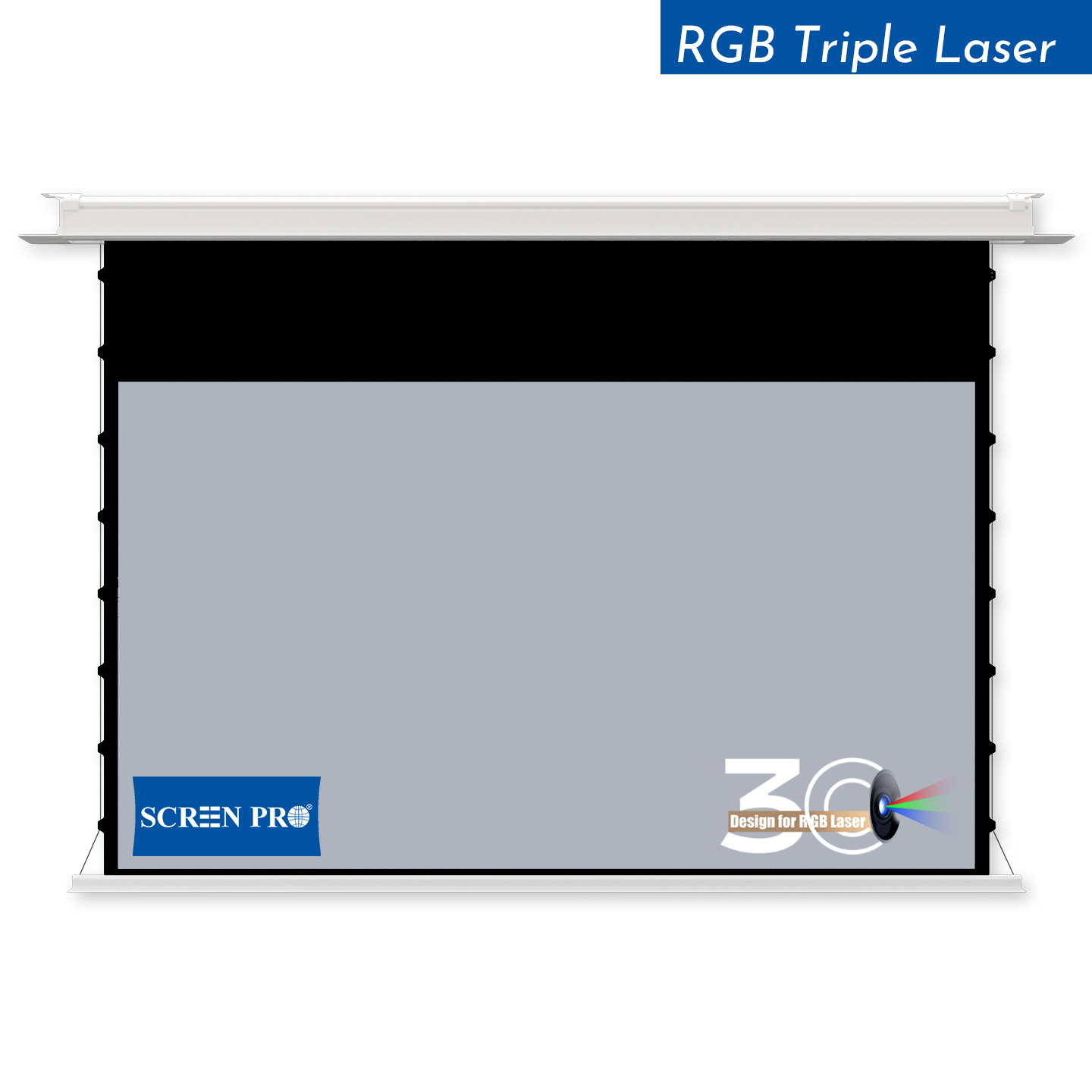
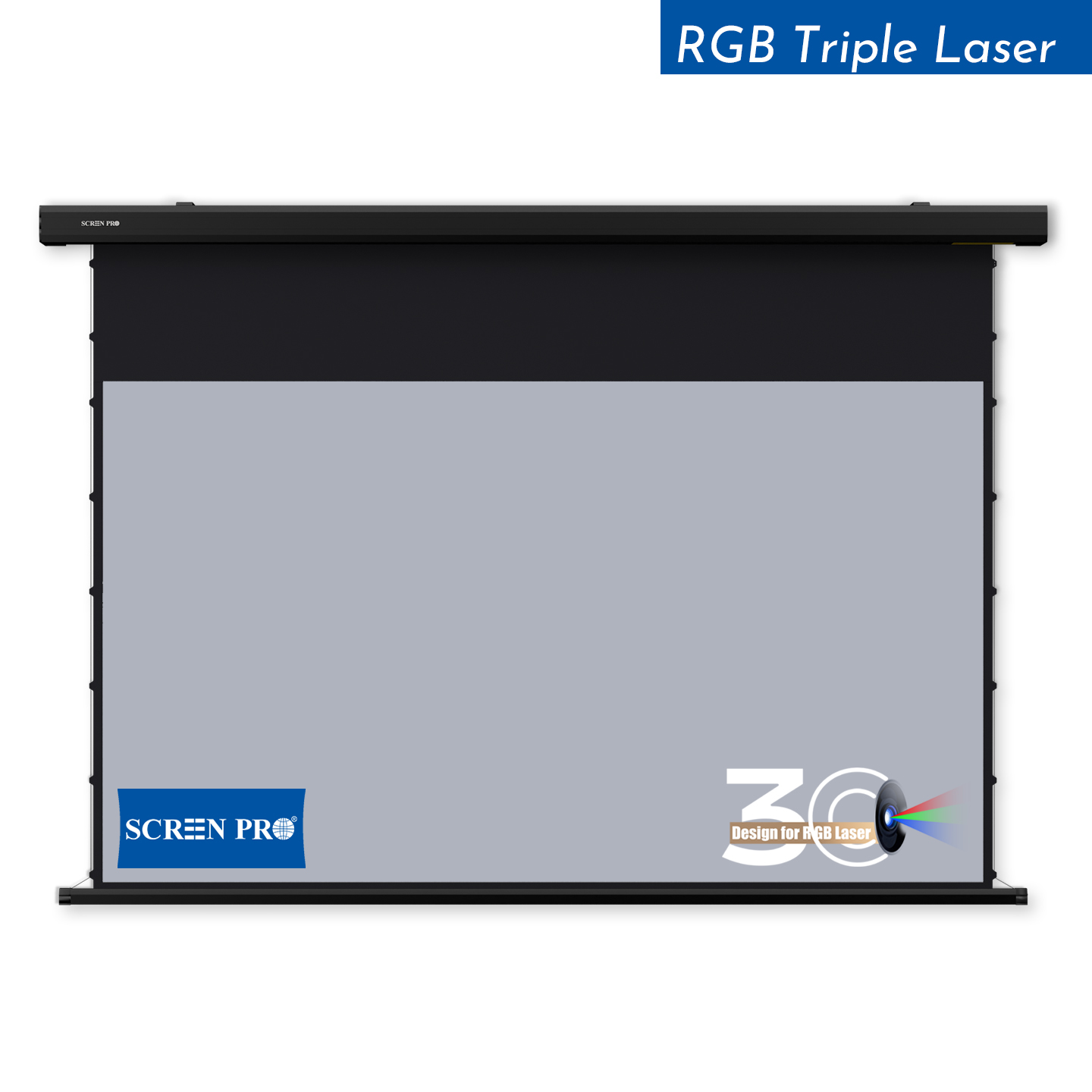
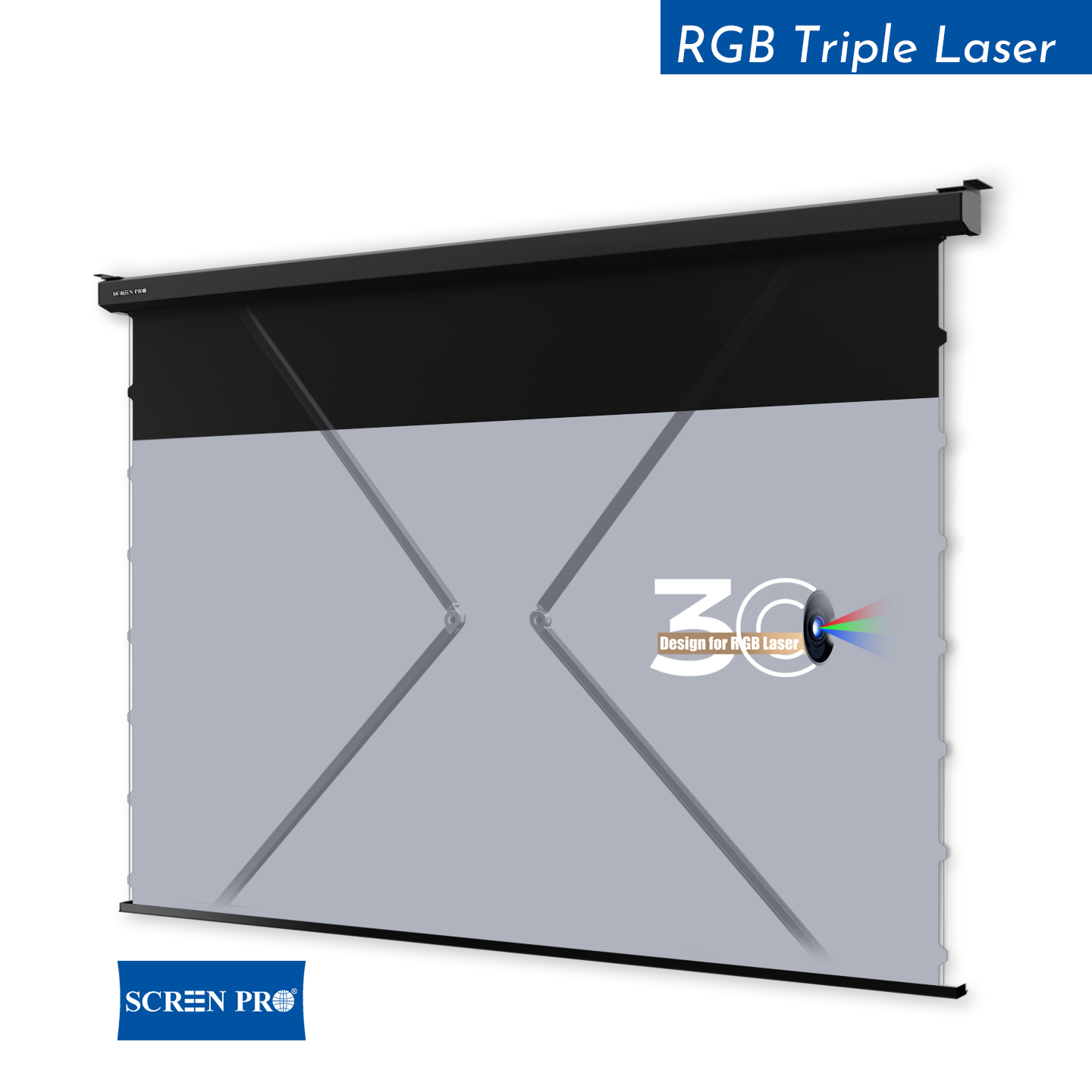
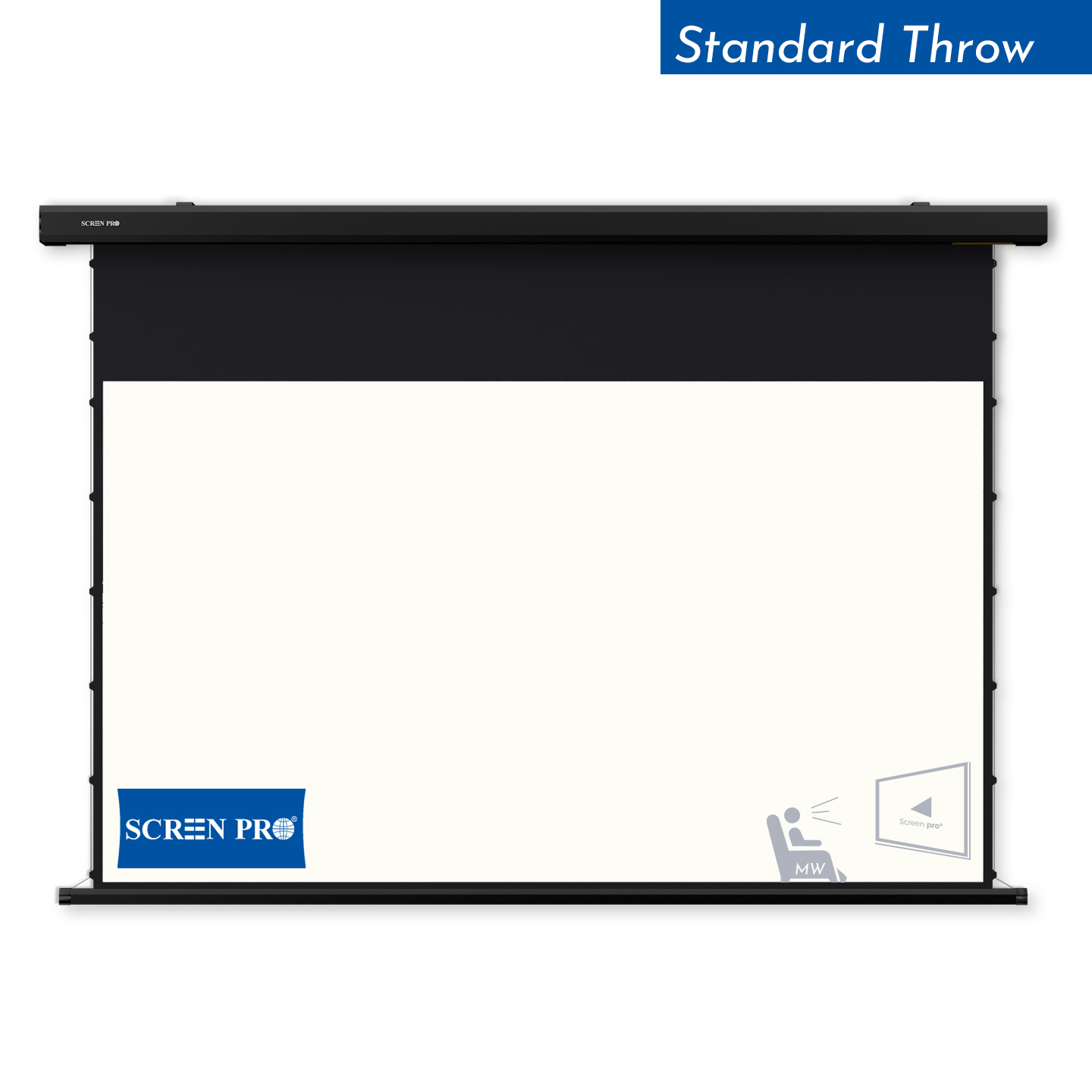
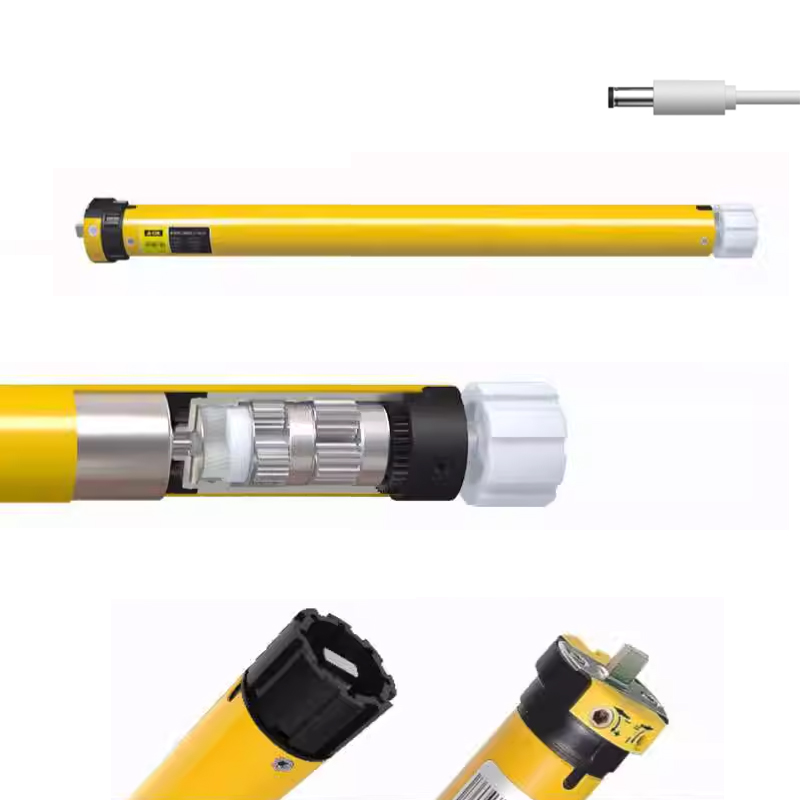
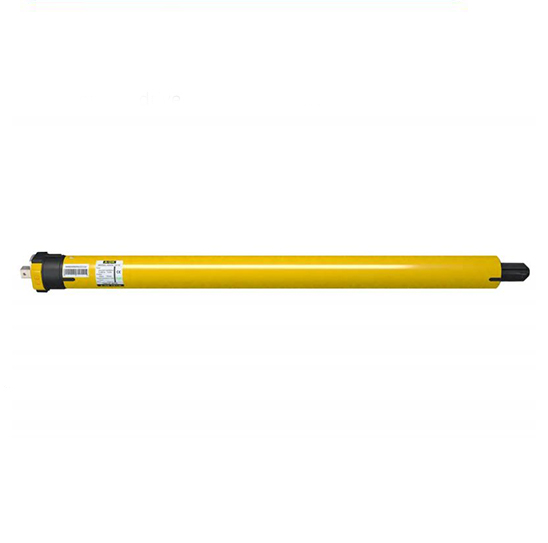
Motorized projection screens can retract into a ceiling or casing, allowing the architecture or merchandise display to remain visible.
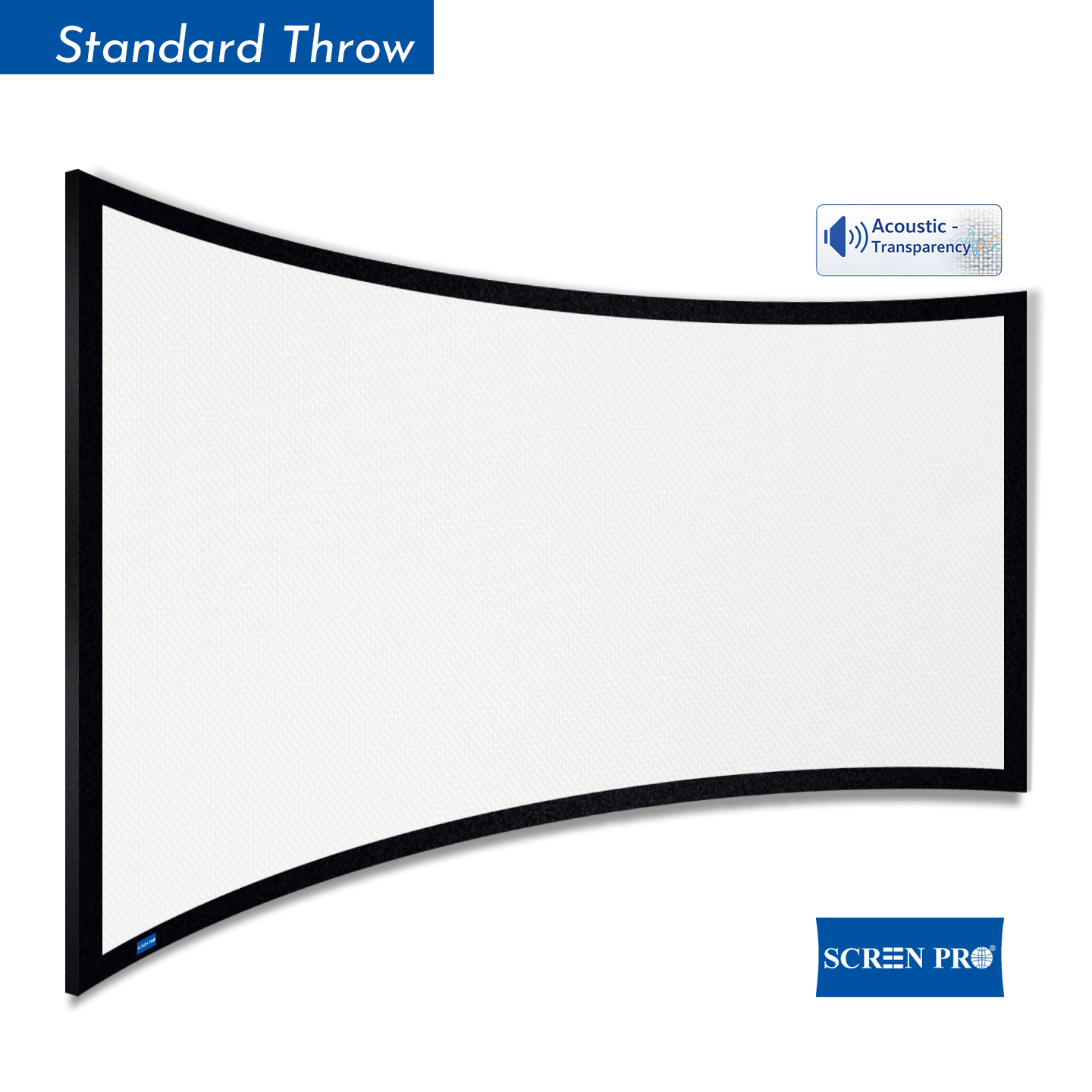
Projection surfaces can be produced in large sizes, unusual aspect ratios and custom shapes for creative retail installations.
Projection, LCD panels and LED displays each have advantages. The best choice depends on ambient light, installation space, image size, viewing distance and whether the display needs to remain permanently visible.
| Display Type | Main Advantages | Potential Limitations | Typical Retail Applications |
|---|---|---|---|
| Projection Screen | Large image, flexible sizing, retractable options, architectural integration | Requires projector placement and light control | Showrooms, malls, events, feature walls |
| Rear Projection | Projector stays behind screen, minimal shadows, clean viewer side | Requires space behind the display | Store windows, exhibits, kiosks, immersive displays |
| LCD Display | High brightness, simple installation, consistent daytime performance | Physical size limits and visible bezel | Menus, product information, standard signage |
| LED Display | Very high brightness and scalable size | Higher system cost, visible pixel structure at short viewing distances | Large storefronts, façades and high-brightness signage |
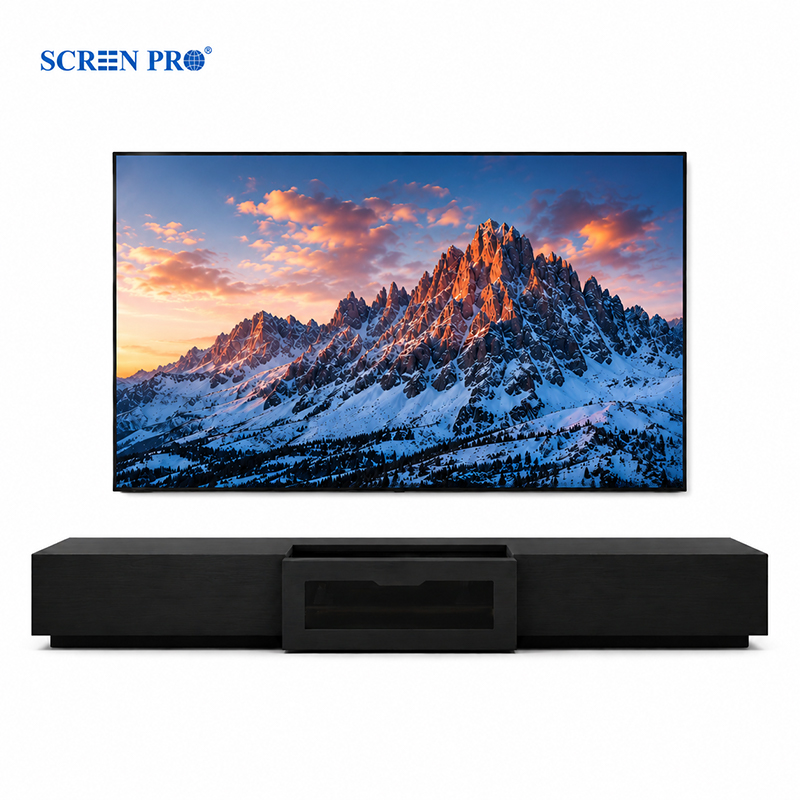
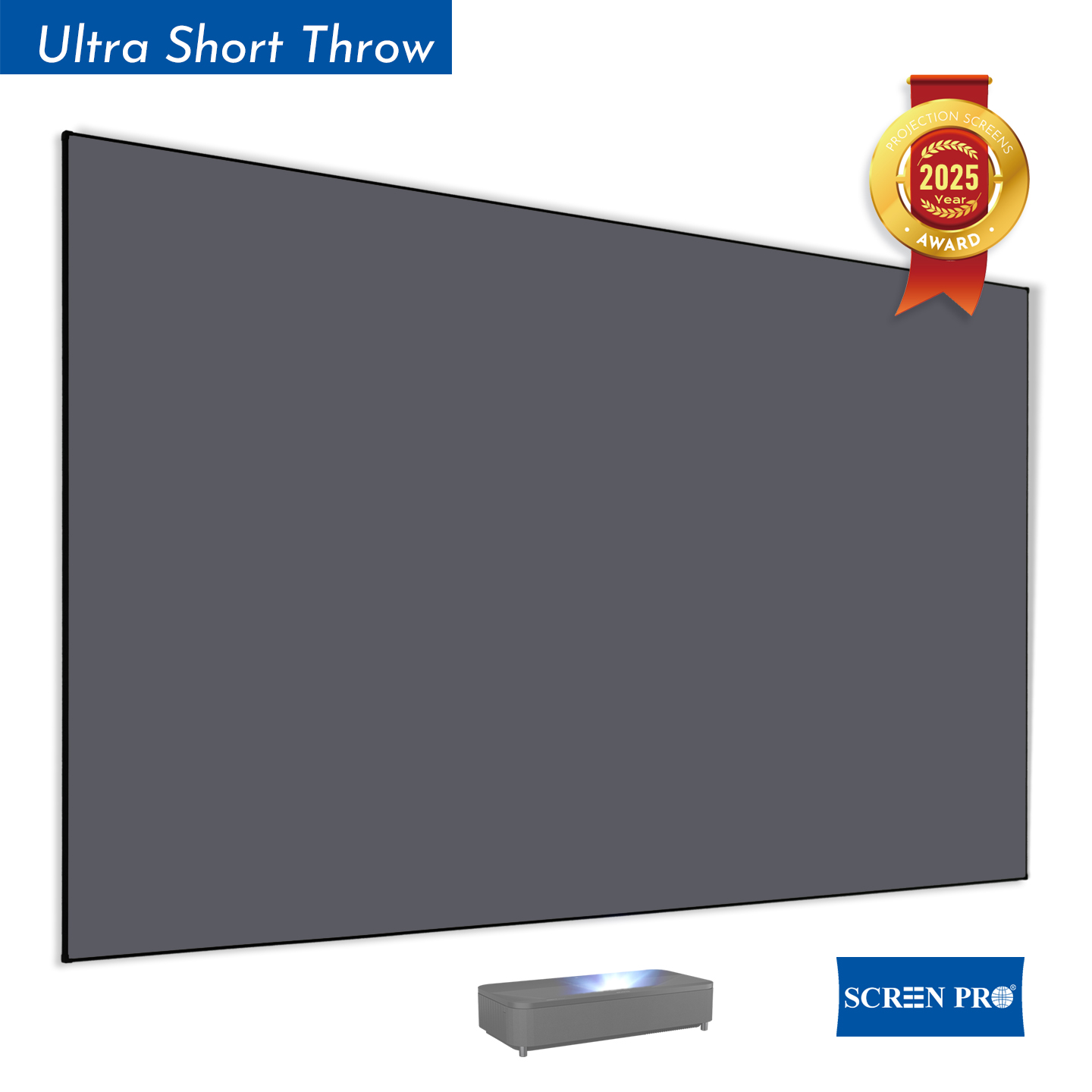
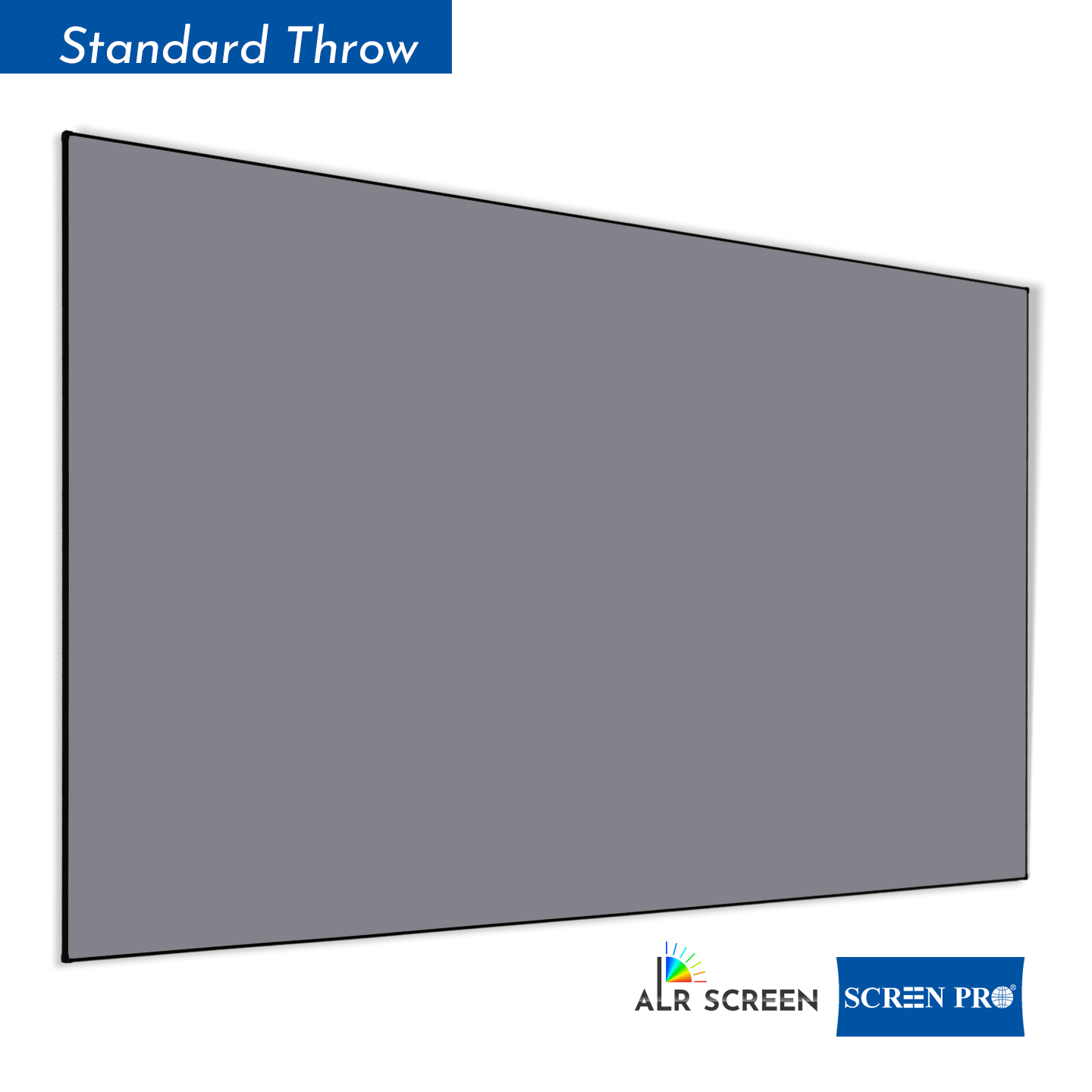
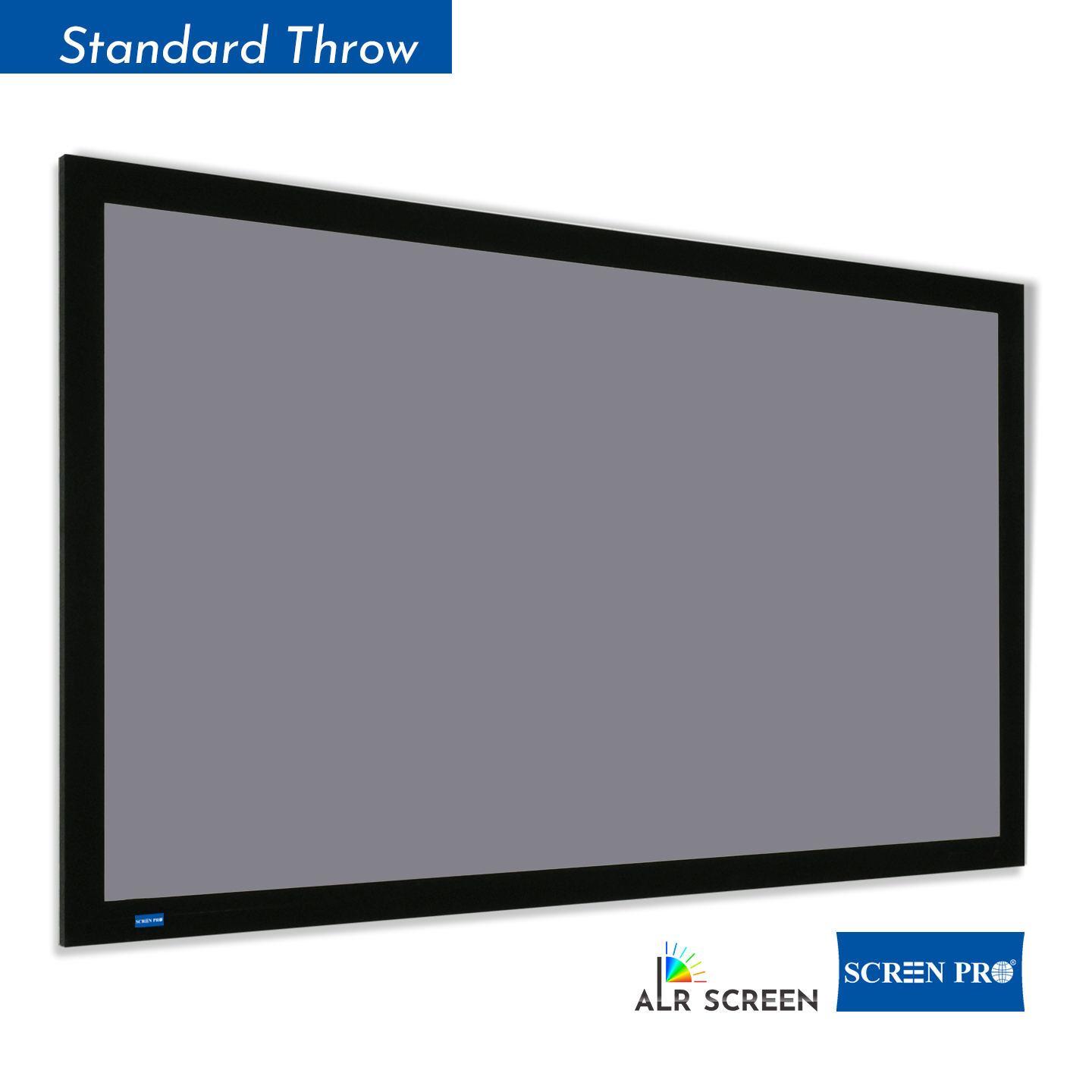
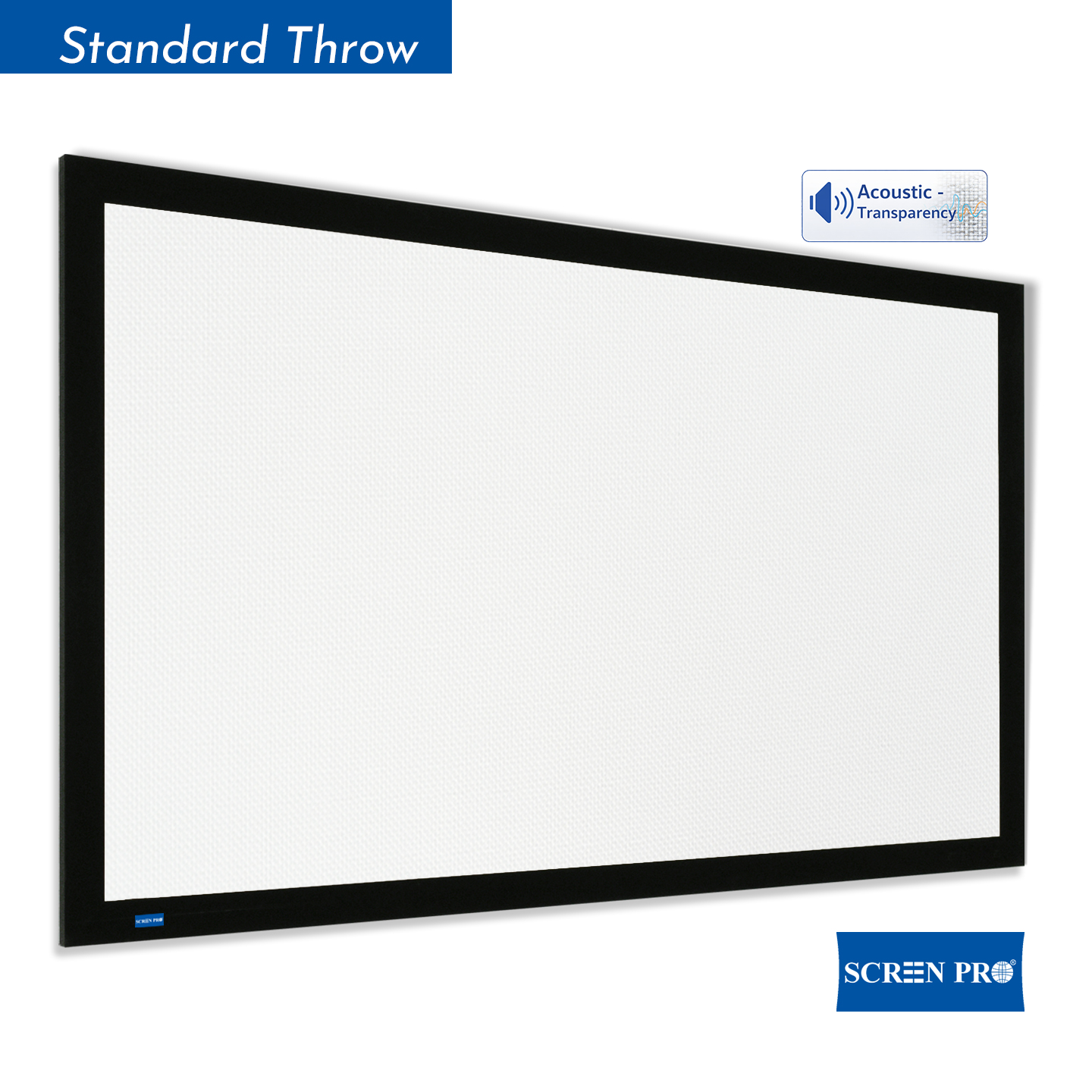
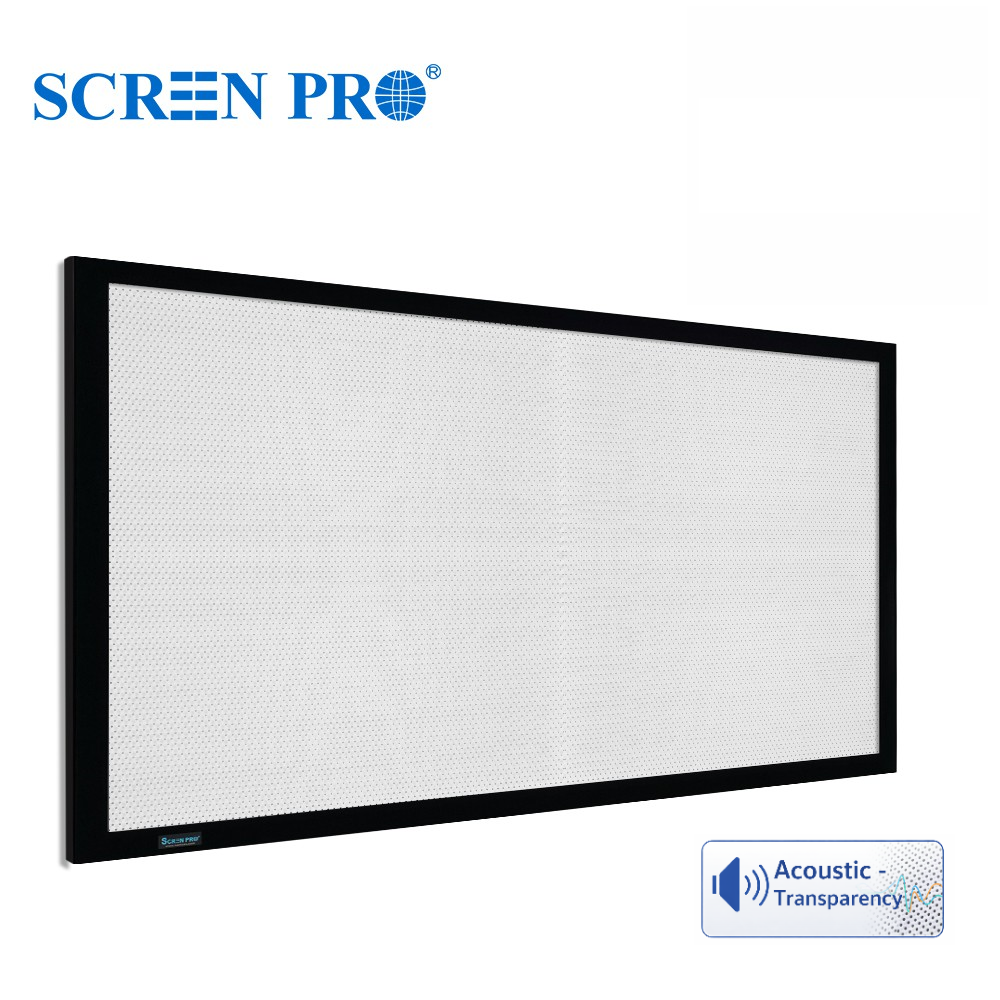
Fixed frame screens are ideal for permanent retail displays where the projection surface remains visible throughout the day. Their tensioned construction keeps the screen flat and creates a clean, professional appearance.
They are commonly used in showrooms, flagship stores, product demonstration areas and permanent commercial AV installations.
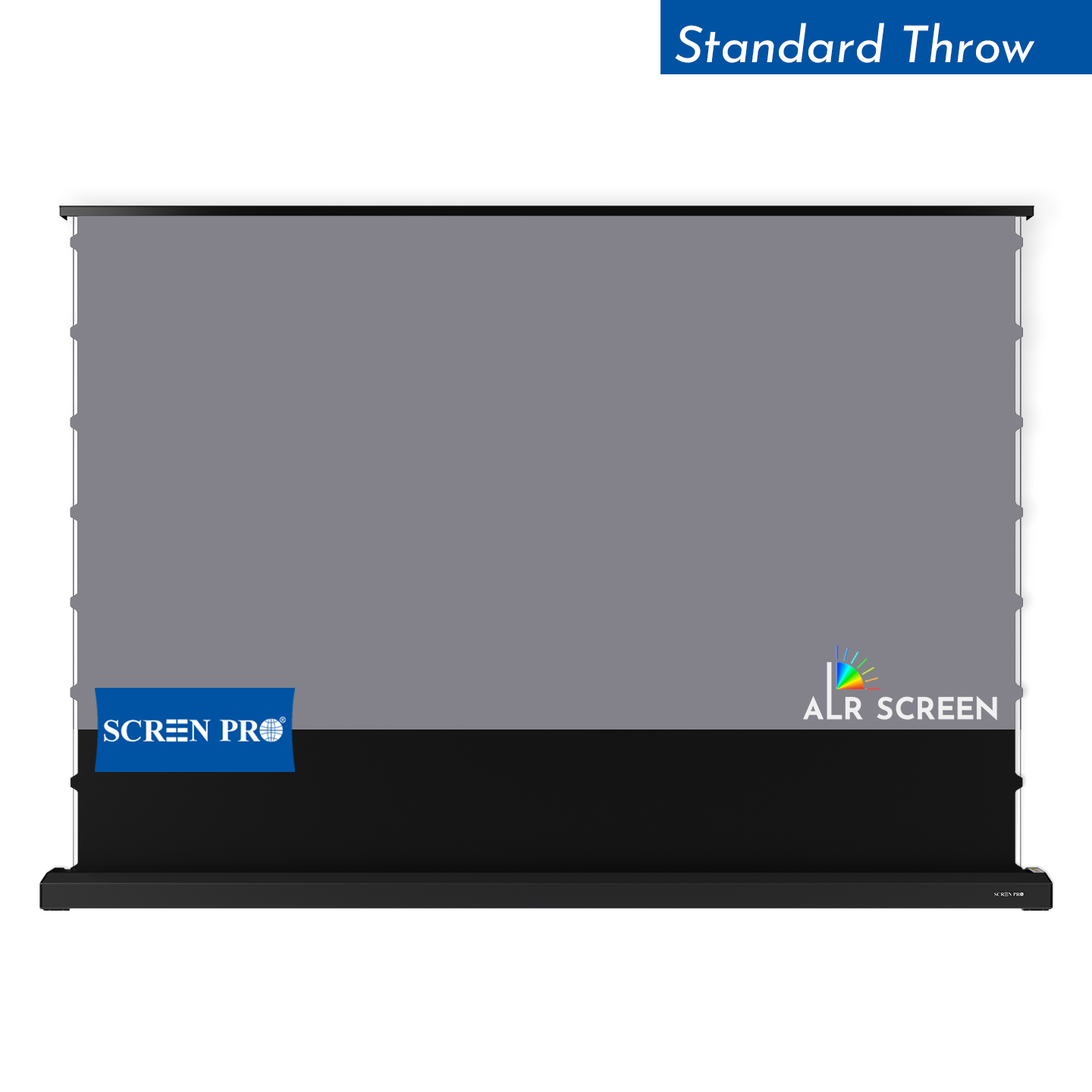
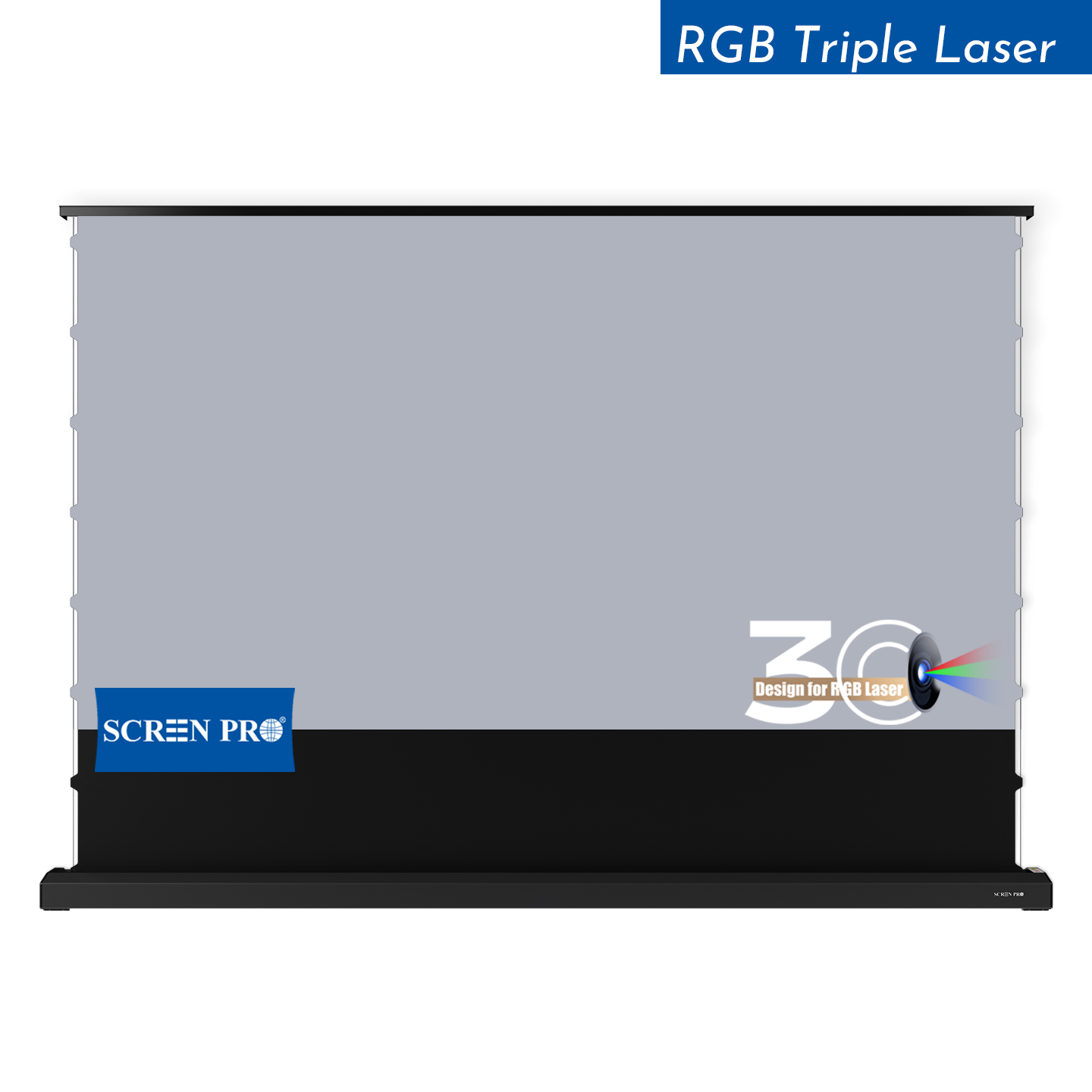
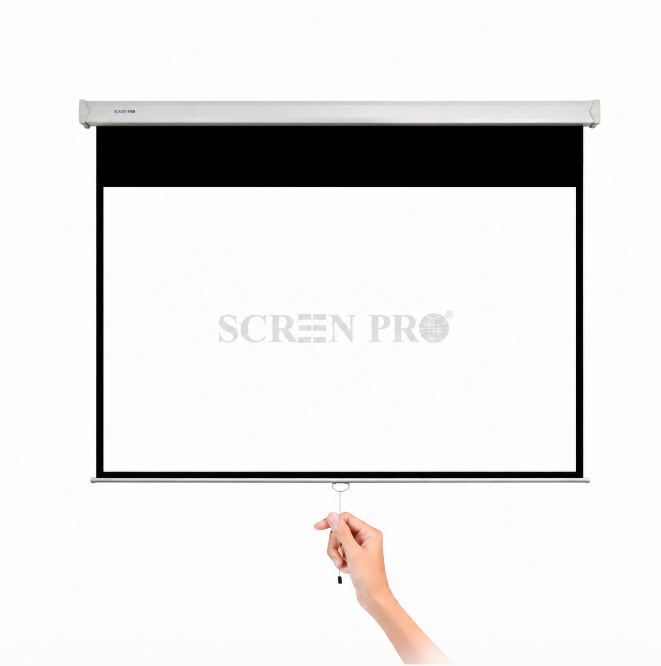
Motorized screens are particularly useful when the projection surface should disappear when it is not being used. The screen can retract into a casing or ceiling cavity, allowing the same wall or display area to serve multiple purposes.
Typical applications include fashion stores, automotive showrooms, conference areas inside retail spaces and multi-purpose brand experience centers.
In rear projection, the projector is positioned behind the projection surface while viewers watch from the front. This arrangement keeps the projector away from the customer-facing side of the installation and significantly reduces the risk of people walking through the projection beam.
Rear projection is especially useful for retail windows, exhibitions, museum-style displays, interactive kiosks and immersive product presentations.
Rear projection film can turn glass, acrylic or other transparent surfaces into a display area. This makes it particularly attractive for storefront windows where retailers want to preserve an open architectural appearance while introducing moving digital content.
Depending on the film structure and installation requirements, projection films may be optimized for different levels of transparency, contrast and viewing angle.
Retail spaces often contain ceiling lights, spotlights and large windows. Under these conditions, a conventional white projection surface may lose perceived contrast.
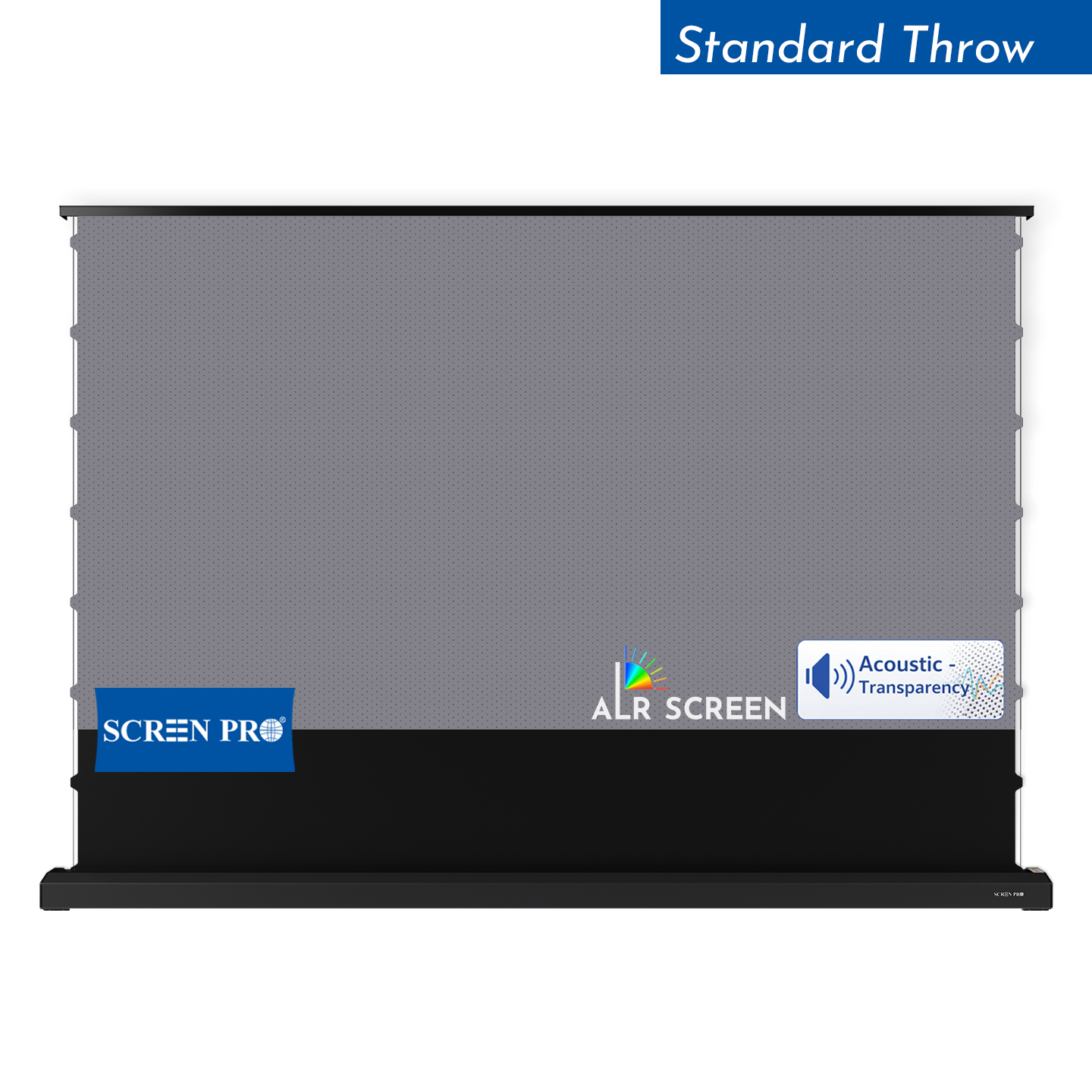
Ambient Light Rejecting, or ALR, screens are designed to improve image contrast by directing more of the useful projector light toward the viewing area while reducing the impact of unwanted ambient light arriving from other directions.
Storefront glass is one of the most interesting applications for commercial projection. Instead of installing a conventional display directly behind the window, a rear projection system can use the window itself as part of the visual installation.
This approach can create floating graphics, promotional videos, product launches and animated brand content while maintaining a clean storefront appearance.
Because sunlight can be extremely strong, storefront projection should be carefully evaluated for brightness, screen gain, contrast and installation orientation.
Shopping malls offer several environments where projection can be more flexible than traditional flat-panel displays. Projection can cover walls, suspended screens, temporary installations or architectural surfaces.
Common applications include:
Projection is particularly useful in showrooms because a very large visual area can be created without permanently occupying the wall with a heavy display.
Automotive, furniture, electronics and luxury product showrooms can use projection for specification graphics, product videos, virtual environments and dynamic backgrounds.
A retractable screen can also allow a showroom to switch between a clean architectural wall and a complete digital presentation surface within seconds.
Projection surfaces can also become part of interactive retail systems when combined with cameras, motion sensors, touch sensors or computer vision systems.
Interactive projection can be used for virtual product catalogs, games, customer engagement, interactive information displays and experiential marketing.
Because the display surface itself does not contain electronics, projection can also be integrated into unusual surfaces where a conventional touch display would be difficult to install.
| Factor | Front Projection | Rear Projection |
|---|---|---|
| Projector Position | Same side as viewers | Behind the screen |
| Risk of Shadows | Higher | Very low |
| Installation Space | Requires throw distance in front | Requires space behind the display |
| Clean Customer-Facing Installation | Good | Excellent |
| Store Window Applications | Limited | Highly suitable |
| Large Showroom Walls | Highly suitable | Suitable where rear space exists |
The screen material often has a greater influence on the final image than the mechanical screen structure. Retail installations should therefore be designed around both the projector and the lighting environment.
White matte surfaces provide natural color reproduction and wide viewing angles. They are suitable for controlled-light retail spaces, training areas and presentation rooms.
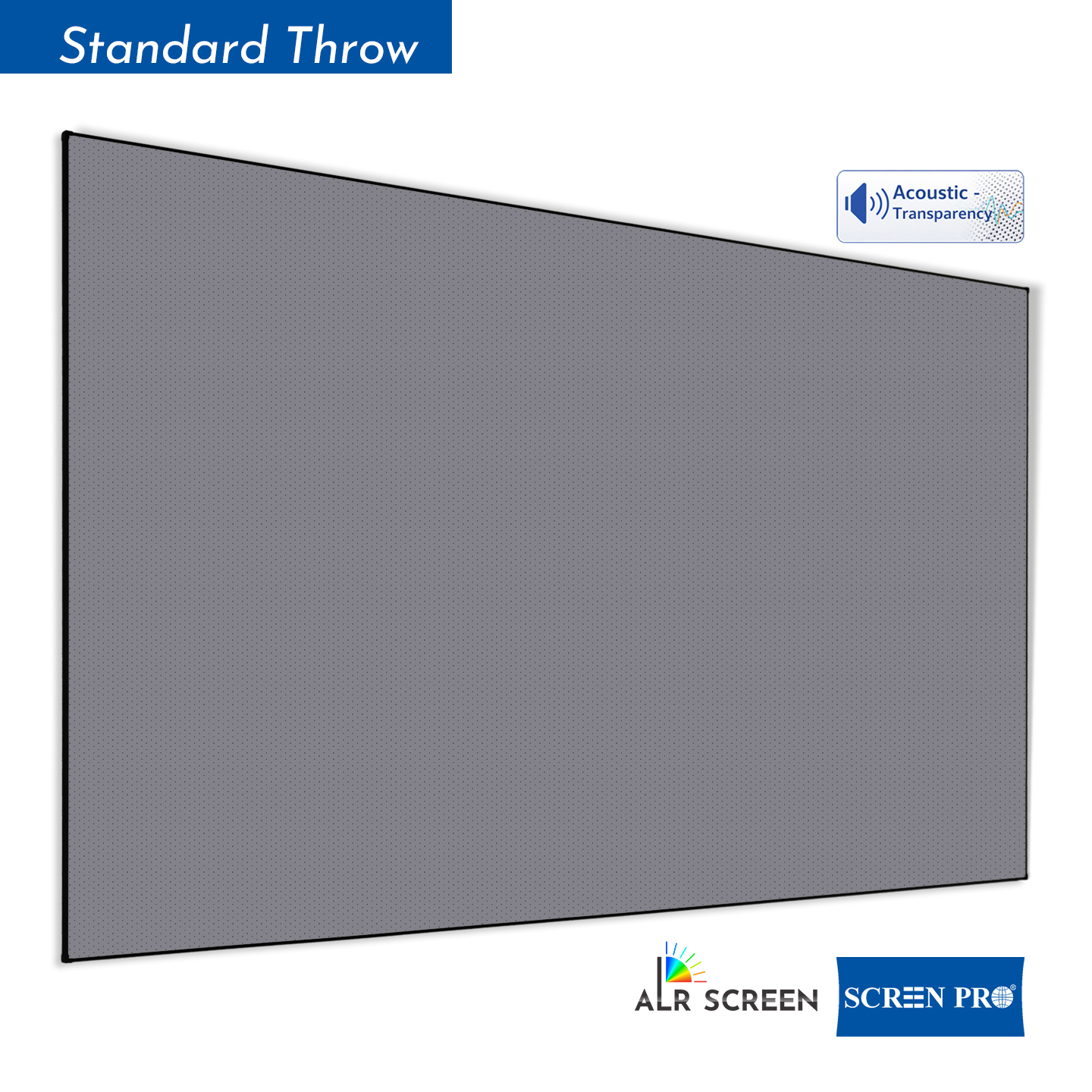
Grey surfaces can improve perceived black levels in environments where some ambient light is unavoidable. They are often used in multimedia spaces and commercial presentation environments.
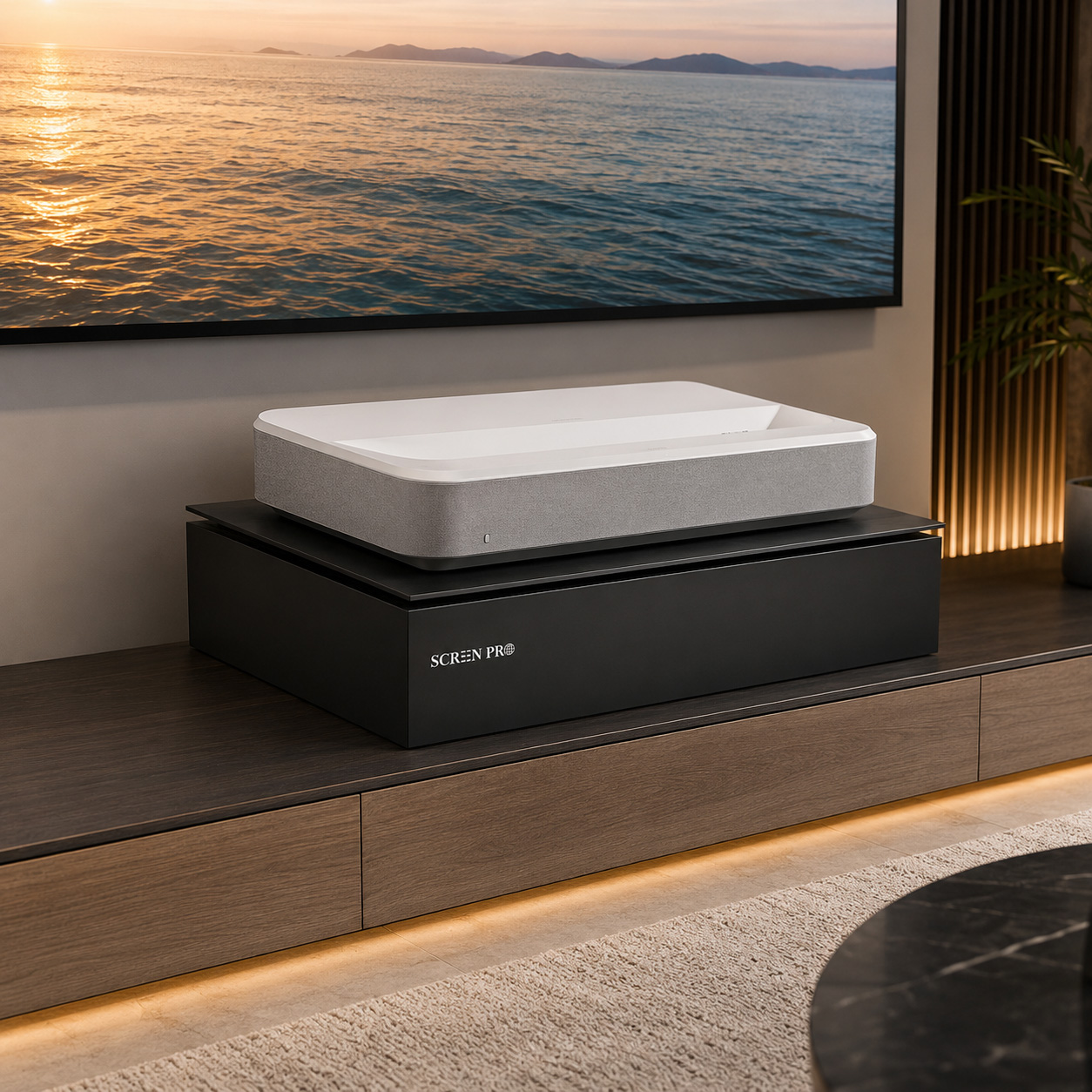
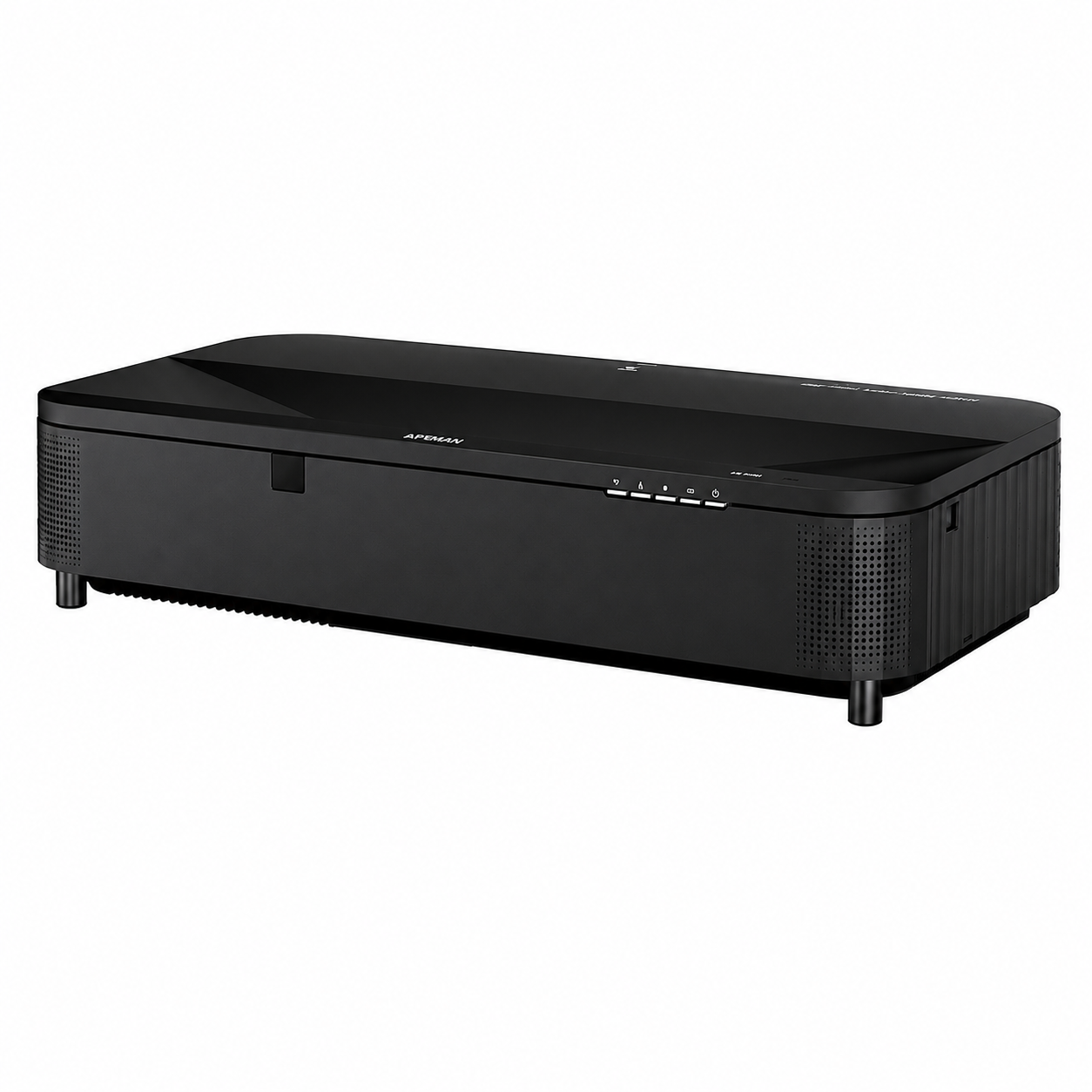
ALR materials are designed for brighter environments and applications where controlling ambient light is difficult. However, different ALR technologies are optimized for different projector positions.
A material designed for an ultra-short-throw projector should not automatically be used with a ceiling-mounted standard-throw projector.
Rear projection materials are engineered to transmit and diffuse light from behind the viewing surface. They are commonly used for storefronts, exhibits, simulation displays and installations where the projector should remain hidden.
Retail lighting is often much brighter than a home cinema environment. Spotlights, display lighting, entrance windows and illuminated signage can all reduce projected-image contrast.
For this reason, selecting a retail projection screen should not begin with screen size alone. The surrounding lighting environment should be evaluated first.
For better retail projection performance:
A larger screen requires the projector's available light to be distributed across a greater surface area. Therefore, projector brightness must be considered together with screen size and ambient light.
A projector that performs well on a 100-inch screen in a dark room may not deliver the same visual impact on a 200-inch screen inside a brightly illuminated shopping mall.
Commercial systems should be designed around the complete projection system rather than choosing the screen and projector independently.
Home cinema viewers usually sit within a relatively predictable seating area. Retail customers do not. People may approach the display from the left, right or at an angle while walking past the storefront.
This means viewing angle is an important factor for retail displays.
Wide-angle screen materials are often preferable for mall corridors, storefront displays and public installations where customers view the image from many different positions.
One of the first design decisions should be whether the projection surface should remain permanently visible.
Fixed frame screens are usually the best choice when the display operates continuously and the projection surface is part of the interior design.
Motorized screens are ideal when the area must switch between projection, merchandising, architecture or another function.
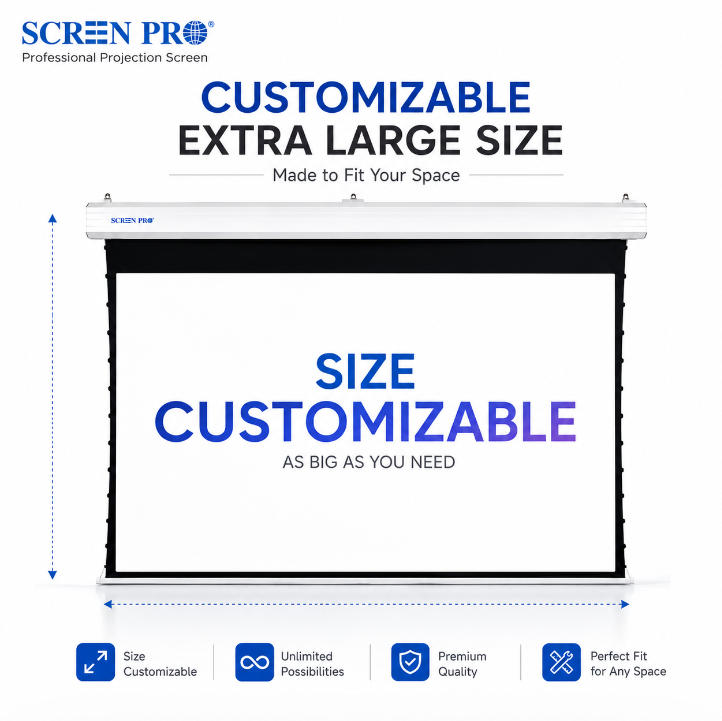
Retail installations frequently require something other than a standard 16:9 screen. Store designers may need panoramic displays, unusually tall screens, ultra-wide formats or projection surfaces designed around architectural features.
Commercial screen systems can be customized for:
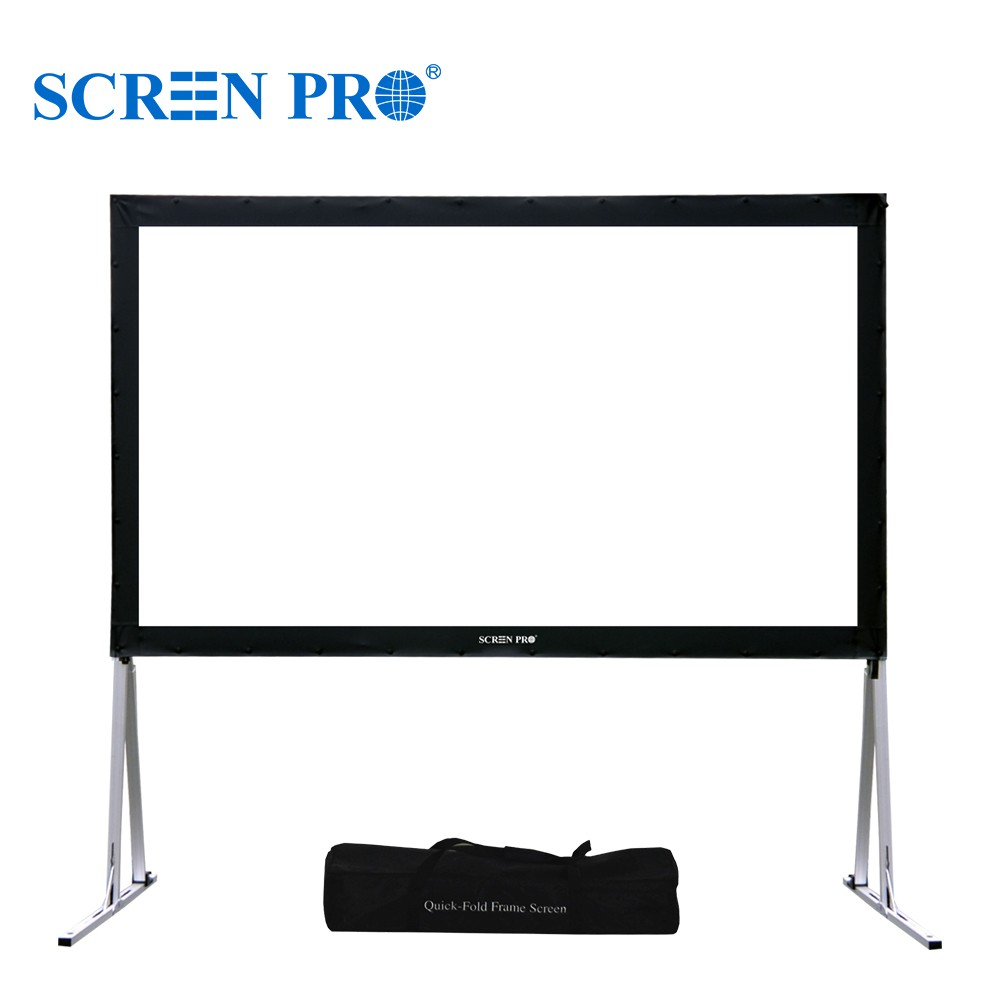
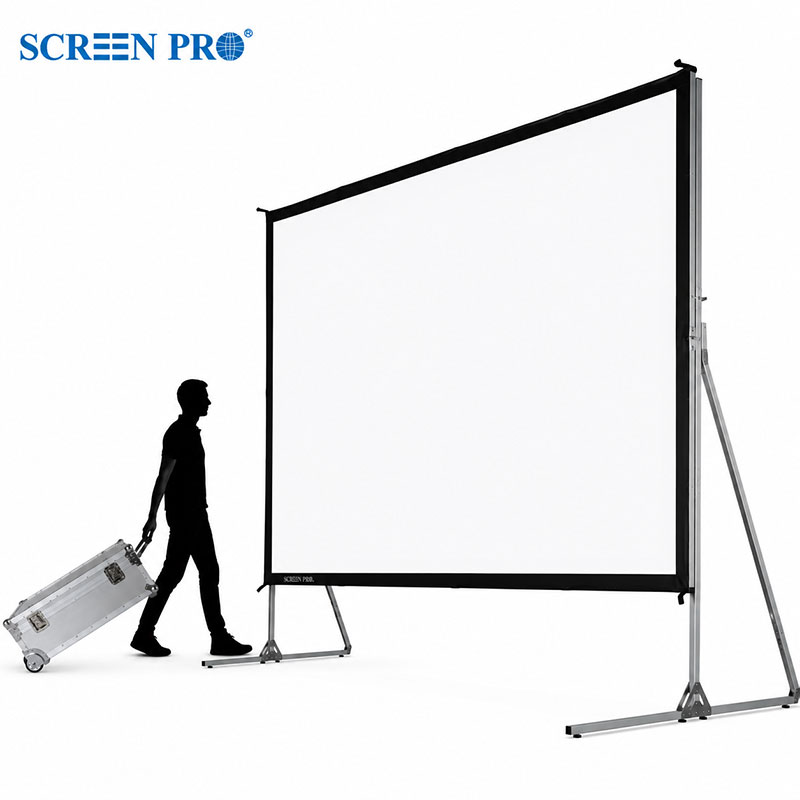
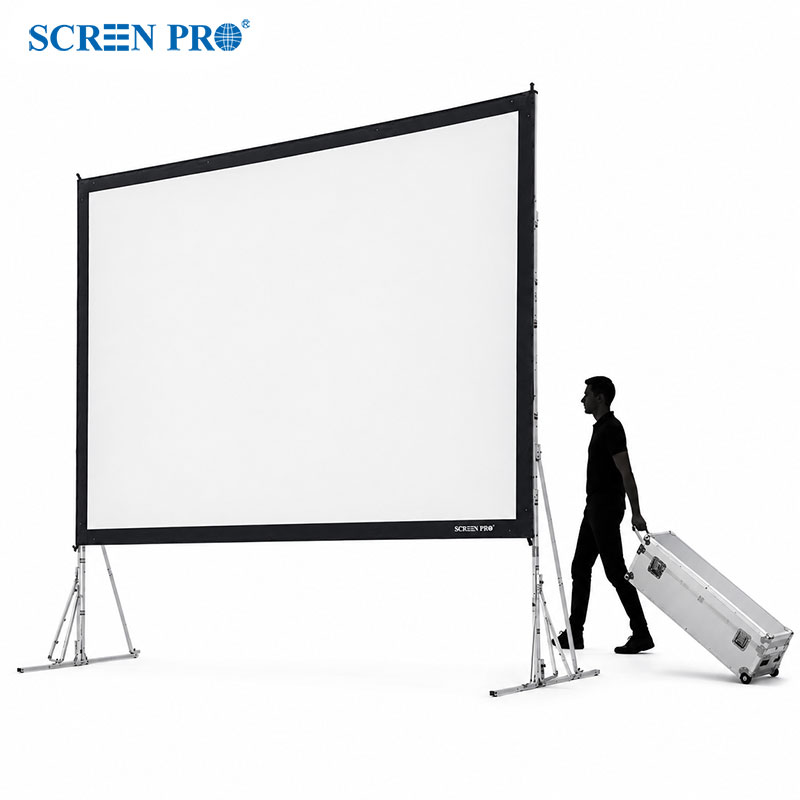
Temporary retail spaces often require a different approach from permanent installations. Equipment needs to be transported, installed quickly and removed after the event.
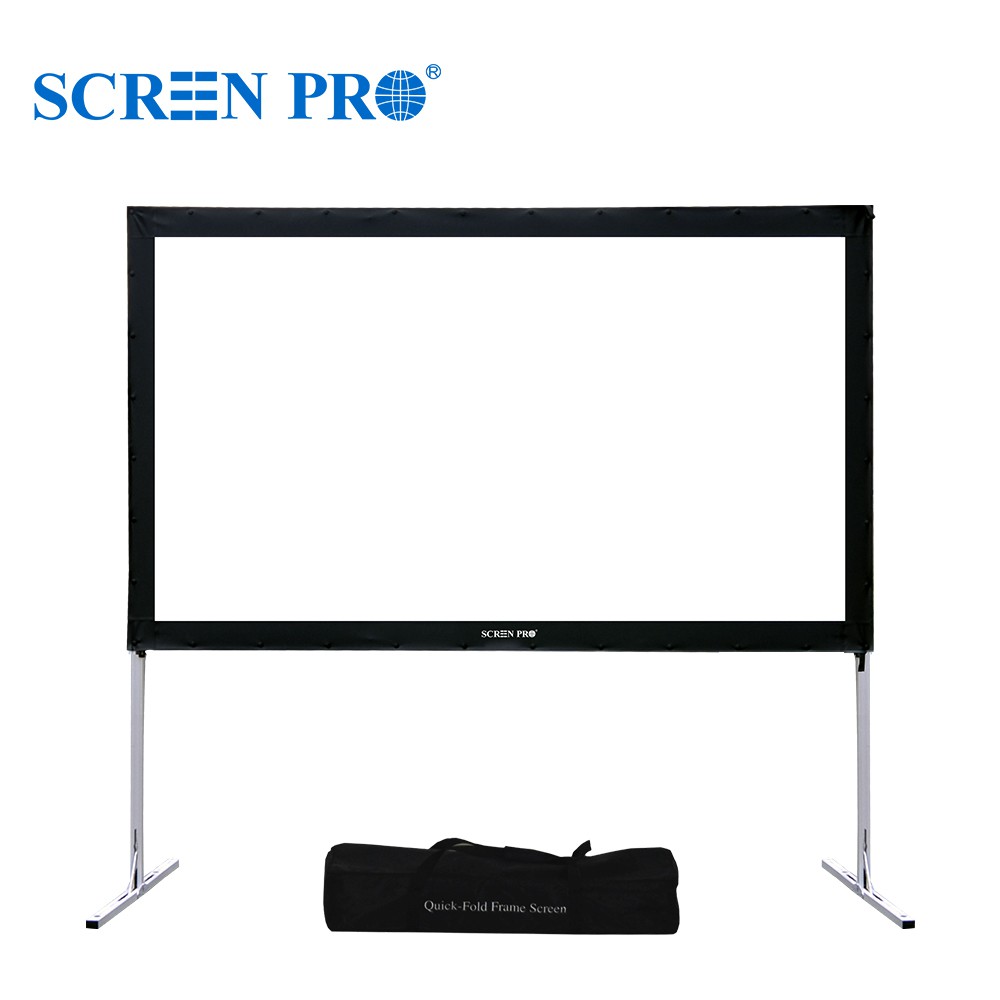
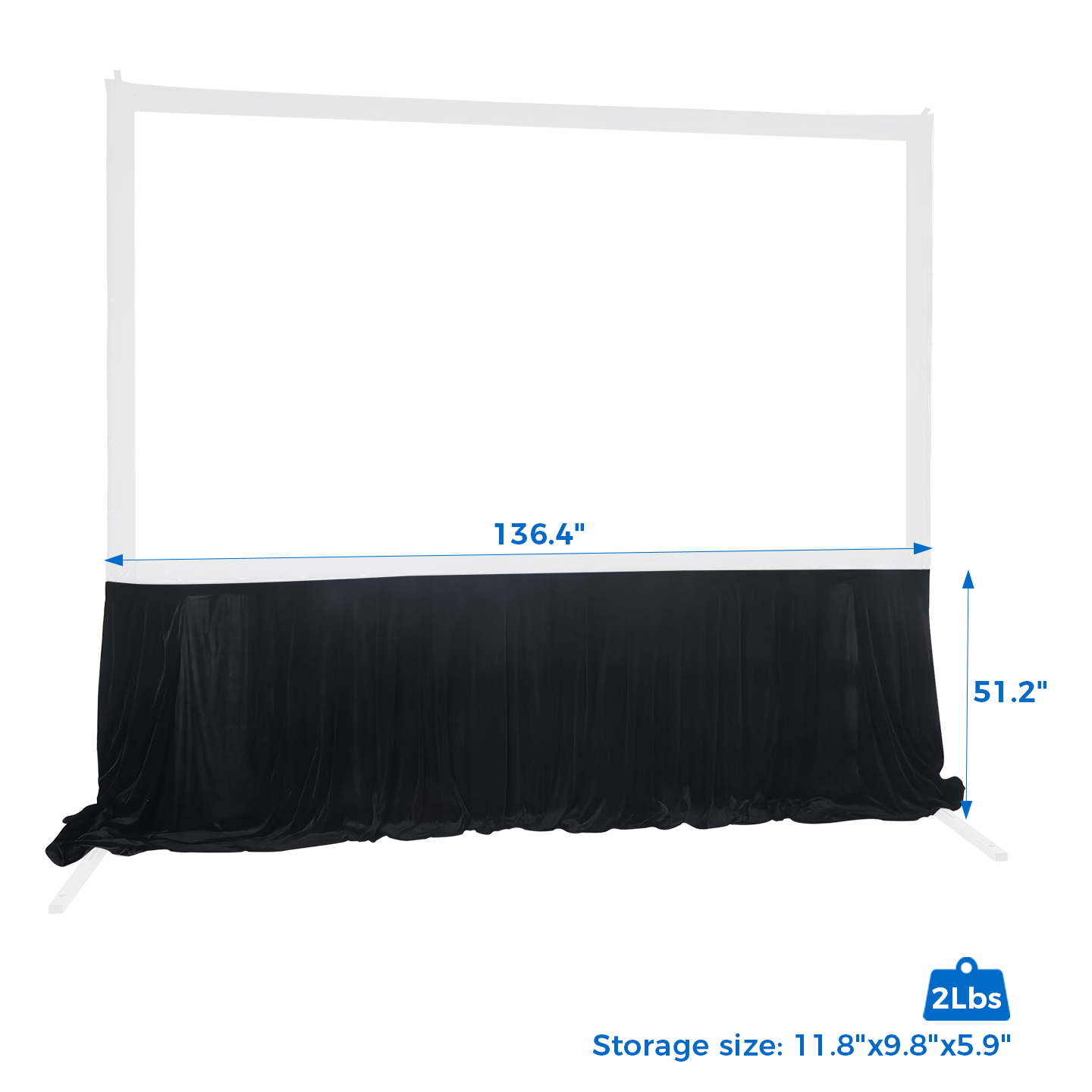
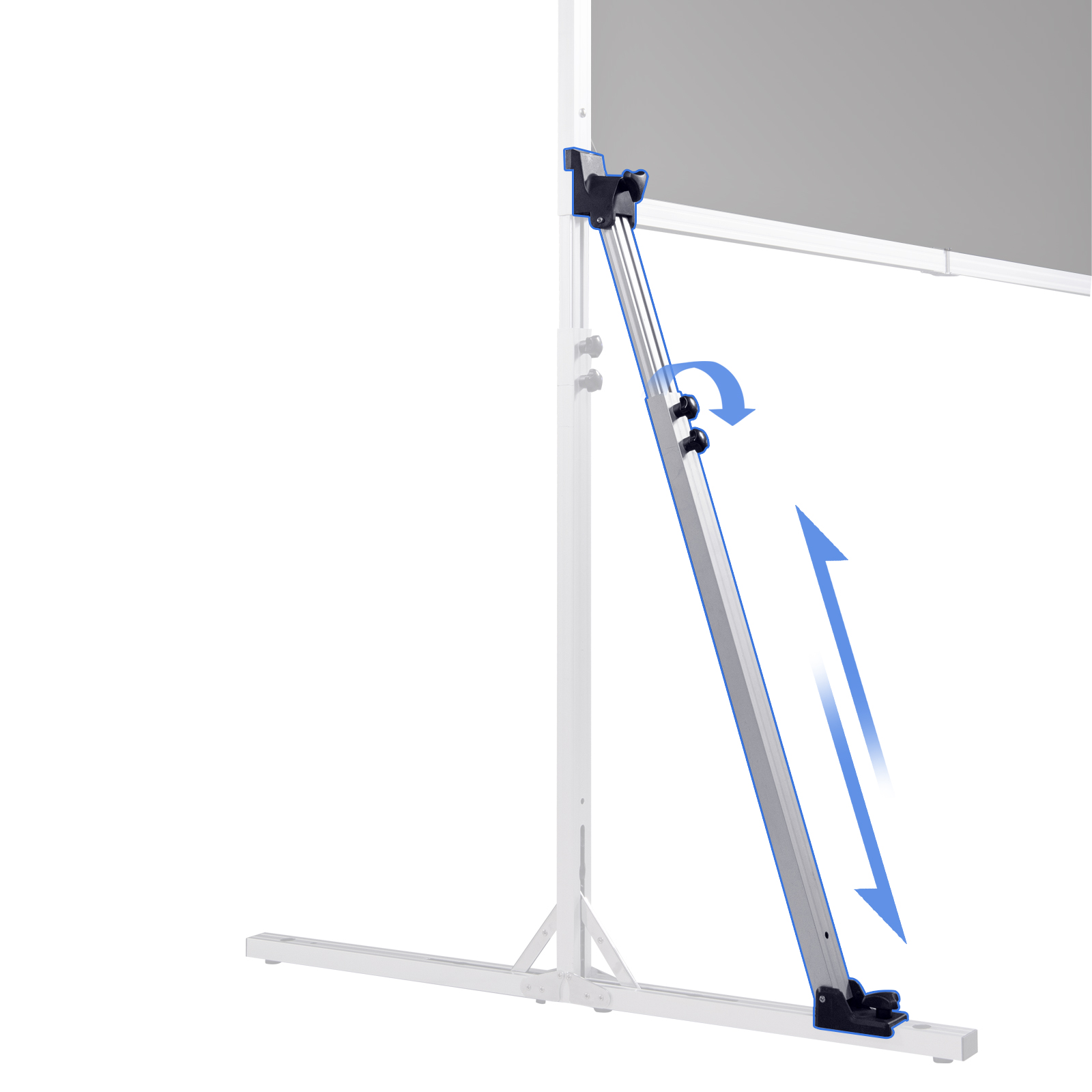
Portable and fast-fold projection screens are particularly suitable for:
Large fast-fold systems can create temporary projection surfaces without requiring permanent modification to the retail environment.
Start with the installation environment rather than the screen model.
Before requesting a commercial projection screen quotation, preparing the following information will make screen selection much easier:
A higher gain number does not automatically mean a better screen. Viewing angle, projector position and lighting direction must also be considered.
Some screen materials are directional. Using the wrong material with a UST or standard-throw projector can significantly reduce image quality.
Even a high-performance projection surface can lose contrast when strong lighting is directed straight onto the image.
Retail spaces frequently require substantially more projector light than home cinema environments.
A screen that looks excellent directly in front may behave differently when customers view it from the side of a storefront or mall corridor.
Runway footage, campaigns, seasonal visuals and large-format brand storytelling.
Vehicle configuration, lifestyle videos, launches and immersive backgrounds.
Product demonstrations, technical visualizations and promotional content.
Architectural projection, minimal storefront displays and immersive brand experiences.
Advertising, event displays, interactive installations and promotional zones.
Portable large-format displays that can be assembled for temporary events.
Yes. Projection can be used for digital signage where large image size, architectural integration, retractability or unconventional display surfaces are important.
In many bright environments, an appropriately selected ALR screen can improve perceived contrast. However, projector position and the direction of ambient light must be considered before selecting the material.
Yes. Rear projection film and rear projection screens can be used to create digital displays on or behind storefront glass.
Rear projection is especially useful where the projector needs to remain hidden or where customers may walk in front of the display. However, sufficient installation depth is required behind the screen.
Yes. Commercial projection installations frequently require custom screen dimensions, aspect ratios and mounting structures.
Choose a fixed frame screen for permanent displays. Choose a motorized screen when the projection surface needs to disappear when it is not being used.
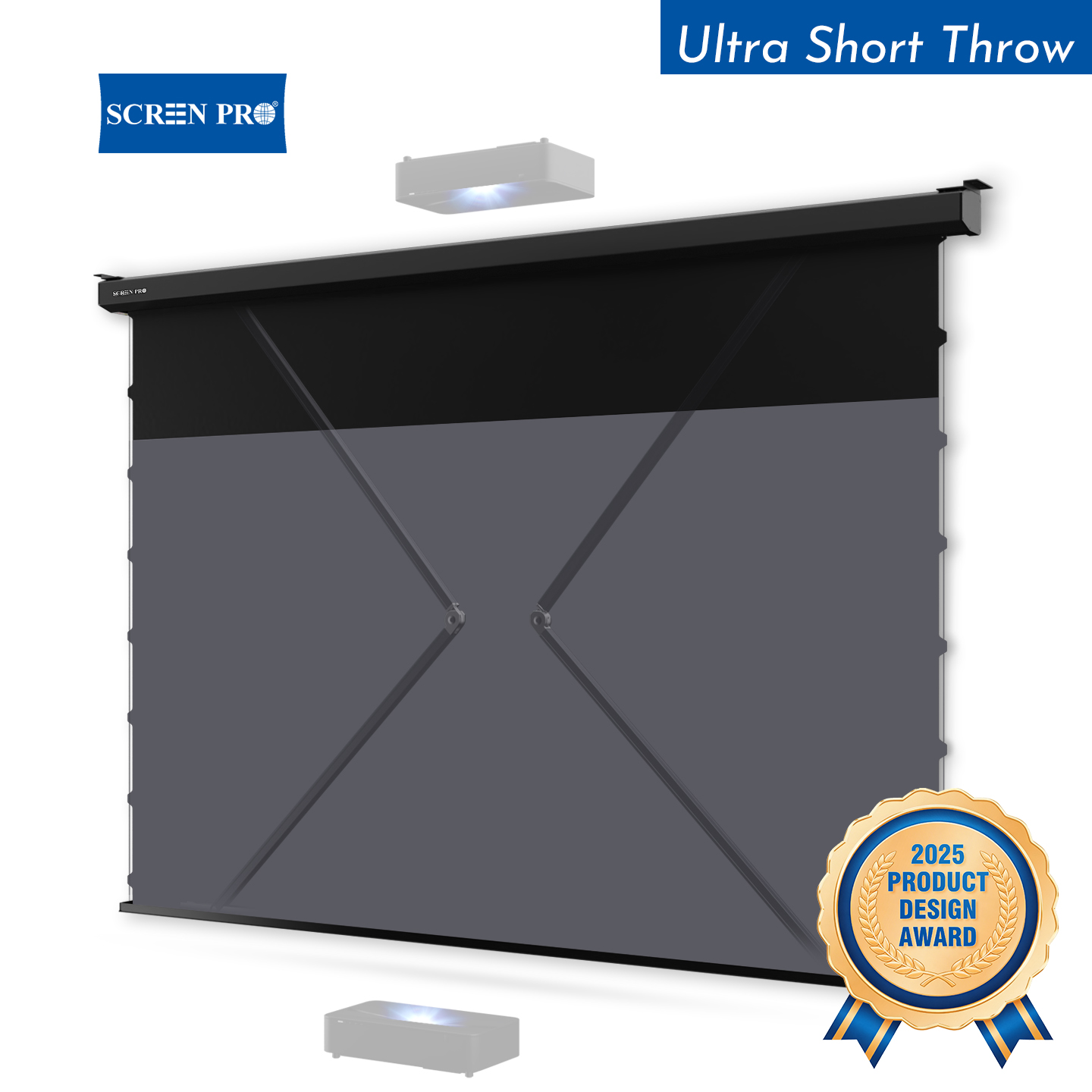
Yes. UST projectors are useful where installation depth is limited, but the projection screen material must be specifically compatible with ultra-short-throw projection geometry.
Retail projection projects vary significantly in screen size, lighting conditions, projector position and architectural requirements. There is no single screen material or screen structure that is ideal for every installation.
SCREENPRO provides projection solutions for permanent commercial installations, retractable systems, rear projection, ALR applications, large-format displays and customized projection projects.
For project-based applications, screen size, projector model, installation position and ambient lighting conditions should be evaluated together before the screen material is selected.
Send us your screen size, projector model, installation drawing and lighting conditions. Our team can help evaluate the appropriate screen structure and projection material.
Contact SCREENPROScreen performance may vary depending on projector type, projector position, screen size, ambient light and installation conditions. Product specifications should be confirmed before final system design.





© Copyright 2004-2026 SCREEN PRO® All Rights Reserved | Specifications are subject to change without notice. All Rights ReservedSite Map Designed by iwonder.cn