


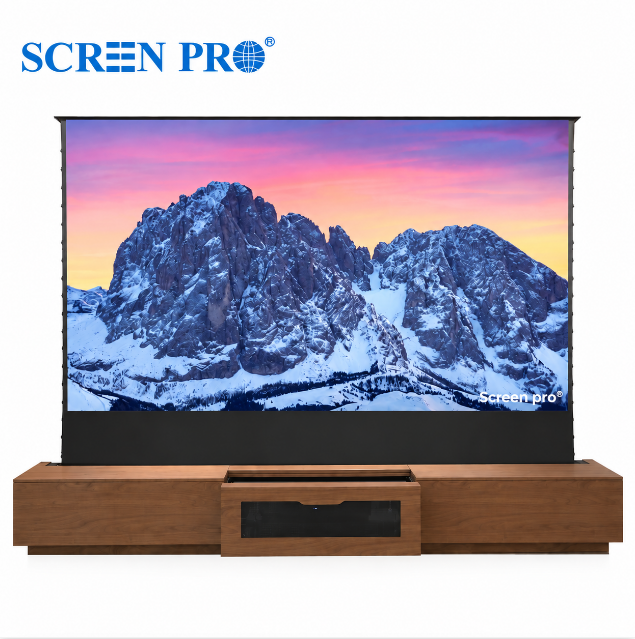
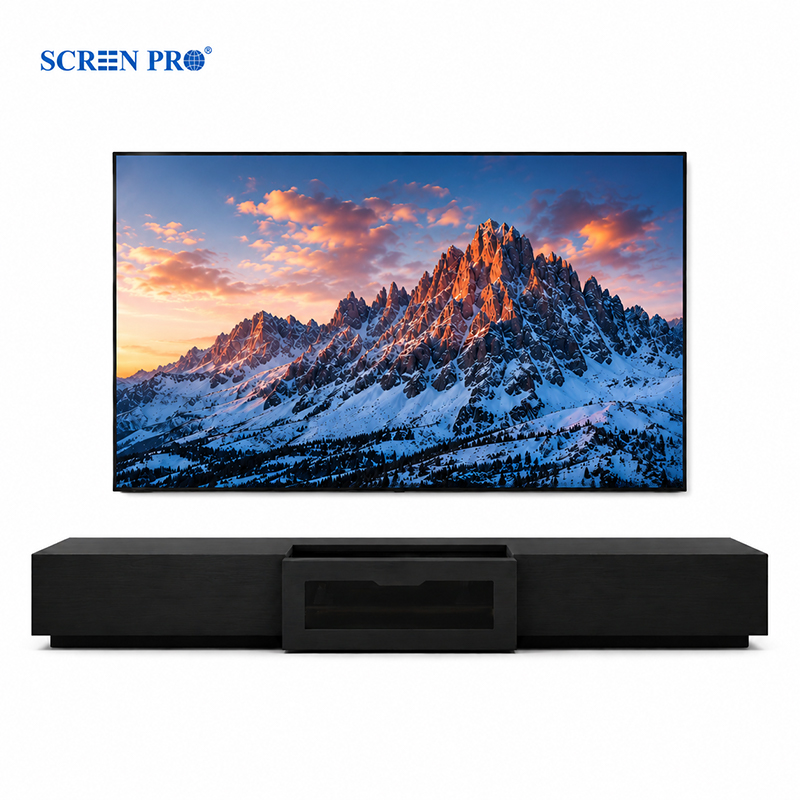
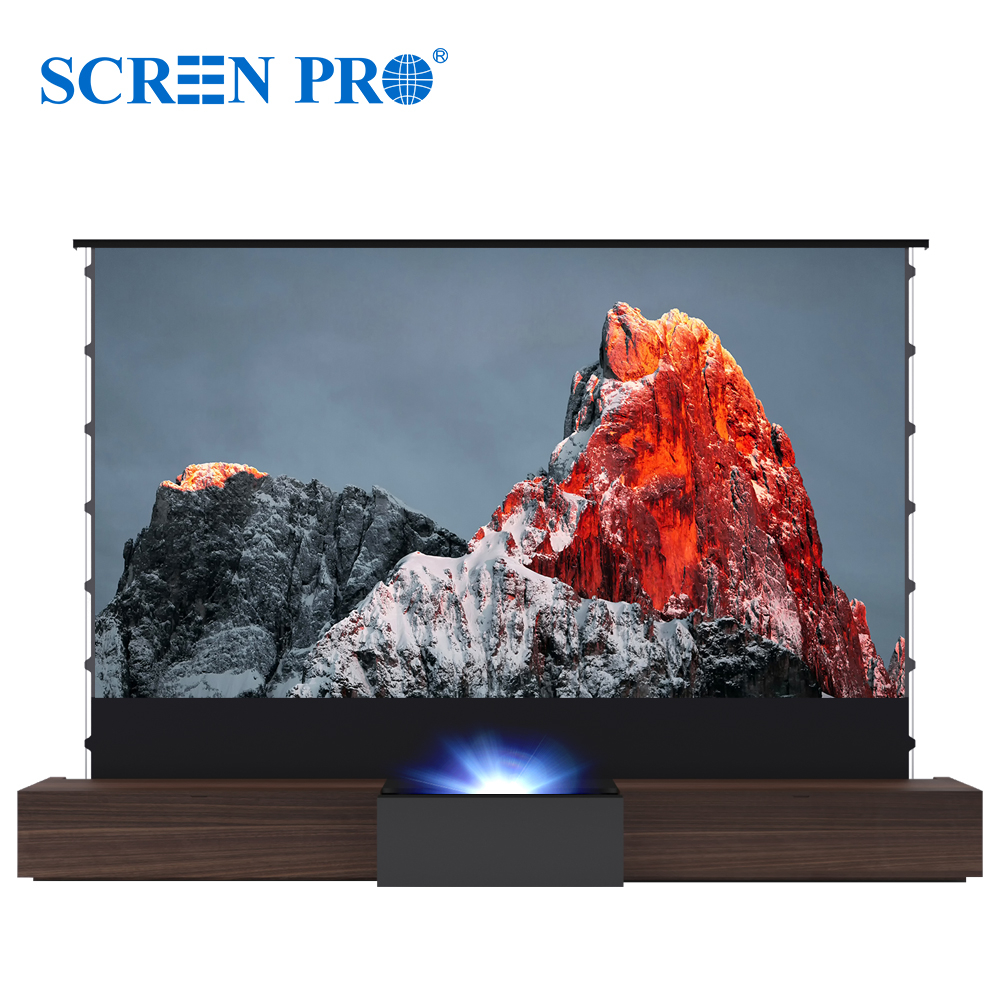
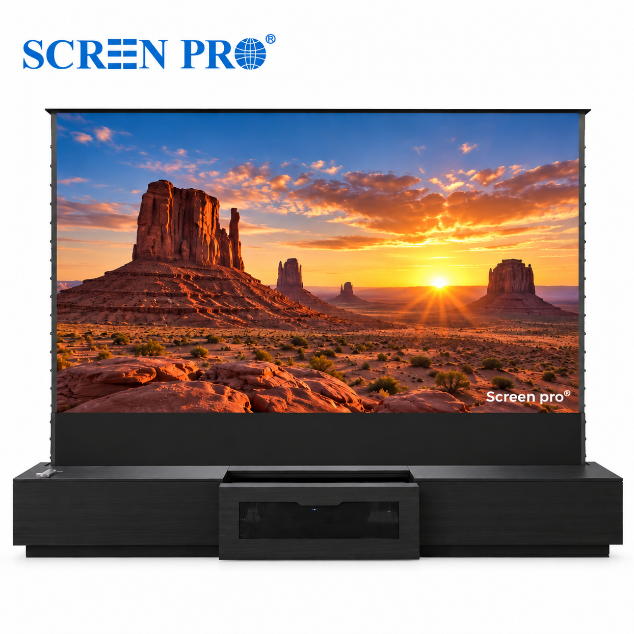








Slim Frame vs. Standard Frame Projector Screens
A narrower frame is not necessarily the better choice for every installation. Slim and standard frames create different visual effects and offer different levels of tolerance around the projected image. Understanding those differences can help you choose the right fixed-frame screen for your room and projector.

Two Frame Styles.
Two Different Priorities.
Both designs can deliver an excellent projection experience. The difference is primarily in visual style, image masking and how much installation tolerance you want around the picture.

Minimal Border.
Maximum Image.
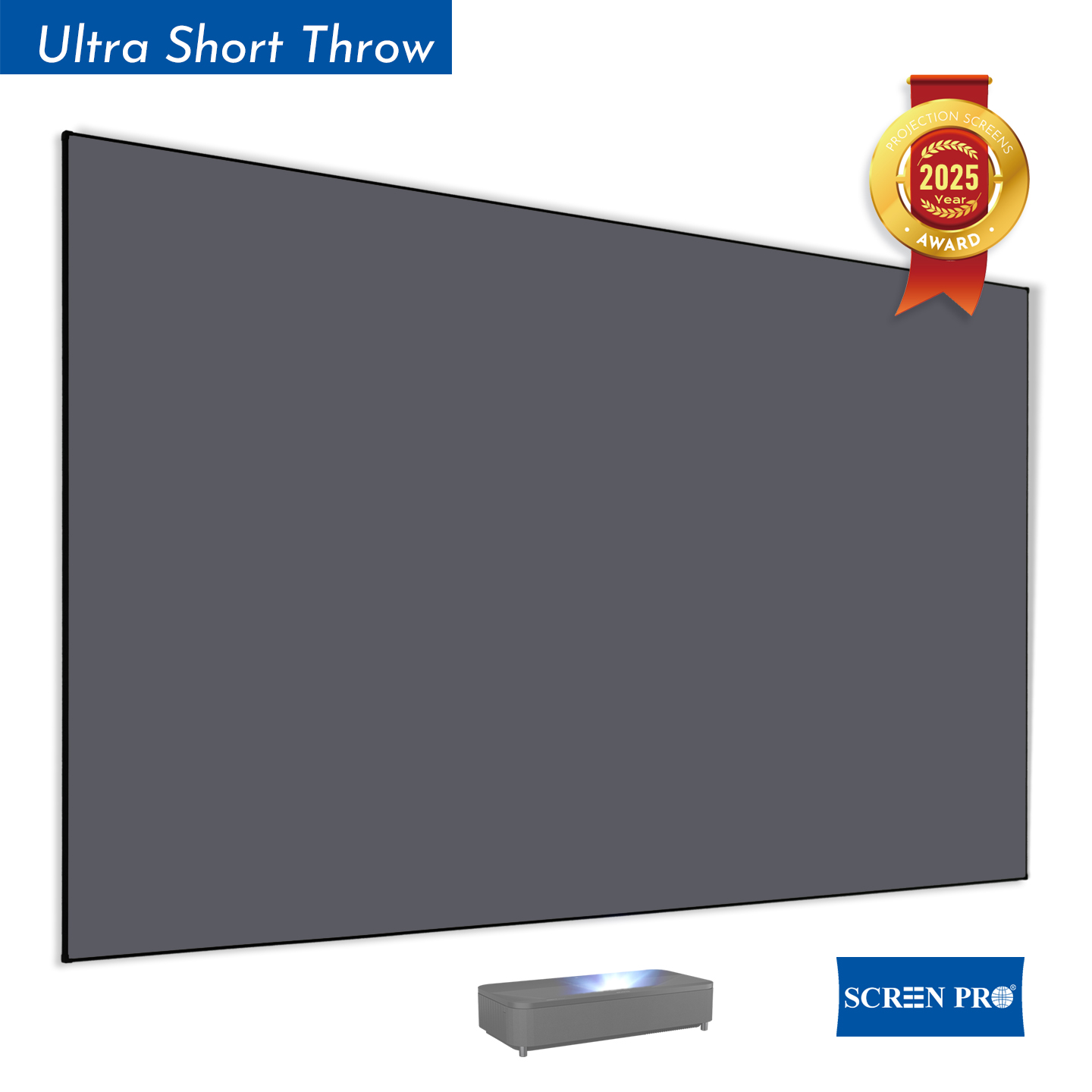
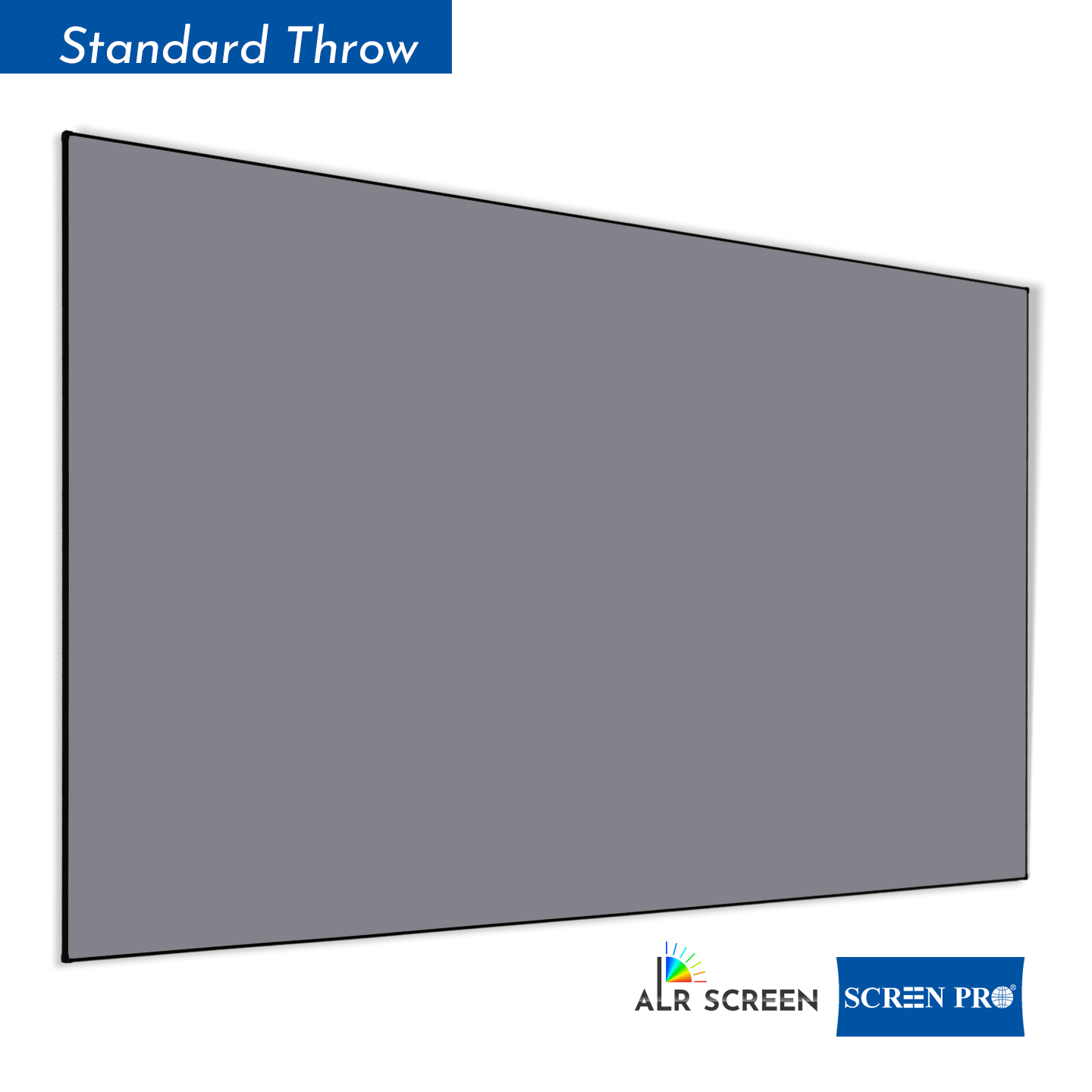
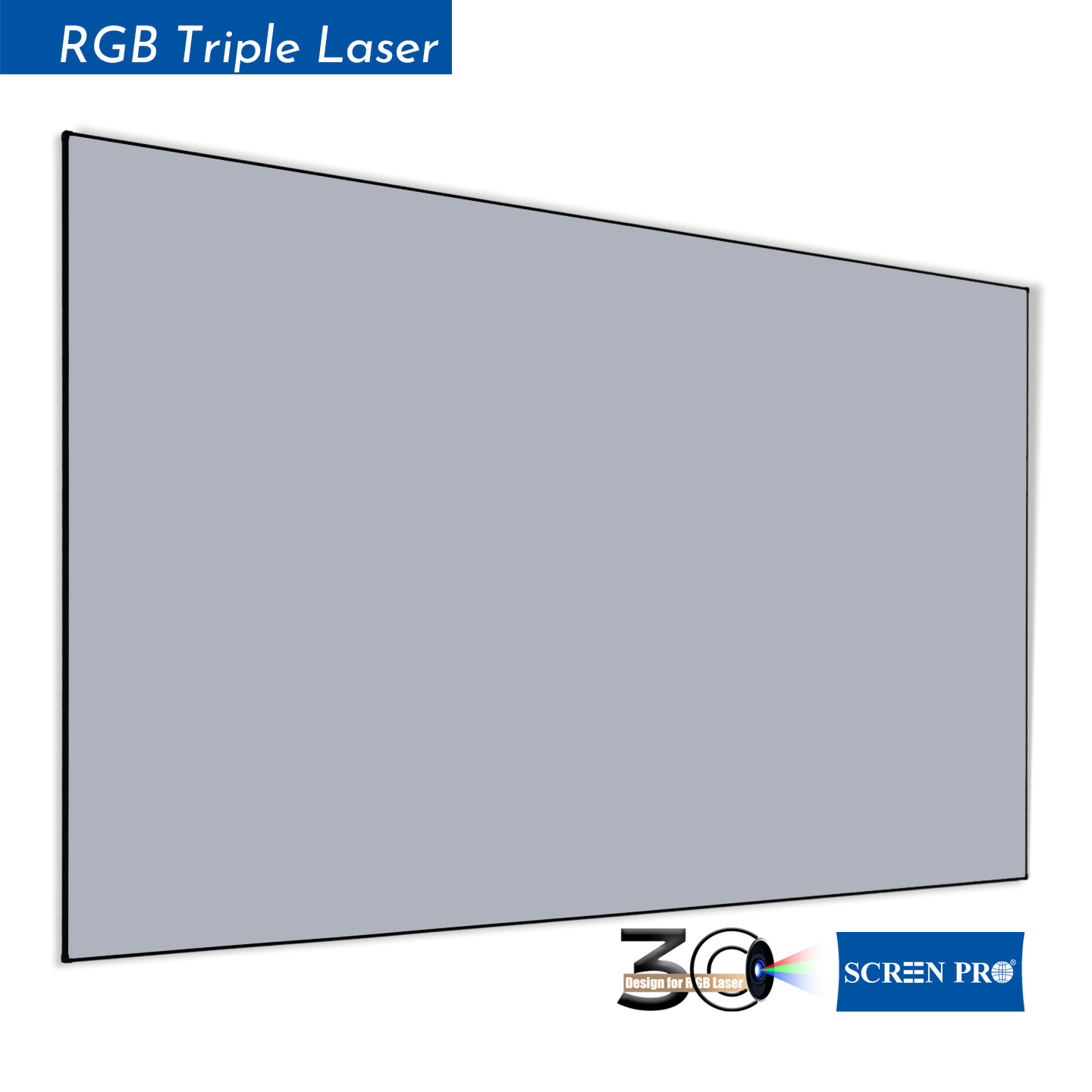
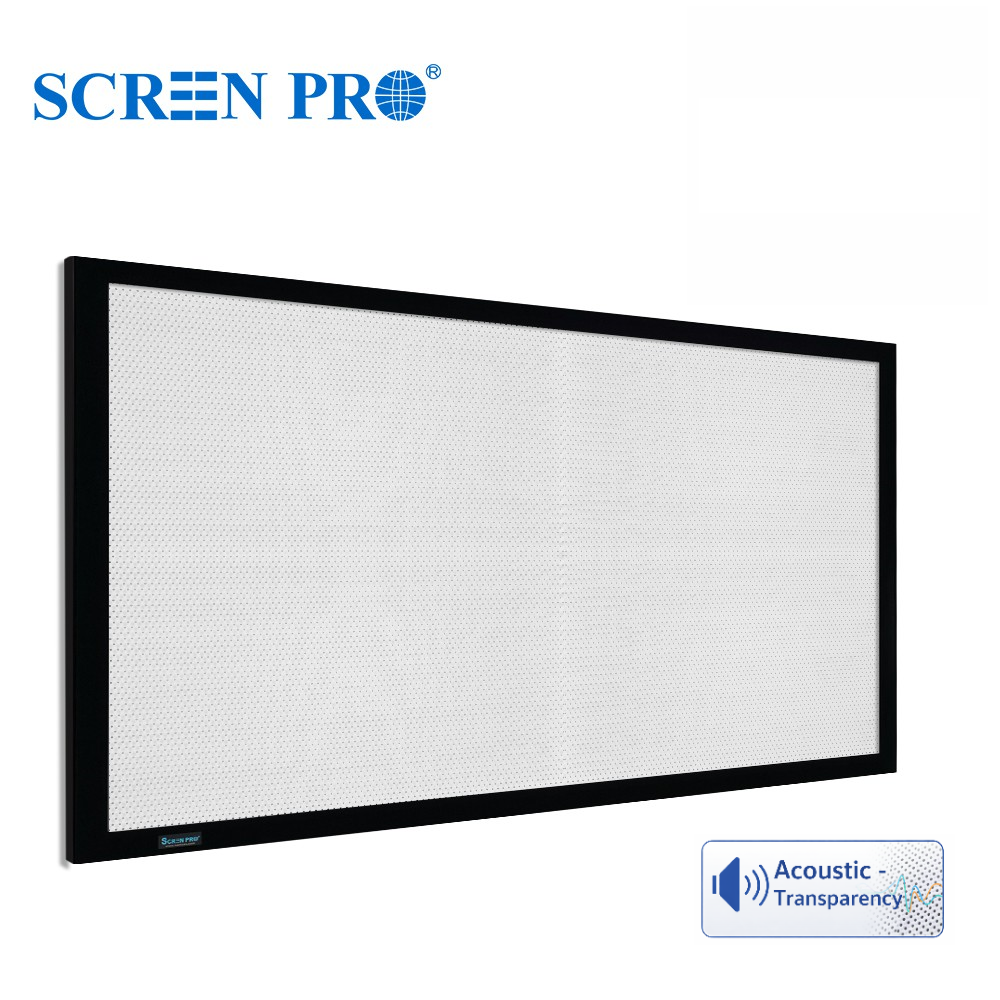
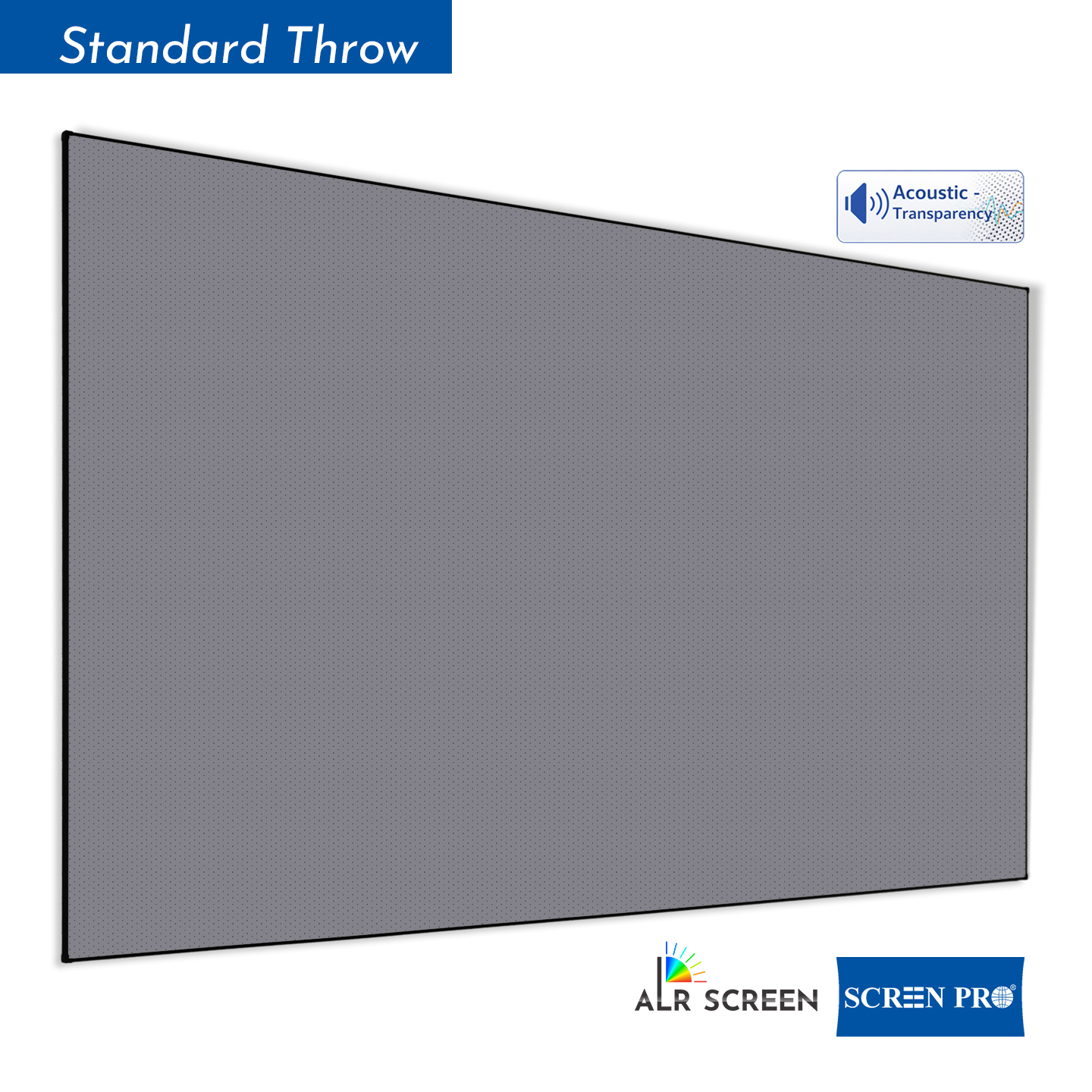
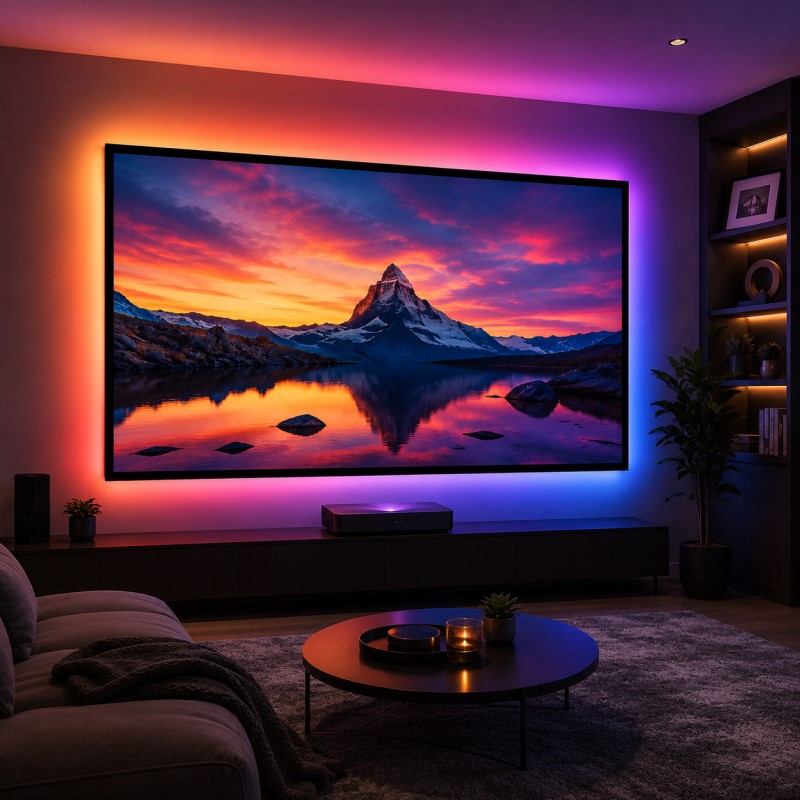
A slim frame minimizes the visible structure around the projection surface, creating a clean and contemporary appearance similar to a large-format display. SCREENPRO slim-frame designs can be as narrow as 7 mm, allowing the image to visually dominate the wall.

Classic Cinema.
More Installation Tolerance.
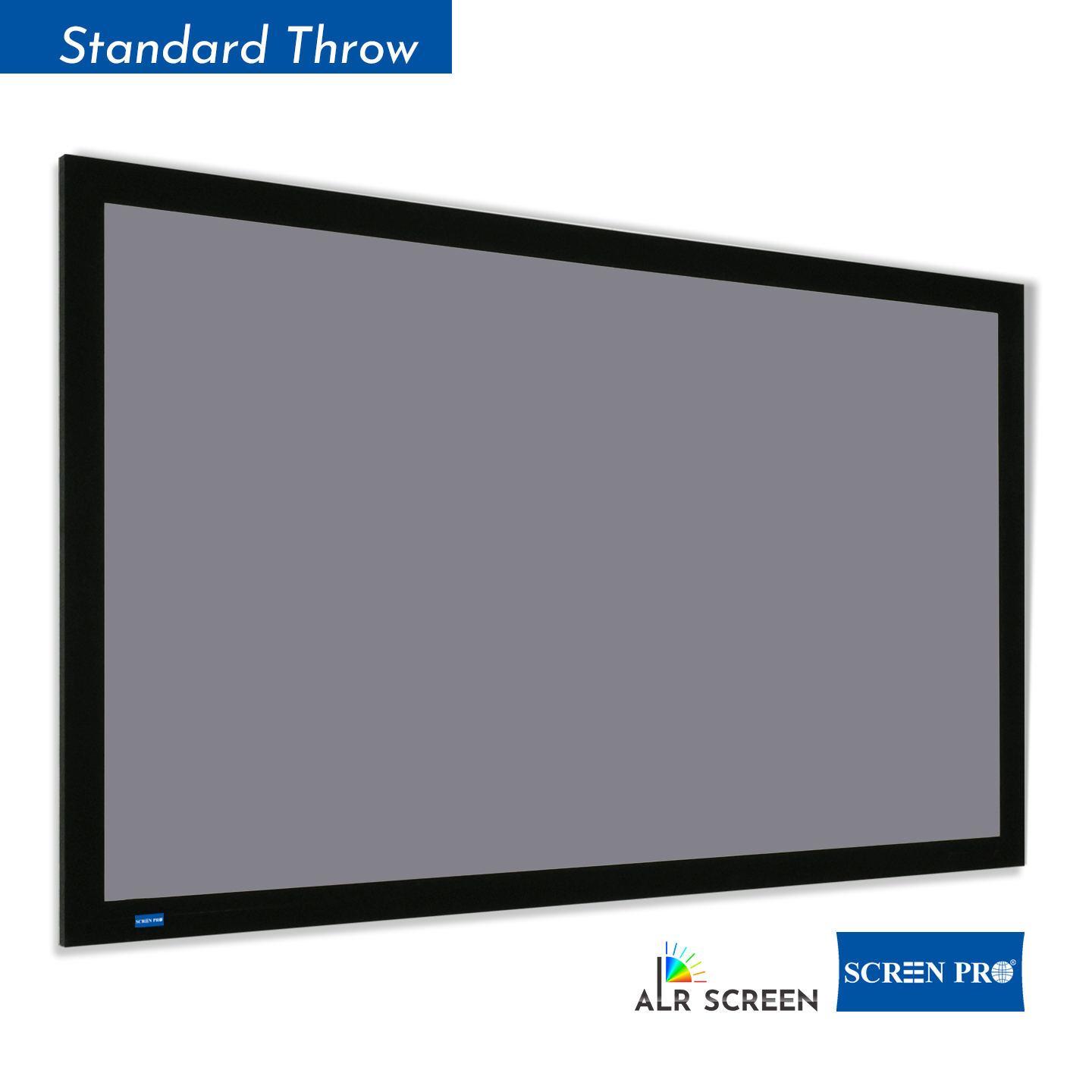
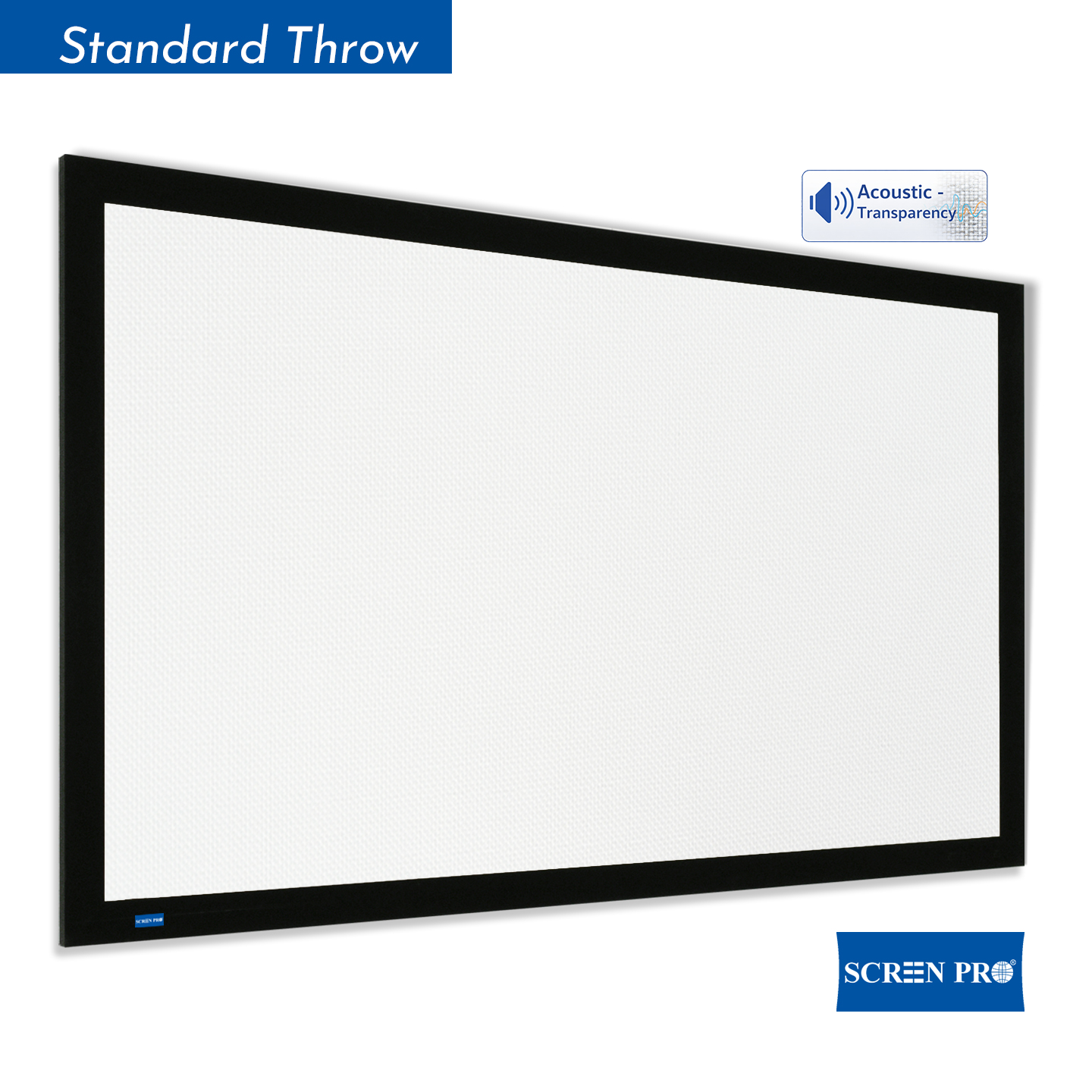
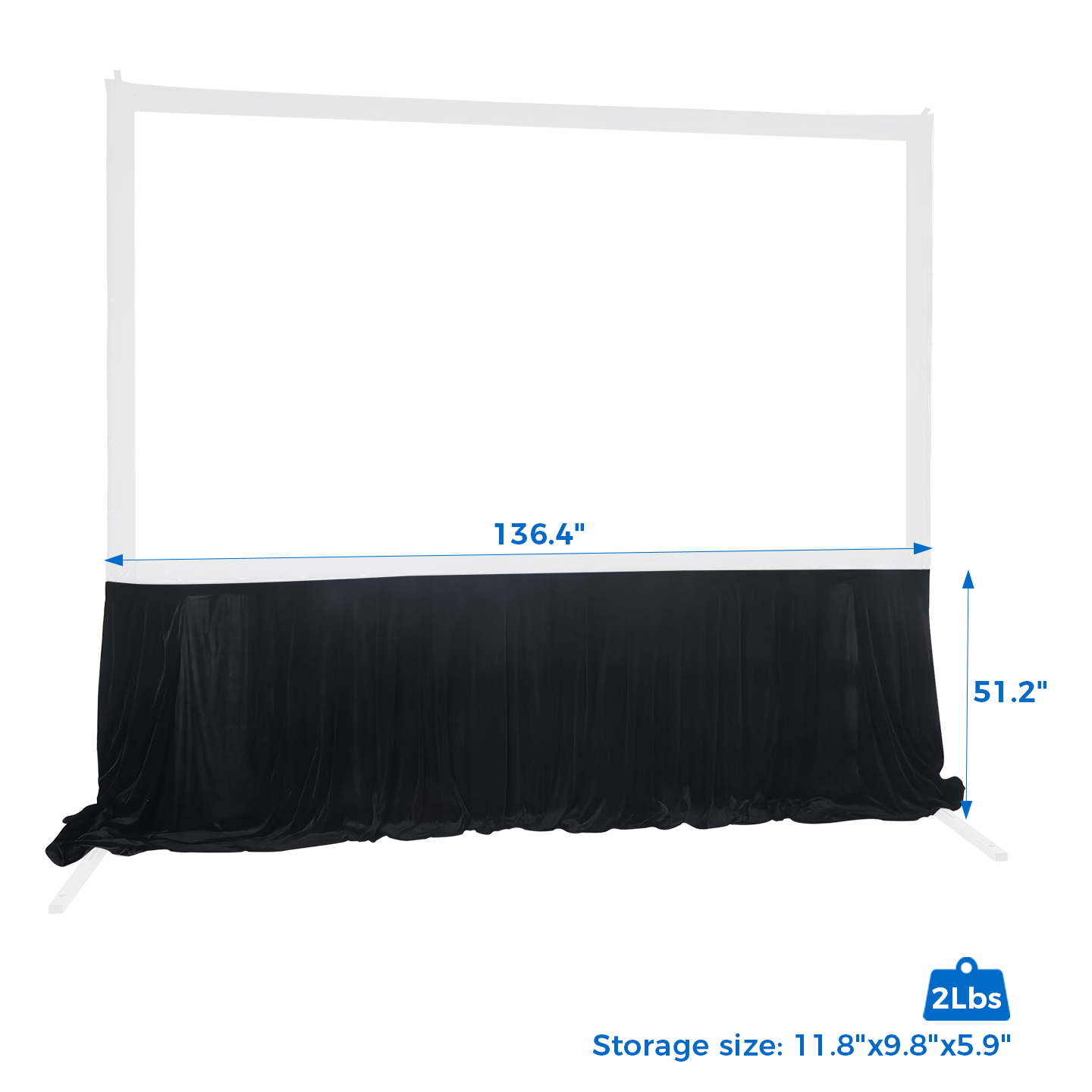
A wider black velvet frame creates the familiar appearance of a traditional cinema screen while providing a larger masking area around the projected image. This can make projector alignment more forgiving during installation.

More Than an
Aesthetic Choice.
Frame width affects more than how a projector screen looks. It also determines how much black masking is available around the projected image.
With a very narrow frame, projector alignment needs to be more precise because there is less border available to conceal small image-position differences.
A wider black velvet frame provides a larger masking area that can help visually hide minor overscan or alignment differences around the edge of the image.
Frame Style Comparison
There is no universally better frame style. The right choice depends on the installation environment, projector setup and the appearance you want to achieve.
| Consideration | Slim Frame | Standard Frame |
|---|---|---|
| Visual Style | Minimal and contemporary | Classic cinema |
| Visible Border | Very narrow | Wider |
| SCREENPRO Frame Options | As narrow as 7 mm | 60 / 90 mm options* |
| Projector Alignment | More precise alignment preferred | More forgiving |
| Image Masking | Minimal masking area | Greater masking area |
| Living Room | Excellent fit | Suitable |
| Dedicated Home Theater | Suitable | Excellent fit |
| Large-Format Installation | Clean, lightweight visual appearance | Strong, defined cinema presence |
*Frame dimensions vary by SCREENPRO series and screen size. Please refer to the individual product specifications for exact dimensions.
Which One Should I Choose?
Start with the appearance you want, then consider your projector alignment and installation environment.
You want the image to visually dominate the wall.
A slim frame is ideal when minimal design is a priority and the projector can be accurately positioned.
You want a defined cinema-style presentation.
A standard frame is ideal when you prefer traditional theater styling or want more masking around the projected image.
Find the Right Fixed-Frame Screen
Frame style is only one part of the selection process. The correct projection surface should also match your projector type, room lighting and application.
Minimal Frame Designs
For installations where a clean, modern appearance and minimal visible border are the priority.
Classic Cinema Frames
For installations that benefit from a wider black velvet border, defined cinema styling and additional image masking.
Common Questions About Frame Styles
Is a slim-frame projector screen better than a standard frame?
Not necessarily. A slim frame provides a more minimal appearance, while a standard frame provides more black masking around the image. The better choice depends on the installation and visual preference.
Does a wider frame make projector installation easier?
A wider black border provides more masking area around the image, which can make small alignment differences or slight overscan less noticeable. The projector should still be correctly positioned and adjusted.
Does frame width affect image quality?
Frame width does not directly determine the optical performance of the projection surface. Image performance is primarily determined by the screen material, projector, room lighting and viewing environment. The frame mainly affects appearance, masking and installation tolerance.
Can I use a slim frame in a dedicated home theater?
Yes. A slim frame can work very well in a dedicated theater when projector alignment is precise. A standard frame may be preferred when a traditional cinema appearance or additional masking is desired.
Should I choose the frame style or screen material first?
Projector type and viewing environment should normally determine the appropriate screen material first. Frame style can then be selected according to installation requirements and visual preference.
Tell Us About Your Installation.
Share your projector model, desired screen size, room dimensions and installation environment. SCREENPRO can help you select the appropriate frame style and projection surface for your project.
Contact SCREENPRO →