



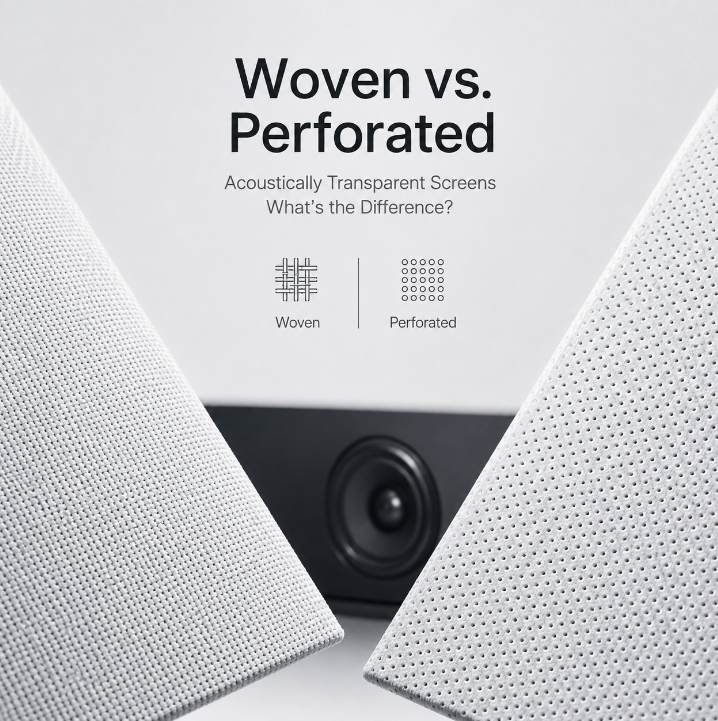
Woven vs. Perforated Acoustically Transparent Screens: What Is the Difference?
In dedicated home theaters and professional screening rooms, an acoustically transparent screen allows the front and center speakers to be positioned behind the image. This helps dialogue and sound effects appear to come directly from the action on screen. The two most common material types are woven acoustically transparent fabric and micro-perforated screen material. Both can deliver an immersive audiovisual experience, but they differ in surface structure, acoustic performance, image characteristics, and system compatibility.
What Is a Woven Acoustically Transparent Screen?
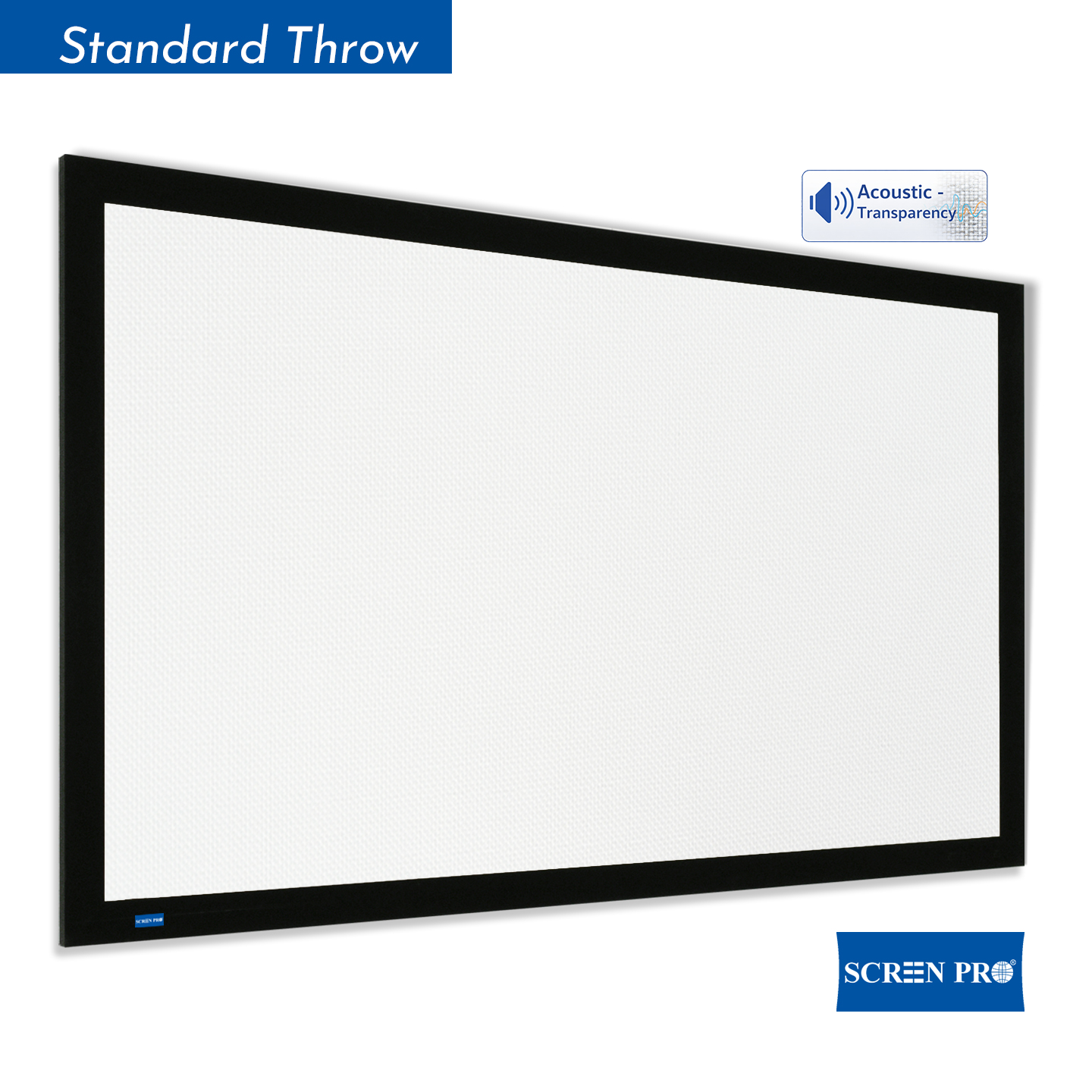
A woven acoustically transparent screen is made from fibers interlaced in a carefully controlled pattern. The spaces between the fibers form a continuous open structure that allows sound to pass through the screen toward the audience.
Unlike ordinary textile materials, professional woven projection fabrics must balance acoustic transparency, structural stability, image uniformity, color accuracy, and high-resolution performance.
The defining characteristic of a woven screen is its open fiber structure, which typically provides natural sound transmission, limited high-frequency attenuation, and soft, evenly diffused light reflection.
What Is a Micro-Perforated Acoustically Transparent Screen?
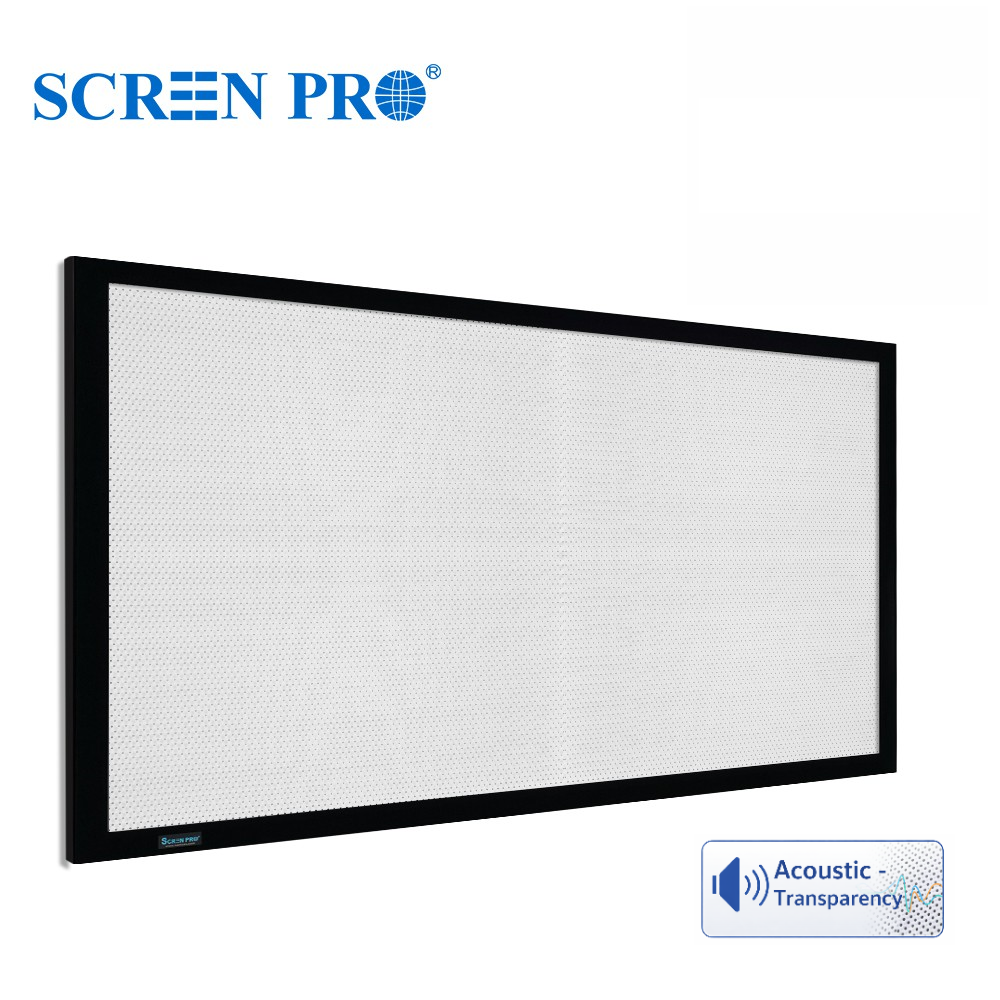
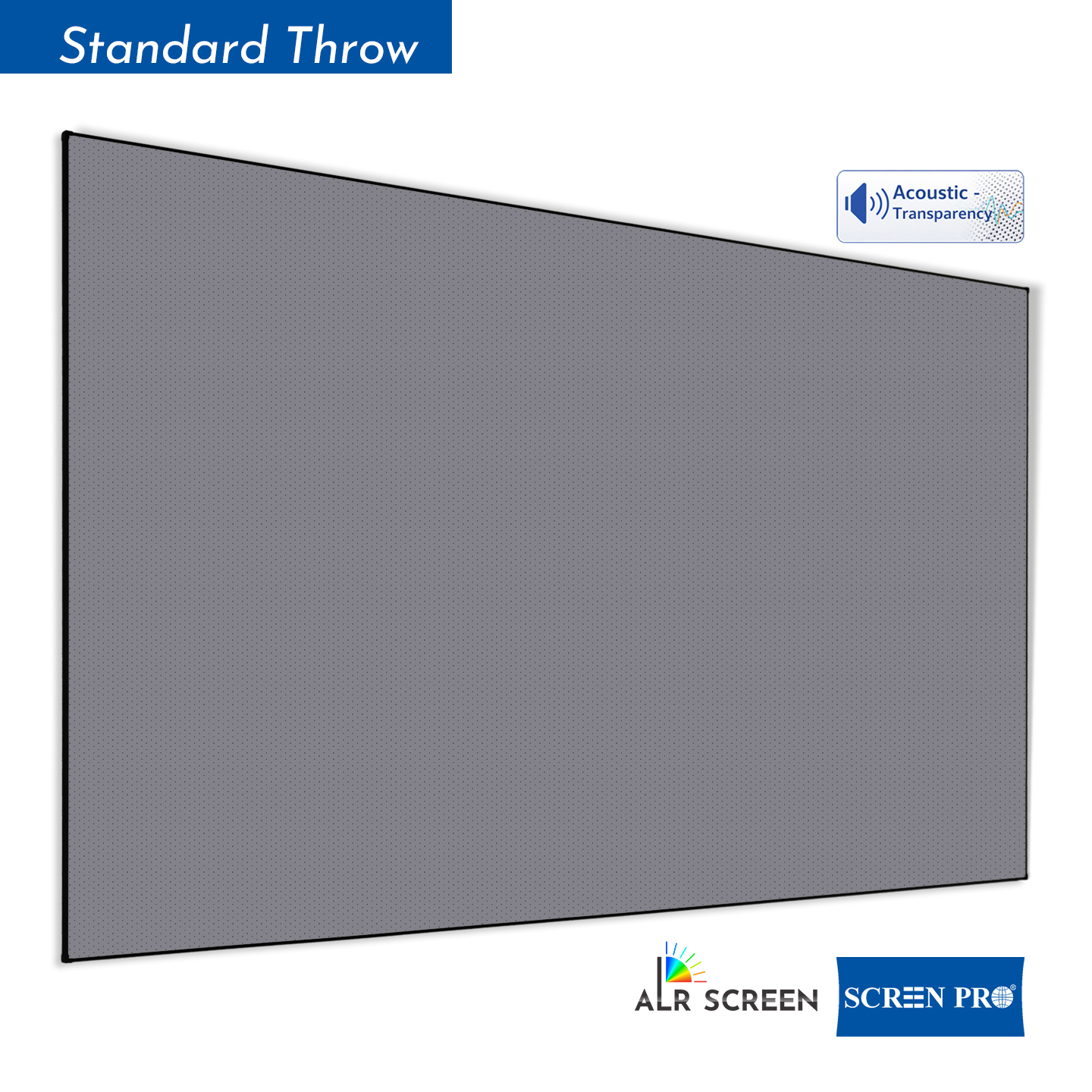
A micro-perforated acoustically transparent screen is generally based on PVC or another projection surface. Precision equipment creates a large number of small holes across the material, allowing sound to pass through while the main surface reflects the projected image.
This construction preserves the appearance of a conventional projection surface while adding acoustic transparency. Hole diameter, spacing, arrangement, and total open area all influence the final acoustic and visual performance.
Micro-perforated materials retain a smooth projection surface and can be developed with different gains, base colors, coatings, and optical characteristics for specific theater requirements.
Woven vs. Micro-Perforated Screen Comparison
| Comparison | Woven AT Screen | Micro-Perforated AT Screen |
|---|---|---|
| Material structure | Interwoven fibers create continuous openings throughout the material. | Precision micro-holes are created in a PVC or coated projection surface. |
| Sound transmission | Sound passes through the natural gaps between the woven fibers. | Sound passes through thousands of regularly distributed micro-perforations. |
| Acoustic performance | Typically offers natural sound transmission with limited high-frequency impact. | Performance depends strongly on hole size, open area, and speaker placement. |
| Surface appearance | Has a subtle textile texture and a soft visual character. | Looks more similar to a conventional PVC projection screen. |
| Image characteristics | Generally provides wide viewing angles and softly diffused light. | Can provide a smooth surface with carefully controlled gain and color characteristics. |
| Moiré control | A fine, optimized weave can reduce the risk of visible moiré. | Hole spacing and projection geometry must be properly matched to minimize interference patterns. |
| Laser speckle | Certain woven structures can help diffuse coherent laser light and reduce visible speckle. | Performance depends on the original surface coating, texture, and projector light source. |
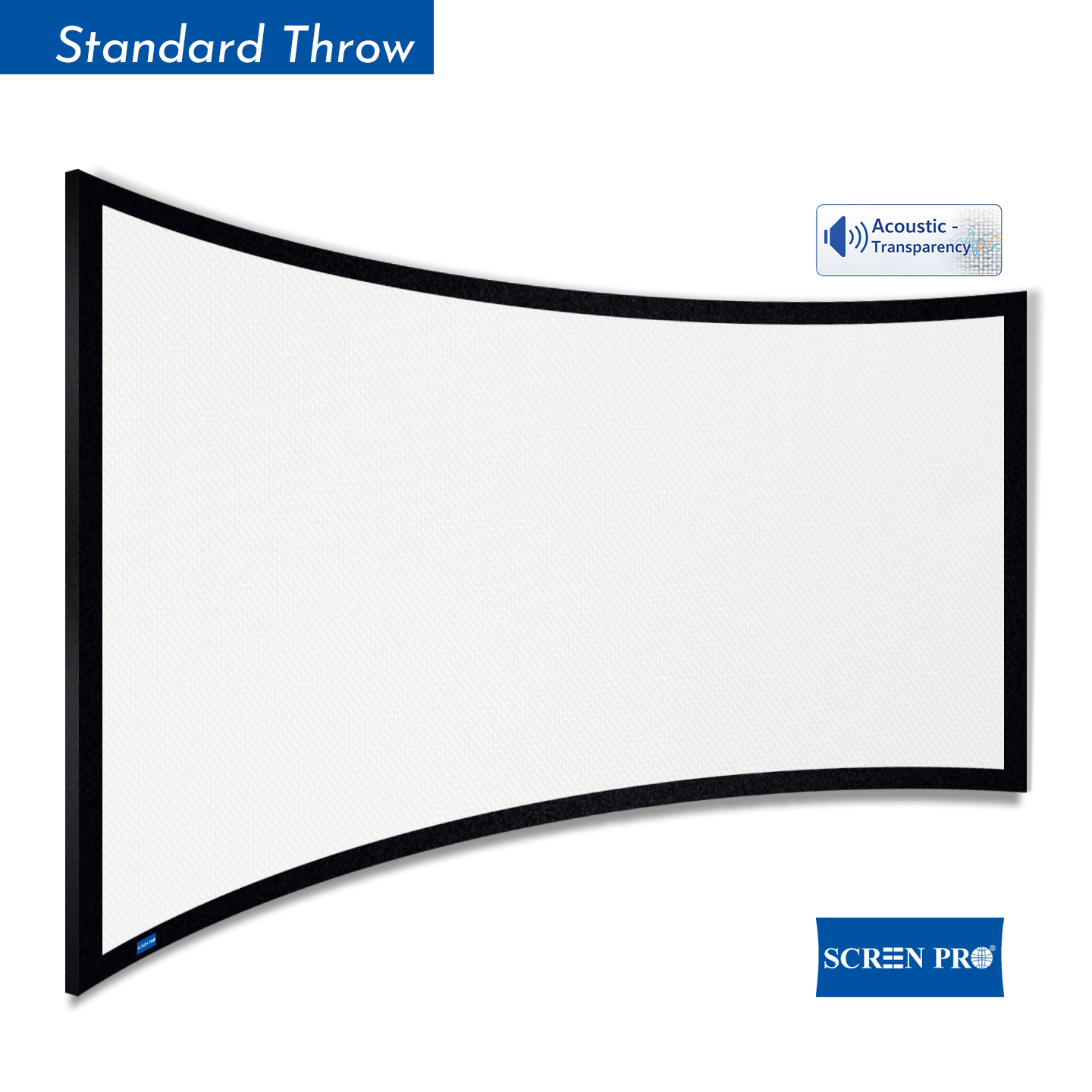
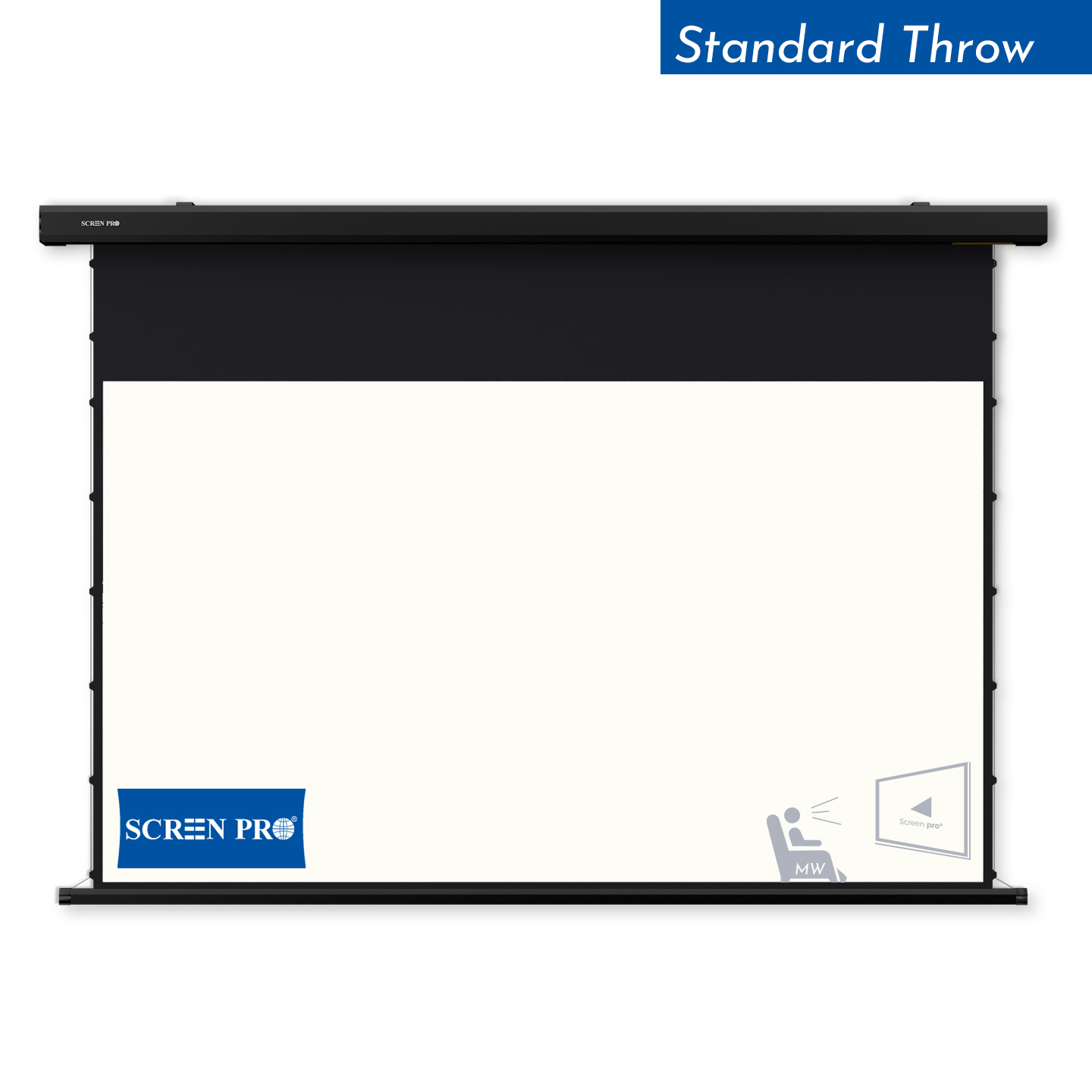
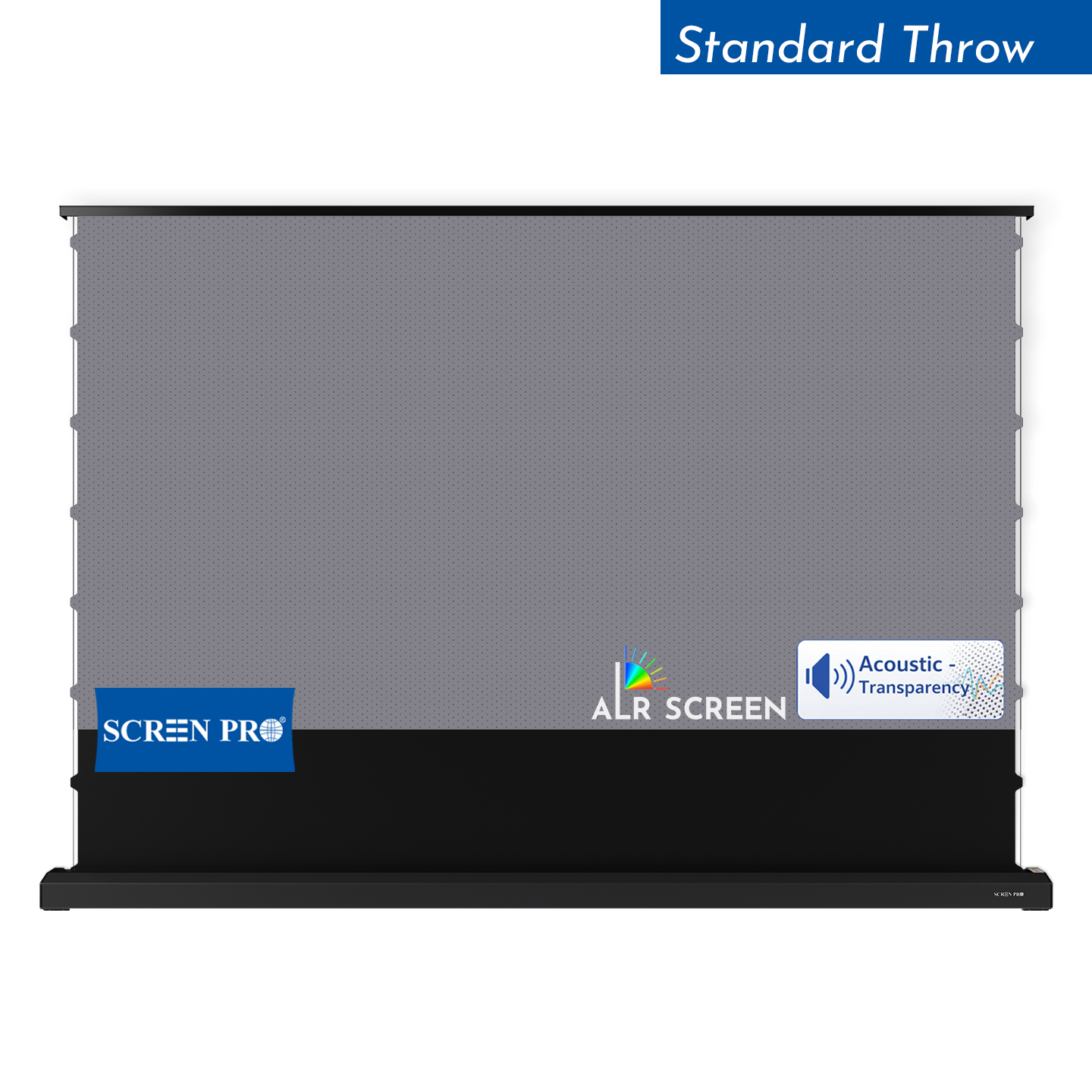
| Typical applications | Fixed-frame screens, tensioned motorized screens, and customized acoustically transparent systems. | Fixed-frame, motorized, in-ceiling, floor-rising, and customized projection screen systems. |
| Maintenance | Best cleaned with a soft brush or low-suction vacuum attachment. | The surface is generally easier to clean lightly with suitable materials. |
How Does the Sound Performance Differ?
Woven Acoustically Transparent Fabric
Woven projection fabric allows sound to pass through continuously distributed spaces between the fibers. Because the sound is not limited to a smaller number of individual perforations, transmission can be smooth and evenly distributed across the screen surface.
For home theaters where dialogue clarity, front soundstage consistency, and high-frequency detail are priorities, a high-quality woven screen can provide very natural acoustic performance.
Micro-Perforated Screen Material
The acoustic performance of a perforated screen depends primarily on its total open area. A higher number of properly designed holes generally improves sound transmission, but the hole pattern must also preserve image uniformity and prevent the perforations from becoming visible.
Correct speaker spacing and room correction through an AV receiver or processor can further optimize high-frequency response and overall tonal balance.
How Does the Image Quality Differ?
Advantages of Woven Screen Fabric
- Produces soft and naturally diffused light reflection.
- Typically provides a wide viewing angle.
- Has a relatively low risk of visible hot spotting.
- Certain materials can reduce the visibility of RGB laser speckle.
- Well suited to theaters that prioritize a natural, cinematic image.
Advantages of Perforated Screen Material
- Provides an appearance similar to a conventional PVC projection surface.
- Can create a smooth and visually uniform image.
- Can be engineered with different gains, base colors, and coatings.
- Suitable for projects with specific brightness, contrast, or optical requirements.
- Can be integrated into a wide range of fixed and motorized screen systems.
Image resolution is not determined only by whether a screen is woven or perforated. Fiber thickness, weave density, hole diameter, hole spacing, surface coating, screen tension, projection distance, and viewing distance all affect the final image.
What Causes Moiré on an Acoustically Transparent Screen?
Moiré can occur when the pixel structure of a projector interacts with a regular pattern in the screen material. When the screen weave or perforation pattern aligns with the projected pixel grid at a particular angle or frequency, visible waves, bands, or interference patterns may appear.
High-quality acoustically transparent materials reduce this risk by optimizing weave angle, fiber density, hole size, and hole spacing. Installation should also follow the recommended projection and viewing distances for the selected material.
A 4K or 8K label alone does not guarantee that a material will be free from visible texture or moiré. The microscopic screen structure, projector resolution, throw ratio, and installation distance must all be considered together.
Which Screen Is Better for an RGB Laser Projector?
RGB triple-laser projectors can produce varying levels of laser speckle. Speckle may become more visible when coherent light reflects from a smooth or highly directional surface.
Some woven anti-speckle materials use their fiber structure to diffuse coherent light and reduce the visibility of laser speckle. However, not every woven acoustically transparent fabric is automatically an anti-speckle material. The screen should be specifically designed and tested for RGB laser projection.
Micro-perforated materials can also be used with laser projectors, but their speckle performance depends on the original PVC surface, coating, embossing, and the specific projector model. Perforation alone does not determine laser speckle performance.
How to Choose the Right Acoustically Transparent Screen
You prioritize natural sound transmission, dialogue clarity, a wide front soundstage, softly diffused image characteristics, or a specially designed woven anti-speckle surface.
You prefer a surface appearance closer to conventional PVC screen material or require a specific gain, gray level, surface coating, or customized optical characteristic.
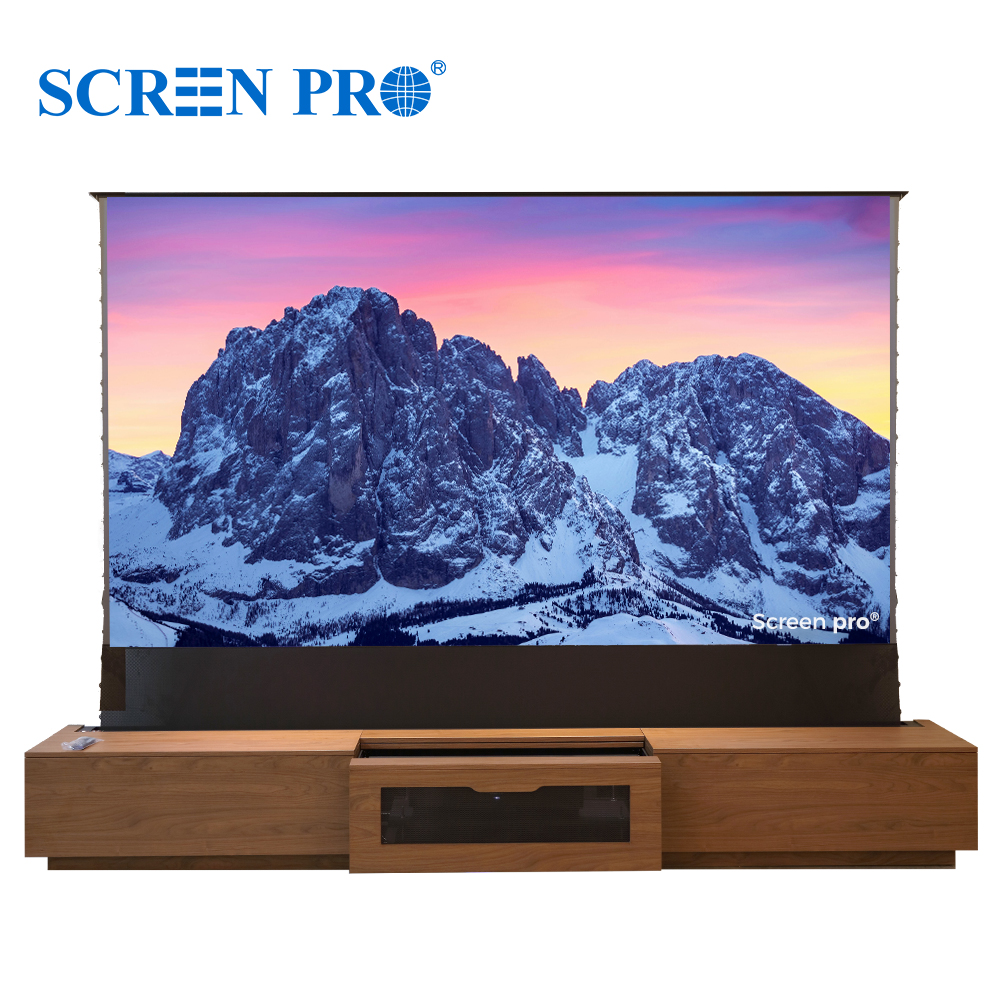
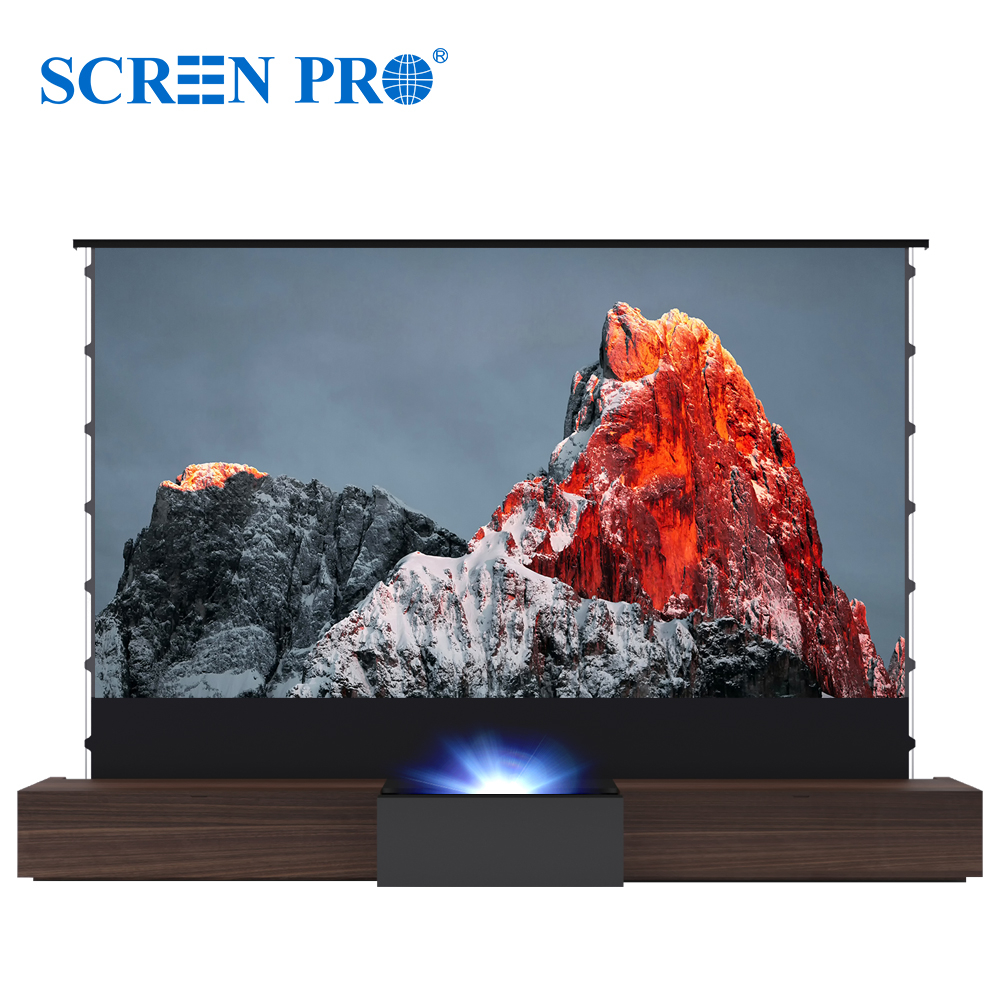
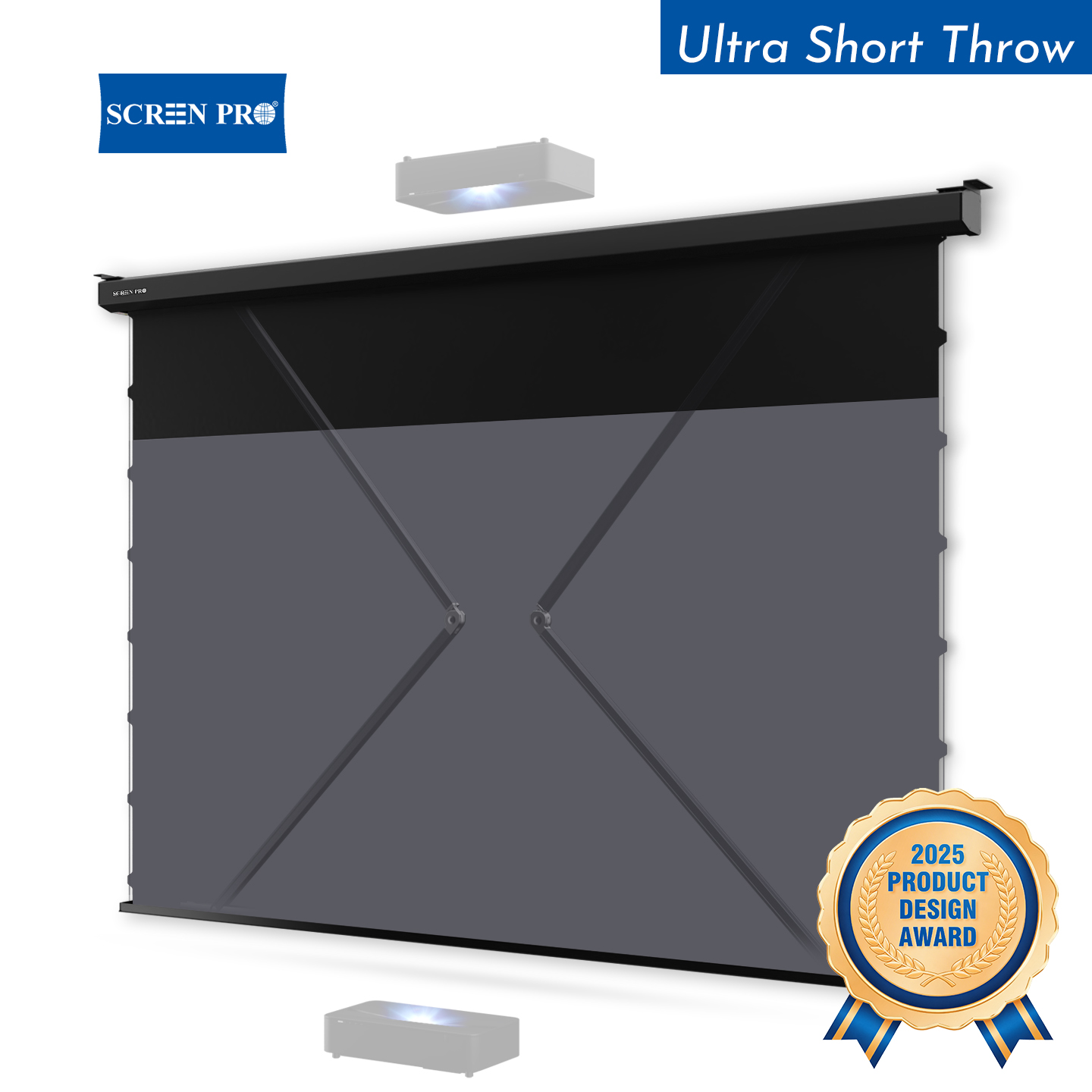
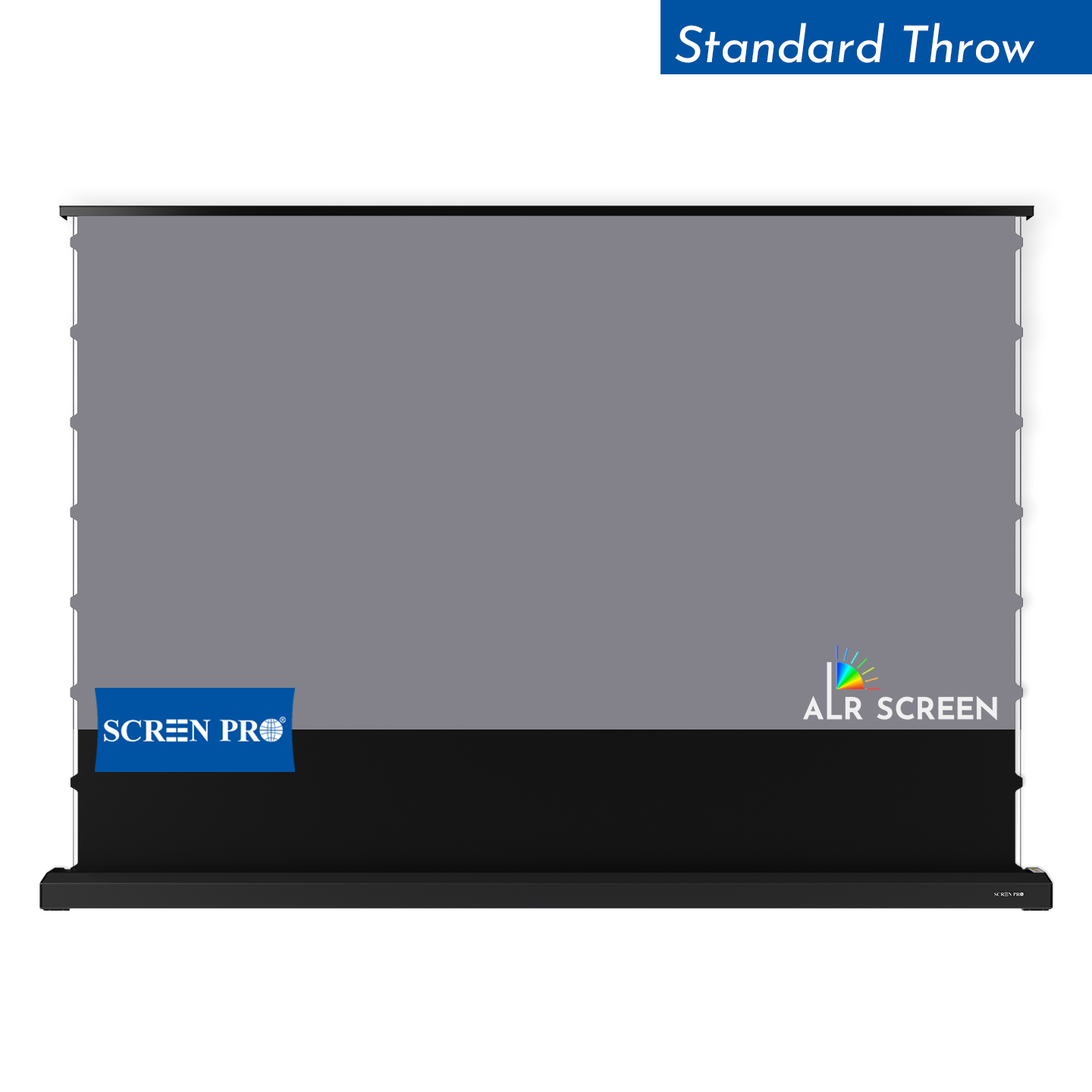
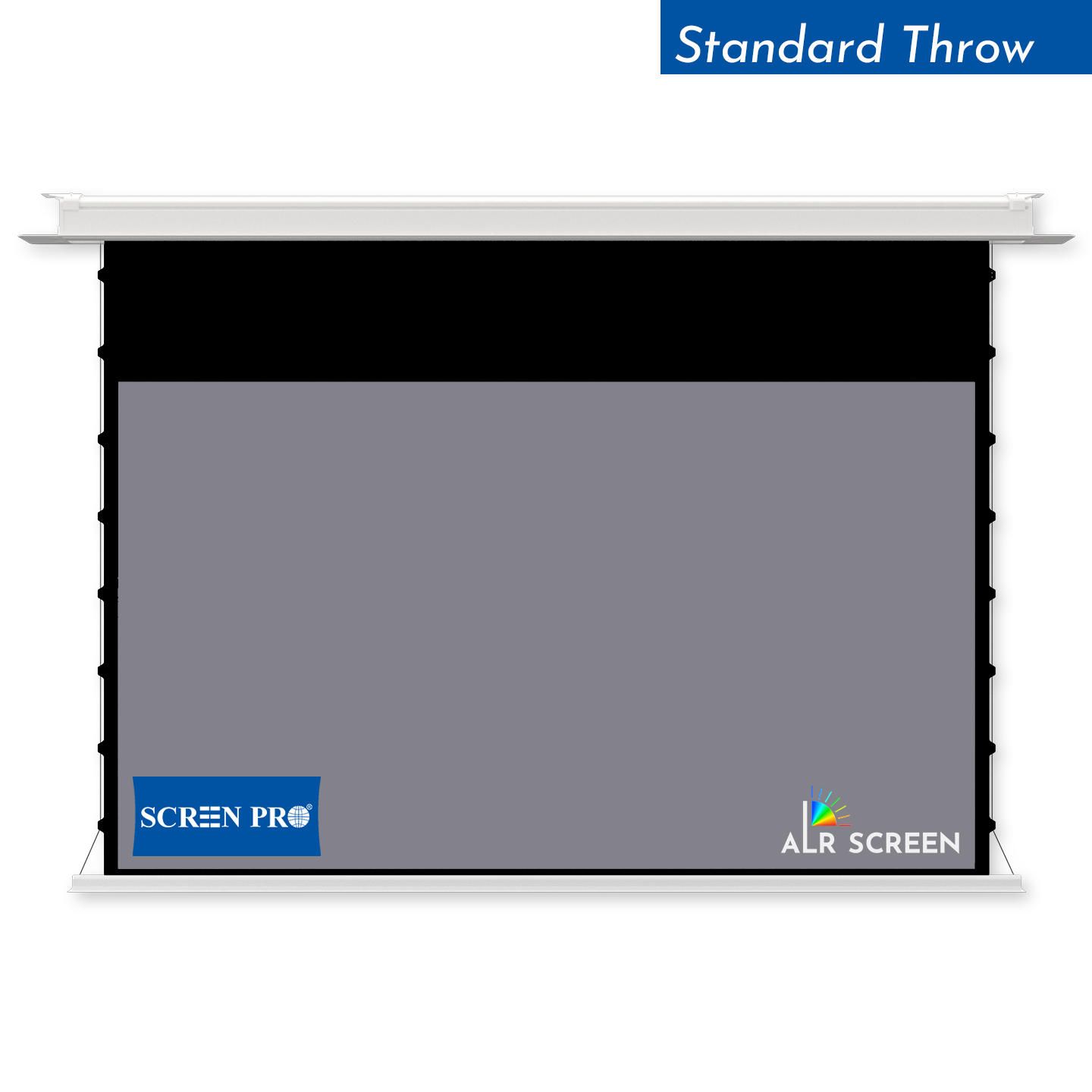
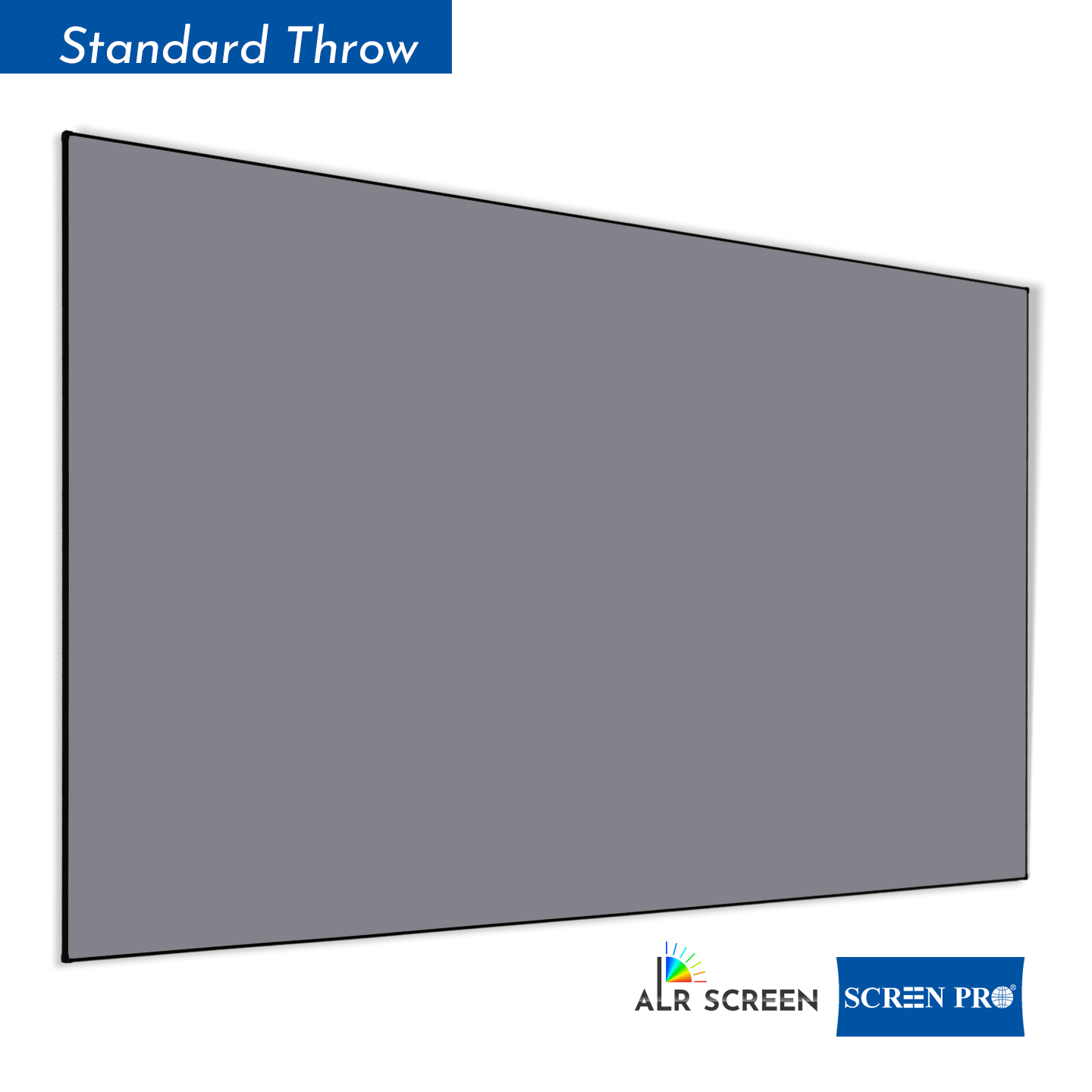
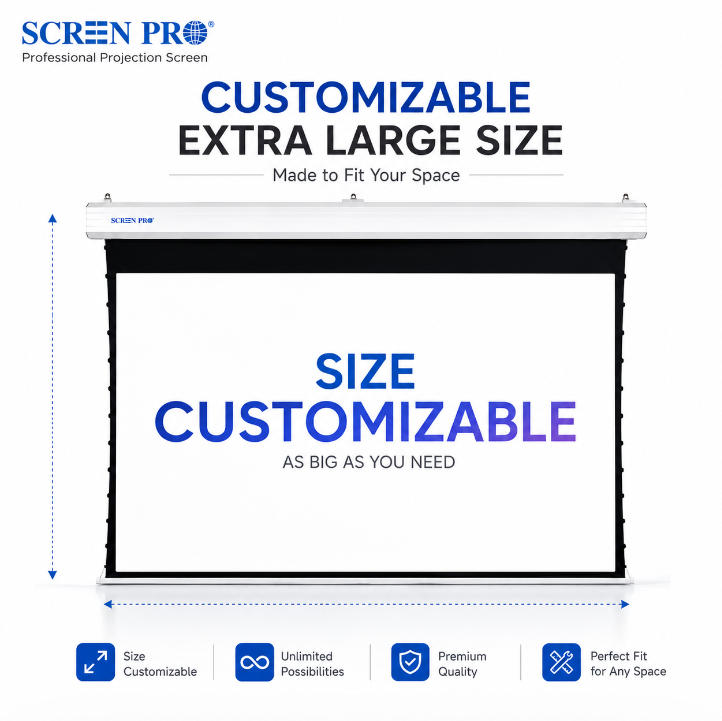
For fixed-frame, tensioned motorized, in-ceiling, and floor-rising screen systems, the final decision should consider both the screen material and the mechanical structure. Proper roller design, tensioning, screen support, and installation geometry all contribute to long-term flatness and stable performance.
Specifications to Check Before Buying
- Screen gain: Determines image brightness and viewing-angle characteristics.
- Open area or acoustic transparency: Indicates how easily sound can pass through the material.
- High-frequency attenuation: Helps determine whether acoustic correction may be required.
- Recommended viewing distance: Helps prevent the weave or perforations from becoming visible.
- Recommended projection distance: Helps reduce moiré and uneven image interaction.
- 4K or 8K compatibility: Should be evaluated based on the actual surface structure rather than the product label alone.
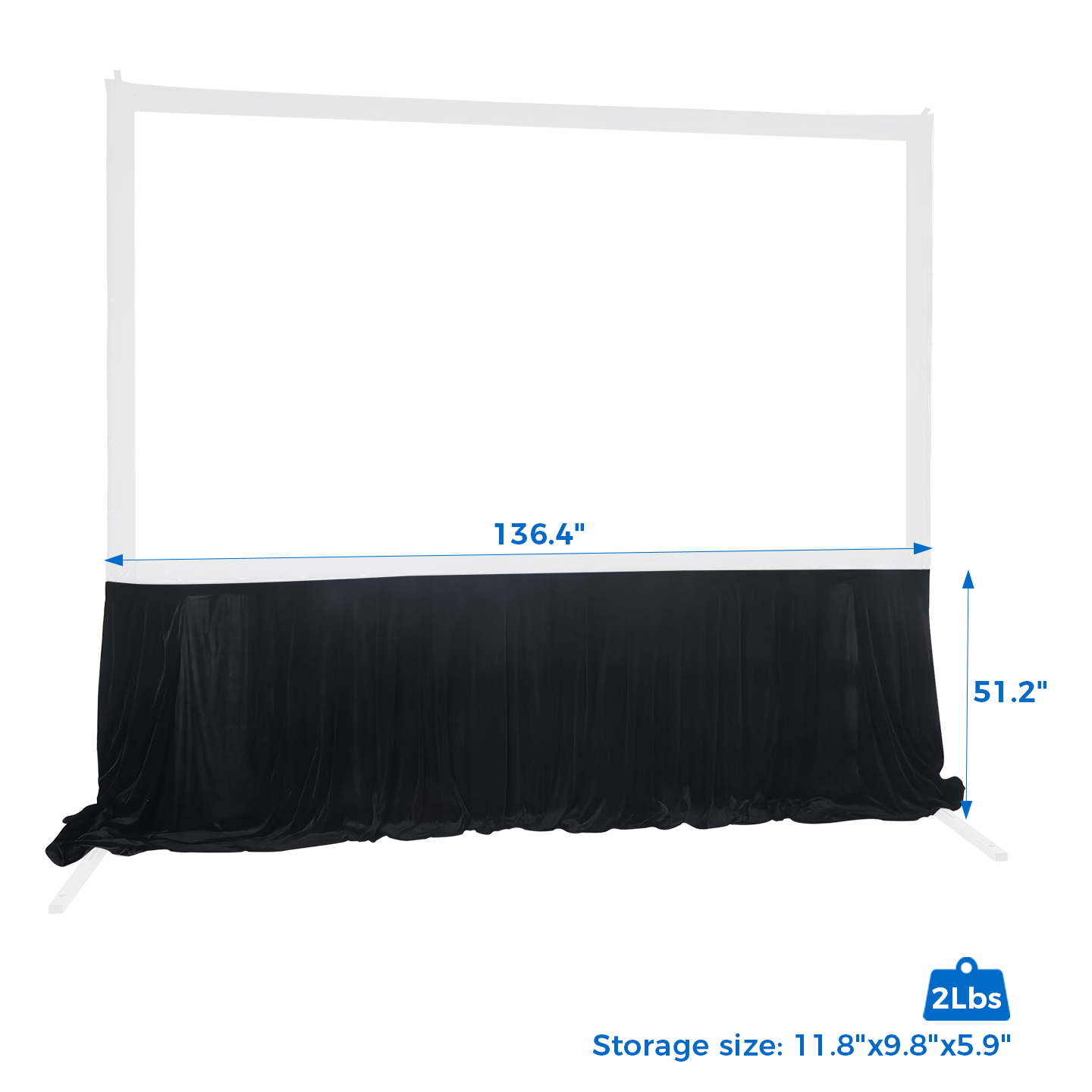
- Black backing: Can reduce light reflected from the wall or equipment behind the screen.
- Projector light source: RGB laser systems should be evaluated specifically for laser speckle.
- Screen structure: The material should be properly matched to the fixed-frame, motorized, in-ceiling, or floor-rising system.
Frequently Asked Questions
Is a woven acoustically transparent screen always better than a perforated screen?
No. Woven materials often offer natural acoustic transmission and wide light diffusion, while perforated materials offer strong control over gain, base color, coatings, and surface appearance. The best choice depends on the complete theater system.
Can woven acoustically transparent fabric be motorized?
Yes. Professionally engineered woven projection fabrics can be used in tensioned motorized screens and other retractable screen systems. Material stability, roller design, tensioning, and system engineering must be properly matched.
Will a micro-perforated screen always produce moiré?
No. Moiré depends on hole diameter, spacing, arrangement, projector resolution, throw distance, and installation geometry. Proper screen design and installation can significantly reduce the risk.
Does an acoustically transparent screen need black backing?
Black backing can be useful when there is a reflective wall, visible speaker cabinet, indicator light, or equipment behind the screen. It helps absorb stray light and prevent objects behind the screen from becoming visible. The backing material should also remain acoustically transparent.
How far should speakers be placed behind the screen?
Follow the recommendations provided by the screen and speaker manufacturers. Proper spacing can reduce screen vibration, reflections, and comb-filtering effects while improving sound transmission.
Conclusion
Woven and micro-perforated acoustically transparent screens are not simply interchangeable versions of the same product. A woven screen relies on an open fiber structure and typically emphasizes natural sound transmission, wide light diffusion, and a cinematic image. A micro-perforated screen starts with a conventional projection surface and adds acoustic transparency through precision perforations, allowing greater control over gain, surface color, and coating characteristics.
The right choice should be based on the projector light source, viewing distance, speaker layout, screen size, installation structure, and desired image characteristics rather than the material name alone.
A high-performance acoustically transparent screen depends on the combined design of the screen material, frame or motorized system, tensioning method, projector, and audio system.
Choose the Right Acoustically Transparent Screen Material
SCREENPRO® provides woven acoustically transparent fabrics, micro-perforated screen materials, fixed-frame screens, tensioned motorized screens, in-ceiling screens, floor-rising screens, and customized acoustic projection solutions. Material recommendations can be provided according to your projector, screen size, speaker layout, and installation environment.
Contact SCREENPRO