




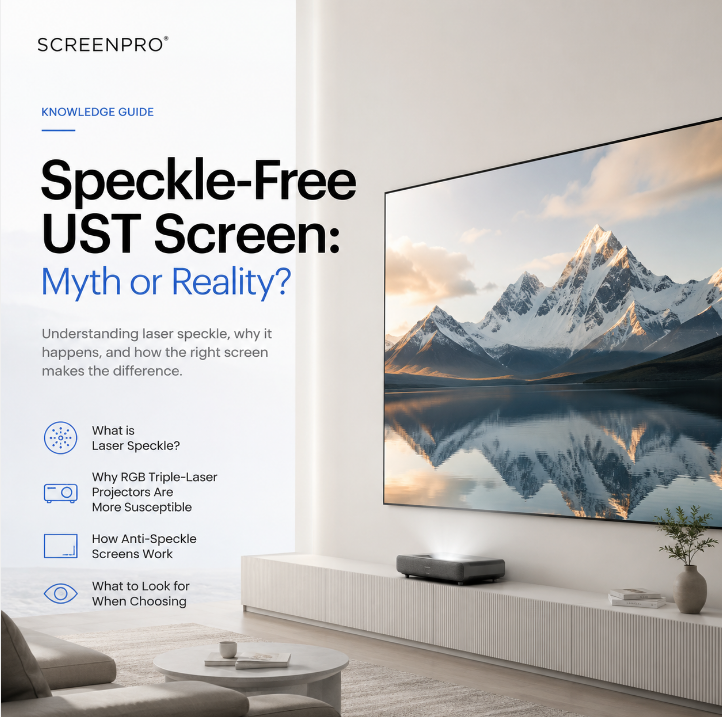
Speckle-Free UST Screen:
Myth or Reality?
What causes laser speckle, why it is commonly associated with RGB triple-laser UST projectors, and how the right screen material can create a cleaner and more comfortable viewing experience.
Why Are People Searching for a “Speckle-Free UST Screen”?
If you have recently purchased a Laser TV or RGB triple-laser ultra-short-throw projector, you may have encountered phrases such as “speckle-free UST screen,” “anti-speckle projector screen,” or “laser speckle reduction.”
These terms address a real viewing concern. Some laser projection systems can produce a fine, shimmering, grain-like texture over parts of the image. This effect is commonly called laser speckle.
A projection screen may substantially reduce the visibility of speckle, but no screen should be assumed to eliminate it completely under every projector, room and viewing condition.
The phrase “speckle-free UST screen” is therefore useful as a consumer search term, but anti-speckle, low-speckle or speckle-reduced is usually the more technically responsible description.
What Is Laser Speckle?
Laser speckle is a visible interference pattern created when coherent laser light reflects from a projection surface. Microscopic variations across the surface cause the reflected light waves to overlap and interfere with one another.
The viewer may perceive the result as a fine sparkling, shimmering or grain-like texture, particularly in bright and relatively uniform areas of the image.
This means the screen is not necessarily defective, and the projector alone is not the only variable. Speckle is created by the interaction of the complete projection system.
UST and RGB Triple Laser Are Not the Same Classification
One of the most common misunderstandings is treating UST and RGB triple laser as though they describe the same technology.
They describe two different aspects of a projector:
These terms describe the throw ratio and the installation distance between the projector and the screen.
These terms describe how the projector generates light and color.
A projector can therefore be UST without using an RGB triple-laser light engine. Likewise, an RGB triple-laser projector can use a short throw or standard throw optical design.
| Projector configuration | Speckle potential | Explanation |
|---|---|---|
| Lamp-based UST | Very Low | Traditional lamp light is not highly coherent in the same way as laser light. |
| LED UST | Low | LED systems are generally not associated with traditional laser speckle. |
| Single-laser UST | Possible | Visibility depends on the optical system, wavelength and screen. |
| RGB triple-laser UST | More Noticeable | Highly coherent RGB laser light can make interference patterns more visible. |
| RGB triple-laser standard throw | Also Possible | Speckle is a laser-related phenomenon and is not limited to UST projectors. |
Why Is Speckle Commonly Associated with UST Projectors?
Although UST geometry does not create speckle by itself, many premium Laser TV systems now use RGB triple-laser light engines. As a result, consumers often experience the projector type and the light-source technology together.
A typical user does not search for a technical phrase such as “coherent-light interference reduction.” Instead, the user sees shimmering on a Laser TV image and searches for a speckle-free UST screen.
The search phrase is therefore understandable and commercially relevant, even though it combines two separate technical classifications.
Can a UST Screen Completely Eliminate Laser Speckle?
It is difficult to guarantee complete elimination across every projector and viewing environment. The perceived result can change according to:
- The projector’s laser wavelengths and optical architecture
- The screen material and microscopic surface structure
- The screen gain and directional optical characteristics
- The projector-to-screen geometry
- The viewer’s position and viewing distance
- The projected content, brightness and room conditions
- Individual sensitivity to laser speckle
For these reasons, an absolute “100% speckle-free” claim may create unrealistic expectations. A more accurate goal is to reduce perceived speckle to a less distracting level while preserving contrast, sharpness, color accuracy and ambient-light performance.
How Does an Anti-Speckle Screen Work?
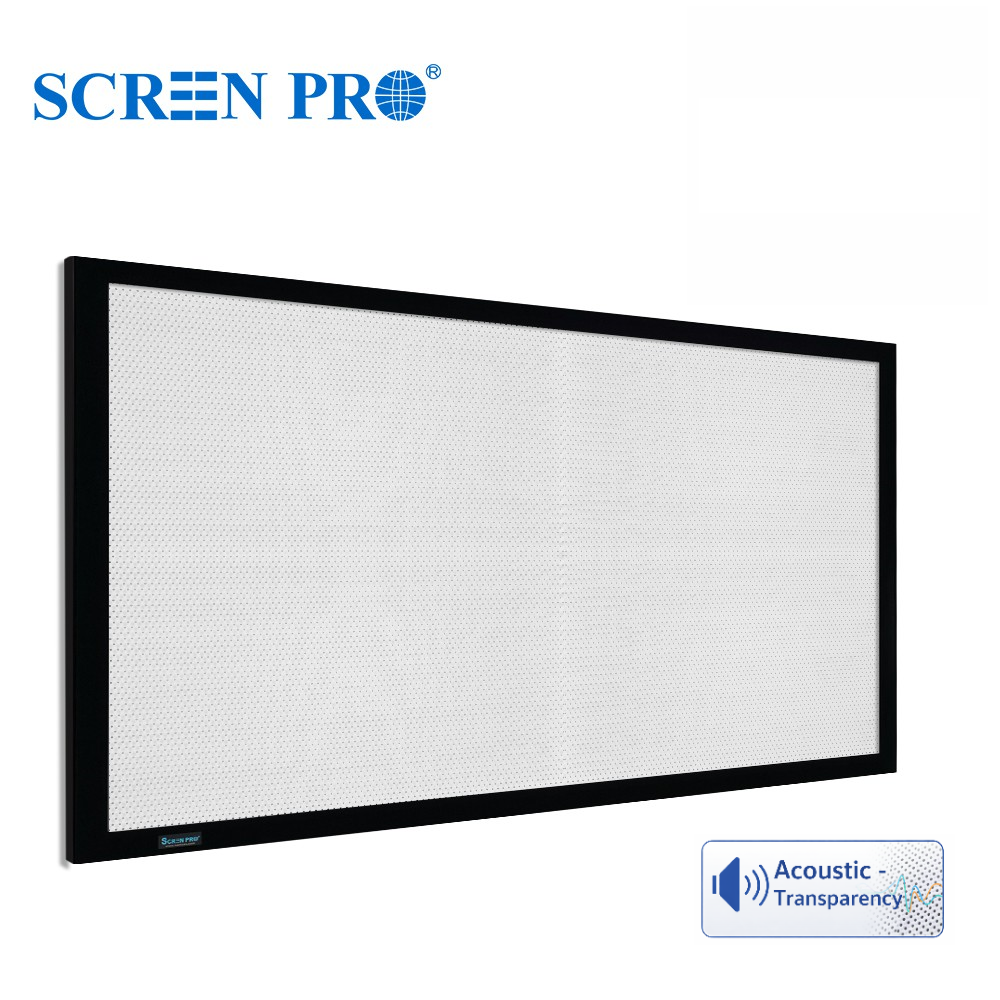
An anti-speckle projection material is engineered to alter how laser light is distributed and reflected toward the viewer. The surface structure helps reduce the visibility of stable interference patterns without excessively diffusing the projected image.
Reduced shimmering
The image appears less sparkly and more stable during normal viewing.
Smoother image texture
Bright and uniform image areas can look cleaner and more natural.
Improved viewing comfort
Reduced visual distraction supports longer movie and gaming sessions.
Balanced optical performance
A well-designed material also preserves clarity, contrast and color consistency.
Anti-speckle performance should not be evaluated in isolation. A screen that reduces speckle but sacrifices too much brightness, detail or ambient-light rejection may not provide the best overall result.
SCREENPRO® 3C Anti-Speckle Technology
SCREENPRO® 3C is developed for modern RGB triple-laser projection systems. Its optical structure is designed to reduce perceived laser speckle while maintaining the image characteristics expected from a premium home-theater screen.
The objective is not simply to suppress a single visual artifact. It is to provide a more balanced viewing experience across contrast, color, image uniformity and viewing comfort.
Actual performance may vary depending on the projector, installation geometry, screen size, viewing position and room environment.
Which SCREENPRO® Screen Format Should You Choose?
Anti-speckle material can be integrated into different screen structures. The correct model depends mainly on the room layout, installation method and preferred visual appearance.
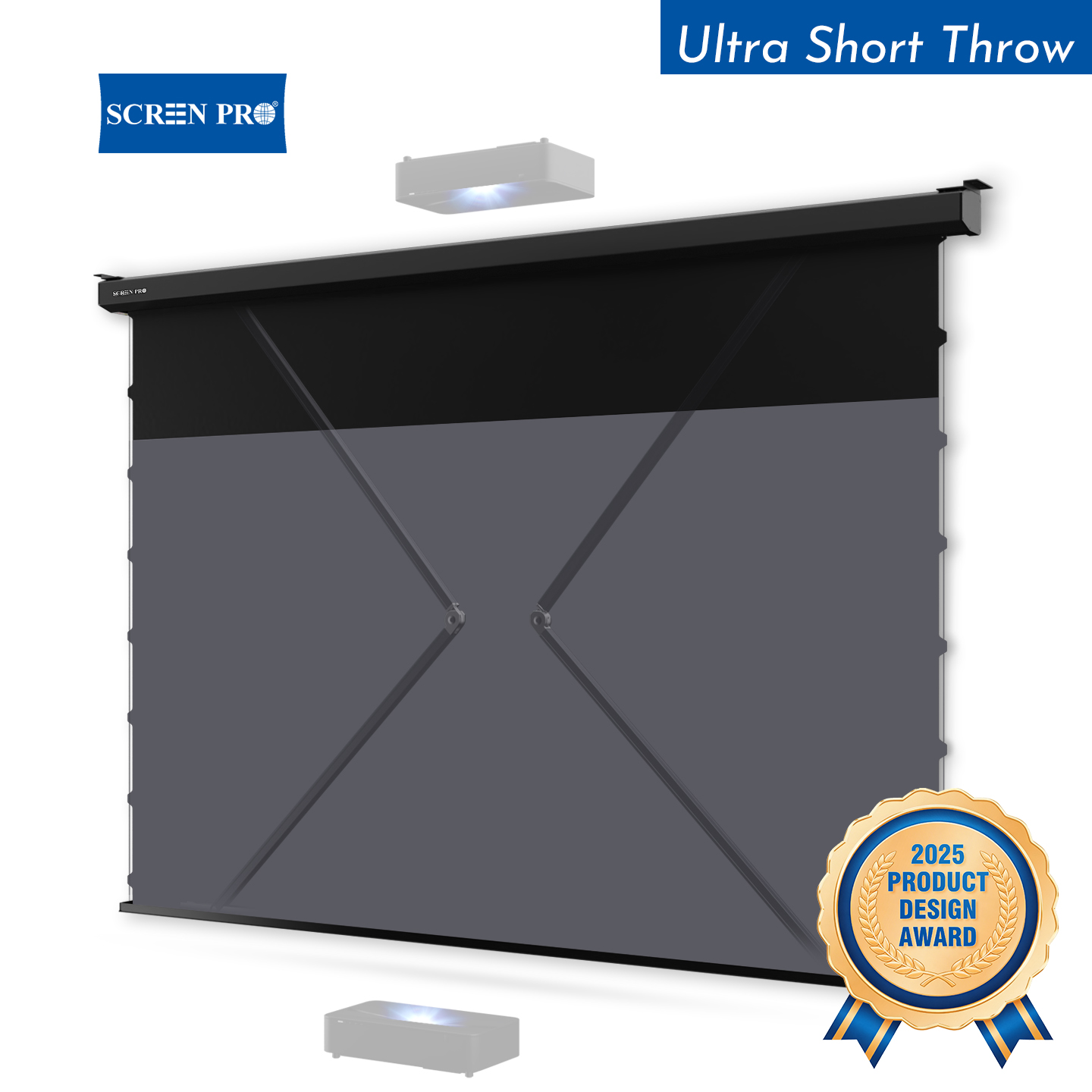
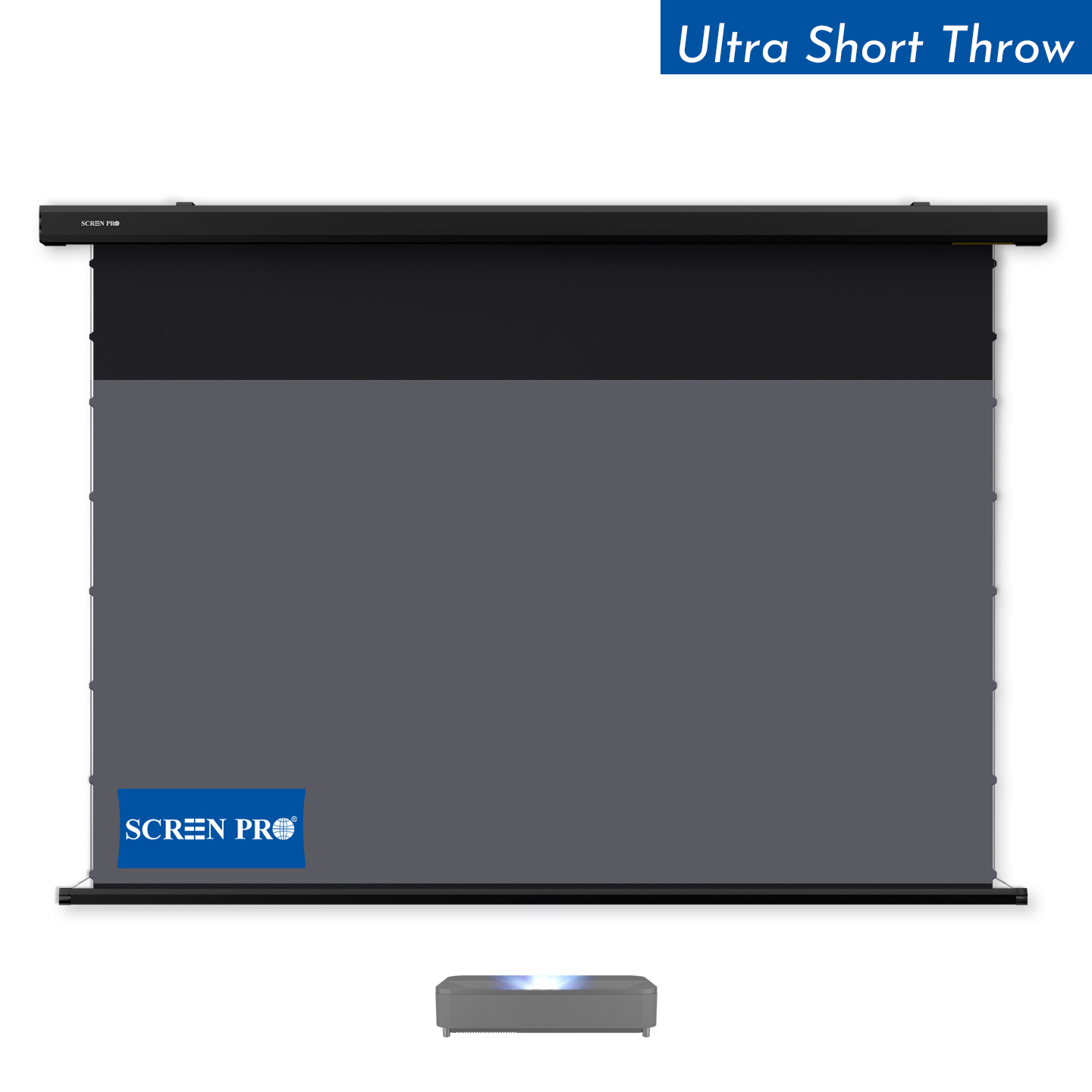
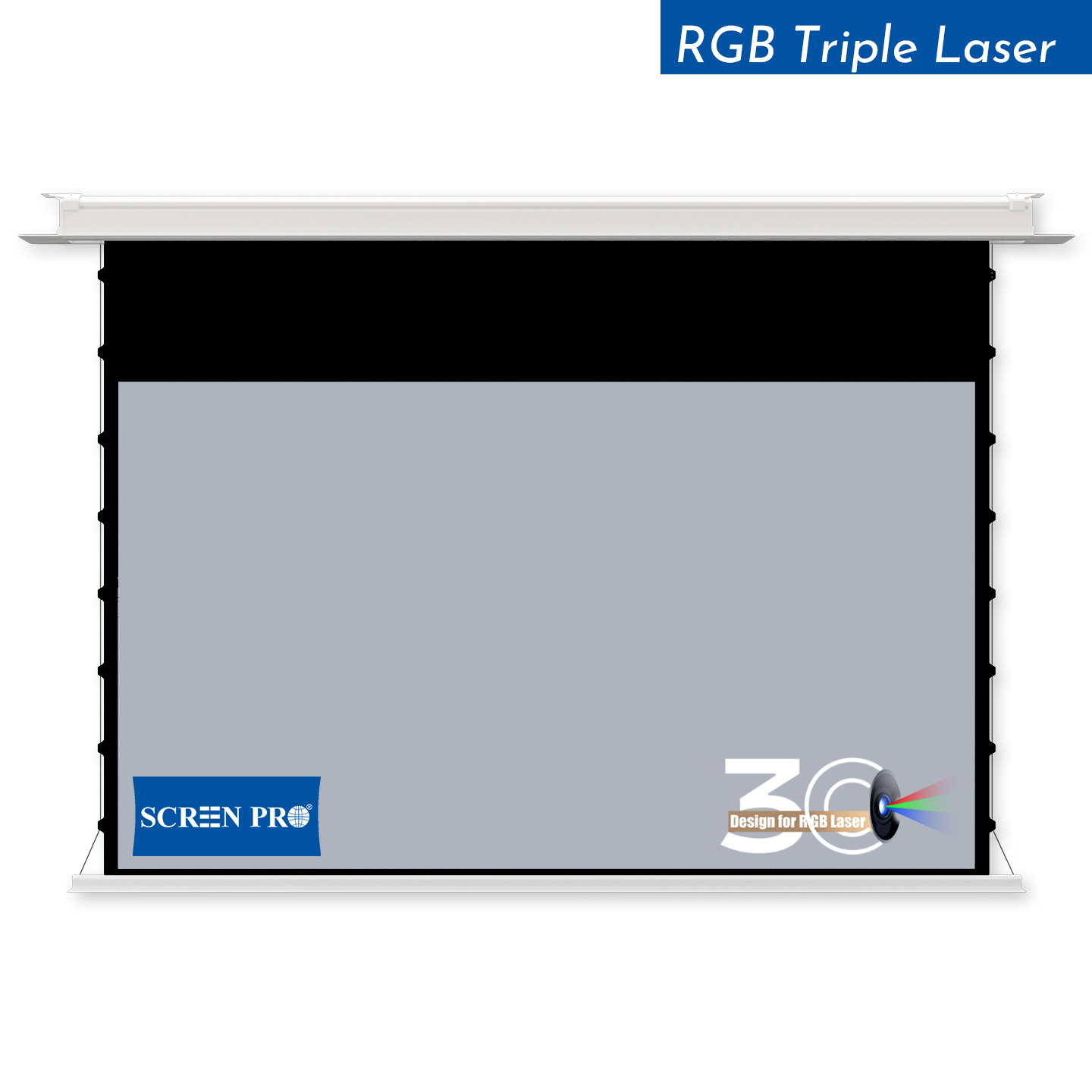
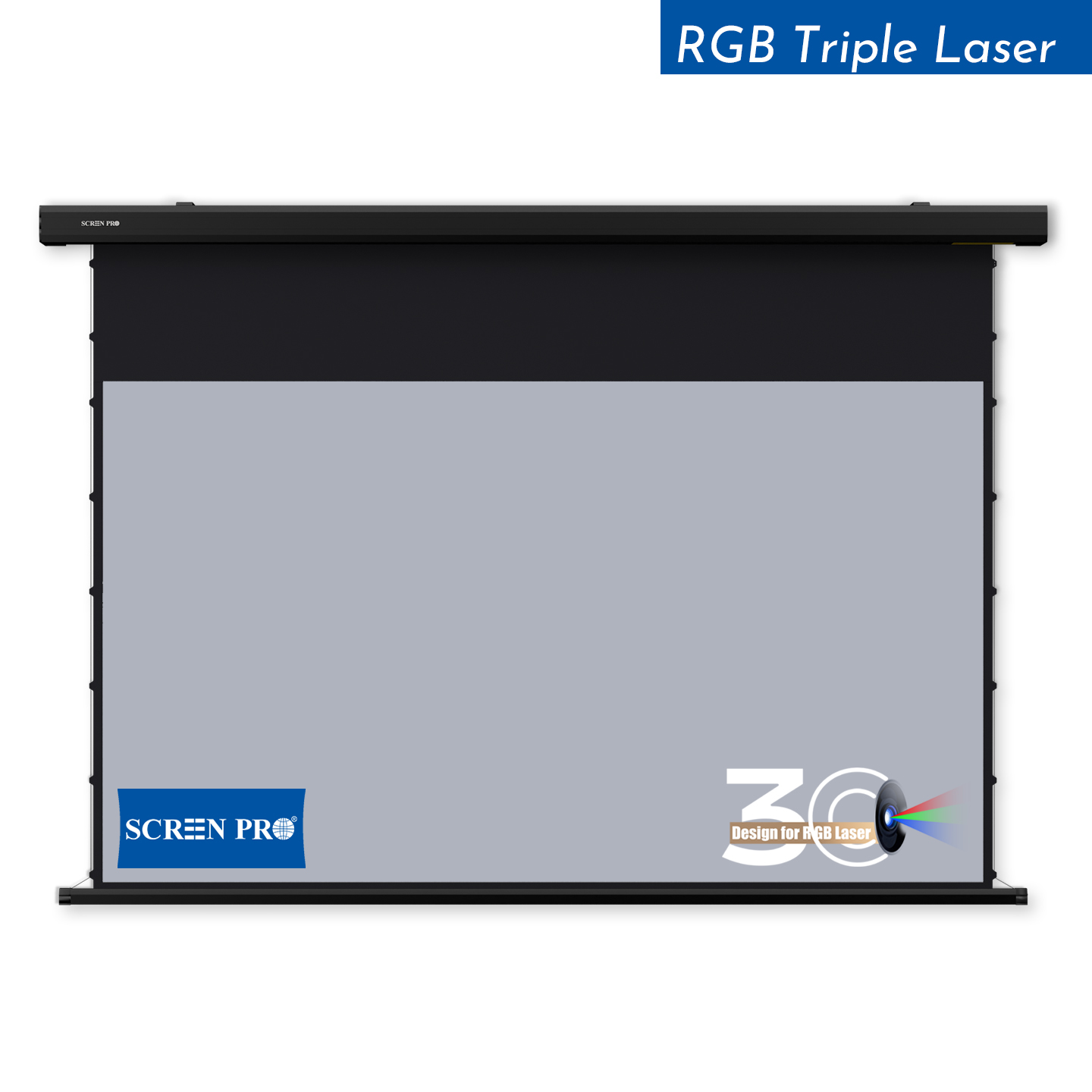
Motorized UST ALR Screen
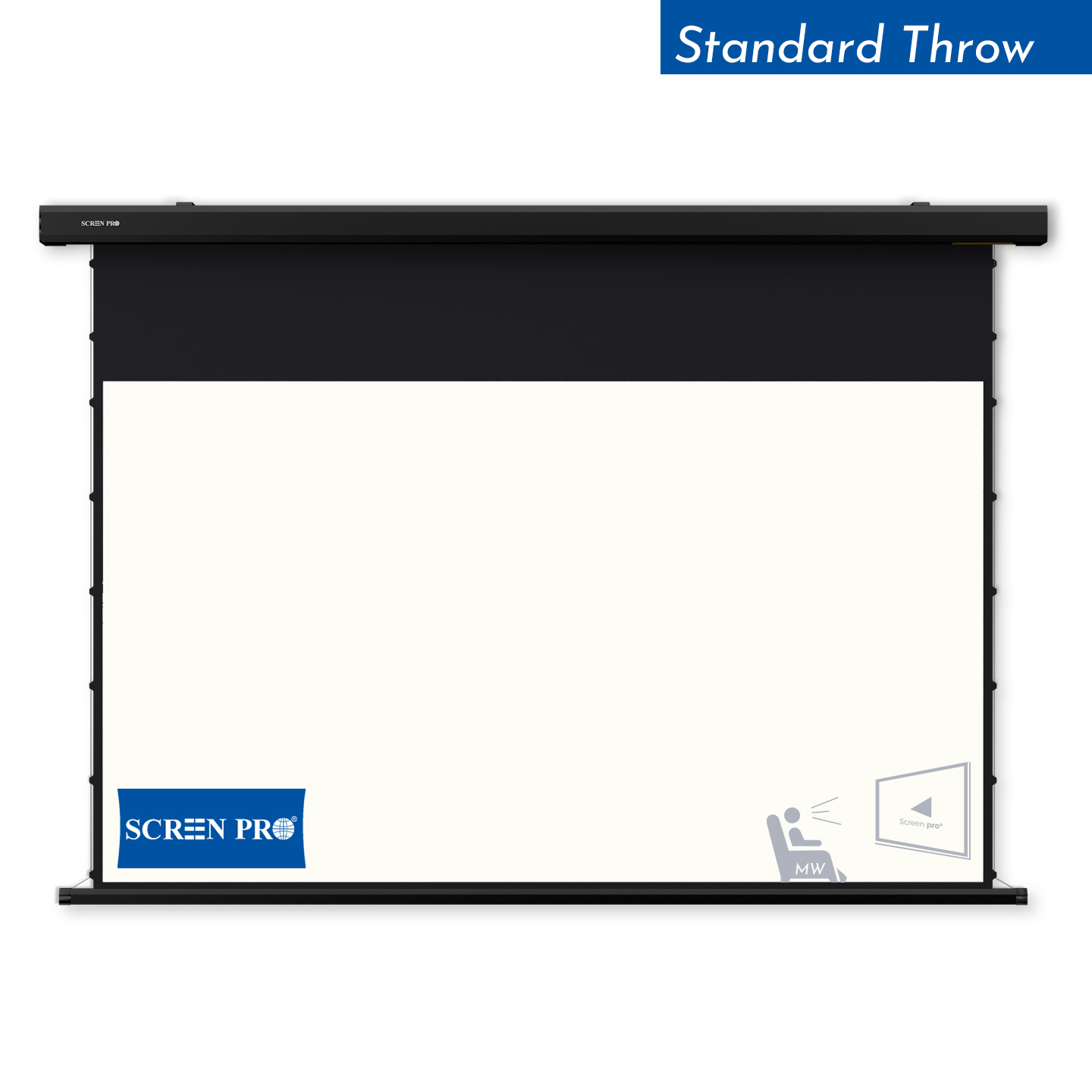
A retractable wall- or ceiling-mounted solution for users who want the screen to disappear when it is not in use.
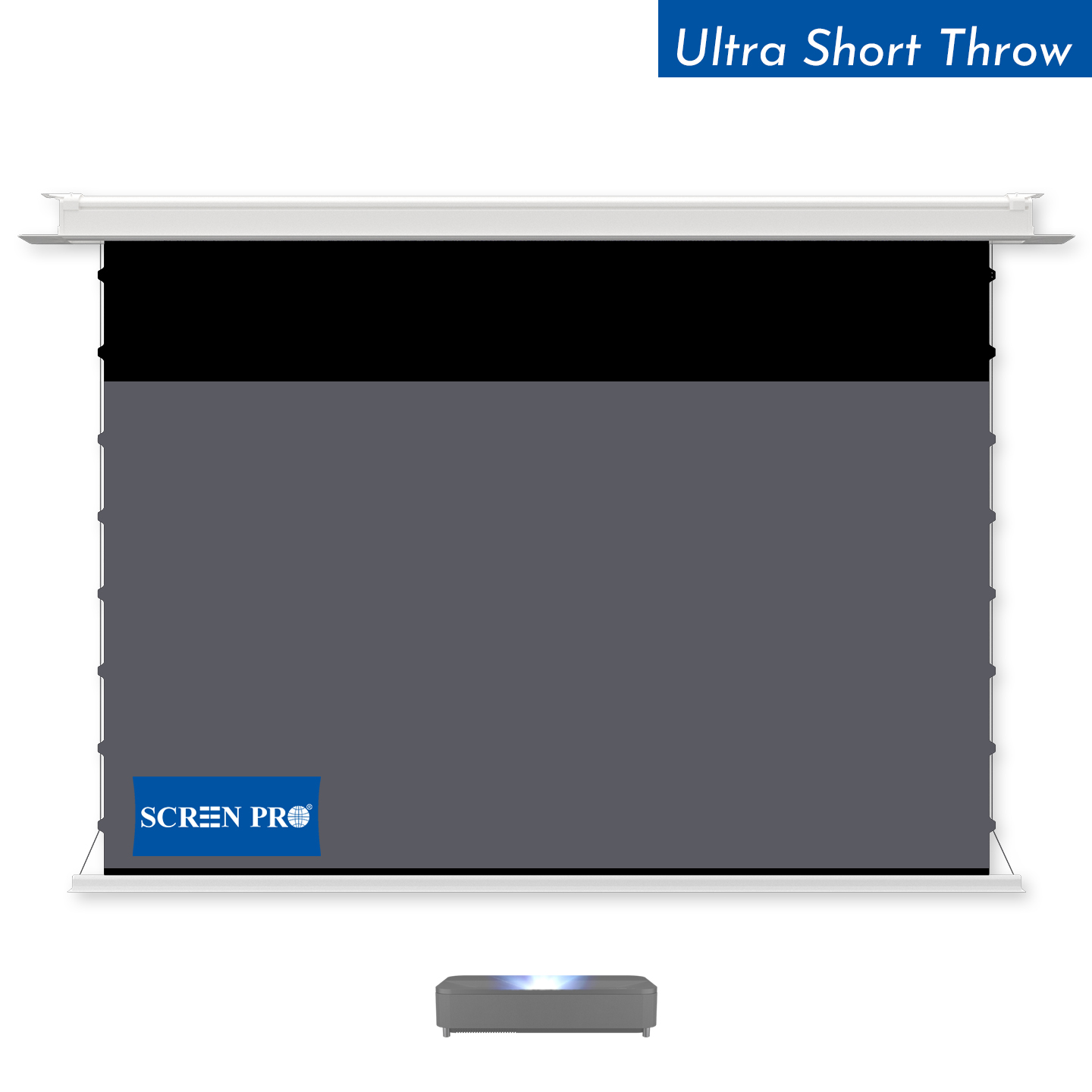
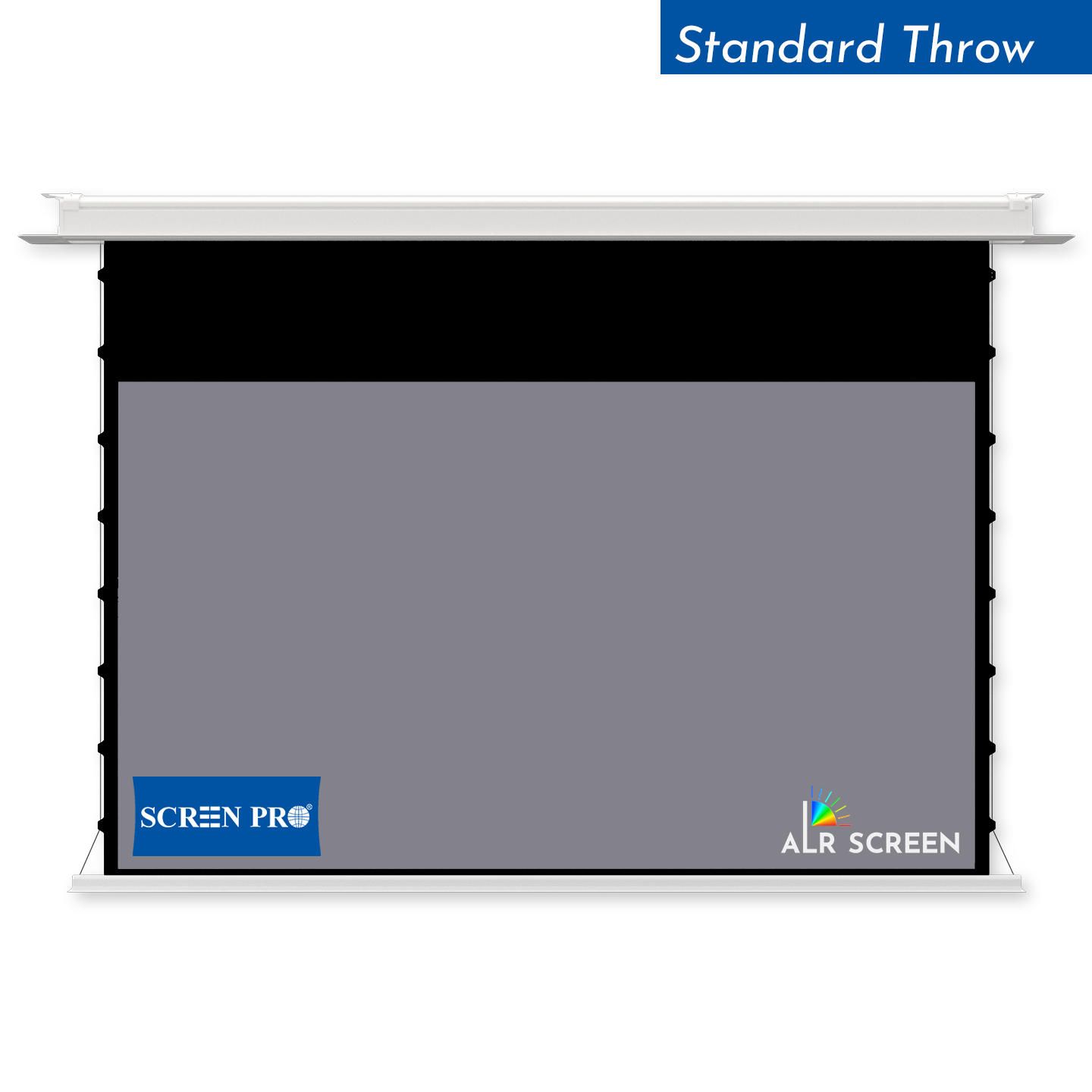
In-Ceiling UST ALR Screen
Designed for recessed ceiling integration and a cleaner architectural finish.
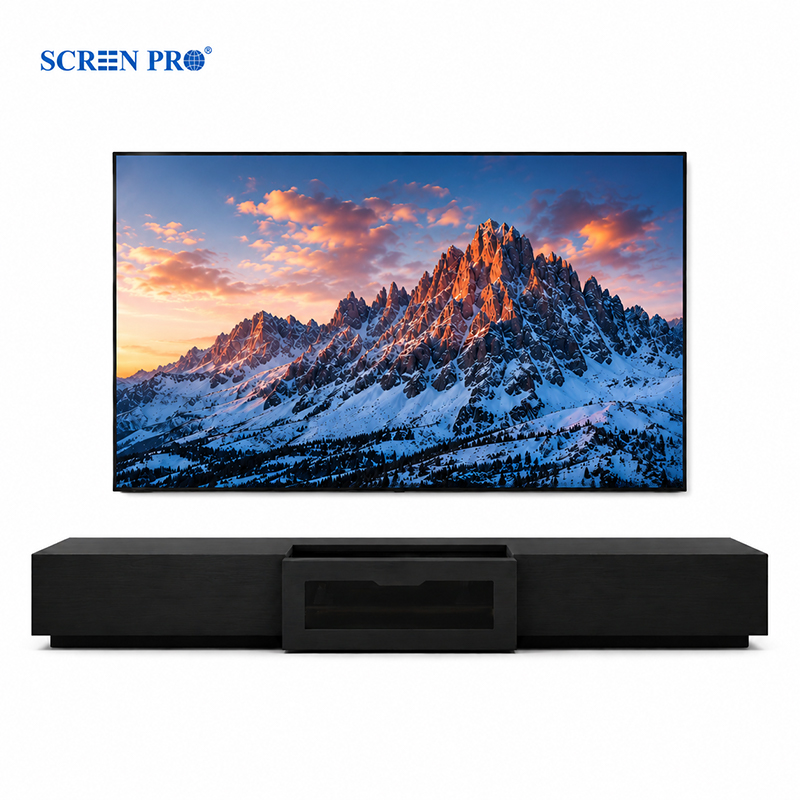
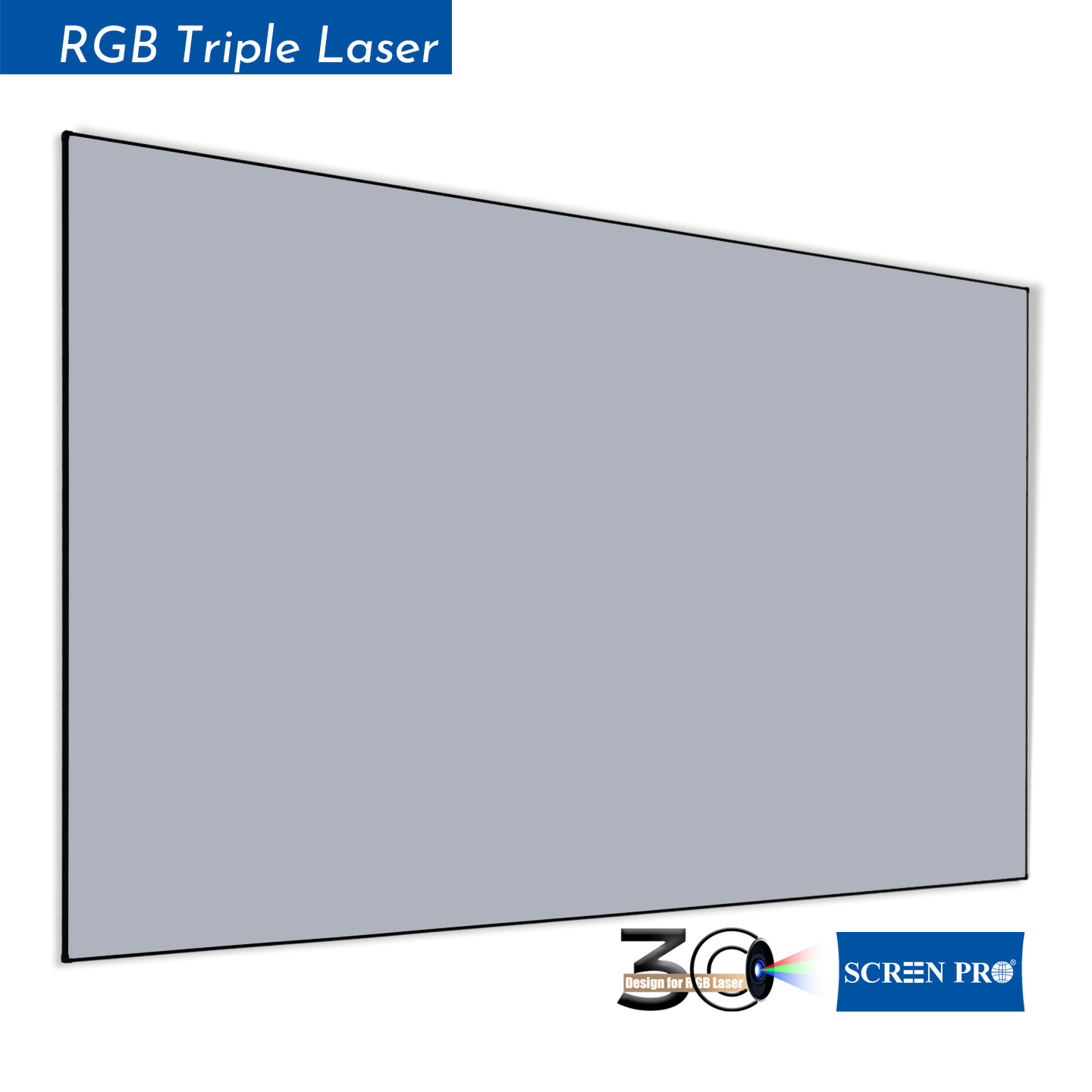
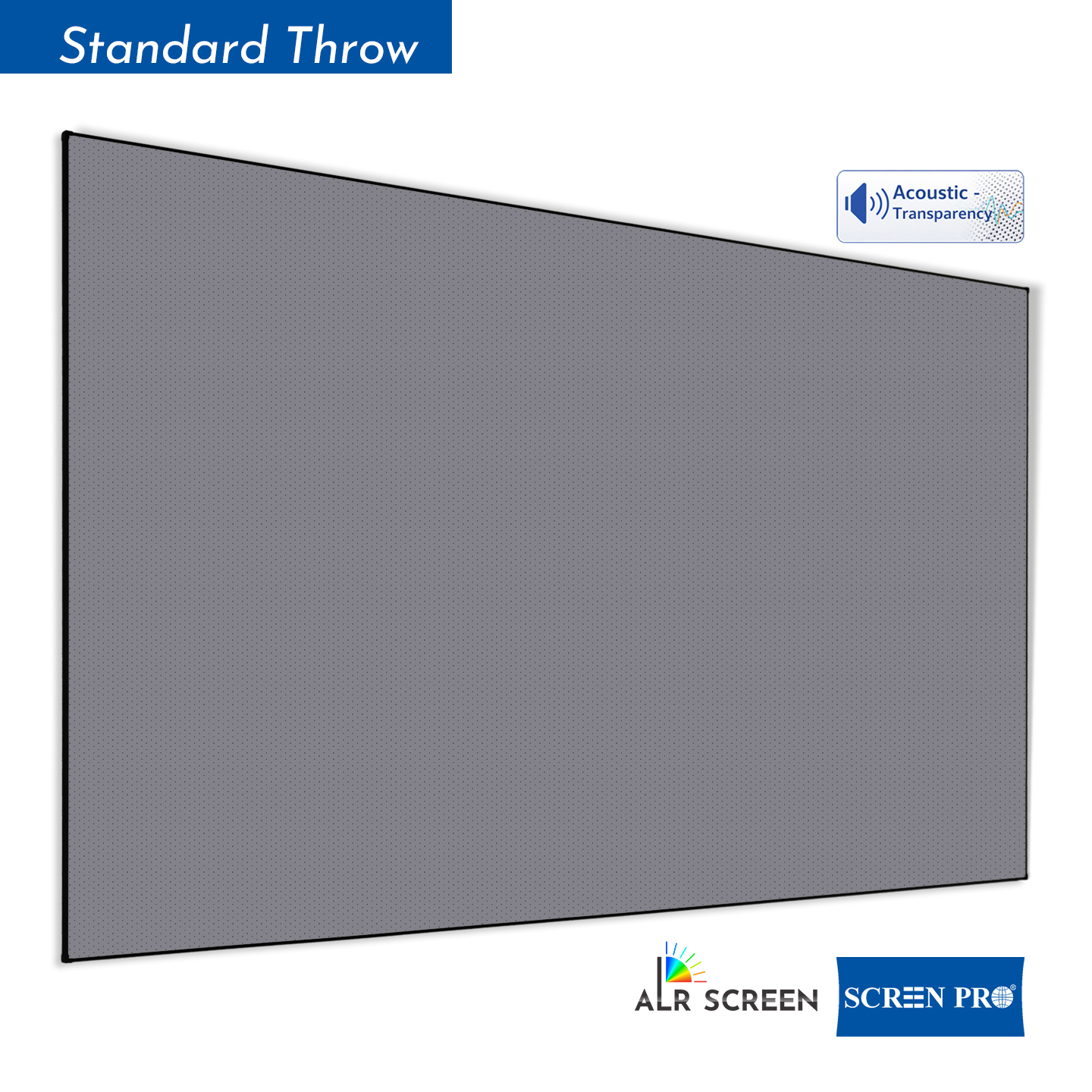
Slim-Frame UST ALR Screen
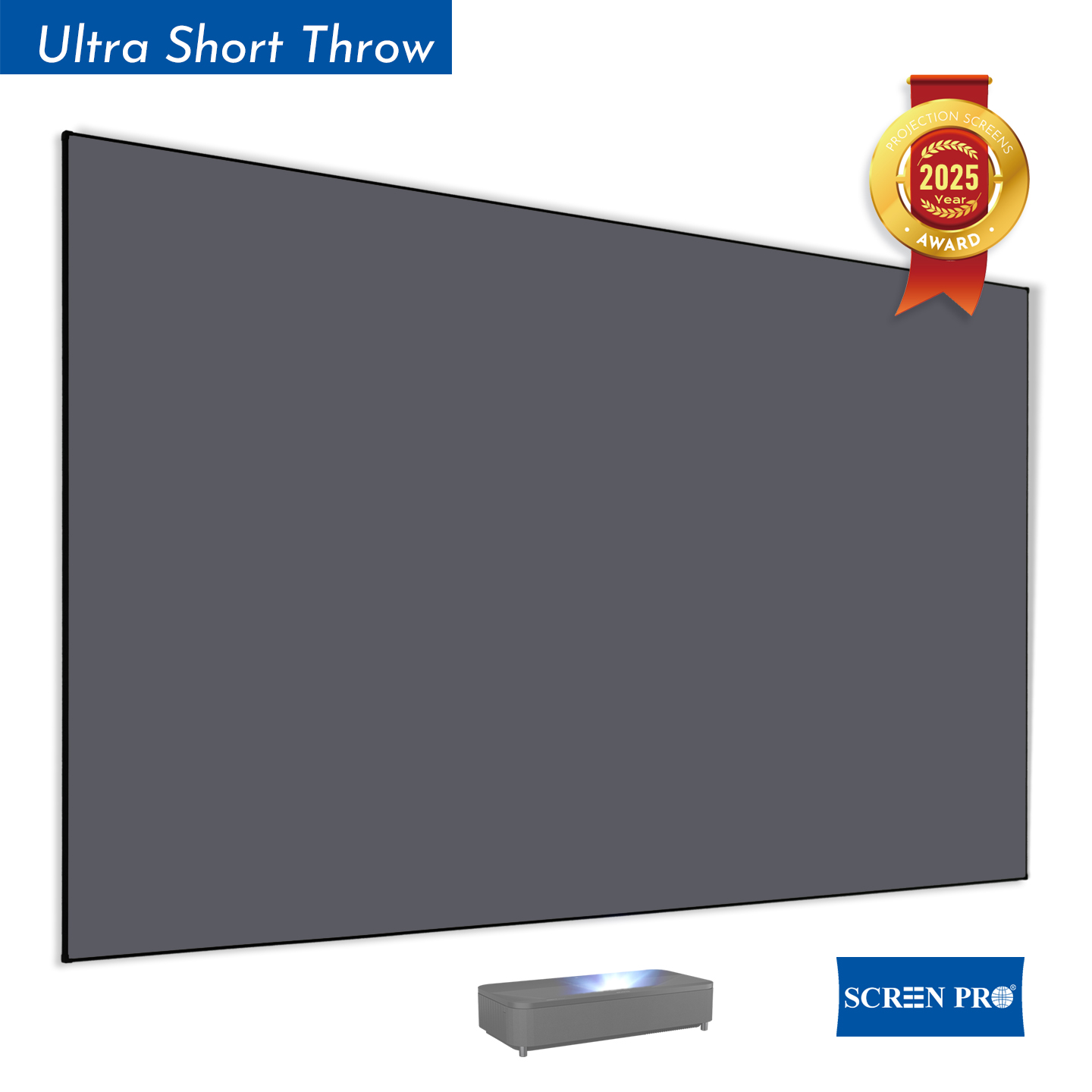
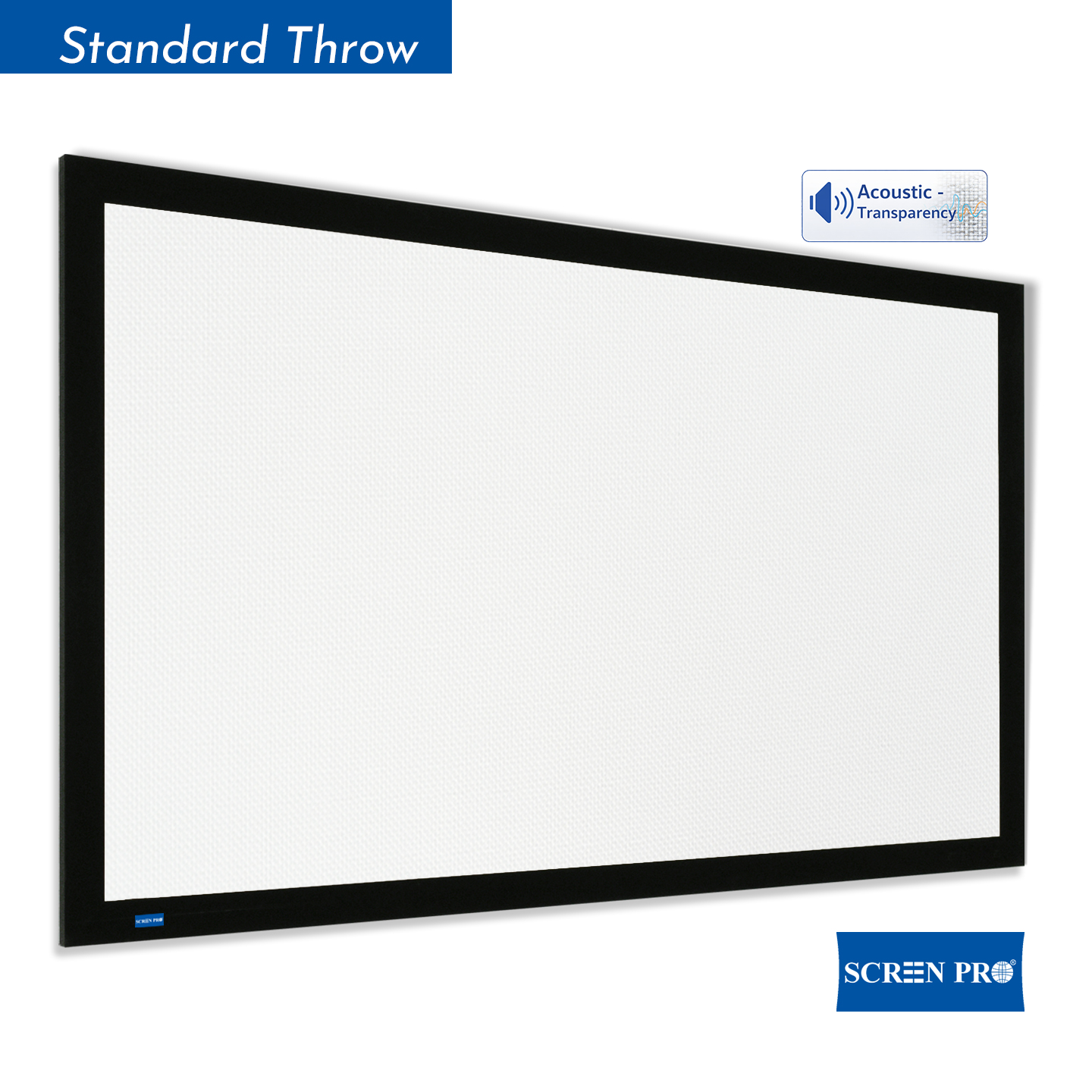
A permanent fixed-frame solution with a minimal bezel for dedicated Laser TV installations.
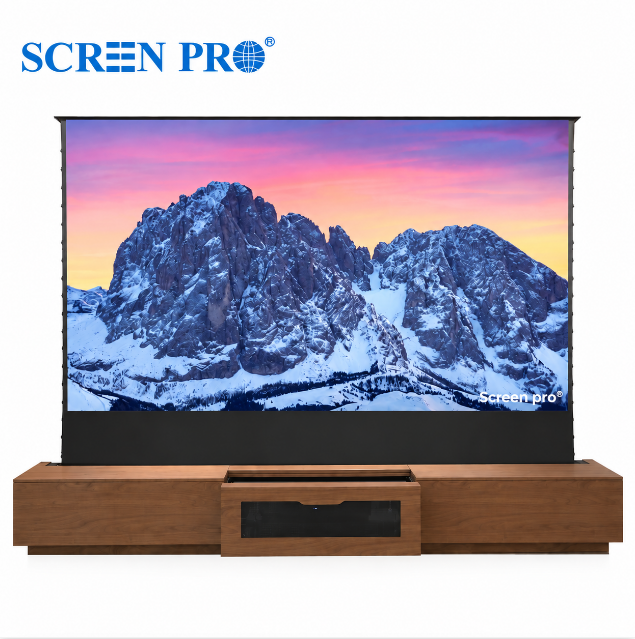
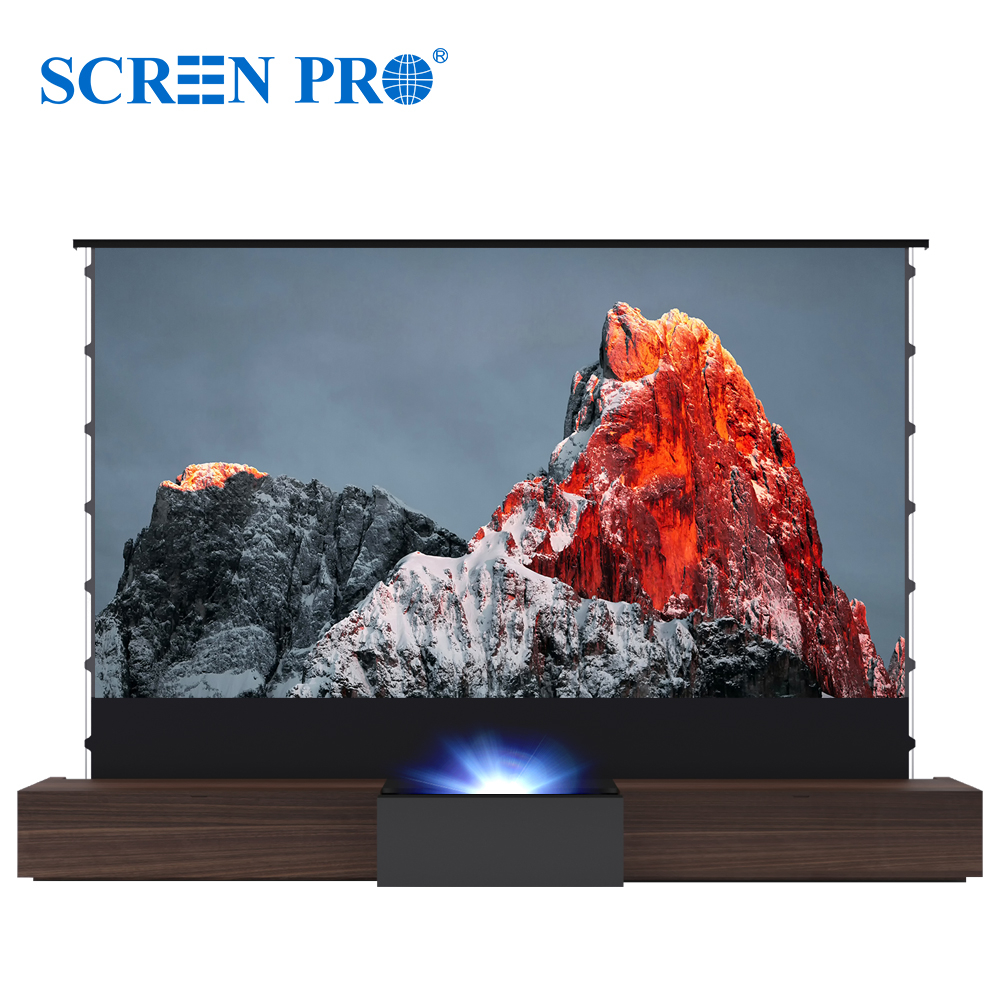
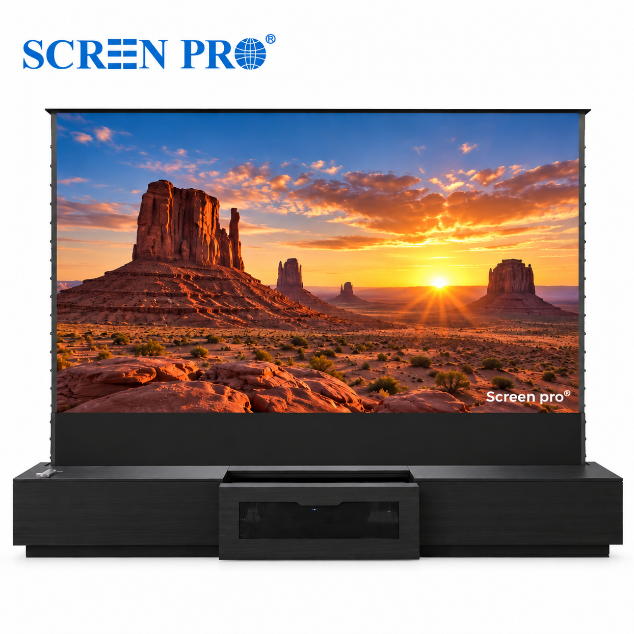
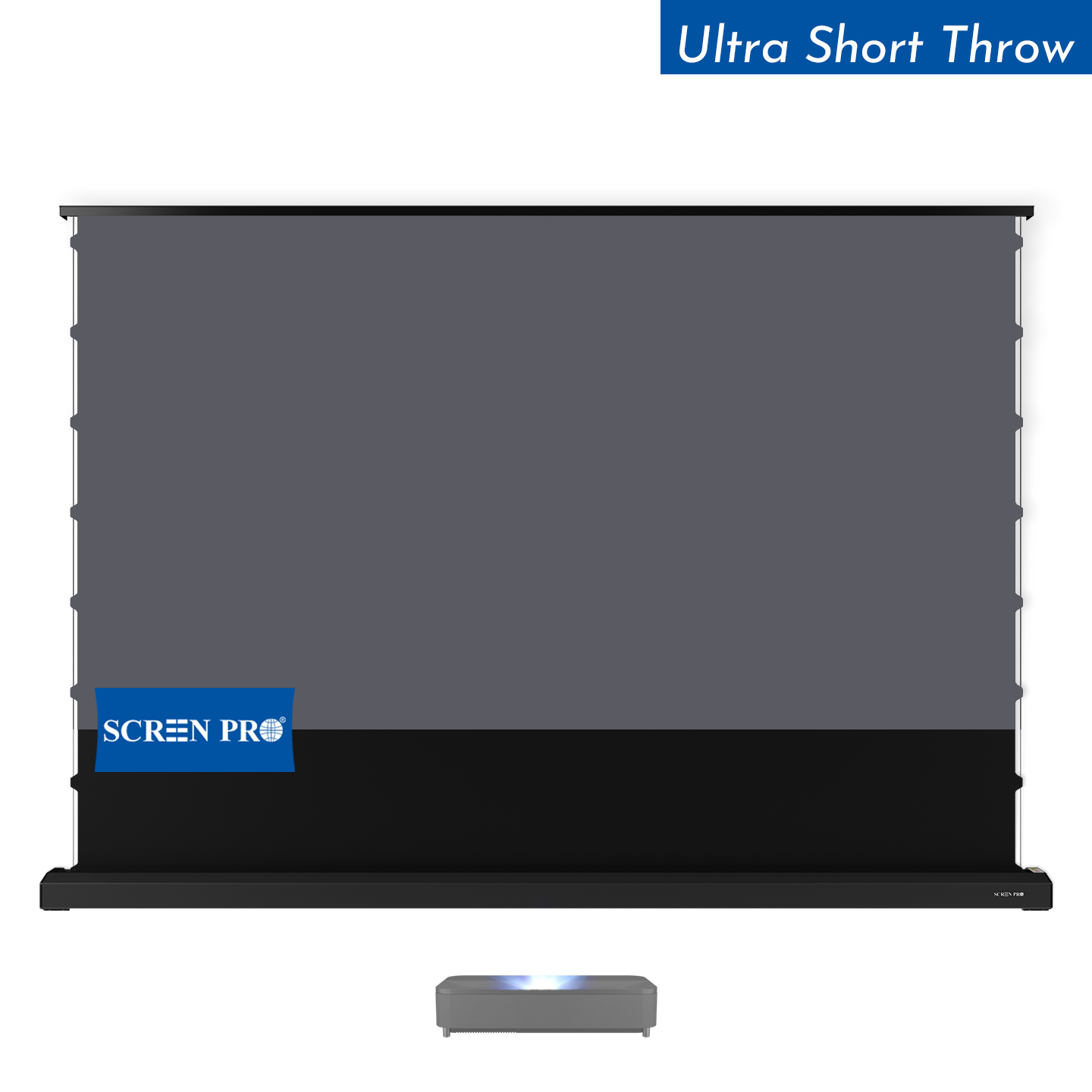
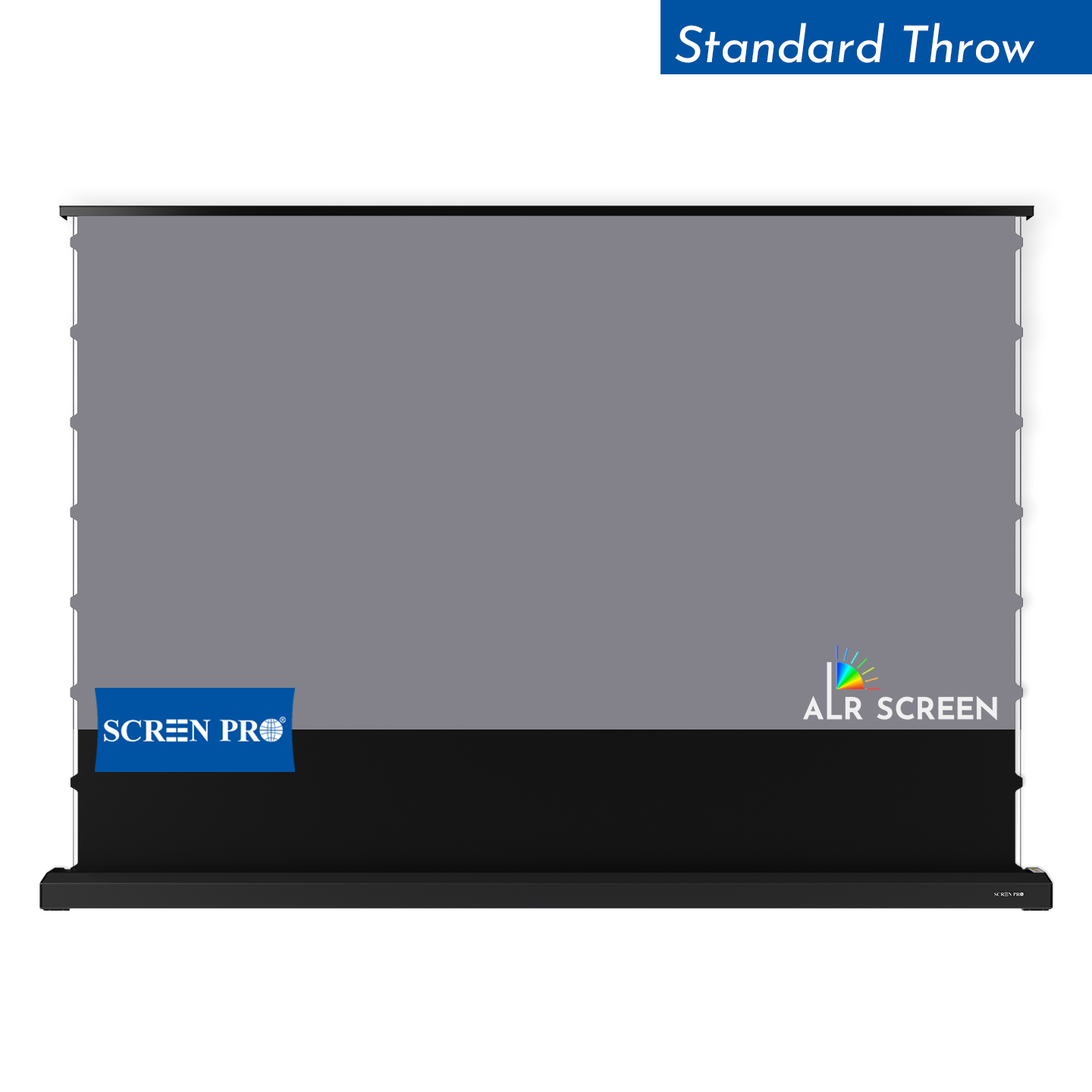
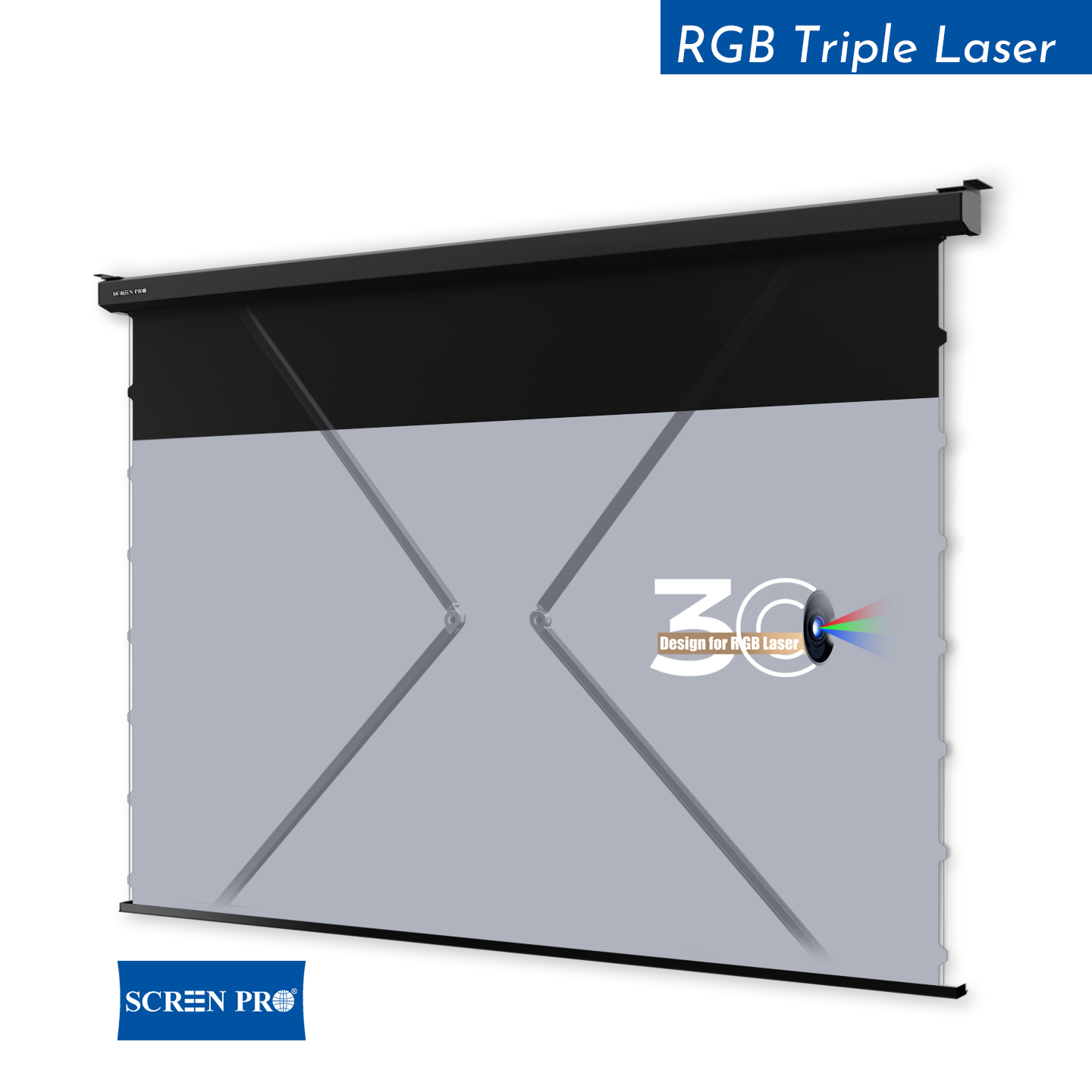
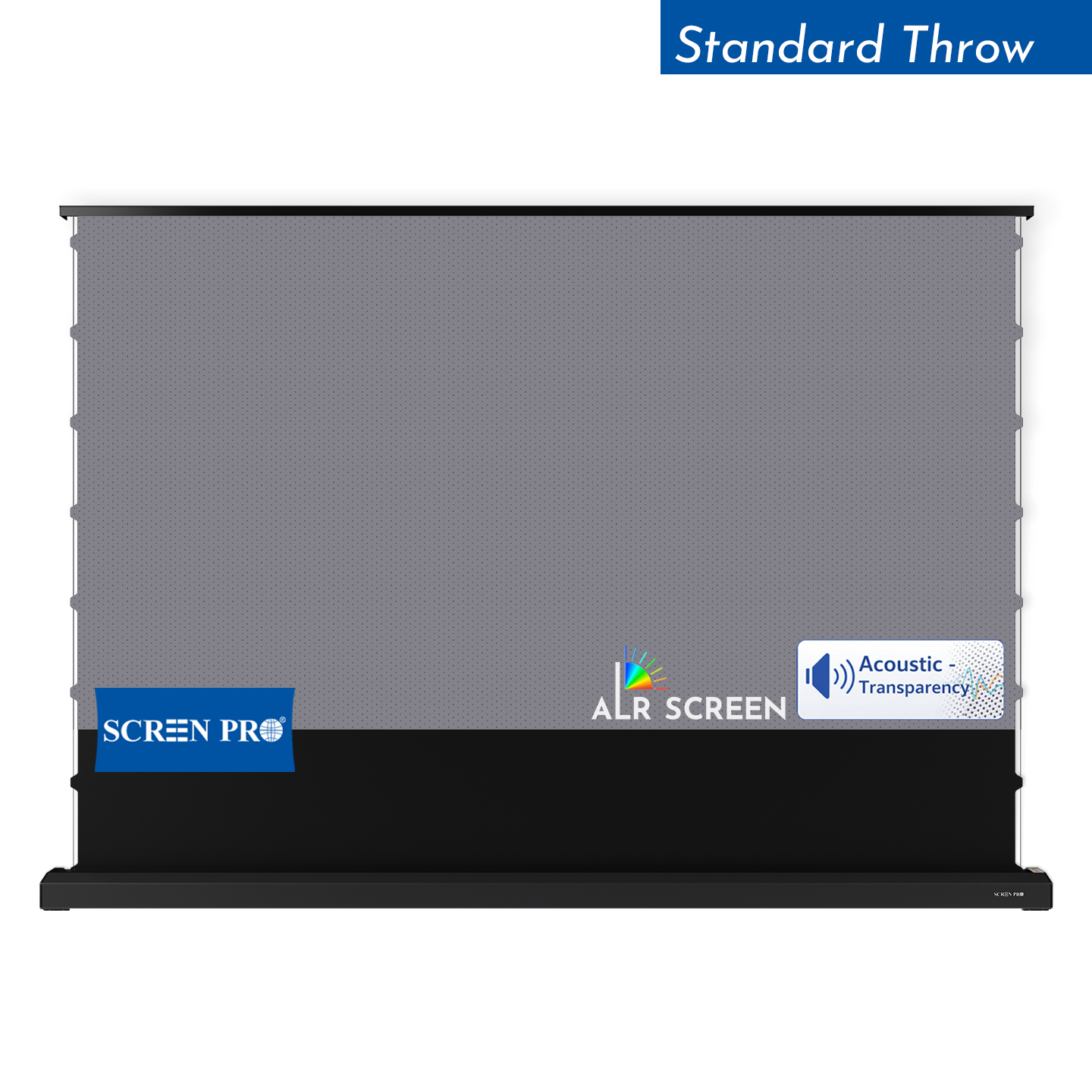
Floor-Rising UST ALR Screen
A flexible motorized option that rises from a floor housing or cabinet-based installation.
How to Choose a Screen for an RGB Triple-Laser UST Projector
Do not evaluate a screen using only the words “ALR,” “CLR” or “speckle-free.” Ask for a complete set of specifications and confirm that the material is suitable for the projector’s optical design.
- Confirm whether the projector uses RGB triple-laser, single-laser, LED or another light source.
- Confirm that the screen is designed for UST projection geometry.
- Ask whether the material is specifically engineered to reduce laser speckle.
- Check gain, viewing angle, ambient-light performance and color accuracy together.
- Review real projection demonstrations rather than relying only on rendered product images.
- Verify the required projection orientation before ordering a directional UST screen.
The most suitable solution is not necessarily the screen with the strongest single specification. It is the screen that achieves the best balance for the projector, room and viewer.
Frequently Asked Questions
Is laser speckle caused by the projector screen?
Not by the screen alone. Speckle results from the interaction between coherent laser light, the projection surface, the viewing geometry and the observer.
Does every UST projector produce visible speckle?
No. UST describes throw ratio, not light-source type. Lamp-based and LED projectors generally do not produce traditional laser speckle, while RGB triple-laser projectors may make it more visible.
Can a screen guarantee complete speckle elimination?
Complete elimination cannot be guaranteed across every projector, room and viewing condition. Anti-speckle materials are intended to reduce the visibility of speckle.
Why is speckle more noticeable with RGB triple-laser projectors?
RGB laser light is highly coherent. This makes optical interference patterns more likely to remain visible after reflection from the screen.
Is “speckle-free UST screen” an incorrect search term?
It is not meaningless, because it reflects a genuine consumer need. However, “anti-speckle UST screen” or “speckle-reduced UST screen” is generally more technically accurate.
Can a standard-throw RGB laser projector also produce speckle?
Yes. Speckle is associated with coherent laser light and is not limited to ultra-short-throw projectors.
Should I choose a screen based only on anti-speckle performance?
No. Screen gain, contrast, viewing angle, color accuracy, ambient light control, image uniformity and installation compatibility should all be evaluated together.
Speckle-Free Is the Search. Speckle-Reduced Is the Engineering Goal.
The term “speckle-free UST screen” describes a real consumer concern, but the underlying issue is laser coherence rather than UST projection itself. For RGB triple-laser systems, a properly engineered anti-speckle UST ALR screen can significantly reduce distracting shimmering and deliver a cleaner, more immersive image.
Find the Right Screen for Your ProjectorProduct specifications and perceived speckle performance may vary according to projector model, installation geometry, screen size, viewing distance, content and room conditions. SCREENPRO® recommends confirming compatibility before ordering.