

© Copyright 2004-2026 SCREEN PRO® All Rights Reserved | Specifications are subject to change without notice. All Rights ReservedSite Map Designed by iwonder.cn


PROJECTOR SCREEN TECHNOLOGY
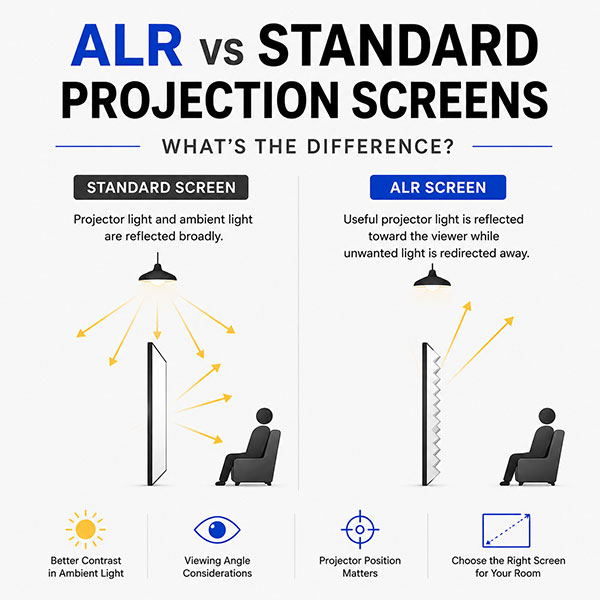
Standard projection screens are designed to reflect projector light broadly and evenly. ALR screens use optical structures to control where light goes, helping preserve contrast when unwanted ambient light is present.
THE BASIC DIFFERENCE
The main difference between a conventional screen and an ALR screen is how the surface handles light arriving from different directions.
A conventional white matte projection surface reflects projector light across a broad viewing area. This helps provide wide viewing angles and natural image uniformity.
The disadvantage is that unwanted room light reaching the screen may also be reflected toward viewers, reducing perceived contrast.
An ambient-light-rejecting screen uses optical characteristics that favor useful projector light while reducing the amount of unwanted light reflected toward the viewing area.
Because this behavior is directional, projector placement and installation orientation become more important.
HOW LIGHT BEHAVES
A standard matte screen is designed to distribute light broadly. That is an advantage in a dark theater, but it also means room light can reduce black levels and wash out the image.
An ALR screen takes a more selective approach. Instead of treating light from every direction equally, its optical structure is designed to direct more useful projector light toward the seating area while reducing unwanted light from other directions.
ALR does not “remove” ambient light. It controls how different incoming light directions are reflected toward or away from viewers.
SIDE-BY-SIDE
| Feature | Standard Screen | ALR Screen |
|---|---|---|
| Dark Room Performance | Excellent | Excellent to very good |
| Ambient Light | Limited contrast preservation | Better suited |
| Viewing Angle | Usually wider | Material-dependent |
| Color Neutrality | Typically very natural | Depends on optical structure |
| Projector Placement | Generally flexible | More specific |
| UST Compatibility | Depends on material | Requires UST-specific ALR |
| Installation Direction | Usually simple | Often directional |
| Typical Cost | Lower | Higher |
IMPORTANT
Different ALR materials are designed around different projection geometries. A material suitable for a standard-throw projector may perform incorrectly with a UST projector.
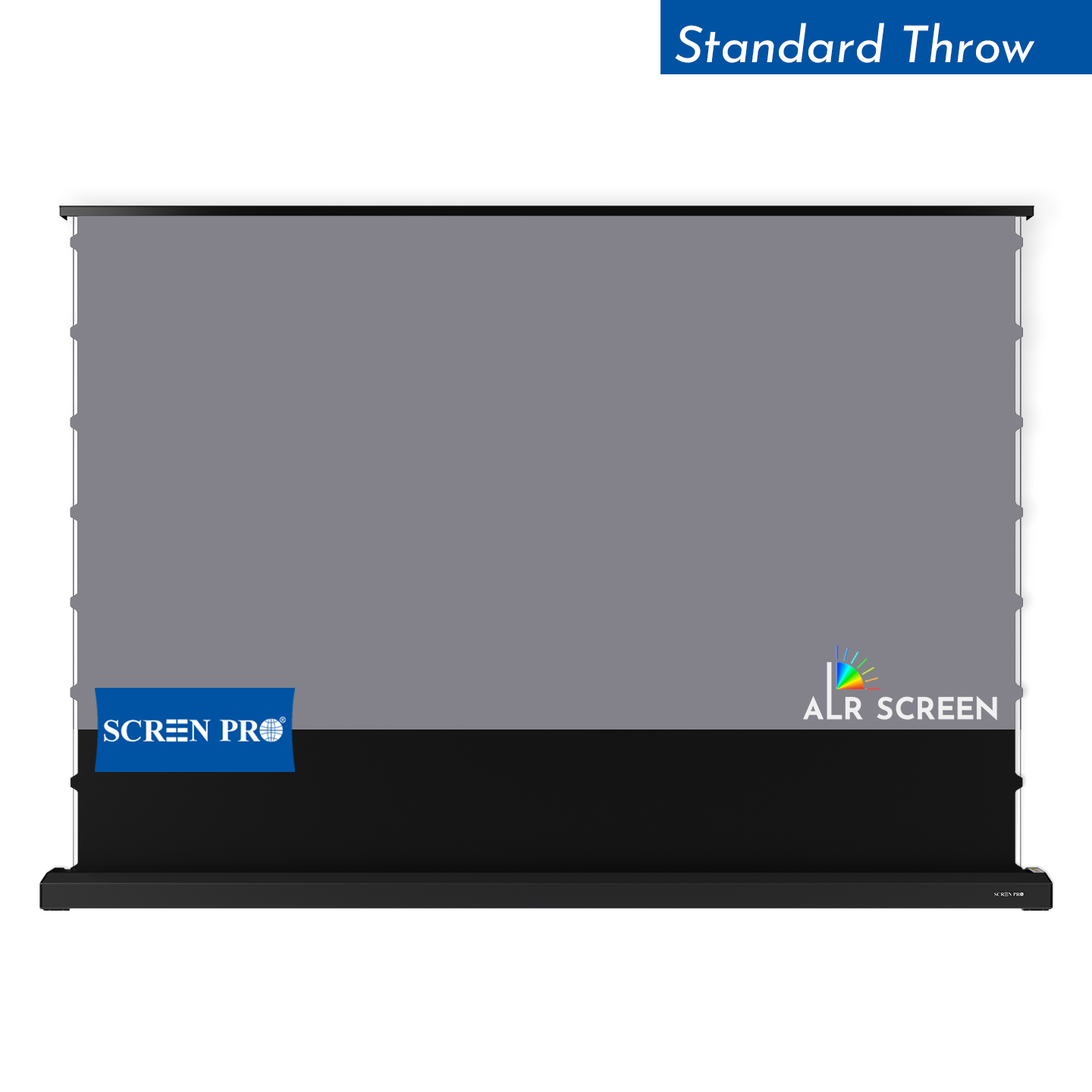
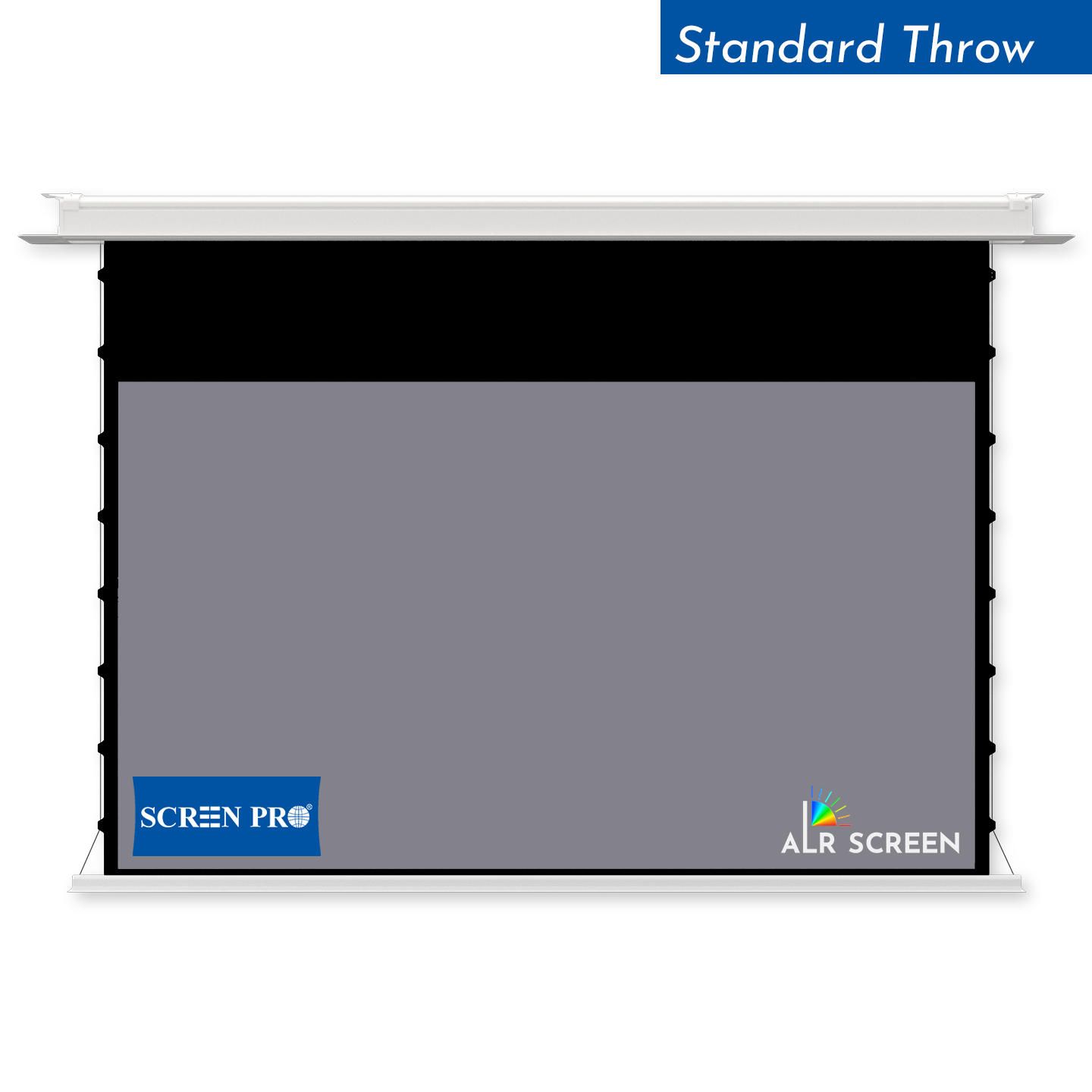
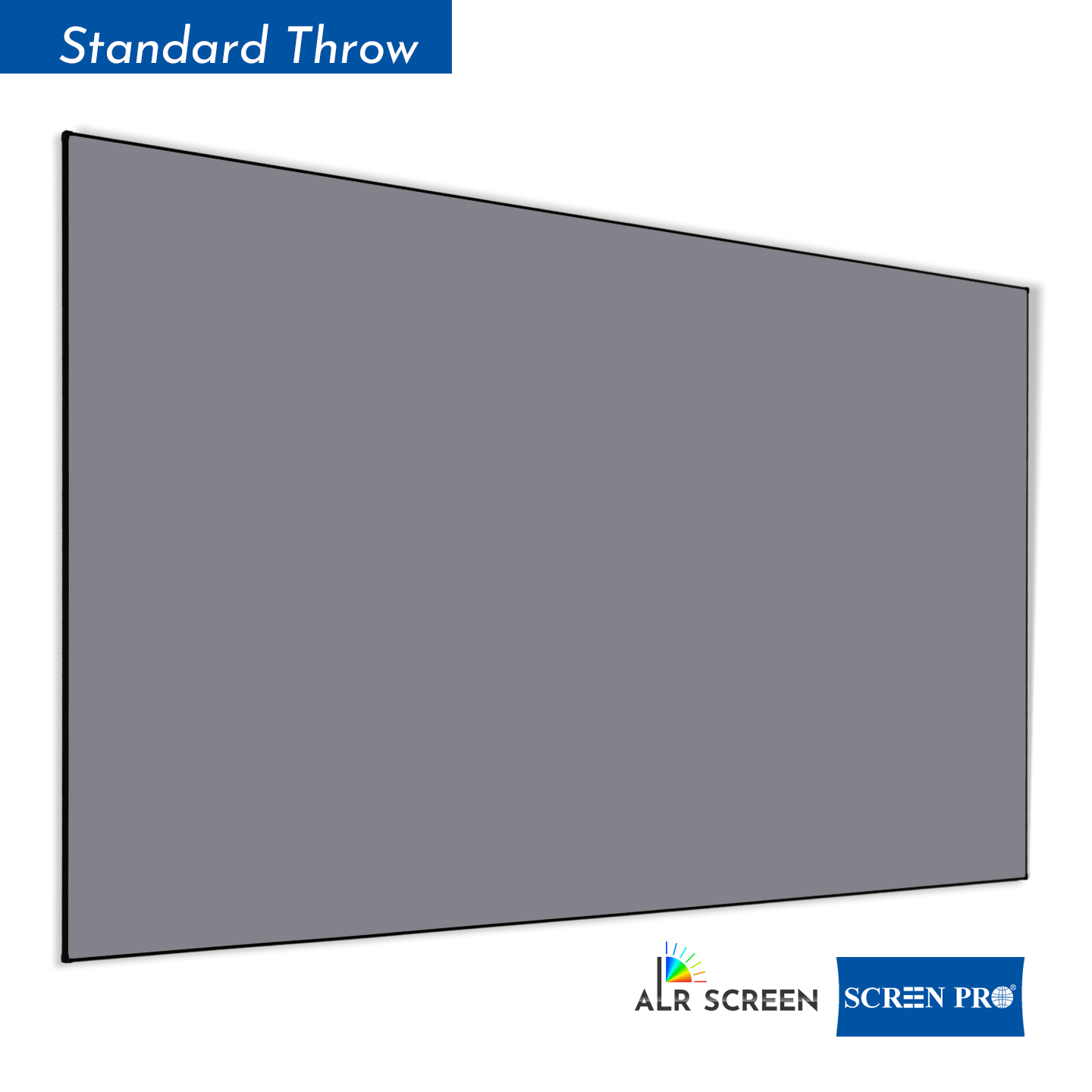
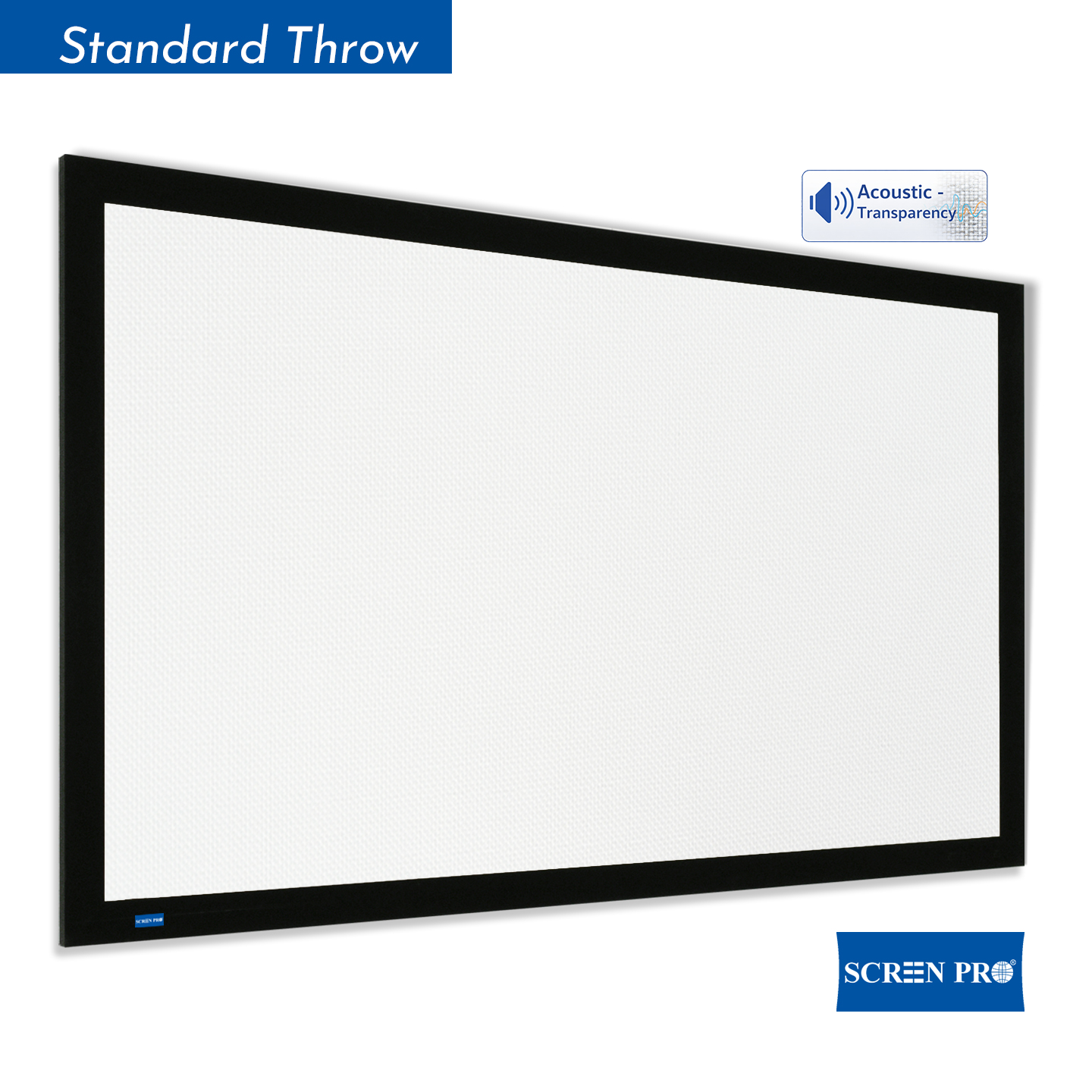
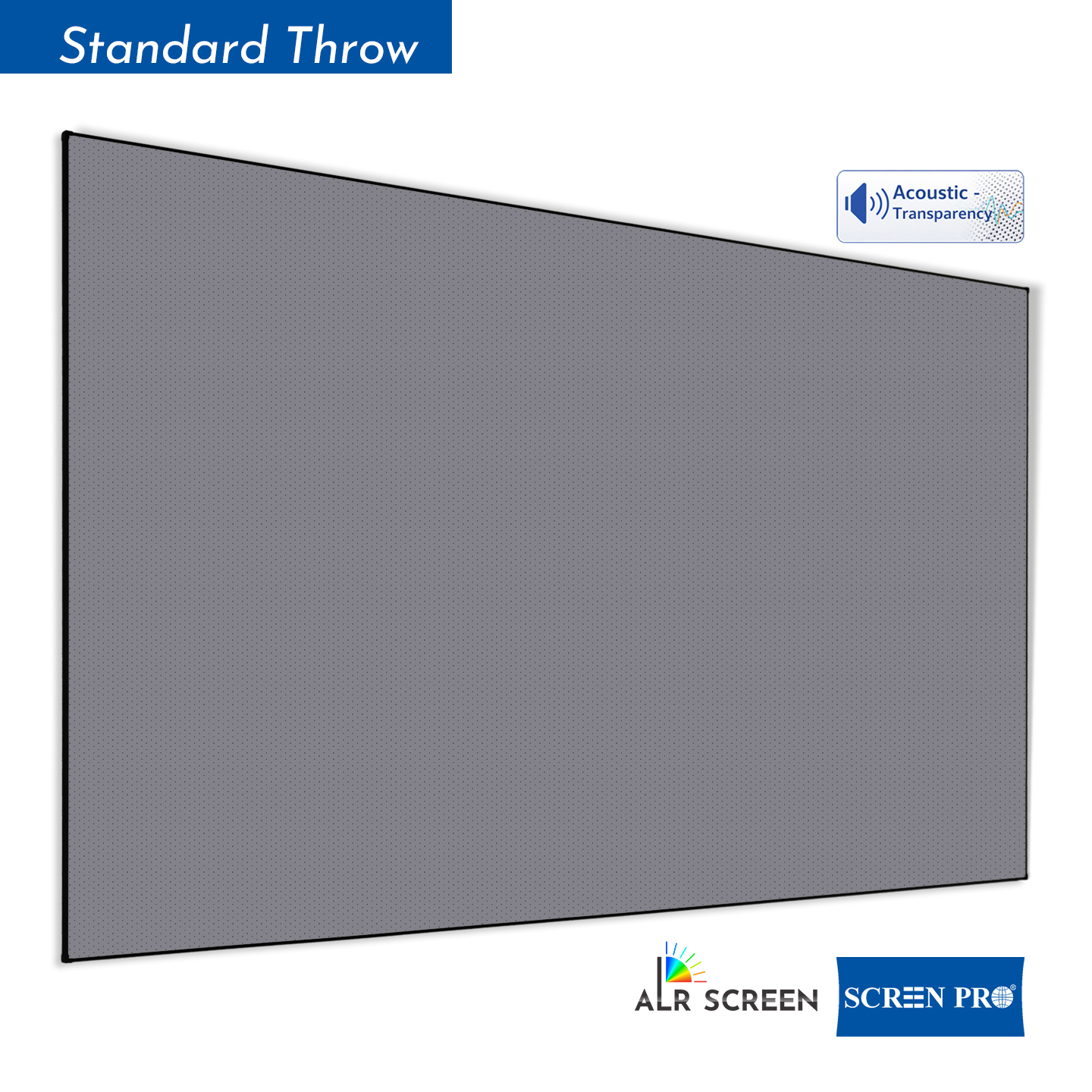
Designed for projectors positioned farther away from the screen and usually near the viewing axis.
Designed to accept light arriving steeply from below while rejecting more light from above.
Uses directional optical microstructures to control the angular path of reflected light.
Never choose an ALR screen by the term “ALR” alone. Match the material to projector type and projector position.
BRIGHTNESS
No. An ALR screen does not increase the projector's lumen output. The projector produces the light.
What ALR can do is redistribute reflected light more strategically. By reducing the amount of unwanted ambient light reaching the viewer from the screen, the image may appear to have stronger contrast and greater visual impact in a bright room.
ALR improves how light is managed. It does not create additional projector brightness.
CONTRAST
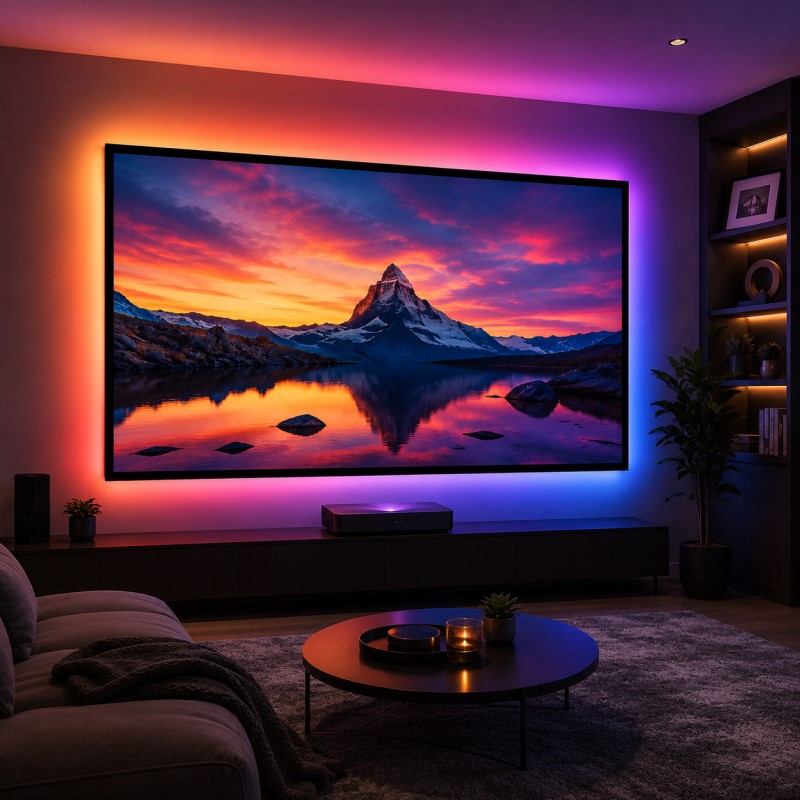
In rooms with ambient light, an ALR screen can improve perceived image contrast by reducing the amount of unwanted light reflected toward viewers.
However, the screen does not change the projector's native contrast ratio. In a completely dark room, the advantage of ALR may become much smaller because there is little unwanted room light to reject.
ULTRA SHORT THROW
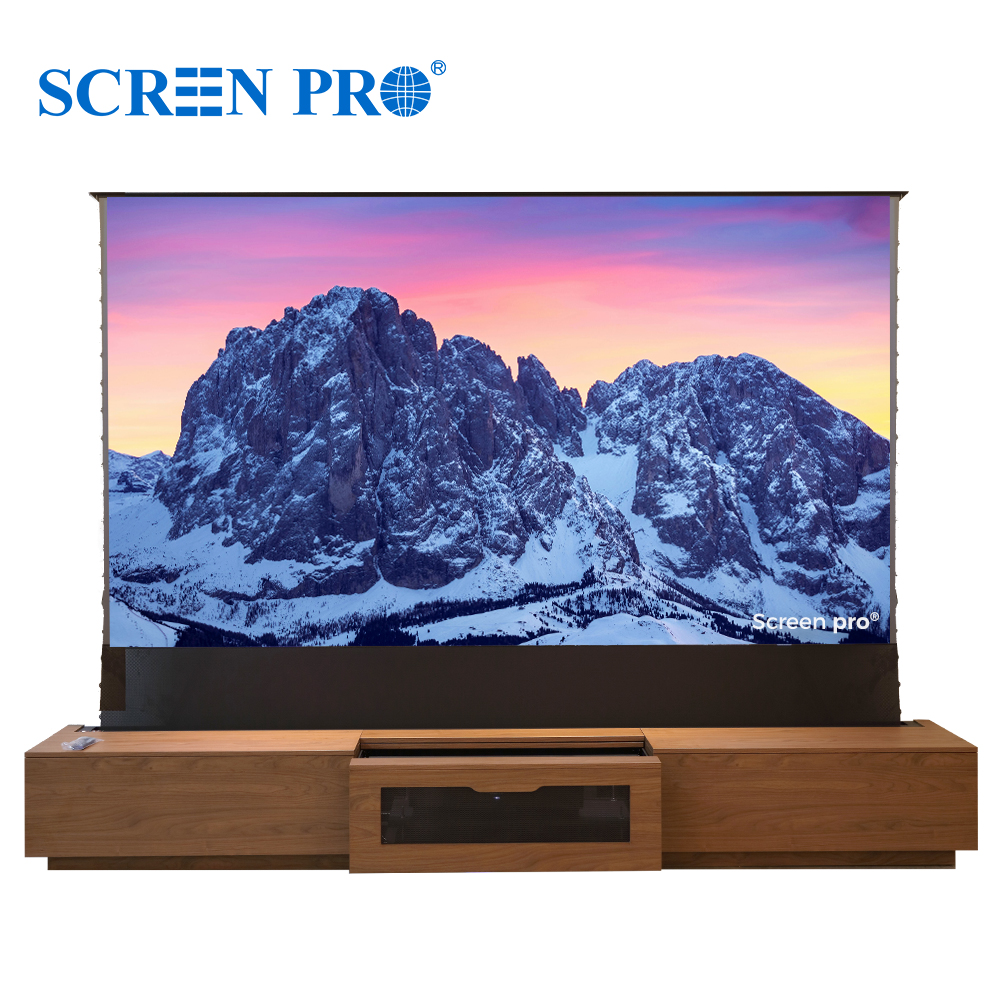
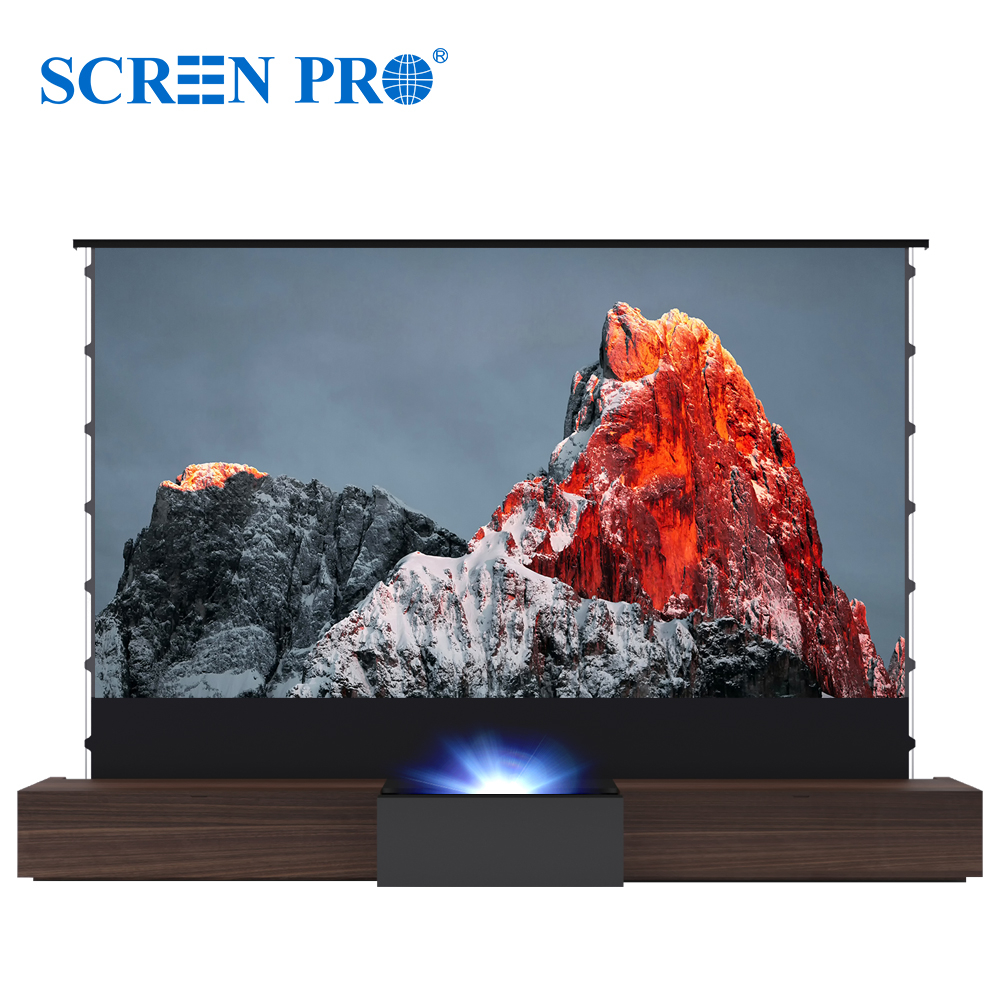
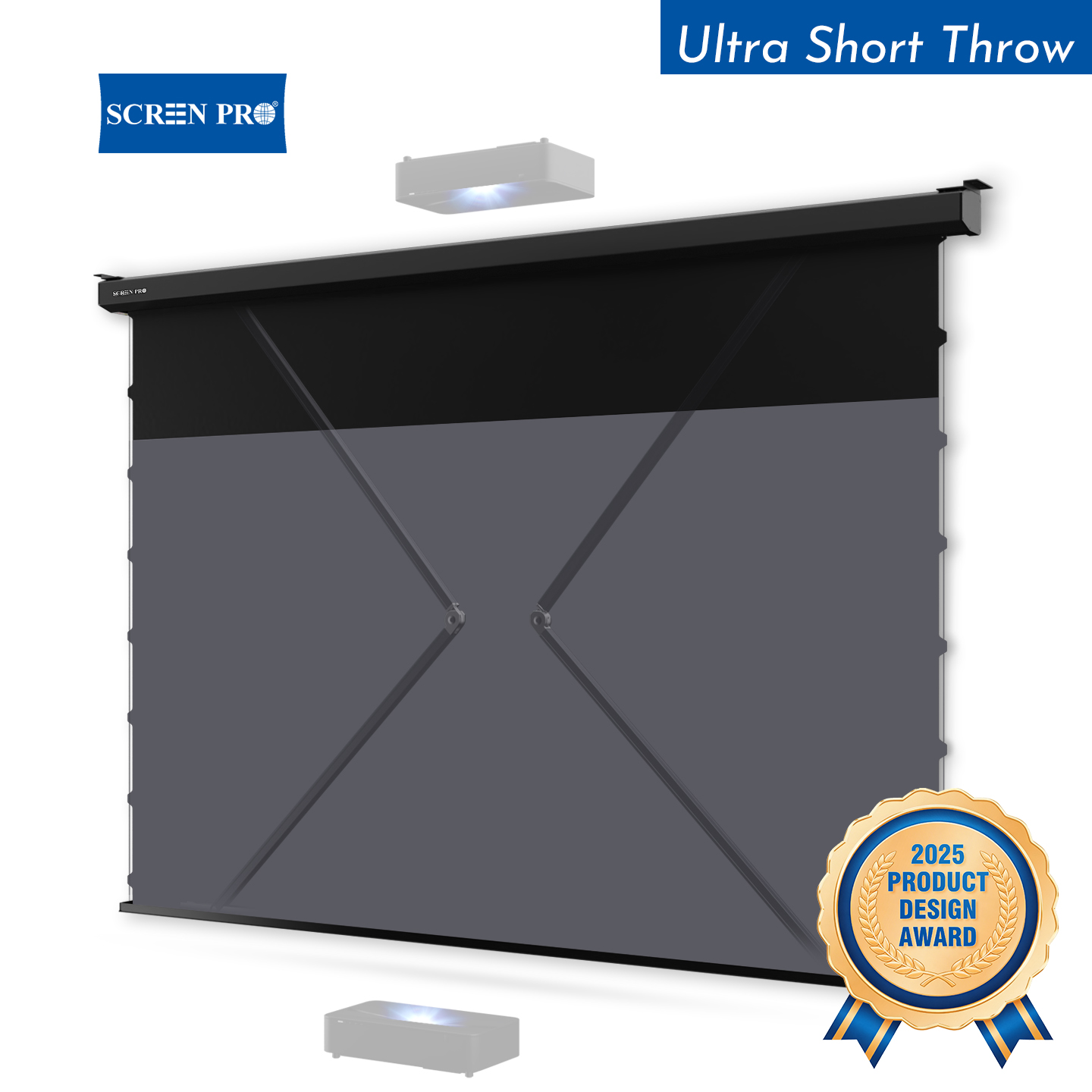
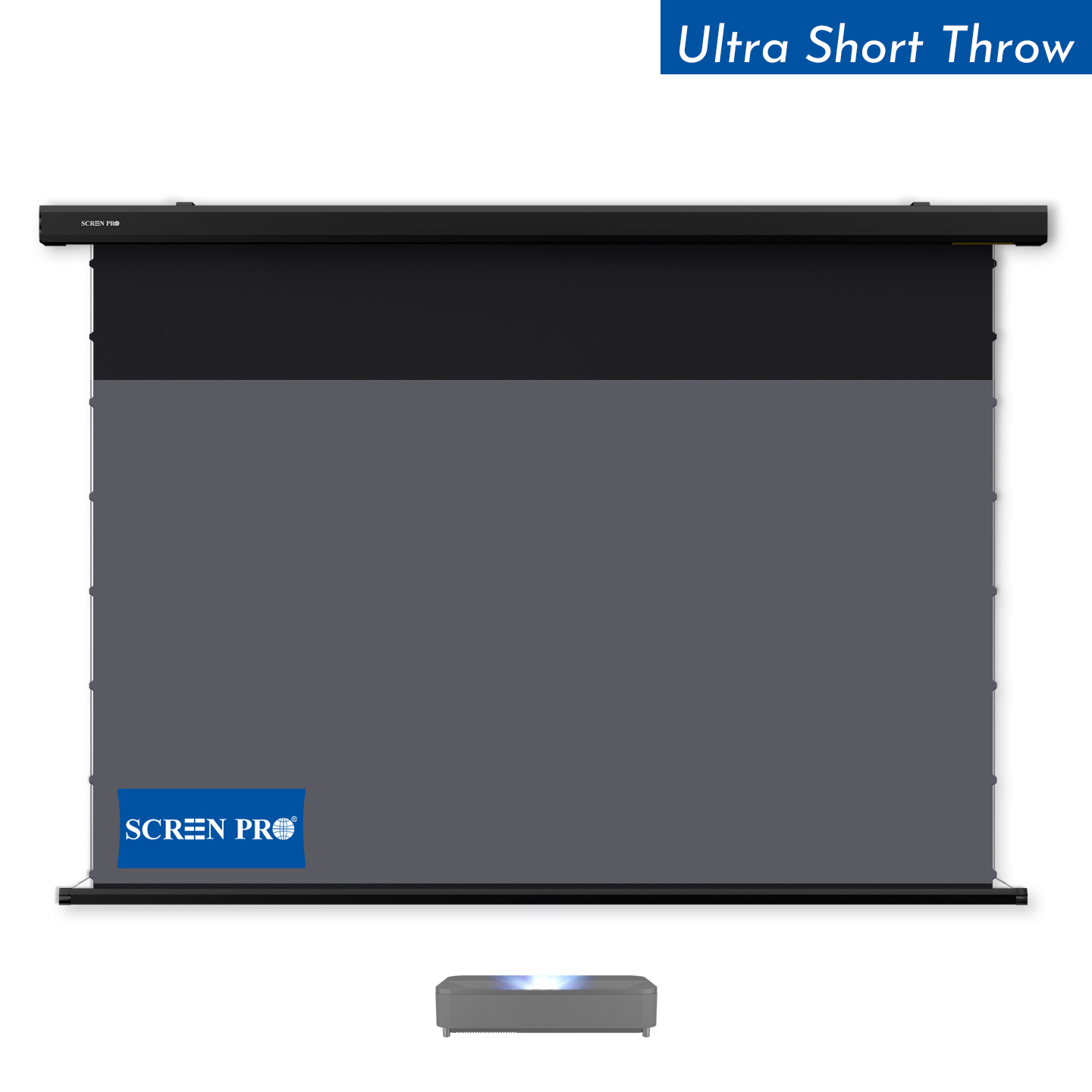
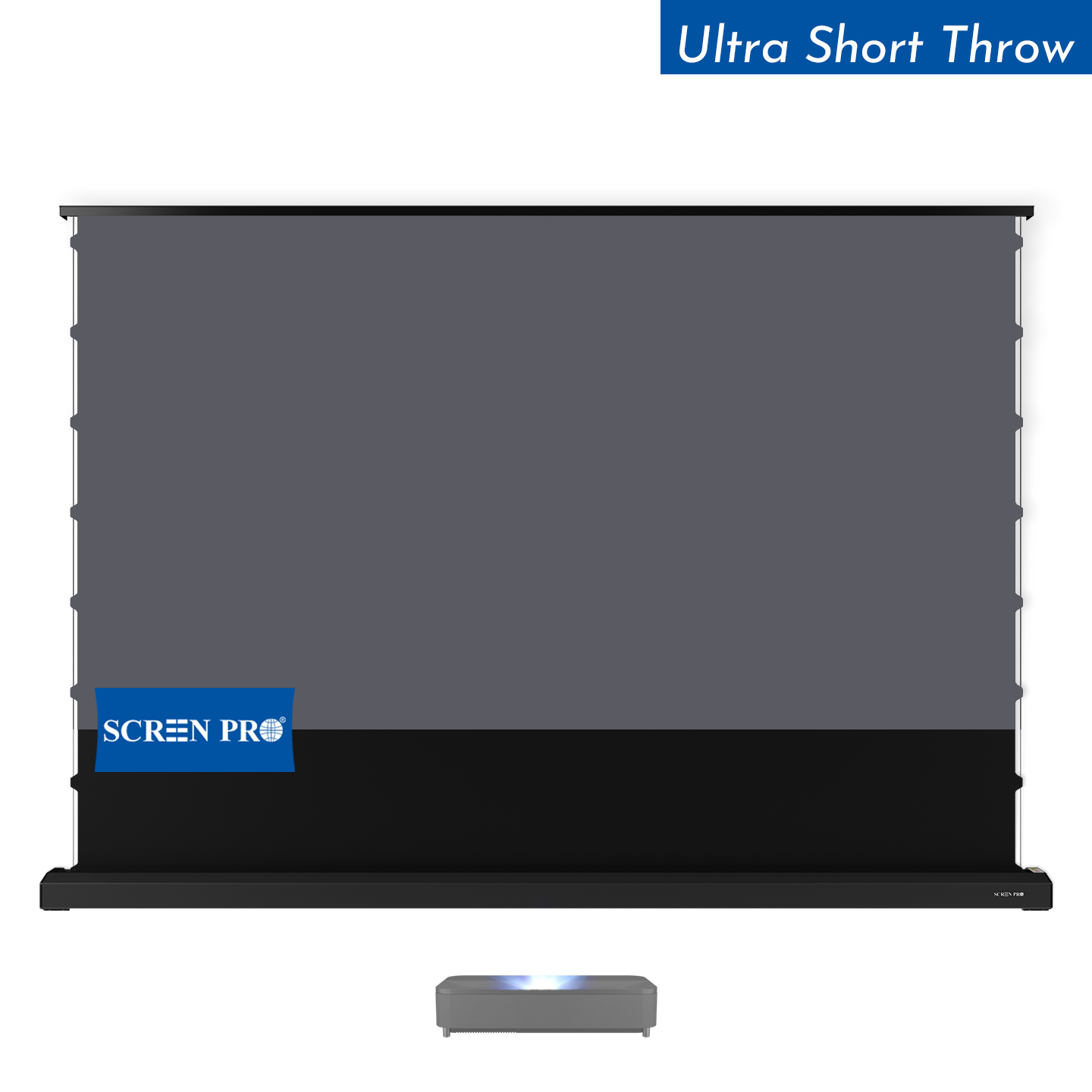
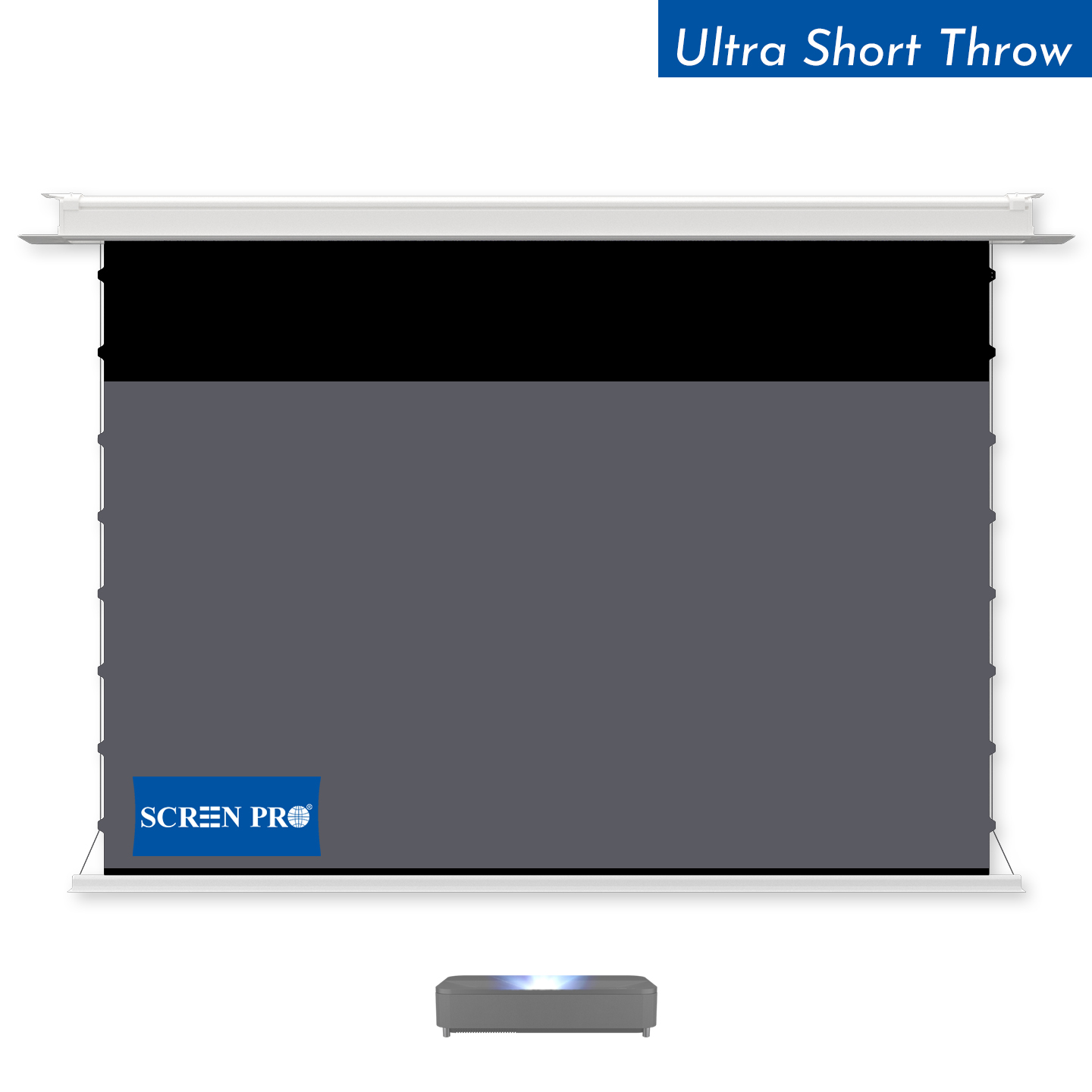
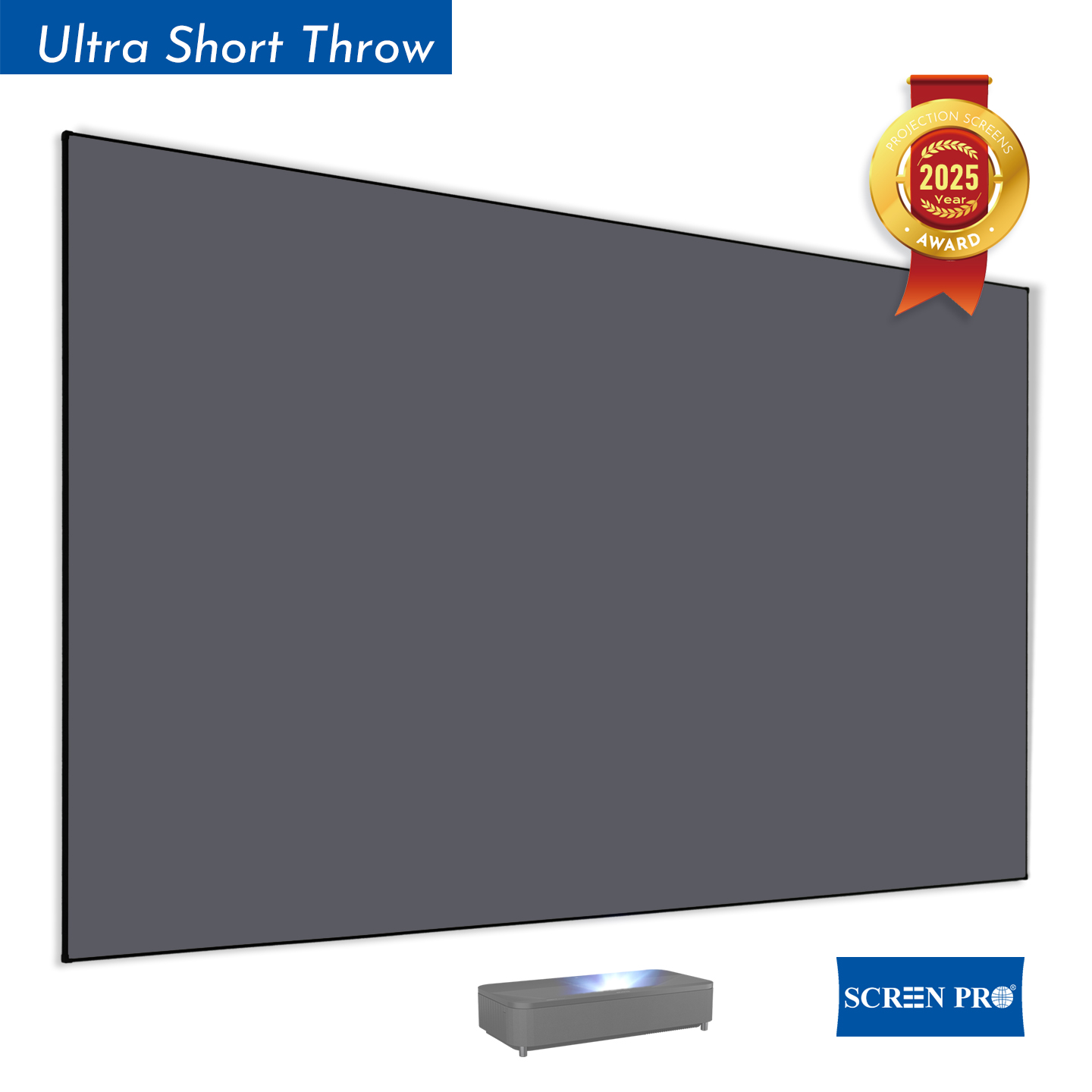
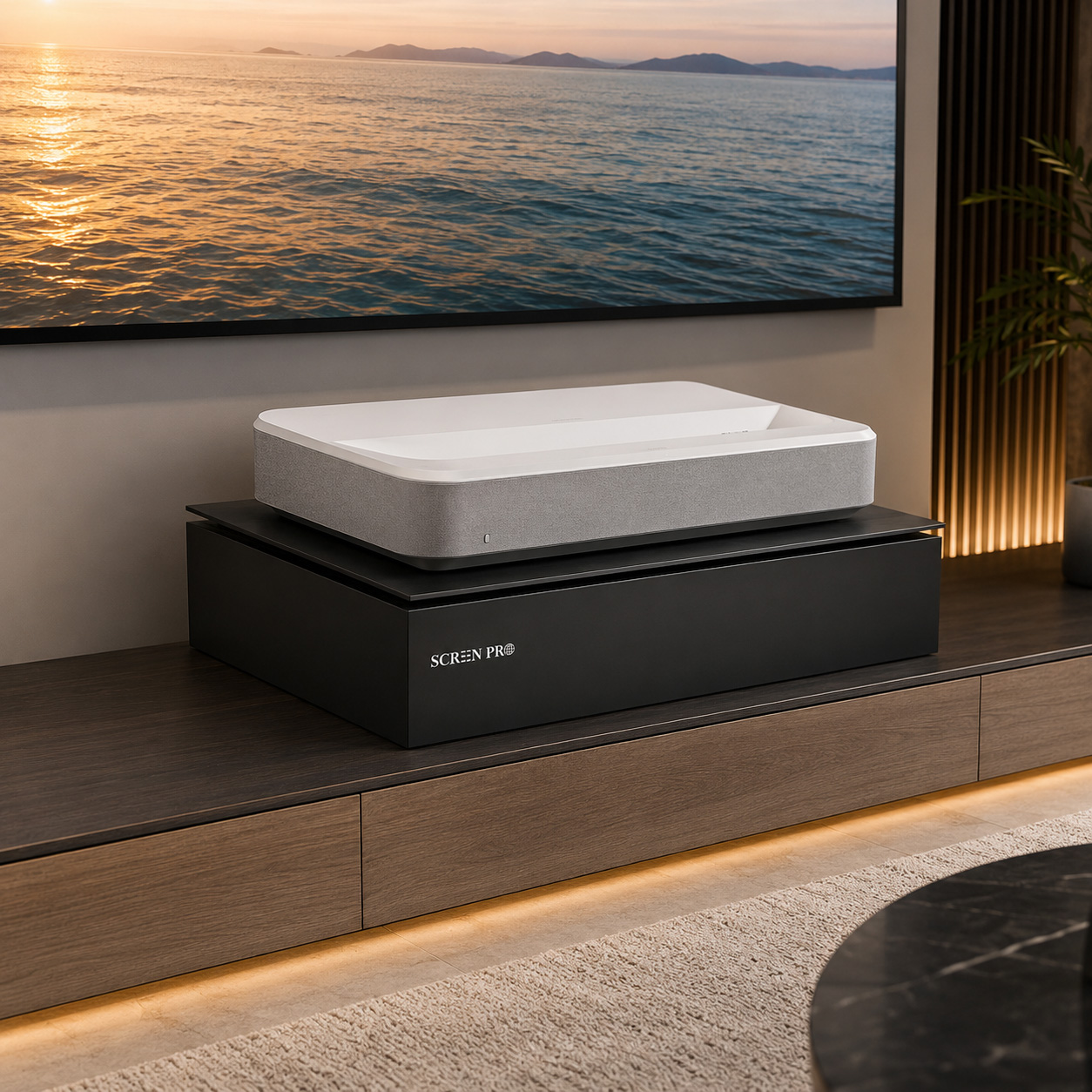
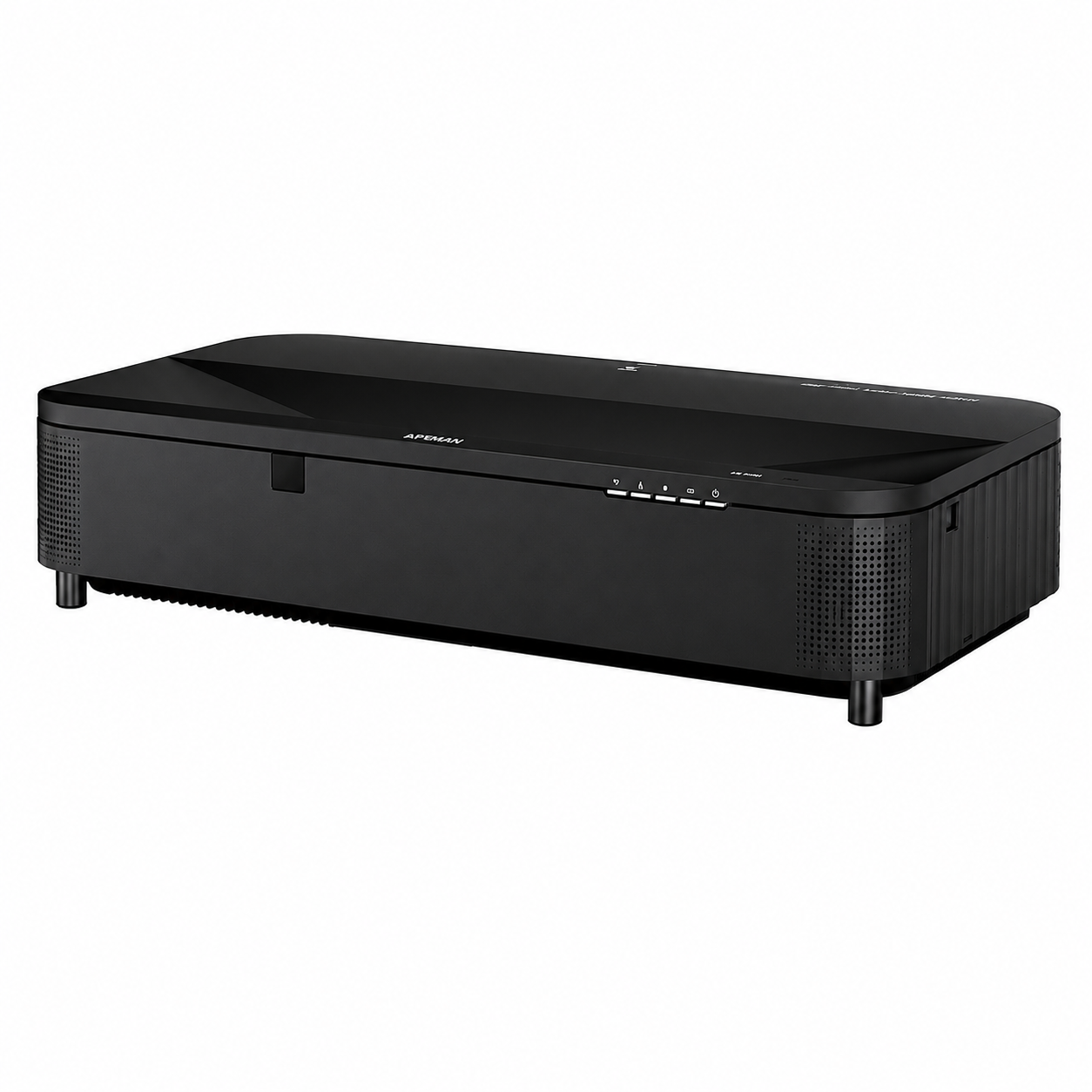
Ultra-short-throw projectors sit very close to the screen and send light upward at a steep angle. A UST ALR screen is designed around that specific geometry.
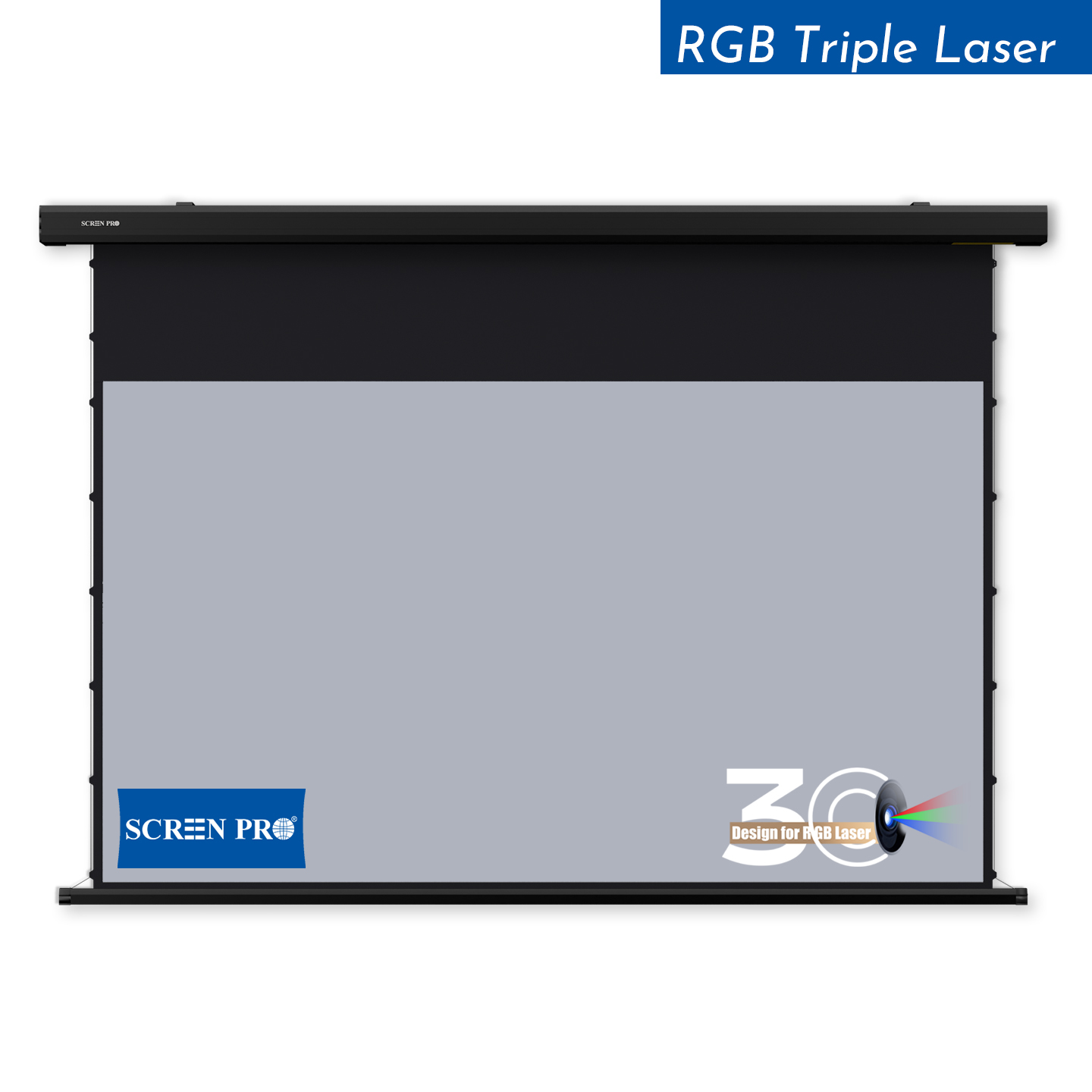
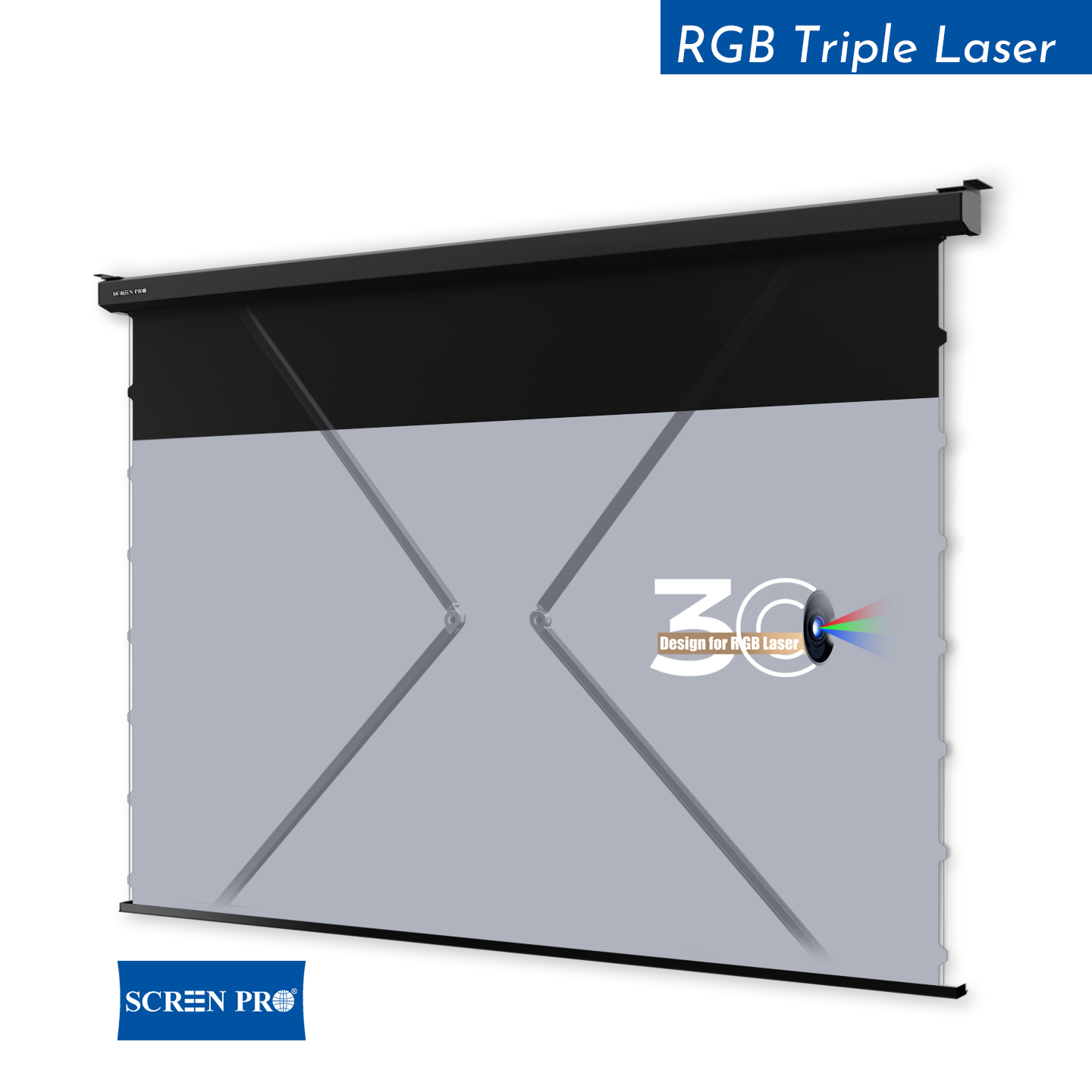
Many UST ALR materials use directional structures that accept light from below while reducing ambient light arriving from above, such as ceiling lights.
Because of this directionality, installation orientation matters, reversing the material can significantly reduce performance.
UST ALR and standard-throw ALR are not interchangeable.
WHEN STANDARD IS BETTER
TRADE-OFFS
The additional optical control of an ALR surface can introduce trade-offs. Depending on the material, these may include narrower viewing angles, greater sensitivity to projector position, or visible brightness variation from extreme seating positions.
Some laser projectors may also produce visible speckle on certain optical surfaces, so RGB laser users should evaluate speckle performance in addition to ambient-light rejection.
This is why ALR should be selected as part of the complete projection system rather than as a universal upgrade over a white screen.
30-SECOND SELECTOR
Start with the room, then check the projector.
THE VERDICT
In a dark, dedicated theater, a high-quality standard projection screen may provide the simplest combination of wide viewing angle, natural color and predictable performance.
In a living room, conference room or other space with unavoidable ambient light, an appropriately matched ALR screen can offer a clear advantage in perceived contrast.
The best screen is not the one that rejects the most light. It matches your projector, room, and seating geometry.
FAQ
A normal screen reflects projector light broadly across the viewing area. An ALR screen uses directional optical properties to favor useful projector light while reducing unwanted ambient light reflected toward viewers.
Not always. ALR is especially useful in rooms with ambient light, while a high-quality white screen may be preferable in a fully dark theater with wide seating.
No. ALR does not increase projector lumen output. It manages reflected light to help preserve image contrast in brighter environments.
No. Ultra-short-throw projectors should use an ALR material specifically designed for the steep projection angle of UST systems.
Yes, but their main advantage becomes less important when there is little or no ambient light to reject.
Many ALR materials are directional. Projector position and screen orientation may be critical to achieving the intended optical performance.
SCREENPRO®
Send us your projector model, screen size, projector position, and room-lighting conditions. SCREENPRO can help match the projection surface to your application.
Explore Projector Screens Ask SCREENPRO





© Copyright 2004-2026 SCREEN PRO® All Rights Reserved | Specifications are subject to change without notice. All Rights ReservedSite Map Designed by iwonder.cn