




How to Design a Luxury Home Cinema
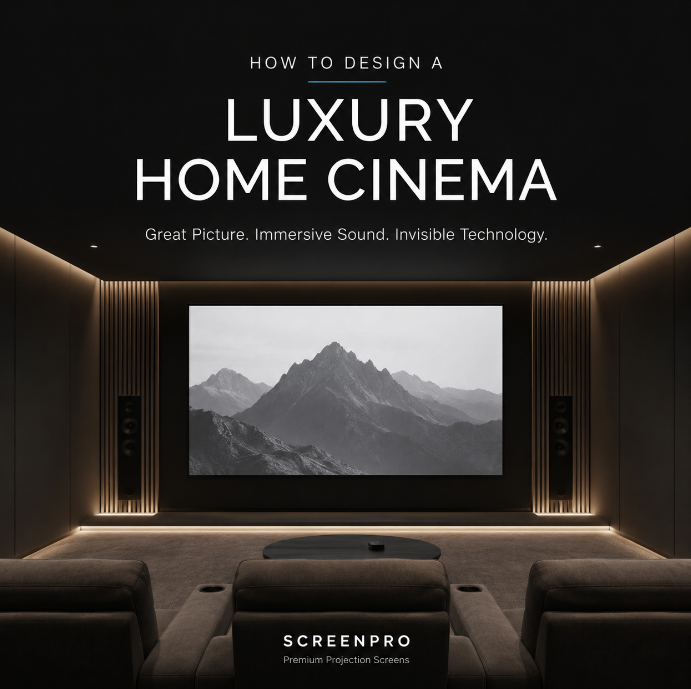
A truly luxurious home cinema is not defined by how much equipment you can see. It is defined by how completely the technology disappears—and how effortlessly the room draws you into the image and sound.
What Makes a Home Cinema Feel Luxury?
Luxury home cinema design is less about filling a room with expensive AV equipment and more about integrating picture, sound, architecture, lighting, seating, and control into one seamless environment.
It is about making the technology disappear.
The best private cinemas feel calm before the movie starts. Speakers are hidden. Cables are invisible. The projector does not dominate the ceiling. Lighting is subtle. The screen feels proportionally correct for the room, and every seat has a comfortable view.
That means the design process should begin with the room itself—not with a projector specification sheet.
Start With the Room, Not the Equipment
Before selecting a projector, screen, speaker system, or cinema seating, determine how the space will actually be used.
Dedicated Cinema Room
The best option for maximum contrast, acoustic control, large screens, hidden speakers, and a fully immersive environment.
Media Room
A multipurpose space where the cinema must coexist with normal living, ambient light, furniture, and interior design.
Luxury Living Space
Best suited to concealed motorized screens, hidden projectors, integrated cabinetry, and minimal visible AV hardware.
Room dimensions also determine screen size, projector throw distance, speaker placement, seating rows, sightlines, and acoustic treatment. These decisions are interconnected, so they should be planned together.
Choose the Right Screen Size
One of the most common mistakes in home cinema design is choosing the largest screen that will physically fit on the wall.
A premium cinema should feel immersive without forcing viewers to constantly move their eyes or head across the image. Screen width, seating distance, aspect ratio, projector brightness, and room height should all be considered together.
For Movie-Focused Rooms
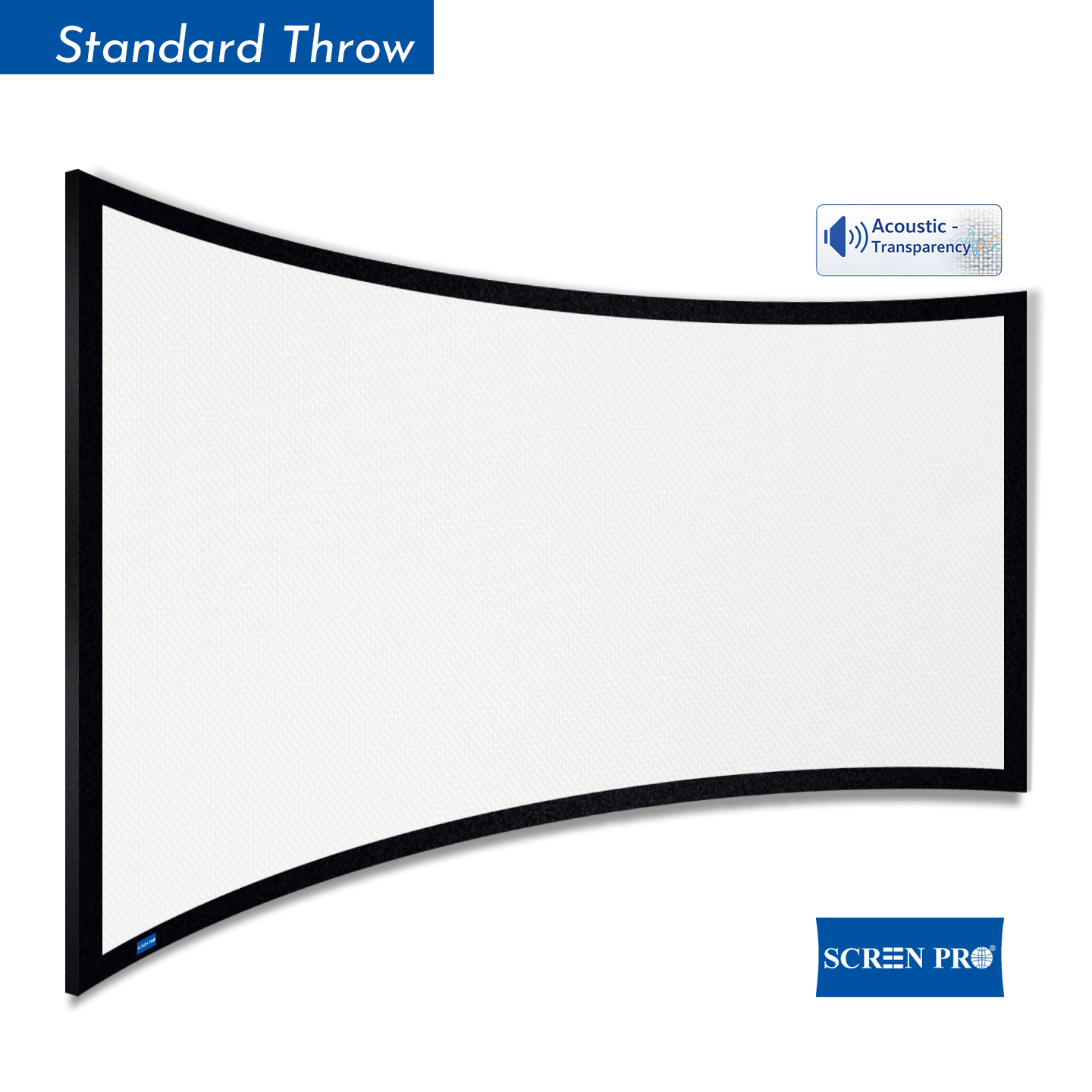
A larger image and wider cinematic field of view can create a more immersive experience, especially when paired with acoustically transparent projection material.
For Mixed Viewing
If the room is used for movies, sports, gaming, and television, a slightly more conservative screen size can improve comfort and versatility.
For custom cinema projects, it is usually better to establish the seating position first and then calculate the appropriate image size rather than selecting the screen independently.
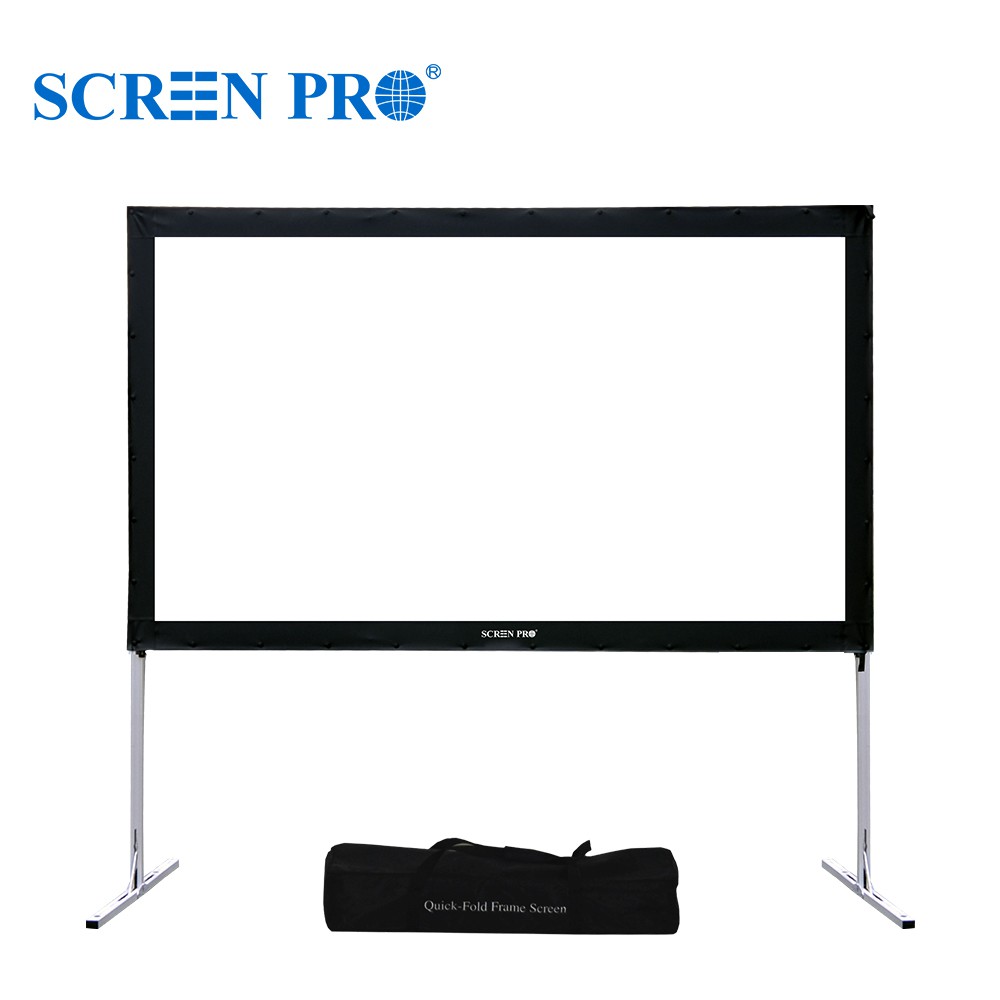
Fixed Frame or Motorized Screen?
The screen structure has a major influence on both image quality and interior design.
| Screen Type | Best For | Main Advantage |
|---|---|---|
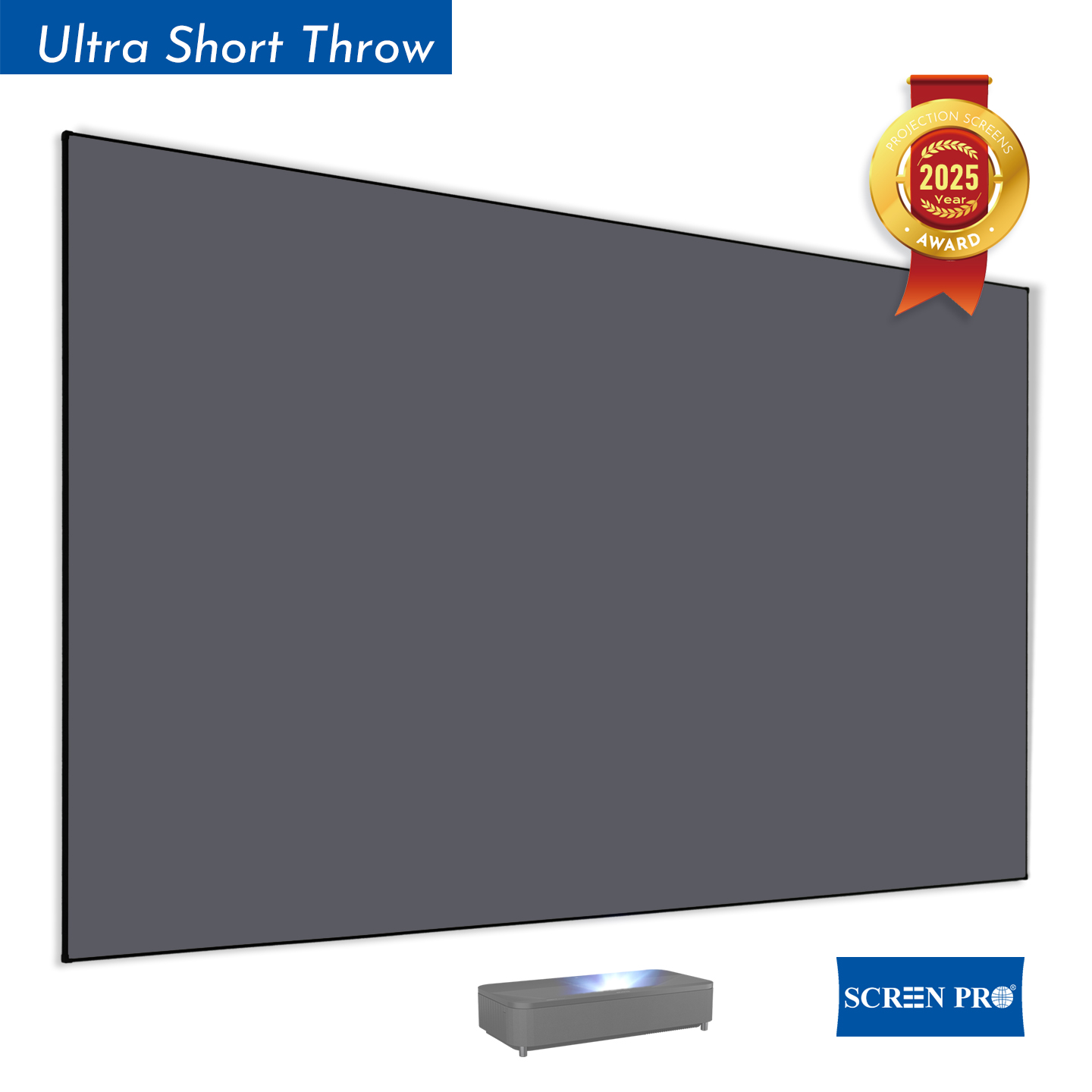
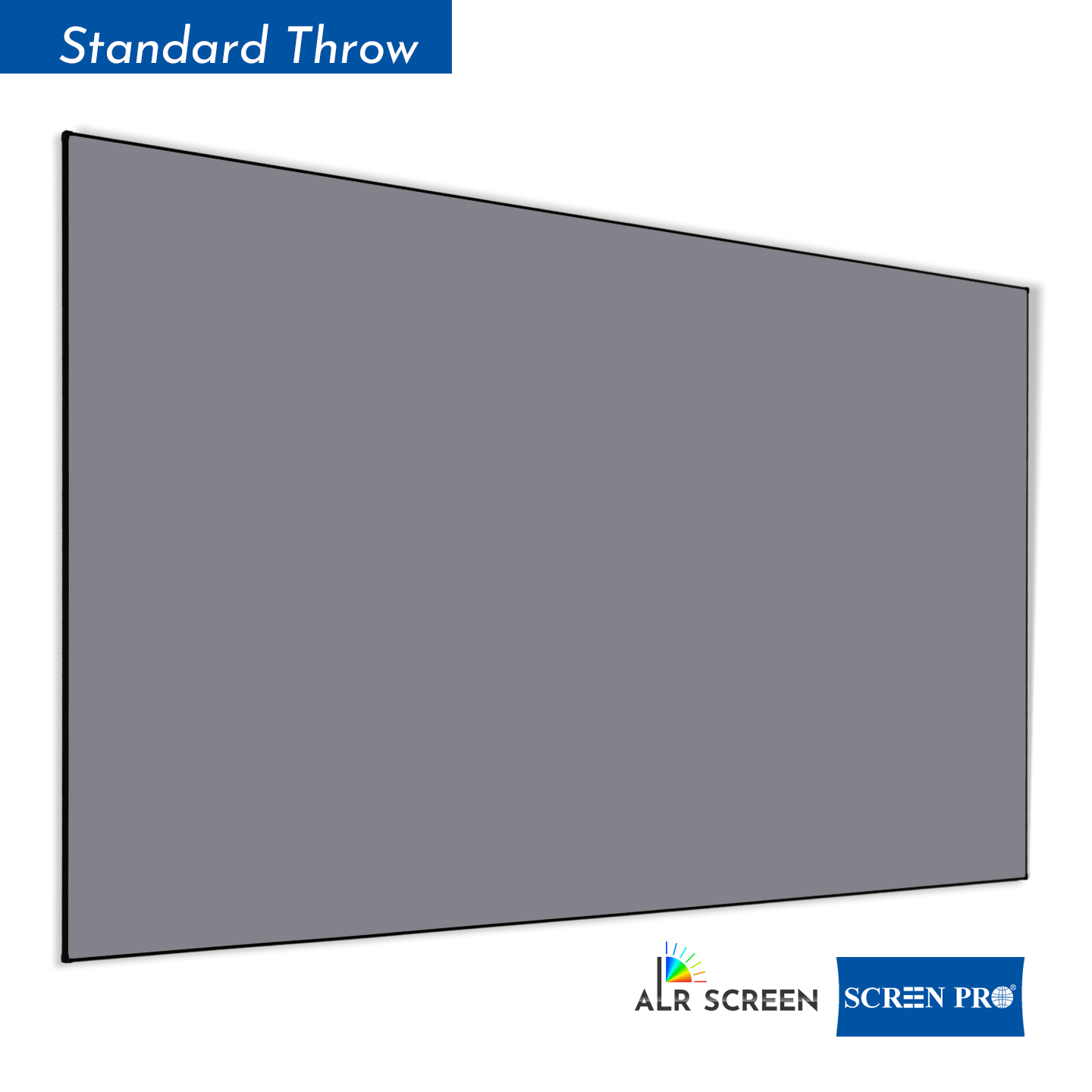
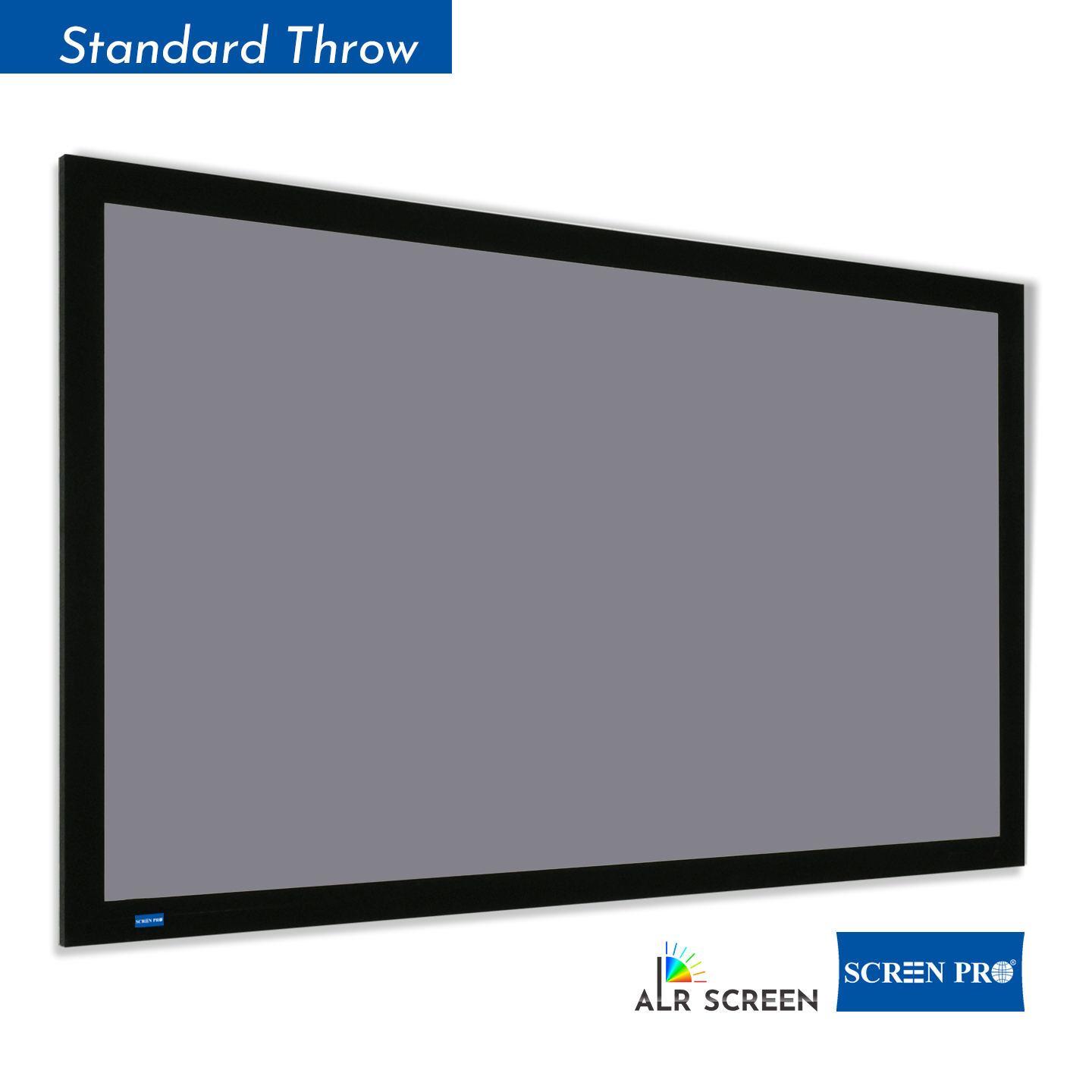
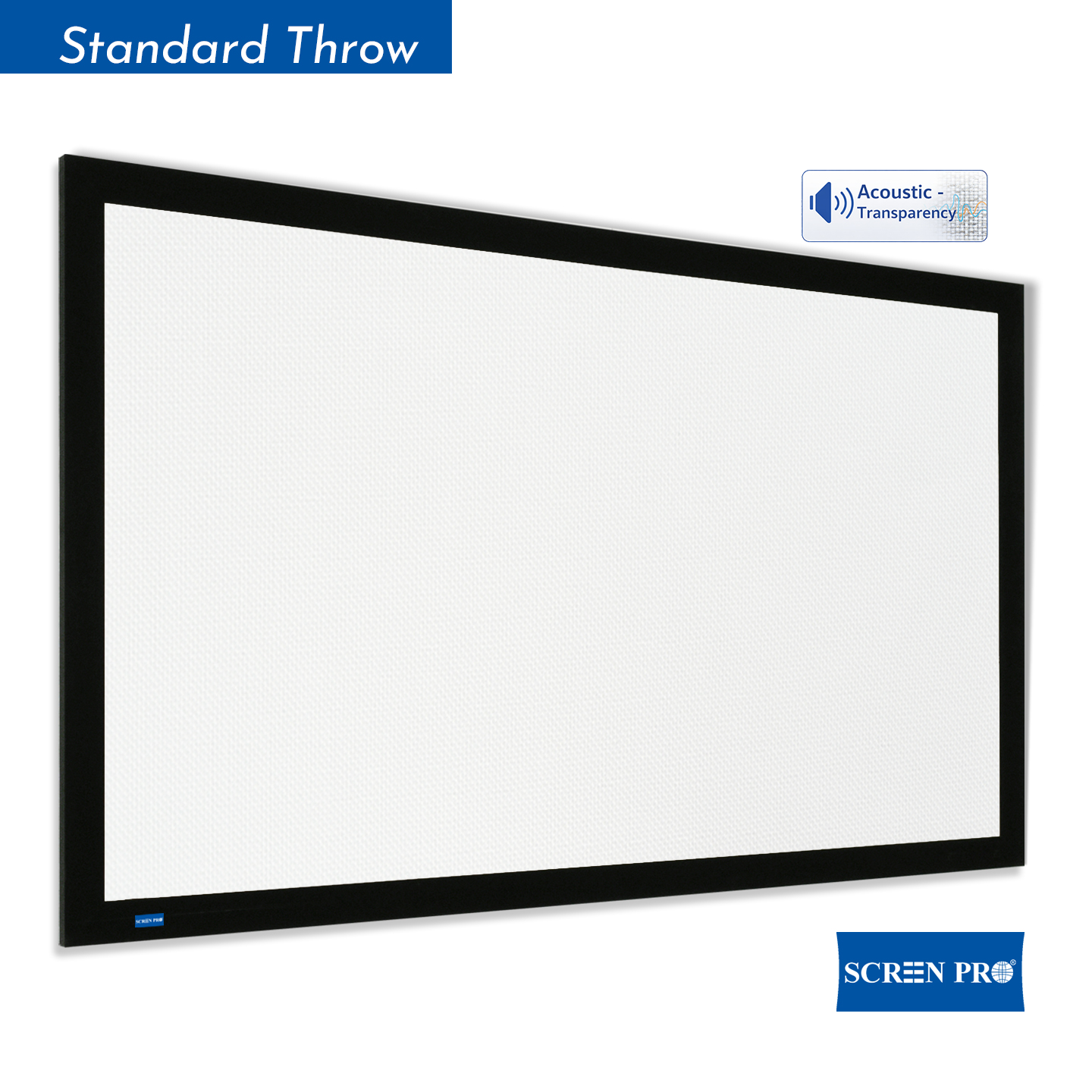
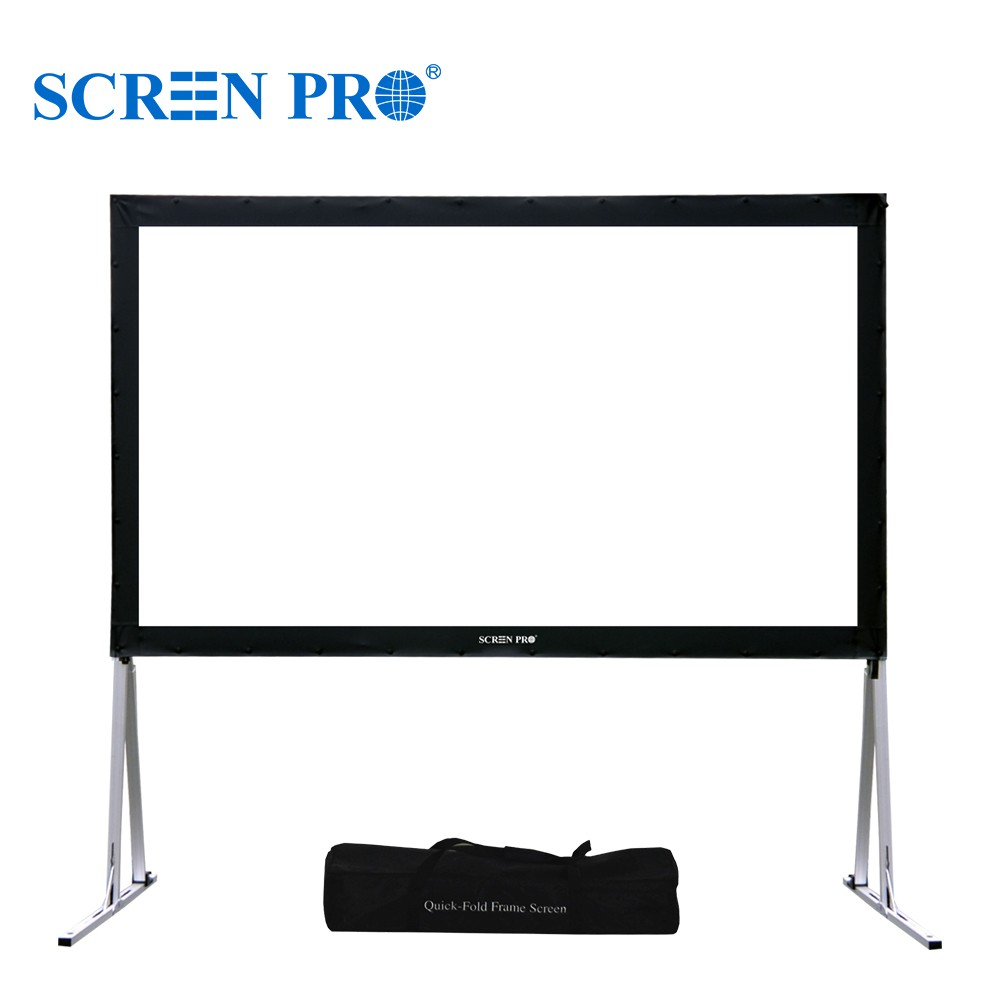
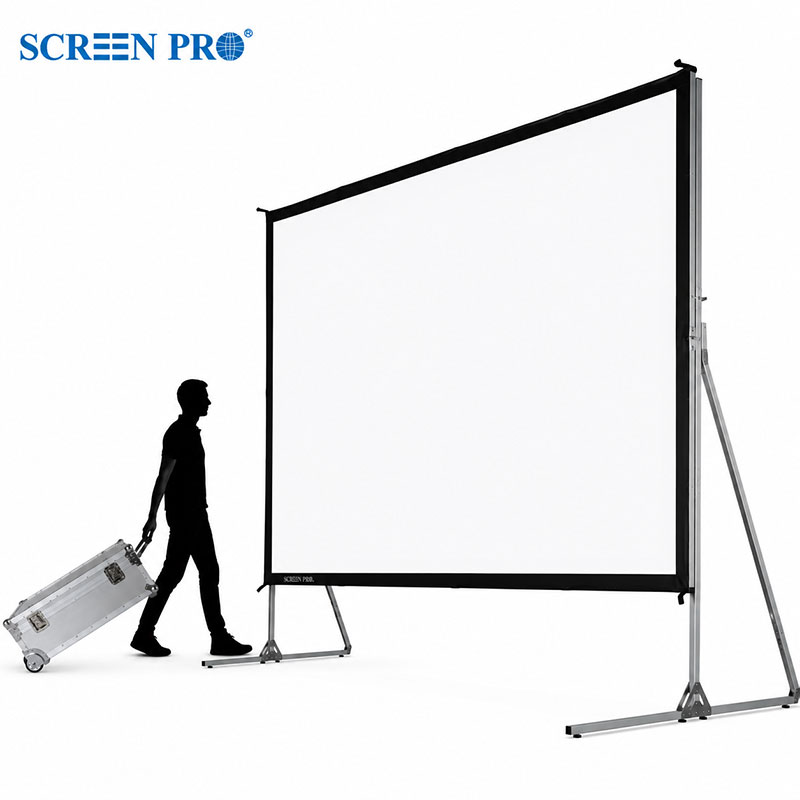
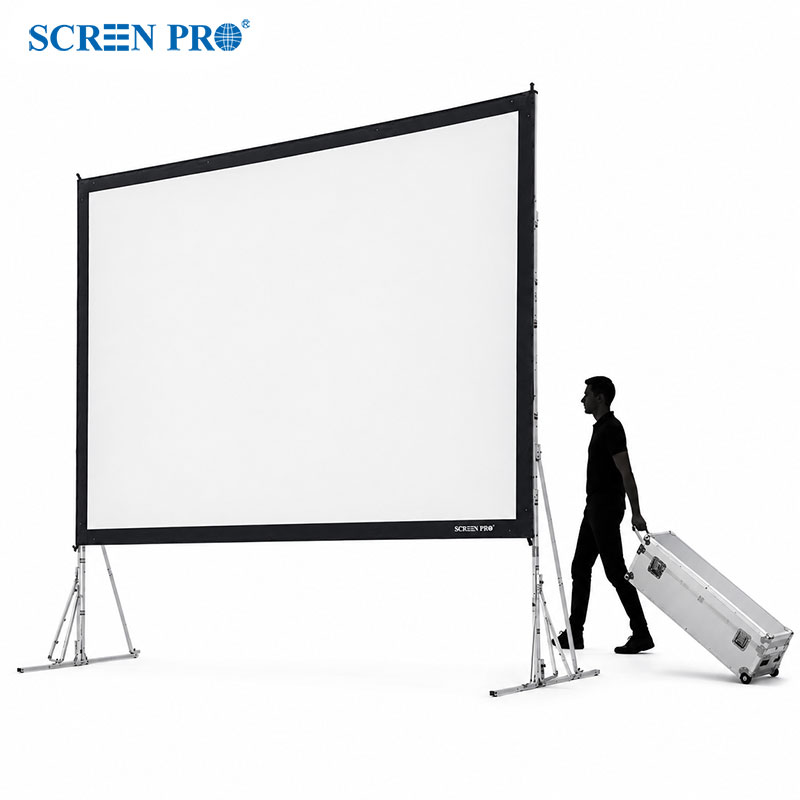
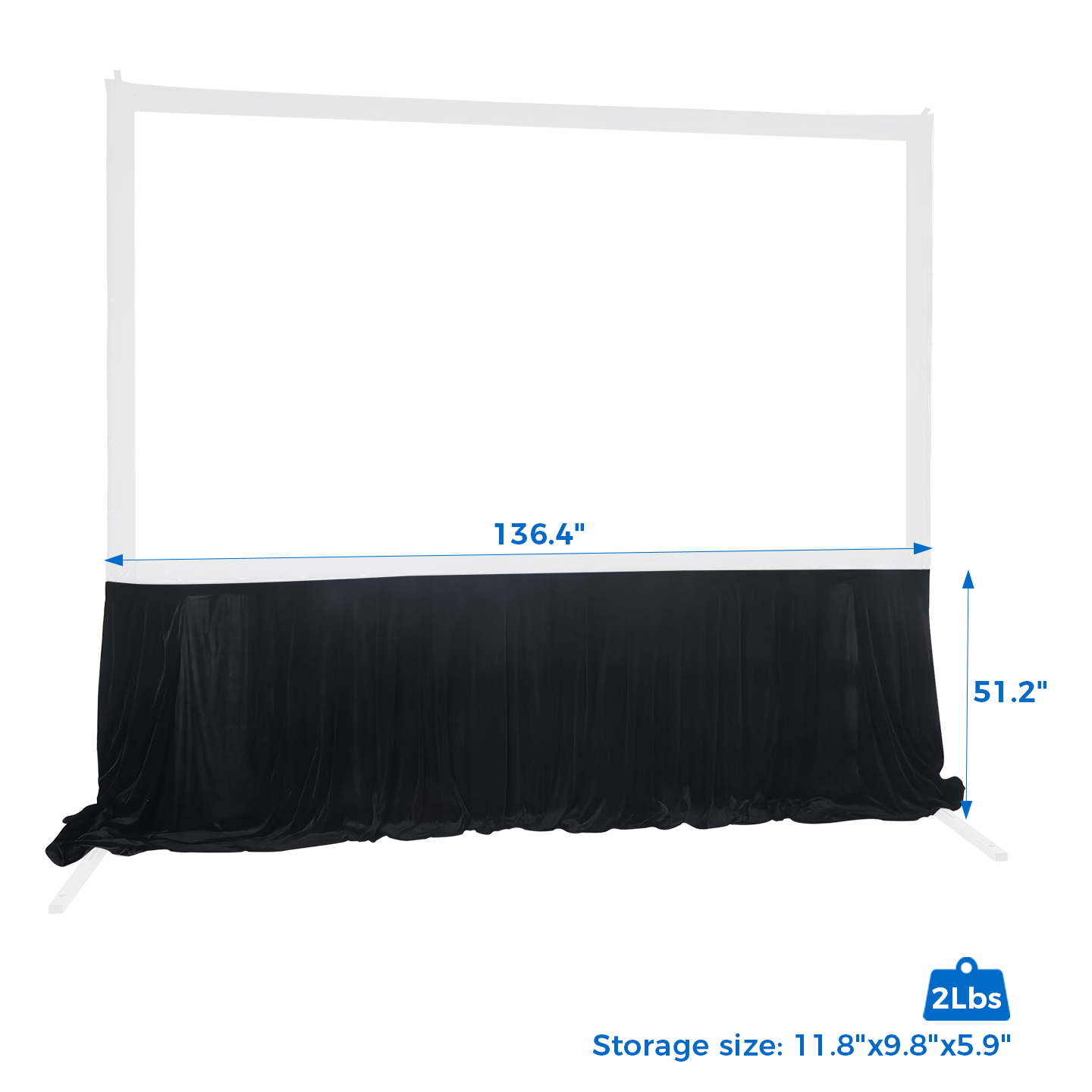
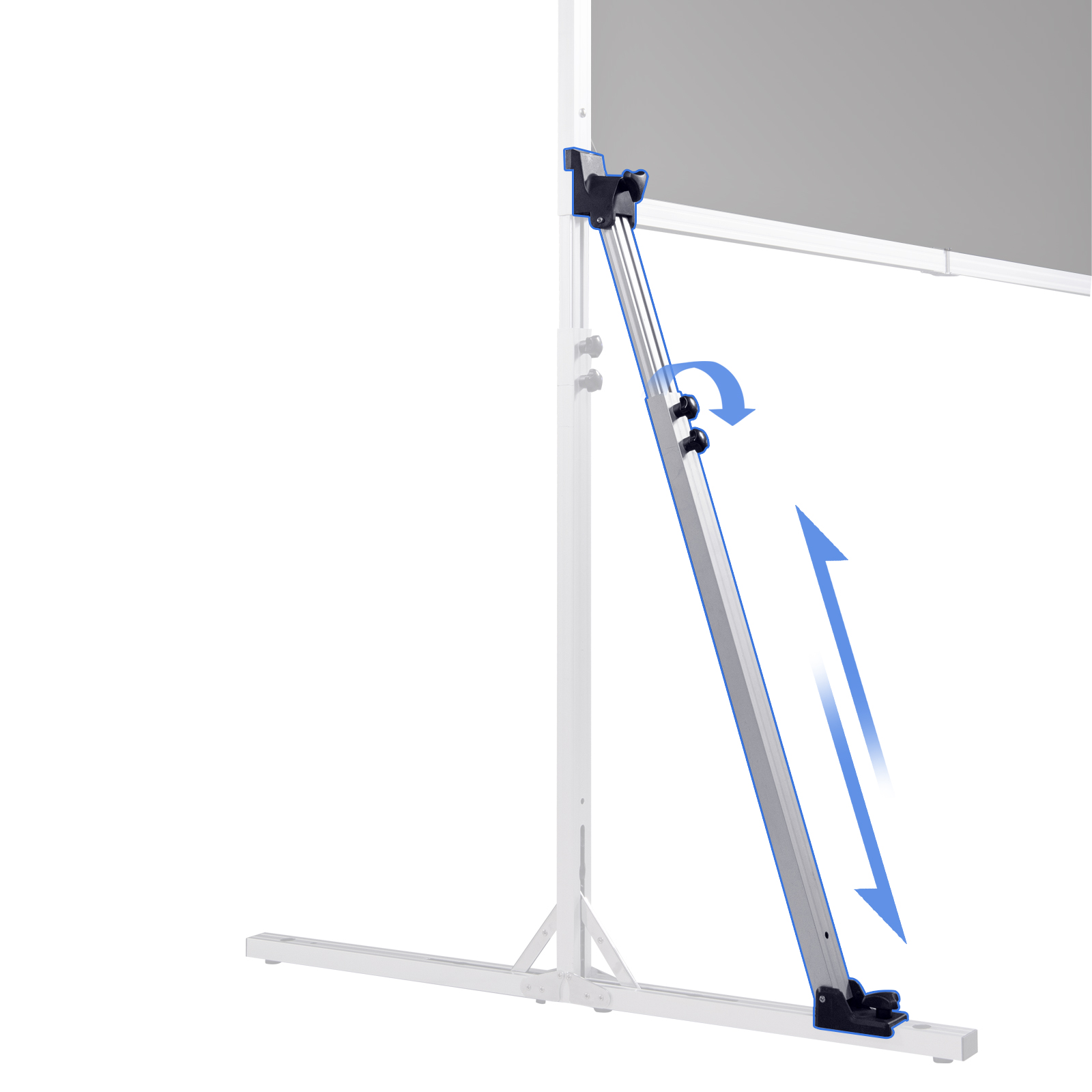
| Fixed Frame Screen | Dedicated cinema rooms | Maximum flatness and a permanent cinematic appearance |
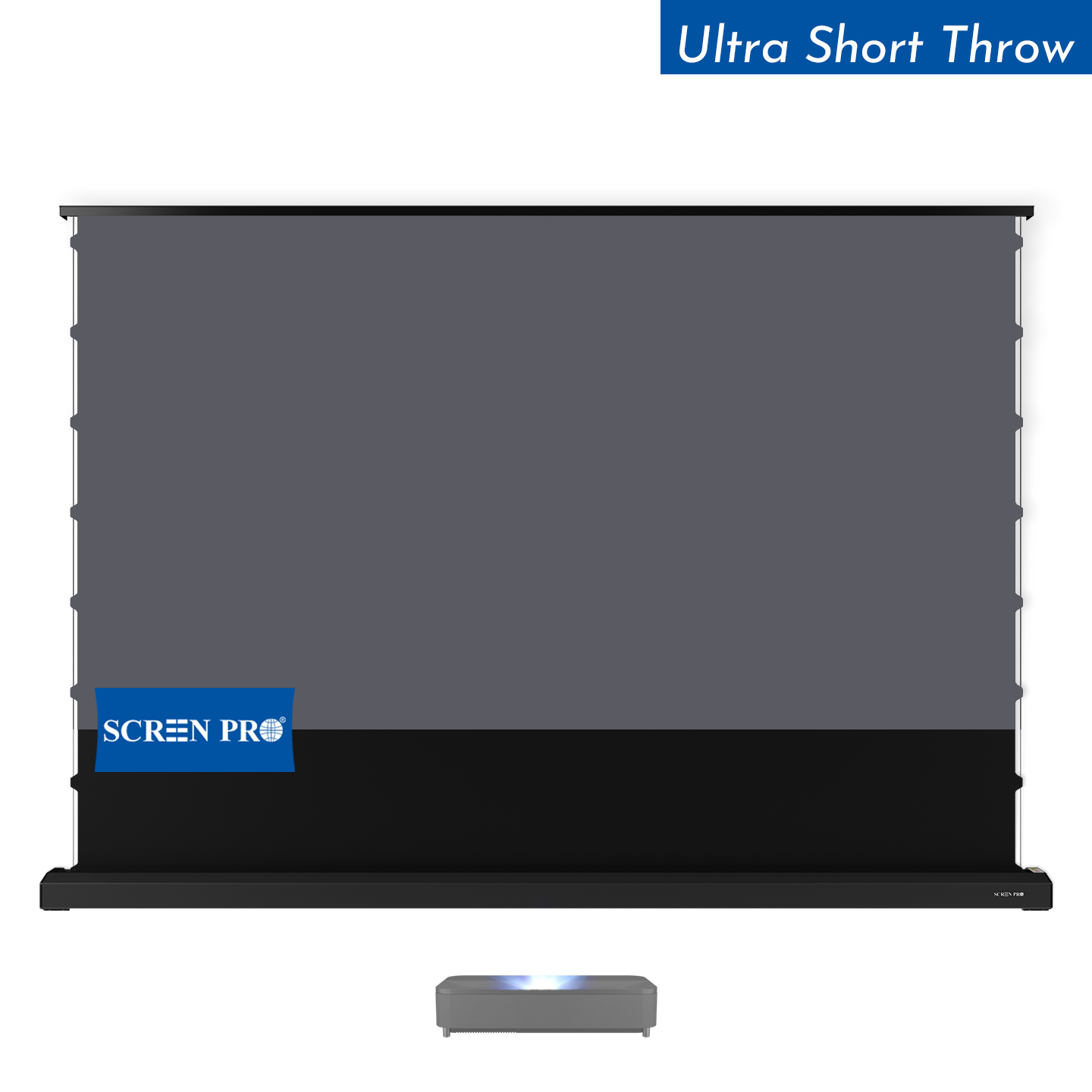
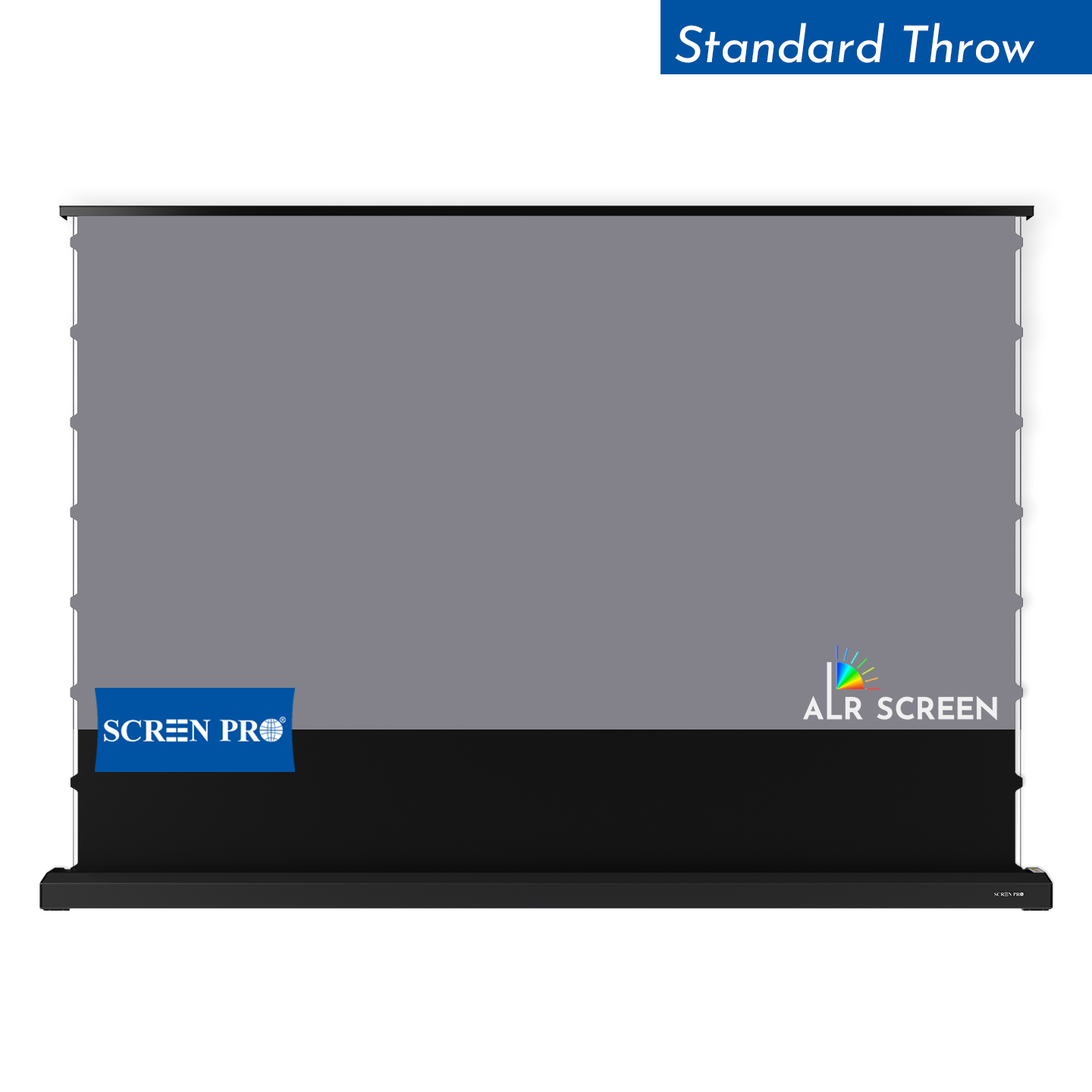
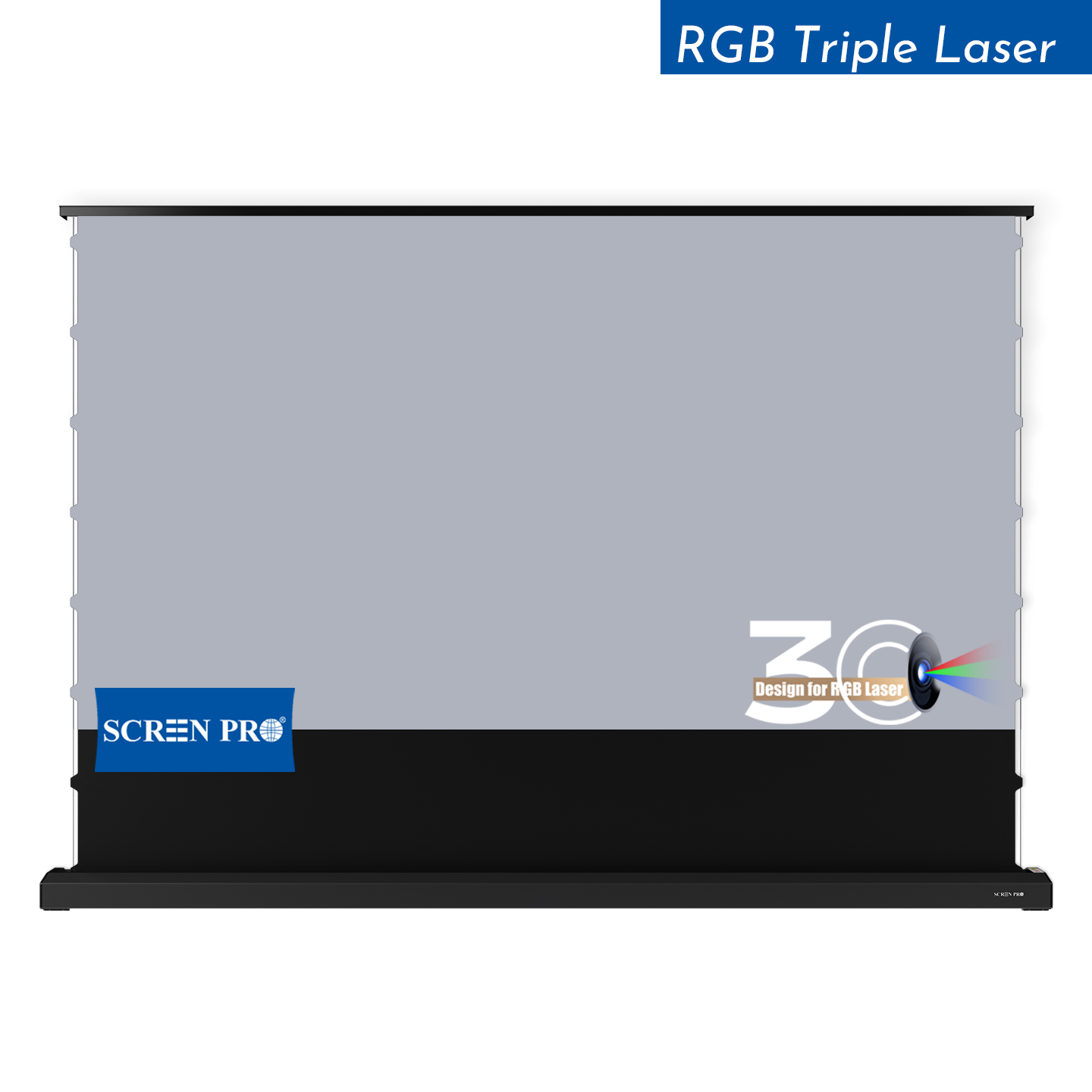
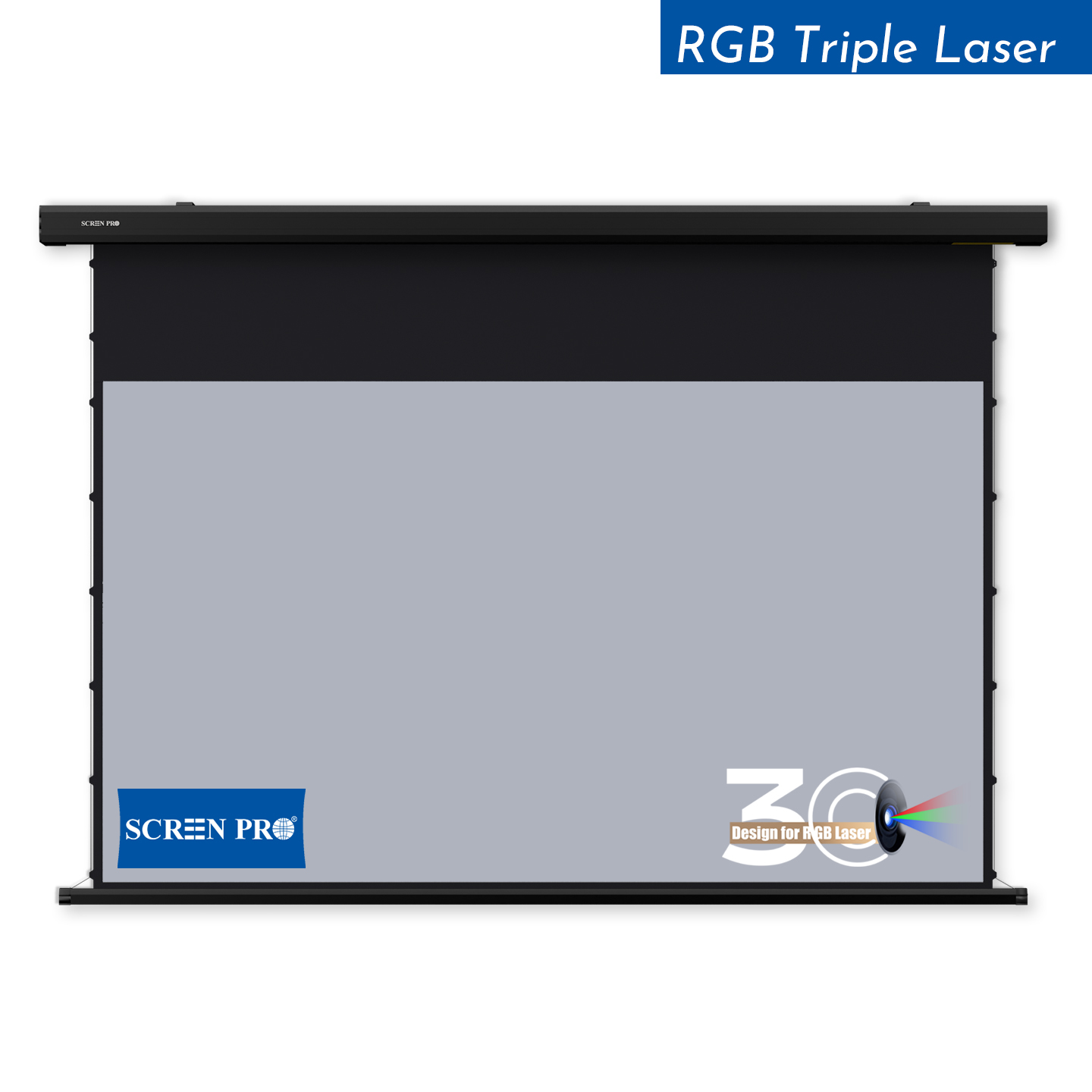
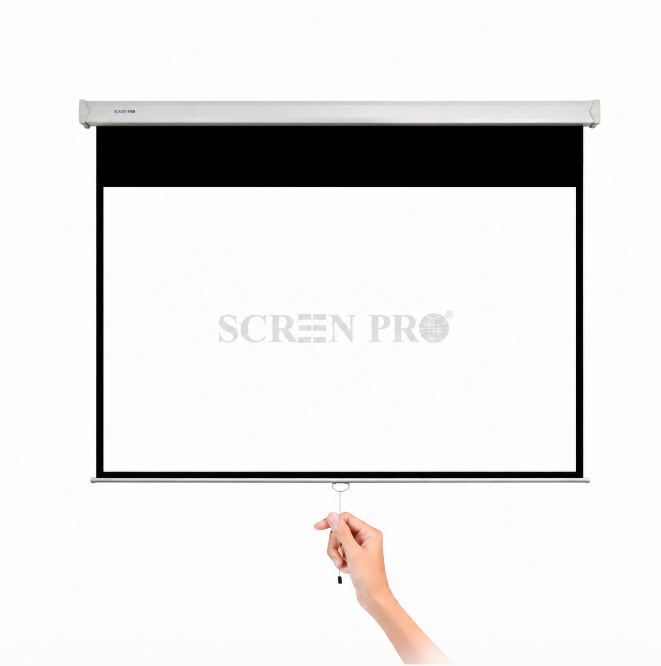
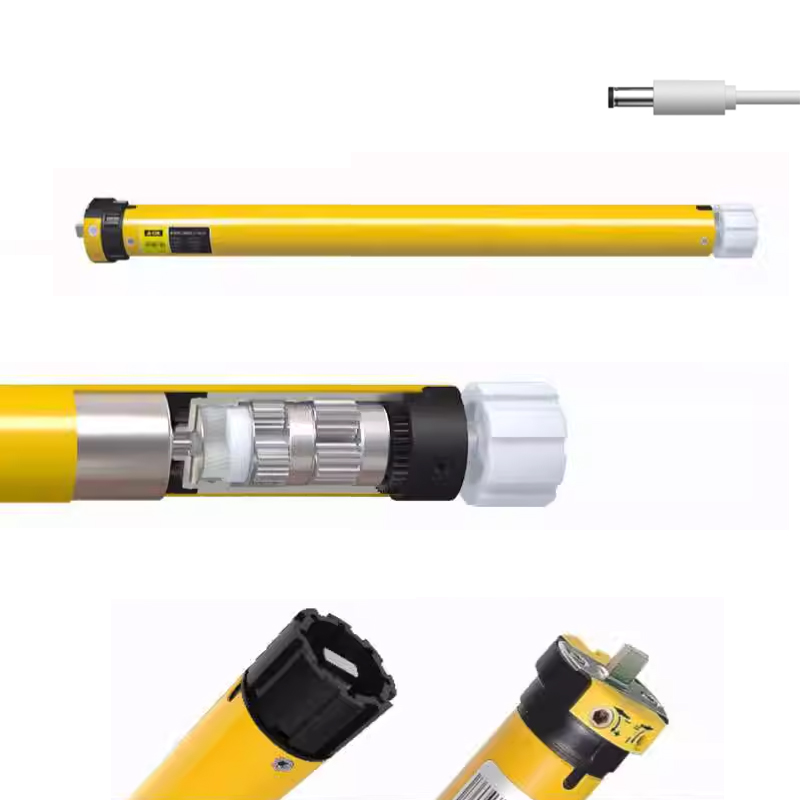
| Motorized Screen | Living rooms and multipurpose spaces | Disappears when not in use |
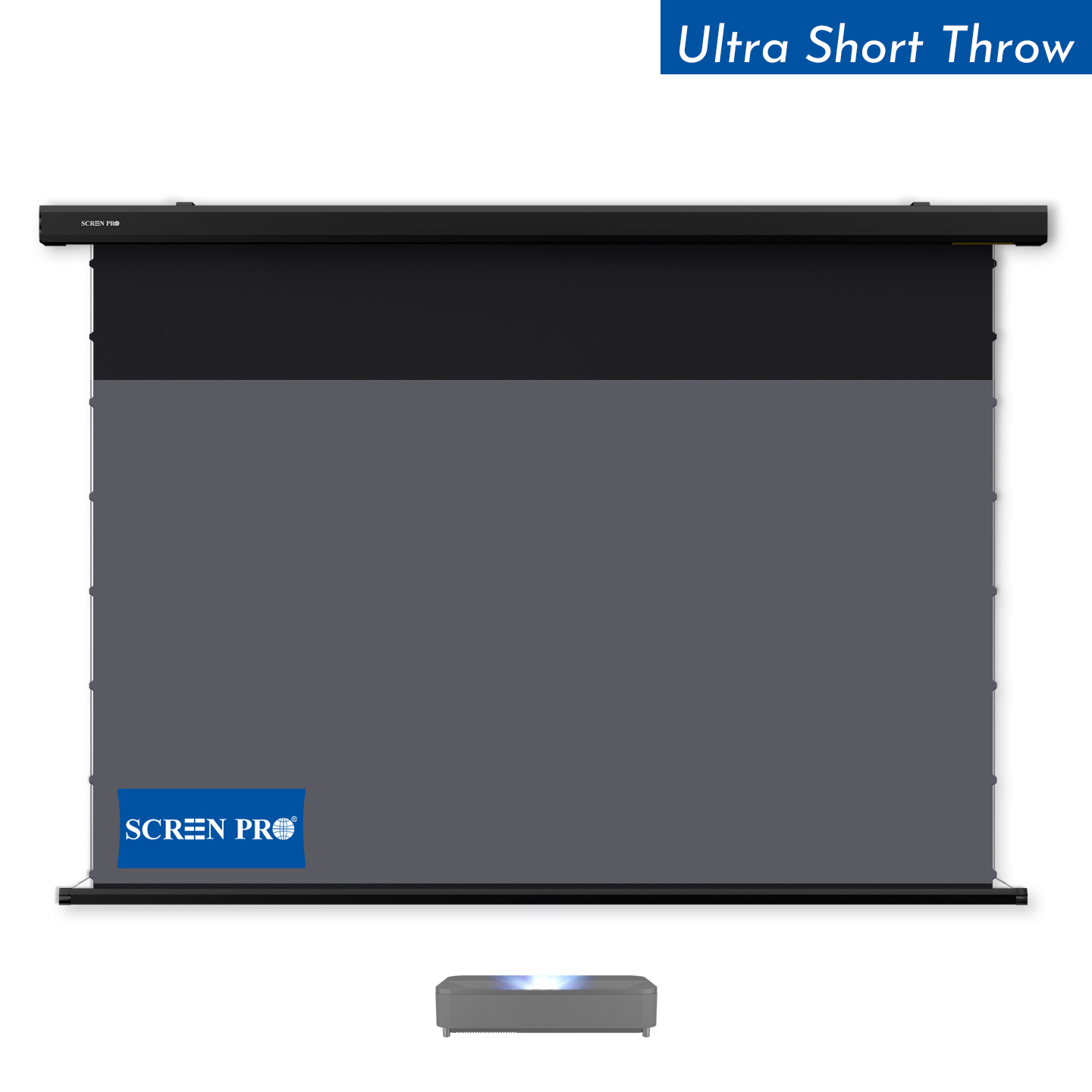
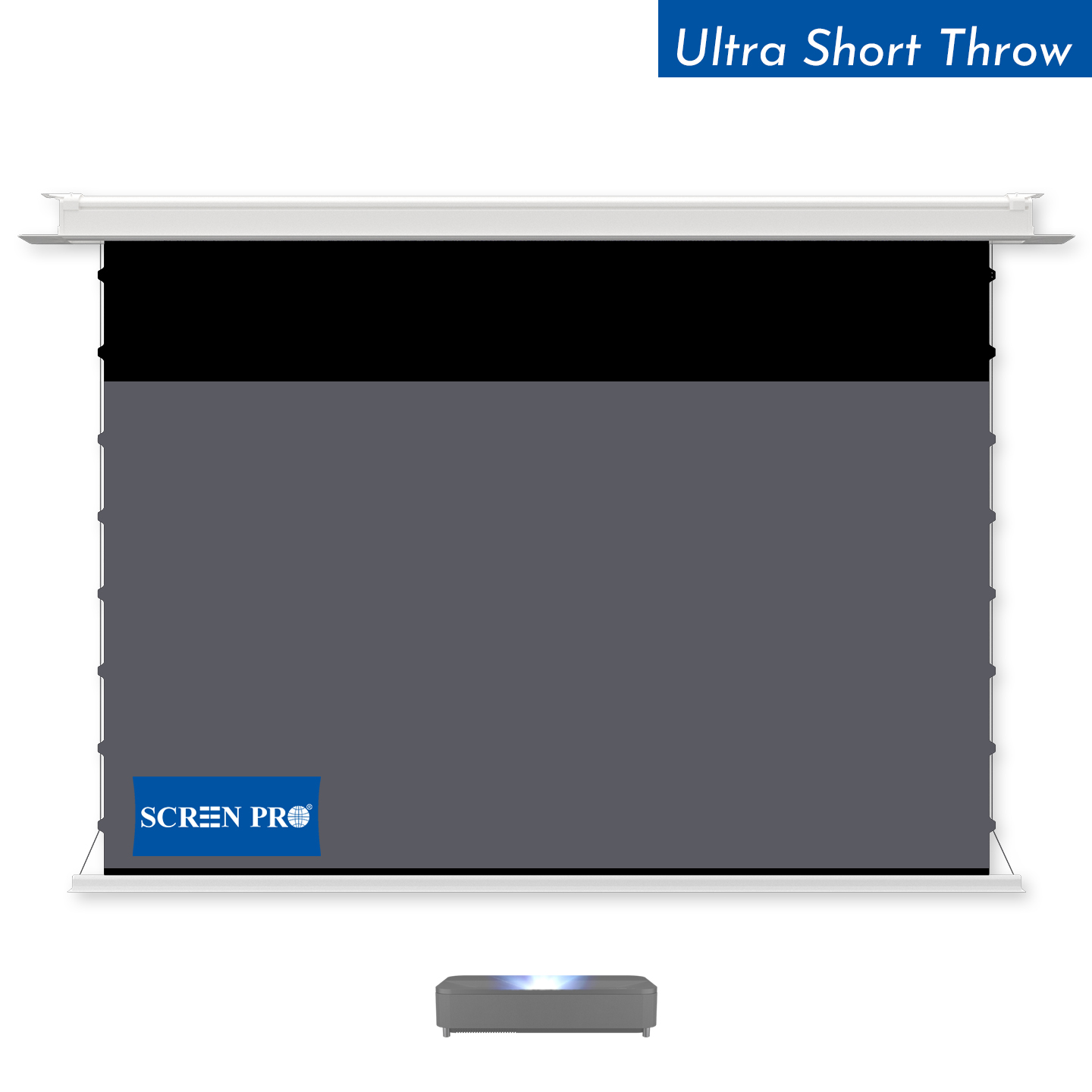
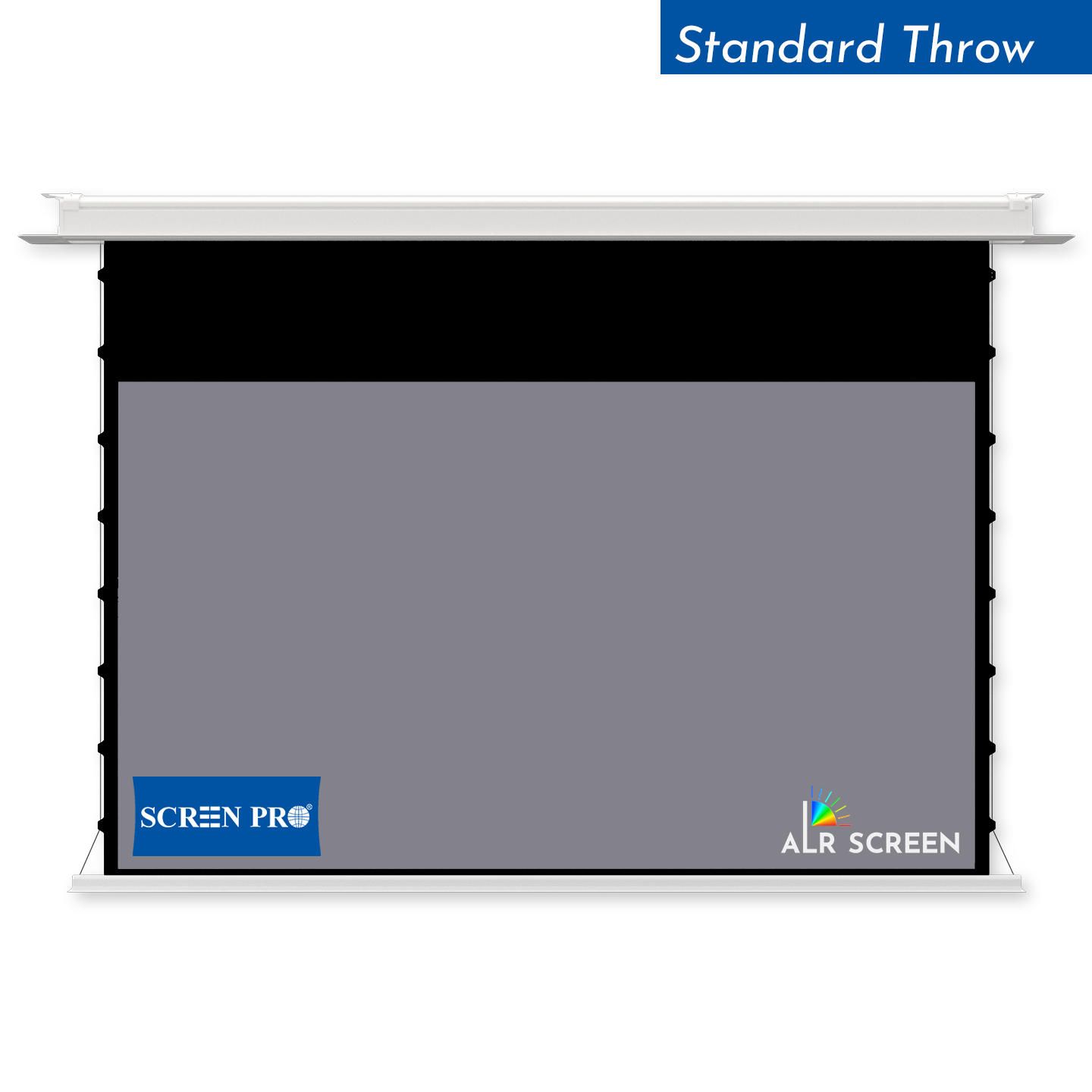
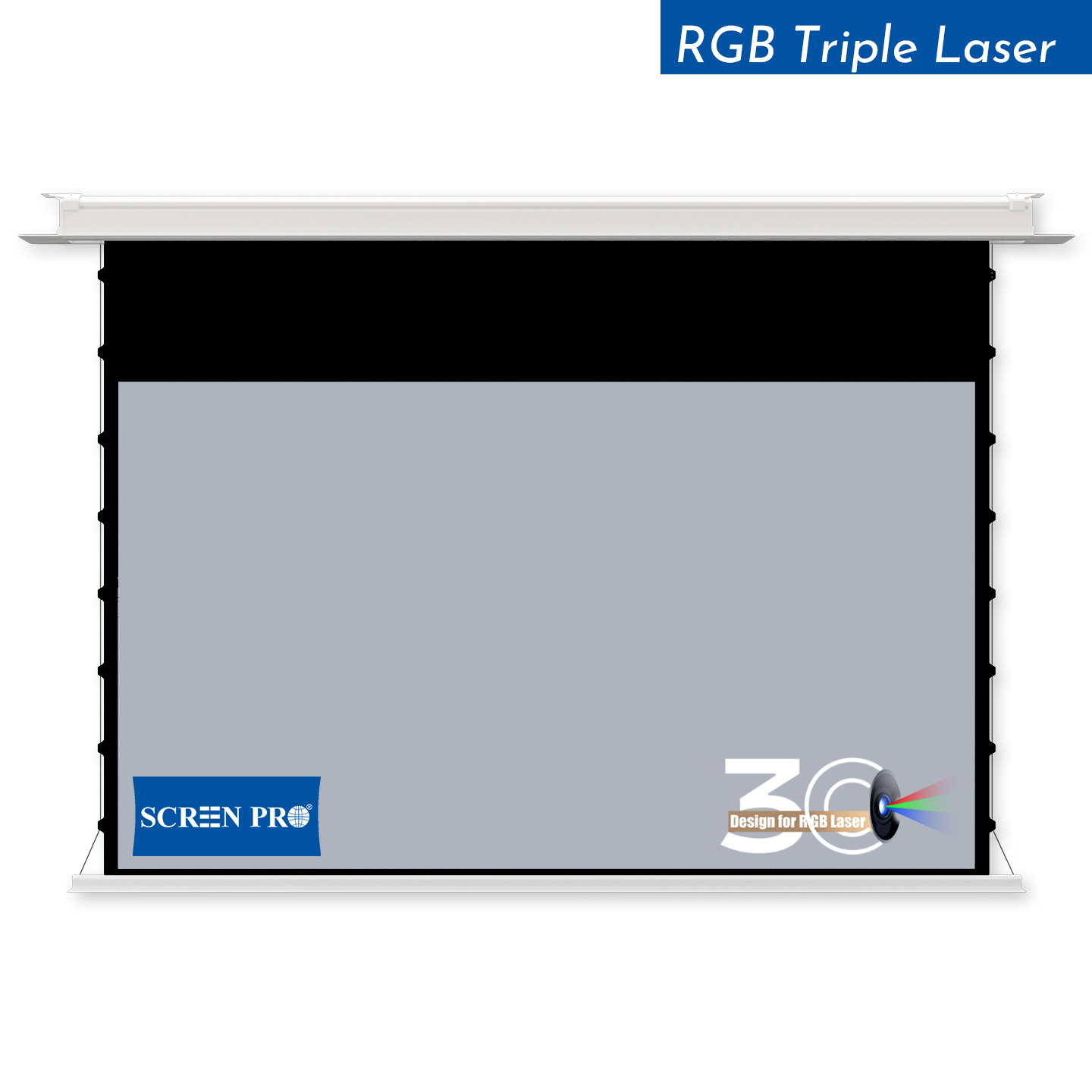
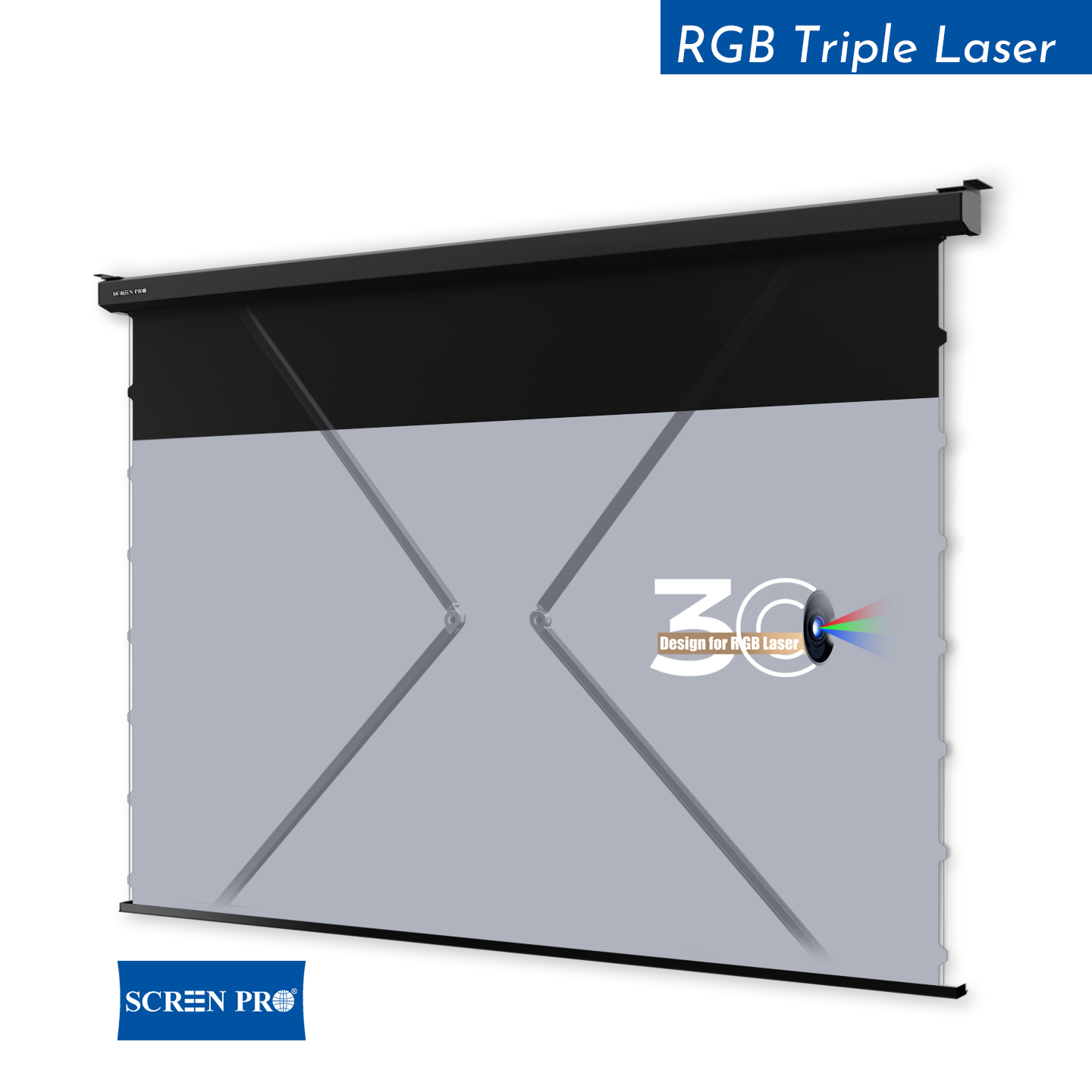
| In-Ceiling Motorized Screen | High-end architectural interiors | Minimal visible hardware |
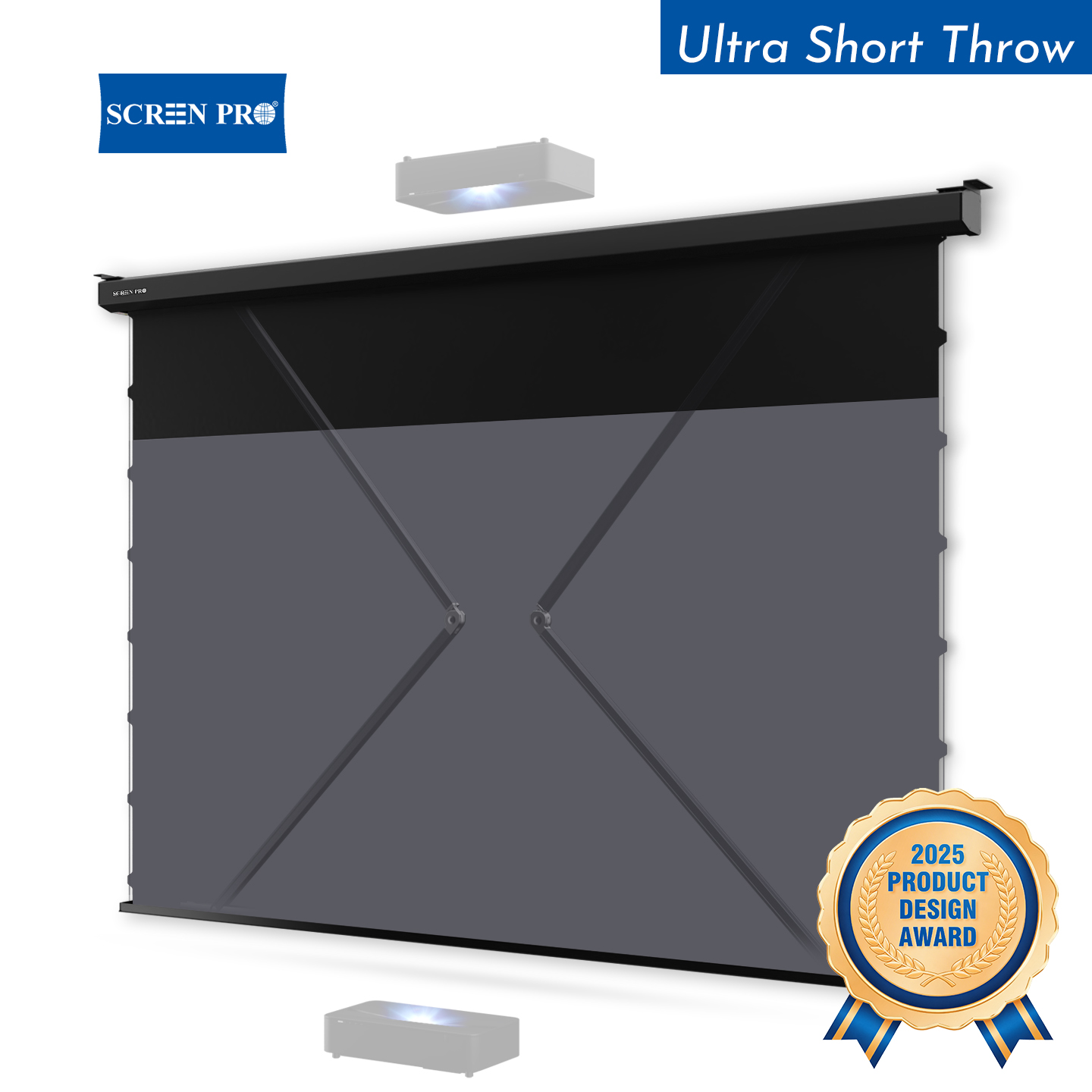
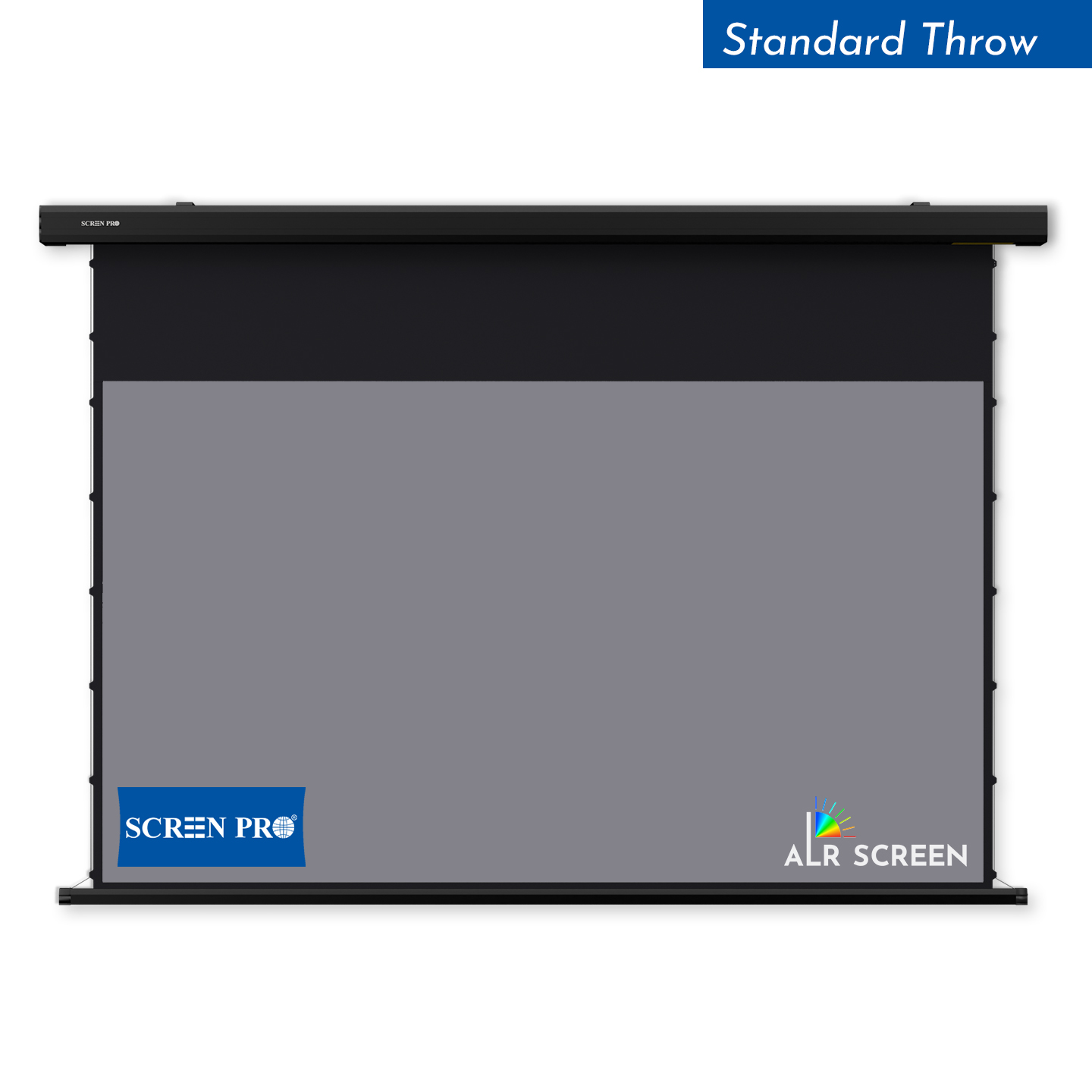
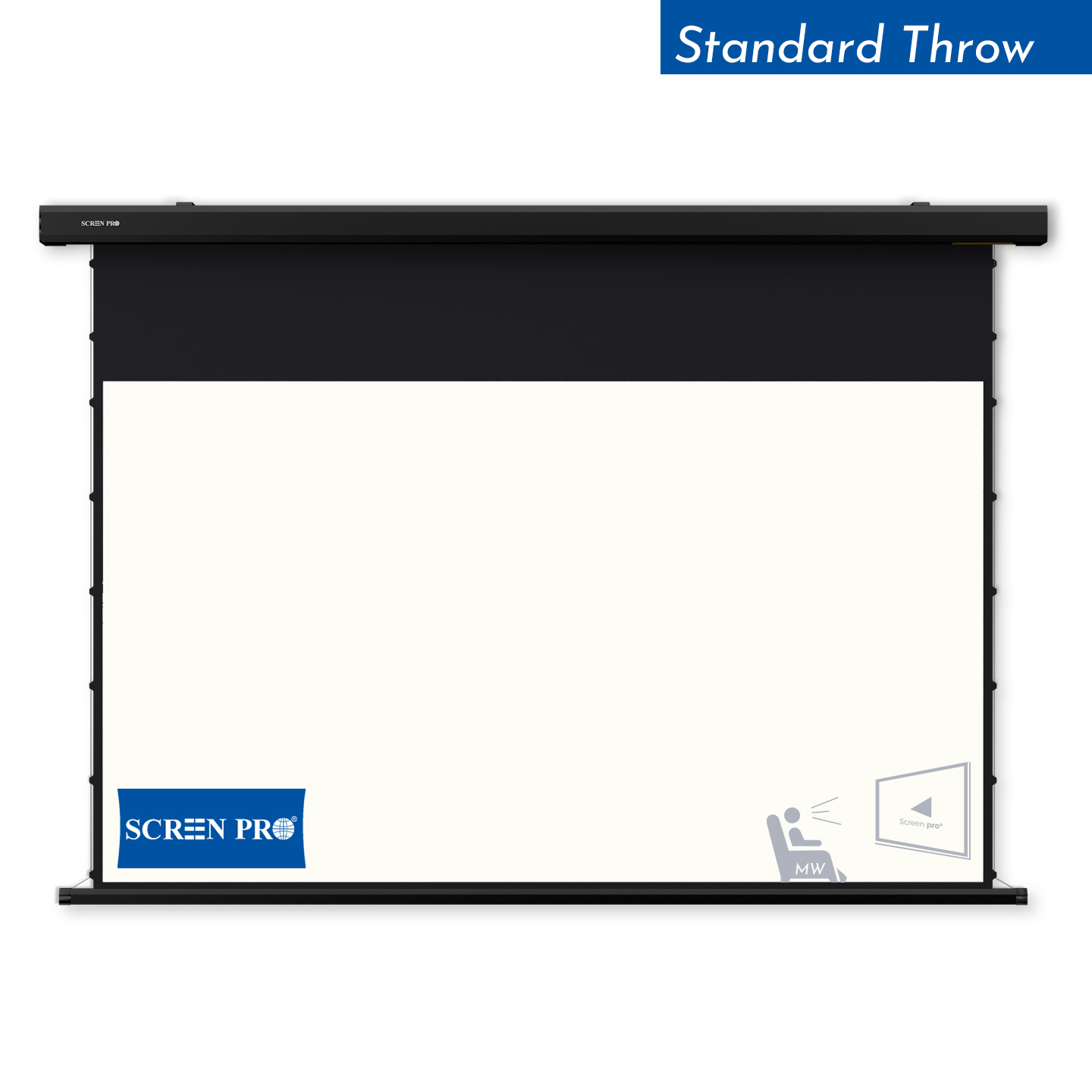
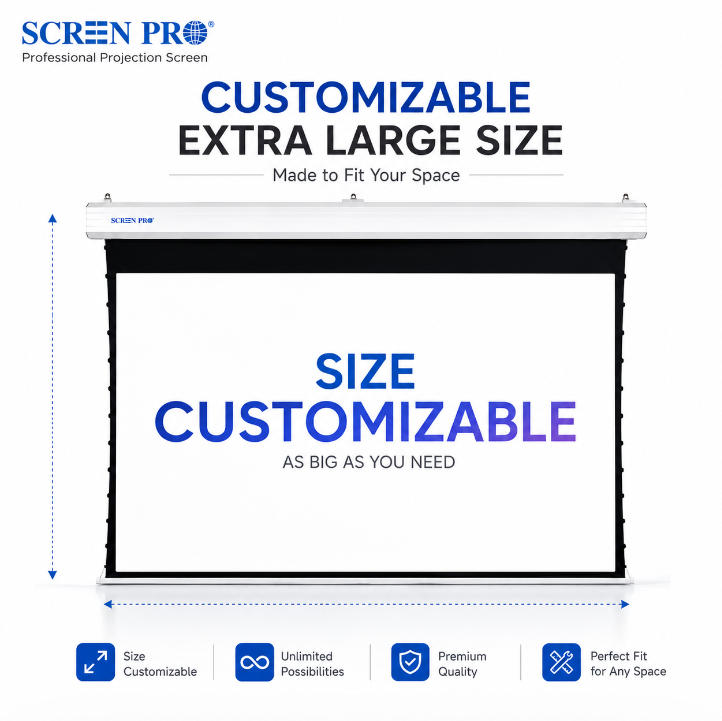
| Tab-Tensioned Screen | Premium retractable installations | Improved surface flatness compared with standard drop-down screens |
For luxury interiors, concealment matters.
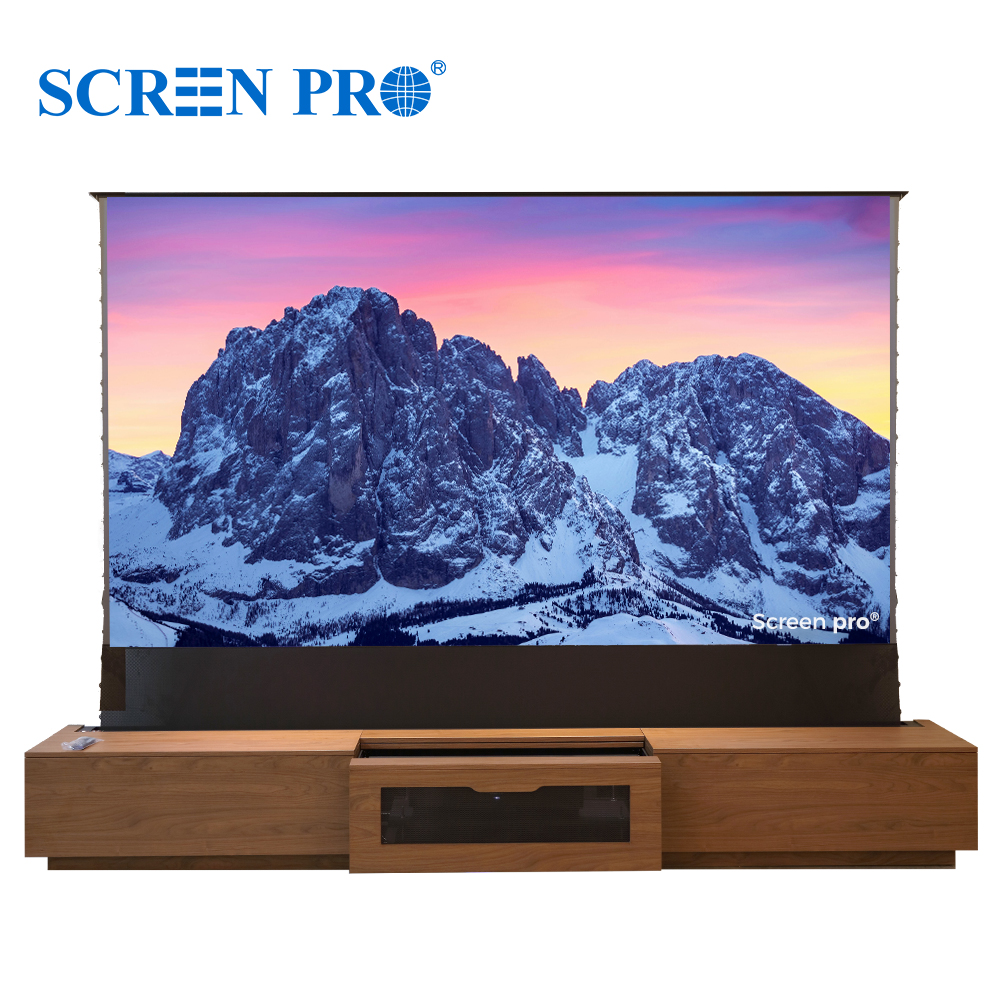
A ceiling-recessed motorized projection screen can preserve the architecture of the room during everyday use and transform the space into a cinema only when needed.
Choose the Right Projection Surface
The screen material is just as important as the screen structure. Different materials control brightness, contrast, viewing angle, ambient light, acoustics, and projector compatibility in different ways.
White Matte
Ideal for dedicated dark rooms where ambient light is well controlled. It provides neutral color reproduction and broad viewing angles.
ALR Screen
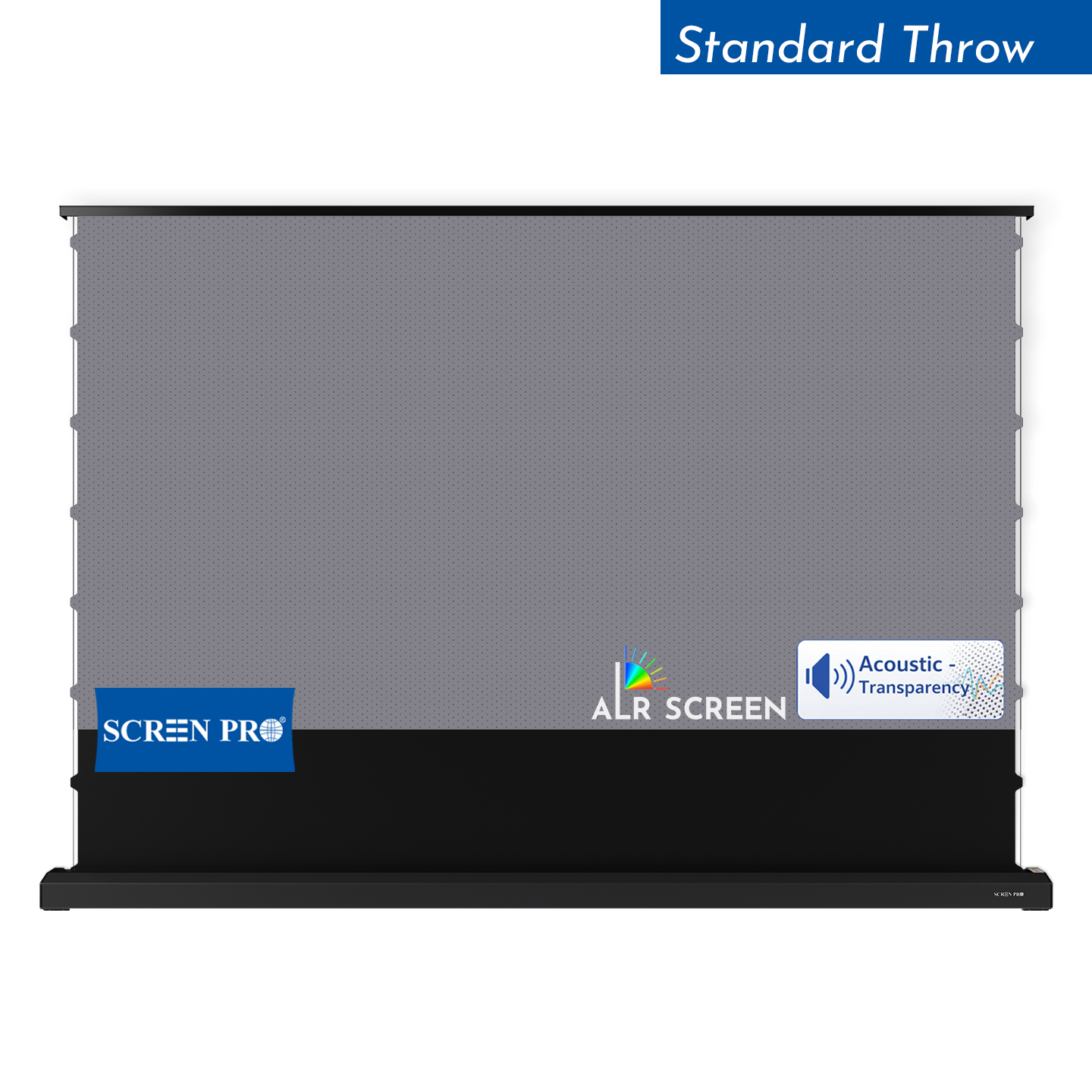
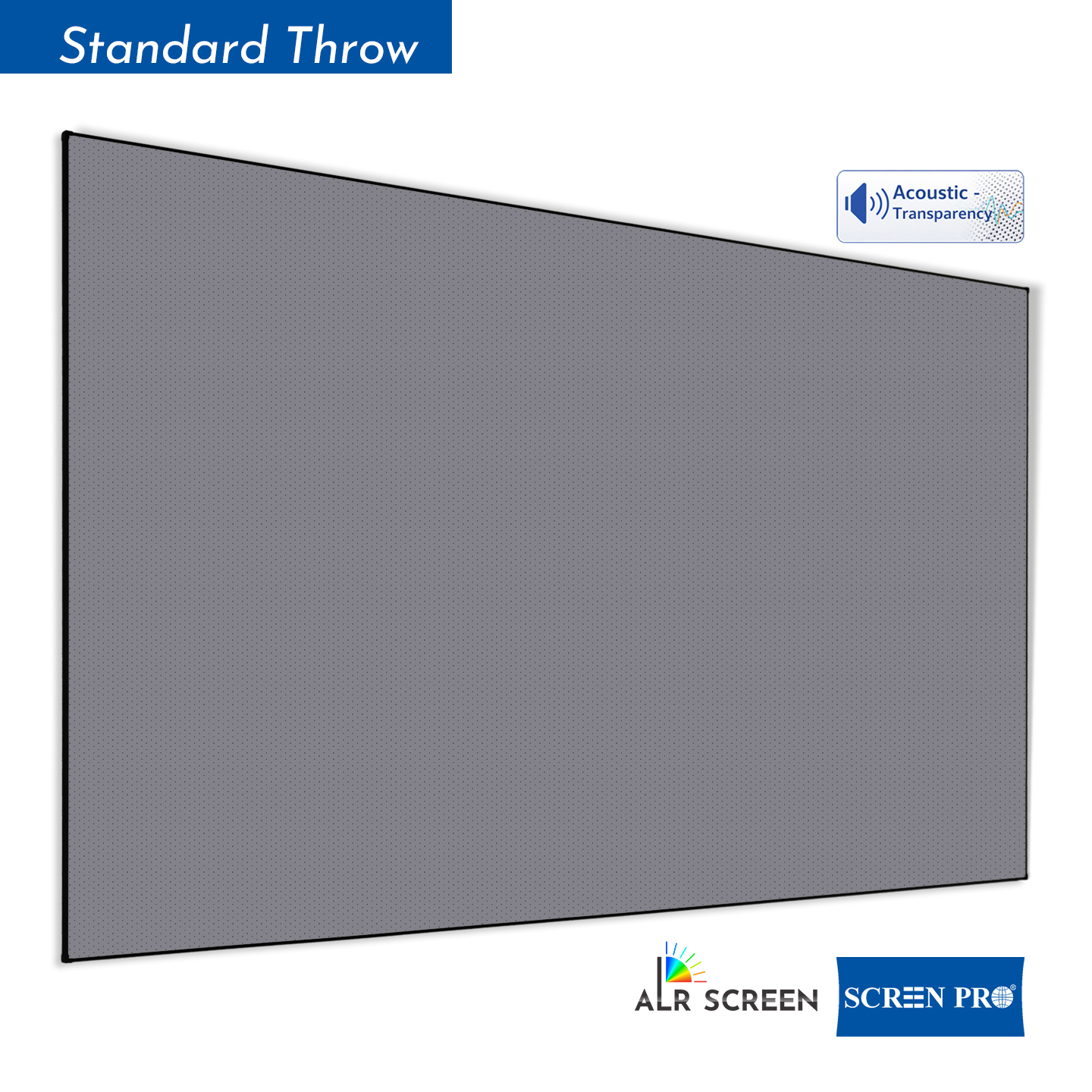
A strong choice for media rooms and living spaces where ambient light cannot be completely eliminated. ALR surfaces help preserve perceived contrast under room lighting.
Acoustically Transparent
Ideal for dedicated cinemas where speakers are positioned behind the image, helping dialogue appear to come directly from the screen.
The correct material should always be matched to the projector type. Ultra-short-throw projectors, standard-throw projectors, RGB laser projectors, and high-output installation projectors may require very different projection surfaces.
Hide the Speakers Behind the Screen
One of the most effective ways to make a home cinema feel more like a commercial theater is to place the front speakers behind an acoustically transparent screen.
In a conventional living-room setup, the center speaker is usually placed below the image. In a dedicated cinema, an acoustically transparent projection screen allows the left, center, and right speakers to sit directly behind the image.
This improves both visual cleanliness and sound localization. Dialogue appears to originate from the person speaking on screen rather than from a speaker cabinet below the picture.
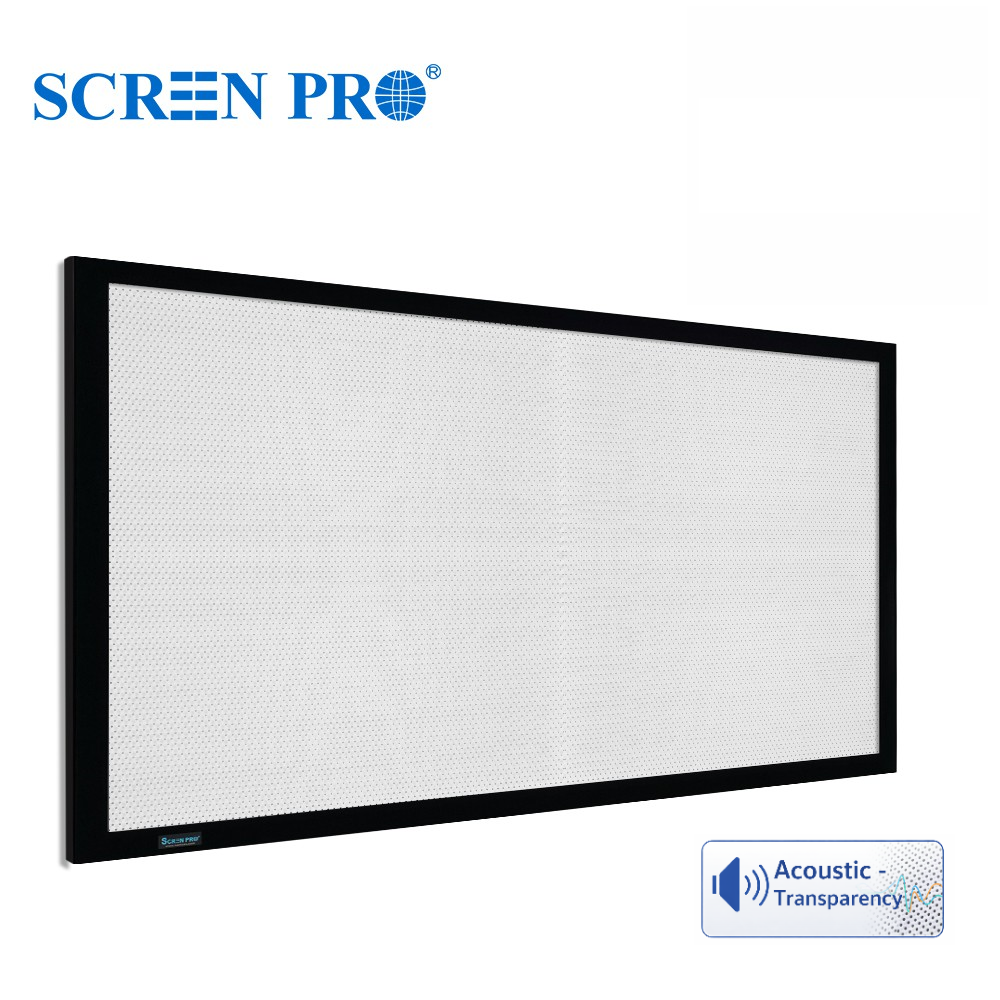
Woven Acoustic Material
A woven structure can provide excellent sound transparency while maintaining a smooth image surface suitable for high-resolution projection.
Perforated Material
Common in commercial cinemas and larger installations. Proper viewing distance is important because perforations may become visible at close range.
Projector Placement Should Be Designed Early
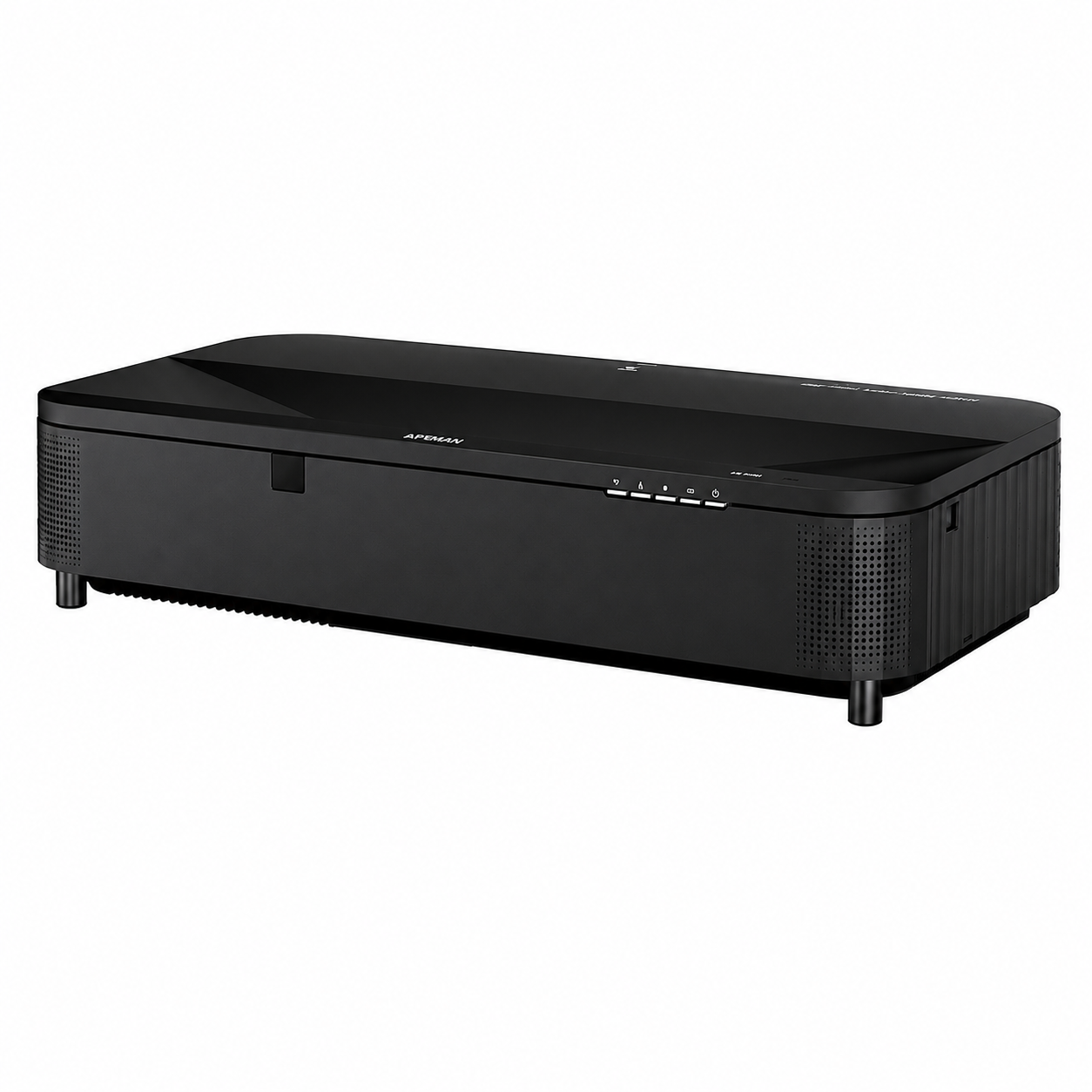
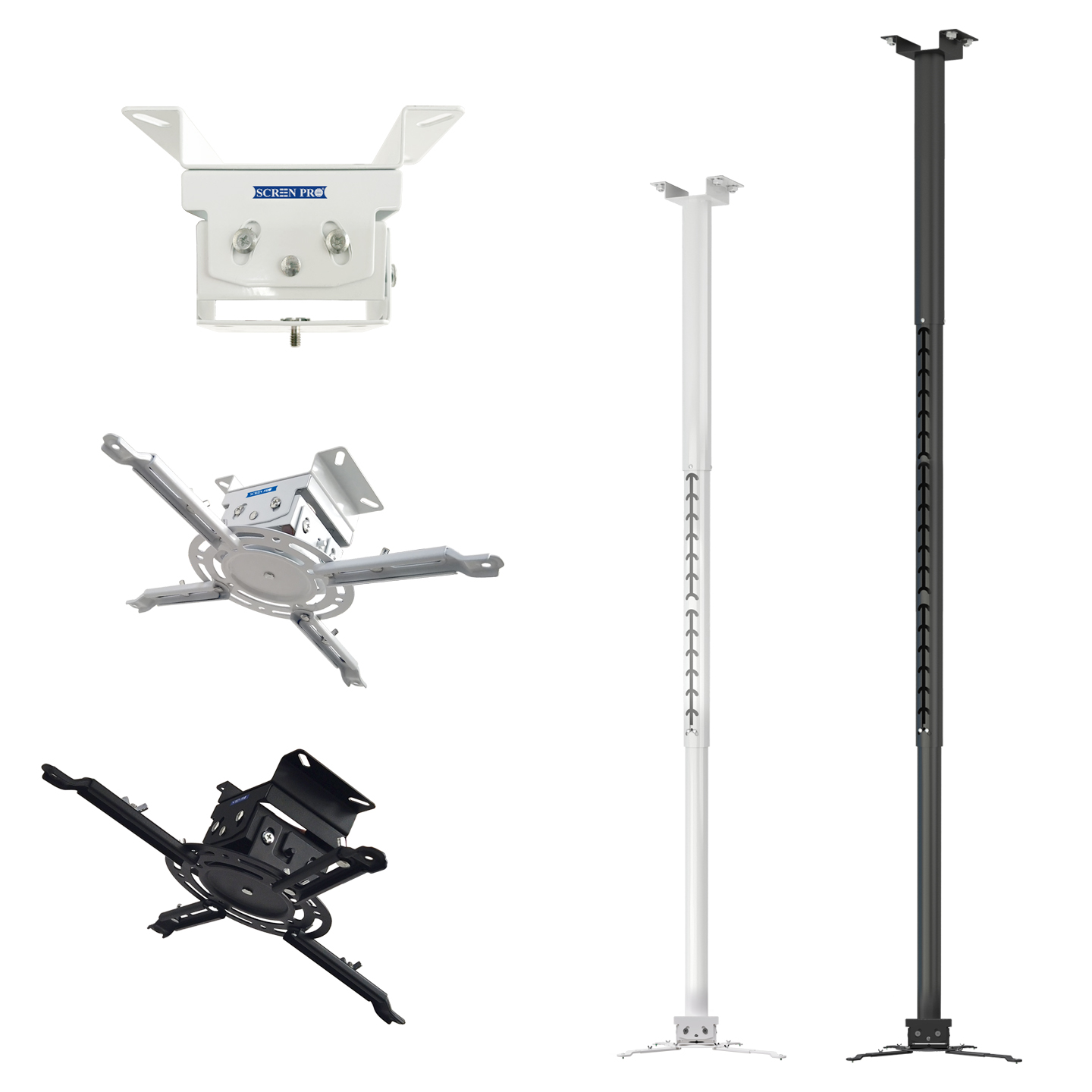
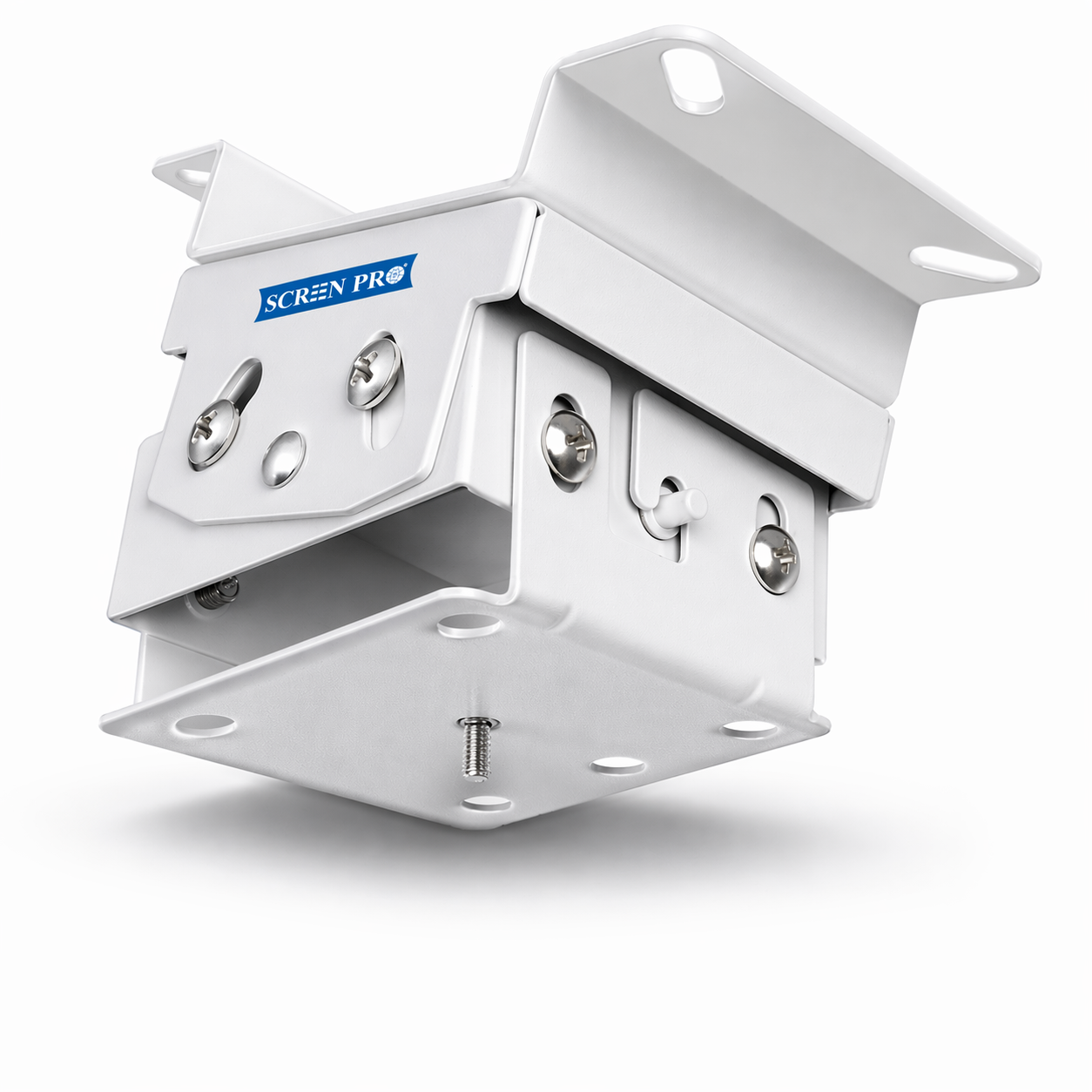
Projector placement should never be an afterthought. The projector determines throw distance, image geometry, ventilation requirements, cable routing, ceiling structure, and sometimes even seating layout.
In luxury interiors, the projector can be integrated in several ways:
- Ceiling-mounted in a dedicated cinema room
- Hidden inside a ventilated architectural enclosure
- Mounted on a motorized projector lift
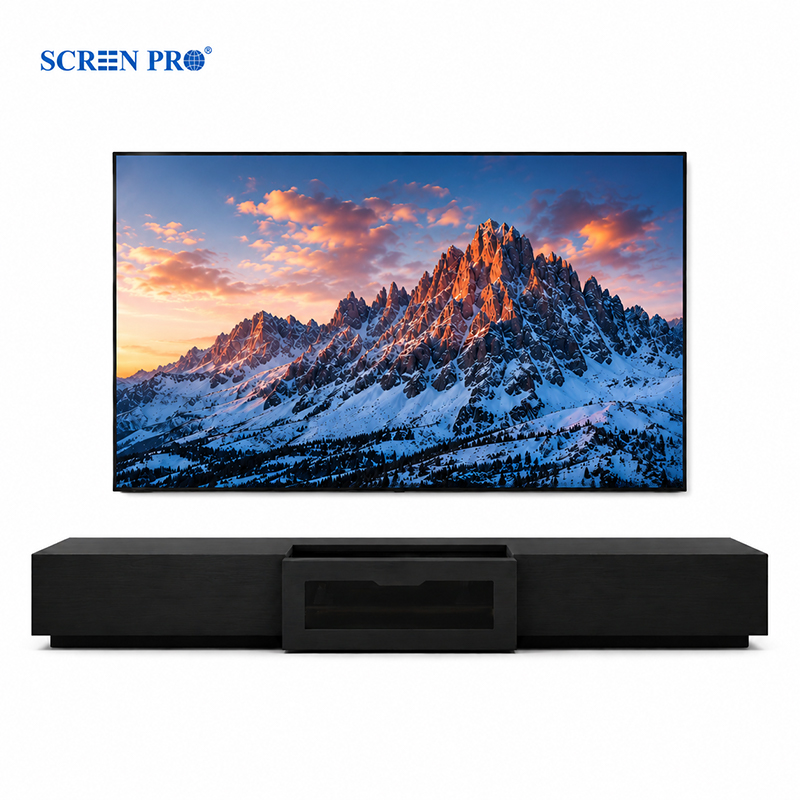
- Integrated into custom cabinetry
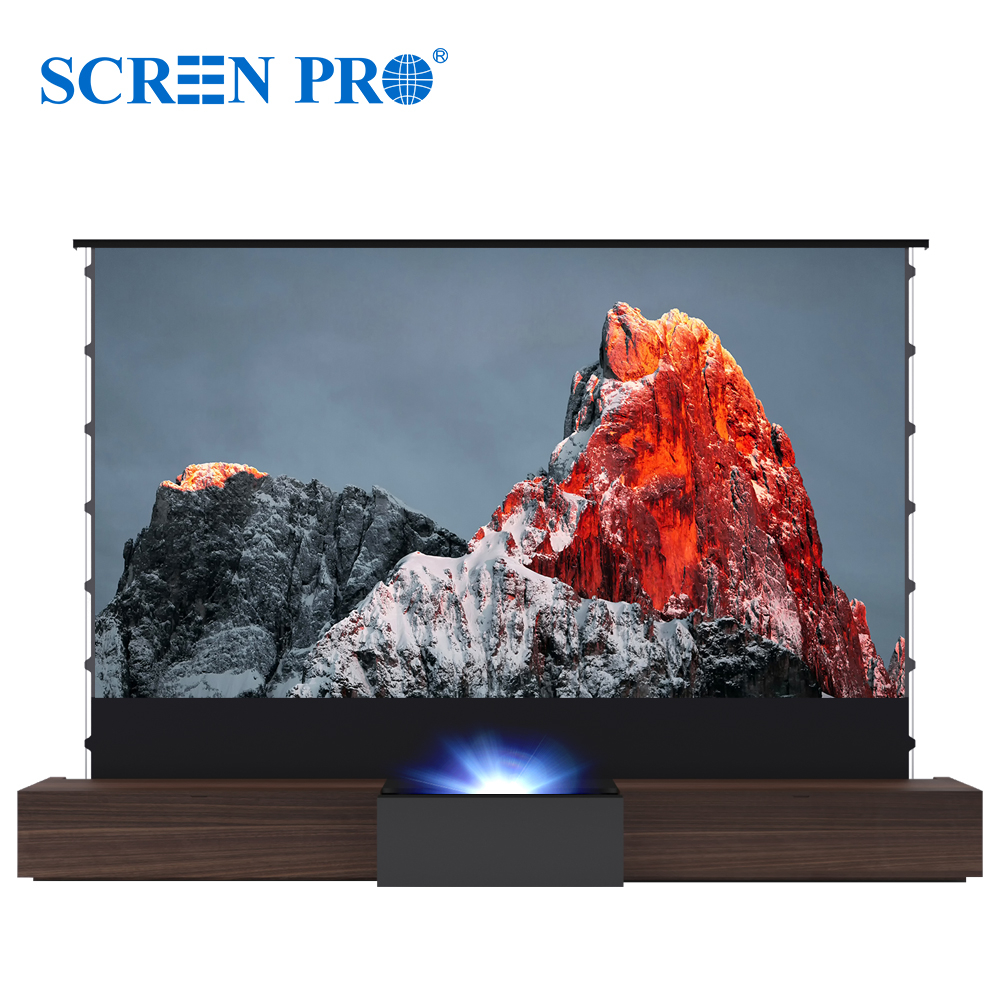
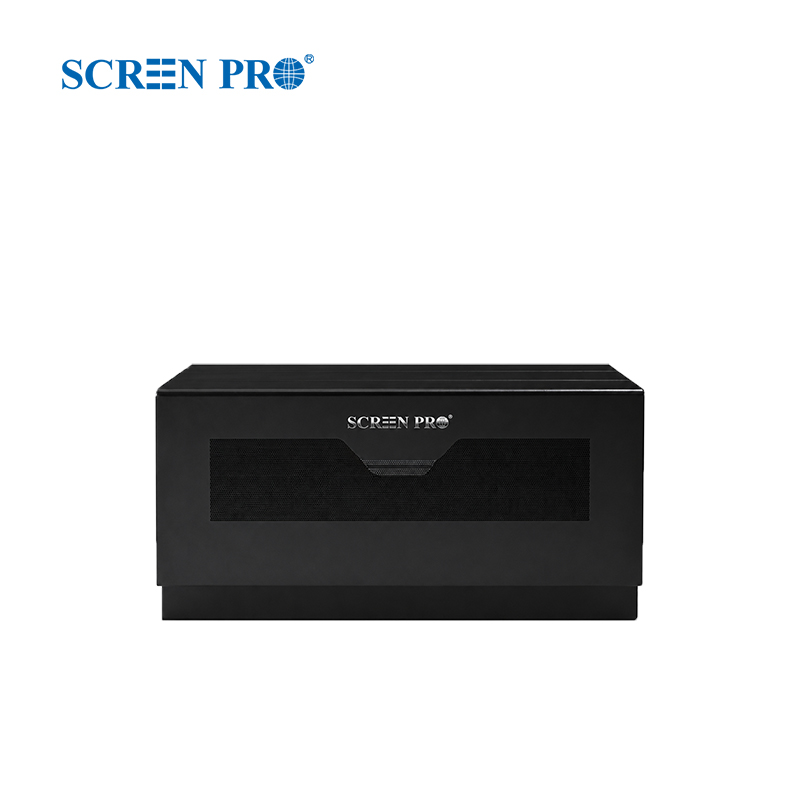
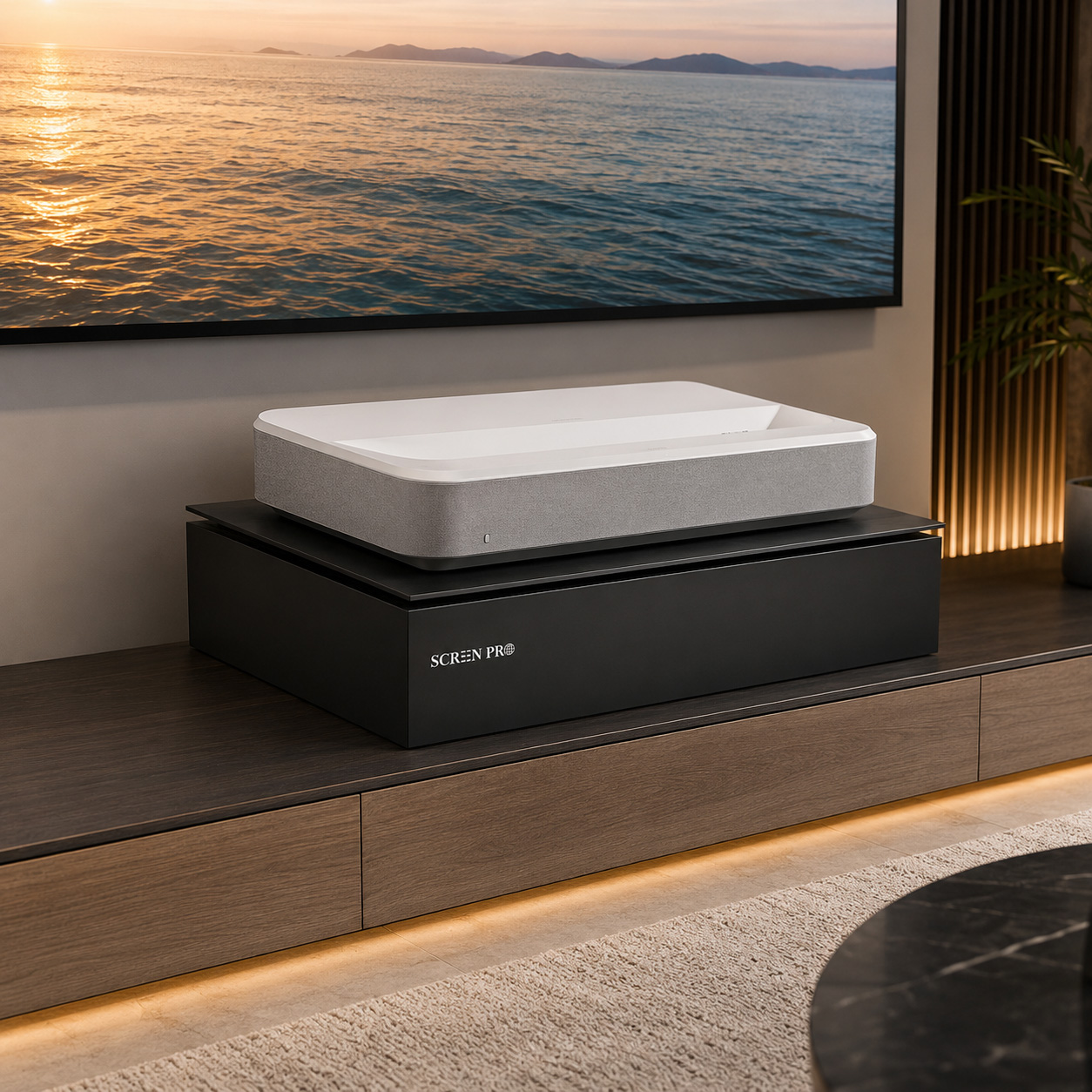
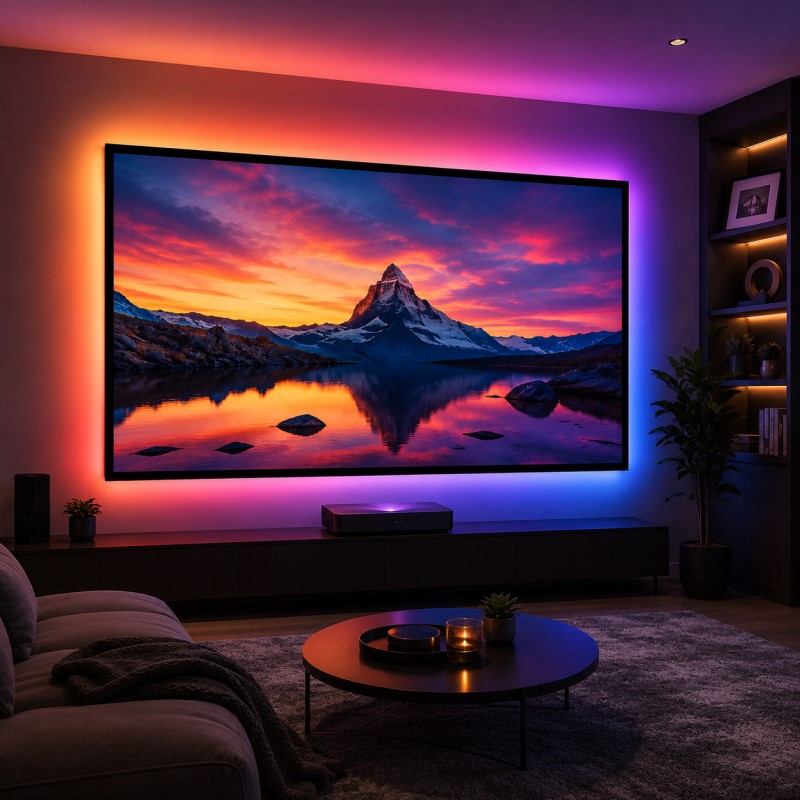
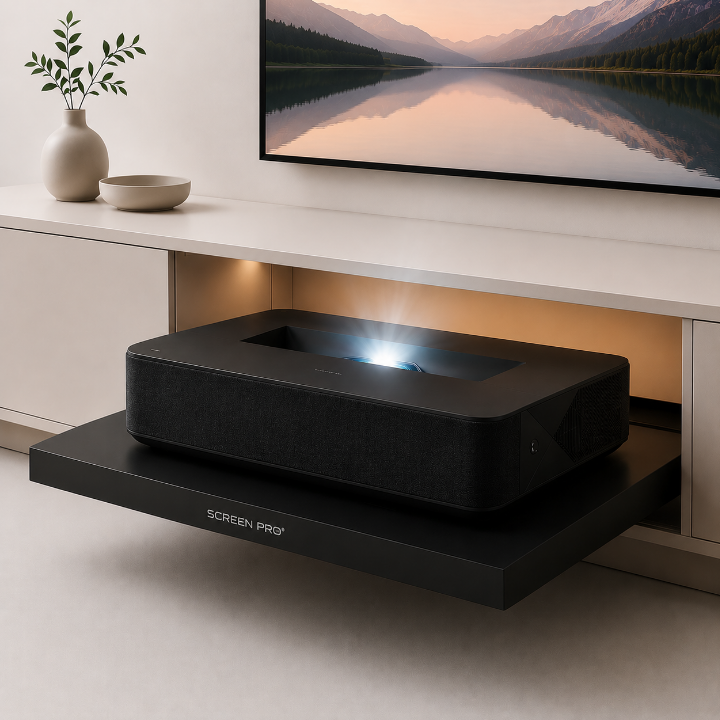
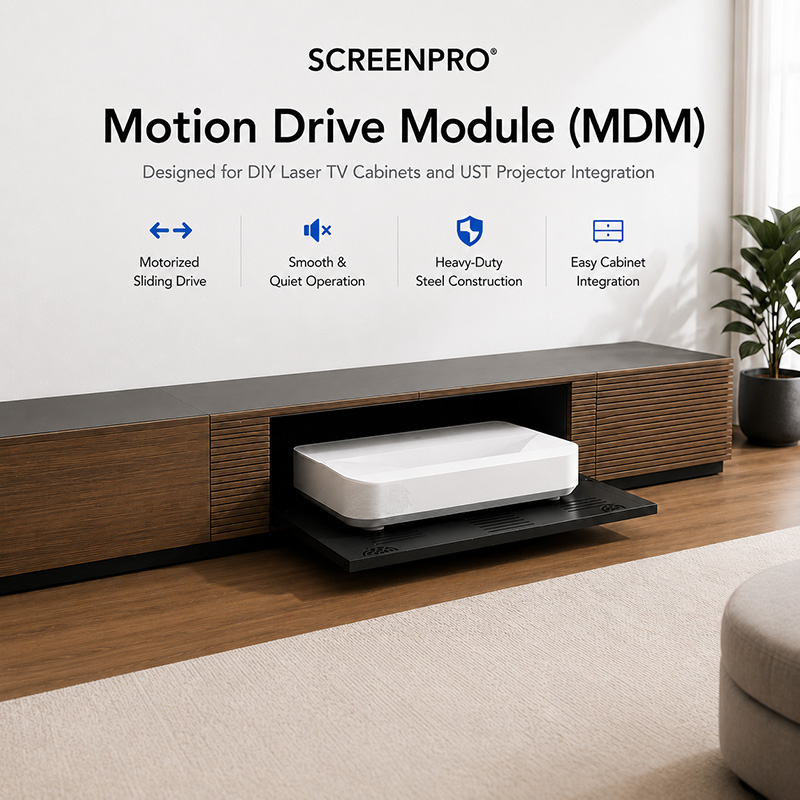
- Placed inside a concealed UST projector cabinet
Always verify projector throw ratio and lens-shift capability before finalizing the screen position.
Lighting Is Part of the Cinema System
Luxury cinema lighting should guide the viewer into the room without competing with the image.
Instead of using one bright ceiling fixture, divide the lighting into separate dimmable zones such as wall lights, step lights, indirect ceiling lighting, aisle lighting, and decorative ambient lighting.
Before the Movie
Soft architectural lighting creates atmosphere and makes the room comfortable for guests.
During Playback
Lighting near the projection screen should be minimized to preserve image contrast.
After the Movie
Automated scenes can gradually restore lighting for a more polished experience.
Do Not Ignore Acoustic Treatment
A high-end speaker system installed in an untreated room may still sound disappointing. Hard walls, glass surfaces, floors, ceilings, and large furniture can create unwanted reflections and uneven bass response.
Professional acoustic design may combine absorption, diffusion, bass management, wall construction, and isolation depending on the room.
The best luxury cinemas integrate acoustic treatment into the architecture. Acoustic panels can be hidden behind fabric walls, decorative panels, or custom interior finishes so the room remains visually refined.
Design Seating Around Sightlines
Luxury cinema seating is not only about choosing premium recliners. Seating geometry has a direct impact on the viewing experience.
For multiple rows, consider riser height, seat spacing, head clearance, aisle width, speaker positions, and the vertical position of the screen. Every viewer should have an unobstructed sightline.
Build Your Home Cinema in 5 Steps
A simple planning sequence can prevent many of the most common design mistakes.
Room
Measure dimensions, ceiling height, windows, doors, and available installation space.
Screen
Select screen size, aspect ratio, screen type, and projection material.
Projector
Confirm throw distance, brightness, projector type, and installation position.
Audio
Plan speaker placement, acoustic treatment, and whether speakers will sit behind the screen.
Integration
Hide cables, controls, projector hardware, lighting systems, and unnecessary visible equipment.
SCREENPRO Solutions for Luxury Home Cinemas
Different cinema designs require different screen systems. Rather than choosing one screen type for every project, the screen should be selected according to the room architecture, projector, lighting conditions, and acoustic requirements.
Fixed Frame + Acoustically Transparent Screen
For a traditional private cinema, a fixed frame screen combined with woven acoustically transparent material allows the front speakers to be hidden directly behind the image.
This creates a clean front wall and more natural dialogue localization.
Dedicated theaters, hidden LCR speakers, 4K/8K projection, custom cinema rooms.
In-Ceiling Motorized Screen
For interiors where the projection system should disappear completely when not in use, a recessed ceiling screen provides a cleaner architectural solution.
It can also be combined with a concealed projector lift for full ceiling integration.
Luxury living rooms, villas, multipurpose media rooms, interior-design-led projects.
ALR Projection Screen
When the room cannot be fully darkened, an ambient-light-rejecting projection surface can help improve perceived contrast compared with a conventional matte-white screen.
The ALR material must be selected according to the projector type and installation geometry.
Media rooms, luxury living rooms, UST projectors, controlled-light commercial-style home entertainment spaces.
Luxury Home Cinema Checklist
- Room dimensions confirmed before selecting screen size
- Viewing distance and seating sightlines planned
- Projector throw distance verified
- Screen material matched to projector type
- Ambient lighting conditions considered
- Acoustically transparent screen considered for hidden speakers
- Speaker locations planned before interior finishing
- Acoustic treatment integrated into walls and ceiling
- Cables and control systems concealed
- Ventilation planned for projector and AV equipment
- Lighting divided into dimmable cinema zones
- Screen, projector, seating, and audio designed as one system
Frequently Asked Questions
What is the best projection screen for a luxury home cinema?
For a dedicated dark cinema, a fixed frame screen with matte-white or acoustically transparent material is often an excellent choice. For rooms with ambient light, an appropriate ALR screen may provide better perceived contrast.
Is an acoustically transparent screen worth it?
For dedicated home cinemas, it can be extremely valuable because the front speakers can be positioned directly behind the image. This creates a cleaner room and more natural sound localization.
Should I choose a fixed frame or motorized screen?
Choose a fixed frame screen when image flatness and a permanent cinema appearance are the priority. Choose a motorized or recessed screen when the room must return to a normal living space after the movie.
Do I need an ALR screen in a dedicated home theater?
Not necessarily. In a well-controlled dark room, a conventional cinema screen may provide excellent results. ALR materials become more useful when ambient light is present or when the projector and room configuration specifically benefit from directional light control.
What should be designed first: projector or screen?
They should ideally be selected together. Screen size affects projector throw distance and required brightness, while projector type determines which screen materials are suitable.
Design the screen around the room.
From fixed frame and acoustically transparent screens to ALR, tab-tensioned, and concealed in-ceiling systems, SCREENPRO supports custom projection solutions for private cinemas and architectural AV projects.
Explore Projection Screen Solutions