




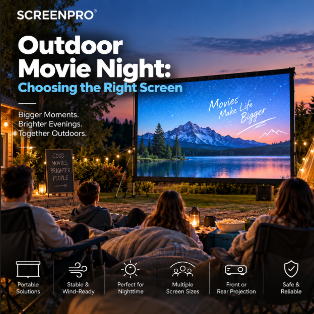
Outdoor Movie Night: Choosing the Right Screen
A backyard movie night, school screening or community event can turn an ordinary outdoor space into a memorable big-screen experience. But outdoor projection introduces challenges that do not exist inside a controlled home theater.
Screen stability, wind, ambient light, projector brightness, audience size, viewing distance and setup time all affect the final result. The right outdoor movie screen needs to provide a flat, visible image while remaining practical to transport, assemble and store between events.
If you are new to projection screen selection, you may also want to read How to Choose the Right Projection Screen for Your Projector before choosing the final screen size and material.
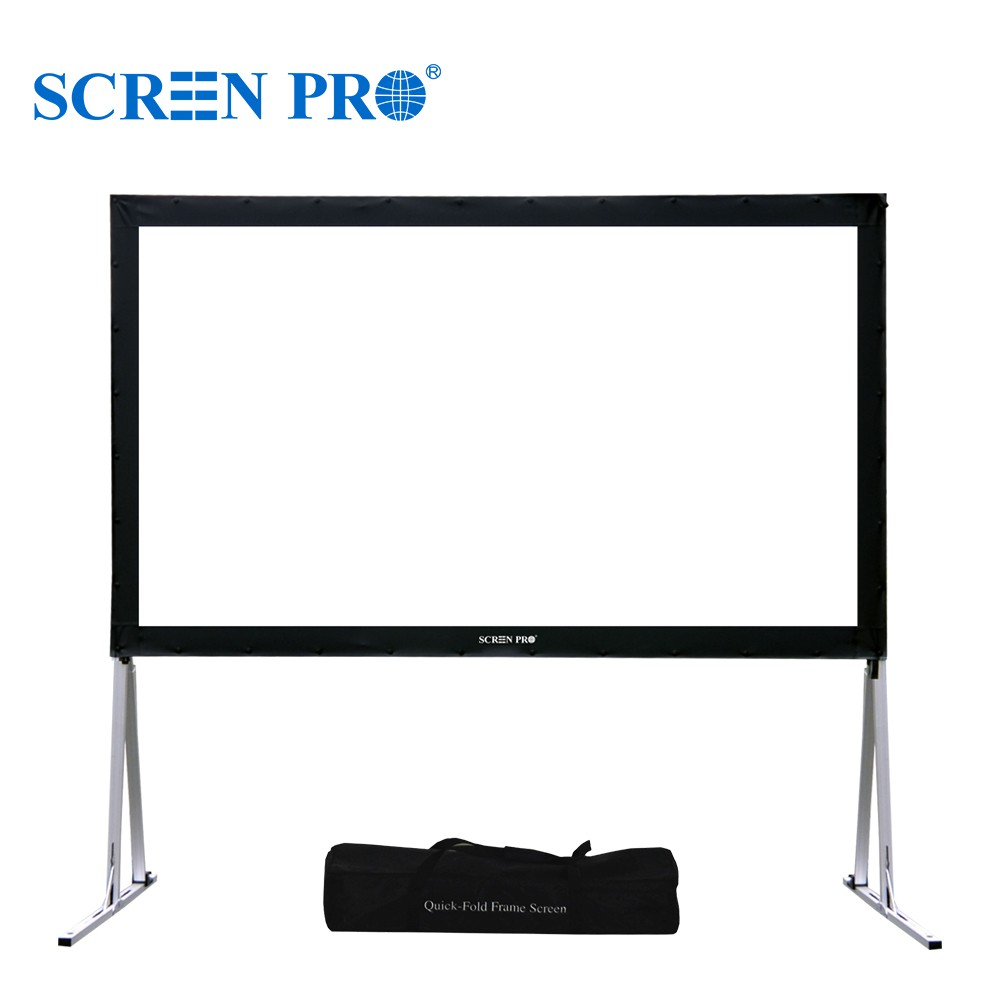
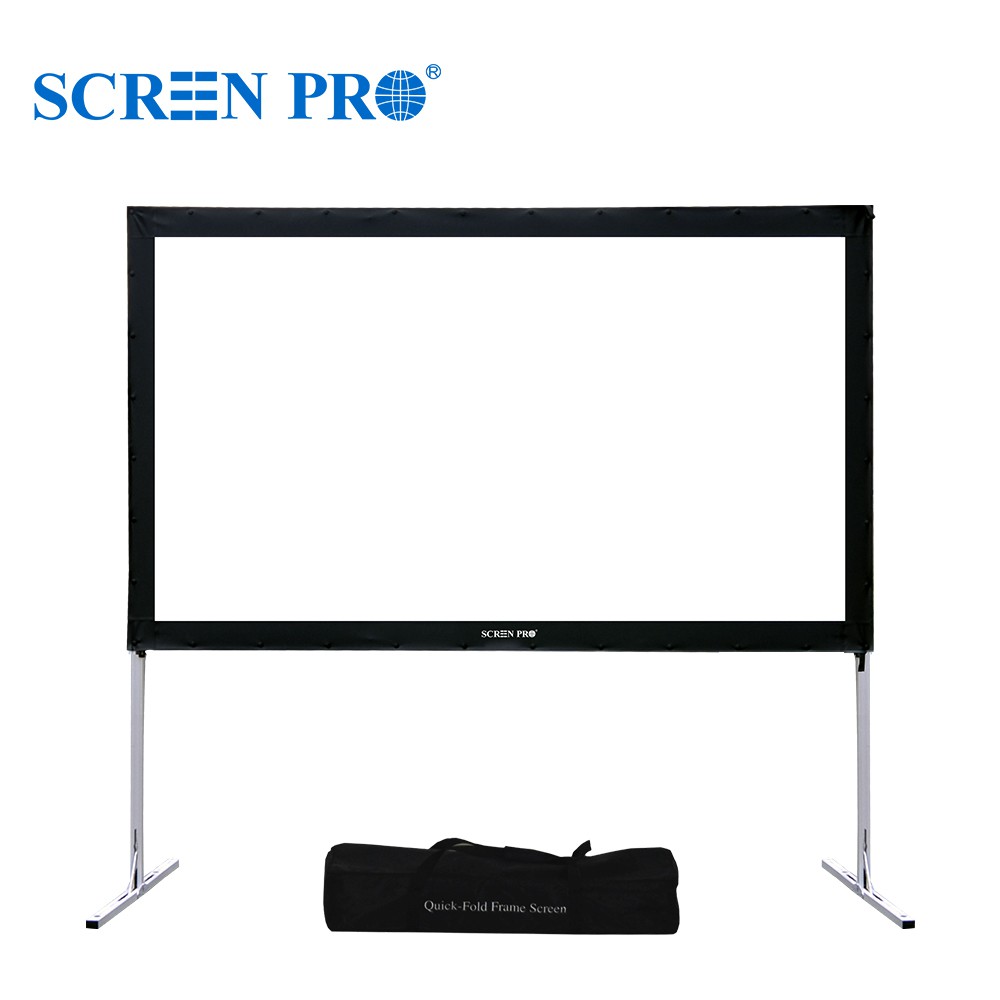
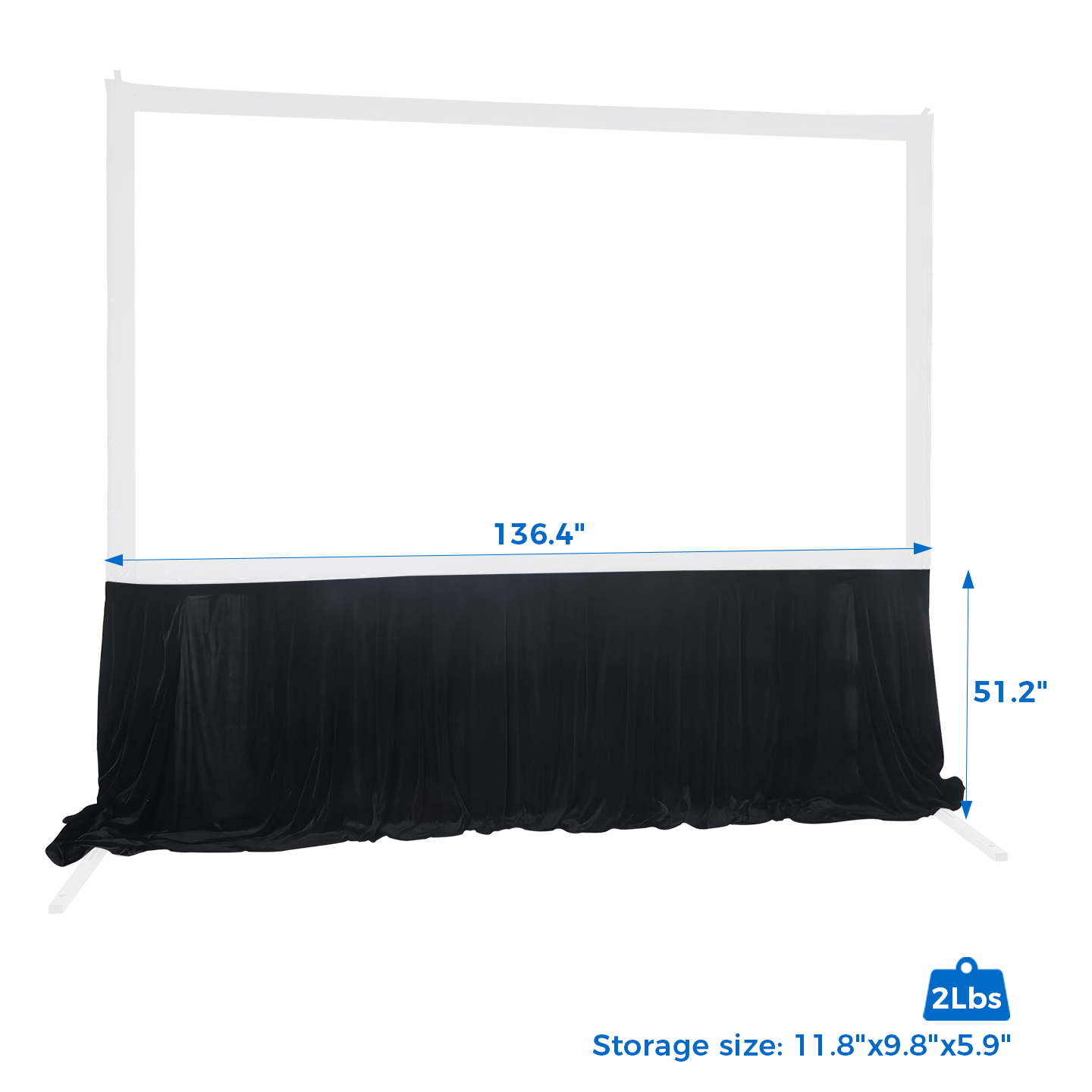
For most temporary backyard movies, school events and community screenings, start with a portable quick-fold projection screen. A rigid folding frame keeps the screen surface tensioned while allowing the complete system to be dismantled and stored after the event.
Unless a projection screen is specifically designed and rated for continuous outdoor exposure, protect it from rain, strong wind, prolonged sunlight, condensation and other weather conditions, and store it appropriately after use.
1. Best Overall for Outdoor Movie Nights: Quick-Fold Screens
For temporary outdoor cinema, a quick-fold screen is one of the most versatile solutions because the projection material attaches directly to a folding frame. This helps maintain a flatter viewing surface while keeping the complete system portable.
Quick-fold screens are particularly useful for:
- backyard movie nights;
- school movie nights;
- community screenings;
- corporate outdoor events;
- festivals;
- mobile cinema;
- rental and staging applications.
SCREENPRO QB Series — Backyard Cinema & Portable Events
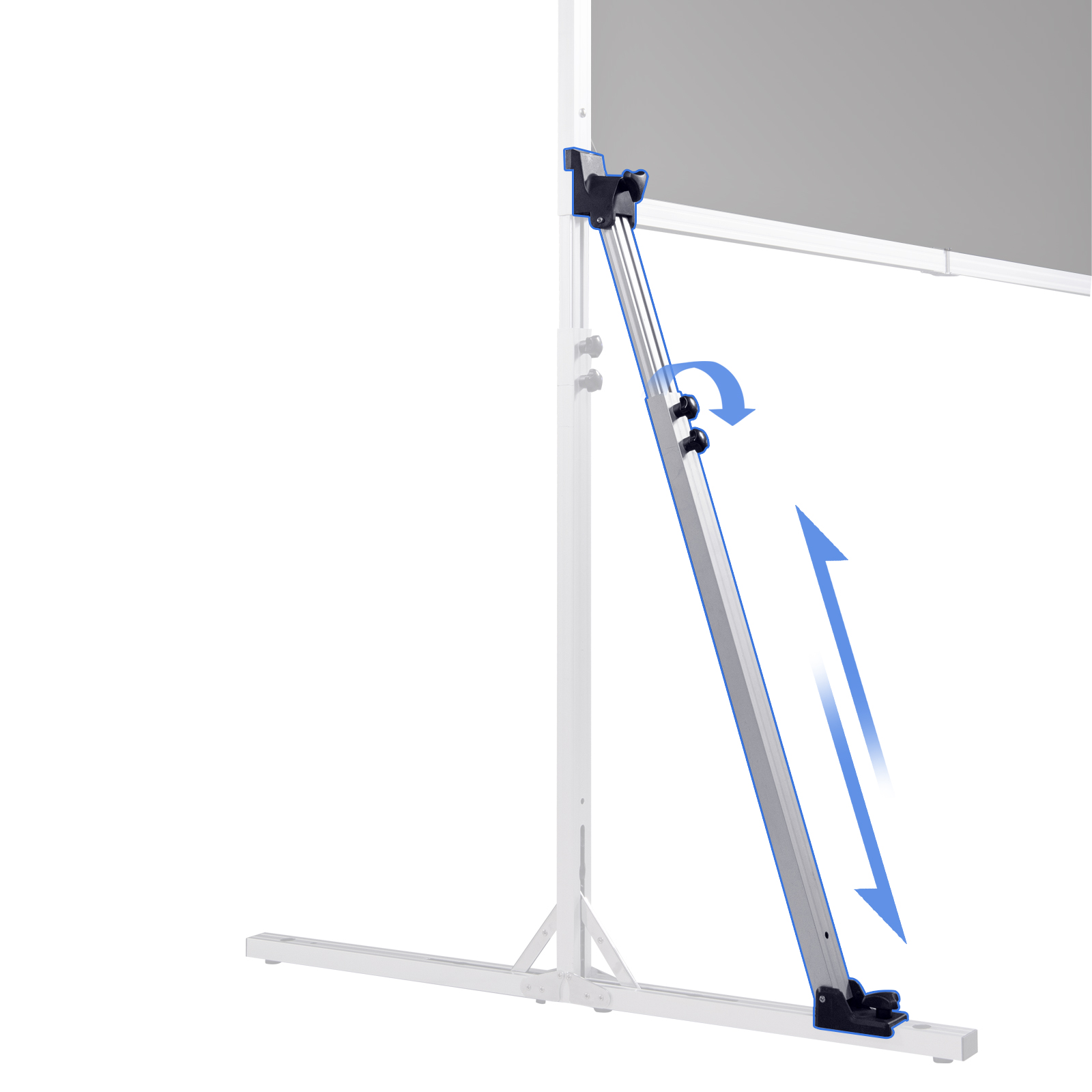
The SCREENPRO QB Series combines a quick-fold frame with adjustable-height legs, making it particularly useful where the screen needs to be raised for better audience visibility.
Its portable construction also makes it suitable for repeated transport between backyards, schools, community spaces and event venues.
Explore SCREENPRO QB Portable Outdoor Quick-Fold Screen →SCREENPRO QV Series — Portable Stage & Event Projection
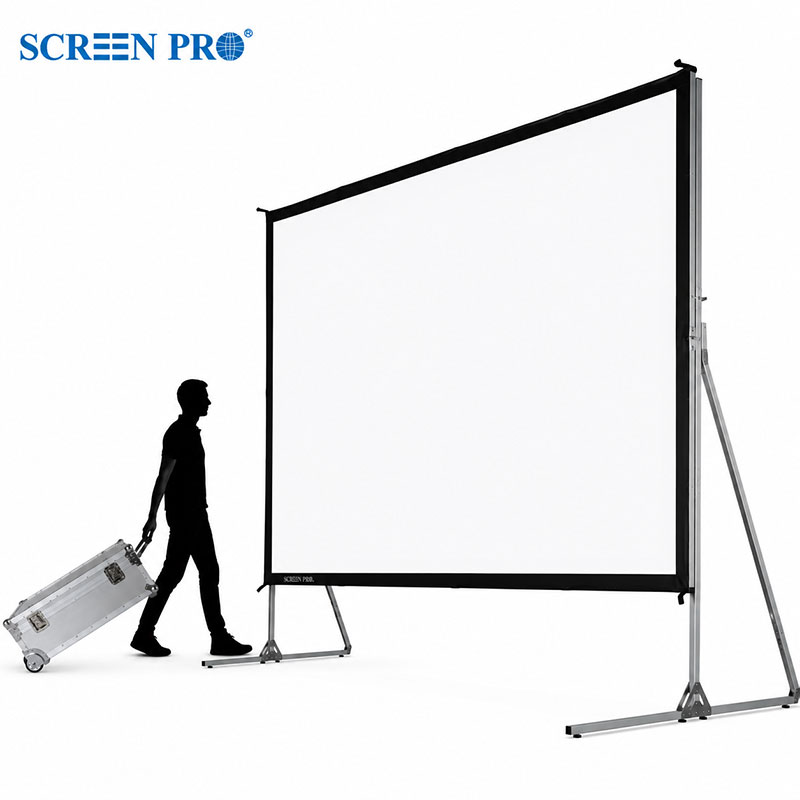
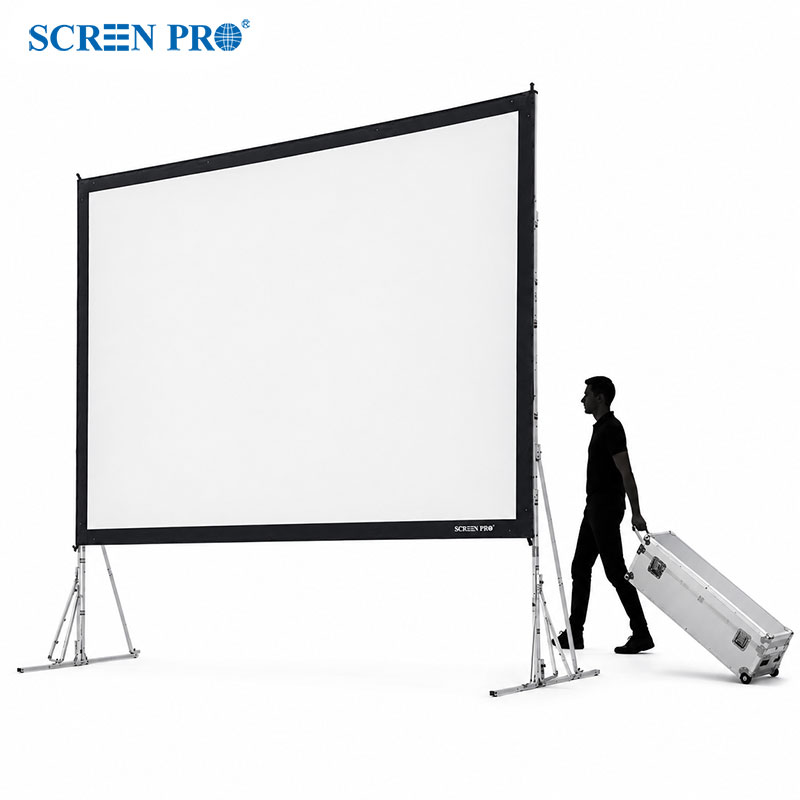
For temporary event projection and outdoor cinema where portability and rapid assembly are important, the SCREENPRO QV Series provides another quick-fold screen option with front and optional rear-projection configurations.
Explore SCREENPRO QV Portable Quick-Fold Screen →For more portable and professional event configurations, browse the complete SCREENPRO Stage & Event Projection Screen Series .
2. How Large Should an Outdoor Movie Screen Be?
The correct size depends primarily on audience size and viewing distance. A small family watching from a patio has very different requirements from a school or community audience spread across a large field.
| Outdoor Application | Typical Planning Range | Main Consideration |
|---|---|---|
| Family Backyard Movie | 100–150" | Easy setup and comfortable close-range viewing |
| Large Backyard Gathering | 150–200" | Audience size and projector brightness |
| School / Community Event | 200–300" | Rear-row visibility and structural planning |
| Large Professional Event | 300"+ | Professional projection, staging and installation planning |
For larger installations, you can also use the SCREENPRO Large Venue Projector Screen Calculator as an additional planning reference.
3. Match Projector Brightness to Screen Size
Increasing screen size spreads the projector's light over a larger area. A projector that looks bright on a 100-inch screen can appear substantially dimmer when the same image is expanded to 200 or 300 inches.
Before selecting the screen, confirm:
- projector light output;
- projector throw ratio;
- available projector distance;
- target image width and height;
- projector resolution;
- ambient-light conditions;
- front or rear projection.
If you already own the projector, use How to Choose the Right Projection Screen for Your Projector to evaluate projector geometry before ordering a screen.
4. Outdoor Movies Work Best After Sunset
One of the most important factors in outdoor projection is something the screen cannot eliminate: daylight.
Even a powerful projector cannot make a conventional projection system behave like a direct-view LED display under strong sunlight. For this reason, outdoor movies normally perform best after sunset or when the site has become sufficiently dark.
Other sources of ambient light can also reduce perceived contrast:
- streetlights;
- building lights;
- parking-lot lighting;
- landscape lighting;
- decorative event lighting.
5. Matte White Is a Strong Choice for Nighttime Movies
For outdoor events held after sunset, a matte white projection surface is a versatile choice because it can provide broad viewing characteristics for an audience distributed across a lawn, courtyard or event area.
This is particularly useful outdoors because viewers rarely sit within one narrow central viewing zone.
Gain, however, should not be evaluated independently from viewing angle. To understand the relationship, see Projector Screen Gain Explained .
6. Do You Need an ALR Screen Outdoors?
For most nighttime outdoor movie events, not necessarily.
Ambient Light Rejecting screens use optical or directional structures to manage light arriving from particular directions. They do not make projection immune to daylight, and more directional materials may reduce viewing flexibility for a widely dispersed outdoor audience.
A conventional wide-viewing screen can therefore be more appropriate for many nighttime movie events.
If you are considering ALR for a specialized application, first read What Is an ALR Projector Screen and How Does It Work? .
7. Front Projection vs Rear Projection Outdoors
Most backyard movie nights use front projection because it requires less installation depth and is generally easier to arrange.
| Projection Method | Advantages | Considerations |
|---|---|---|
| Front Projection | Simpler layout, less space behind the screen and suitable for most backyard and community events. | People moving in front of the projector can temporarily create shadows. |
| Rear Projection | Keeps the projector and beam behind the screen and allows presenters or guests to move freely in front. | Requires suitable rear-projection material and sufficient space behind the screen. |
Rear projection is particularly useful for professional stage events, presentations, exhibitions and installations where the technical equipment should remain outside the main audience area.
SCREENPRO RL Rear Projection Fabric
For compatible quick-fold configurations, rear-projection material allows the projector to be positioned behind the screen. This can help keep the projection beam and projector equipment away from the audience area.
Explore SCREENPRO RL Rear Projection Fabric →8. Wind Is a Critical Outdoor Safety Factor
A large projection surface can catch wind like a sail. As the screen becomes larger, wind load becomes an increasingly important part of event planning.
Before setup:
- check current and expected weather conditions;
- install the frame on stable ground;
- use the appropriate support and stabilization system;
- avoid exposed locations during strong or gusty wind;
- keep the audience clear of structural supports;
- stop using the screen if site conditions become unsafe.
The safe operating conditions of the event and installation must always take priority over continuing the screening.
9. Protect the Screen from Rain and Moisture
Portable outdoor use does not mean that the screen should remain exposed to rain, condensation or prolonged moisture.
Moisture can affect projection material, hardware and nearby electrical equipment. After an event, the viewing surface should be properly dried before being packed for storage.
Avoid leaving a wet projection surface folded inside a storage case for an extended period.
10. Should You Install a Motorized Projection Screen Outdoors?
A standard indoor motorized screen should not automatically be considered appropriate for permanent outdoor installation.
Motors, control electronics, housings and projection materials can be affected by humidity, condensation, rain, wind, temperature changes and prolonged environmental exposure.
For occasional outdoor movie nights, a portable non-powered quick-fold system is normally easier to deploy and return to indoor storage after use.
11. What About Very Large Outdoor Events?
Once the audience and image size become substantially larger, the project starts to move from a backyard cinema setup into professional staging and large-format projection.
At this scale, the project should consider:
- large-format projector output;
- multiple projector or edge-blending requirements;
- professional rigging;
- screen support structure;
- audience safety zones;
- audio distribution;
- power distribution;
- front vs rear projection;
- weather contingency planning.
SCREENPRO Large Venue Projection Solutions
For very large professional venues where a portable backyard screen is no longer appropriate, SCREENPRO also provides large-format projection systems designed for commercial AV and venue applications.
Explore SCREENPRO TT Large Venue Projection Screen →12. What Aspect Ratio Is Best for Outdoor Movies?
For most outdoor movie nights, 16:9 is the most flexible format. It matches modern streaming content, video playback, games and many projector native resolutions.
Cinema formats such as 2.35:1 or 2.40:1 can be useful for specialized film events, but 16:9 gives a portable screen greater flexibility when it is also used for:
- sports;
- presentations;
- school events;
- gaming;
- video conferences;
- general event content.
13. Don't Forget Outdoor Audio
Image size is only half of an outdoor cinema experience. Outdoor spaces do not contain sound in the same way an enclosed room does, so the audio system must cover the audience directly.
For small backyard events, portable powered speakers may be sufficient. Larger community events may require a professional distributed speaker system.
Keep speakers positioned so that the screen frame does not obstruct the sound and so that volume remains reasonably consistent across the audience area.
14. Plan Power and Cables Safely
Outdoor projection may require electrical power for:
- the projector;
- media sources;
- audio equipment;
- lighting;
- network or AV equipment.
Cable routes should be planned to prevent trip hazards and keep electrical connections protected from moisture.
- avoid loose cables across audience walkways;
- protect connections from moisture;
- use appropriate equipment for the installation environment;
- keep technical areas separated from audience circulation;
- follow applicable local electrical and event safety requirements.
Which SCREENPRO Solution Fits Your Outdoor Event?
Family Backyard Movie
100–150" portable quick-fold screen with straightforward front projection.
Large Backyard Gathering
Portable quick-fold system with a brighter projector and appropriate screen support.
School Movie Night
Portable screen with good audience visibility, fast setup and easy transportation.
Community Event
Larger event-oriented quick-fold screen selected around projector brightness, audience size and installation conditions.
Rear Projection Event
Quick-fold frame combined with compatible rear-projection material where sufficient installation depth is available.
Large Professional Venue
Professional large-format projection system with dedicated staging, projection and structural planning.
Outdoor Movie Night Checklist
- Choose screen size according to audience size and viewing distance.
- Confirm projector brightness before increasing screen size.
- Check projector throw distance and lens position.
- Plan the screening for sufficiently dark conditions.
- Keep strong local lighting away from the screen surface.
- Decide between front and rear projection.
- Check weather and wind conditions before setup.
- Stabilize the screen according to the site and product instructions.
- Protect power and AV connections from moisture.
- Test screen, projector and audio before the audience arrives.
- Make sure the screen is dry before packing and storage.
Common Outdoor Movie Screen Mistakes
Choosing the Largest Screen Possible
A larger screen requires more projector output. Increasing screen size without considering brightness can produce a disappointing image.
Trying to Project in Direct Sunlight
A projection screen cannot turn a conventional projector into a daylight LED display. For outdoor cinema, environmental light control remains critical.
Ignoring Wind
The larger the screen, the greater the exposed surface area. Weather and structural safety should always be considered before image quality.
Assuming ALR Solves Every Bright-Room Problem
ALR screens are directional optical systems, not a replacement for appropriate lighting conditions.
Leaving the Screen Outdoors Permanently
Temporary outdoor compatibility does not mean the product is intended for continuous weather exposure.
Forgetting Rear-Projection Space
Rear projection can create a cleaner audience area, but sufficient distance behind the screen must be planned before choosing that configuration.
What Is the Best Screen for an Outdoor Movie Night?
For most backyard movie nights, school screenings and temporary community events, a portable quick-fold projection screen with a wide-viewing surface is one of the most practical solutions.
The SCREENPRO QB Series is particularly suited to portable backyard and event applications, while QV and the broader Stage & Event series provide additional options for professional temporary installations.
For projects that require the projector behind the screen, compatible rear-projection material can provide a cleaner event layout. Larger professional applications may require dedicated large-format projection systems.
Most importantly, choose the system around audience size, projector output, ambient light, wind, weather and site safety rather than simply choosing the largest screen available.
Find the Right Screen for Your Outdoor Event
From backyard movies to school screenings, community cinema and professional staging, SCREENPRO offers portable quick-fold and large-format projection solutions for different audience sizes and installation requirements.
Explore Stage & Event Screens Find the Right Projection ScreenDiscuss Your Outdoor Project
Frequently Asked Questions
What type of projector screen is best for outdoor movies?
For many temporary outdoor movie nights, a portable quick-fold screen provides a practical combination of screen flatness, portability and repeatable setup. The correct model and size should still be matched to projector brightness, audience size and site conditions.
What size screen is best for a backyard movie night?
For many family backyard setups, approximately 100–150 inches can provide a large viewing experience without immediately requiring professional event-scale projection equipment. Larger audiences may require substantially larger screens and more projector output.
Can I leave an outdoor movie screen outside permanently?
A portable or standard indoor projection screen should not be assumed suitable for permanent outdoor exposure. Rain, wind, sunlight, condensation and temperature changes can affect projection materials and components.
Do I need an ALR screen for an outdoor movie?
Not necessarily. ALR cannot overcome direct sunlight and directional ALR materials may reduce viewing flexibility for a wide outdoor audience. A wide-viewing projection surface can be more suitable for many nighttime events.
Can I use rear projection for an outdoor movie?
Yes, when sufficient space is available behind the screen and compatible rear-projection material is used. Rear projection can help keep the projector and projection beam away from the main audience area.
Are quick-fold screens suitable for school and community events?
Yes. Portable quick-fold screens can be useful for school screenings, community movie nights and temporary event projection because they can be assembled for the event and dismantled for transport and storage afterward.
Can a motorized projector screen be installed permanently outdoors?
A standard indoor motorized projection screen should not automatically be used for permanent outdoor installation. Environmental exposure such as rain, humidity, condensation, wind and temperature variation must be evaluated for the specific project.