


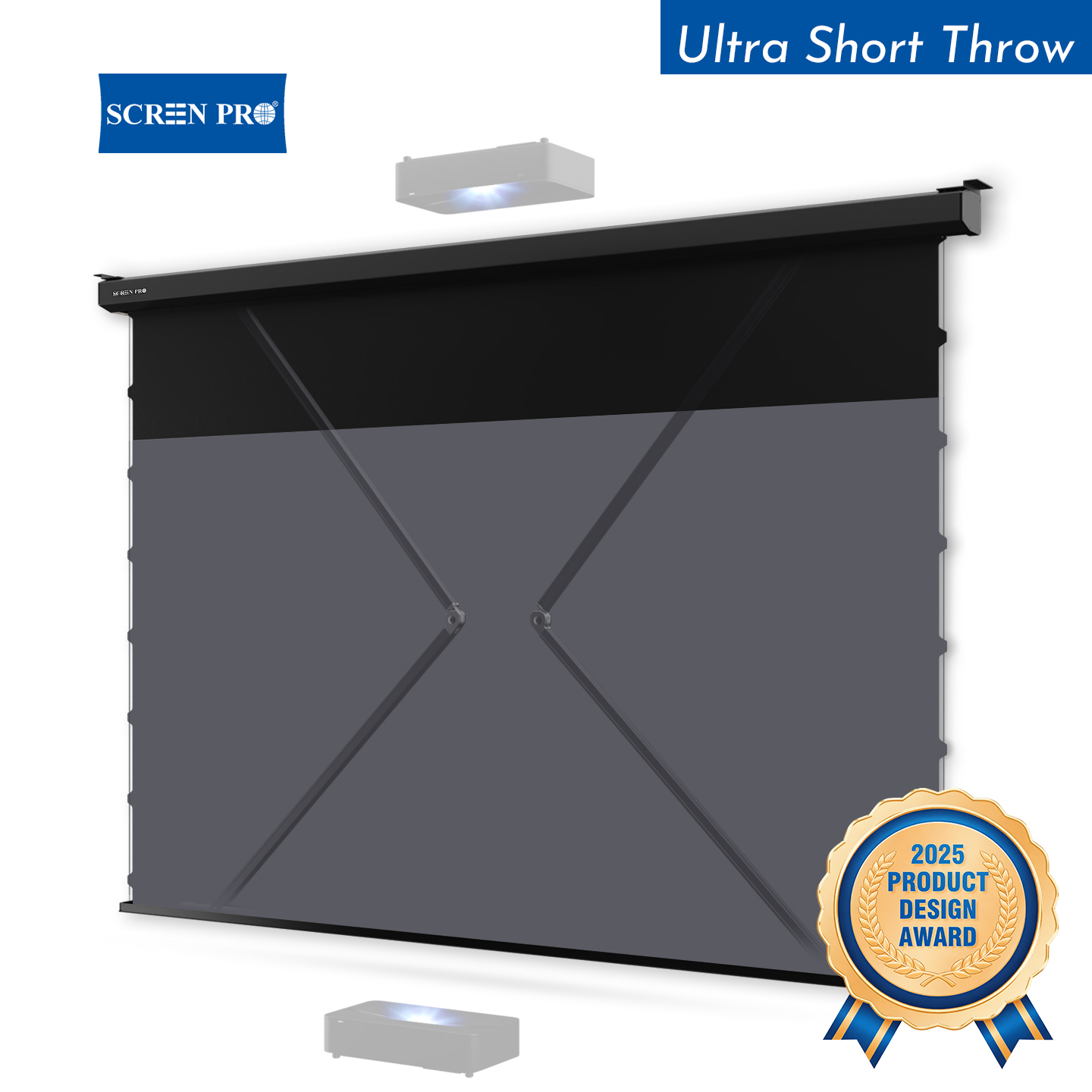
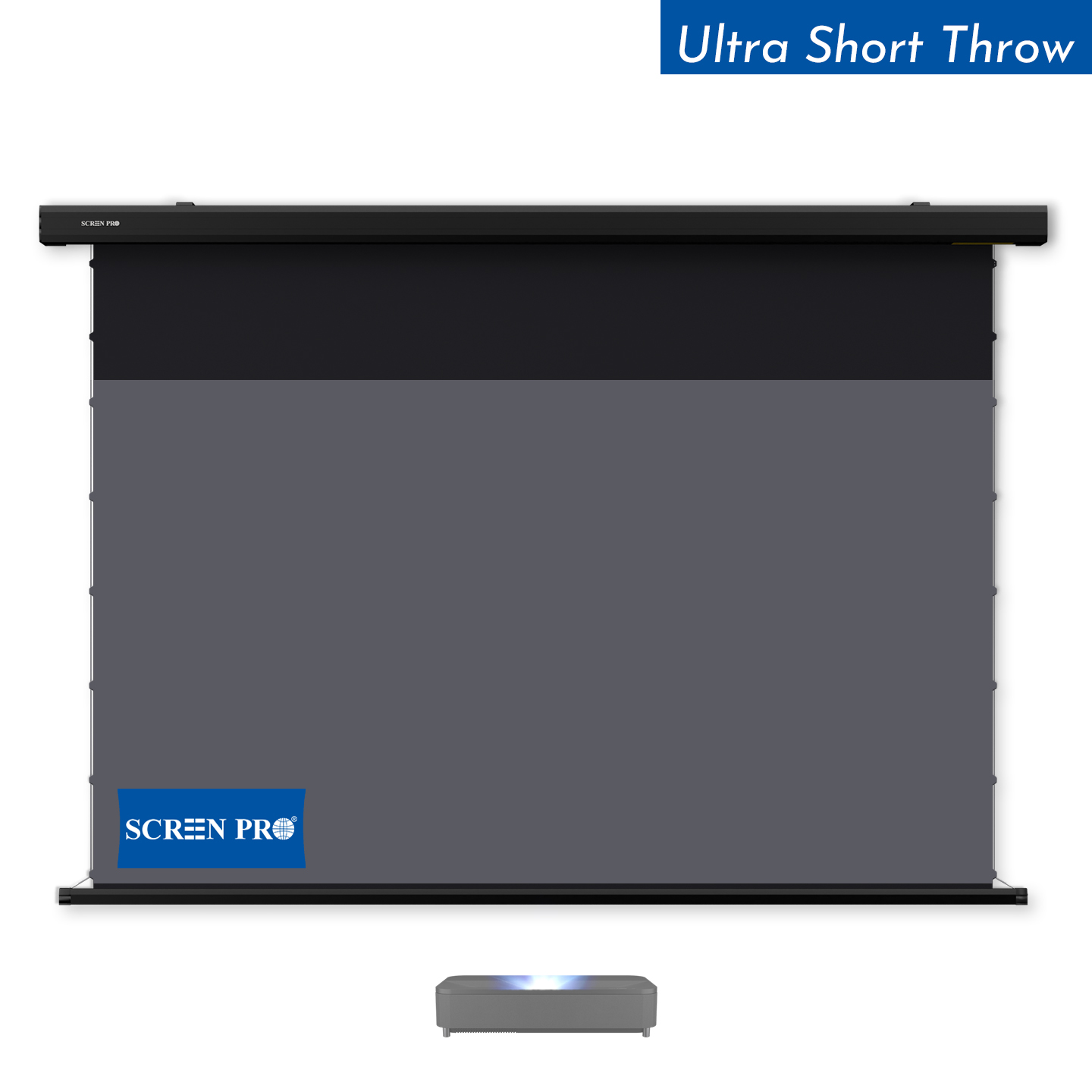
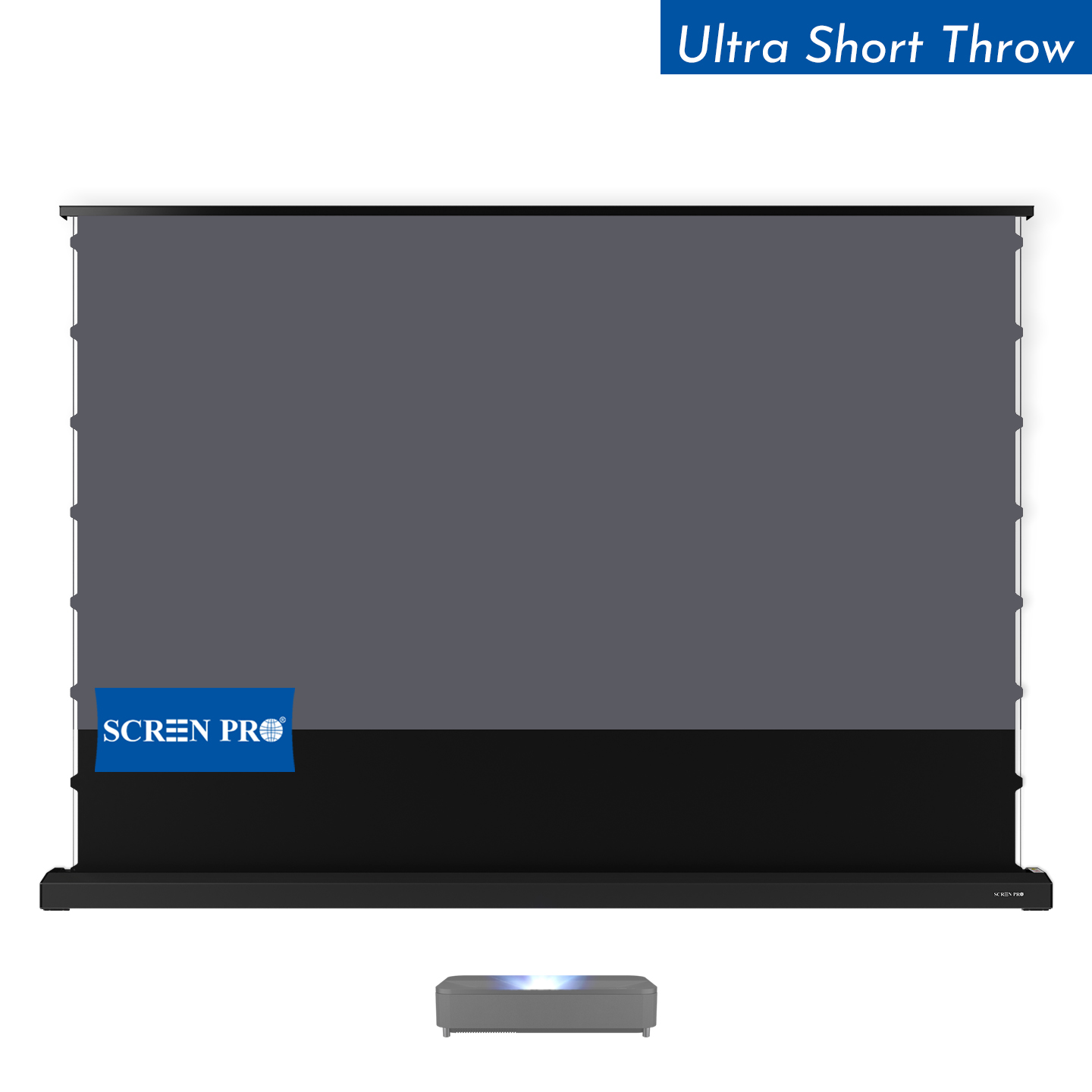
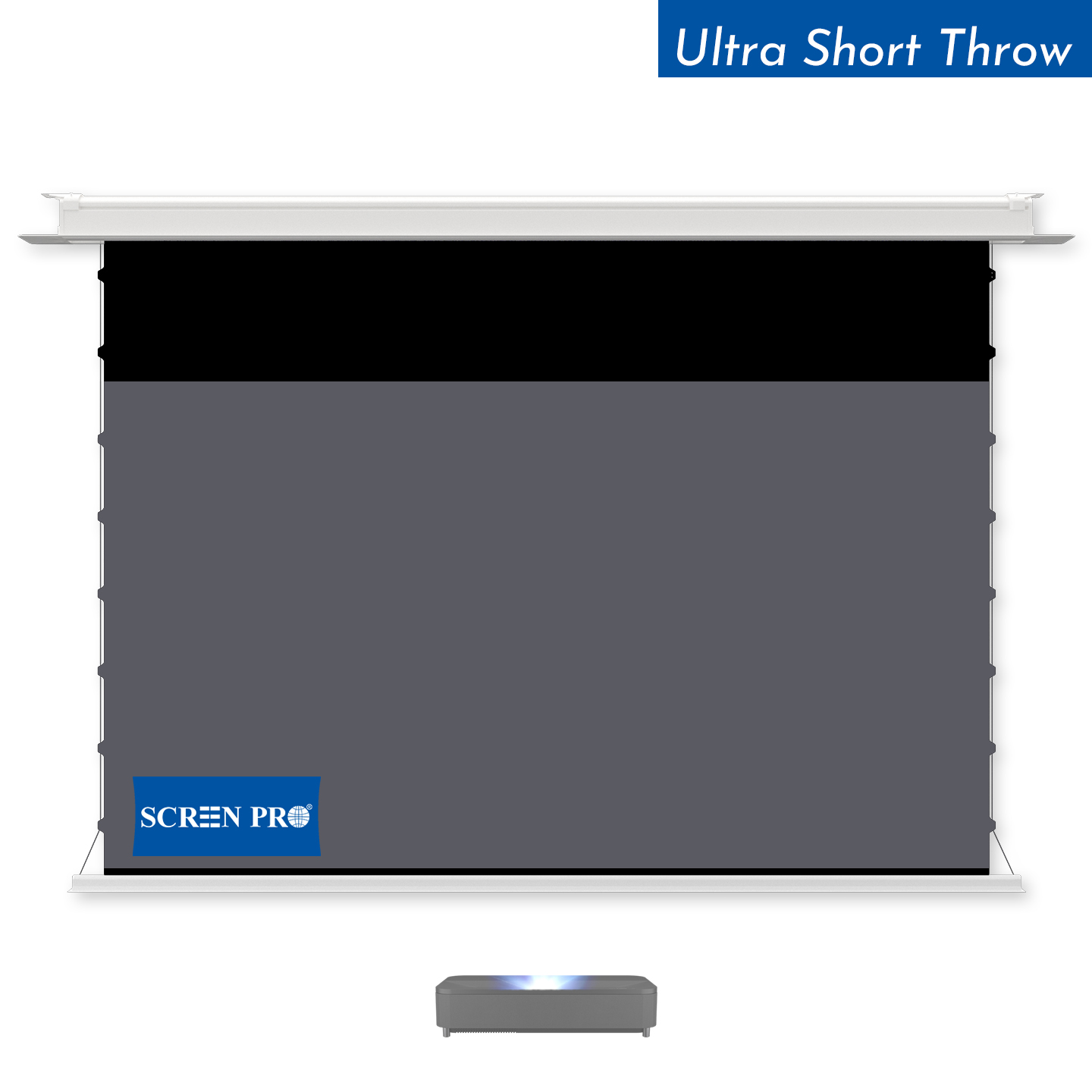
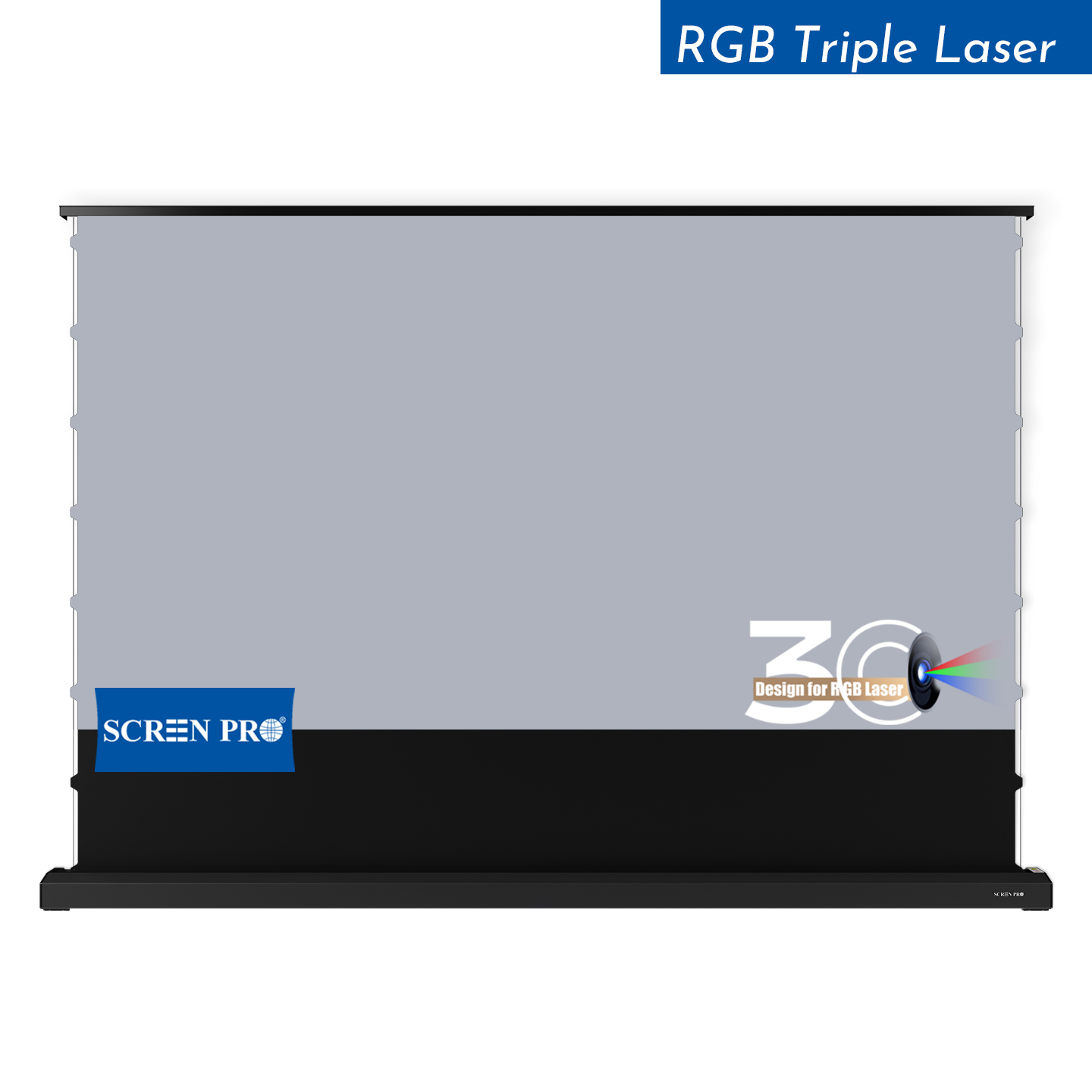
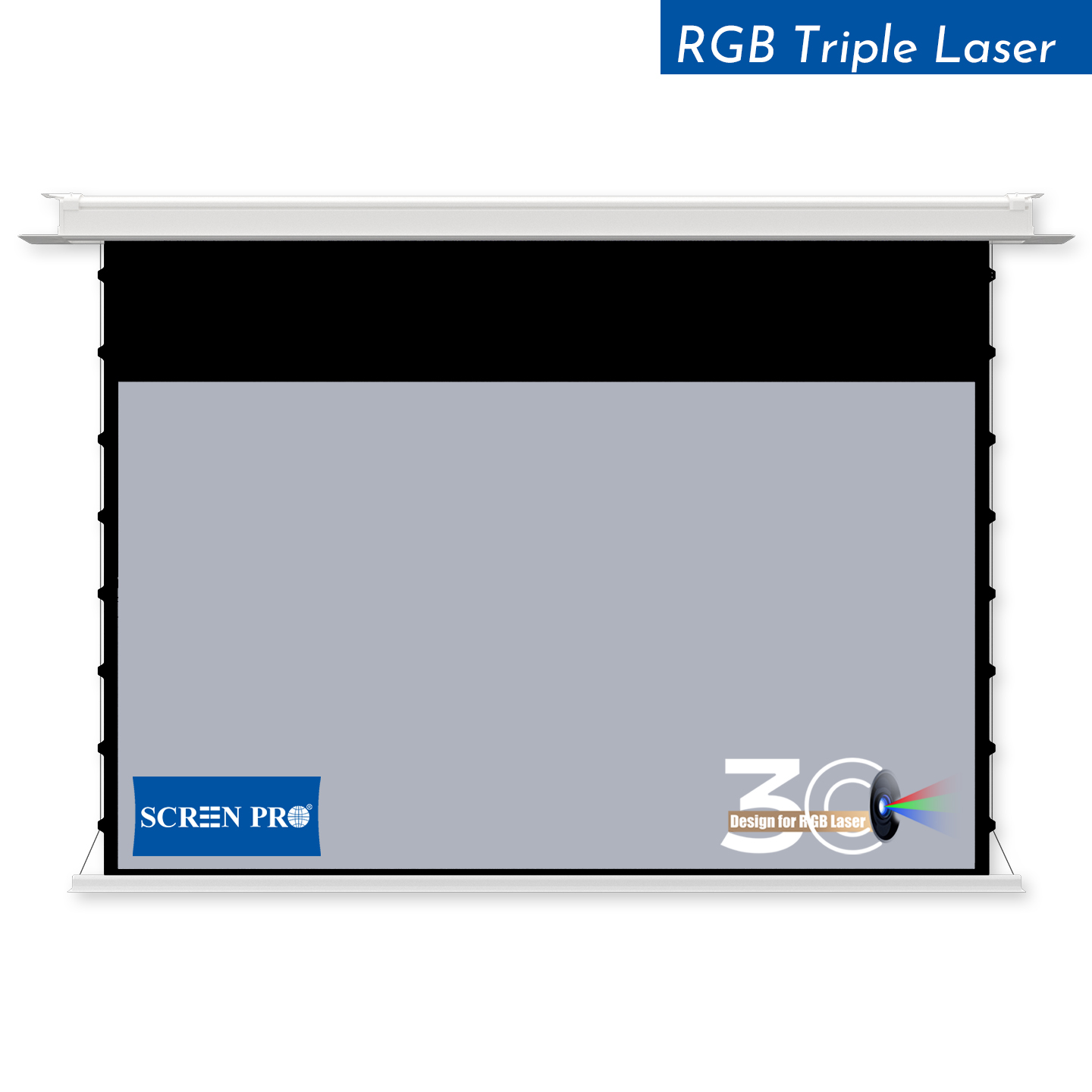
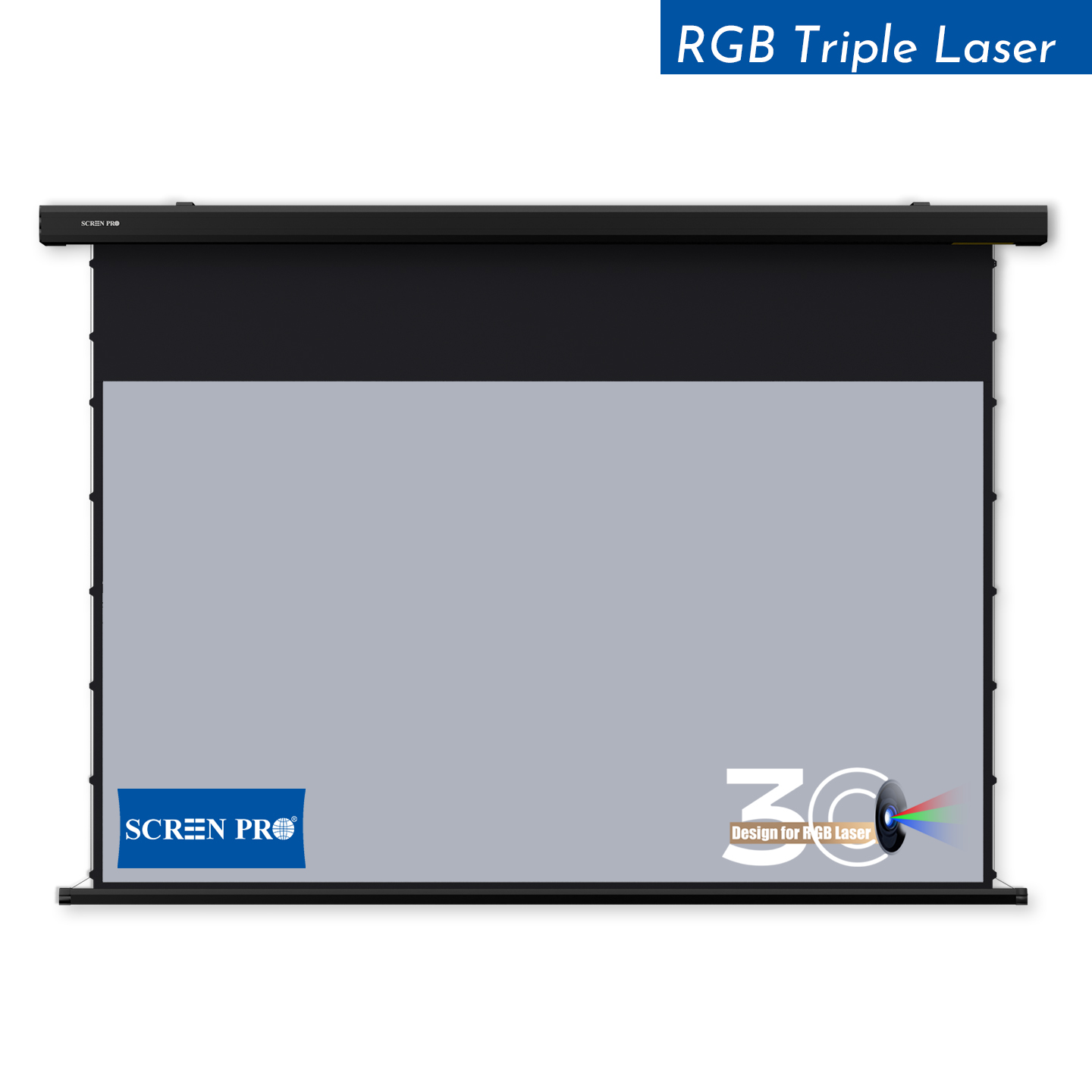
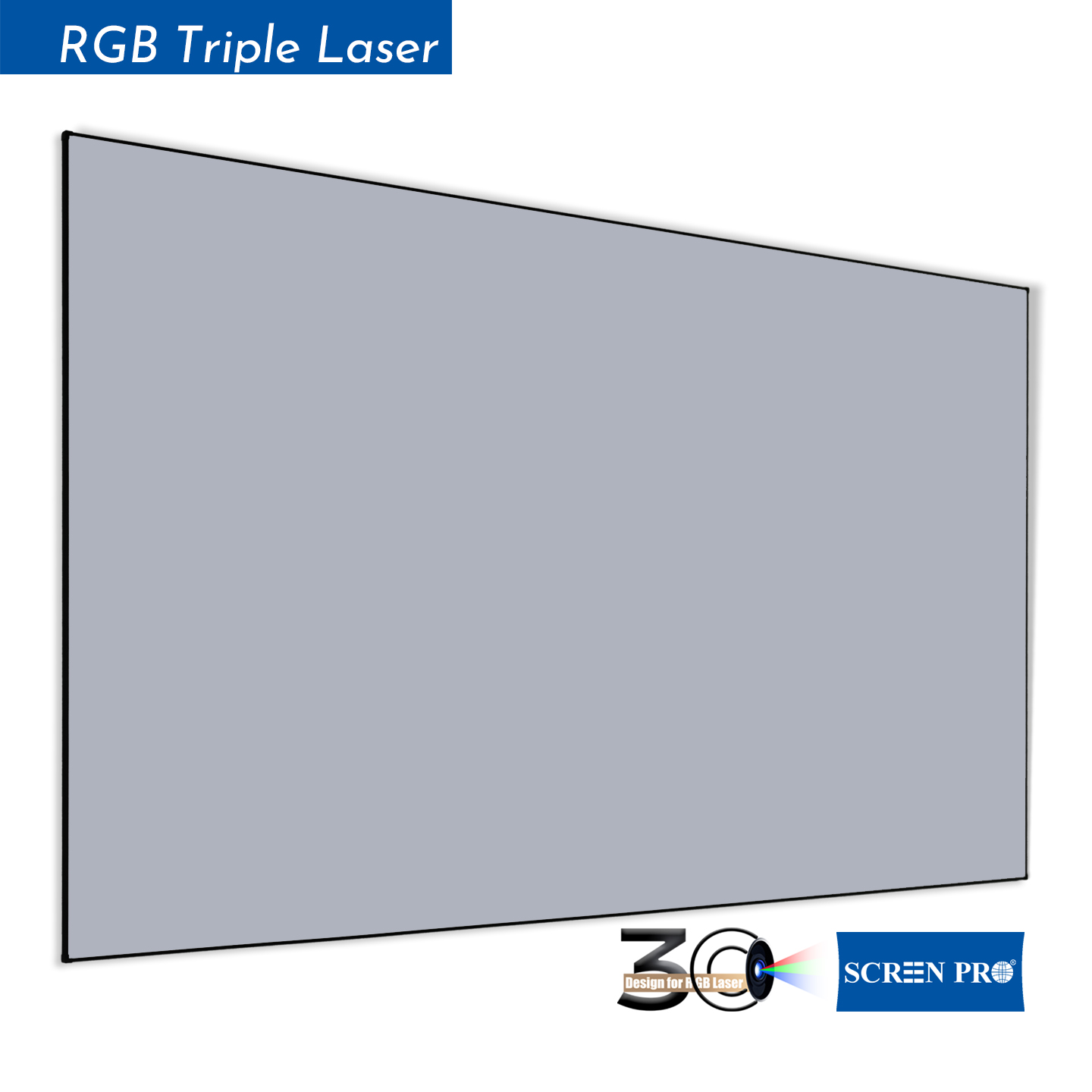


Projection Screen Fabric Only: Finishing Options Explained
When projection screen fabric is supplied without a complete frame or casing, the edge finishing method becomes an important part of the installation. Different finishing options are designed for different frame structures, tensioning methods, and custom AV projects.
Why Fabric Finishing Matters
Projection screen material is not always supplied as a finished screen assembly. For custom frames, curved screens, architectural installations, replacement fabrics, or OEM projects, customers may require the projection material only.
In these applications, the edge structure determines how the fabric is attached, tensioned, and kept flat. SCREENPRO therefore offers different finishing methods according to the installation system.
Three Common Finishing Options
Integrated Screen Ears
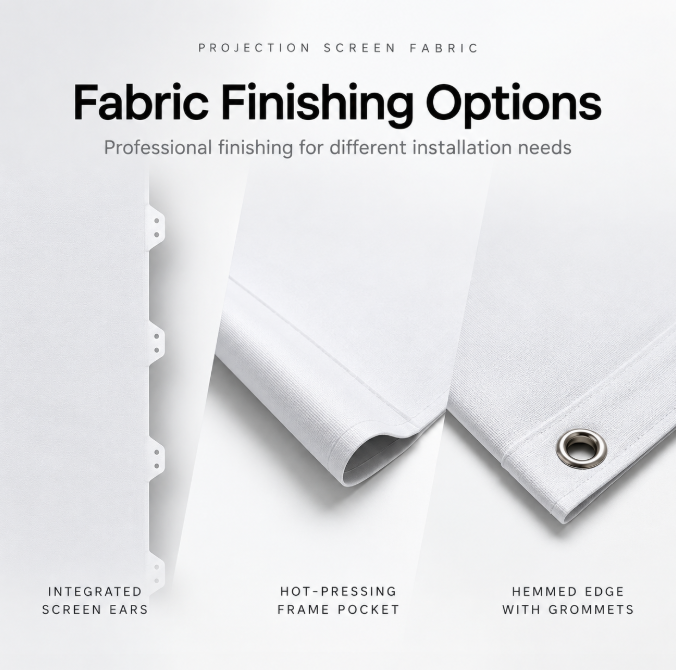
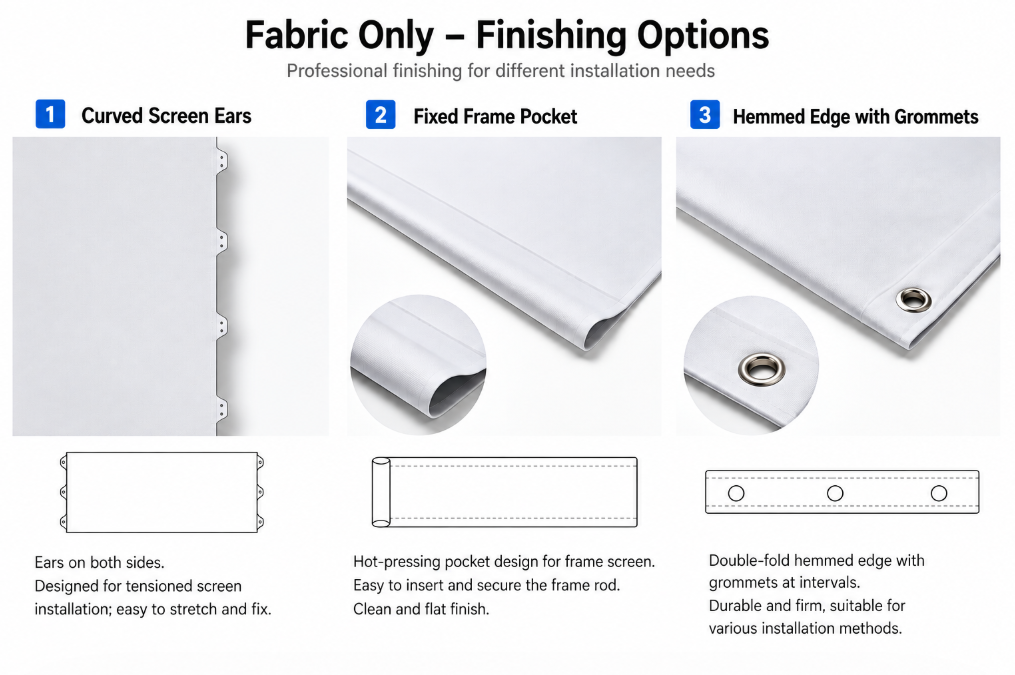
Ears are cut directly from the same piece of projection fabric rather than being sewn on as separate components.
Ears on both sides are designed for tensioned screen installation, making the material easy to stretch and secure to the supporting structure.
Hot-Pressing Frame Pocket
A hot-pressed pocket is formed along the fabric edge to accommodate a frame rod or tensioning bar.
The rod can be inserted directly into the pocket, helping distribute tension evenly while maintaining a clean and flat edge.
Hemmed Edge with Grommets
The fabric edge is reinforced with a double-fold hem and fitted with metal grommets at selected intervals.
This structure is suitable for rope tensioning, elastic cords, hooks, custom frames, and large-format installations.
Integrated Ears Are Different from Grommet Tabs
One important distinction is that SCREENPRO integrated screen ears are part of the original fabric itself. The projection material is cut into the required shape during fabrication, creating repeated tensioning ears along the edge.
Finishing Method Comparison
| Finishing Method | Structure | Typical Installation | Main Advantage |
|---|---|---|---|
| Integrated Screen Ears | Ears cut from the same fabric sheet | Tensioned frames / custom screen structures | Simple, lightweight and easy to tension |
| Hot-Pressing Pocket | Continuous pocket formed along the edge | Fixed frame screens with tension rods | Clean finish and even force distribution |
| Hemmed Edge + Grommets | Reinforced folded edge with eyelets | Large screens, custom frames and temporary installations | Strong attachment and flexible installation |
Other Available Fabric Finishing Options
Beyond the three common finishing methods above, selected projection materials can be processed in other ways depending on the mounting structure and project requirements.
Velcro Attachment
Selected materials can be prepared for hook-and-loop attachment where the frame or supporting structure is designed for removable fabric mounting.
Black Backing
Selected projection materials can be supplied with black backing to help reduce unwanted light transmission from behind the projection surface.
Cut-to-Size
Projection material can be cut to specified dimensions for integration into compatible customer structures or for additional processing by the installer.
Oversize Cutting
Extra material can be left beyond the required viewing area where additional allowance is needed for stretching, wrapping, clamping, or customer-side finishing.
Additional Finishing for OEM & Volume Projects
Some fastening systems require the screen fabric to match a dedicated frame structure precisely. These processes are better suited to volume production than individual replacement fabric orders.
Spring Mounting
Spring-mounted screen fabric can be evaluated for eligible bulk, OEM/ODM, and project orders.
Spring positions and edge preparation must match the corresponding frame dimensions and tensioning structure. For this reason, this option is generally not offered for single-piece custom fabric orders.
Press Studs / Snap Fasteners
Press-stud finishing can be produced for eligible bulk, OEM/ODM, and project orders.
Fastener positions must correspond accurately with the mating positions on the frame. This option is therefore generally not available for single-piece custom fabric orders.
Custom Fabric Finishing
Fabric-only projects often involve non-standard dimensions or installation structures. For this reason, edge finishing can usually be adjusted according to the actual frame and tensioning system.
Before production, the frame drawing or required finished fabric dimensions should be confirmed so that the correct finishing method can be selected.
- Custom fabric dimensions
- Custom pocket width
- Custom grommet spacing
- Custom ear spacing
- Curved or irregular screen shapes
- Replacement screen fabrics
- OEM / project-specific finishing
Using SCREENPRO Fabric with a Customer-Supplied Frame
Selected custom projects can be evaluated for integration with customer-supplied frames or mounting structures.
However, projection screen fabrics and tensioning systems are not universally interchangeable. Different frame designs may use different finished dimensions, tension levels, pocket sizes, fastener positions, or edge structures.
Where Fabric-Only Solutions Are Used
Fabric-only projection materials are particularly useful when the supporting structure is manufactured locally or when the installation requires a non-standard screen format.
Custom Fixed Frames
Suitable for integrators or manufacturers producing their own aluminum, steel, or architectural screen frames.
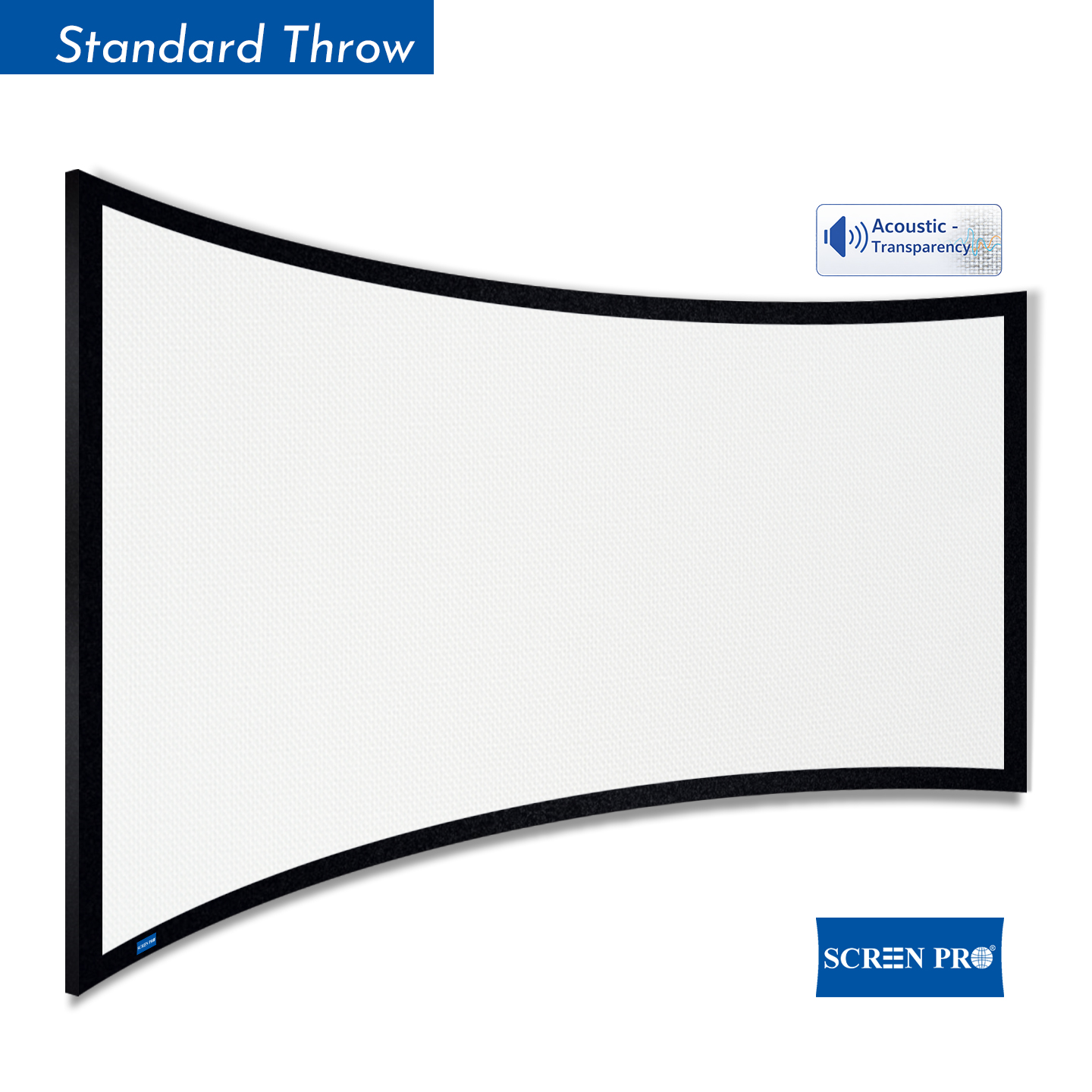
Curved & Special-Shaped Screens
Fabric dimensions and tensioning edges can be adapted for curved, panoramic, simulator, or custom projection surfaces.
Replacement Fabric
Existing compatible screen frames may be reused while replacing damaged, aged, or upgraded projection material.
Which Finishing Option Should You Choose?
The correct finishing method depends primarily on how the fabric connects to the frame. If the fabric is tensioned directly around a custom structure, integrated ears may provide a simple solution. If the frame uses rods, a hot-pressed pocket may be more suitable. For hook, rope, elastic, or large-format tensioning systems, reinforced grommets provide greater installation flexibility.
Velcro, backing, special cutting, springs, or press studs should be selected according to the specific frame design, material, quantity, and application.
Need Fabric for a Custom Projection Screen?
Send us the required screen material, viewing dimensions, overall fabric dimensions, mounting method, frame structure, quantity, and project application. Drawings or photographs are recommended for custom mounting systems.
Discuss Your ProjectFrequently Asked Questions
Can I order projection screen fabric without a frame?
Yes. Selected projection materials can be supplied separately for custom frames, replacement projects, OEM manufacturing, and special installations.
Are the screen ears sewn onto the fabric?
No. For the integrated-ear configuration, the ears are cut directly from the same sheet of projection fabric rather than being added as separate sewn tabs.
Can the spacing between the ears be customized?
Depending on the material and project structure, ear spacing can be configured according to the required tensioning layout.
Can the pocket size be customized?
Yes. Pocket dimensions can be produced according to the size of the compatible rod or supporting component used in the installation.
Can grommet spacing be customized?
Yes. Grommet spacing can be adjusted according to the screen dimensions, expected tension, and frame attachment method.
Can SCREENPRO provide spring-mounted fabric?
Yes, for eligible bulk, OEM/ODM, and project orders. Spring-mounted finishing is generally not offered for single-piece custom fabric orders because the spring positions must match the corresponding frame structure.
Can SCREENPRO provide screen fabric with press studs?
Yes, for eligible bulk, OEM/ODM, and project orders. Press-stud positions must be matched precisely to the corresponding frame, so this option is generally not available for single-piece custom fabric orders.
Can projection screen fabric be supplied with black backing?
Selected materials can be supplied with black backing where additional control of light transmission behind the projection surface is required. Availability depends on the material and application.