


© Copyright 2004-2026 SCREEN PRO® All Rights Reserved | Specifications are subject to change without notice. All Rights ReservedSite Map Designed by iwonder.cn


PROJECTION SCREEN GUIDE
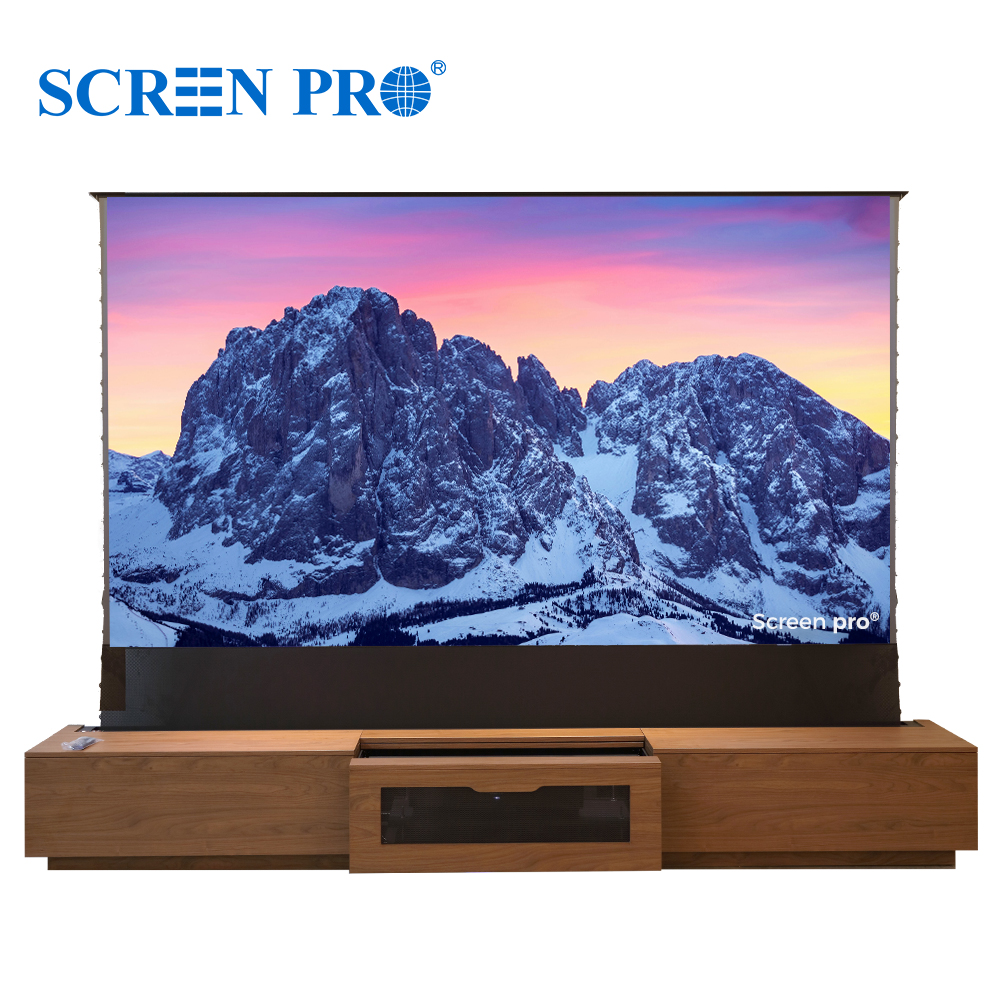
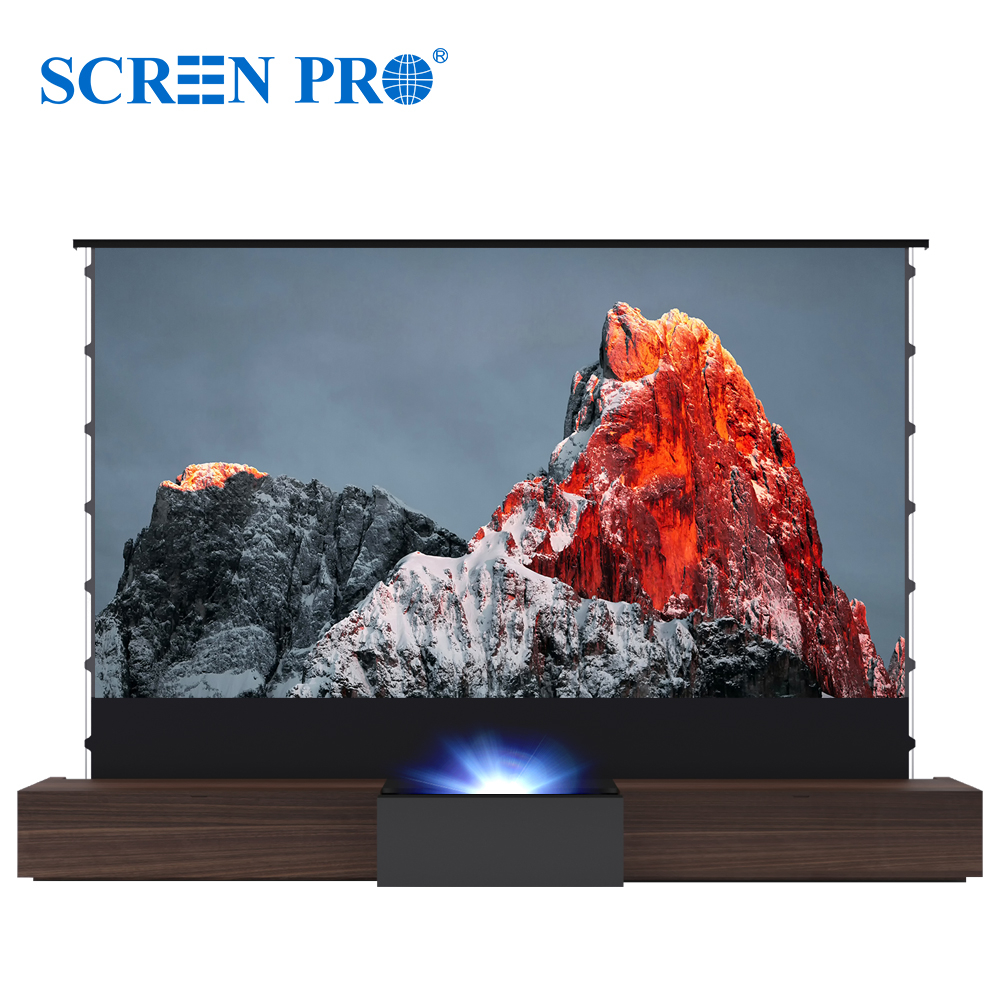
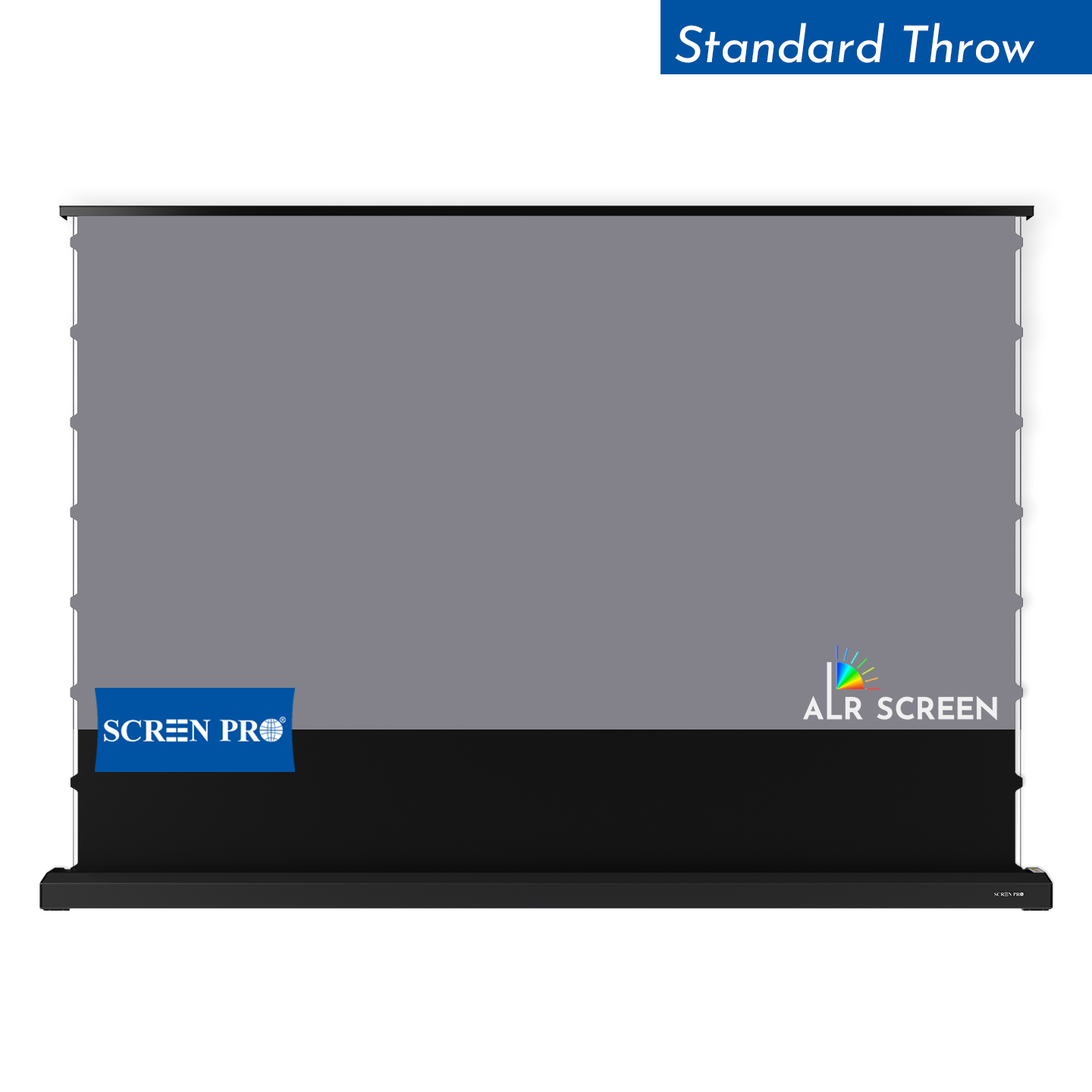
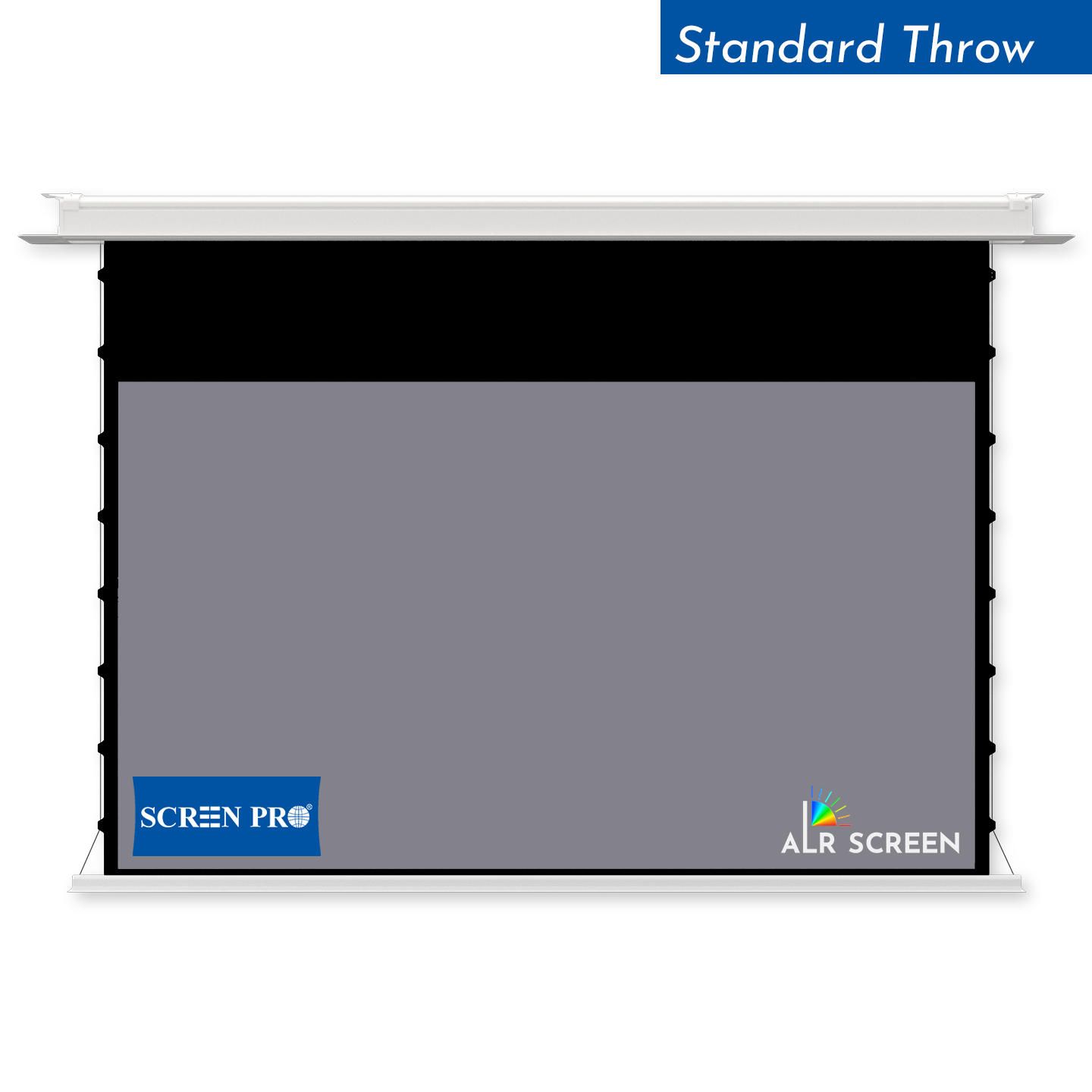
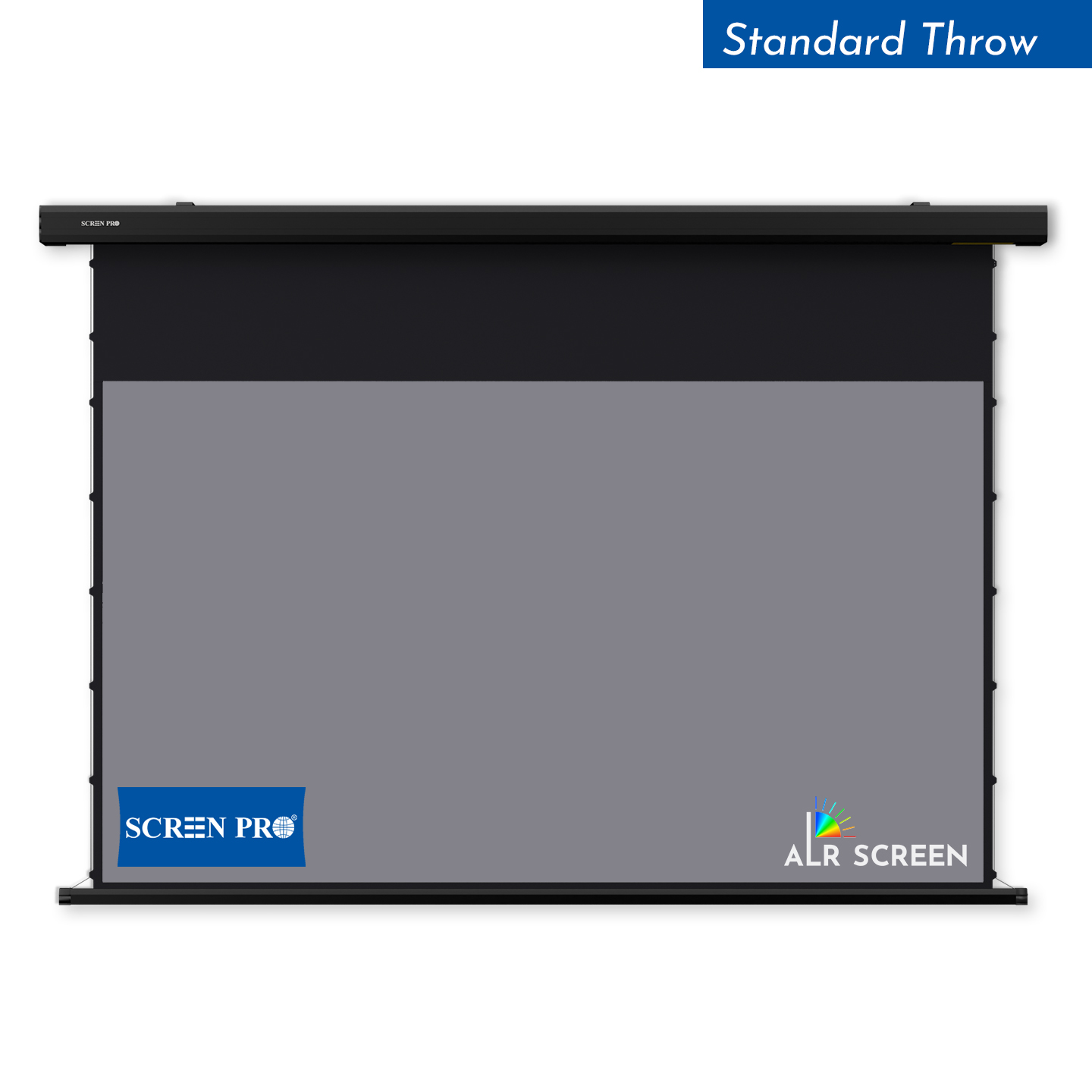
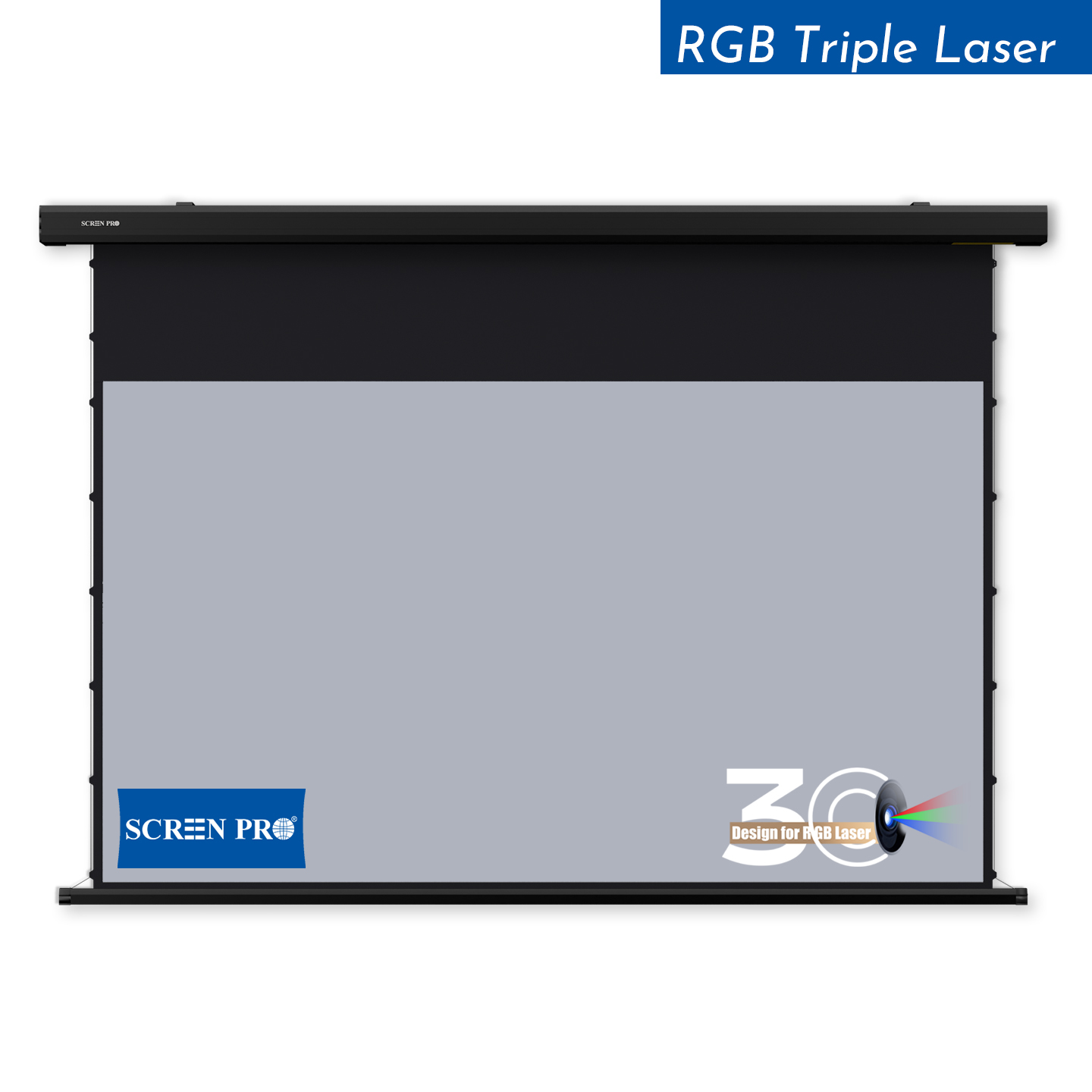
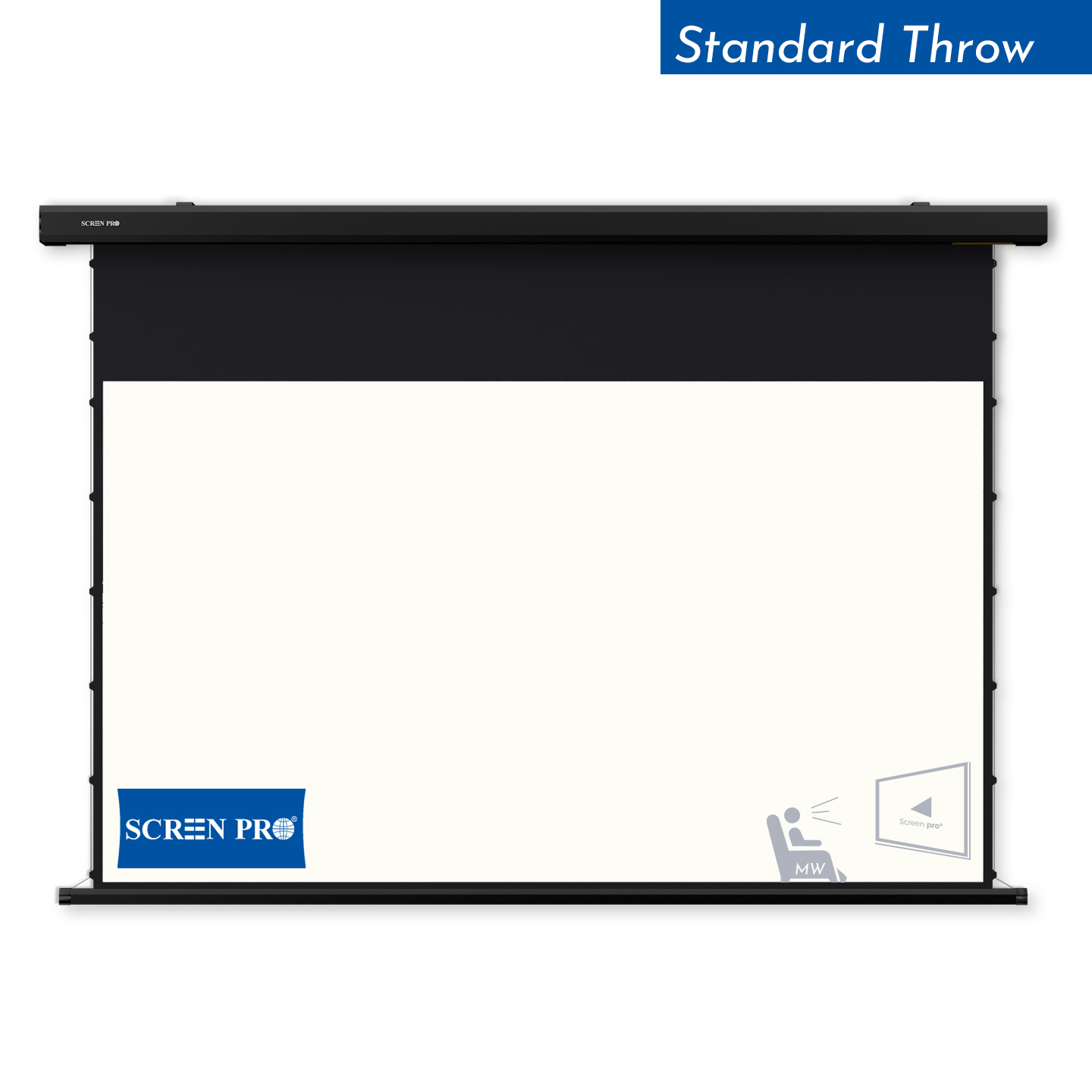
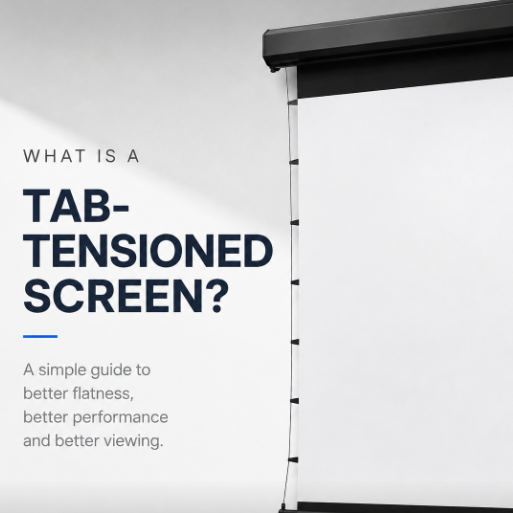
A tab-tensioned projector screen uses a tensioning system along both sides of the screen surface to help maintain a flatter and more consistent viewing area when the screen is deployed.
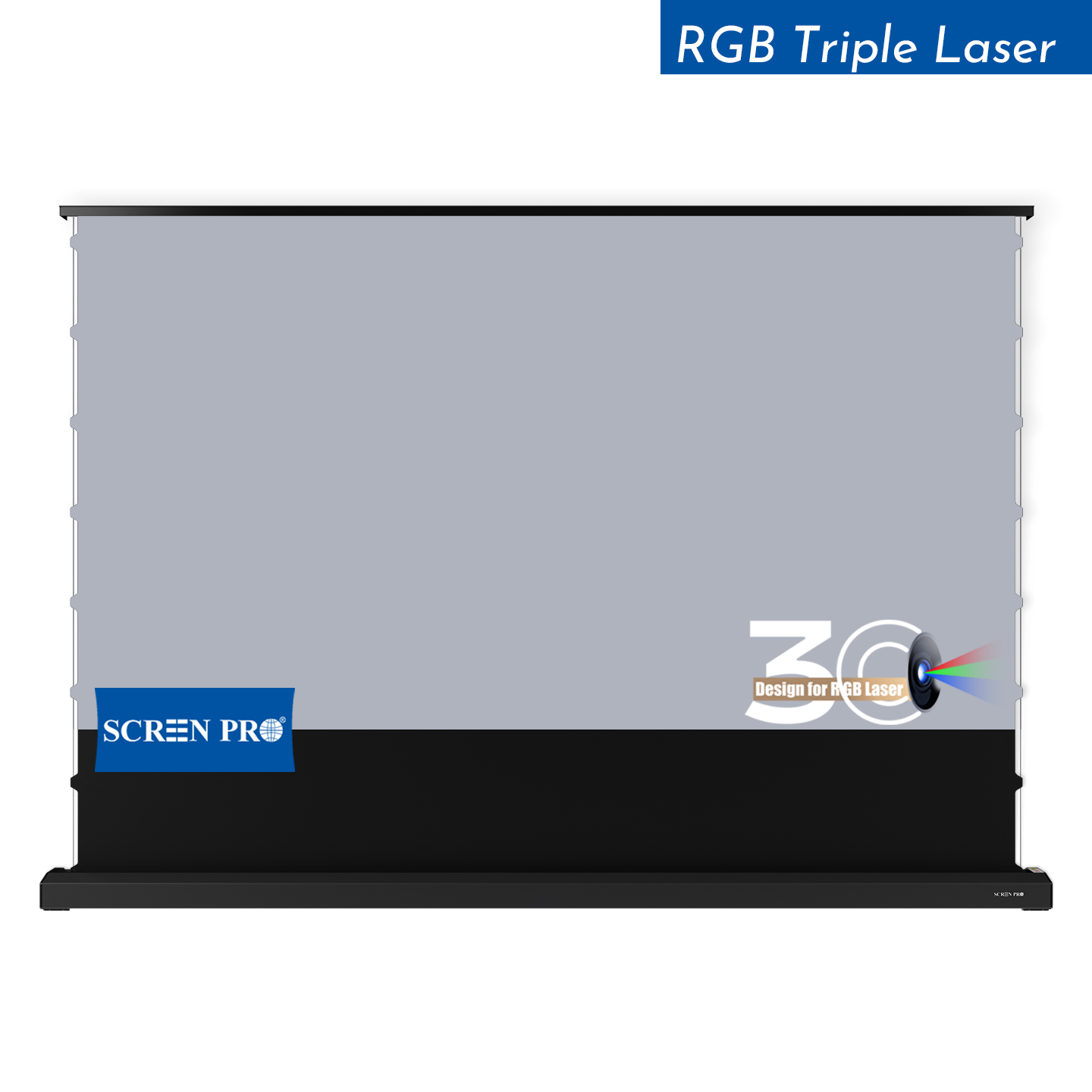
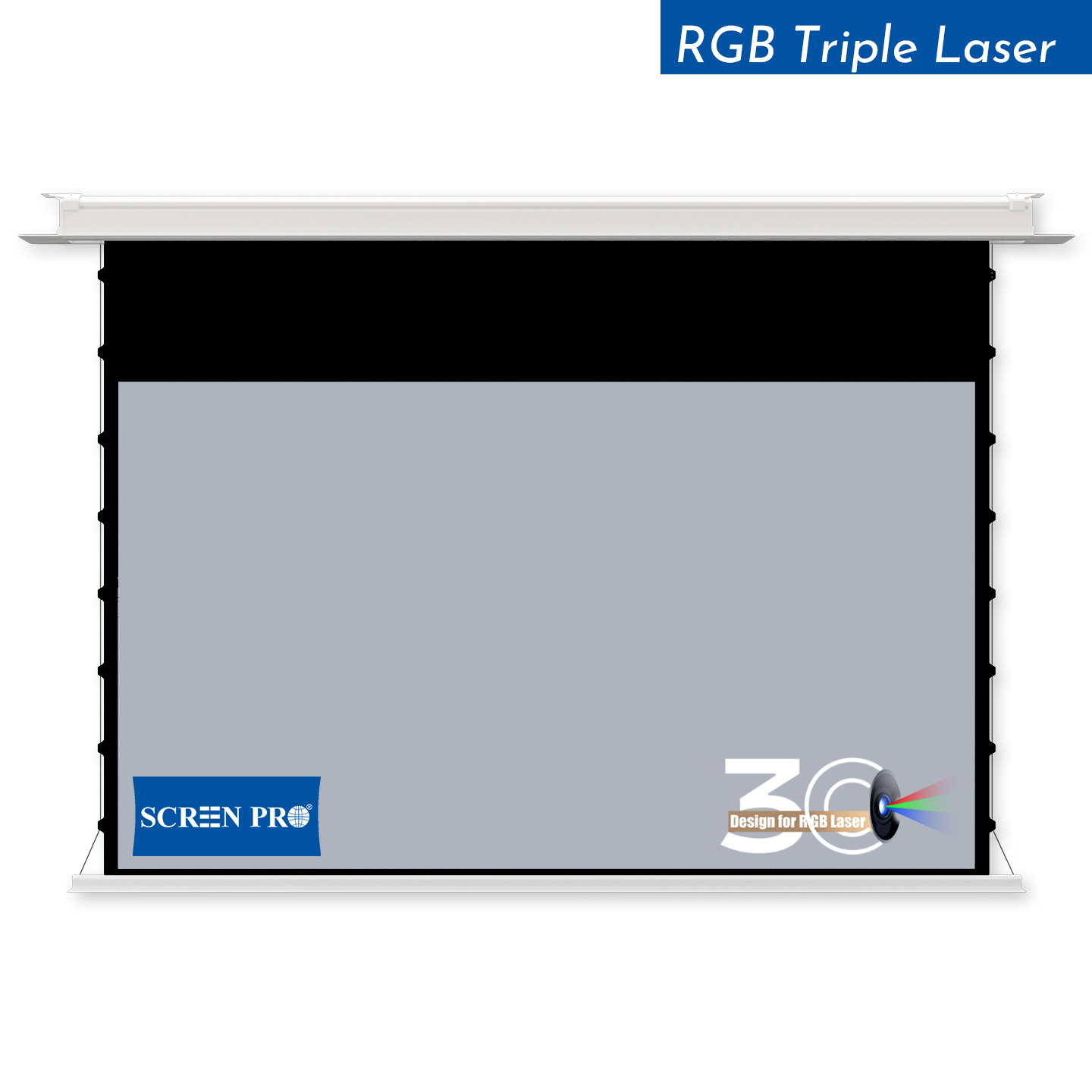
If you have compared different motorized projector screens, you may have noticed that some models use thin tension cords running down both sides of the screen.
This type of screen is commonly called a tab-tensioned screen, or simply a tensioned projector screen.
The purpose of the system is simple: to apply controlled lateral tension to the projection surface so that the viewing area remains flatter when the screen is lowered.
For home theaters, meeting rooms, commercial AV installations and high-performance projection systems, maintaining a flat projection surface can be important for image geometry, focus consistency and overall viewing quality.
THE BASIC PRINCIPLE
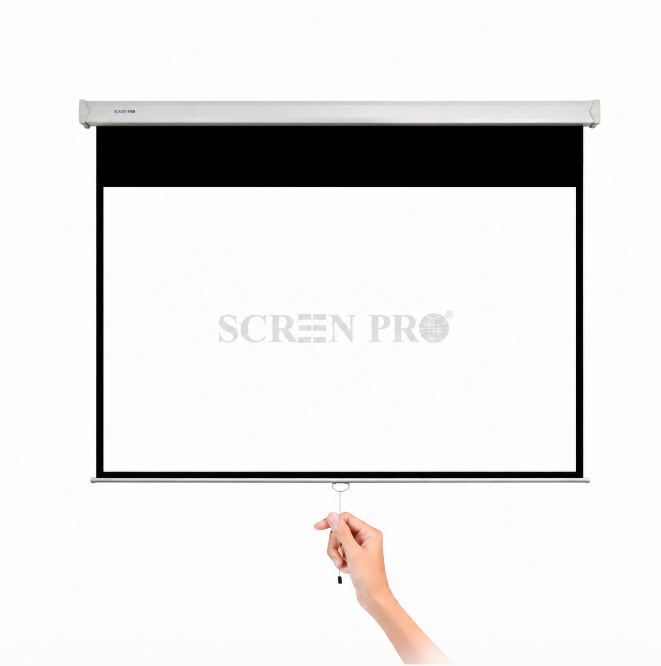
A conventional retractable projector screen is mainly tensioned vertically by the weight of the bottom bar.
This vertical force helps pull the screen downward, but it does not actively control the left and right edges of the material.
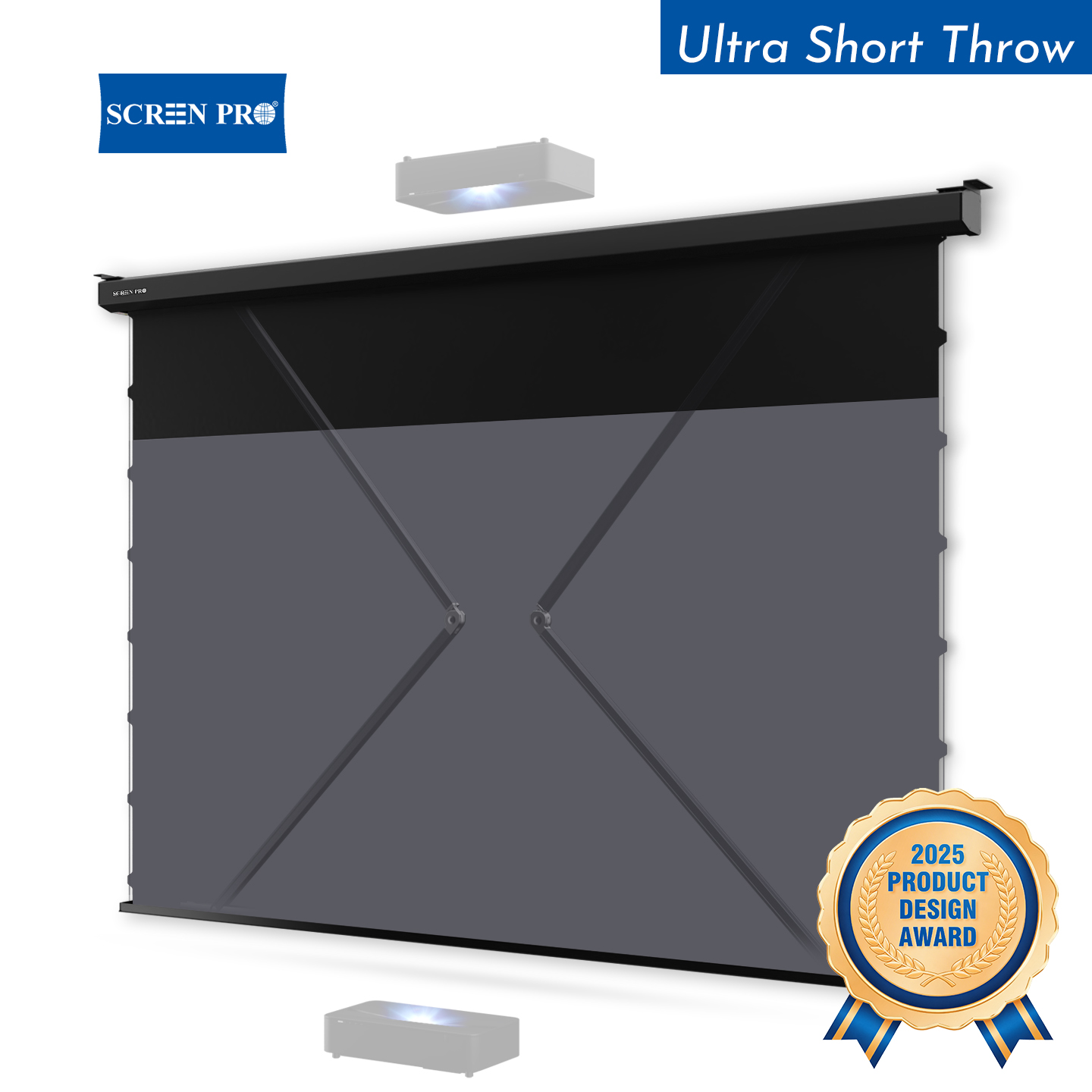
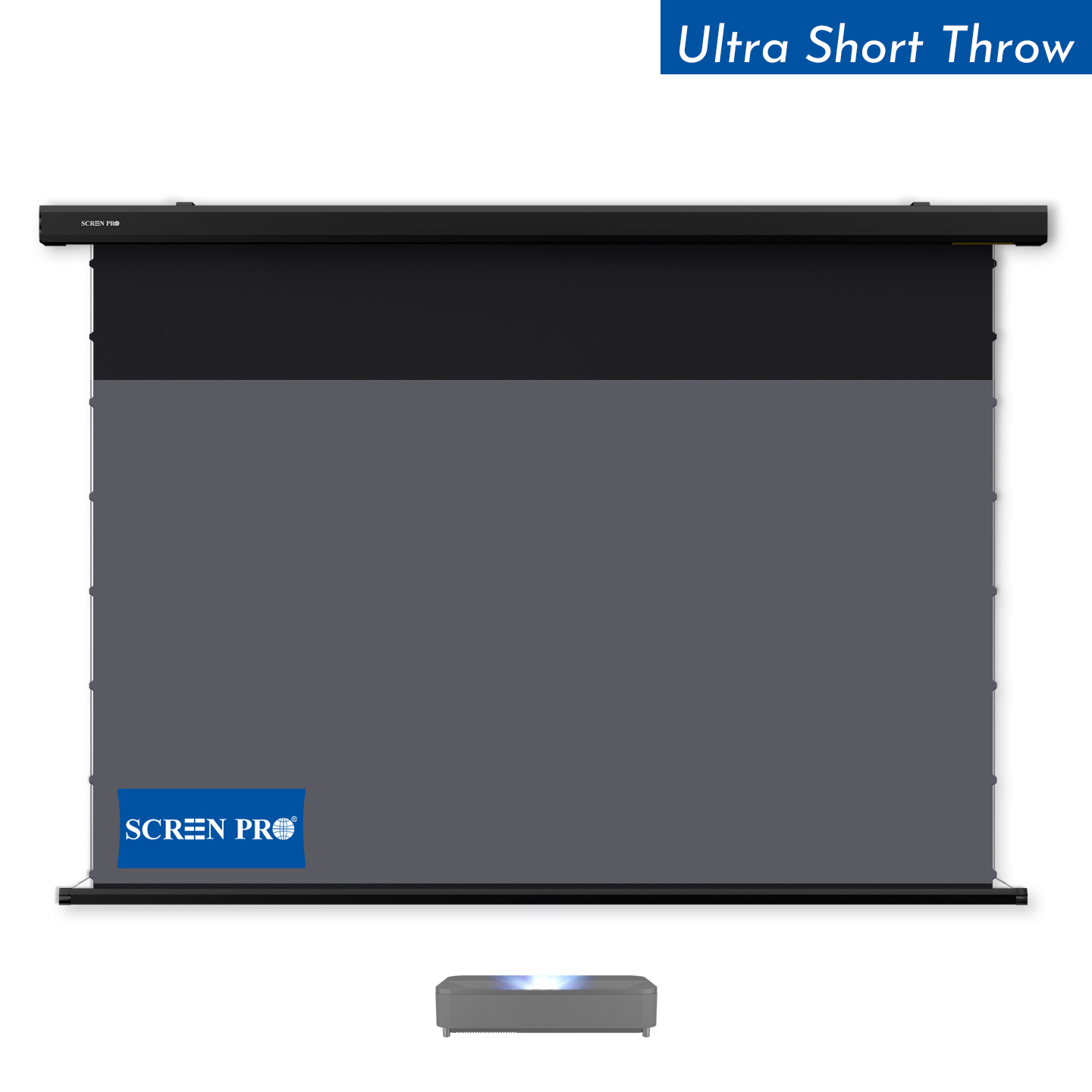
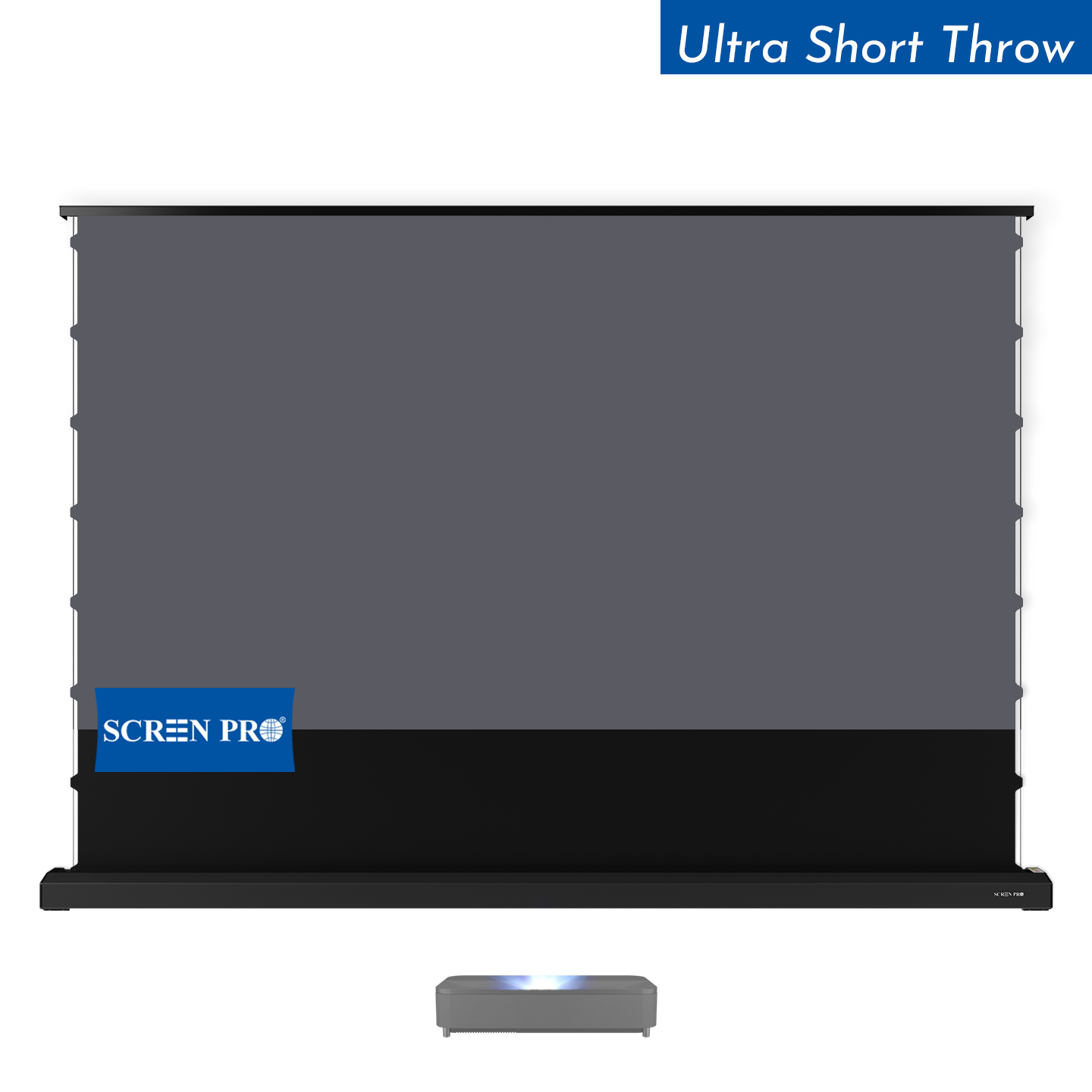
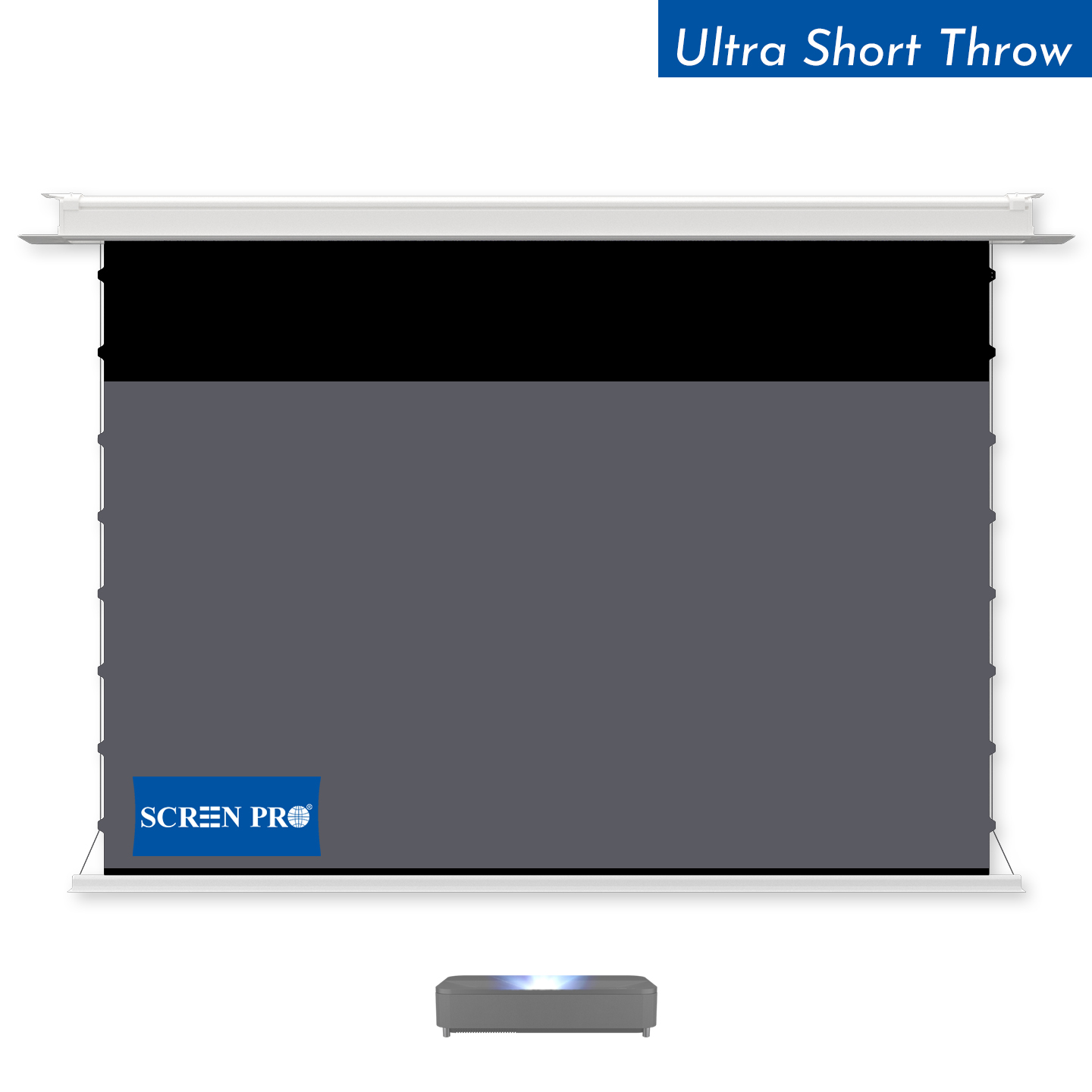
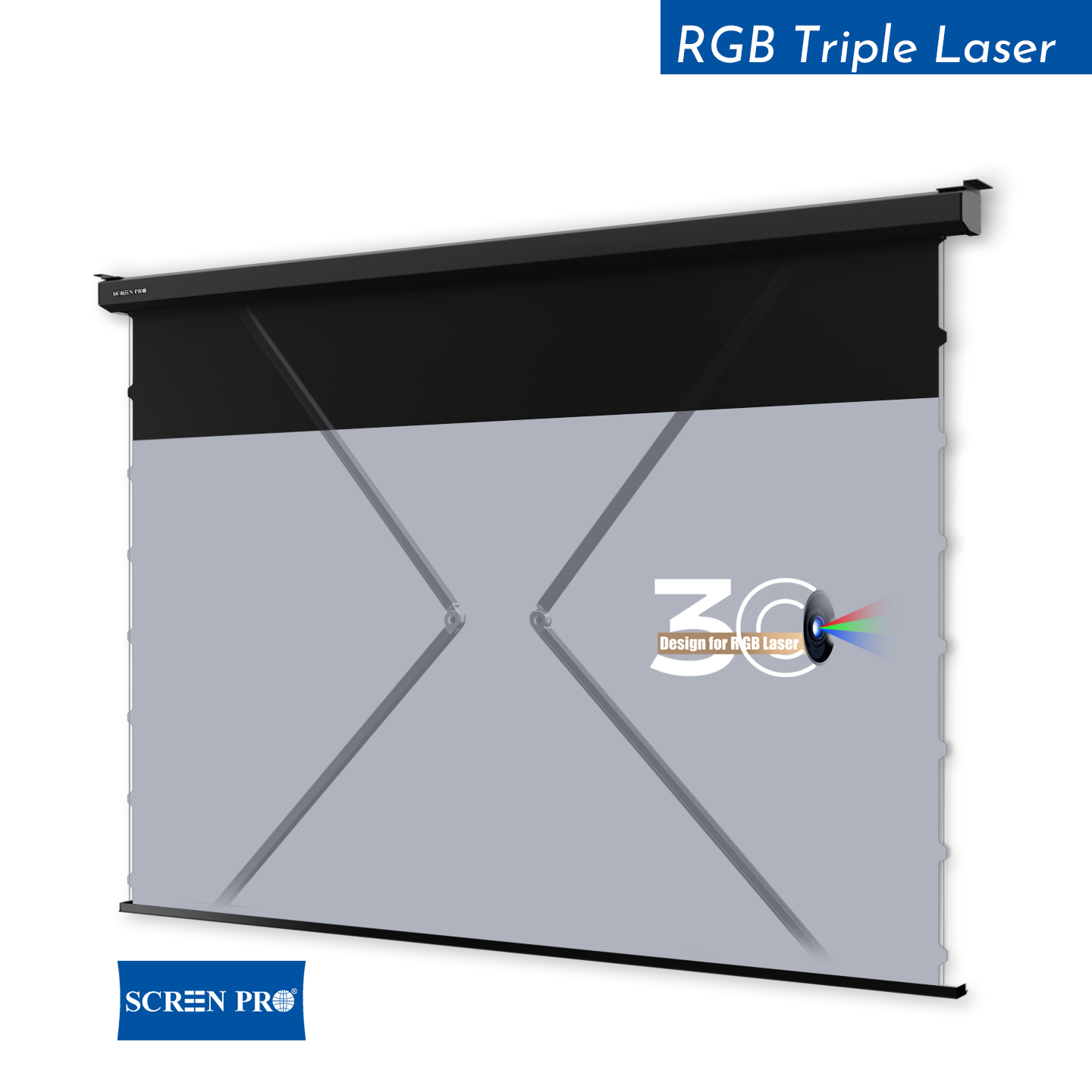
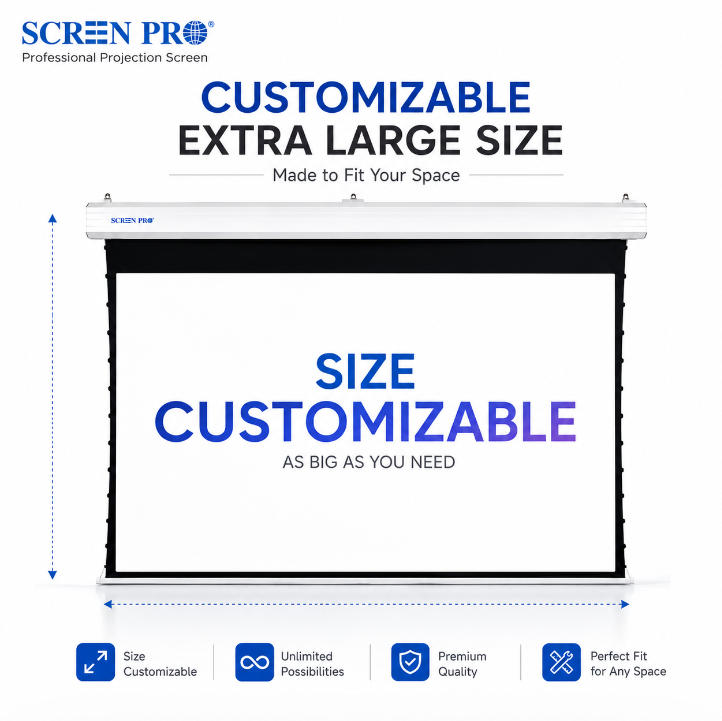
A tab-tensioned system adds tension cords along both sides of the projection surface.
Small tabs are positioned along the edges of the screen material and connected to the tensioning cords. When the screen is deployed, these cords apply a controlled outward and downward force to the material.
The result is a more evenly tensioned viewing surface.
SCREEN CONSTRUCTION
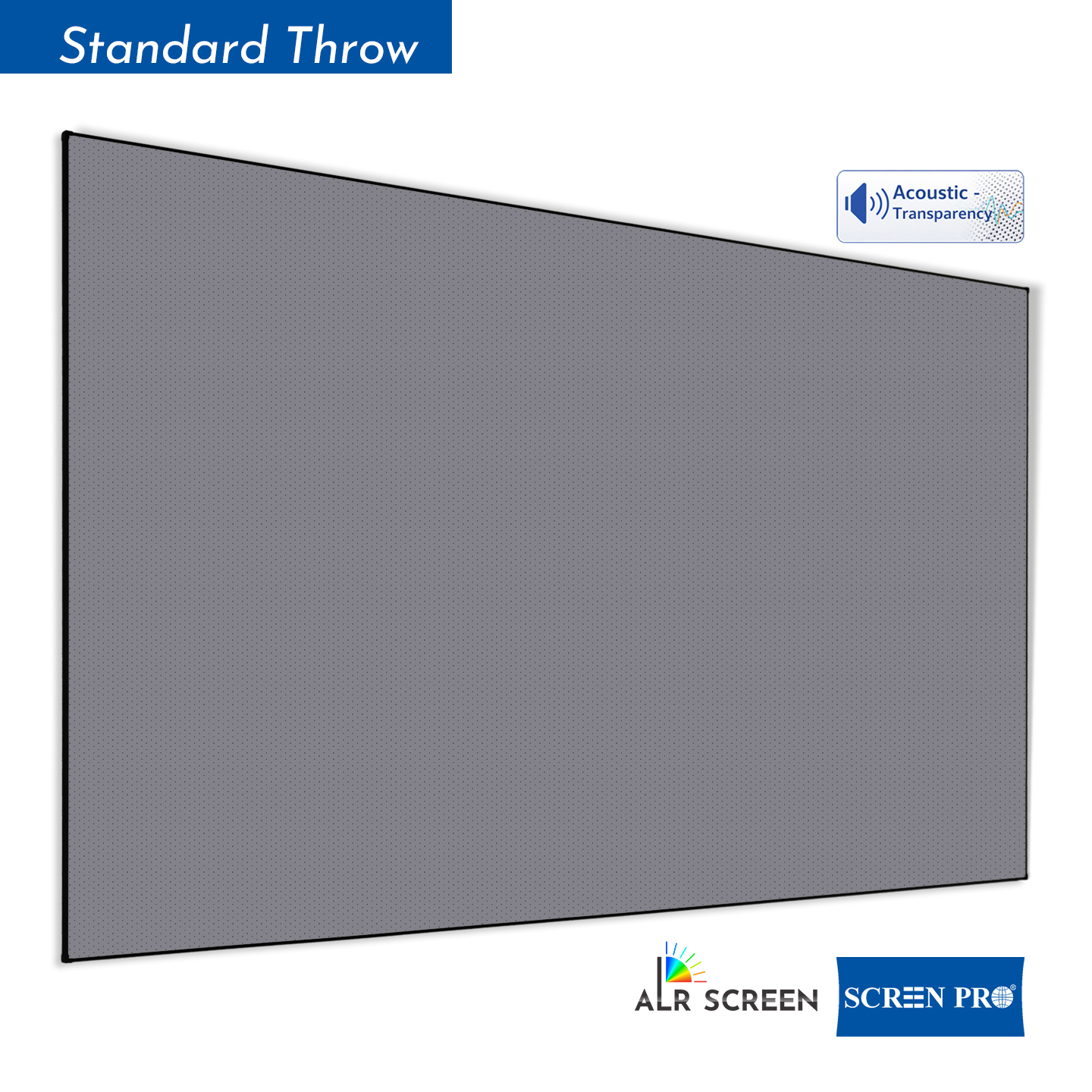
The screen material forms the active viewing area and may be matte white, ALR, grey, acoustically transparent or another specialized projection surface.
Tabs positioned along both sides transfer tension from the cords into the projection material.
Elastic or tension-controlled cords help pull the edges outward and maintain a more uniform screen surface.
The weighted bottom bar provides vertical tension and helps keep the screen properly positioned when deployed.
The material rolls into the housing when not in use, allowing a retractable installation without permanently occupying wall space.
IMAGE PERFORMANCE
A projector creates an image on a defined optical plane. Ideally, the entire projection surface should remain as close as possible to that plane.
If the material develops visible waves, curls or uneven areas, the projected image may appear slightly distorted.
Depending on the projector, screen size and viewing distance, surface irregularities can contribute to:
These effects can become more noticeable with larger screens, higher-resolution projectors and projection materials with more directional optical characteristics.
SCREEN COMPARISON
| Feature | Standard Motorized Screen | Tab-Tensioned Screen |
|---|---|---|
| Vertical tension | Yes | Yes |
| Lateral tension | Limited | Yes |
| Surface flatness | Suitable for many standard applications | Better controlled |
| Construction | Simpler | More complex tensioning system |
| Typical use | Classrooms, offices, general projection | Home theater, premium AV and specialized materials |
| Cost | Generally lower | Generally higher |
SCREEN MATERIAL
Not every projection material behaves in the same way.
Some flexible screen surfaces naturally require more controlled tension than others. This is especially relevant for certain PVC-based, optical and ambient-light-rejecting materials.
A tab-tensioned structure can therefore be particularly useful for:
The required tensioning method should always be matched to the physical characteristics of the screen material rather than selected only by screen size.
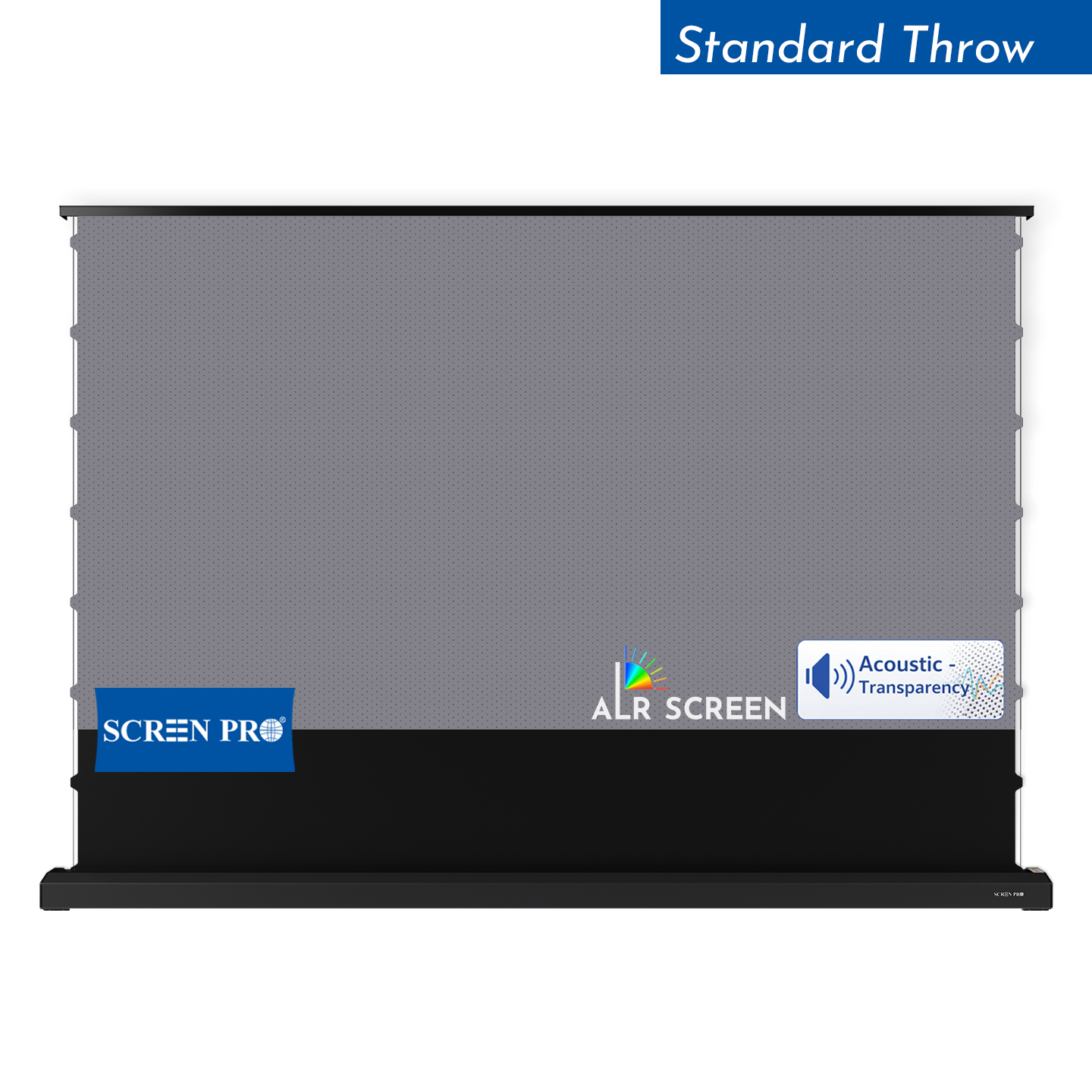
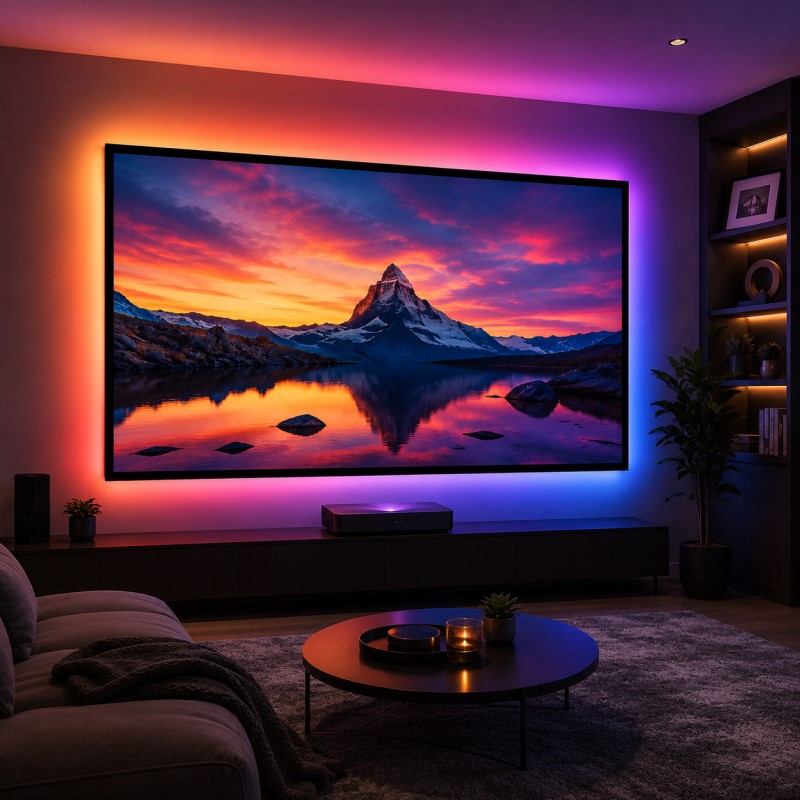
UST & ALR APPLICATIONS
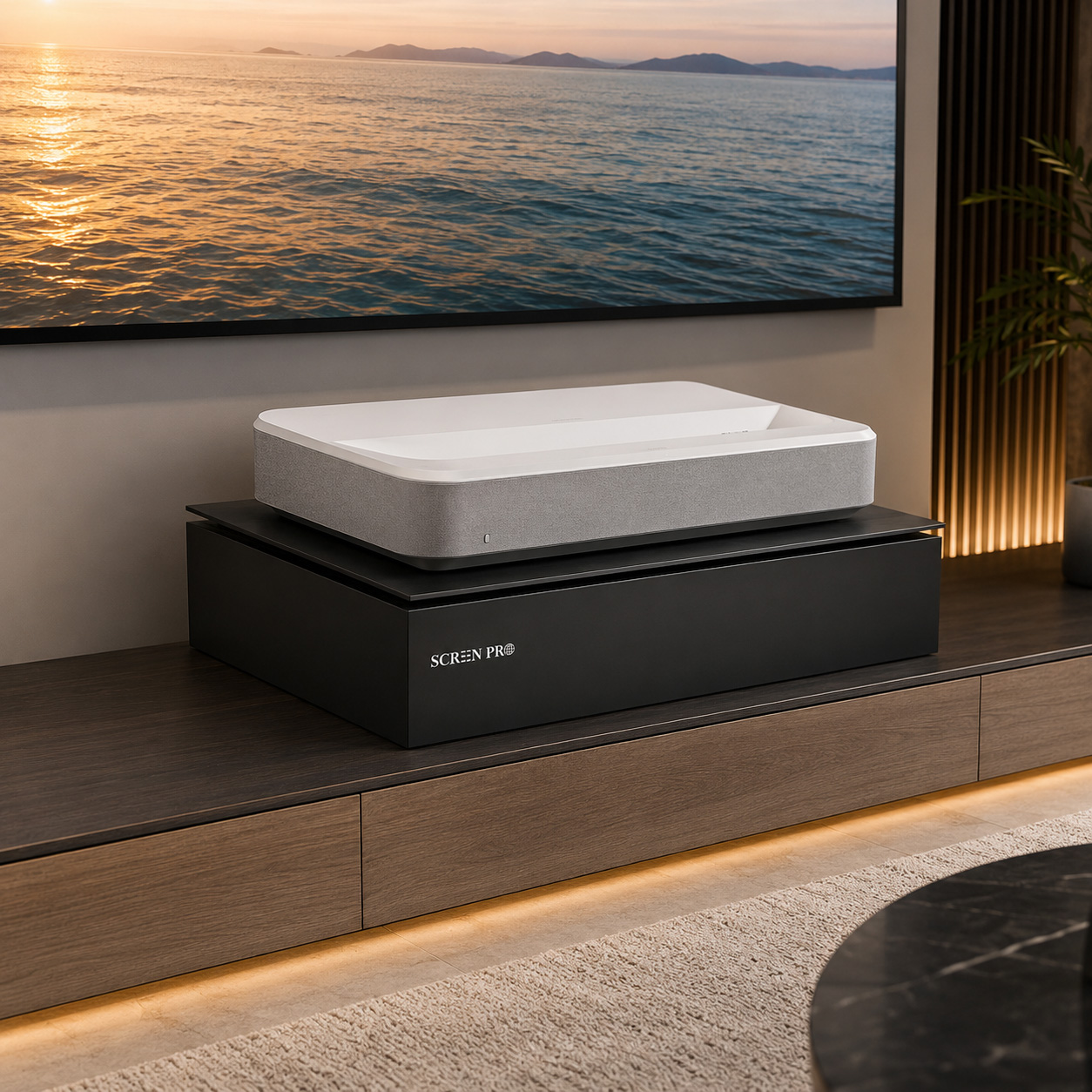
Ultra-short-throw projectors position the projector very close to the screen and project light upward at a steep angle.
Because of this geometry, even relatively small changes in screen position may become more visible than with a conventional long-throw projector.
For UST applications, screen structure, material direction and surface flatness therefore need to be considered together.
A tensioned structure can help maintain a controlled surface, but the screen must also use a material specifically suitable for the projector type.
IMPORTANT TO UNDERSTAND
A tab-tensioned system improves control of a retractable projection surface, but it should not be understood as a guarantee that the material will behave exactly like a rigid panel or permanently stretched fixed-frame screen.
Screen flatness is influenced by several factors, including:
The tensioning system is therefore one part of the overall screen design rather than an isolated feature.
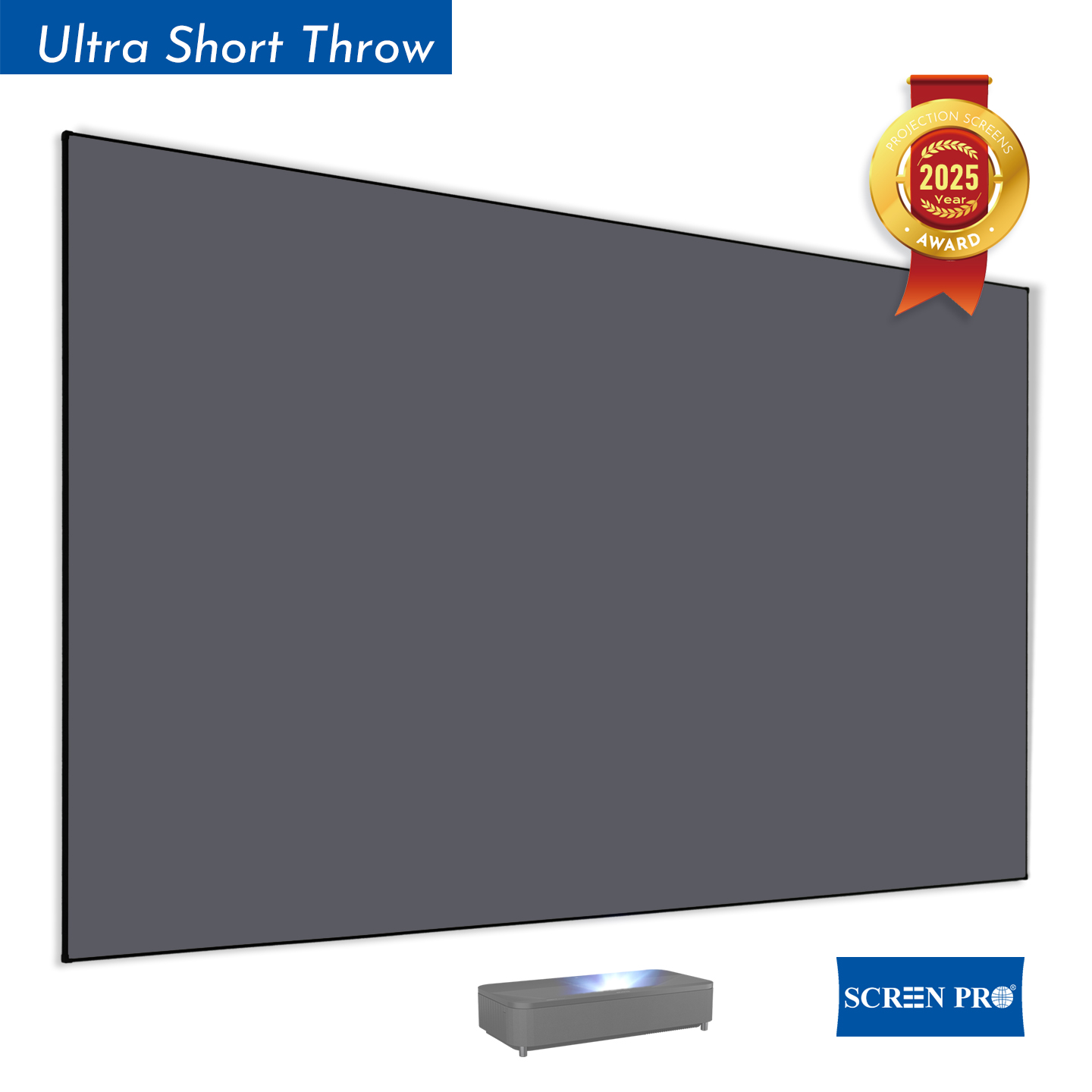
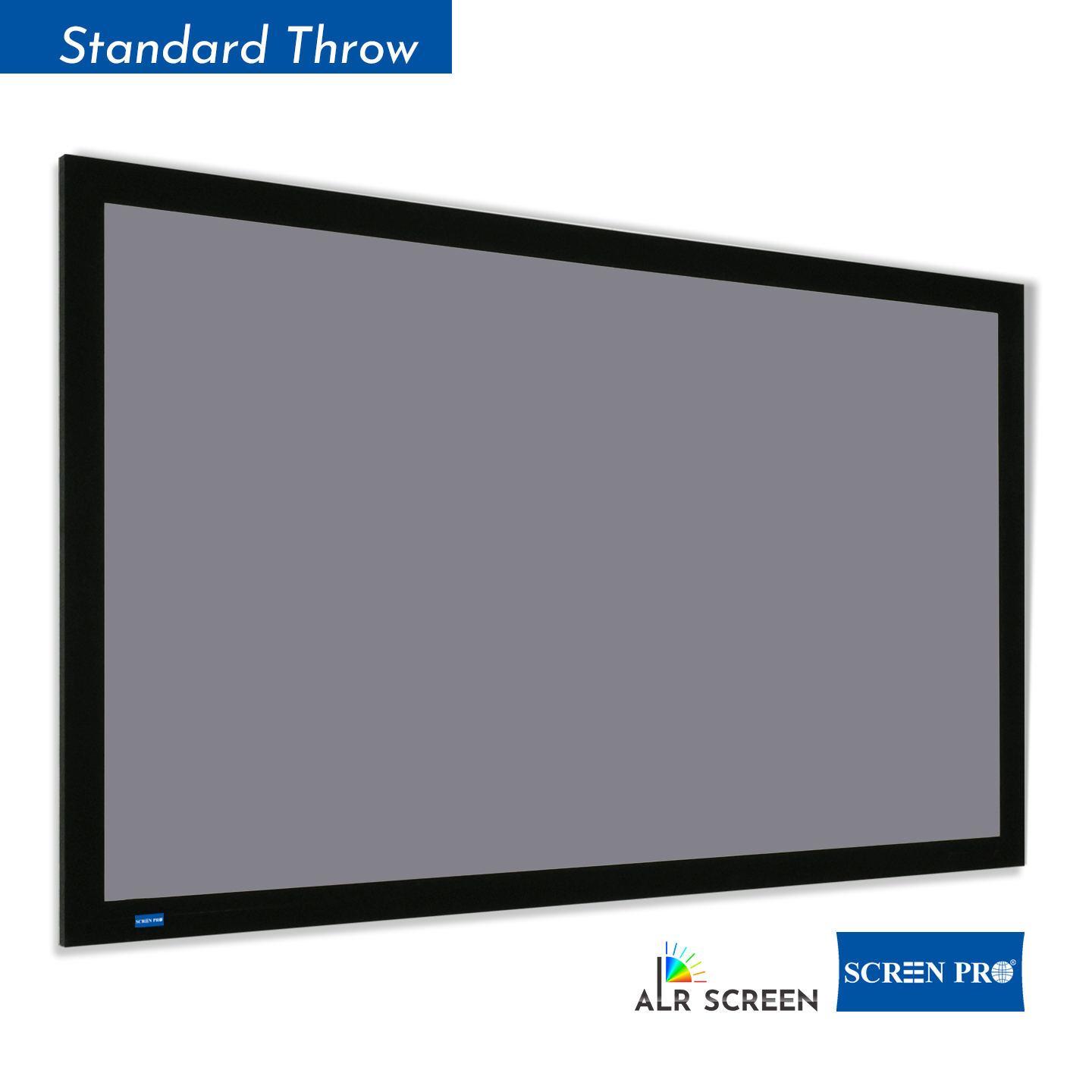
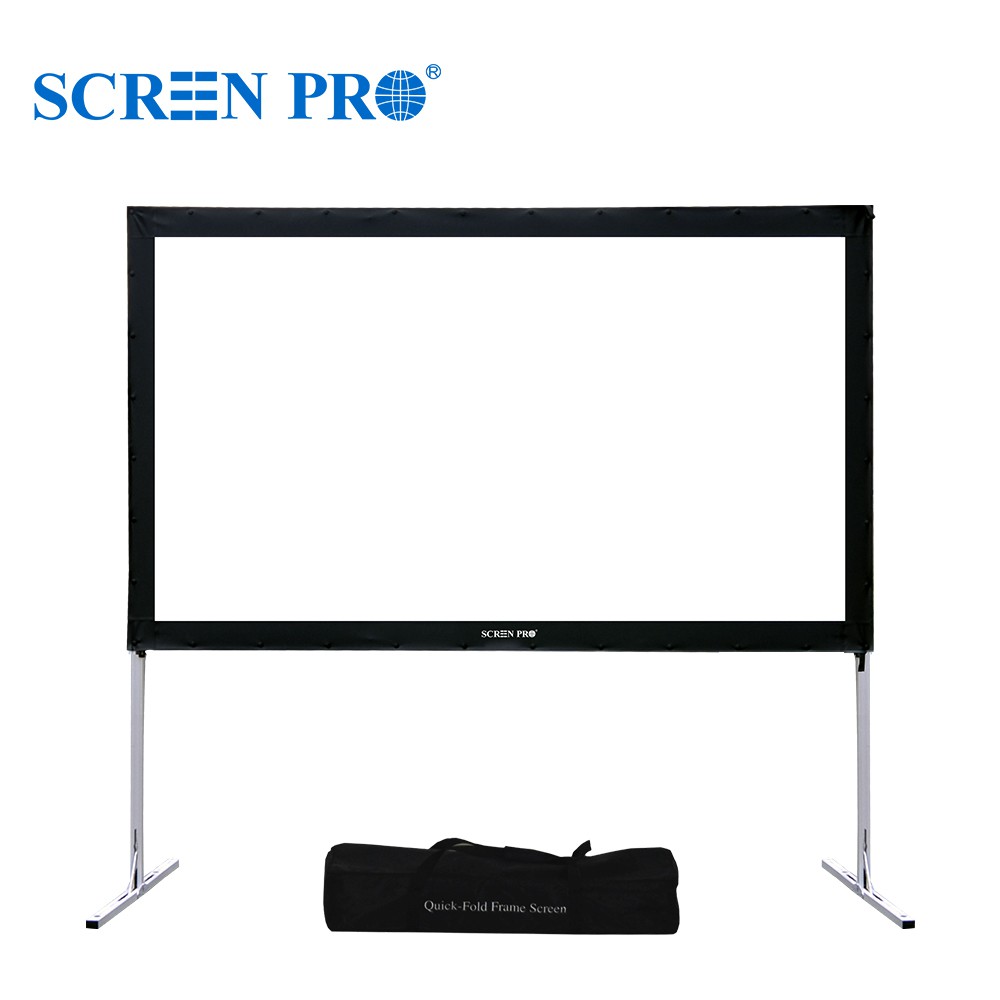
If maximum surface flatness is the primary requirement and the screen can remain permanently installed, a fixed-frame screen is generally the simplest solution.
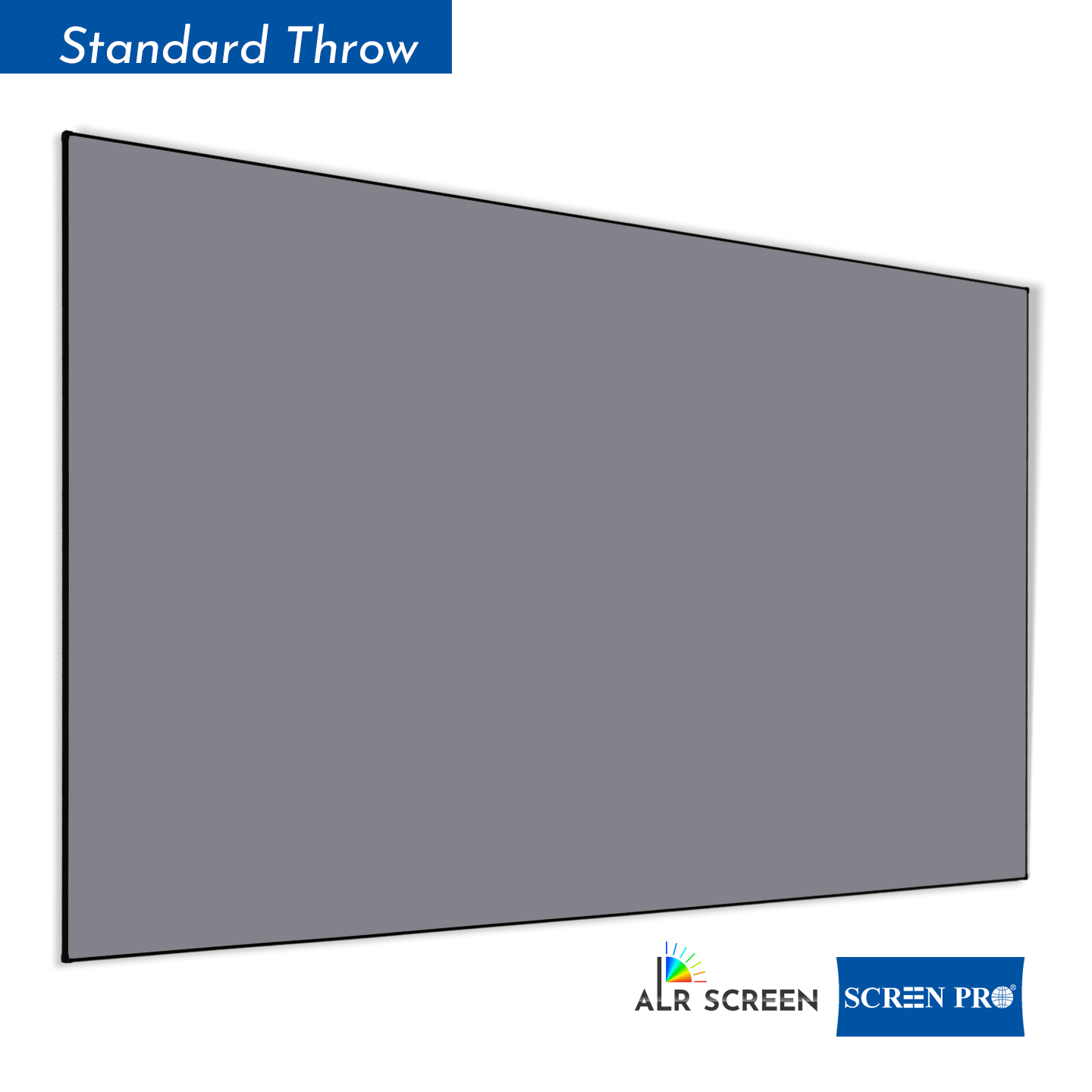
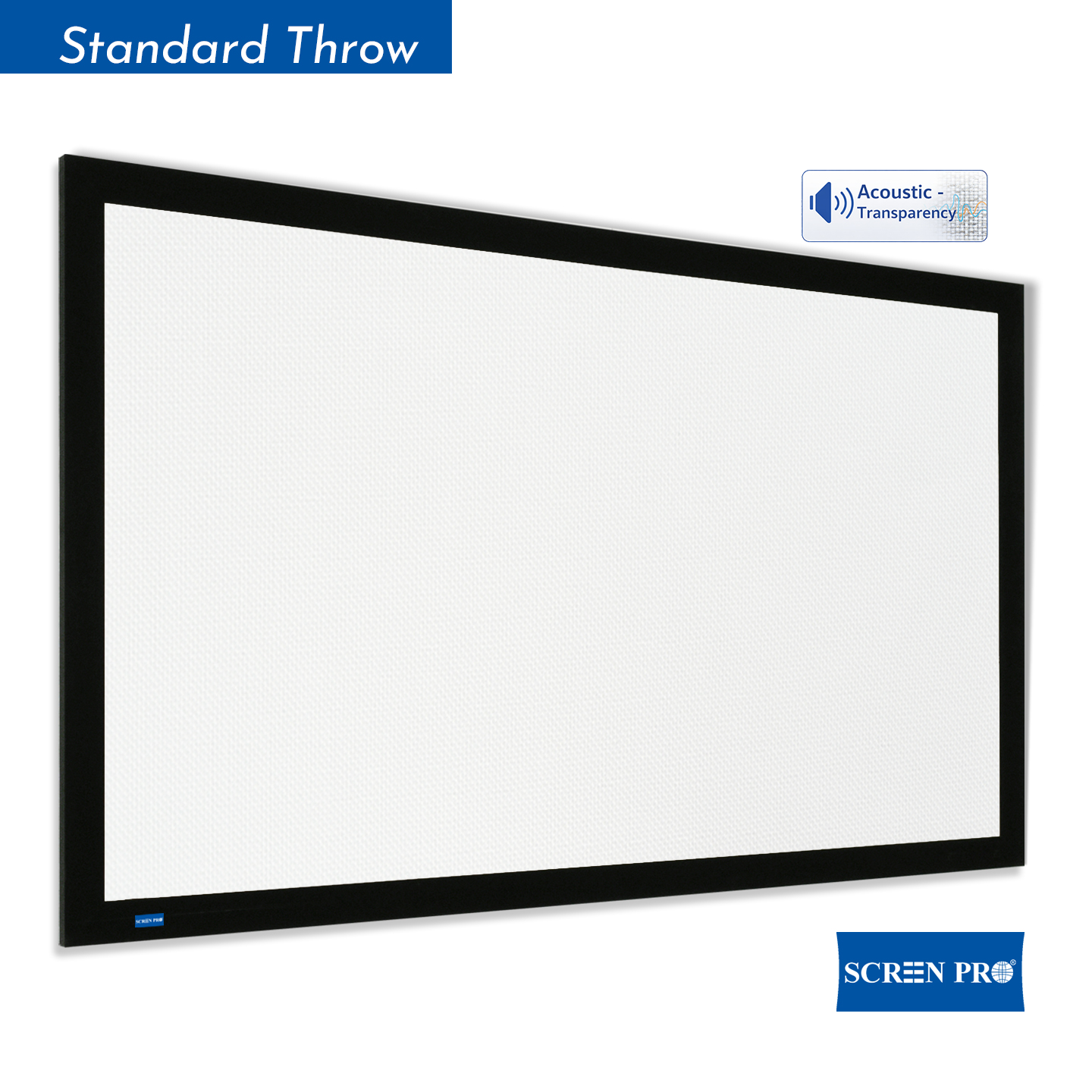
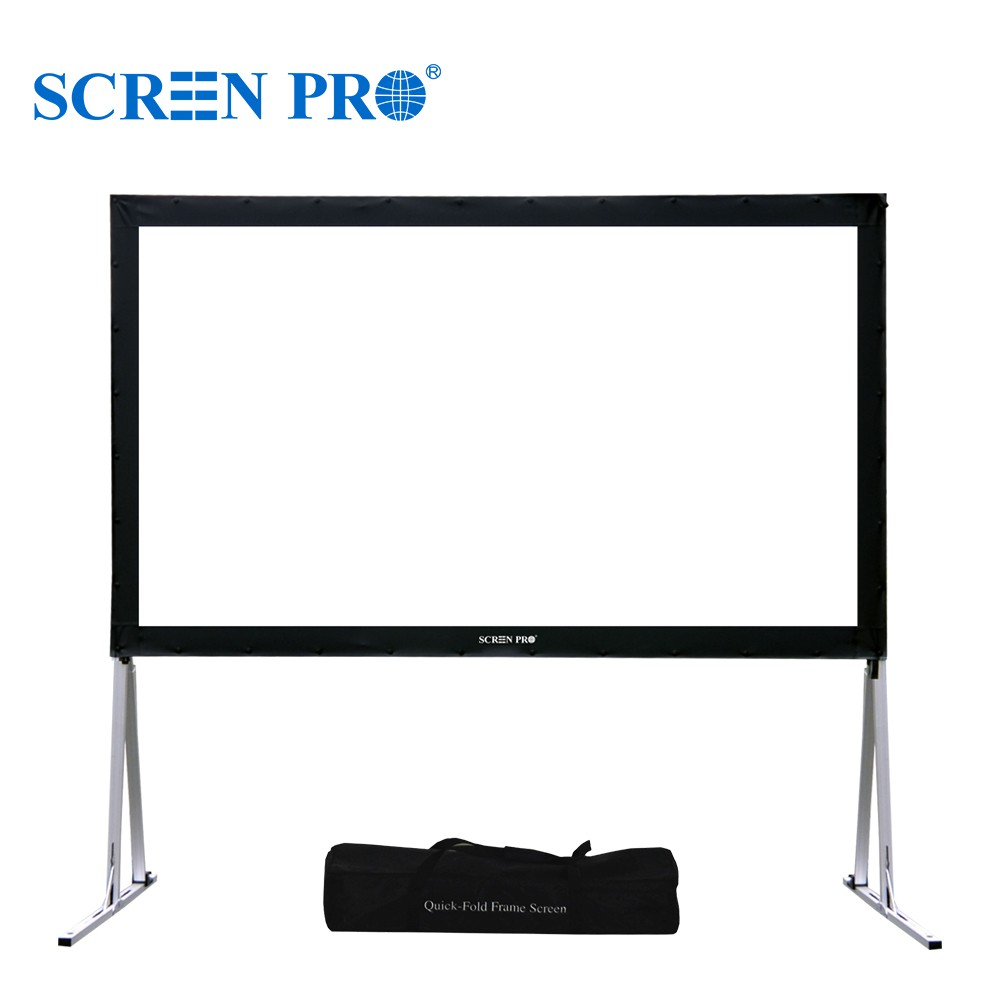
A fixed-frame screen stretches the material continuously around a rigid frame, providing stable tension in multiple directions.
A tab-tensioned screen is more suitable when the projection surface needs to retract when not in use.
In practical terms:
Choose a fixed-frame screen when image performance and permanent installation are the priority.
Choose a tab-tensioned screen when you need a retractable installation while maintaining better control of the projection surface.
TYPICAL APPLICATIONS
Retractable cinema installations where image quality is a priority.
Screens that disappear when not in use while maintaining a clean interior.
Boardrooms and premium meeting spaces requiring retractable projection.
Integrated ceiling, cabinetry and architectural AV projects.
BUYING GUIDE
A good tensioning system is important, but it is only one part of choosing the correct projector screen.
Before selecting a model, consider:
FAQ
Not necessarily. Standard motorized screens are practical and cost-effective for many classrooms, offices and general AV applications. Tab tensioning is most valuable when improved surface control is required.
On many designs, the tension system can be adjusted during manufacturing or installation. Adjustment methods vary by screen construction and should follow the manufacturer's instructions.
It is designed to improve surface flatness, but actual results depend on the screen material, dimensions, installation conditions and the overall tensioning structure.
It can be particularly useful for larger retractable screens, but the correct structure depends on the material, screen width and installation environment. Large-format projects should be evaluated individually.
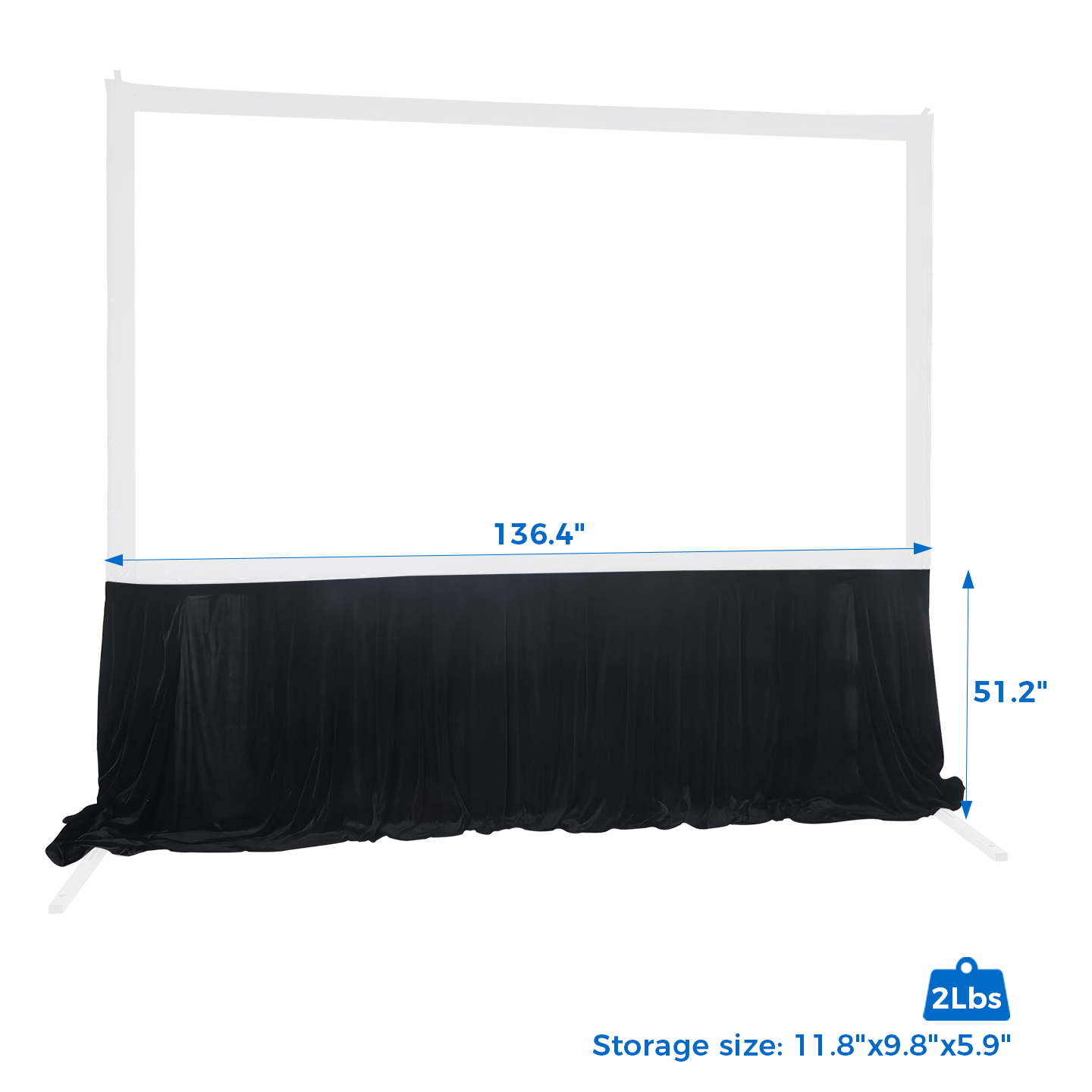
Yes. Depending on the screen structure and material, customized viewing areas, aspect ratios, black drops, housing dimensions and control configurations can be produced for residential and commercial AV projects.
SCREENPRO
The best projector screen is not defined by one feature alone. Screen structure, projection material, projector type, installation method and viewing environment should be considered as one complete system.
SCREENPRO provides tab-tensioned motorized screens, recessed screens, ALR projection solutions and custom screen configurations for residential, commercial and professional AV applications.





© Copyright 2004-2026 SCREEN PRO® All Rights Reserved | Specifications are subject to change without notice. All Rights ReservedSite Map Designed by iwonder.cn