




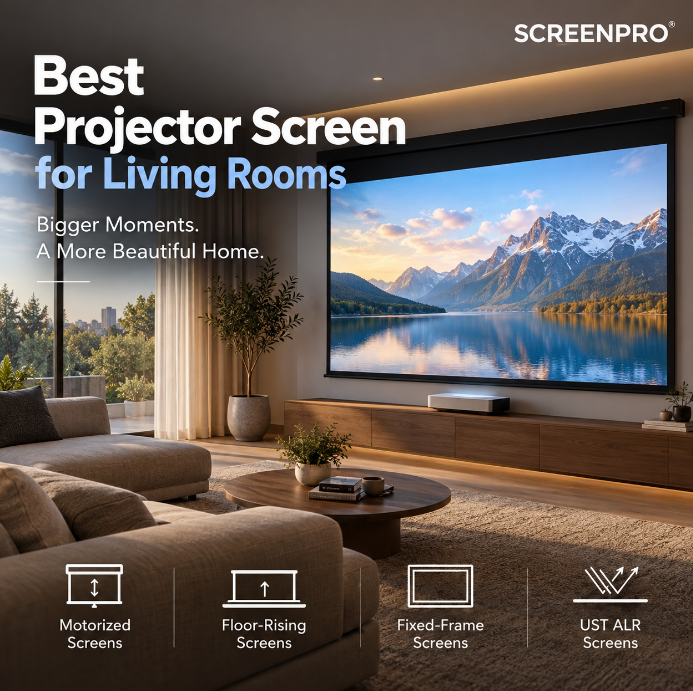
Best Projector Screen for Living Rooms
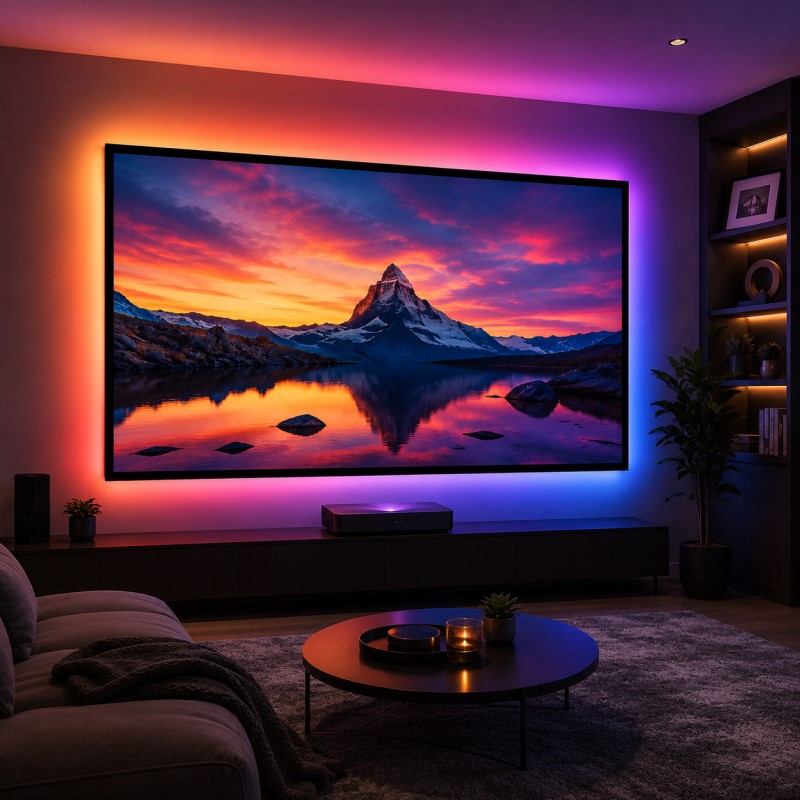
The best projector screen for a living room depends on much more than screen size. Ambient light, projector type, viewing distance, room layout, and whether you want the screen visible when not in use can all change which screen works best.
For most modern living rooms, the ideal choice usually falls into one of four categories: an UST ALR screen, a motorized projection screen, a floor-rising screen, or a fixed-frame screen. This guide explains how to choose the right one for your room.
If you use an ultra-short-throw laser projector in a bright living room, start with a directional UST ALR screen. If you use a conventional long-throw projector in a darker room, a matte white or long-throw ALR screen is usually more suitable.
What Makes a Projector Screen Suitable for a Living Room?
Unlike a dedicated home theater, a living room usually has windows, ceiling lights, decorative lighting, furniture, and multiple viewing positions. The projection screen therefore needs to balance image performance with interior design.
A good living-room projector screen should provide appropriate contrast for the room, match the projector's throw type, fit the available wall space, and integrate naturally into the room when the projector is not being used.
1. Best for Bright Living Rooms: UST ALR Screens
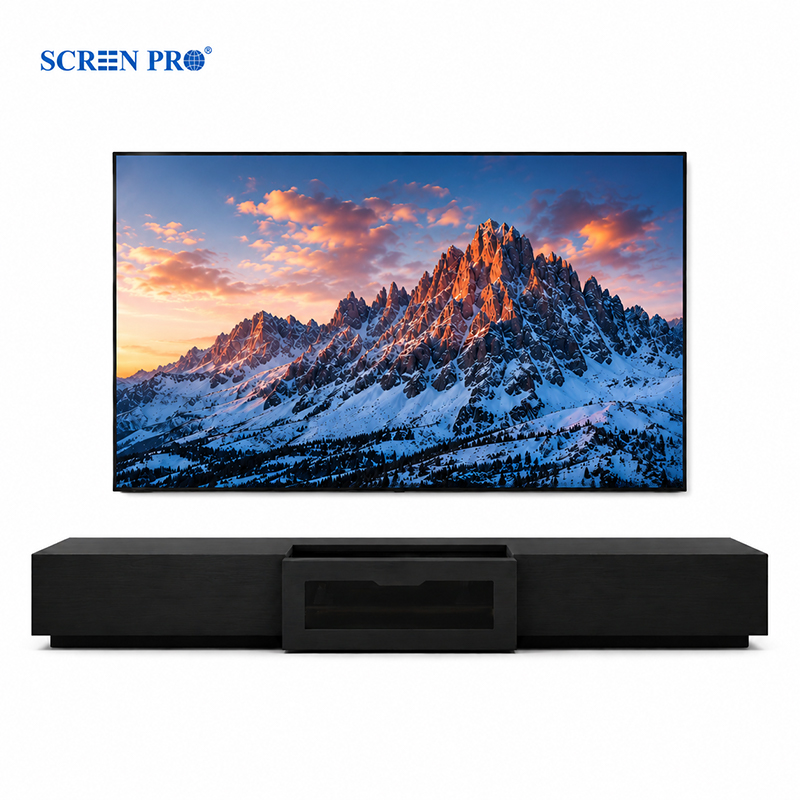
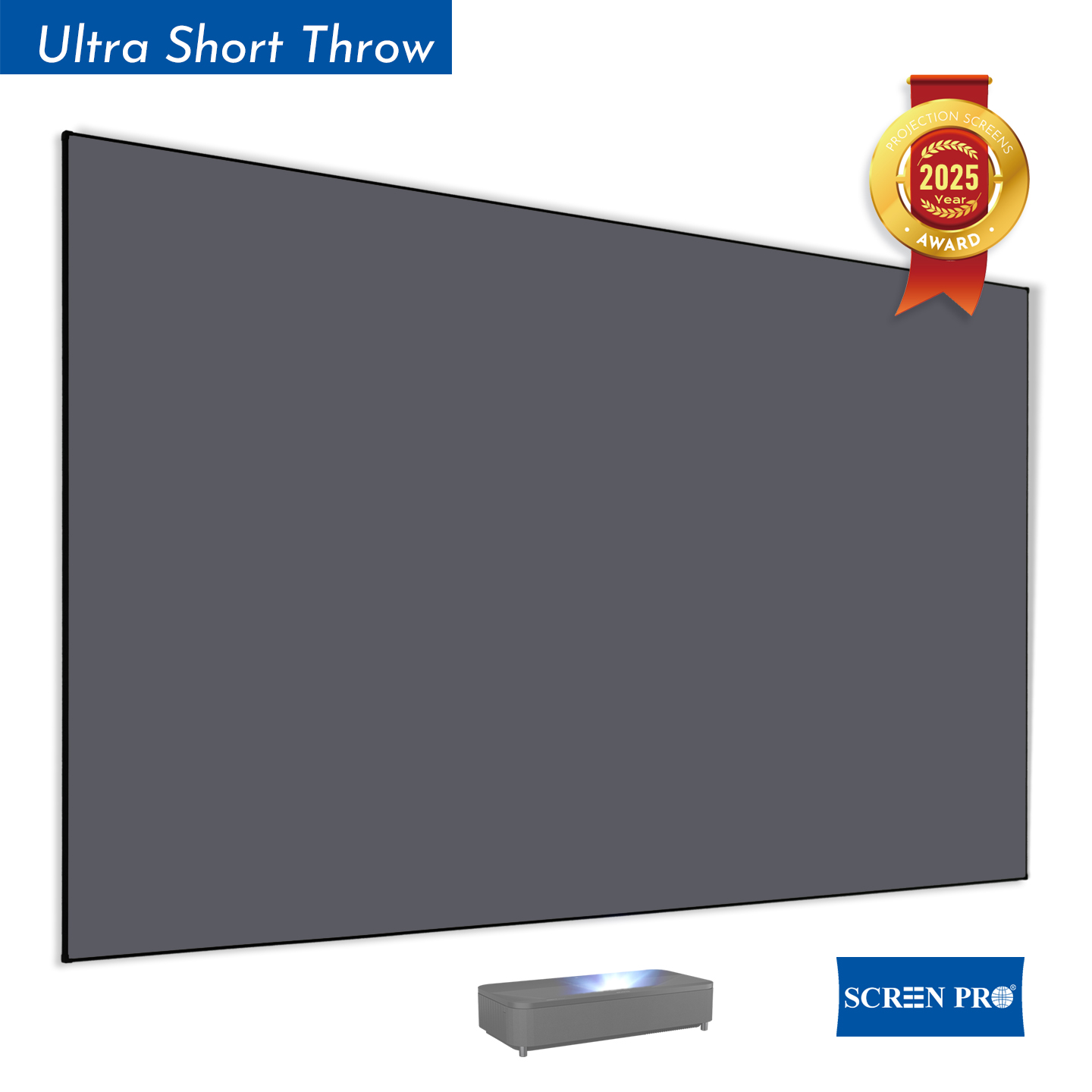
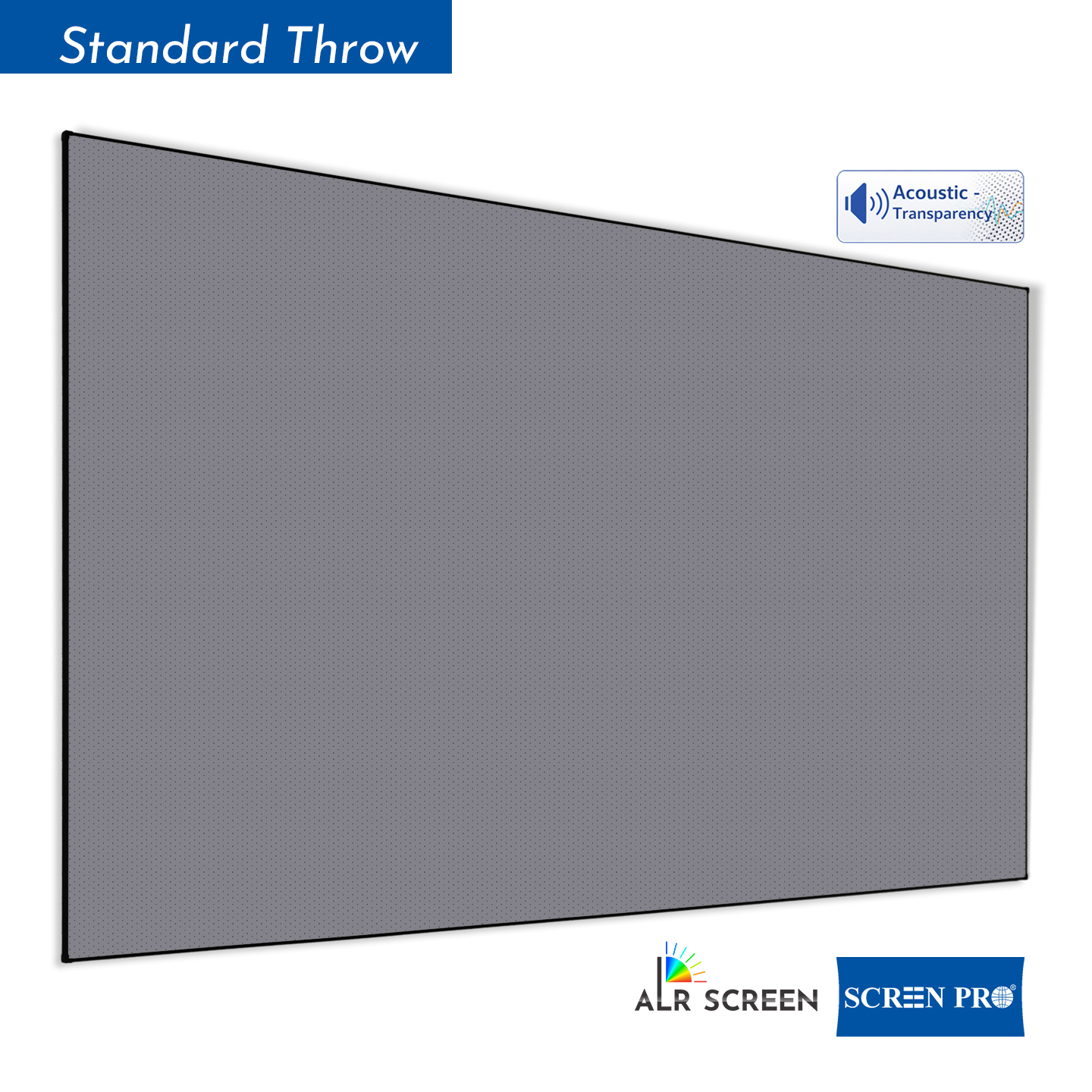
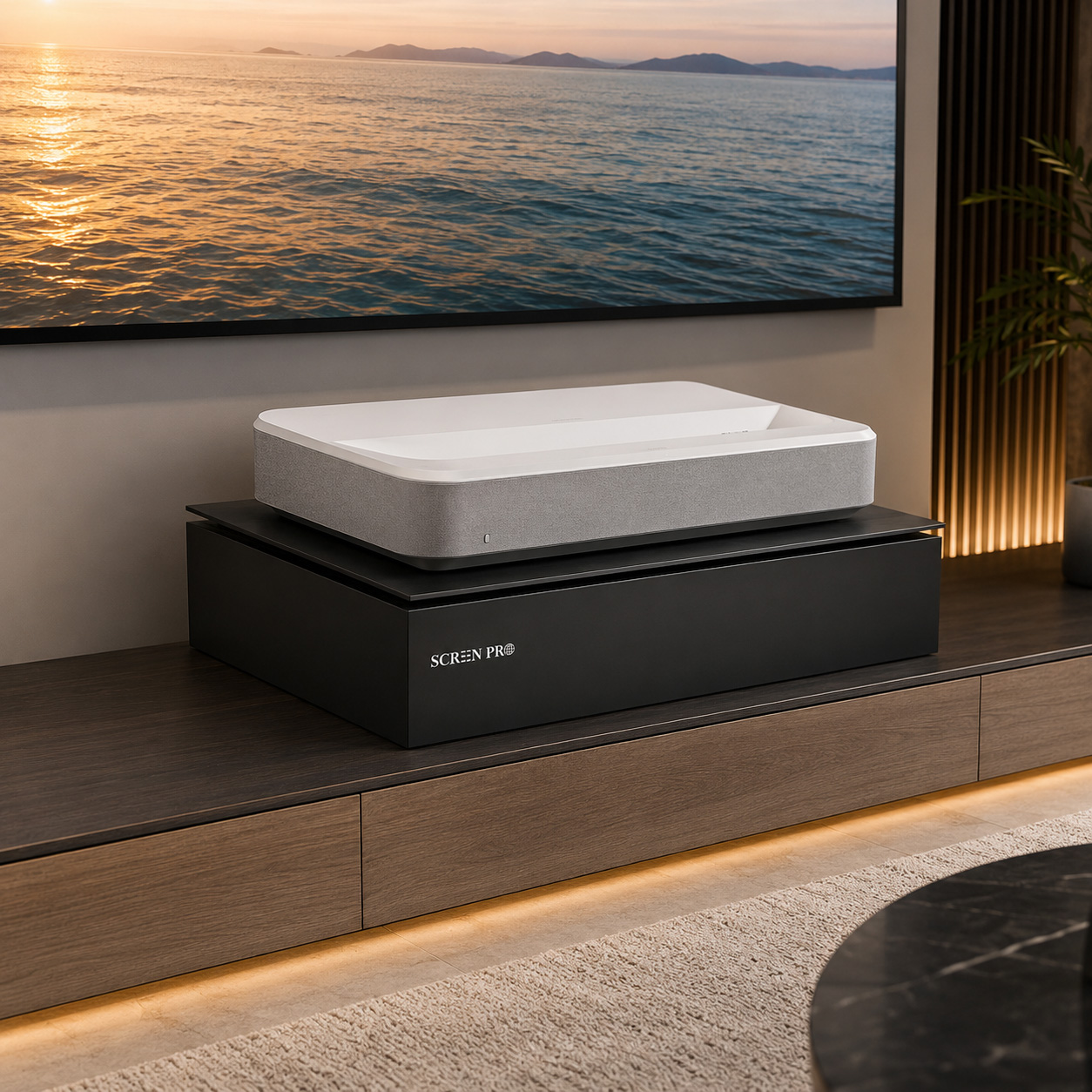
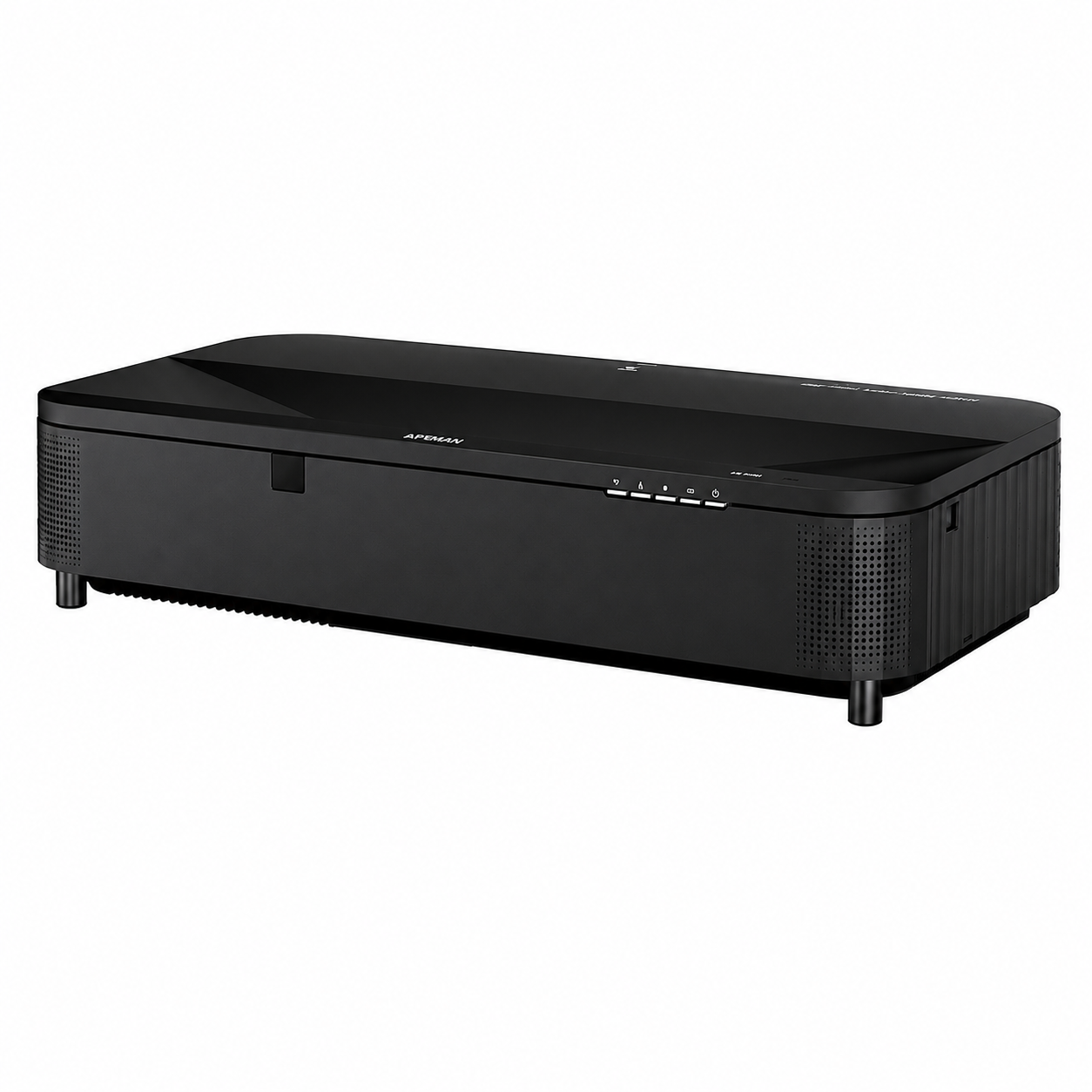
Ultra-short-throw projectors have become popular in living rooms because they can sit very close to the wall while producing a large image. However, a UST projector should normally be paired with a screen specifically designed for the steep angle of light coming from below the screen.
A UST ALR screen uses an optical surface structure to direct projector light toward the viewing area while reducing unwanted ambient light from other directions. This can significantly improve perceived black levels and contrast in a room that cannot be completely darkened.
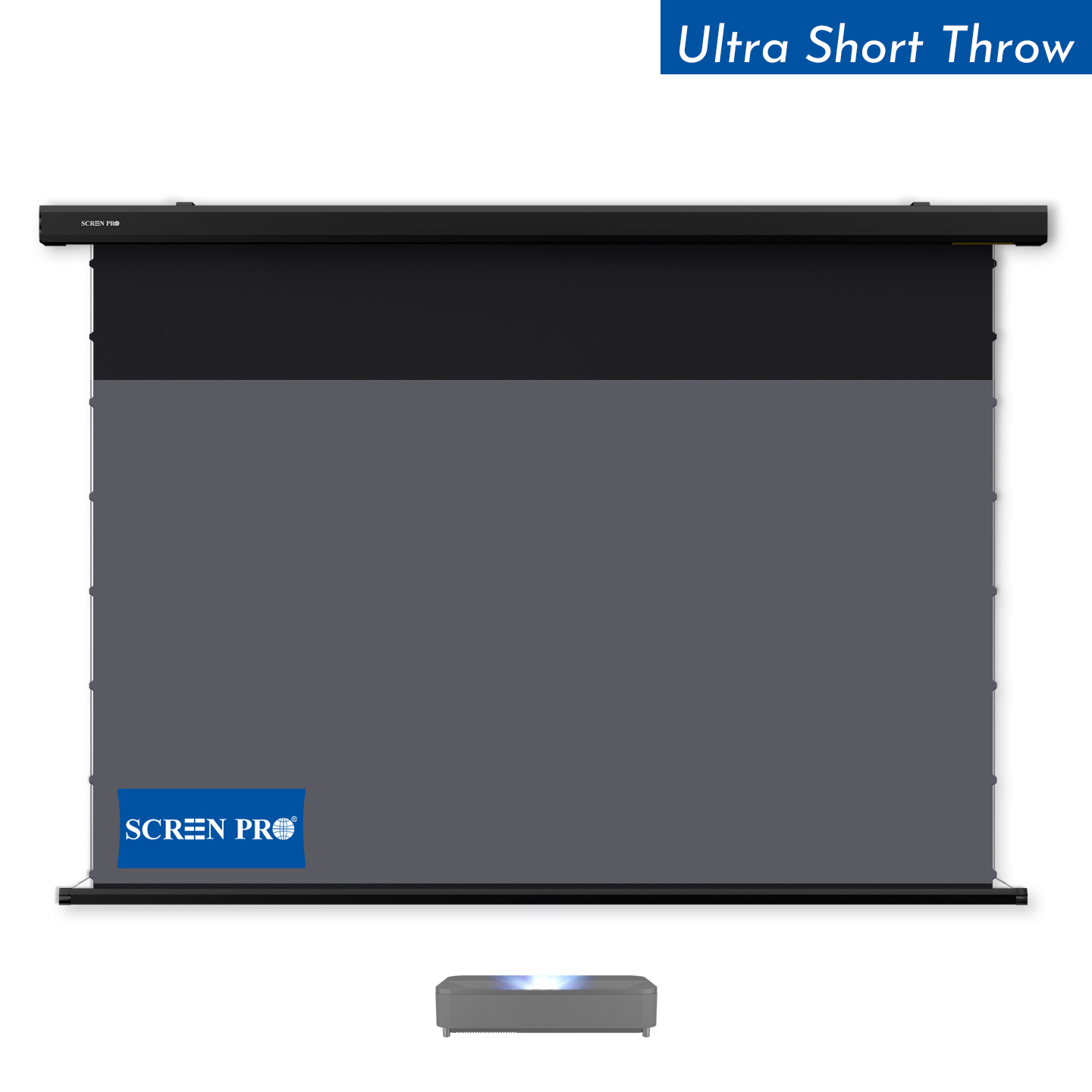
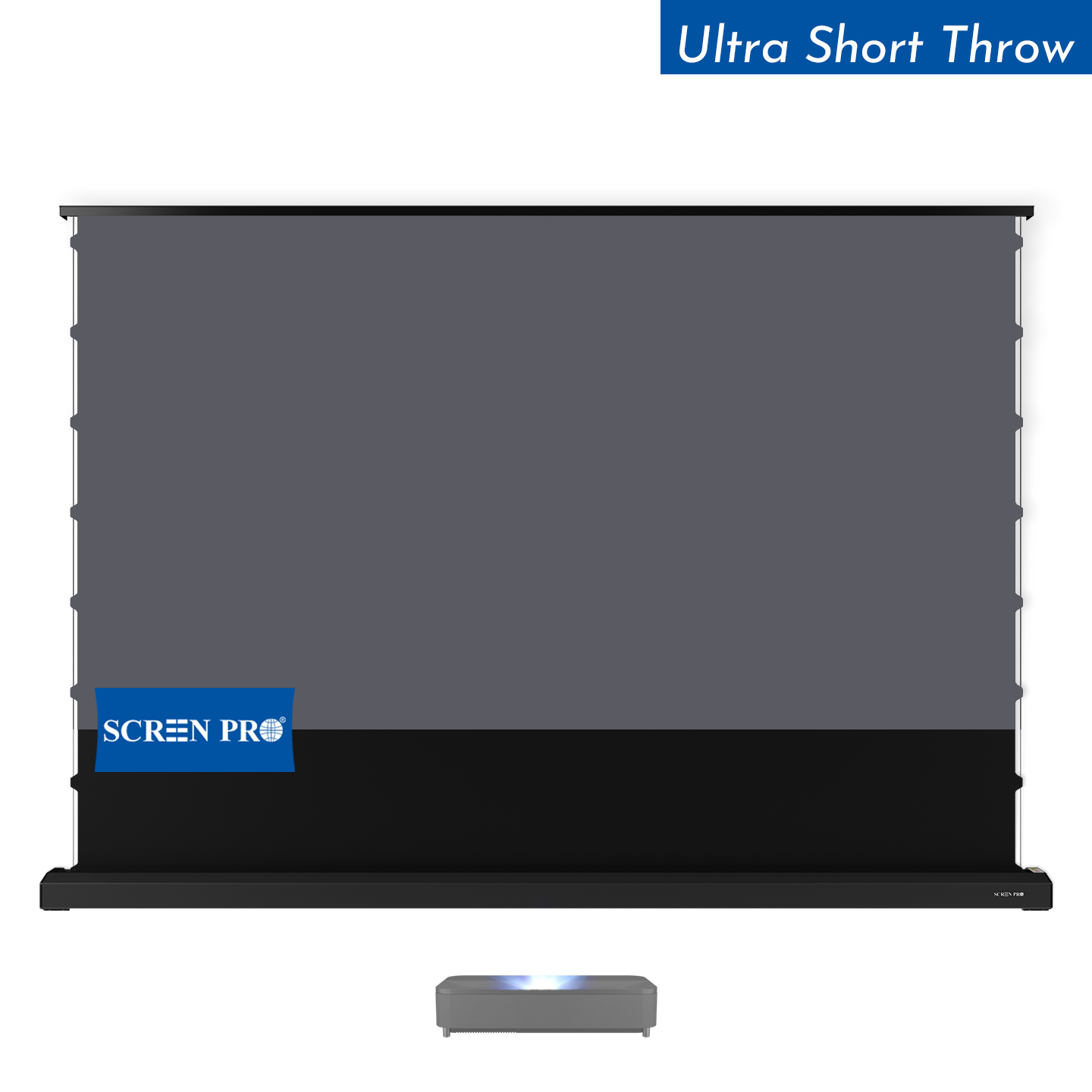
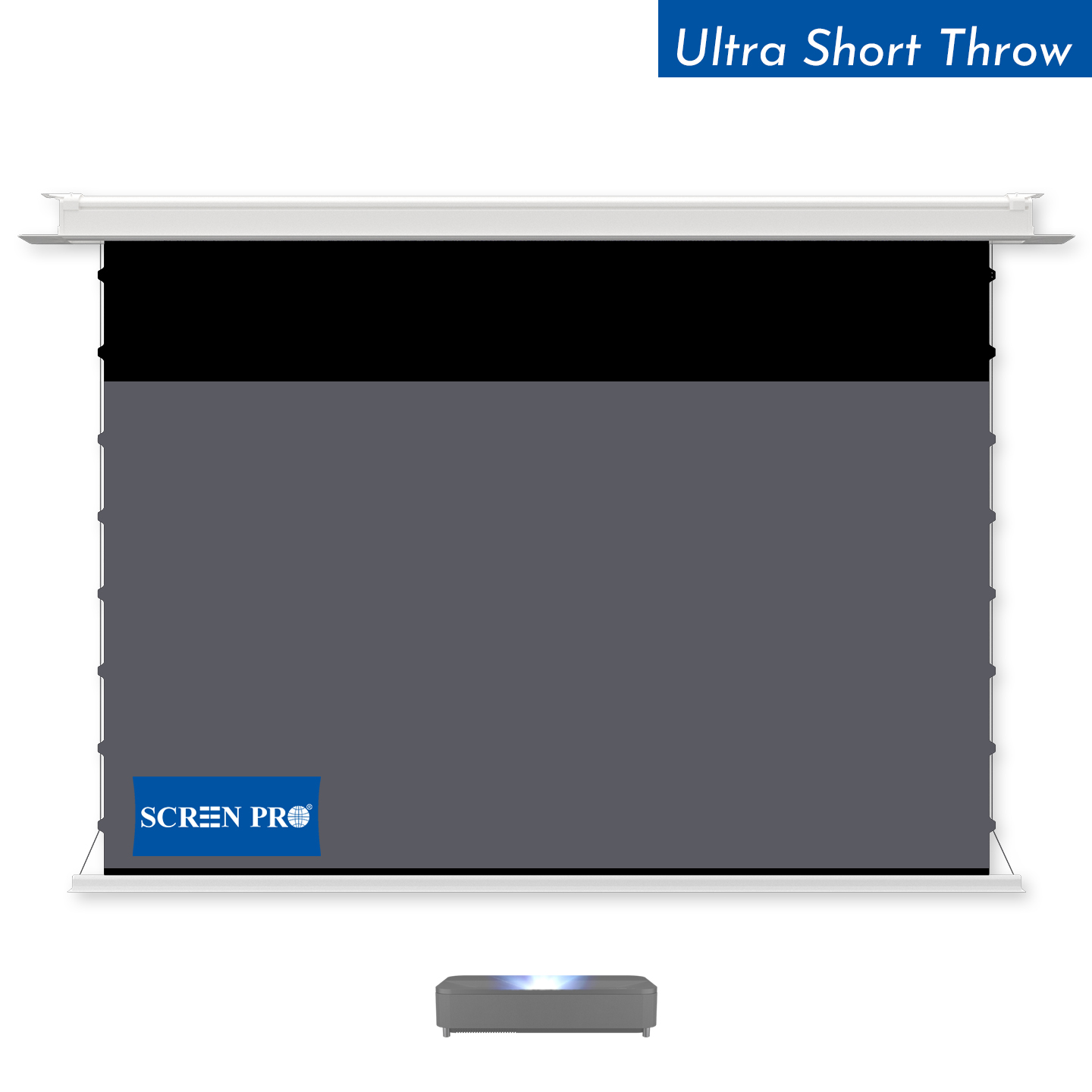
SCREENPRO offers several UST ALR configurations depending on how the screen needs to integrate with the room:
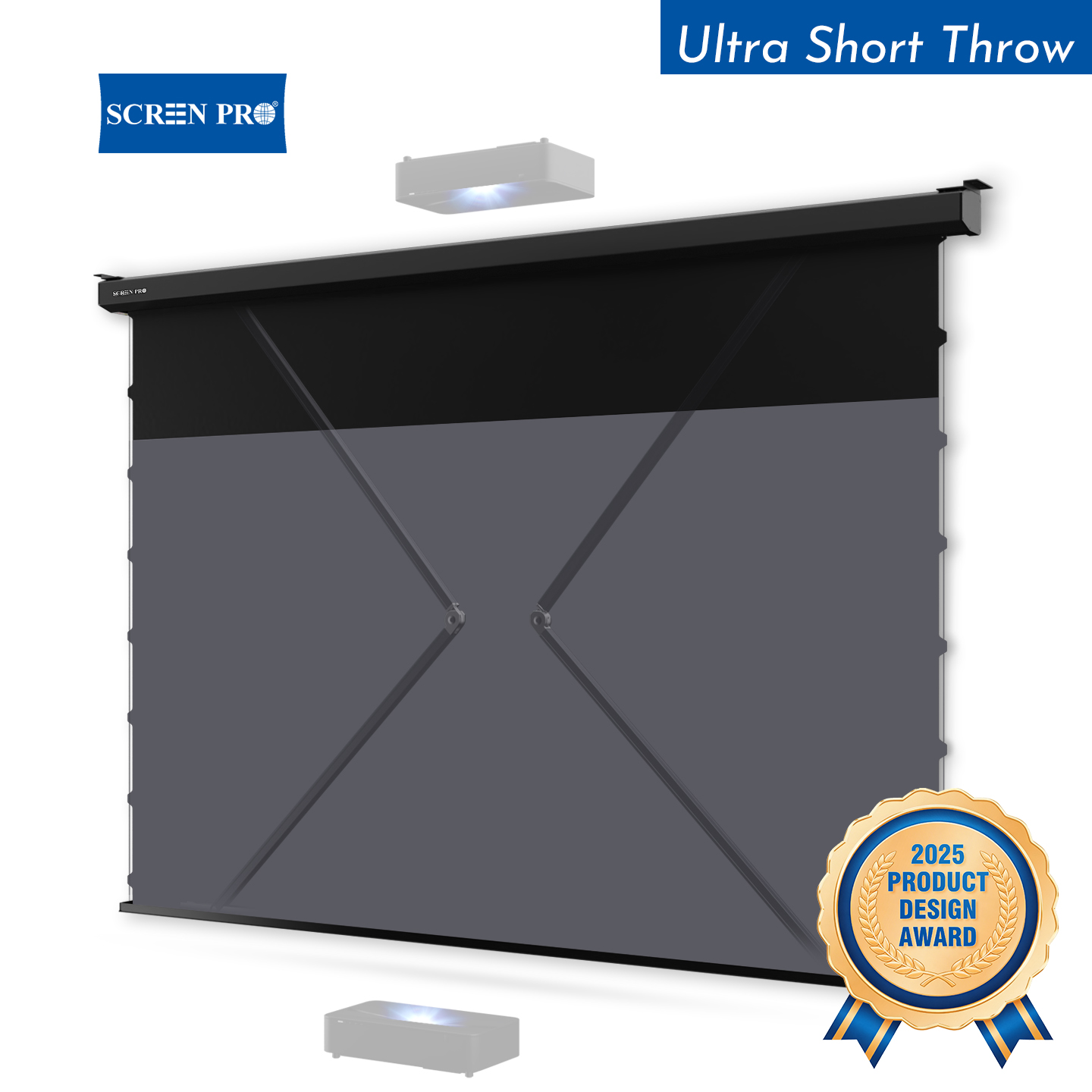
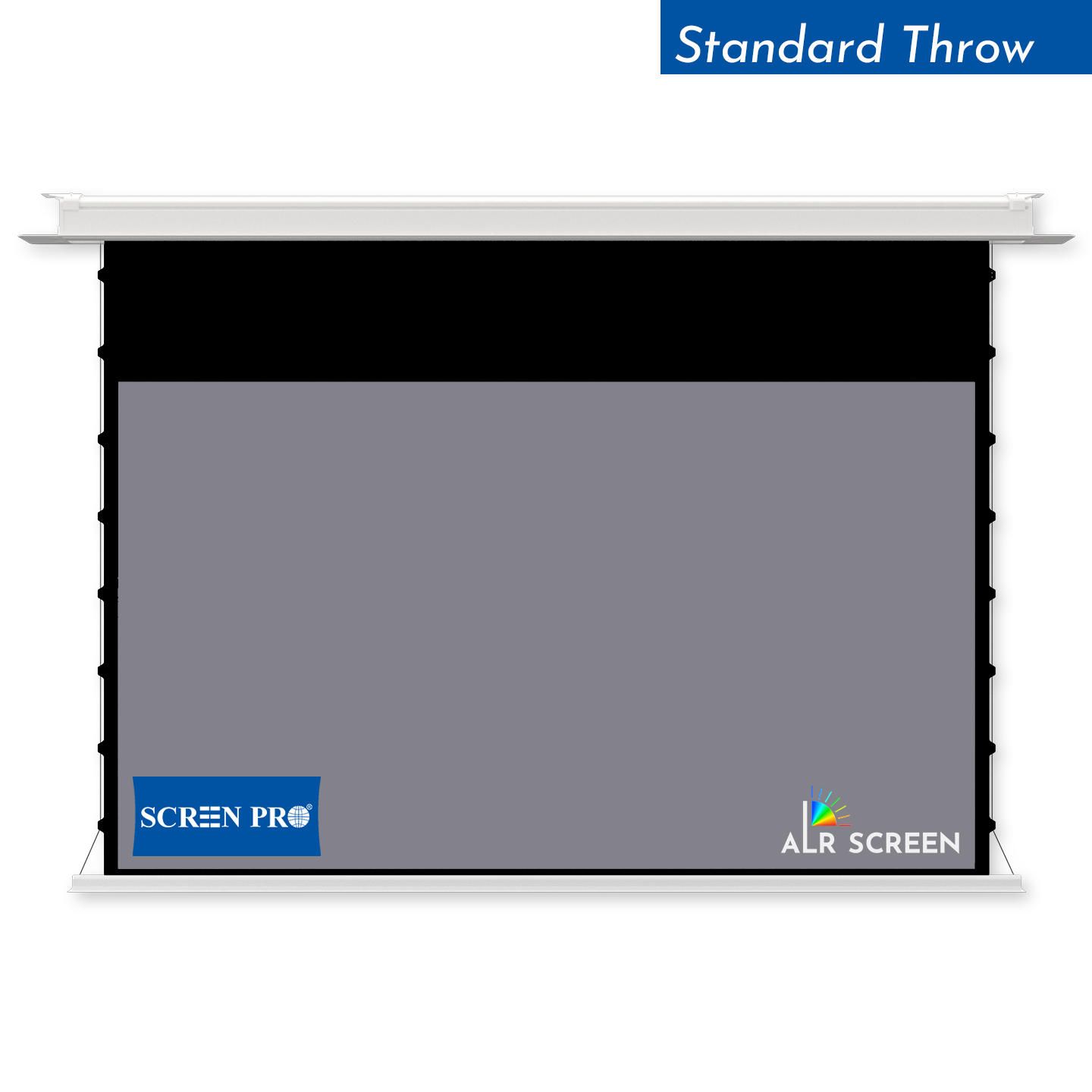
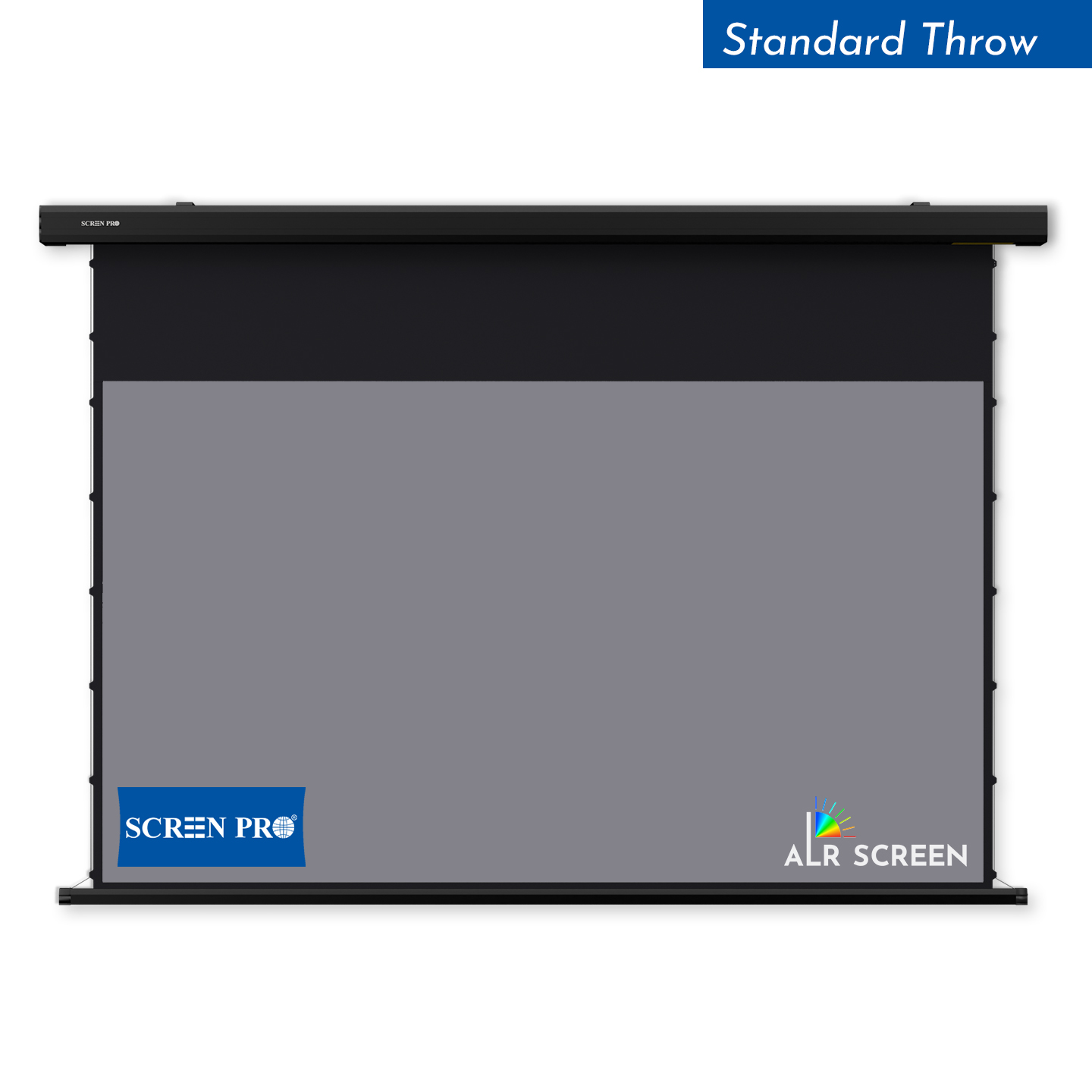
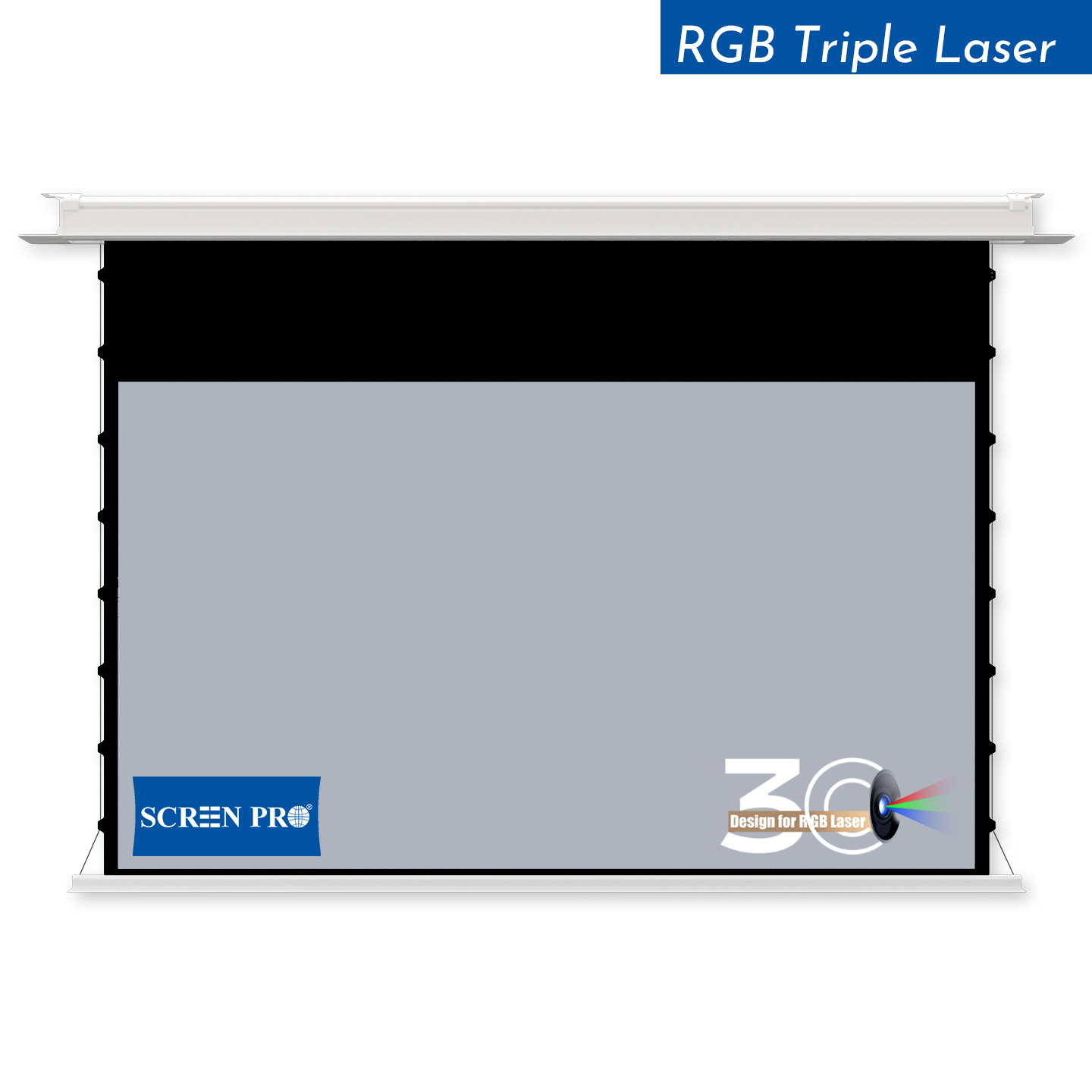
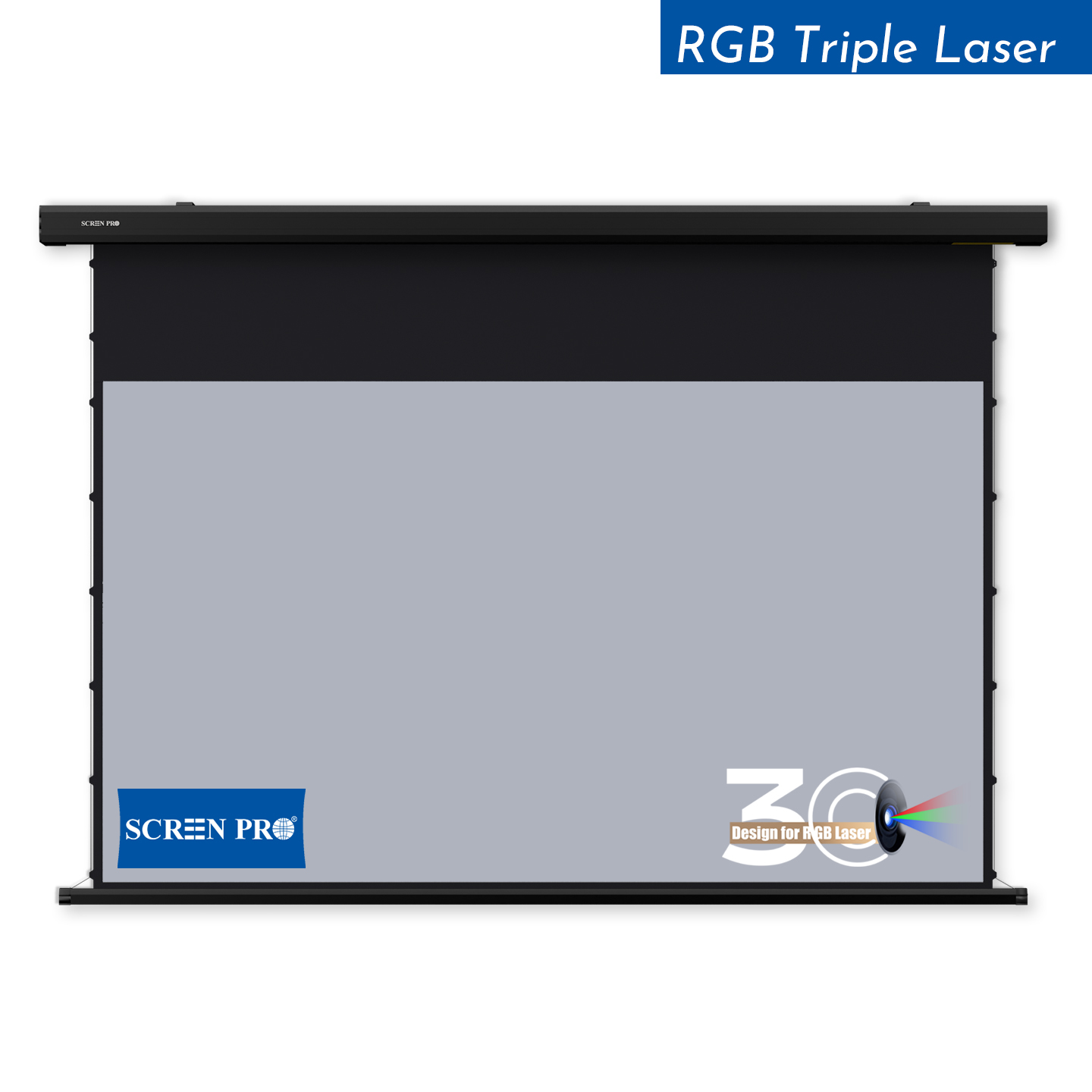
Motorized UST ALR Screen
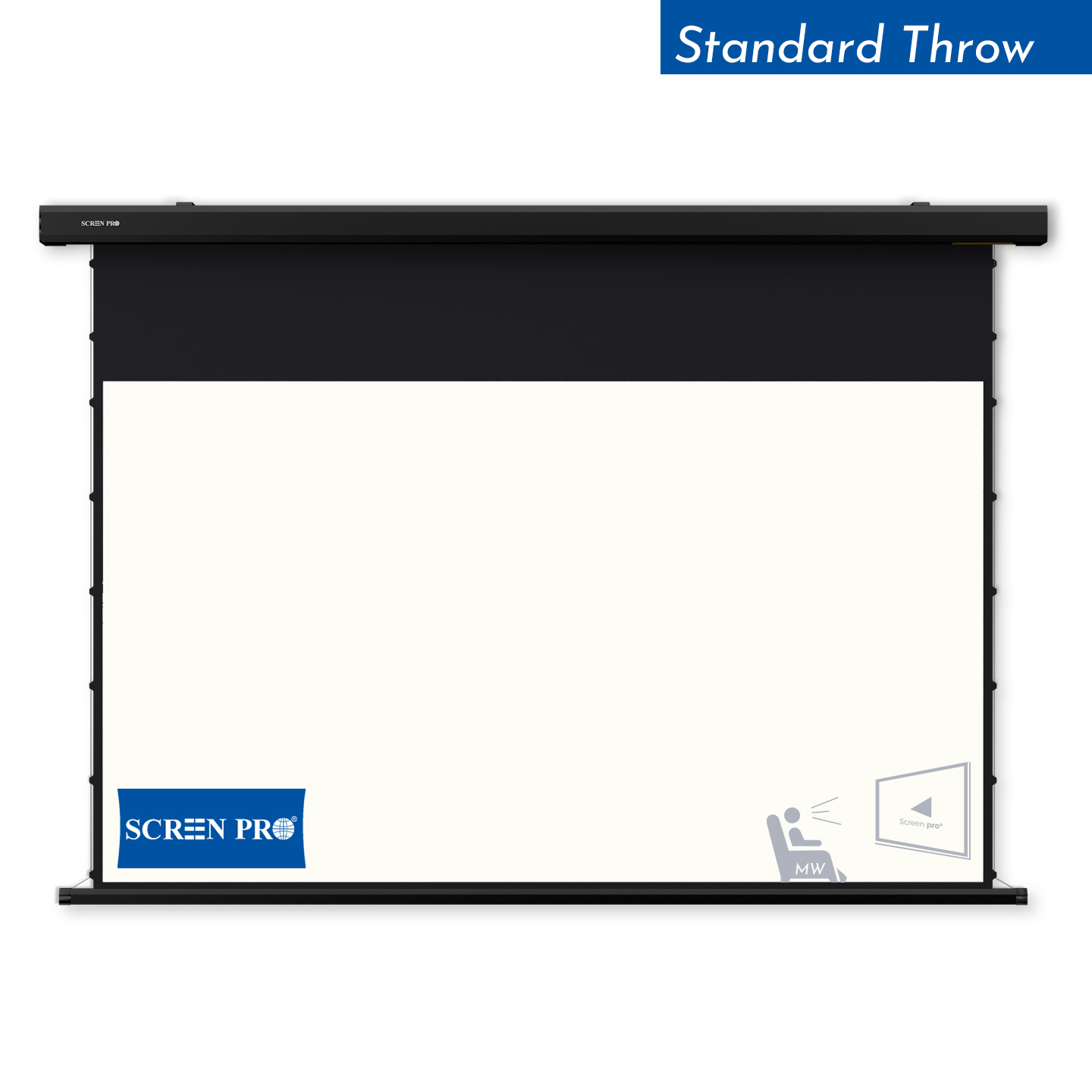
Best when you want the projection surface hidden when it is not being used. A ceiling- or wall-integrated motorized screen preserves a cleaner living-room appearance.
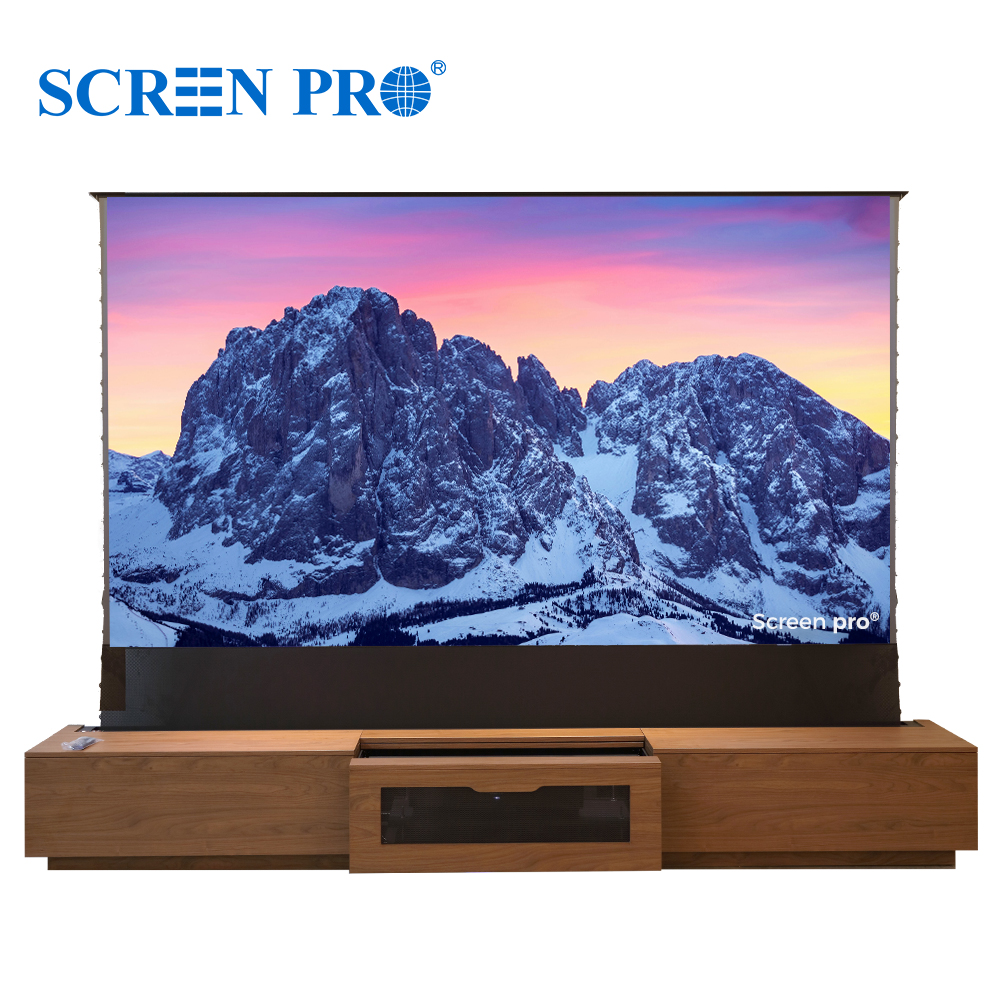
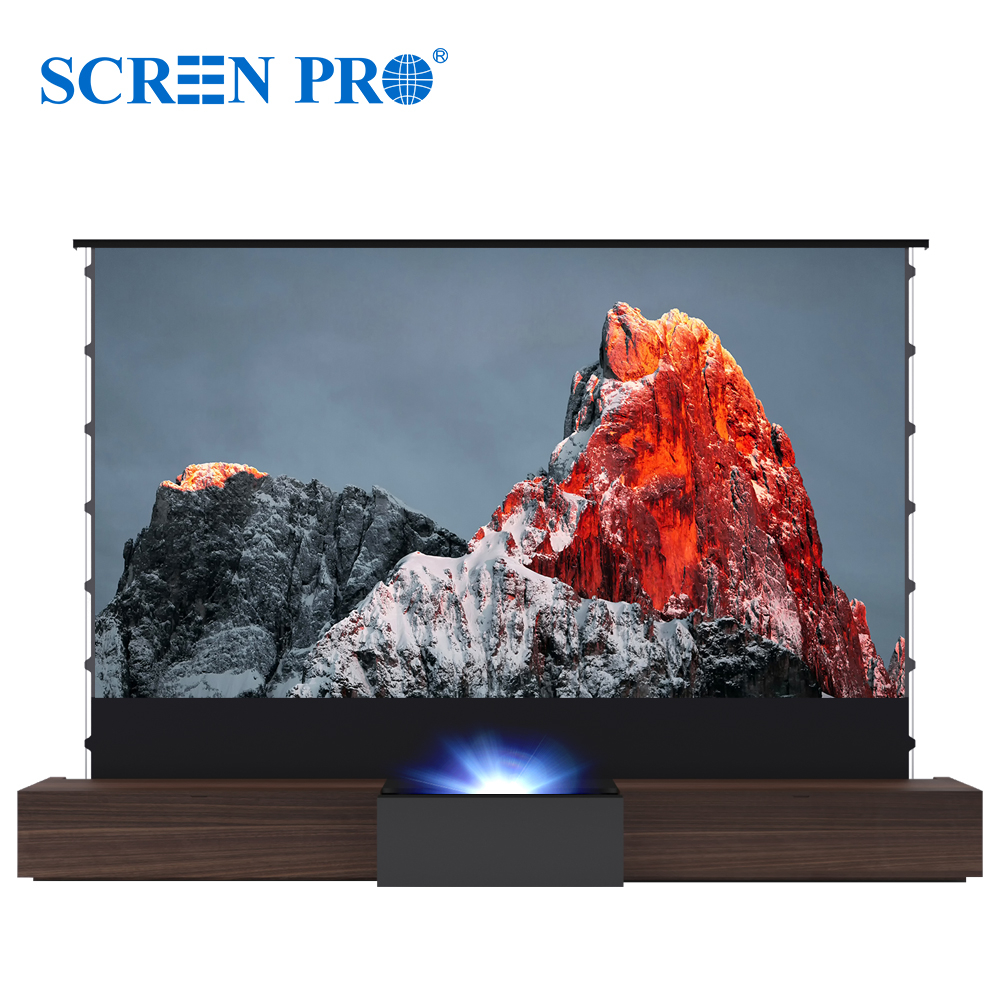
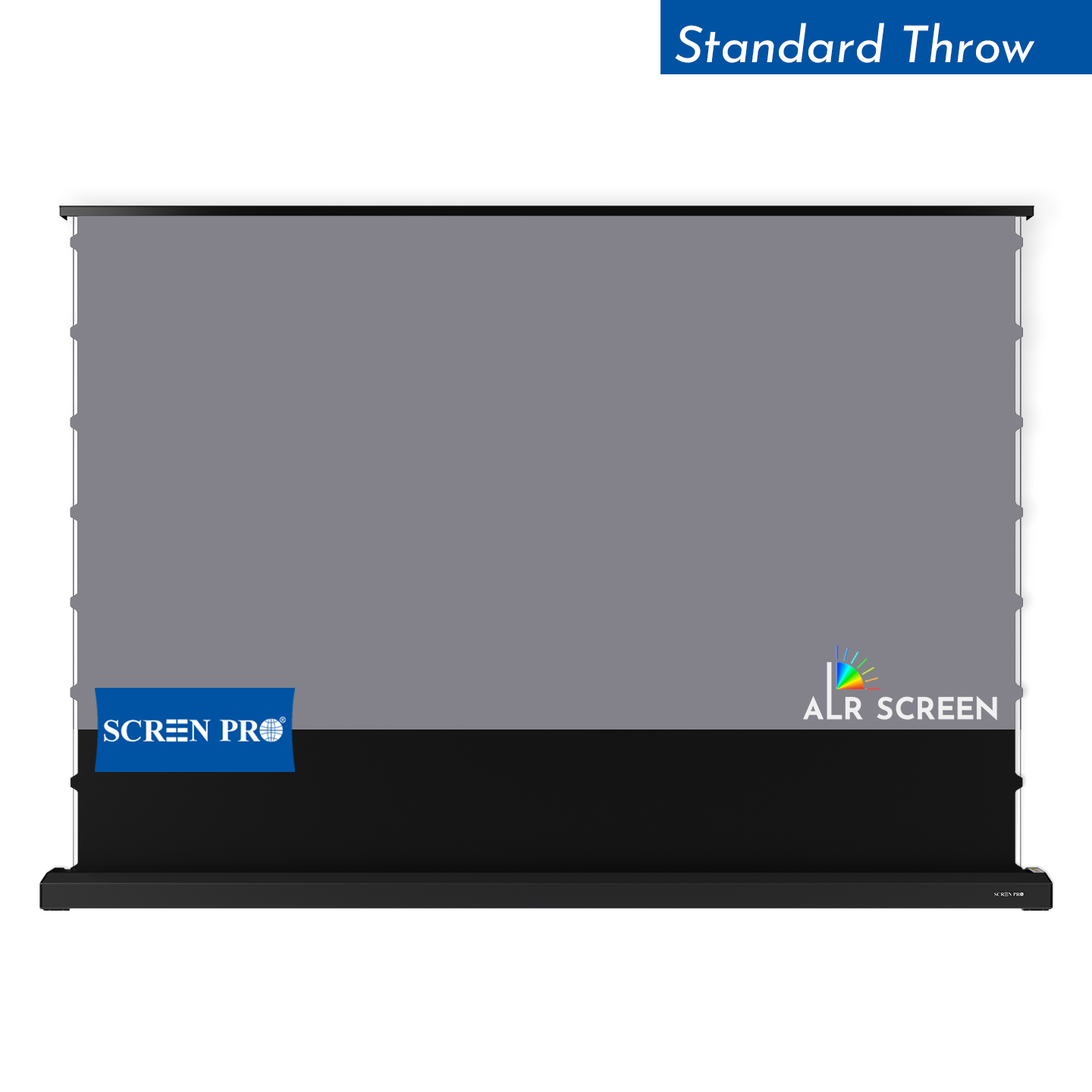
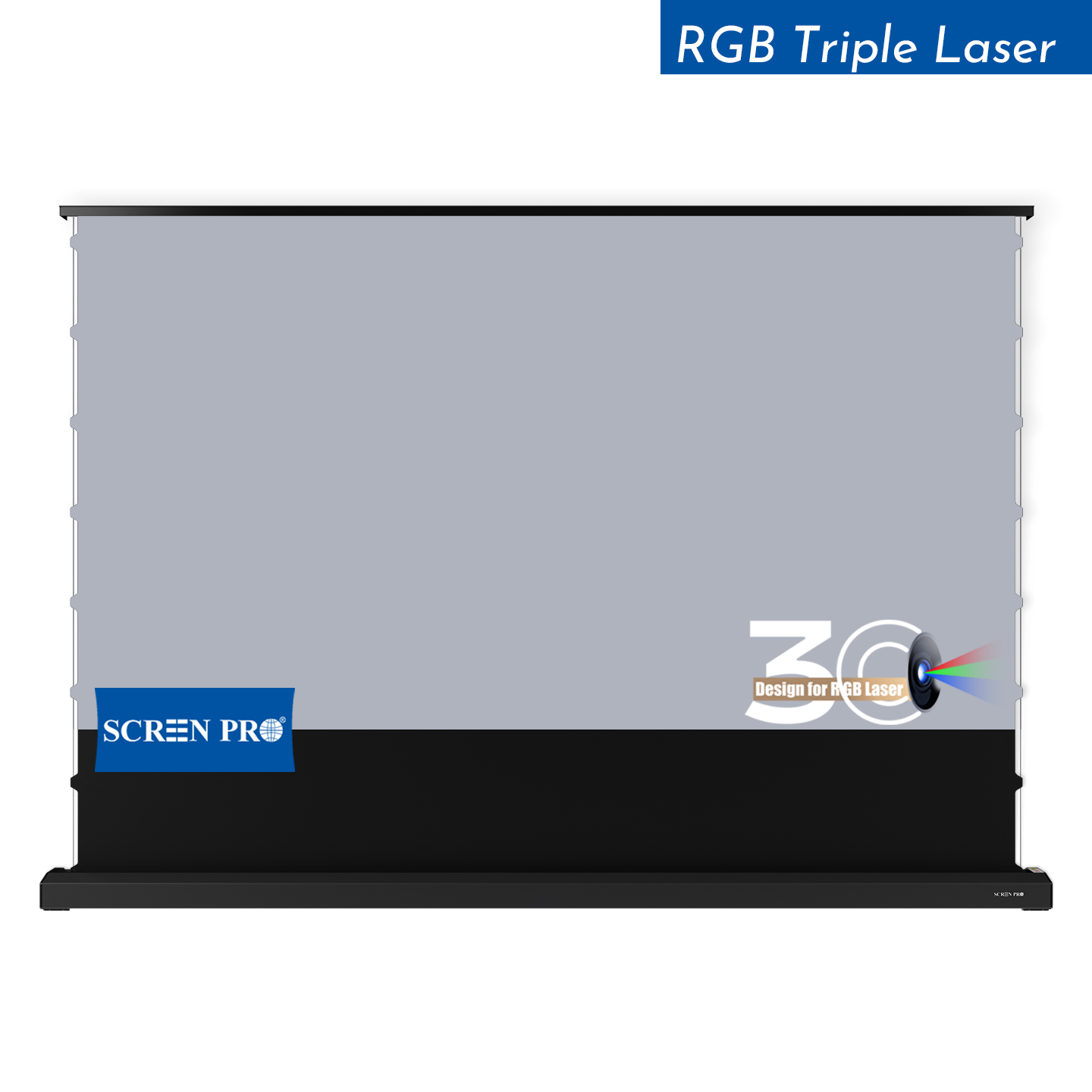
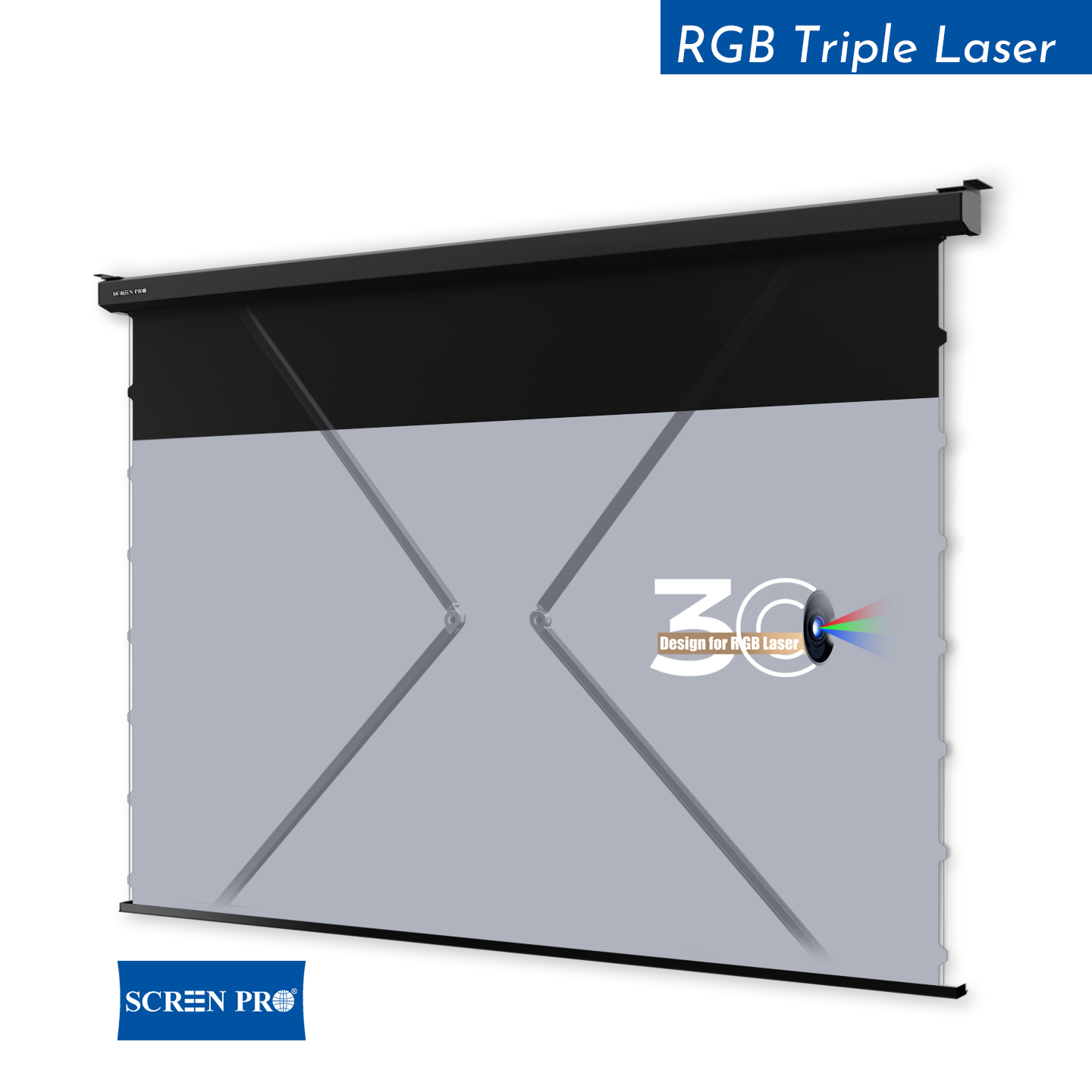
Floor-Rising UST ALR Screen
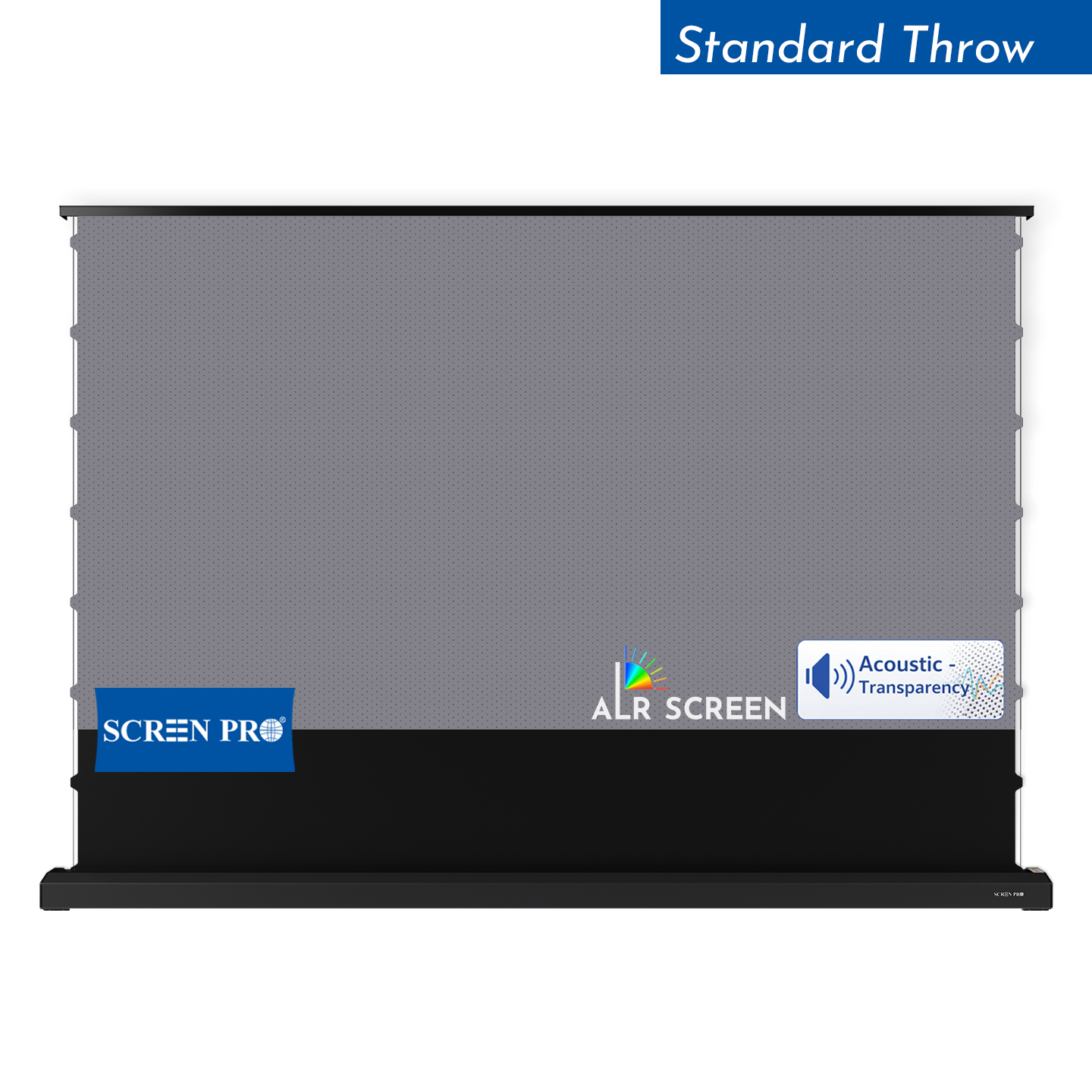
A strong choice when ceiling installation is difficult or when the screen needs to rise from a cabinet or media console.
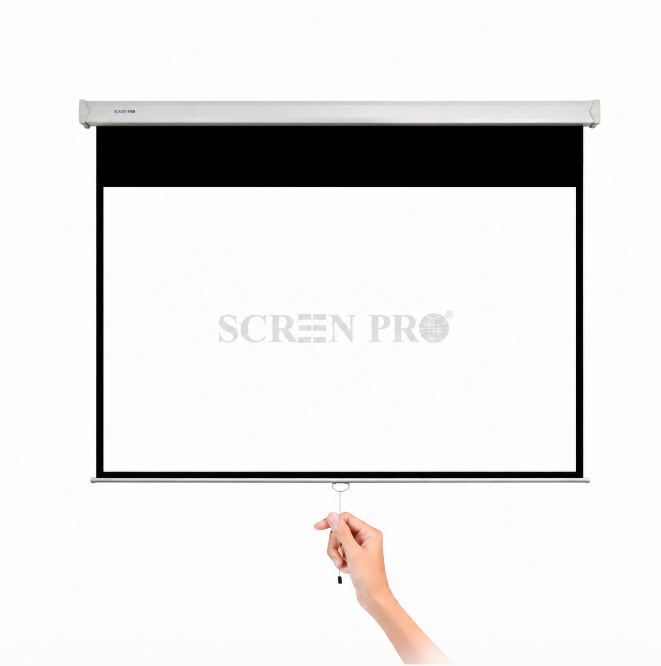
2. Best for Minimalist Interiors: Motorized Screens
In many living rooms, the biggest advantage of a motorized projector screen is not simply automation—it is the ability to make the screen disappear.
When retracted, the wall can remain visually clean or continue to be used for artwork, cabinetry or other interior elements. When needed, the screen lowers into position.
This makes motorized screens especially suitable for multipurpose spaces where the living room is used for entertainment, socializing and everyday family activities.
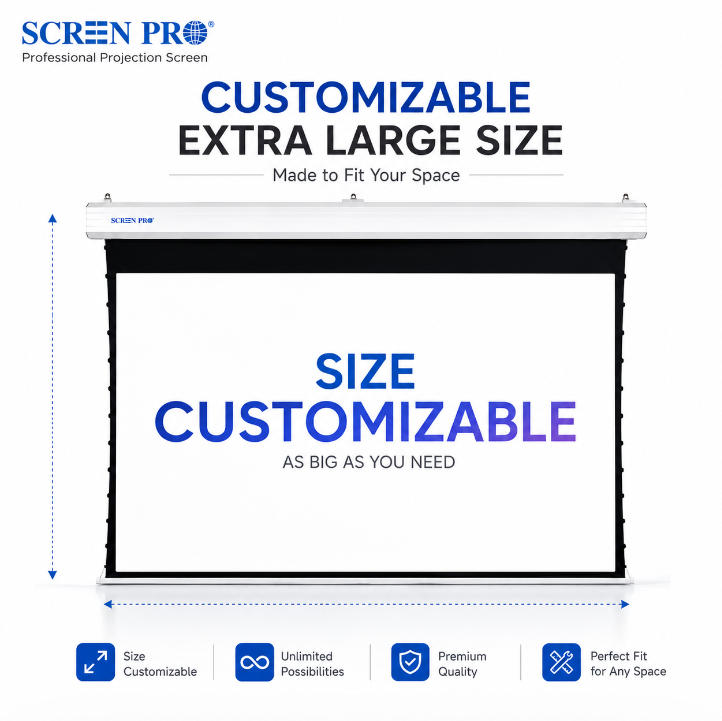
For premium installations, tab-tensioned motorized screens can help maintain a flatter viewing surface by applying lateral tension along the sides of the screen.
Learn more: What Is a Tab-Tensioned Projector Screen?
3. Best Without Ceiling Installation: Floor-Rising Screens
A floor-rising projector screen is one of the most practical solutions for a modern living room because it does not require a visible screen case above the wall.
The screen rises vertically from a low-profile housing or cabinet and retracts when not in use. This works particularly well with UST projectors because the projector and screen mechanism can be integrated into the same media furniture arrangement.
Floor-rising screens are particularly useful when:
- ceiling mounting is not possible;
- the wall needs to remain visually clean;
- the room uses a media cabinet below the screen;
- the property is rented, or installation changes should be minimized;
- a UST projector is installed close to the screen.
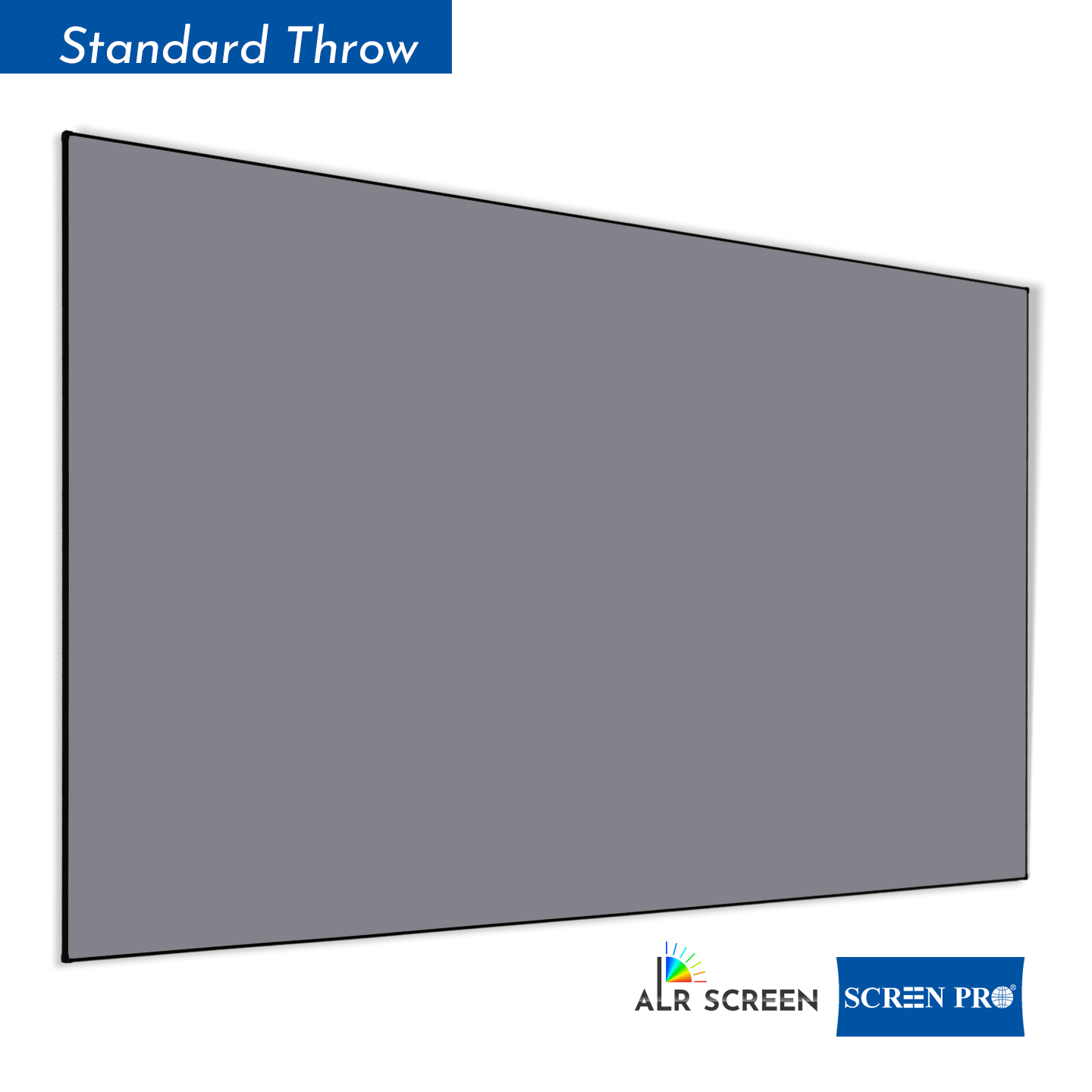
4. Best for Dedicated Movie Viewing: Fixed-Frame Screens
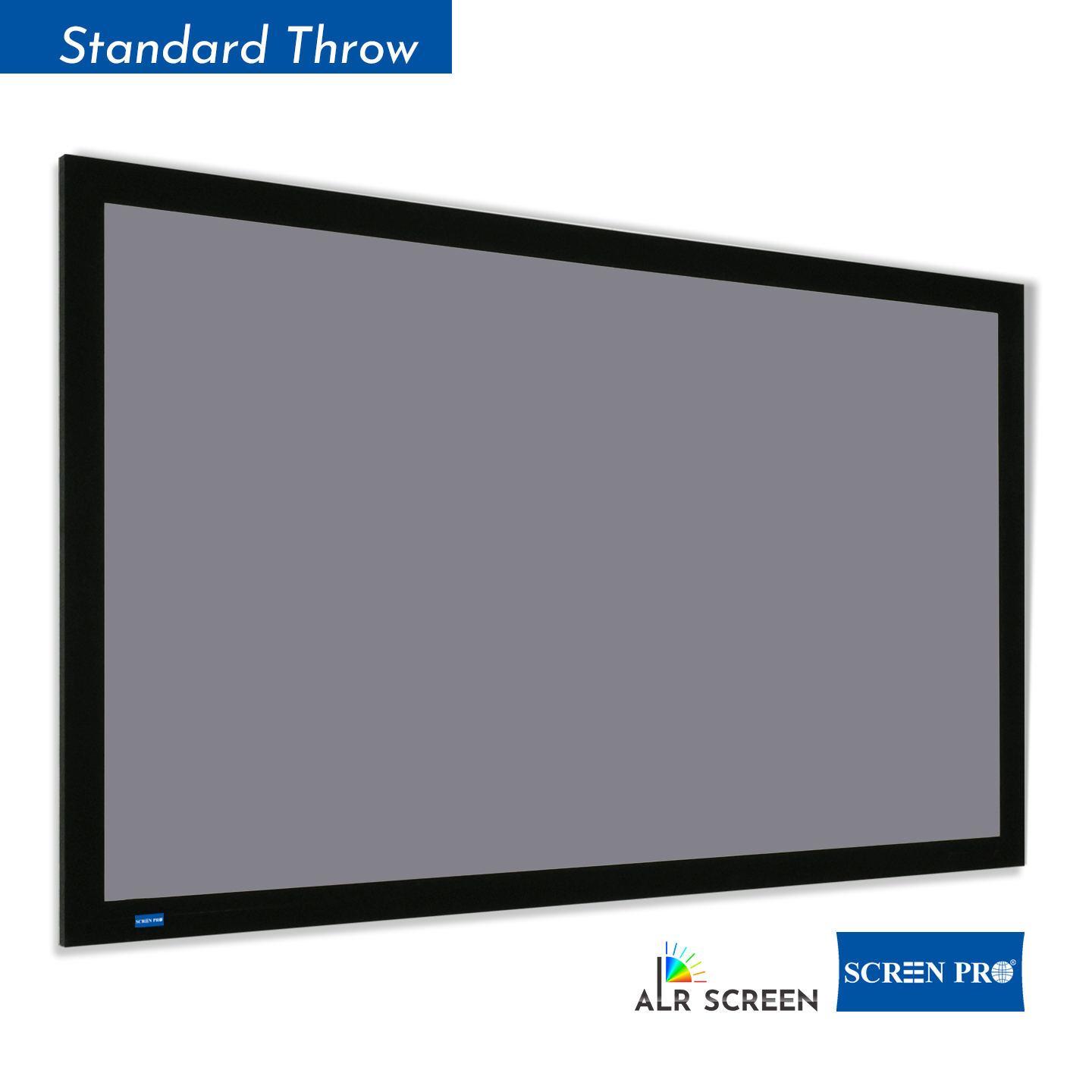
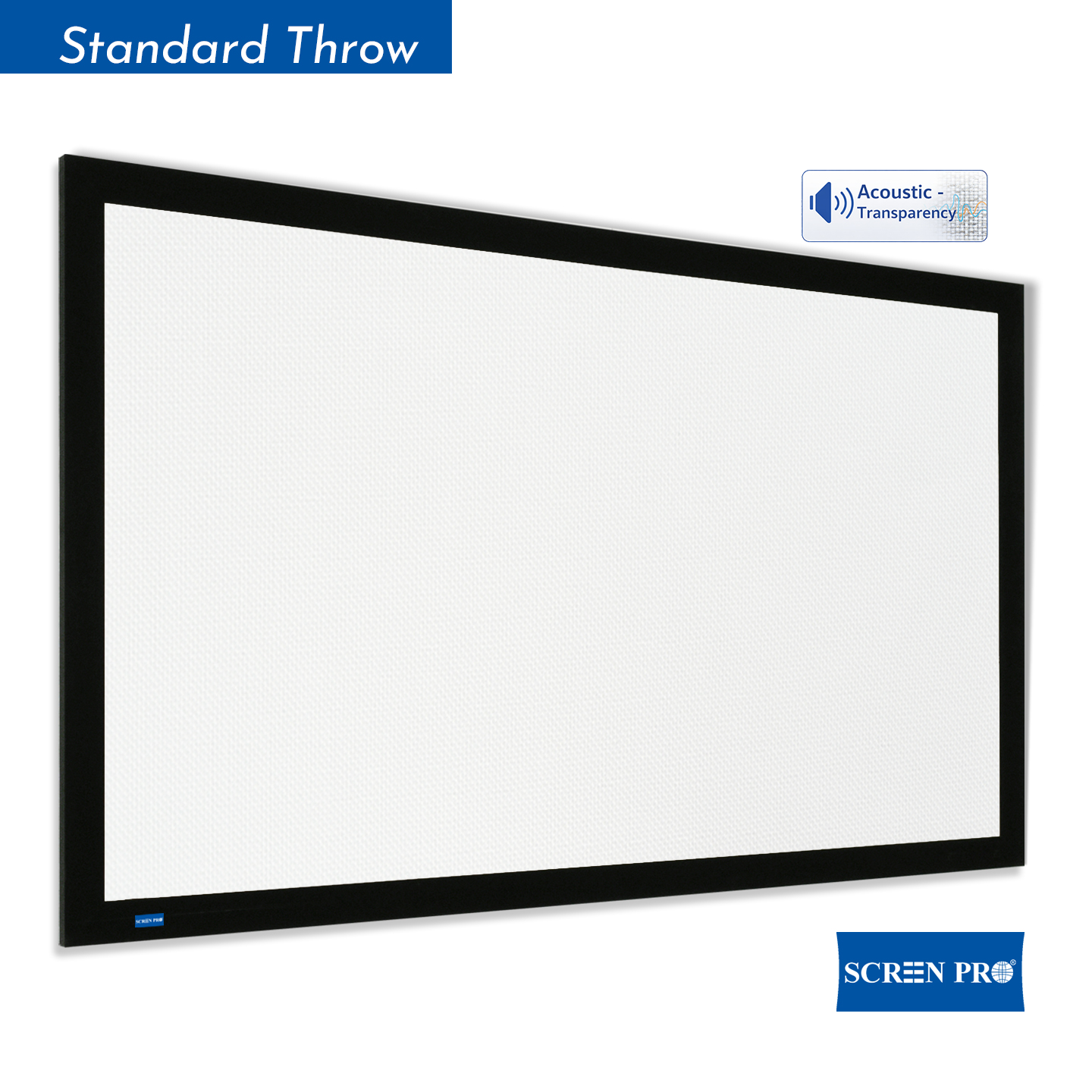
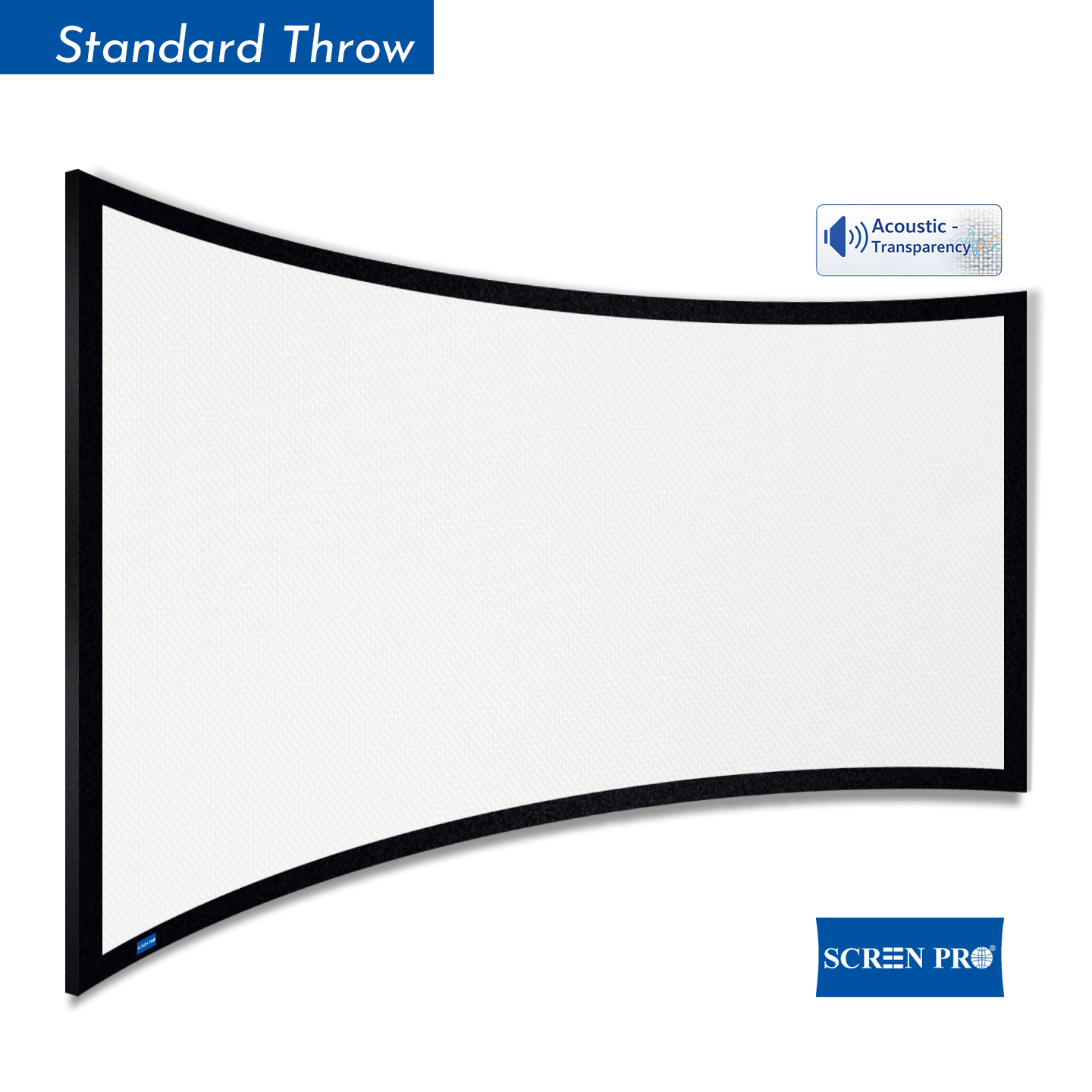
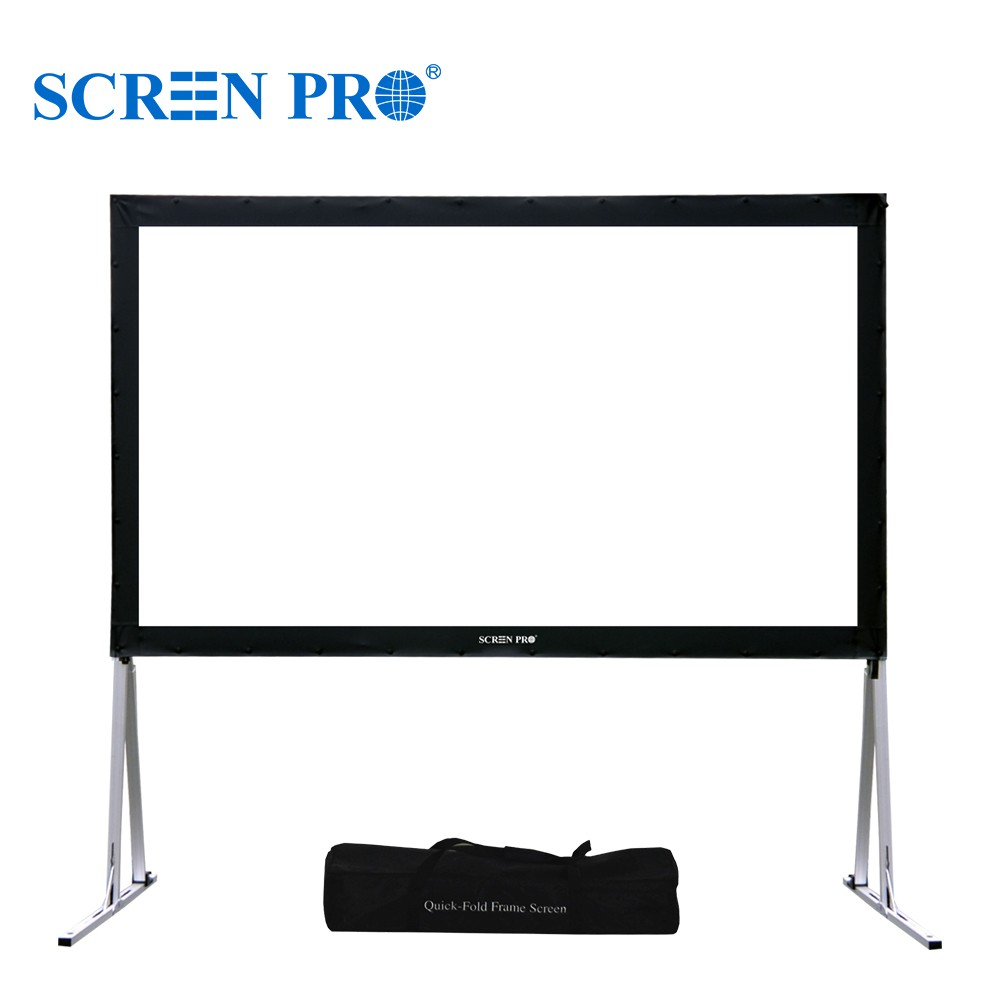
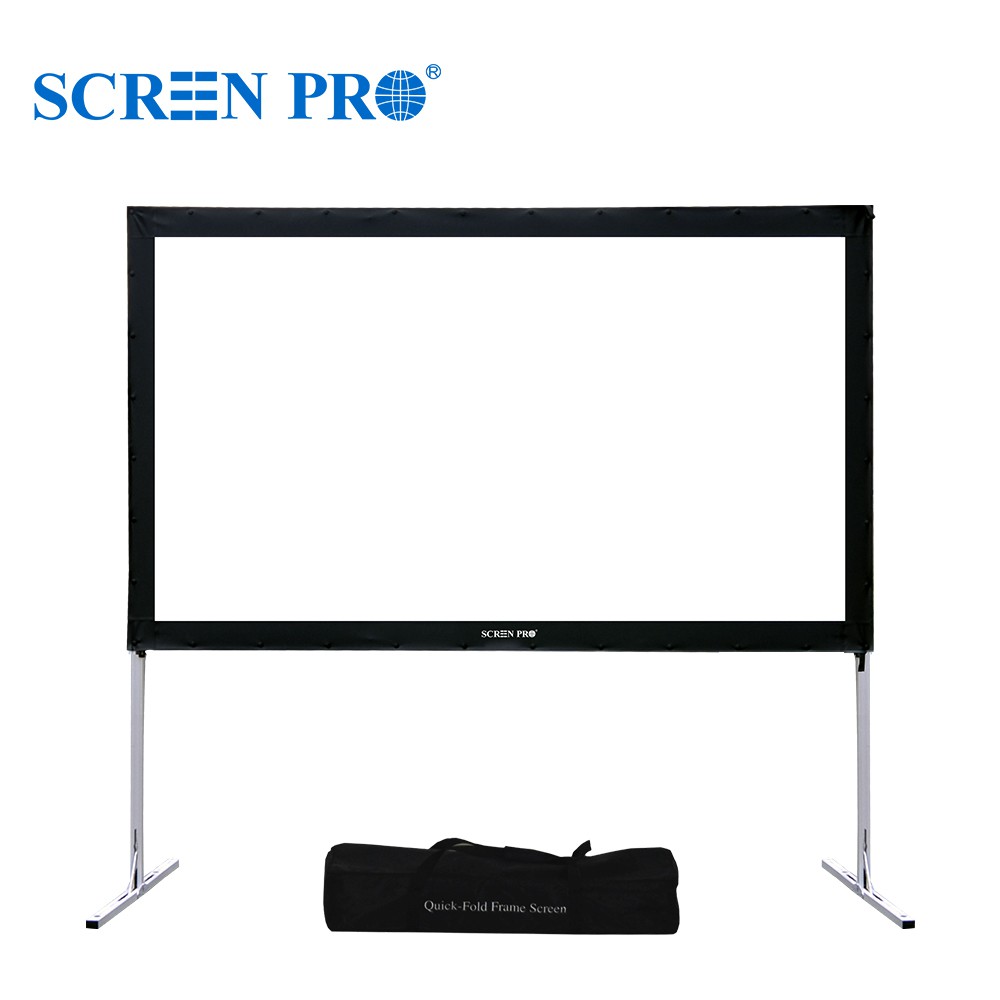
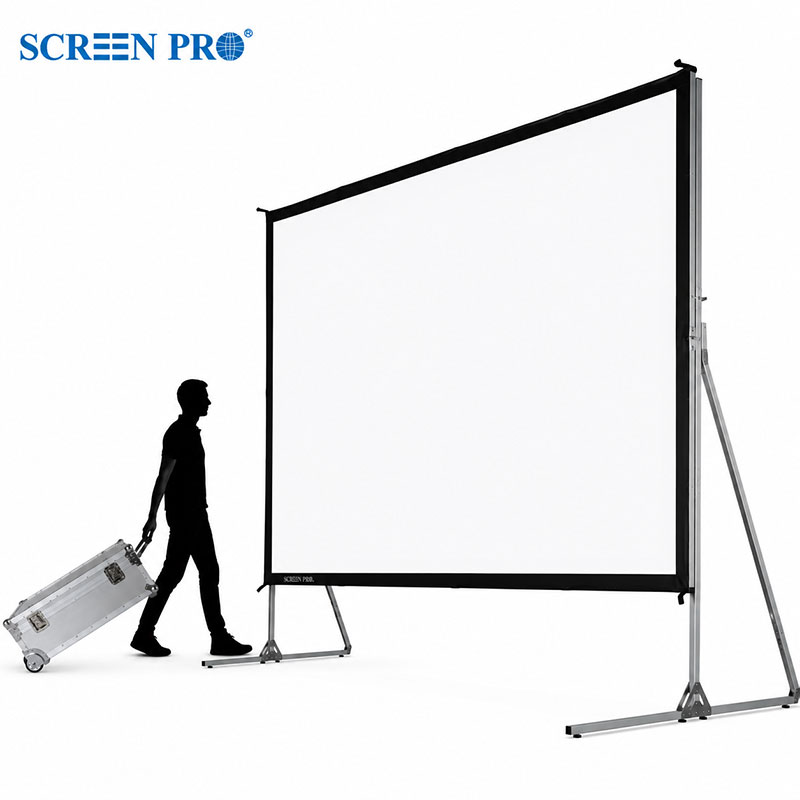
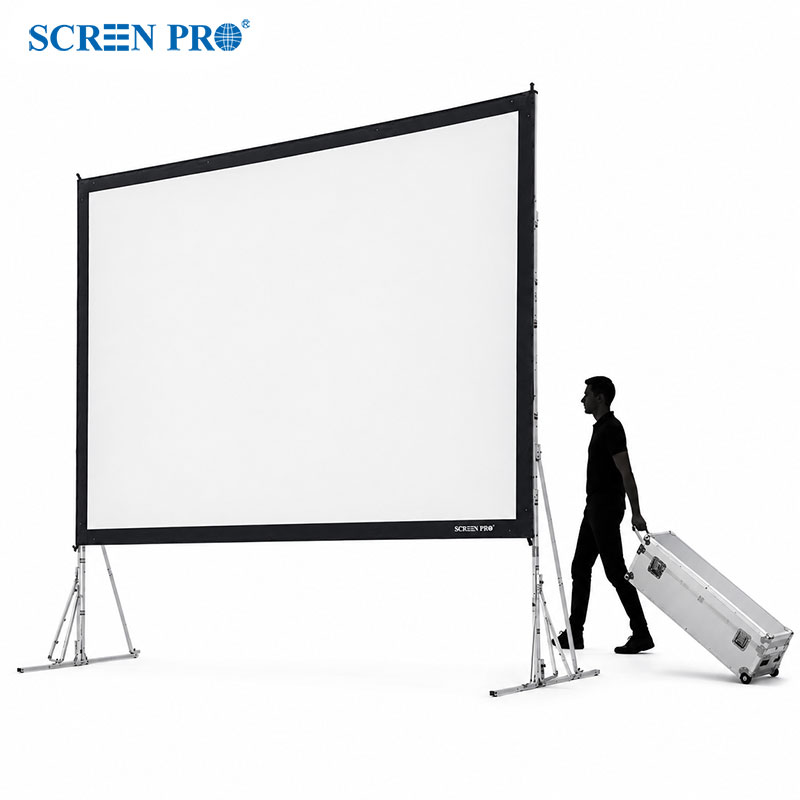
If the projector is the primary display in the living room and the screen does not need to disappear, a fixed-frame projection screen generally provides the simplest way to maintain a consistently flat screen surface.
Fixed-frame screens are especially suitable for larger media rooms, open-plan home cinemas and living rooms where a large projection image is part of the permanent design.
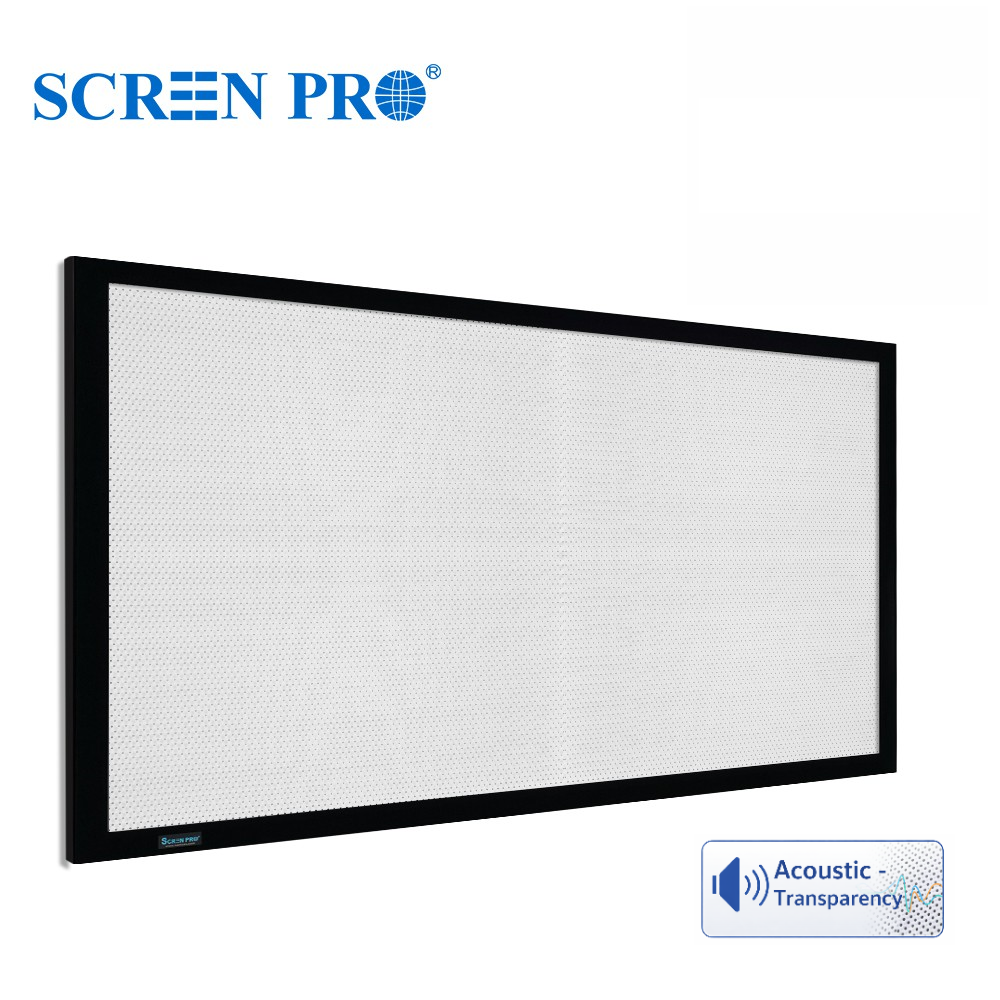
They can also support a wide range of screen materials, including matte white, ambient-light-rejecting and acoustically transparent fabrics.
Explore: SCREENPRO Fixed Frame Projection Screens →
UST Projector vs Standard Projector: Choose the Screen First
| Projector Setup | Typical Living-Room Screen | Best For |
|---|---|---|
| Ultra-Short Throw Projector | UST ALR / CLR-type directional screen | Bright living rooms and laser TV setups |
| Standard Long-Throw Projector | Matte white or long-throw ALR screen | Controlled-light rooms and ceiling-mounted projectors |
| Hidden Installation | Motorized or recessed screen | Minimalist interiors |
| No Ceiling Installation | Floor-rising screen | Media cabinets and flexible installations |
| Permanent Cinema Setup | Fixed-frame screen | Maximum flatness and dedicated viewing |
Do You Need an ALR Screen in a Living Room?
Not every living room needs an ALR screen.
If you mainly watch movies at night and can control the room lighting effectively, a quality matte white screen may provide excellent image uniformity and natural color. In these conditions, an ALR screen is not automatically better.
ALR becomes more useful when ambient light cannot be fully controlled. This is common in living rooms with large windows, open-plan architecture, or regular daytime viewing.
The correct ALR technology also depends on projector placement. A screen designed for an ultra-short-throw projector is fundamentally different from a long-throw ALR screen.
Read more: What Is an ALR Projector Screen and How Does It Work?
What Screen Gain Is Best for a Living Room?
Screen gain describes how much light a projection surface reflects in a particular direction compared with a standard reference surface.
For many conventional living-room projection systems, a screen around 1.0 gain offers a good balance between brightness, viewing angle, and image uniformity.
Lower-gain gray or ALR materials may sacrifice some peak brightness in exchange for improved perceived black levels and ambient-light control. Higher-gain surfaces can increase brightness but may have narrower viewing characteristics.
Learn more: Projector Screen Gain Explained
What Projector Screen Size Is Best for a Living Room?
The most common mistake is choosing the largest screen that physically fits the wall. Screen size should instead be based on viewing distance, projector capability and the amount of space available around the image.
For many living rooms, screen sizes between approximately 100 and 150 inches provide a cinematic experience without overwhelming the room. Larger sizes can work well in bigger spaces, but projector brightness and viewing distance become increasingly important.
| Screen Size | Typical Use | Living-Room Character |
|---|---|---|
| 92–100" | Compact apartments and smaller rooms | TV-like scale with projection flexibility |
| 110–120" | Typical modern living rooms | Strong cinematic feel without dominating the wall |
| 130–150" | Large living rooms and open-plan spaces | Immersive home-cinema experience |
| 150"+ | Large residential media spaces | Requires careful projector brightness and viewing-distance planning |
Should You Choose 16:9 or 2.35:1?
For a general-purpose living room, 16:9 remains the most practical screen format because it matches most television, streaming and gaming content.
A 2.35:1 or 2.40:1 cinemascope screen can create a more cinematic presentation for movie-focused systems, but it usually requires additional planning for different content aspect ratios.
If the room will be used for Netflix, sports, YouTube, gaming and movies, 16:9 is normally the safer choice.
Fixed Frame vs Motorized Screen for a Living Room
| Feature | Fixed Frame | Motorized |
|---|---|---|
| Screen flatness | Excellent | Excellent with tab tension |
| Hidden when not in use | No | Yes |
| Interior design flexibility | Moderate | High |
| Installation simplicity | Relatively simple | Requires power and mounting planning |
| Best use | Permanent cinema setup | Multipurpose living room |
Our Recommendation by Living-Room Type
Bright Modern Living Room
UST projector + directional UST ALR screen.
Best when daylight and interior lighting are regularly present.
Minimalist Living Room
Motorized or recessed projection screen.
Best when the screen should disappear into the architecture.
Living Room with Media Cabinet
Floor-rising screen.
Particularly effective for integrated UST projector furniture.
Dedicated Cinema-Style Living Room
Fixed-frame screen.
Best when maximum screen flatness matters more than concealment.
So, What Is the Best Projector Screen for a Living Room?
For most bright modern living rooms using an ultra-short-throw projector, a UST ALR screen is usually the most appropriate solution.
For conventional long-throw projectors, choose between matte white and long-throw ALR based on how much ambient light is present.
Then choose the screen mechanism according to the room: motorized for concealment, floor-rising for furniture integration, and fixed-frame for a permanent cinema installation.
Find the Right Projection Screen
Not sure which screen material, structure, or installation style works with your projector and room?
Find Your Screen Contact SCREENPROFrequently Asked Questions
What type of projector screen is best for a bright living room?
If you are using an ultra-short-throw projector, a directional UST ALR screen is usually the best option because it is designed to reject a portion of ambient light while directing projector light toward the viewer.
Is an ALR screen necessary for a living room?
No. If the room can be darkened effectively, a matte white screen can provide excellent results. ALR screens become more useful when ambient light is difficult to control.
Can I use a UST ALR screen with a normal projector?
Generally, no. UST ALR screens have a directional optical structure designed specifically for light arriving from the steep angle of an ultra-short-throw projector. Conventional projectors require a different type of screen.
Is a motorized projector screen good for a living room?
Yes. Motorized screens are especially suitable for multipurpose living rooms because they can retract when the projection system is not being used.
Is a floor-rising projector screen better than a ceiling screen?
It depends on the installation. Floor-rising screens are useful when ceiling installation is difficult or when the screen needs to integrate with a media cabinet. Ceiling-mounted screens are often more suitable when the screen casing can be integrated into the architecture.
What projector screen size is best for a living room?
Many living rooms work well with screens between 100 and 150 inches, but the correct size should be determined by viewing distance, projector brightness, projector throw ratio, and available wall space.