




Lenticular vs Fresnel ALR Screens: Which Is Better for UST Projectors?
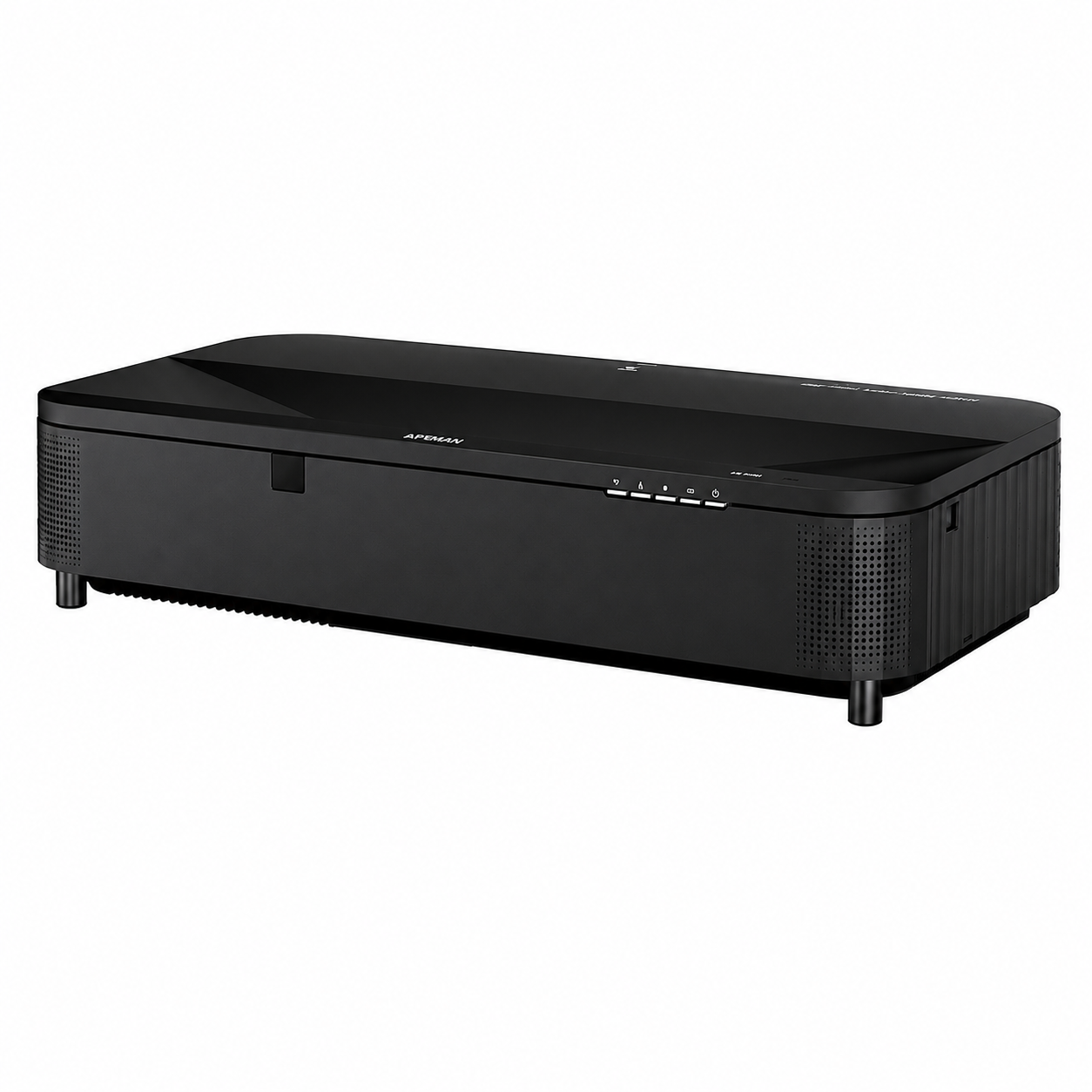
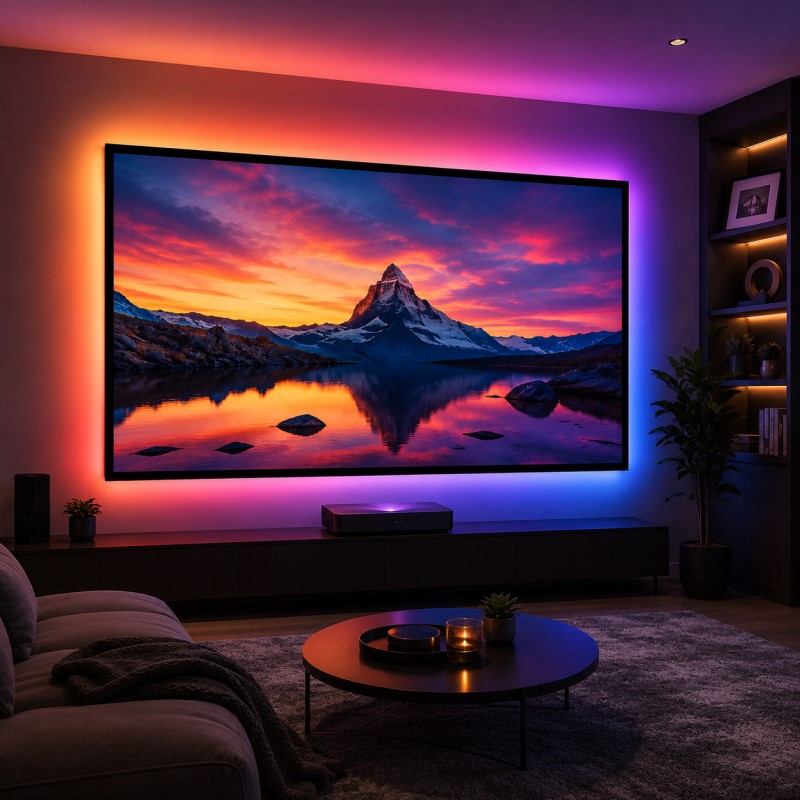
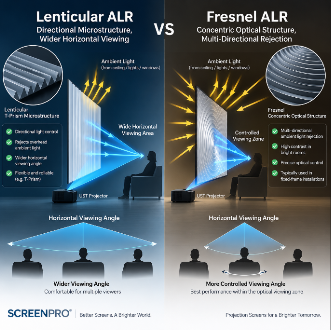
Lenticular and Fresnel are two of the most important optical ALR technologies used with ultra short throw projectors and Laser TVs. Both are designed to control ambient light, but their optical structures, viewing characteristics, screen formats, and installation possibilities are significantly different.
Lenticular vs Fresnel at a Glance
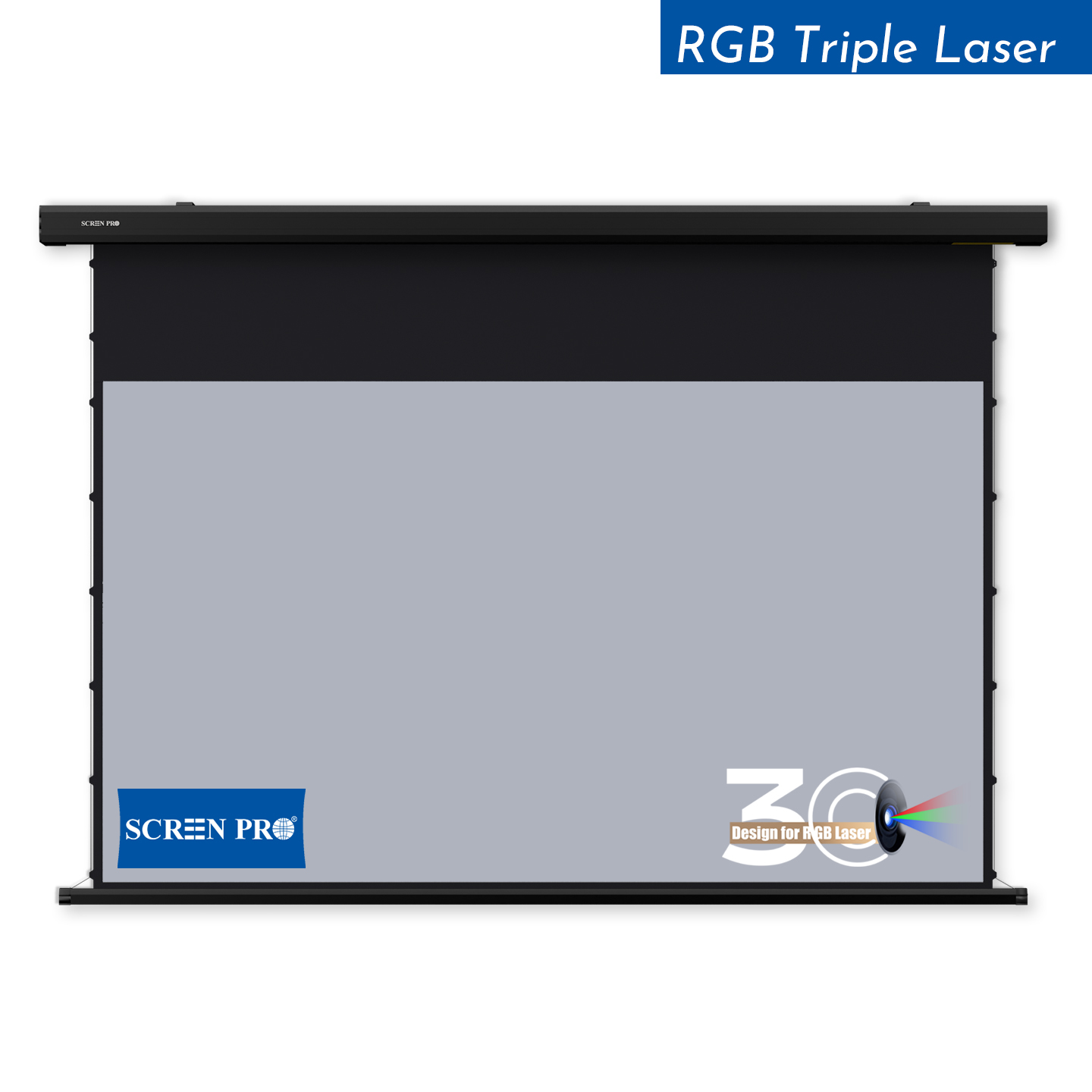
Lenticular ALR generally offers wider horizontal viewing and greater screen-format flexibility. Flexible lenticular technologies such as SCREENPRO T-Prism™ can also be used in rollable, tab-tensioned and floor-rising screen systems.
Fresnel ALR uses a more complex concentric optical structure and can provide very strong control of ambient light from multiple directions, making it particularly suitable for bright-room fixed installations.
What Is an ALR Screen?
ALR stands for Ambient Light Rejecting. Unlike a conventional matte white projection screen that reflects incoming light broadly, an optical ALR screen is designed to control where light is absorbed, rejected, and reflected.
This becomes especially important with ultra short throw projectors because UST projectors send light toward the screen from a steep angle. A properly designed UST ALR screen can use this predictable projection geometry to separate useful projector light from unwanted room light.
The goal of ALR is not simply to make an image brighter. Effective optical screen design helps preserve perceived contrast, black level, color performance, and image visibility when ambient light is present.
What Is a Lenticular ALR Screen?
A Lenticular ALR screen uses a repeated directional microstructure across the projection surface.
Instead of scattering incoming light in all directions, the microscopic optical structure is engineered to respond differently depending on the direction from which light arrives.
In a typical UST installation, projector light approaches the screen from below at a steep angle. The lenticular structure directs useful projected light toward the viewing area while reducing unwanted ambient light arriving from other directions.
In simplified terms, Lenticular ALR creates a controlled optical path between Projector → Screen → Viewer, rather than allowing all incoming light to scatter broadly throughout the room.
SCREENPRO T-Prism™ Lenticular ALR Technology
SCREENPRO T-Prism™ is a flexible, rollable Lenticular ALR technology developed for short-throw and ultra short throw projection.
Its directional T-Prism optical microstructure helps control projected and ambient light while preserving image brightness, color saturation, perceived contrast, and image detail.
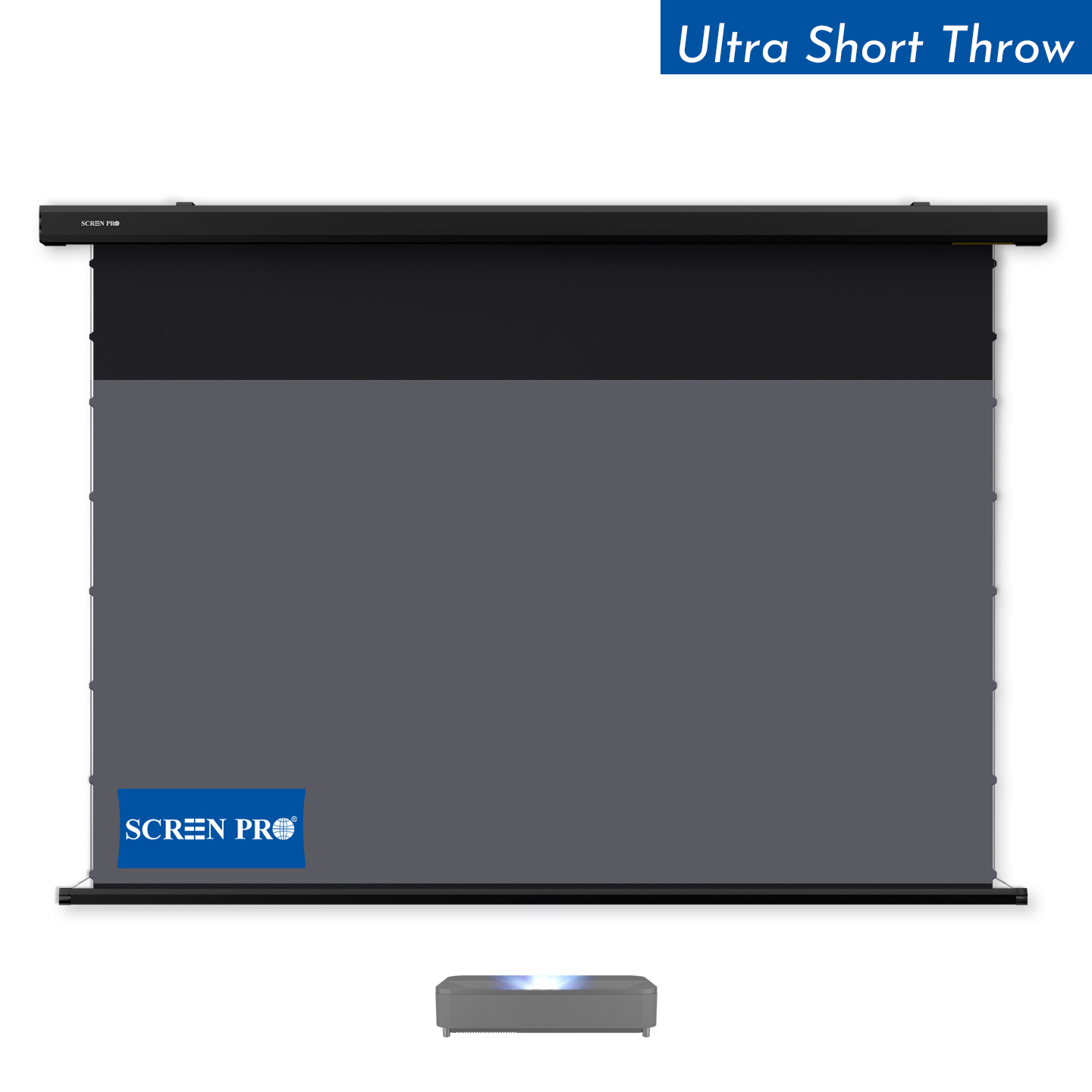
An important difference between T-Prism and many rigid optical screen constructions is its mechanical flexibility. The optical material can be rolled, allowing Lenticular ALR technology to be used in retractable projection systems rather than being limited to permanent fixed-frame screens.
Rollable Lenticular ALR
T-Prism uses a flexible optical structure that can be rolled and integrated into retractable screen mechanisms.
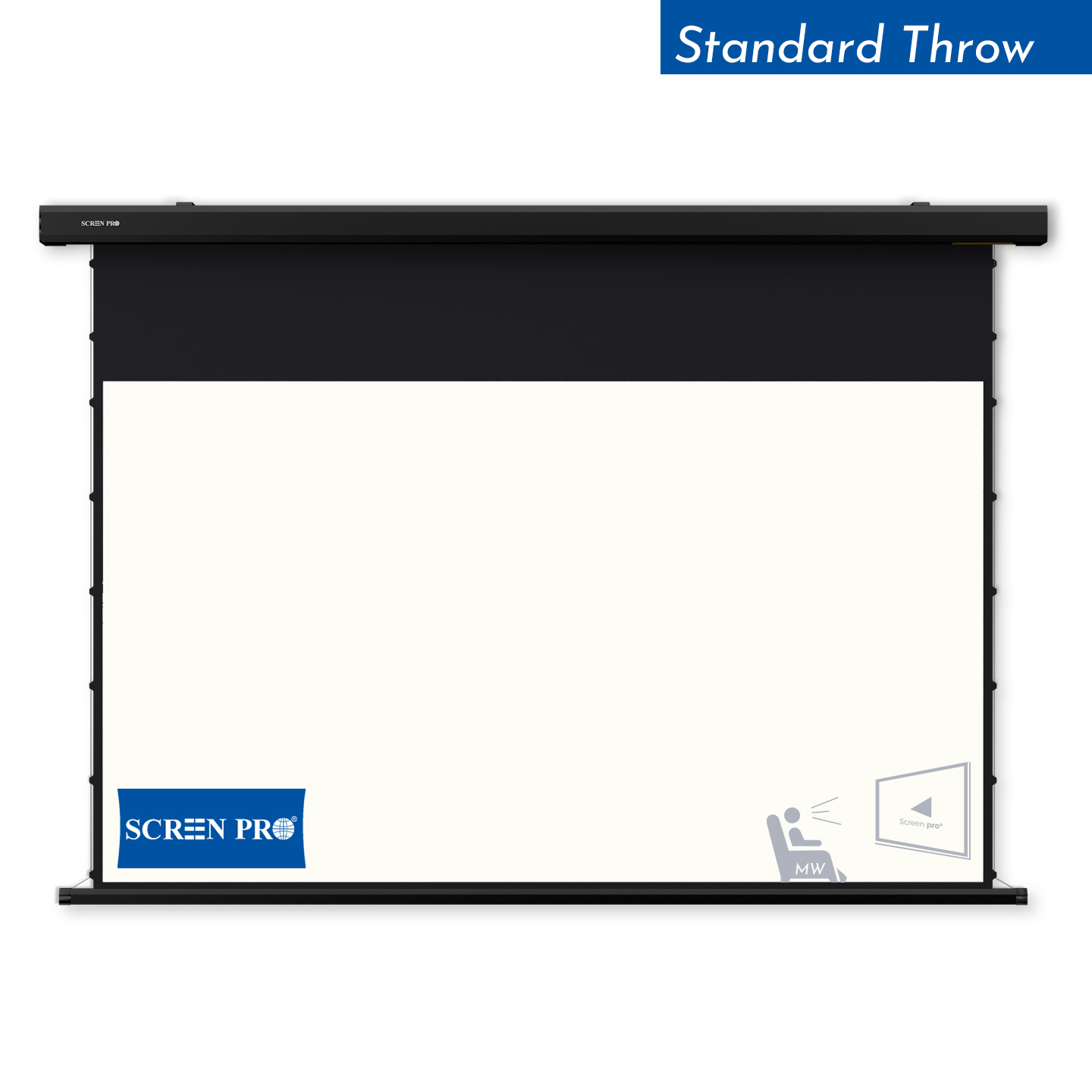
Tab-Tensioned Motorized
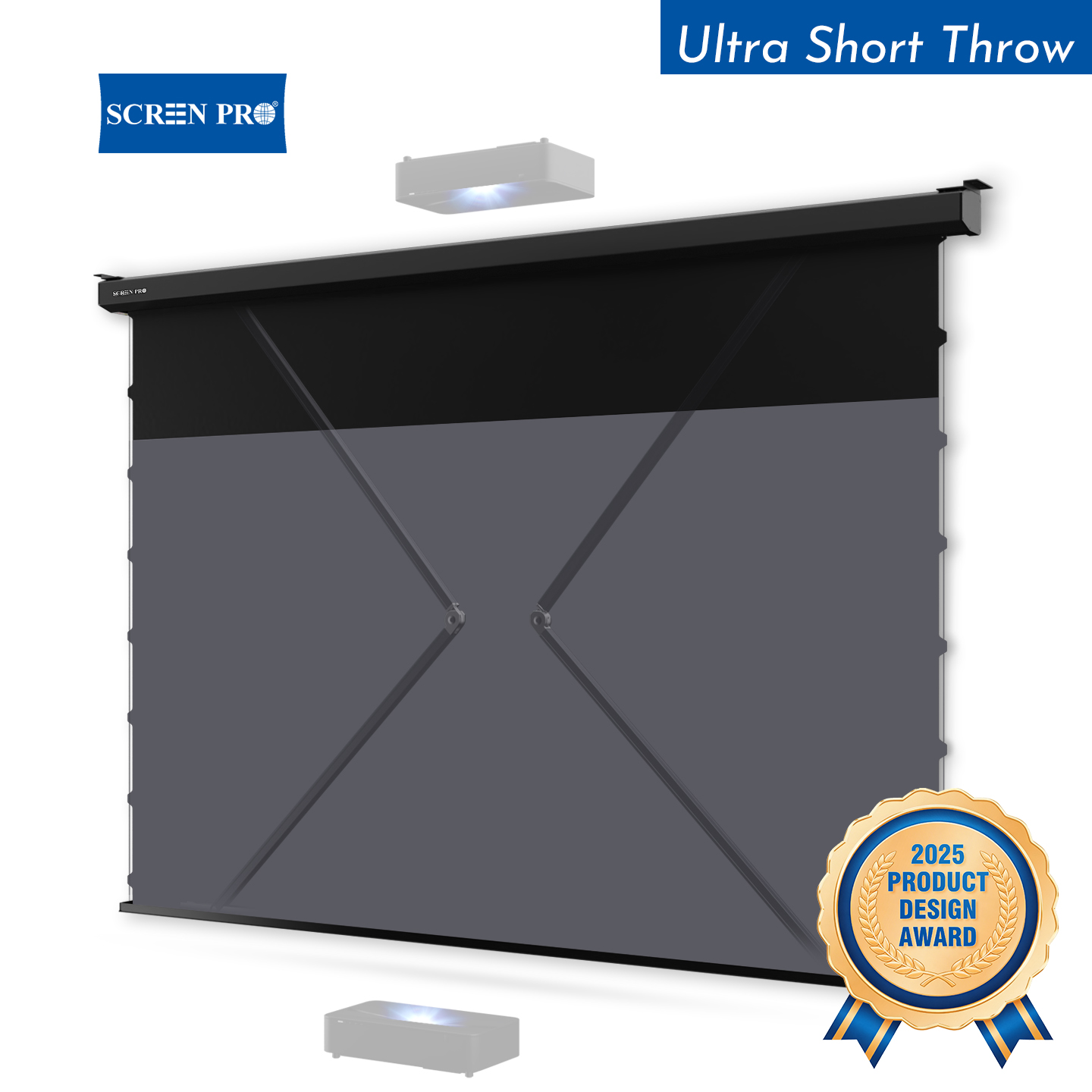
It can be used with tab-tensioned motorized UST ALR screens where lateral tension helps maintain screen flatness.
Multiple Screen Formats
The material can be used in motorized, floor-rising, in-ceiling, and fixed-frame ALR screen configurations.
Reversible Orientation
T-Prism can be vertically reversed during installation according to projector position and incoming projection-light direction.
What Does Reversible Orientation Mean?
T-Prism allows the optical material to be installed in the appropriate top-to-bottom orientation according to projector position.
This gives installers greater flexibility when matching the directional optical structure to the incoming projection light.
Important: Reversible orientation does not mean both sides of the material are projection surfaces. The projection side remains unchanged. Only the vertical orientation of the optical material is reversed.
What Is a Fresnel ALR Screen?
A Fresnel ALR screen uses a different optical structure. Instead of repeated linear microstructures, Fresnel screens typically use precisely arranged concentric or arc-shaped structures designed around the projector's light path.
The optical pattern controls light according to both incoming angle and position across the projection surface.
With a compatible UST projector, useful projector light is redirected toward the viewing zone while a significant amount of ambient light arriving from other directions can be rejected.
This ability to control light from multiple directions makes Fresnel technology particularly suitable for bright-room Laser TV installations where maximum ambient-light rejection is a high priority.
Lenticular vs Fresnel ALR: Key Differences
| Feature | Lenticular ALR | Fresnel ALR |
|---|---|---|
| Optical Structure | Repeated directional microstructure | Concentric or arc-shaped optical structure |
| Typical Projector | UST / Laser TV | UST / Laser TV |
| Ambient Light Control | Strong directional rejection | Very strong multi-directional rejection |
| Horizontal Viewing | Generally wider | Generally more controlled |
| Optical Direction | Directional | Highly directional |
| Rollable | Possible with flexible materials such as T-Prism | More limited depending on construction |
| Motorized Screen | Possible with suitable flexible material | Less common |
| Floor Rising | Possible | More limited |
| Fixed Frame | Yes | Yes |
| Large Sizes | Generally easier with flexible rollable structures | More dependent on Fresnel manufacturing limits |
| Installation Flexibility | High | More dependent on fixed optical geometry |
1. Ambient Light Rejection
If maximum ambient-light rejection is the primary objective, Fresnel ALR can have an advantage.
Its optical geometry can control unwanted light arriving from multiple directions while directing projector light toward a defined viewing zone.
Lenticular ALR screens can also provide strong ambient-light rejection, but their performance is more closely related to the direction of both projection light and ambient light.
Maximum ALR Priority
Fresnel can be particularly effective when a permanent UST installation requires aggressive ambient-light control.
ALR + Viewing Flexibility
Lenticular can provide a strong balance between ambient-light rejection, wider horizontal viewing, and flexible screen formats.
2. Viewing Angle
Because Fresnel structures control reflected light very precisely, their strongest brightness and contrast performance is normally concentrated within a more defined viewing zone.
Lenticular structures can generally provide a wider horizontal viewing area, making them attractive for living rooms and home theaters where multiple viewers sit across a wider seating arrangement.
This difference is important because a screen should be selected not only for its ALR specification, but also for the actual seating layout of the room.
3. Rollable vs Rigid Optical Screens
This is one of the most important practical differences between the technologies.
Many Fresnel optical screens are commonly used in rigid or semi-rigid fixed-frame formats.
Flexible Lenticular materials can provide much greater mechanical freedom.
With SCREENPRO T-Prism™, it becomes possible to combine Lenticular ALR + UST Projection + Tab Tensioning + Motorized Retraction in one screen system.
For rooms where the projection screen needs to disappear when it is not being used, this can be a significant architectural advantage.
4. Why Tab Tensioning Matters for UST
A rollable UST screen must remain sufficiently flat when deployed.
This is especially important because UST projectors illuminate the screen from a steep angle. Even relatively small waves or surface distortions may become visible in the projected image.
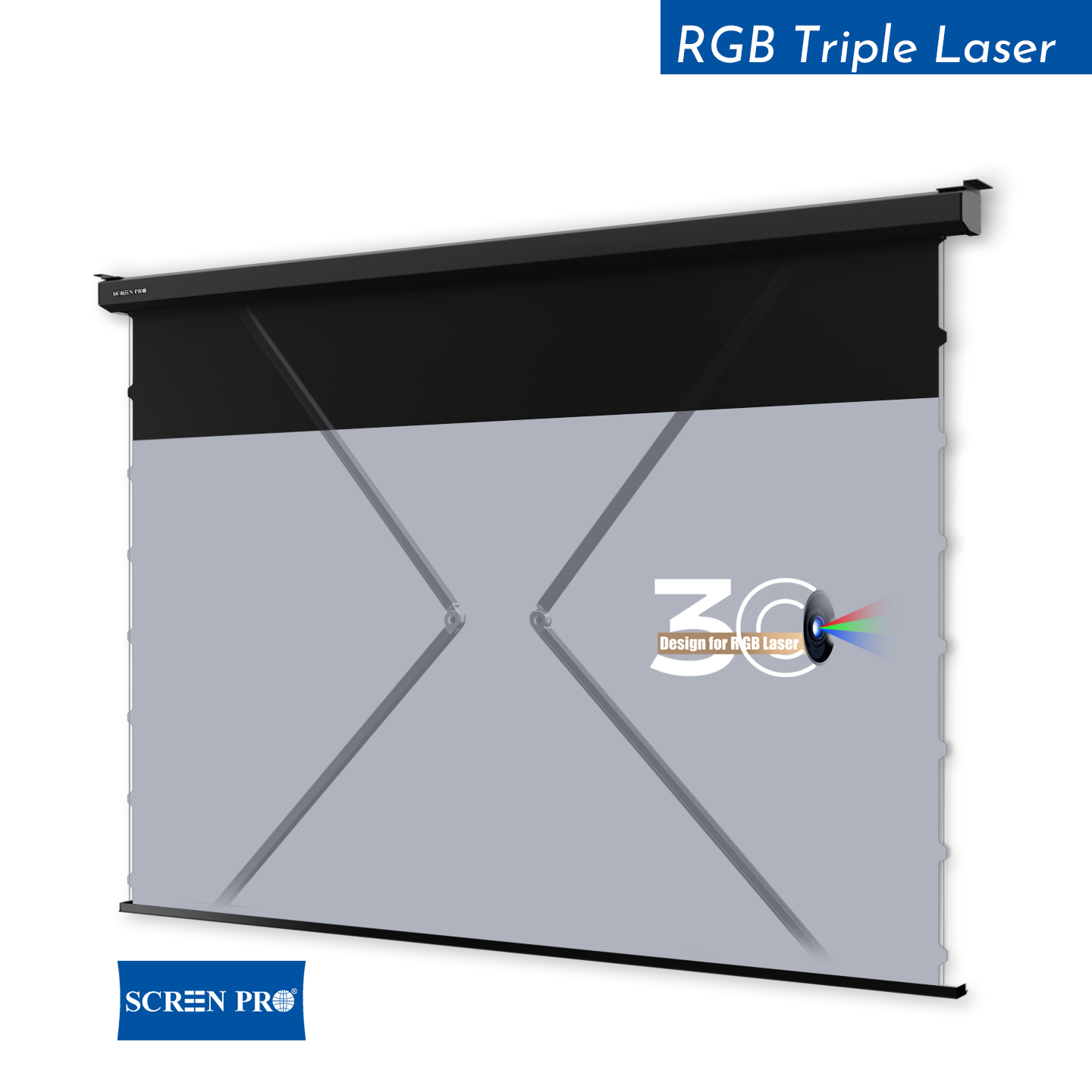
A tab-tensioning system applies lateral tension to the screen surface to improve flatness and stability.
This is why flexible optical materials such as T-Prism are typically paired with a tensioning system when used in a motorized UST ALR screen .
5. Installation Direction
Both Lenticular and Fresnel ALR screens are directional optical materials.
Correct installation orientation therefore matters.
A conventional matte projection screen may perform similarly when rotated 180 degrees. A directional ALR material may not perform correctly if its optical structure is oriented incorrectly relative to the projector.
T-Prism provides additional installation flexibility because its vertical orientation can be reversed according to projector position and incoming projection-light direction.
6. Screen Size
Manufacturing large optical ALR screens is more complex than manufacturing conventional matte projection surfaces.
Fresnel structures need to maintain precise optical geometry across the complete projection area, which can create greater manufacturing constraints at larger sizes.
Flexible Lenticular structures can be more adaptable depending on material construction and production process.
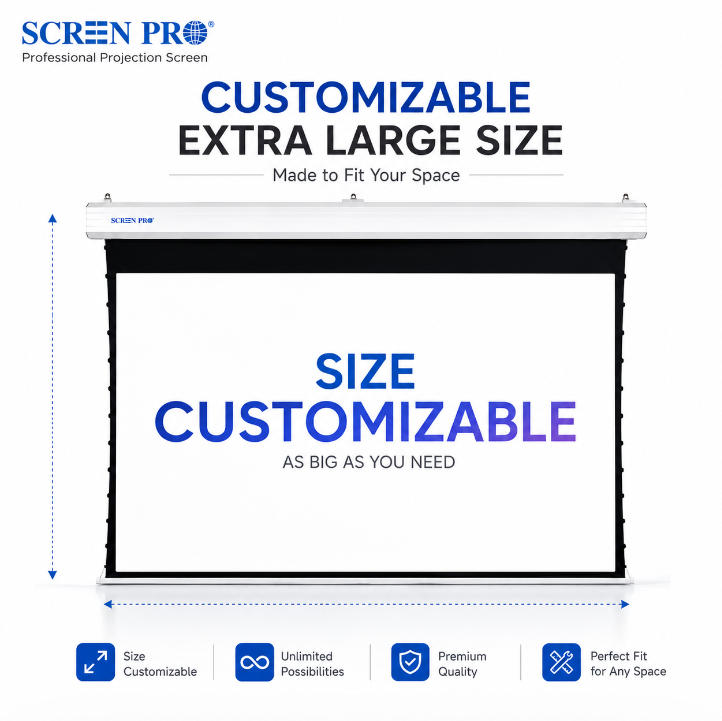
SCREENPRO SP Fabric using T-Prism optical structure supports seamless 16:9 screens up to 150 inches, subject to material-width limitations.
7. Which Is Better for a Bright Living Room?
For a permanently installed Laser TV in a very bright room where maximum ambient-light rejection is the highest priority, Fresnel ALR may be the stronger choice.
However, Lenticular ALR may be more appropriate when the installation requires wider seating, screen retraction, ceiling concealment, floor-rising operation, or greater screen-format flexibility.
The decision should therefore be based on the complete room rather than one ALR percentage alone.
8. Which Is Better for a Motorized UST Screen?
For retractable UST installations, flexible Lenticular technology offers a major practical advantage.
A rollable Lenticular ALR material can be integrated with tab tensioning and a motorized screen mechanism, allowing the projection surface to retract completely when not in use.
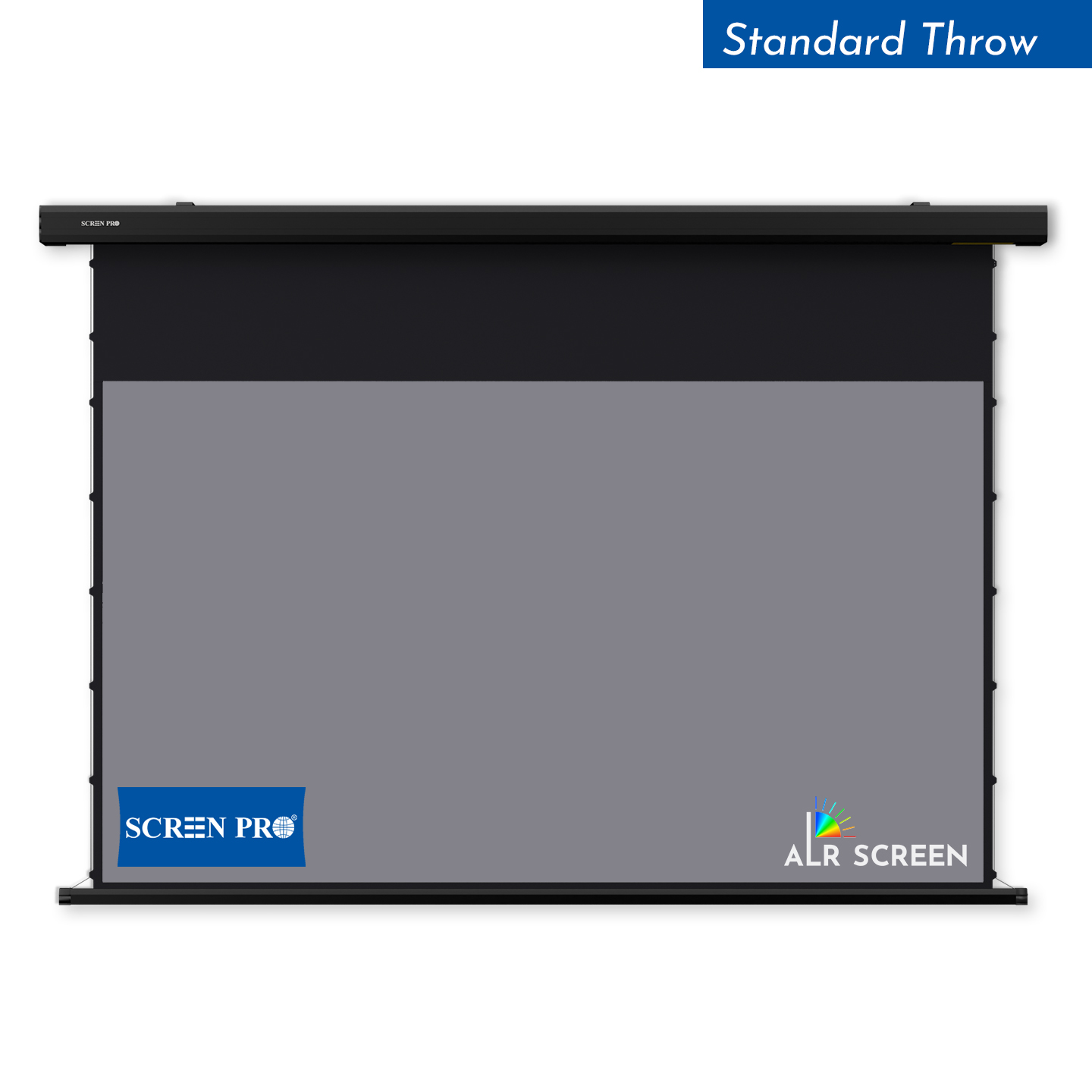
SCREENPRO offers several solutions for this type of installation, including the AJ Motorized UST ALR Screen and the AW ZeroWave ALR Screen .
For multipurpose living rooms, premium residential AV installations, and concealed projection systems, a retractable ALR screen can provide a much cleaner architectural result than leaving a large fixed panel permanently visible.
9. What About Floor-Rising and In-Ceiling UST Screens?
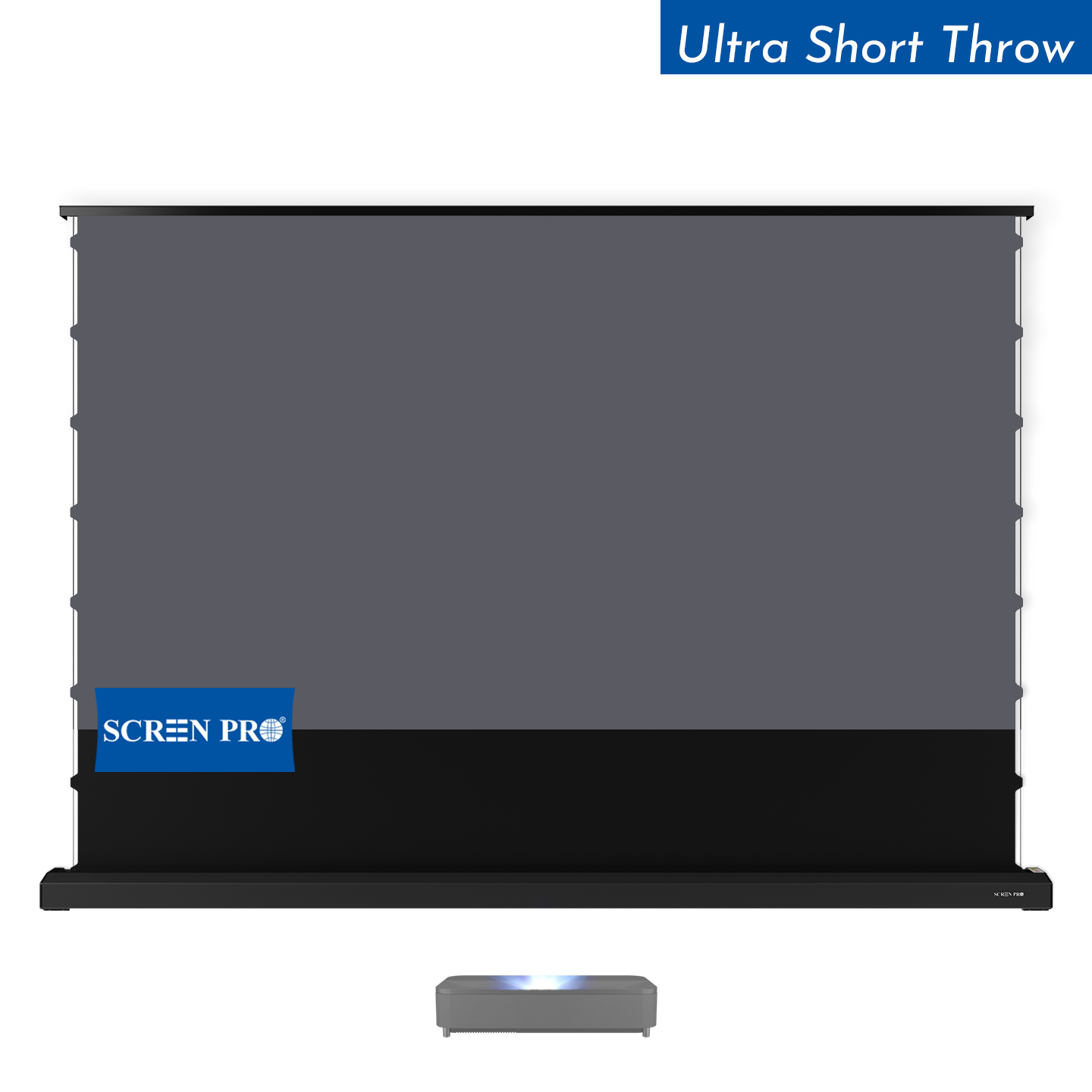
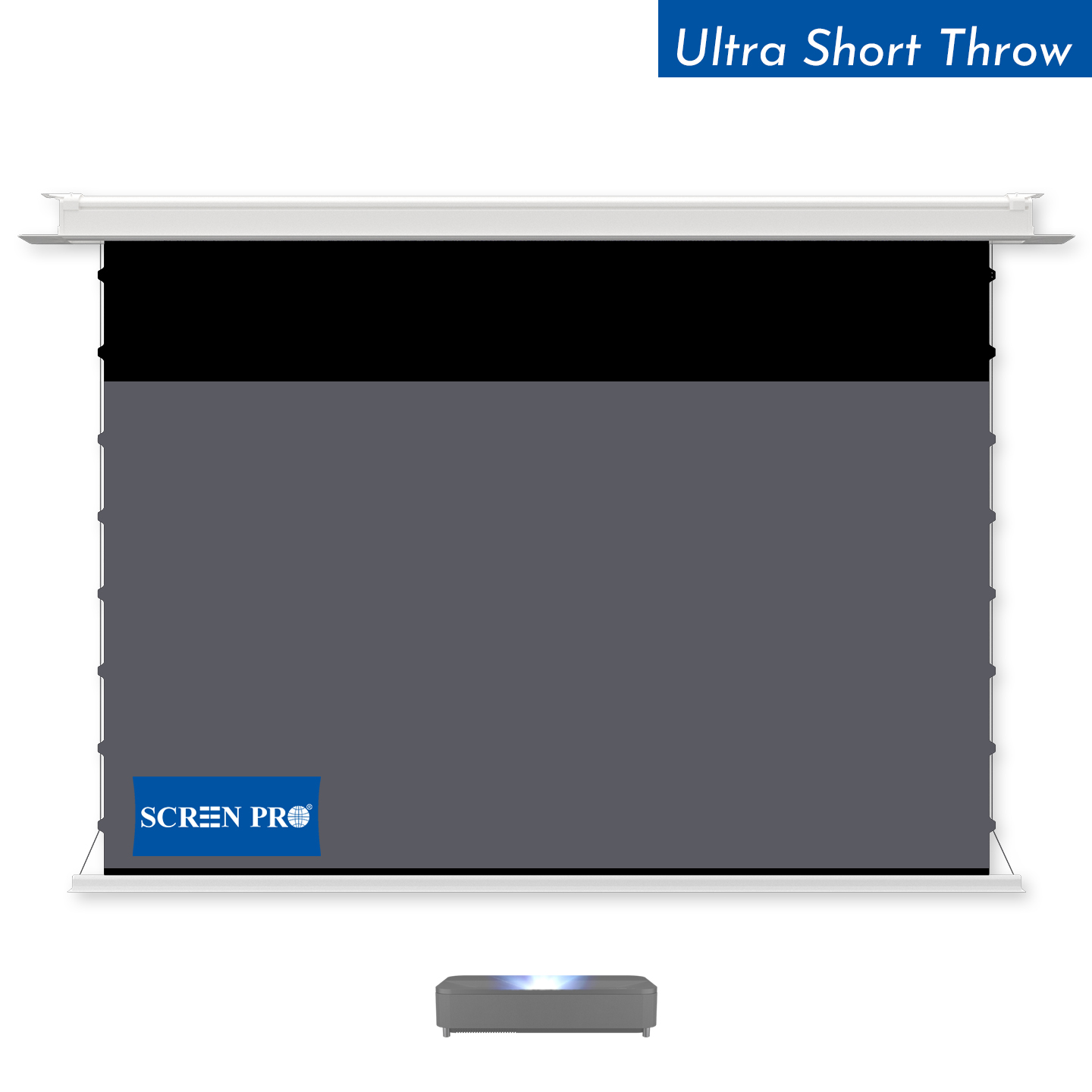
The mechanical flexibility of rollable Lenticular material also allows optical ALR technology to be used in installation formats beyond standard wall-mounted motorized screens.
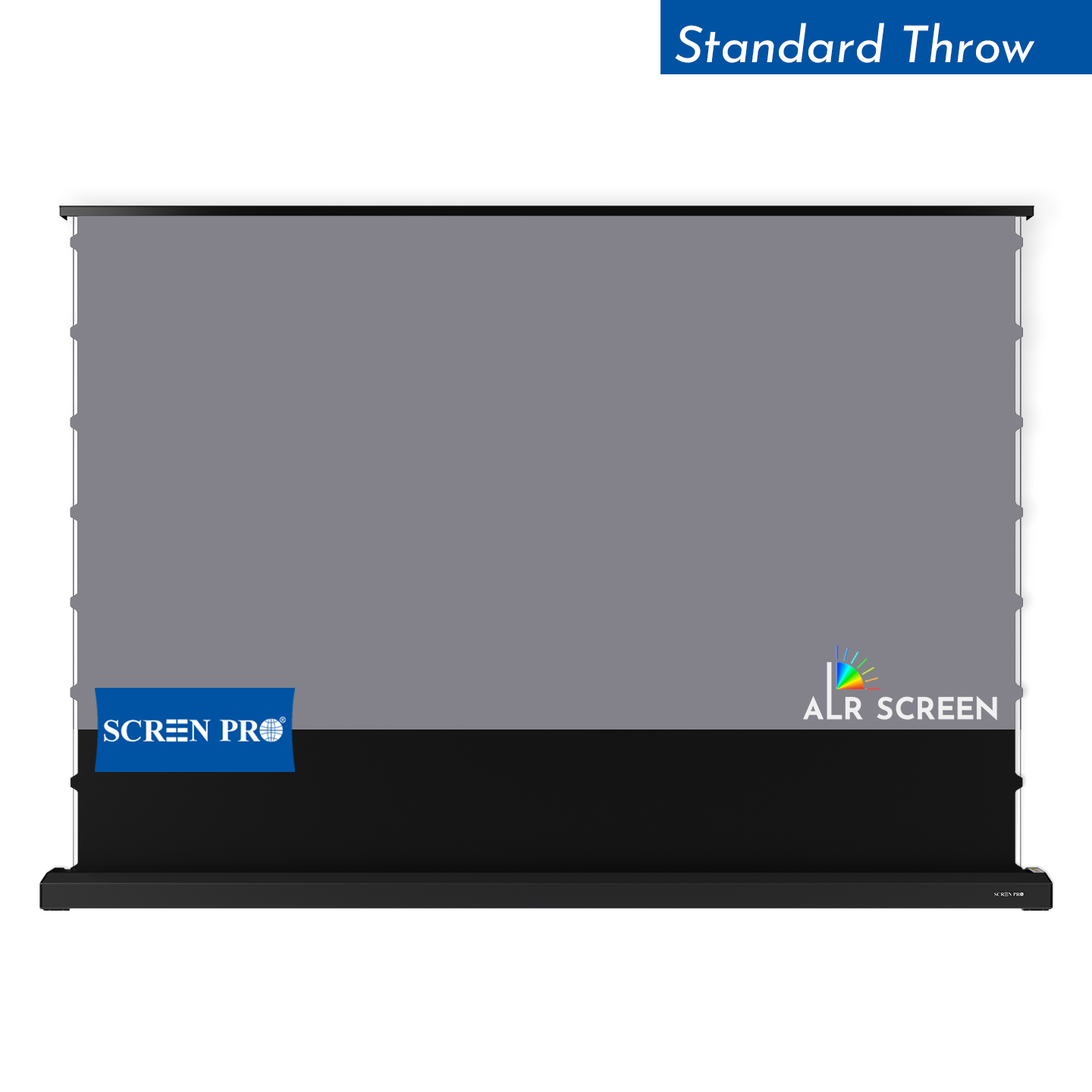
Floor-Rising UST ALR
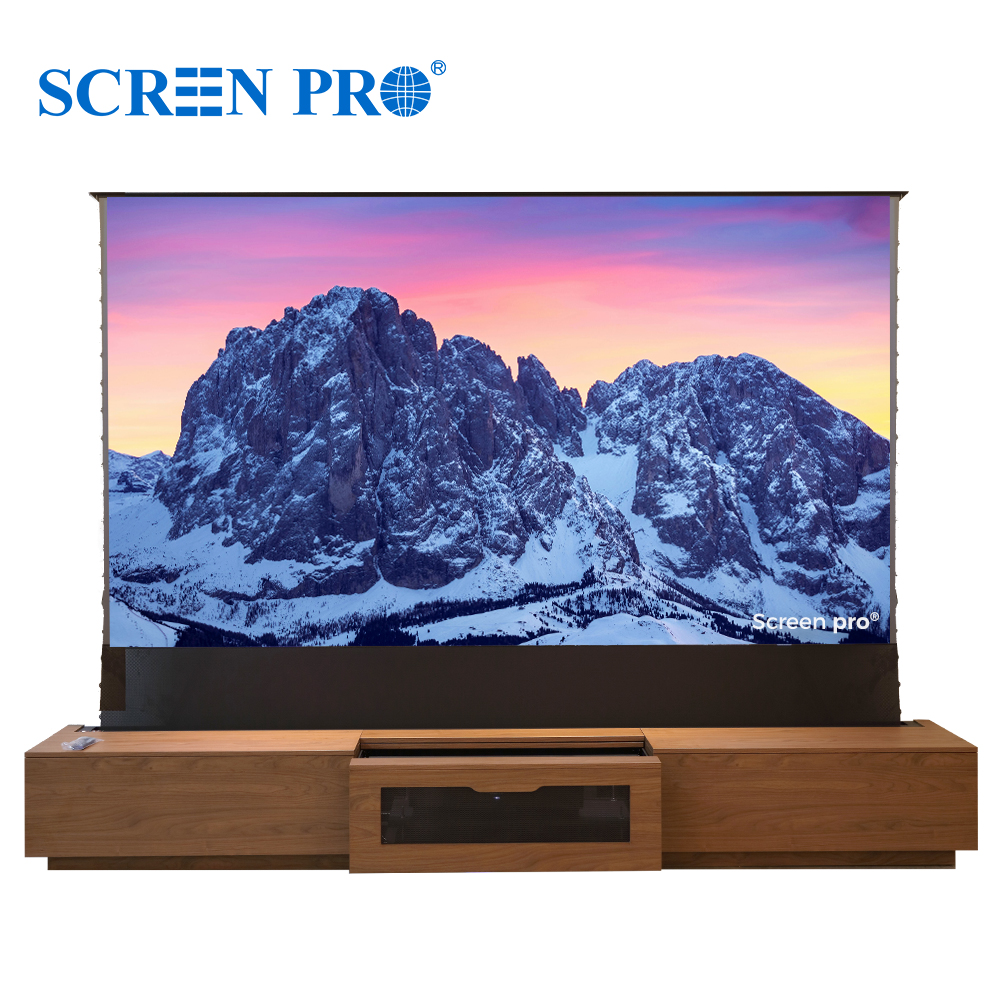
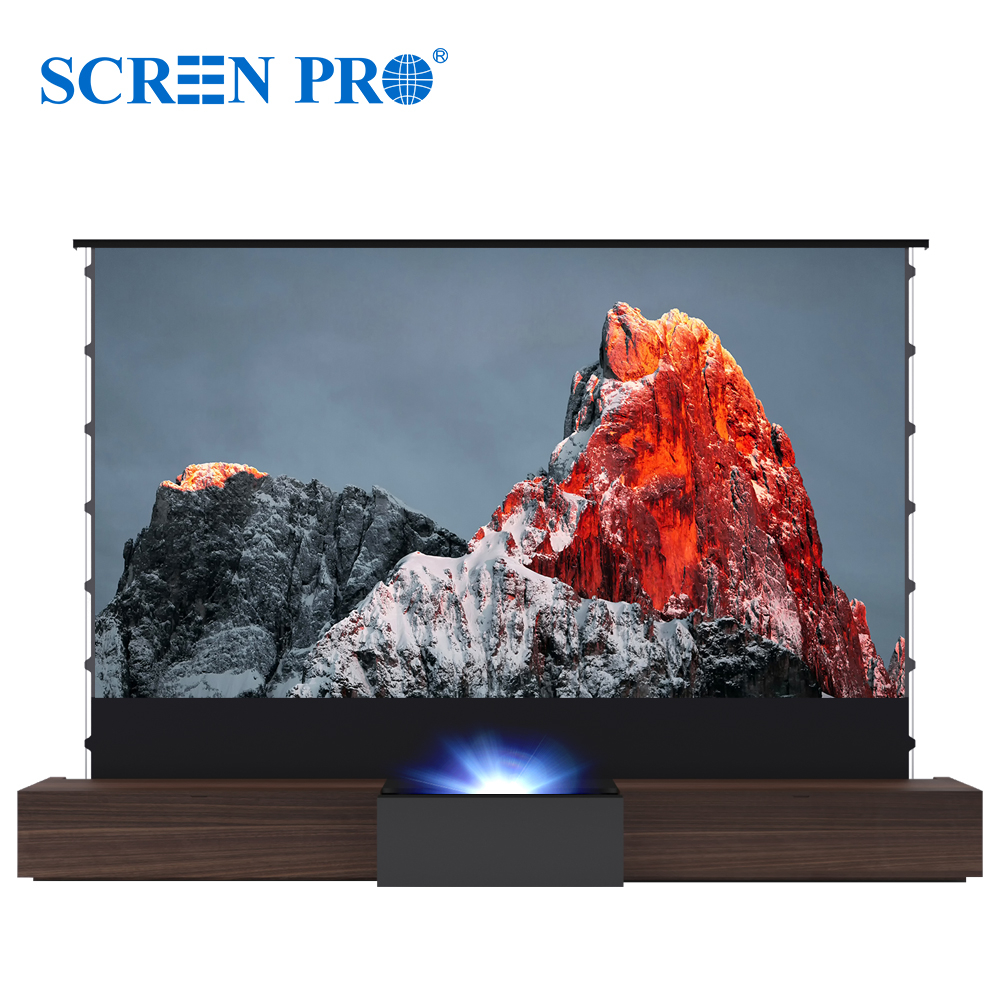
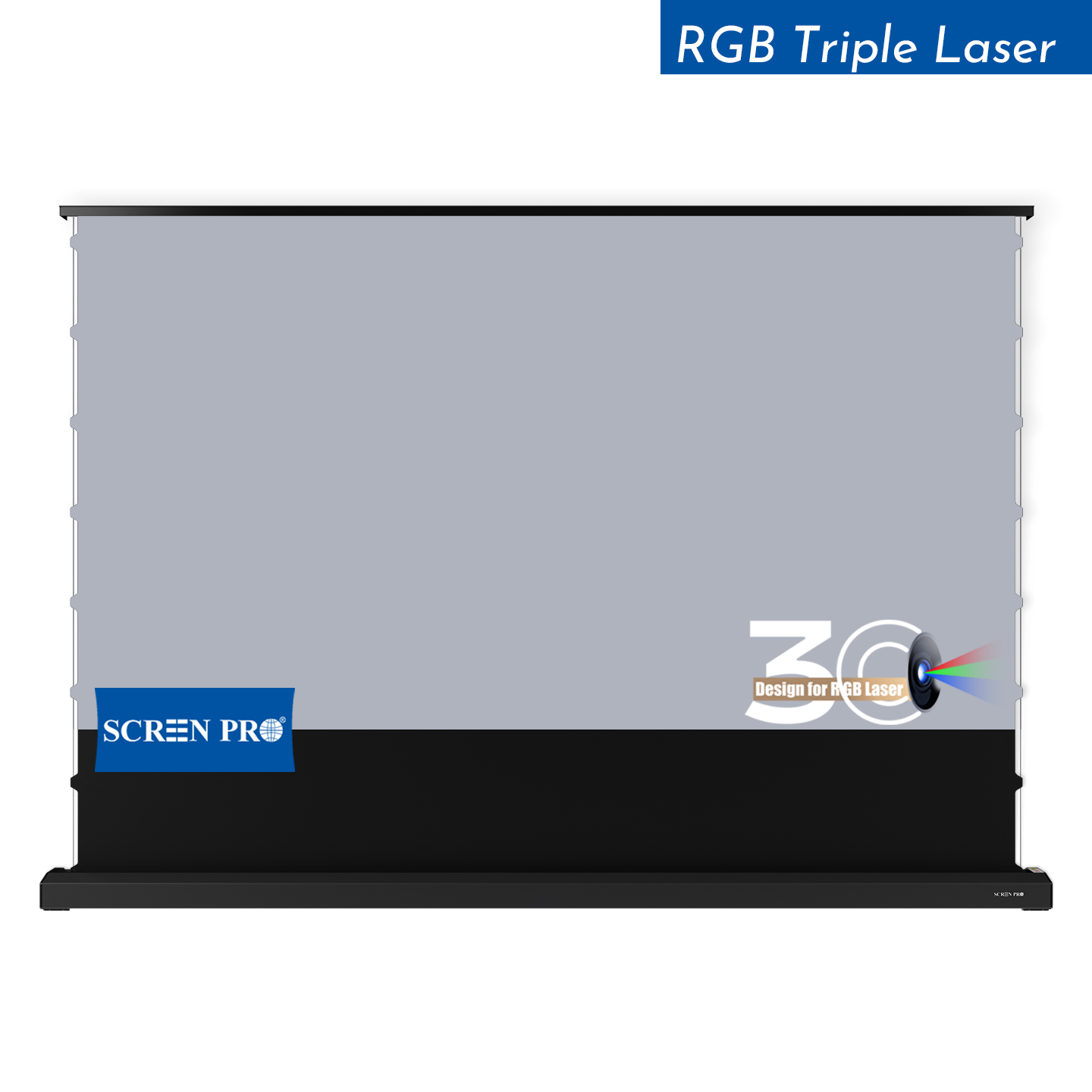
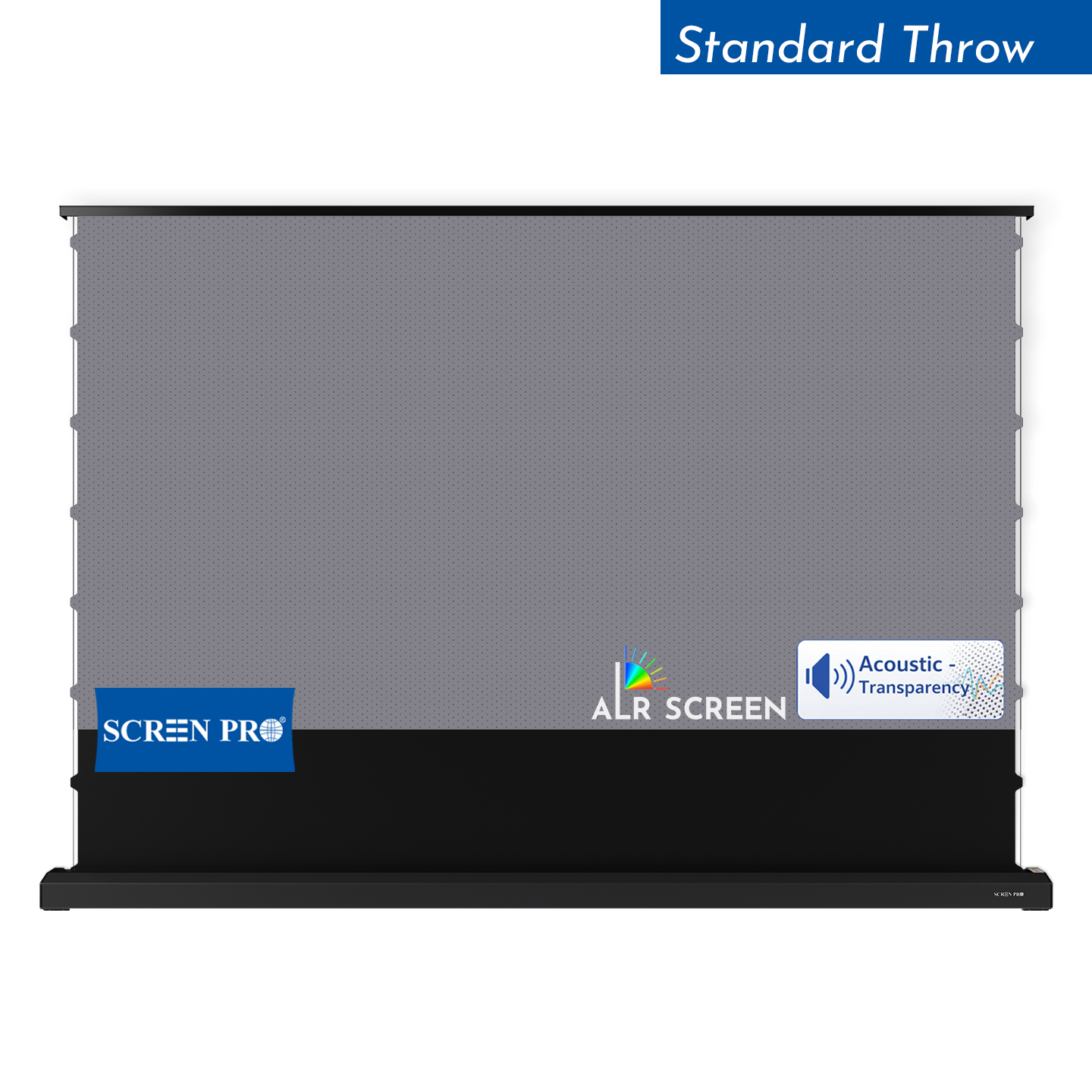
The SCREENPRO AD Floor Rising UST ALR Screen is designed for spaces where a permanent wall-mounted screen is not preferred.
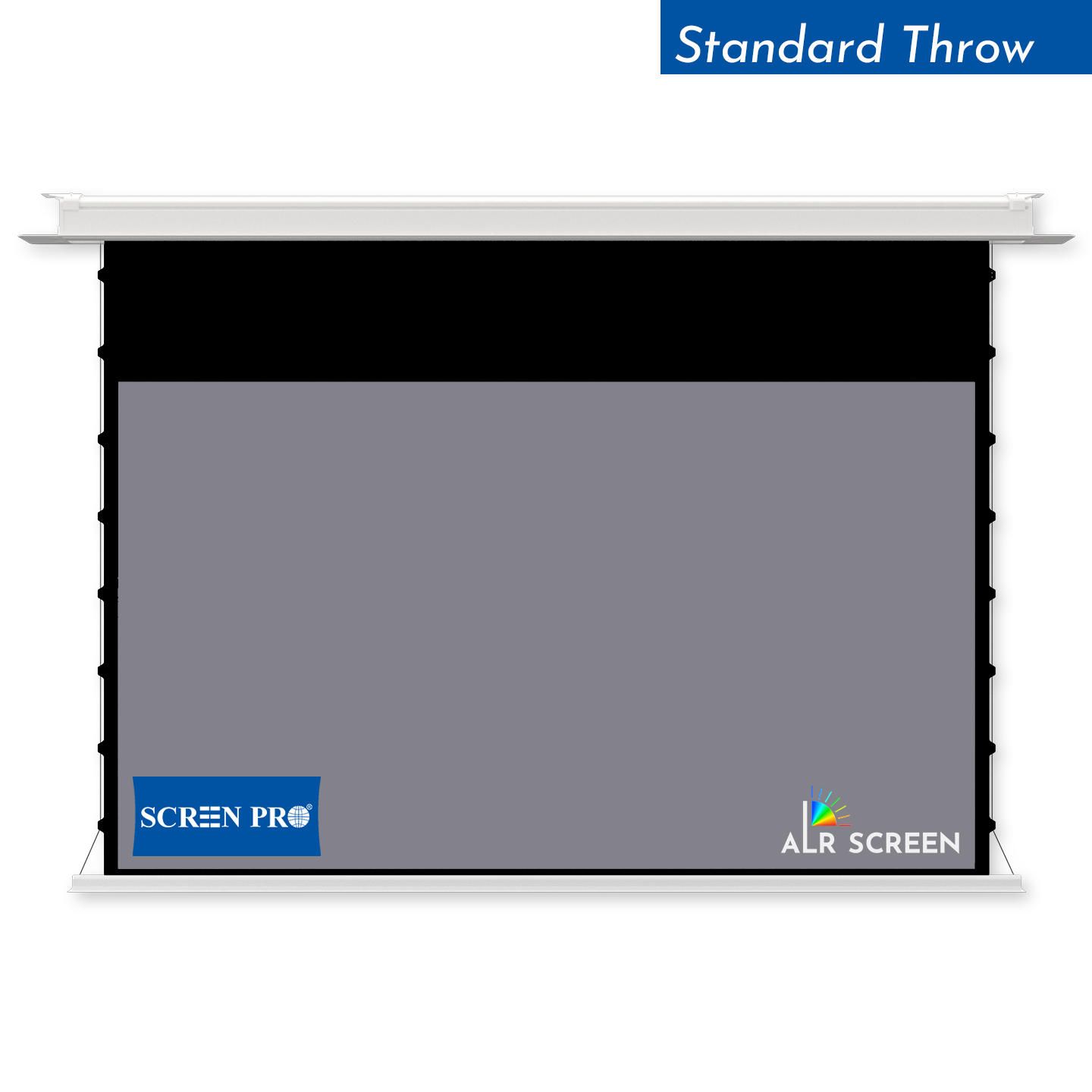
In-Ceiling UST ALR
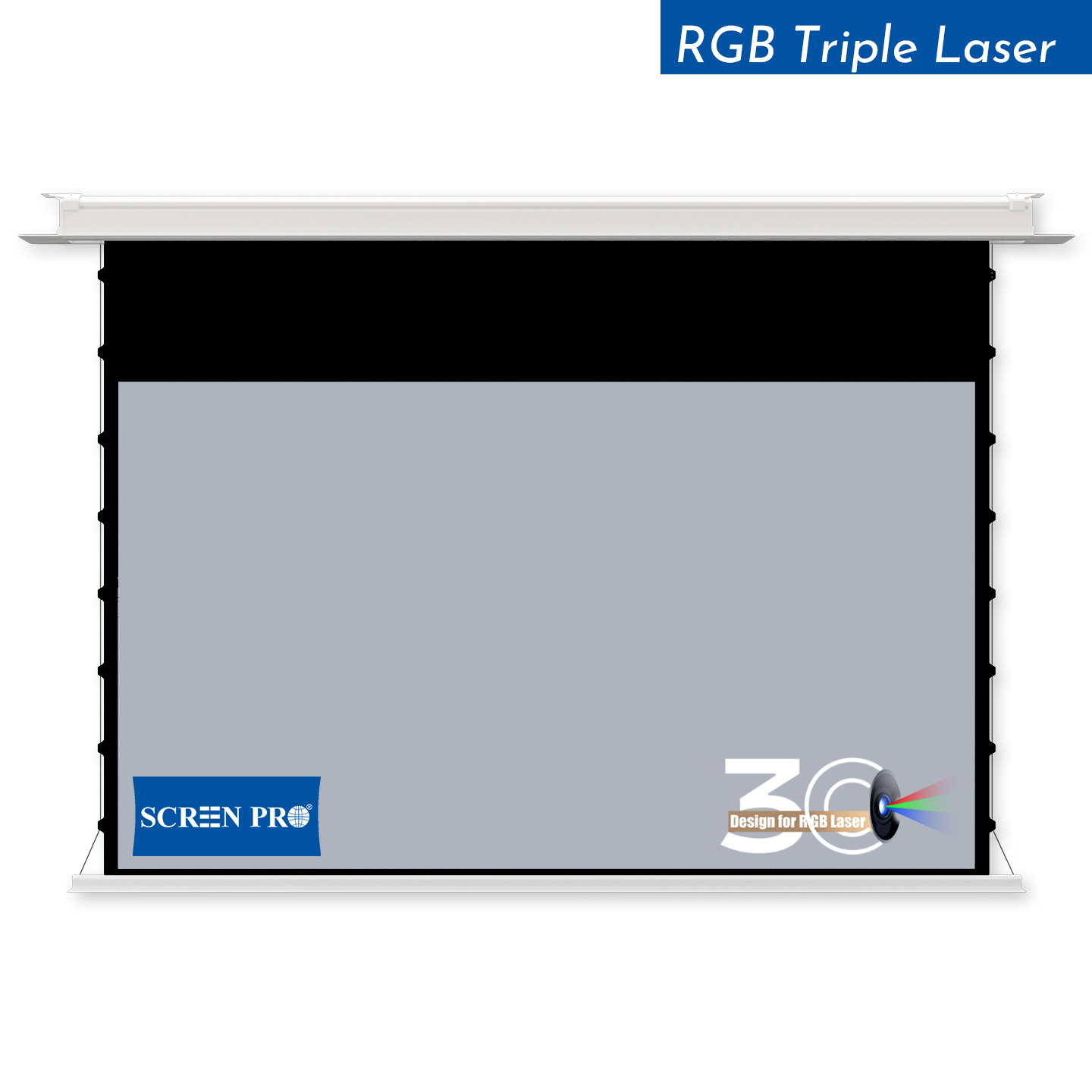
The SCREENPRO AI In-Ceiling UST ALR Screen allows the screen to retract into the ceiling for a cleaner architectural installation.
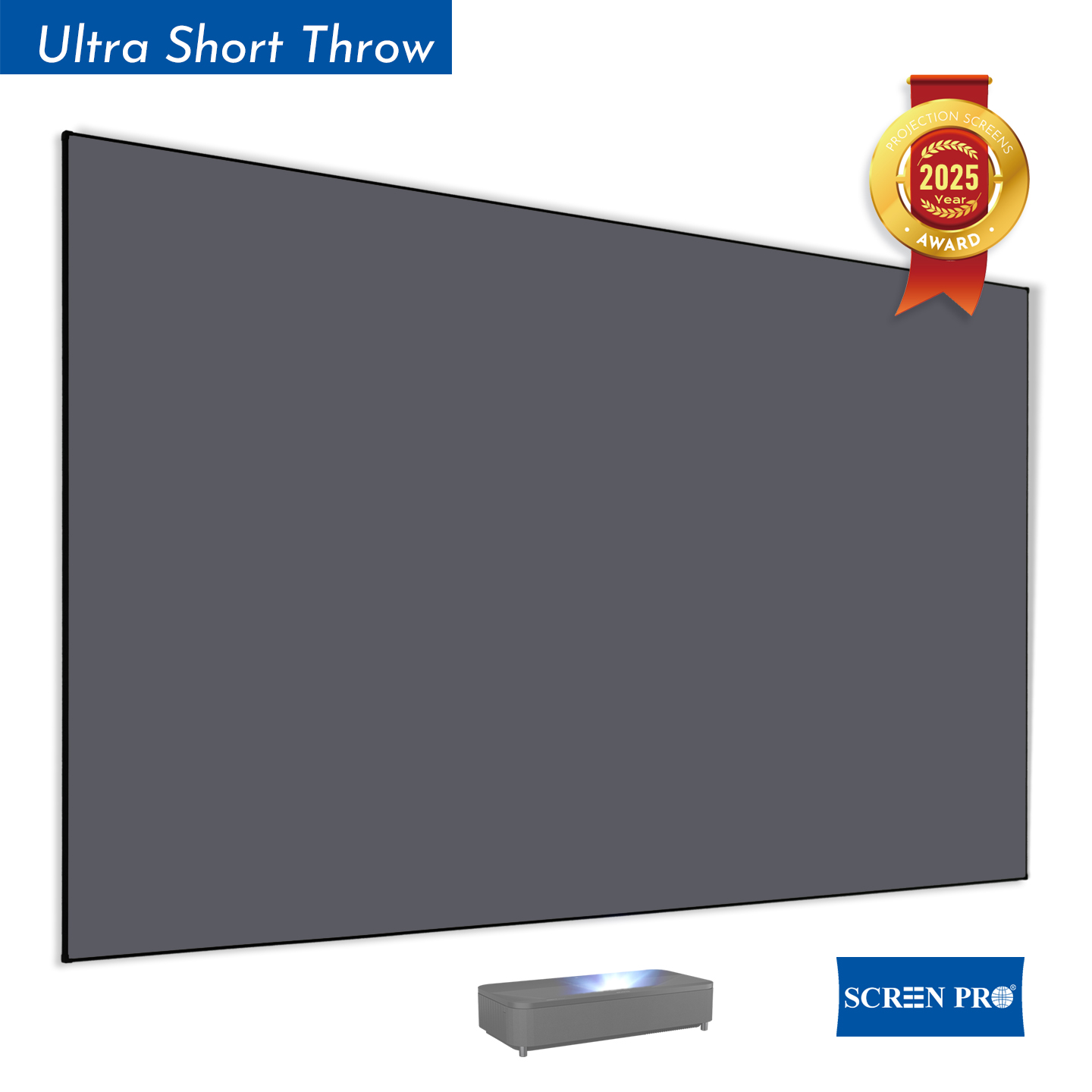
10. What About Fixed-Frame UST ALR Screens?
A retractable screen is not always necessary.
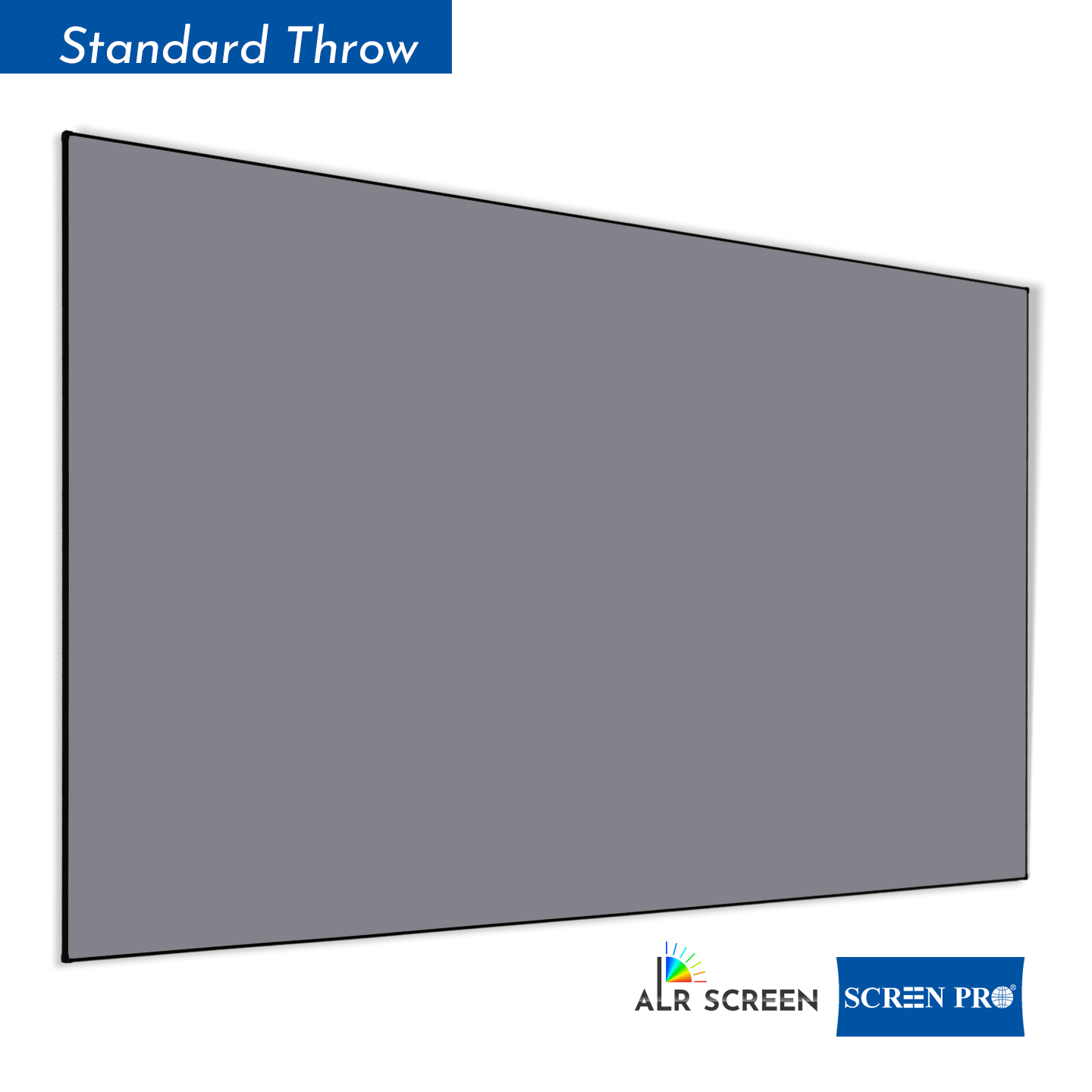
If the room is dedicated to projection and the screen can remain permanently installed, a fixed-frame optical screen provides continuous tension and a consistently flat viewing surface.
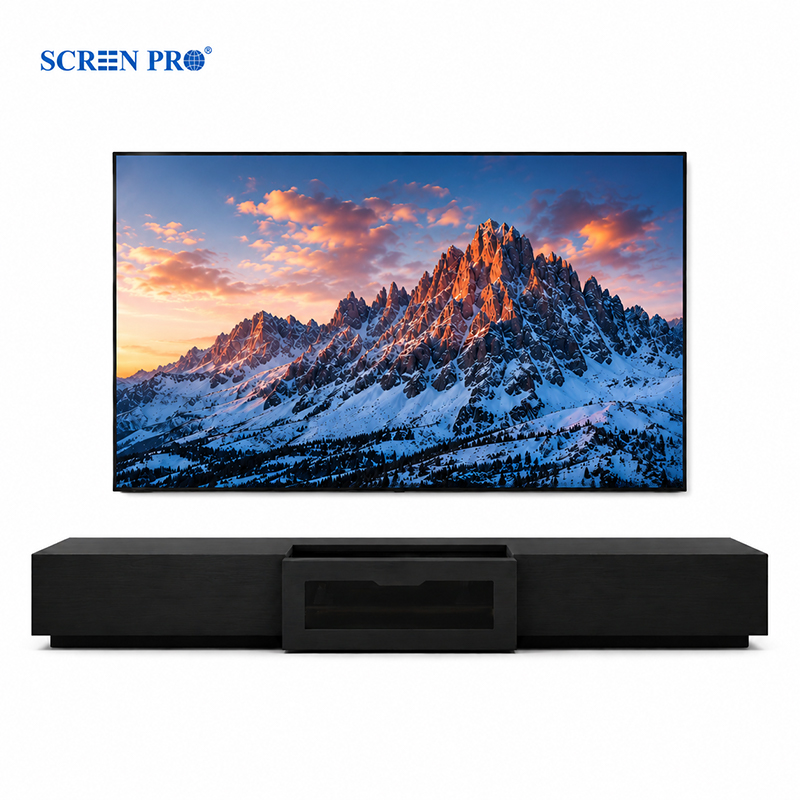
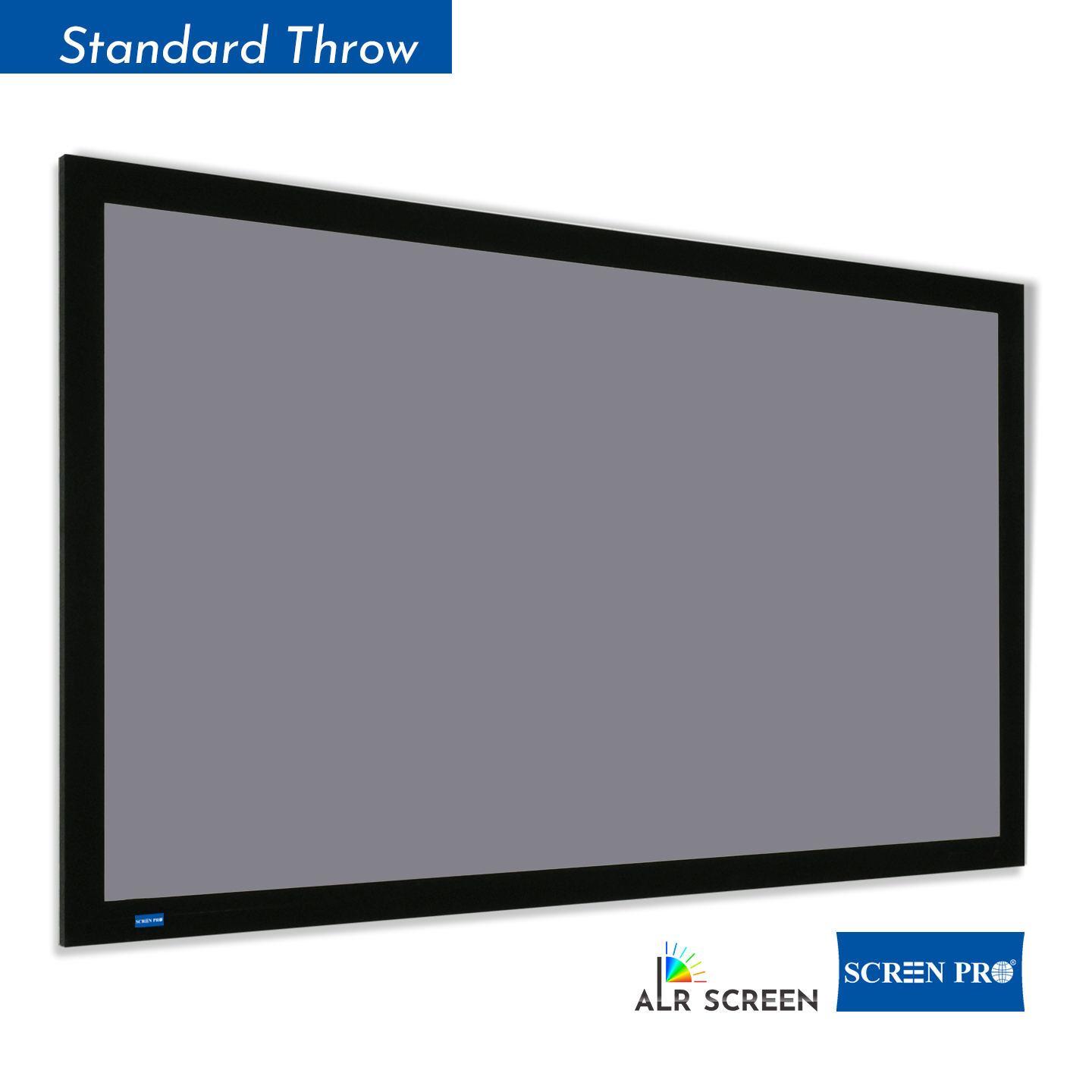
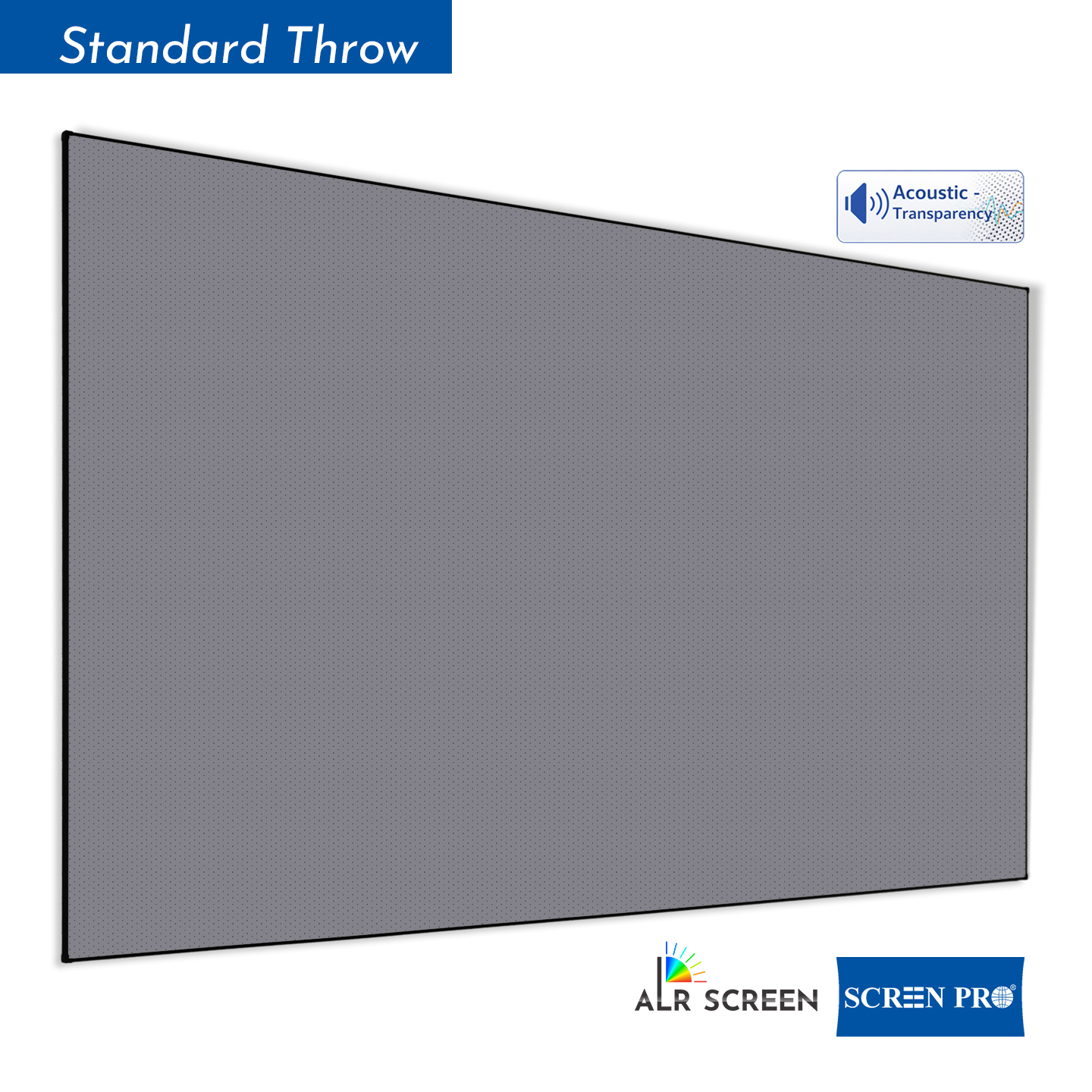
The SCREENPRO AZ 7mm Frame UST ALR Screen is an example of a slim-frame UST ALR solution for permanent Laser TV and ultra short throw projector installations.
Lenticular or Fresnel: Which Should You Choose?
Choose Lenticular ALR If You Prioritize:
- Wider horizontal viewing
- Flexible installation
- Motorized or retractable screens
- Tab-tensioned screen systems
- Floor-rising installations
- In-ceiling installations
- Flexible screen formats
- UST and Laser TV integration
Choose Fresnel ALR If You Prioritize:
- Maximum ambient-light rejection
- Permanent fixed installation
- Strong multi-directional ambient-light control
- A controlled primary viewing area
- Dedicated Laser TV installation
The better question is not simply “Which ALR technology is better?” but rather “Which optical structure is better suited to this projector, lighting environment, seating arrangement, screen format, and installation method?”
Explore SCREENPRO UST ALR Solutions
SCREENPRO offers multiple UST ALR screen formats using optical screen technologies for residential, commercial, and architectural projection installations.
T-Prism™
Rollable Lenticular ALR optical technology for short-throw and UST projection.
AW Series
ZeroWave motorized ALR screen designed for premium UST projection systems.
AD Series
Floor-rising UST ALR screen for flexible installations without permanent wall mounting.
AZ Series
7 mm slim-frame UST ALR screen for permanent Laser TV installations.
Frequently Asked Questions
Is Lenticular the same as ALR?
No. ALR is a broad category of projection screen technologies designed to reduce the visual impact of ambient light. Lenticular is one type of directional optical structure used to create an ALR screen. Fresnel is another.
Is a Fresnel screen always better than a Lenticular screen?
No. Fresnel can provide very strong ambient-light rejection, while Lenticular screens may provide advantages in horizontal viewing, installation flexibility, screen size, and retractable applications. The better choice depends on the room and installation.
Can a Lenticular ALR screen be motorized?
Yes, if the optical material is specifically designed to be flexible and rollable. SCREENPRO T-Prism™ can be integrated into tab-tensioned motorized, floor-rising, and in-ceiling screen systems.
Why does a motorized UST screen need tab tensioning?
UST projectors illuminate the screen from a steep angle, making waves and surface distortions more visible. Tab tensioning helps maintain a flatter and more stable projection surface.
Can a Lenticular ALR screen be installed upside down?
It depends on the optical material. Directional ALR screens must be installed according to their designed optical direction. SCREENPRO T-Prism™ allows vertical reversal during installation to accommodate different projector positions, while the projection side itself remains unchanged.
Can Fresnel ALR screens be rolled?
Fresnel ALR screens are commonly associated with fixed or more rigid optical constructions. Rollability depends on the specific material and manufacturing technology, so the screen should be specifically rated for repeated rolling before being used in a retractable system.
Which ALR screen is best for a Laser TV?
Both Lenticular and Fresnel ALR screens can work with Laser TVs when correctly matched to the projector geometry. Fresnel may be preferred for maximum ambient-light rejection, while flexible Lenticular ALR can be preferable when wider viewing or a retractable screen is required.
Conclusion
Lenticular and Fresnel ALR screens address the same fundamental challenge in different ways: controlling light so that a projected image can maintain stronger perceived contrast when ambient light is present.
Fresnel ALR is particularly attractive when maximum ambient-light rejection and a permanent fixed installation are priorities.
Lenticular ALR offers a strong balance of directional light control, wider viewing flexibility, and — with flexible optical technologies such as SCREENPRO T-Prism™ — the ability to create rollable, tab-tensioned, floor-rising, and motorized UST screens.
For a modern AV installation, screen format can be just as important as optical performance. Projector type, projector position, room lighting, seating area, screen size, and whether the screen needs to retract should all be considered before choosing the final ALR technology.
Find the Right UST ALR Screen
Compare SCREENPRO motorized, floor-rising, in-ceiling, fixed-frame, and optical ALR screen solutions for Laser TV and ultra short throw projection.
Explore UST ALR Screens →